
Why UV Exposure Defines Your Installation Approach
Arizona’s UV intensity breaks down stone sealant films two to three times faster than moderate climates — and when you decide to install 12 inch patio stones in Arizona, that variable needs to drive every decision from material selection through sealing schedule. Arizona receives more annual solar radiation than nearly any other state, and that intensity doesn’t just fade color — it breaks down the crystal matrix near the stone surface, accelerates efflorescence migration, and degrades sealant films two to three times faster than you’d see in a Pacific Northwest or mid-Atlantic climate. Understanding that dynamic before you cut your first piece changes how you work.
The 12-inch format is actually well-suited to high-UV environments for a practical reason: the smaller module limits the exposed surface area per joint, which means thermal cycling causes less differential movement at each individual stone edge. You’ll still see expansion and contraction, but the forces distribute more evenly than they would across a 24-inch slab. That said, the installation sequence, base prep, and sealing protocol all need to reflect Arizona’s sun reality from day one.
Material Selection Under Arizona’s UV Conditions
Not all natural stone weathers the same way under sustained UV bombardment. When you’re selecting 12 inch patio stones in Arizona, the finish and mineral composition matter more than most guides acknowledge. Honed and brushed finishes hold their appearance significantly better than polished surfaces in high-UV zones — a polished travertine or limestone will micro-etch on the exposed surface within two seasons, leaving a dull, inconsistent sheen that no amount of resealing fully reverses.
- Lighter-colored stones reflect more UV energy and stay cooler underfoot, but they also show efflorescence more visibly — factor that into your aesthetic expectations
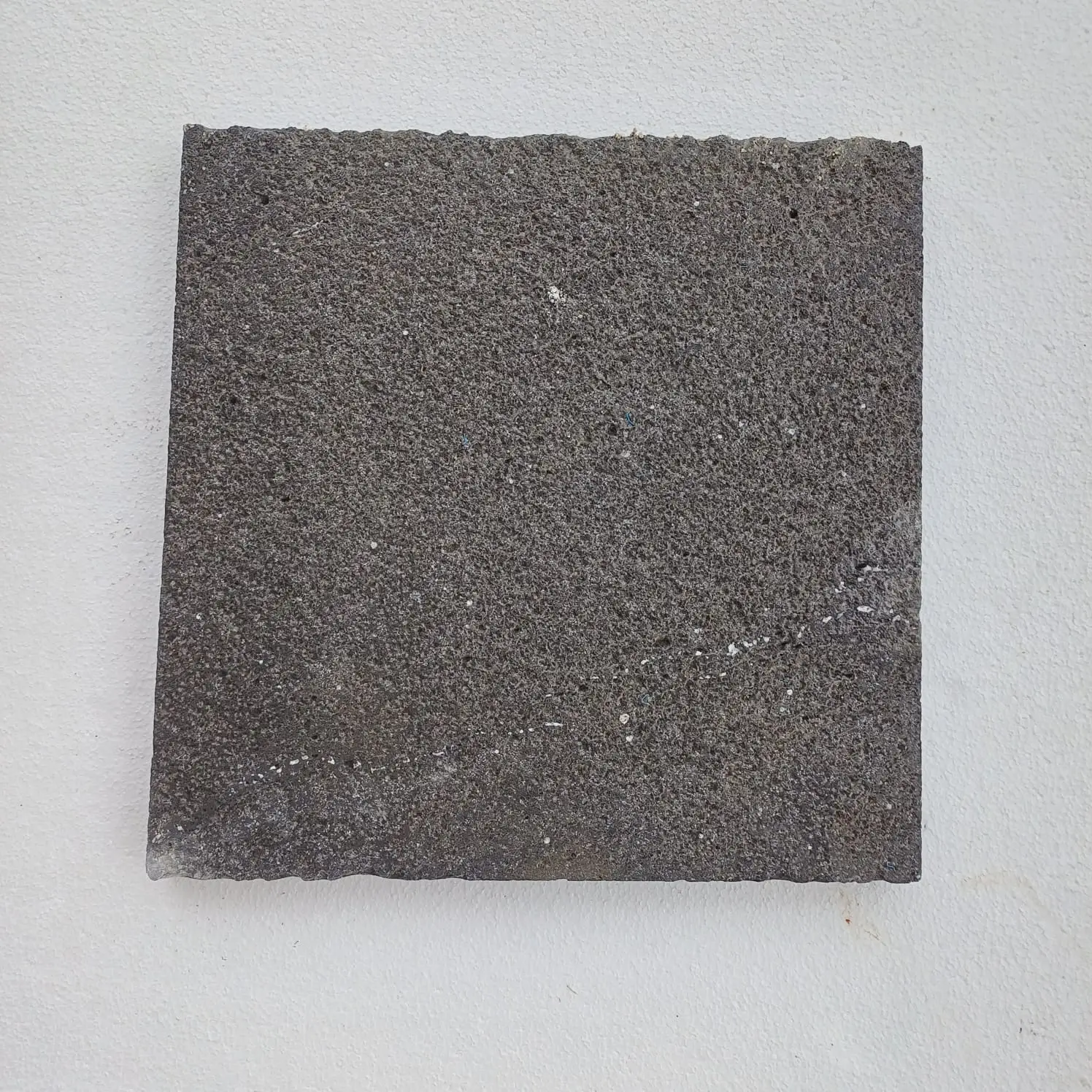
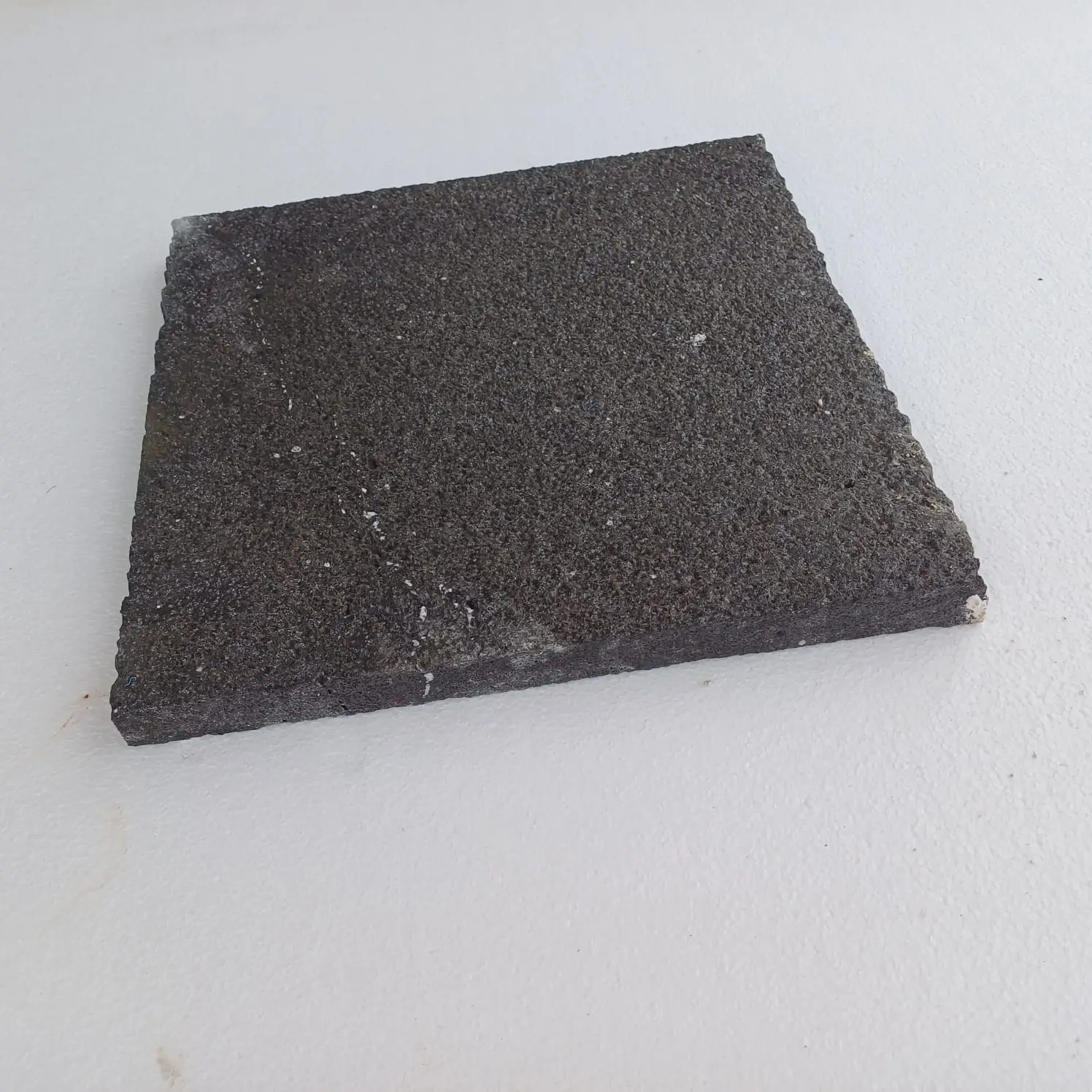
- Darker basalt and bluestone absorb UV more aggressively, which accelerates surface oxidation on untreated stone — a penetrating sealer applied before first use is non-negotiable
- Travertine with tight, filled voids performs better long-term than open-vein travertine because fewer surface pores mean less entry point for UV-activated oxidation products
- Dense limestone varieties with low absorption rates (under 3% by ASTM C97) resist UV-driven color migration better than high-porosity alternatives
- Tumbled-edge 12-inch formats tend to hide UV weathering more gracefully than sharp-cut edges, which show corner bleaching more prominently over time
At Citadel Stone, we assess each stone batch for surface absorption rates before warehouse release specifically because UV performance in Arizona is so directly tied to that metric. A stone absorbing at 6% versus 2% will require completely different sealing intervals in Phoenix, where UV index readings regularly exceed 11 from April through September.
Base Preparation: Getting the Foundation Right
Your base work determines whether the 12 inch stone paver installation steps you follow above grade actually hold for 20 years or start rocking and lippage-cracking within five. Arizona’s native soils range from expansive clay caliche in the Valley to sandy decomposed granite in higher elevations, and neither tolerates a skimped base.
The standard recommendation is 4 inches of compacted Class II aggregate base, but in clay-heavy soils you should extend that to 6 inches and add a layer of geotextile fabric between native soil and aggregate. The fabric isn’t about filtration here — it’s about preventing clay migration upward into the aggregate voids during the monsoon saturation cycles that hit the region every summer.
- Compact aggregate base in two lifts maximum — a single 6-inch lift won’t compact uniformly and leaves settlement voids that show up as low spots within the first year
- Target 95% compaction per ASTM D698 — field testing with a nuclear density gauge on larger patio installations is worth the rental cost
- Slope your base at a minimum 1% grade away from structures — 1.5% is better in areas with heavy monsoon runoff
- Allow the compacted base to settle 48 hours before setting your bedding layer, particularly if working in recently graded soil
Projects in Tempe frequently encounter subsurface caliche at variable depths — sometimes as shallow as 14 inches — and that layer needs to be either broken and removed or used deliberately as a structural sub-base depending on its continuity and density. Treating it as an obstacle rather than a potential asset wastes excavation budget unnecessarily.
Bedding Layer Specifications for Small Format Stones
The bedding layer is where small format patio stone laying technique in Arizona diverges from what works in cooler climates. A 1-inch screed bed of coarse concrete sand (ASTM C33) is the standard, but you need to account for the fact that Arizona’s dry heat accelerates moisture loss from the bedding layer during installation — sometimes dramatically. Following an Arizona 12 inch patio stone base and bedding guide that ignores this moisture variable leads to compaction failures that only reveal themselves months later.
Laying 12-inch natural stones across Arizona patios in summer means your screed can lose workable moisture in under two hours on an exposed surface. That’s not a problem with the sand itself, but it means you should only screed sections you can stone within that window. Screeding an entire 400-square-foot patio before setting a single stone is a mistake you’ll see catch up with you during compaction, when dry screed zones don’t respond correctly to the plate compactor.
- Keep screed depth consistent at 1 inch — variations beyond ±1/8 inch create lippage with 12-inch modules because the shorter span leaves less tolerance for uneven bedding
- Use a damp — not wet — screed mix; the sand should hold shape when squeezed but not release moisture when pressed
- In summer installations, lightly mist the aggregate base before screeding to slow surface evaporation without saturating the base
- Do not screed directly over standing water from irrigation or sprinklers — wait a minimum of four hours after watering
Setting 12 Inch Patio Stones: The Step-by-Step Process
Completing the Arizona 12 inch patio stone base and bedding guide correctly gets you to this point — now the actual stone placement requires a specific sequence that the 12-inch format demands more than larger slabs do. Because the module is small, every placement decision is amplified across more individual stones, so your first row needs to be perfect.
Establish a control line using a string line pulled tight from two fixed reference points — typically the house foundation or a permanent edge structure. Your first row of 12 inch stone pavers should run parallel to that line with no deviation. Snap a chalk line on the screeded base as a secondary guide so you can see your reference even when the string is briefly removed for working access.
- Place stones by setting the back edge first, then rotating the stone down onto the screed — this prevents screed displacement better than flat placement
- Maintain 3/16-inch joints minimum in direct sun exposures — tighter joints look clean initially but won’t accommodate thermal expansion cycles in Arizona summer conditions
- Check level with a 4-foot straightedge across every fourth stone — lippage should not exceed 1/16 inch between adjacent stones in pedestrian traffic zones
- Use a rubber mallet and beating block (never direct mallet contact) to seat individual stones — the block distributes force across the stone face and prevents corner cracking
- Verify slope consistency with a digital level every 10 linear feet — it’s easy to lose your grade line over long patio runs
For patio areas over 200 square feet, plan your setting 12 inch natural stones across Arizona patios layout from the center of the field outward toward edges. This approach prevents you from accumulating small measurement errors that end up as an awkward partial stone at a visible edge. Cut pieces at edges should be no smaller than half the stone dimension — anything narrower is mechanically weak and looks unfinished.
Once you’ve confirmed your layout plan and have your materials ready, exploring your sourcing options early pays off. Arizona 12 inch stone pavers Citadel Stone carries consistent thickness-calibrated stone that makes maintaining your bedding depth uniform across the full installation significantly more manageable.
Joint Sand and Compaction Under Arizona UV and Heat
Polymeric joint sand performs differently in Arizona’s high-UV environment than the manufacturer data sheets suggest, and that gap matters for long-term maintenance. Standard polymeric sand relies on a UV-activated cure, which sounds ideal for Arizona — but excessive UV intensity in low-desert environments can over-cure the surface layer before moisture fully activates the binding agents through the joint depth. The result is a surface crust that looks set but hasn’t bonded below the top quarter-inch.
The workaround is to apply polymeric sand in the cooler morning hours and lightly mist the joints before the surface cures completely, which slows the UV activation rate and gives the binders time to migrate through the full joint depth. In Tucson, where summer UV intensity combined with lower humidity creates particularly aggressive curing conditions, this timing adjustment consistently produces better joint bond depth than afternoon applications.
- Compact your patio with a plate compactor over a protective pad before applying joint sand — compaction after setting settles the screed and eliminates hidden voids
- Apply joint sand in two passes: first pass fills joints to 80%, second pass after light misting fills to within 1/8 inch of the surface
- Sweep clean thoroughly before final misting — polymeric residue left on stone surfaces will haze under UV and becomes very difficult to remove once cured
- Allow 24-hour cure before foot traffic and 72 hours before furniture or vehicle loads
Sealing Schedule and UV Protection for Natural Stone
Sealing is where Arizona installations diverge most sharply from national specification standards, and understanding why changes how you approach your maintenance calendar. A penetrating siloxane or fluoropolymer sealer applied to 12 inch patio stones in Arizona needs to be reapplied every 12 to 18 months in low-desert zones — not the 3 to 5 years you’ll see on most product labels, which are calibrated for moderate-UV climates.
UV radiation degrades the polymer chains in topical sealers and slowly degrades even penetrating sealers by oxidizing the silicone compounds within the stone pores. You can measure degradation with a simple water-bead test: drop a tablespoon of water on the stone surface and time how long the bead holds before absorbing. Under 30 seconds means the sealer needs refreshing. Over 60 seconds means you have adequate protection. That test takes 20 minutes to run across a full patio and gives you definitive data instead of guessing by calendar date.
- Apply sealer to clean, dry stone — moisture trapped under sealer causes whitish blush staining that’s difficult to reverse without stripping
- Two thin coats outperform one thick coat consistently — the first coat primes the surface absorption, the second coat seals uniformly
- Use an impregnating sealer with UV-stabilizing additives specifically — standard impregnators without UV inhibitors break down 30 to 40 percent faster in Arizona sun conditions
- Seal within 30 days of installation before the first monsoon season if your project completes between March and June
- Stone edges along saw cuts are higher-porosity than the face — run an extra sealer pass along cut edges and around any field cuts near transitions
Drainage Design and Edge Restraint Details
Your drainage design affects UV weathering indirectly but significantly — standing water on a sun-exposed patio creates a localized high-humidity zone that accelerates efflorescence migration and sealer breakdown in the wet zone perimeter. Proper slope and edge drainage keeps the surface uniformly dry between monsoon events, which means UV exposure is the only weathering mechanism you’re managing rather than UV plus moisture cycling.
Edge restraints for 12-inch natural stone patios should be metal or composite — plastic edging in Arizona sun exposure becomes brittle within three to four seasons and loses its holding force on the screed containment. Aluminum edging spiked at 12-inch intervals is the standard field solution, and it’s worth the additional cost over plastic every time.
- Position drainage outlets at the lowest edge of the patio, not at the midpoint — midpoint outlets create ponding zones on either side
- Install edge restraints before setting any stone — adjusting them after the patio is set almost always disturbs the screed near the perimeter
- Step-down transitions between the patio surface and adjacent grade should include a gravel drainage strip at least 6 inches wide to prevent soil undercut during monsoon runoff
Citadel Stone’s team can advise on edge detail specifications based on your specific site grades — verifying warehouse availability for your full quantity before finalizing your edge restraint and drainage layout helps avoid mid-project delays when phased delivery affects your sequencing plan.
Installing 12 Inch Patio Stones in Arizona: Moving Forward
The decisions that determine whether your Arizona stone patio looks sharp at year ten come down to material specification, UV-conscious sealing intervals, and base preparation that accounts for regional soil behavior — not just the setting sequence. Arizona’s UV intensity is relentless, but it’s a predictable variable you can fully engineer around with the right product choices and maintenance schedule. The 12-inch format gives you a manageable module that distributes thermal movement well and allows precise layout control, provided your bedding is consistent and your joints give the stone room to breathe through temperature cycles.
As you move from installation planning into material procurement, format comparisons can help you validate your 12-inch choice against other available dimensions. 24×24 vs Smaller Patio Stones: Which Is Better in Arizona? covers how different stone dimensions perform across Arizona conditions — useful context if your project design involves mixed formats or you’re weighing format options across different patio zones on the same property. Contractors and homeowners in Chandler, Tucson, and Yuma use Citadel Stone 12 inch patio stones because the uniform calibration simplifies sand bedding depth calculations during Arizona outdoor installations.