
Grey brick driveway design in Arizona demands more than aesthetic judgment — the mechanical stresses placed on your driveway surface by monsoon-season wind loads, hail events, and storm-driven debris separate a 10-year installation from a 25-year one. Most homeowners focus on colour pairings and kerb appeal, and those elements absolutely matter, but the design choices that hold up in Arizona’s severe weather cycles start with understanding how material thickness, edge restraint systems, and joint integrity respond to physical impact. Getting this right from the outset means your driveway stays structurally sound long after the first serious storm season.
Why Storm Resistance Shapes Grey Brick Design in Arizona
Arizona’s monsoon season delivers wind gusts that routinely exceed 60 mph, and haboobs in the Phoenix basin can push sand and gravel into joint systems with enough force to erode polymeric sand within a single season. Your grey brick driveway design in Arizona needs to account for this mechanical assault before you ever think about paver shade or pattern style. The good news is that well-specified grey brick — particularly dense, low-absorption units in the 2.5-inch nominal thickness range — handles wind-driven impact far better than thin-set concrete alternatives.
Edge restraint integrity is the critical variable most installers underestimate. Aluminium L-profile restraints spiked at 12-inch centres are adequate for mild climates, but for Arizona storm zones, 9-inch spike spacing into compacted aggregate — with a minimum 4-inch embedment — is the specification that prevents lateral creep after repeated high-wind events. The units themselves can be beautiful and storm-ready simultaneously.
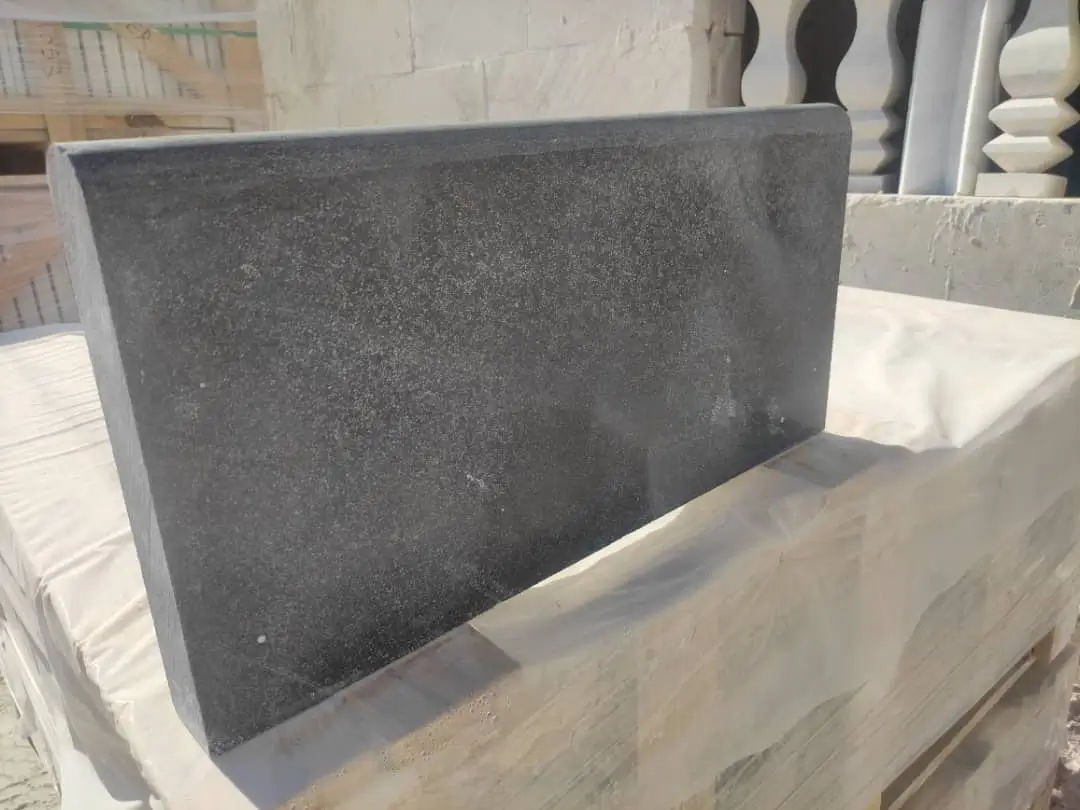
Idea 1: Charcoal Ashlar Pattern for Wind-Load Resistance
An ashlar pattern — three staggered rectangular formats laid in a broken bond — distributes point loads from wind-driven debris more effectively than a running bond. Charcoal-toned grey brick in this layout creates a sophisticated, contemporary aesthetic that suits the clean architecture common in Scottsdale, while the interlock geometry resists the racking forces that monsoon gusts impose on driveway surfaces. The colour depth also shows minimal surface marking from storm debris. This pattern is one of the grey brick paving styles across Arizona homes that consistently delivers both structural and visual results.
- Use 4-inch × 8-inch and 4-inch × 12-inch mixed formats for genuine ashlar appearance
- Maintain 3mm joint spacing to allow polymeric sand to key in fully without excess void
- Charcoal finishes absorb slightly more heat than lighter greys — orient the driveway to maximise morning shadow if shade trees are available
- Specify a minimum compressive strength of 8,000 PSI to handle hail impact without surface spalling
Idea 2: Pale Grey Herringbone for High-Impact Interlock
Herringbone remains the highest-performing pattern for mechanical interlock under dynamic load — and wind-driven lateral pressure qualifies as dynamic load. The 45-degree herringbone orientation means no continuous joint runs parallel to the primary load direction, which is exactly what you want when storm events push debris across your driveway at speed. Pale and mid-grey tones in this pattern work exceptionally well against desert-buff render and cream limestone walls, delivering the natural brick driveway colour pairings AZ homeowners prefer for cohesive streetscapes.
The interlock advantage is measurable. Independent testing on 80mm herringbone-laid pavers shows lateral displacement resistance roughly 35% higher than the same unit in a running bond under equivalent load. That performance gap widens in installations with well-compacted 3/4-inch crushed aggregate base at the correct 4-inch depth minimum. Among the grey brick paving styles across Arizona homes, pale herringbone also offers versatility — it reads as understated on wider approaches where bolder patterns can become visually demanding.
Idea 3: Silver-Grey Field with Exposed Aggregate Border
A silver-grey brick field paired with a contrasting exposed aggregate concrete border creates a driveway edge definition that also serves a structural role. The aggregate border acts as a visual and physical transition zone, helping to anchor the edge restraint system against the ground movement that storm-saturated soils can produce. For grey brick driveway kerb appeal ideas in Arizona, this approach gives you a custom, high-end appearance without sacrificing the perimeter integrity your driveway needs after heavy rainfall events.
- Specify the aggregate border at minimum 6 inches wide to provide meaningful restraint mass
- Use a grey tone in the brick that picks up the aggregate’s stone flecks for visual continuity
- Verify warehouse stock on the border aggregate mix before locking in your grey brick selection — mismatched lead times can delay your project by weeks
- This combination suits wider driveway approaches of 18 feet or more, where the border proportions read clearly from the street
Idea 4: Slate-Grey Cobble Units for Impact Resistance
Cobble-format grey brick — typically 4 × 4 inches with a tumbled or natural split face — offers exceptional impact resistance compared to smooth-faced units. The thicker cross-section (commonly 2.75 to 3.15 inches nominal) means hail impact and storm debris have a much greater material mass to defeat before surface damage occurs. Grey brick driveway design in Arizona for properties in exposed, high-elevation locations benefits most from this format. You’ll also find the textured surface provides better traction under the slick film that forms when wind-driven rain hits hot paving.
Flagstaff installations face both hail events and freeze-thaw cycling that other Arizona locations don’t encounter — the cobble’s thicker section and denser material matrix handle both stress types more reliably than thinner paver formats. For grey brick driveway design in Arizona at elevation, this is frequently the strongest specification choice available. Confirming warehouse availability for cobble units in your chosen grey tone early in the planning process is essential, as specialty formats can carry extended lead times.
Idea 5: Two-Tone Grey Banding for Storm Drainage Lines
Using alternating light and dark grey brick bands running perpendicular to your garage allows you to visually signal the drainage slope while creating a distinctive aesthetic. This idea works especially well because the band lines naturally guide storm water runoff toward your intended drainage channels — a functional design choice that matters enormously in Arizona’s short, intense rainfall events where 2 inches can fall in under 30 minutes. Your driveway surface should carry at minimum a 1.5% cross-fall to prevent ponding, and banding helps you verify that slope is maintained during installation.
Among grey brick driveway kerb appeal ideas in Arizona, this two-tone approach delivers a structured, architectural look that complements both contemporary and transitional home styles. Keep the contrast moderate — a mid-grey against a near-white grey reads as elegant, while a very dark charcoal paired with near-white can feel harsh under intense Arizona light. Coordinating truck delivery schedules for both grey tones simultaneously prevents colour-batch inconsistencies that are difficult to correct once installation is underway.
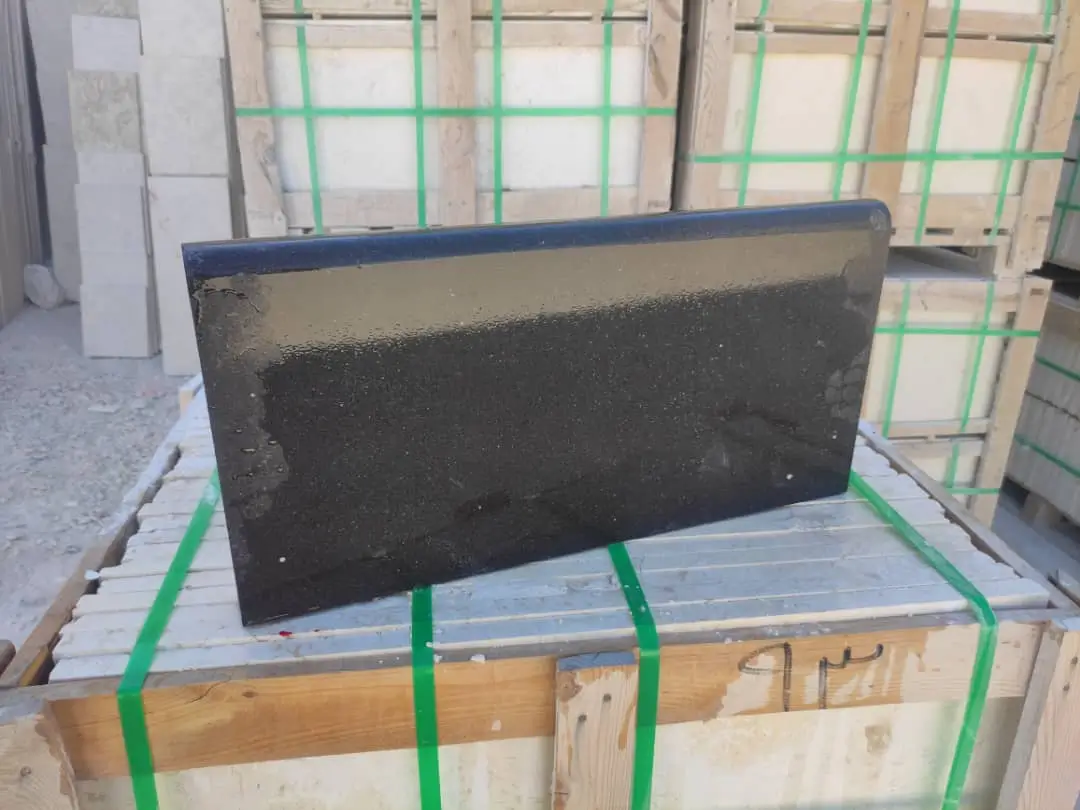
Idea 6: Natural Grey Limestone Brick for Desert Palette Harmony
Natural grey limestone brick carries subtle buff and warm undertones that integrate beautifully with Arizona’s desert palette — terracotta render, cream stucco, and ochre sandstone all read as cohesive when paired with limestone grey rather than the cooler blue-grey of concrete-based units. This is one of the Arizona desert-compatible grey brick driveway aesthetics that performs as well visually as it does structurally. Dense grey limestone in a brick format handles storm-driven water infiltration well because its interconnected pore structure, when sealed with a penetrating silane-siloxane sealer, repels wind-driven rain at joint faces rather than absorbing it. Joint integrity under this kind of water pressure is a genuine performance variable, not just a maintenance question.
For projects in Sedona, where red-rock surroundings dominate the streetscape, a warm grey limestone brick reads as grounded and site-responsive in a way that cooler grey tones simply don’t. The material’s natural colour variation also means minor storm-debris marking becomes visually absorbed into the surface character over time rather than standing out as obvious damage. The natural brick driveway colour pairings AZ homeowners prefer in this region consistently favour limestone grey over concrete-based alternatives precisely because of this site-contextual warmth.
At Citadel Stone, we source grey limestone brick from quarries whose material density and pore structure have been verified for Arizona’s specific weather exposure conditions — not just general outdoor use. For a closer look at available material specifications, Citadel Stone grey brick Arizona options covers the full product range worth considering for your driveway project.
Idea 7: Large-Format Grey Brick Slabs with Mortar Joints
A large-format grey brick slab — 12 × 24 inches or 16 × 24 inches — creates a modern, minimal driveway aesthetic that suits contemporary Arizona architecture. The wider mortar joints on these formats, typically 3/8 to 1/2 inch, need to be filled with a polymer-modified mortar that can handle the movement from wind loading without cracking. Standard Portland-based mortar performs poorly in this application — within two to three monsoon seasons, joint cracking provides pathways for storm water infiltration that destabilise your base course.
- Specify polymer-modified jointing mortar with a minimum flexural strength of 400 PSI
- Large-format slabs require a concrete sub-base rather than aggregate-only for adequate structural support under point loads
- The grey brick driveway design Arizona aesthetic in large format looks particularly strong when the joint colour complements rather than contrasts the brick tone
- Verify truck delivery access before ordering — 24-inch format slabs in full-pallet quantities require adequate turning radius and ground clearance for safe unloading
Idea 8: Grey Brick Field with Contrasting Dark Kerb Detail
Installing a darker grey or charcoal brick kerb detail at the perimeter of your grey brick driveway does double duty — it creates a strong visual frame that anchors the design, and it reinforces your perimeter edge restraint system against lateral displacement from storm impact. The kerb units need to be specified at full-depth (minimum 4 inches) and set with full-bed mortar adhesion to the concrete edge beam beneath. Half-depth kerb units look identical at installation but fail under the first serious storm event where wind-driven debris impacts the edge line directly.
Grey brick paving styles across Arizona homes increasingly use this dark-kerb framing technique to create finished, polished streetscapes that read as intentional design rather than standard pavement. The contrast also makes your driveway boundary clearly legible from the street, which matters for property presentation and resale value in competitive Arizona markets. Our technical team recommends specifying the kerb unit in the same material family as the field brick to ensure thermal expansion coefficients match — mismatched materials at kerb-to-field transitions develop joint gaps within one to two years in Arizona’s temperature range.
What Defines Grey Brick Driveway Performance in Arizona
Across all eight design ideas, the performance thread that matters most in Arizona is mechanical resilience — your driveway’s ability to absorb wind loads, hail impact, and storm-water pressure without losing structural integrity at joints, edges, or field units. Design choices that look identical on day one diverge significantly after three to five monsoon seasons, and the divergence traces back to specification decisions made before a single unit was laid. Thickness, edge restraint density, joint fill material, and base depth are the variables that determine which of these eight designs still looks pristine in year 15.
You should also account for your project’s supply timeline when selecting among these options. Warehouse stock levels for specific grey tones and formats can vary seasonally, and some of the larger-format or specialty cobble units carry 3 to 4 week lead times from the warehouse to your site. Building that window into your project schedule prevents the installation delays that force contractors to use alternate materials mid-project. The Arizona desert-compatible grey brick driveway aesthetics covered here all perform well when correctly specified — but that performance depends entirely on sourcing the right material density, joint fill, and edge system before installation begins. For a comprehensive resource on selecting among these options based on your specific site and budget, How to Choose Grey Driveway Pavers in Arizona provides the cost and specification context that connects these design ideas to real purchasing decisions. Citadel Stone grey brick selections, known for their muted iron-oxide veining, pair naturally with the buff and ochre exterior palettes favoured by homeowners in Chandler, Sedona, and Mesa seeking cohesive kerb appeal across Arizona streetscapes.