
Your Arizona wholesale stone paver order guide starts not with material aesthetics but with what’s underneath your project — the soil. Across Arizona, ground composition varies dramatically by region, and those variations directly control how much base preparation you’ll need, how thick your paver bed should be, and whether a standard pallet quantity will actually cover your project after accounting for cuts and waste from irregular subgrade corrections. Understanding these site-specific variables before you place a wholesale order separates contractors who finish on budget from those calling in emergency pallets at retail pricing.
How Arizona Soil Conditions Shape Your Paver Procurement
The single most underestimated procurement factor in Arizona isn’t heat — it’s caliche. This calcium carbonate hardpan layer appears across central and southern Arizona at depths ranging from six inches to several feet below grade, and it fundamentally changes your excavation scope, your base material quantities, and ultimately your paver coverage calculations. Projects in Yuma deal with some of the densest caliche formations in the state, often requiring pneumatic breaking equipment before any aggregate base work begins — a cost that many contractors forget to factor into their paver quantity budgets when accounting for re-excavation and backfill.
Sandy desert soils in the western low desert present a different problem: they compact unevenly under load, especially after monsoon saturation cycles. You’ll need more crusher-run aggregate for base stabilization in these zones, which pushes your overall square footage cost up and sometimes forces you to reduce your paver coverage area to stay within budget. Run your subgrade bearing capacity numbers before you finalize any wholesale order — a lab compaction test runs about $150 and can save you from ordering 20% more material than your base can adequately support.
Expansive clay soils show up in scattered pockets across the Phoenix valley floor, particularly in older alluvial deposits. Unlike caliche, clay doesn’t resist excavation — it resists stability. It swells with moisture, contracts in dry periods, and creates differential movement that works paver joints loose over 3–5 years if you don’t address it at the subgrade level. Your fix here is a lime-stabilized subbase layer, which adds material cost and changes your compacted depth calculations before you ever think about how many pallets to order.
Natural Stone Paver Pallet Quantities in Arizona: What the Numbers Actually Mean
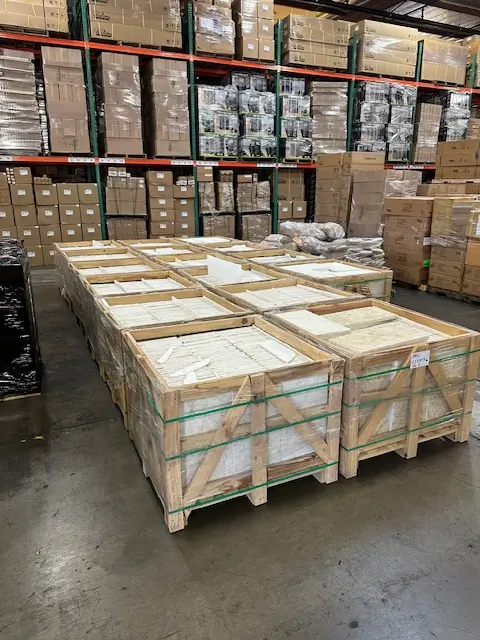
Natural stone paver pallet quantities in Arizona follow different coverage rules than concrete pavers, and if you’re ordering wholesale for the first time, the difference can catch you off guard. A standard pallet of 2-inch nominal travertine or limestone pavers covers roughly 100–120 square feet at nominal count — but your actual installed coverage will typically run 8–12% lower after you account for perimeter cuts, pattern waste, and material rejected at quality inspection on the job site.
Thickness matters here too. Many Arizona contractors spec 1.25-inch pavers for patios and walkways where soil conditions are stable and well-drained. Caliche-heavy sites where the base is firm and predictable can support this thinner profile without issue. But on sandy or clay-affected subgrades, moving to 2-inch or even 2.5-inch material is the right call — and that shifts pallet weight, coverage per pallet, and freight costs simultaneously. The coverage math changes: a pallet of 2.5-inch travertine covers approximately 80–90 square feet, not 100+.
- 1.25-inch pavers: approximately 110–130 sq ft per pallet (lighter, more units per layer)
- 2-inch pavers: approximately 95–115 sq ft per pallet (most common wholesale spec in AZ)
- 2.5-inch pavers: approximately 80–95 sq ft per pallet (recommended for expansive soil zones)
- Add 10–15% to your square footage before calculating pallets for straight-set patterns
- Add 15–20% for diagonal or herringbone patterns — cut waste is substantially higher
- Always round up to the nearest full pallet — partial pallets carry freight penalties at wholesale
One practical note from wholesale ordering experience: natural stone is a product with dimensional variance. Unlike manufactured concrete pavers with controlled tolerances, you’ll find 3–5% of any natural stone pallet will need to be set aside — pieces with edge chips, thickness variation beyond the spec range, or color anomalies that break pattern consistency. Build that into your coverage estimate, not as an afterthought.
Stone Paver Minimum Orders Across Arizona: What Wholesale Actually Requires
Stone paver minimum orders across Arizona vary by supplier and material type, but at the wholesale tier, you’re generally looking at a one-pallet floor for in-stock items and a 5–10 pallet minimum for special-order materials or imported stone. The distinction matters because it affects your project planning timeline and your cash flow. At Citadel Stone, we see most landscape contractors in Arizona working with 10–25 pallet orders for mid-size residential projects, which puts them comfortably above minimums while keeping truck delivery logistics manageable.
For smaller infill projects or repair work, ordering just one or two pallets is possible with in-warehouse stock, but the per-square-foot economics shift noticeably. Delivery costs that spread across 15 pallets become a significant line item when split across two. Consolidating orders wherever the project scope allows — or coordinating with neighboring projects on the same street to share a truck delivery and split the haul cost — is a tactic experienced contractors use regularly in high-density neighborhoods in Mesa and Gilbert.
Here’s what most first-time wholesale buyers miss: minimum order quantities are sometimes set by the quarry origin, not just the distributor’s inventory policy. Materials sourced from Portuguese limestone quarries or Turkish travertine operations often come pre-palletized in fixed quantities that don’t divide evenly into standard US project measurements. You may find yourself forced into 12-pallet increments when your project spec calls for coverage equivalent to 10.3 pallets. That remainder becomes your attic stock — which is actually valuable for future repairs if you store it properly.
- Confirm minimum order quantities before finalizing your project bid — not after
- Ask whether the minimum is per-material or per-order across multiple SKUs
- Verify whether sample pieces count toward your minimum on first orders
- Get clarity on partial-pallet pricing if your quantity lands between whole pallet counts
- Understand whether the supplier’s warehouse holds mixed pallets or ships single-material only
Wholesale Paver Lead Times for AZ Projects and Delivery Logistics
Wholesale paver lead times for AZ projects depend heavily on whether you’re pulling from domestic warehouse stock or triggering an import order. In-stock materials at an Arizona warehouse typically deliver in 3–7 business days from order confirmation — sometimes faster if the supplier runs regular routes through your region. Import orders are a different calculation entirely: 6–12 weeks from order placement is realistic, accounting for production at the quarry, container loading, ocean freight, customs clearance, and inland trucking to the Arizona distribution point.
Working backward from your project start date is the only reliable way to determine which lead time category applies. The trap most contractors fall into is assuming warehouse stock levels they haven’t actually confirmed. Stone that was available when you quoted the project may have been committed to another job by the time you pull the trigger on your order. Always verify current stock levels with your supplier before submitting your formal proposal to the client — not before you order, but before you commit pricing.
Truck scheduling in Arizona carries its own seasonal wrinkle. Summer months bring monsoon weather that can delay deliveries, close job sites mid-pour, and create subgrade saturation events that force you to pause installation even after your material arrives. Build at least a 10-business-day delivery buffer into your project schedule during July through September. Receiving pavers during an active monsoon cycle and storing them properly on-site requires planning — pallets need to be on level ground, covered, and not stacked on compactable surfaces where forklifts will struggle to reposition them.
For a clearer picture of what ordering through a regional supplier looks like in practice, review our wholesale paver minimums Arizona — it covers the specific quantity thresholds and lead time commitments that apply to Arizona orders.
Why Subgrade Preparation Directly Affects Your Quantity Planning
Here’s a connection most procurement guides skip: your subgrade conditions don’t just affect installation cost — they change how many pavers you actually need. Uneven caliche excavation leaves an irregular sub-base surface that requires thicker bedding sand in low spots, which compresses more than uniform bedding and causes slight dimensional shifts in your paver layout. Over a 1,000-square-foot installation, that variation can pull your edge courses 1–2 inches out of alignment by the time you reach the perimeter, costing you additional cuts and material.
Projects in Mesa sit in a particularly variable geologic zone — you can move three blocks and shift from stable compacted gravel deposits to silty alluvium that drains poorly and requires geotextile fabric separation between native soil and aggregate base. When you add fabric, your compacted base depth increases to maintain the same bearing capacity, which sometimes requires additional excavation to maintain your finished grade elevation. That additional excavation changes your spoil disposal scope and occasionally reveals utility conflicts not visible on initial site walk.
Practical base depth standards for Arizona natural stone paver installations:
- Pedestrian applications on stable caliche or native gravel: 4 inches compacted aggregate base minimum
- Pedestrian applications on sandy or silty soils: 6 inches compacted aggregate base minimum
- Light vehicular (passenger cars) on stable soils: 6–8 inches compacted aggregate base
- Light vehicular on expansive or sandy soils: 8–12 inches compacted aggregate base with geotextile
- Bedding sand layer: 1 inch screeded (not compacted) consistent across all soil types
- Always compact in 3-inch lifts — compacting 6 inches in a single pass does not produce uniform density
Matching Material Selection to Arizona Soil Compatibility
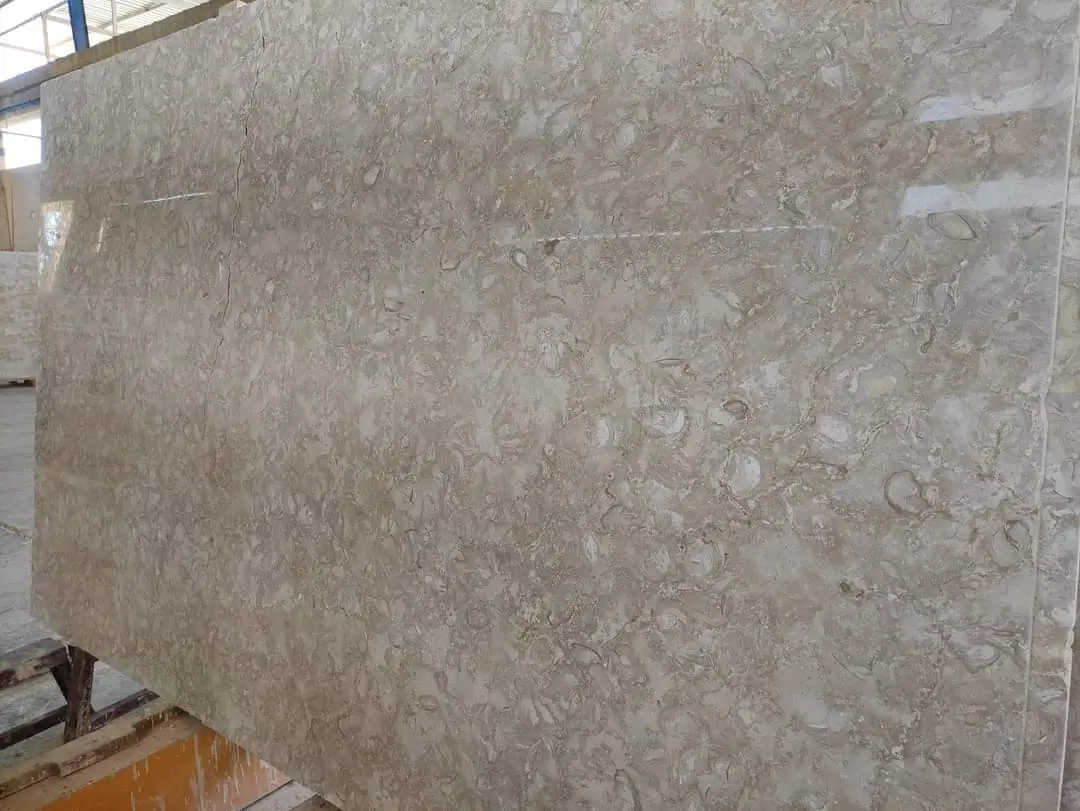
Not every natural stone performs equally well on every Arizona soil profile. Dense limestone — particularly varieties running 150+ PCF unit weight — handles the load distribution demands of sandy subgrades better than more porous travertine, because the denser material spreads point loads across a wider bedding contact area. On firm caliche, porosity matters less for structural reasons, which is why travertine sees such widespread use in Phoenix-area residential projects where caliche provides a natural load-bearing platform just below finish grade.
Reviewing natural stone pavers wholesale options in Arizona against your specific subgrade profile before finalizing the spec is a step that separates well-planned projects from costly mid-course corrections. Basalt is worth considering for projects on expansive clay soils — its extremely low absorption rate (under 0.5% by some quarry certifications) means moisture movement in the clay doesn’t wick into the stone body and accelerate surface degradation. Limestone and travertine have higher absorption rates (typically 3–8%) and perform fine in most Arizona conditions, but deserve closer attention in zones with seasonal groundwater fluctuation.
Thermal mass performance overlaps with soil stability in one important way: stone over a stable, well-drained base maintains more consistent temperature through the diurnal Arizona heat cycle, reducing the differential expansion stress at joints. A stone paver sitting on a saturated, shifting base experiences both thermal and mechanical cycling simultaneously — and that combination shortens joint sand retention significantly, usually requiring re-sanding within 2–3 seasons instead of the 5–7 year interval you’d get with proper base conditions.
The Ordering Process: Verification Steps Before You Commit
An Arizona wholesale stone paver order guide isn’t complete without a structured verification checklist — because errors at the ordering stage are expensive to correct once material is in transit. The most common field problem isn’t product quality; it’s quantity miscalculation combined with lead time assumptions that don’t survive contact with actual supplier inventory.
Projects in Gilbert illustrate a common procurement pattern worth noting — the area has seen significant new residential development in recent years, which means wholesale suppliers serving that corridor sometimes run lower inventory levels on popular travertine and limestone SKUs during peak building season (February through May and September through November). Confirming warehouse availability during these windows, rather than assuming it, protects your project schedule. This is precisely where Arizona landscape contractor paver procurement falls apart most often: the assumption of availability rather than the verification of it.
- Confirm exact pallet coverage for the specific lot you’re ordering — quarry lots vary in piece count per pallet
- Request the material’s absorption rate and compressive strength certification before finalizing your spec
- Verify current warehouse stock level on the date you place the order, not the date you quoted
- Get a written lead time confirmation — verbal estimates are not binding in most wholesale agreements
- Confirm truck access requirements at your delivery site: road width, overhead clearance, staging area
- Ask whether the supplier can hold material in the warehouse after arrival if your site isn’t ready
- Clarify return policy on unopened pallets before ordering — most natural stone wholesale is final sale
One detail that rarely gets documented but matters in the field: pallet weight versus your truck or forklift capacity. A pallet of 2-inch limestone pavers can run 2,400–2,800 lbs depending on density and moisture content. Confirm your site equipment rating before your delivery arrives. A mismatch discovered at delivery causes delays that ripple through your entire project schedule.
Joint Sand Stability, Sealing, and Soil Moisture Interaction
The relationship between Arizona’s soil moisture cycles and paver joint performance is one of the more nuanced long-term maintenance considerations in your procurement and specification planning. During Arizona’s bimodal precipitation pattern — winter Pacific moisture and summer monsoon — native soils experience repeated wetting and drying cycles that create subtle movement at the subgrade level. Even well-prepared bases experience minor vertical displacement over time, and that movement works polymeric joint sand upward and outward through the joint face.
Standard polymeric sand rated for desert climates (hazing temperature range above 95°F) should be your baseline spec for any Arizona natural stone project. Application timing matters as much as product selection. Applying polymeric sand during Arizona’s June heat — before monsoon begins — gives it maximum cure time before moisture stress arrives. Applying it in late July during active monsoon weather often results in premature activation from humidity and surface moisture, producing an under-cured joint that erodes faster in the first heavy rain.
Sealing protocols for natural stone pavers in Arizona wholesale projects should include a penetrating impregnating sealer applied after joint sand cure — typically 28 days minimum for polymeric products — not a topical coating. Topical sealers trap moisture migrating upward from the soil in high-humidity soil zones and can cause delamination that looks like the stone is failing when the actual problem is vapor pressure beneath a sealed surface. Penetrating sealers allow vapor transmission while protecting against staining and surface absorption. Resealing intervals in Arizona’s UV environment typically run 3–4 years for penetrating products.
Completing Your Arizona Wholesale Stone Paver Order: Final Procurement Guidance
Pulling together a complete Arizona wholesale stone paver order requires you to sequence your decisions correctly — soil assessment informs base specification, base specification informs paver thickness and coverage, coverage with waste factors determines pallet count, and pallet count triggers the lead time calculation that sets your project start date. Skipping or rushing any step in that chain is where budget overruns and schedule delays originate. The soil conditions across Arizona are genuinely diverse enough that a procurement approach that works in one part of the Phoenix metro may fail two counties over.
At Citadel Stone, we recommend building your procurement timeline backward from your project start date, with confirmed warehouse availability checked within five business days of order placement — not at the quote stage. Our technical team can help you match material specifications to soil reports and verify coverage calculations before your order is finalized. As you continue developing your Arizona hardscape specifications, material selection decisions extend beyond pavers into complementary stone applications — Paver Block vs Stone Tile: Which Is Better for Arizona? provides a useful comparison framework for adjacent product decisions on the same project.
Whether your site sits on dense caliche near Yuma, alluvial deposits in the Mesa corridor, or mixed soil profiles in the Gilbert growth zone, the right wholesale order starts with verified ground conditions and ends with confirmed inventory. Citadel Stone sources wholesale natural stone pavers direct from select natural stone quarries worldwide, with lead times that builders in Phoenix, Mesa, and Gilbert can factor into their procurement schedules.