
Road paver block selection Arizona is one of those specification decisions where engineers and contractors routinely underestimate how much the regulatory environment shapes your material choices — long before thermal performance or aesthetics enter the conversation. Arizona’s municipal and county jurisdictions have developed increasingly specific structural requirements for road and hardscape paving systems, driven by decades of watching inadequately specified installations fail under heavy vehicle loads and expansive soil movement. The paver blocks that work beautifully in a Phoenix residential driveway can be completely wrong for a Tempe commercial roadway application, and the difference usually comes down to code-driven thickness and base depth requirements, not material aesthetics.
Arizona Structural Codes and How They Shape Your Road Paver Specification
The Arizona Department of Transportation and local municipal engineering standards draw a firm line between decorative hardscape and load-rated road pavers in Arizona. Your specification needs to reflect which side of that line your project sits on. For any paver installation classified as a vehicular travel surface — including shared access drives, parking structures, and public right-of-way transitions — you’re working under IBC Chapter 18 foundation requirements as adopted by Arizona, plus local amendments that address the state’s specific soil conditions. Base depth requirements in Arizona’s desert regions typically run 6 to 8 inches of compacted aggregate base for light traffic and 10 to 12 inches for heavy vehicle applications, which is more aggressive than many national standards assume for warm-climate jurisdictions.
What catches specifiers off guard is that Arizona’s expansive soil classifications — which cover significant portions of the Phoenix metro and extend into Tucson’s basin soils — can push base depth requirements even further. Expansive soils with a plasticity index above 15 trigger additional sub-base preparation requirements that interact directly with your paver thickness selection. You’ll need a geotechnical report confirming soil classification before you can finalize your base specification, and that report often changes the entire system design.
Load-rated road pavers in Arizona must also comply with the Interlocking Concrete Pavement Institute (ICPI) design standards as referenced by most Arizona jurisdictions — specifically the design category that matches your traffic index. For passenger vehicles only, you’re typically in Traffic Category 2. Mixed commercial traffic pushes you into Category 3 or 4, where paver minimum thickness jumps from 60mm (2.36 inches) to 80mm (3.15 inches) nominal. That’s not a small distinction — specifying 60mm pavers on a route that actually carries delivery trucks creates a structural failure within three to five years, not thirty.
Load-Bearing Requirements and Material Thickness Standards
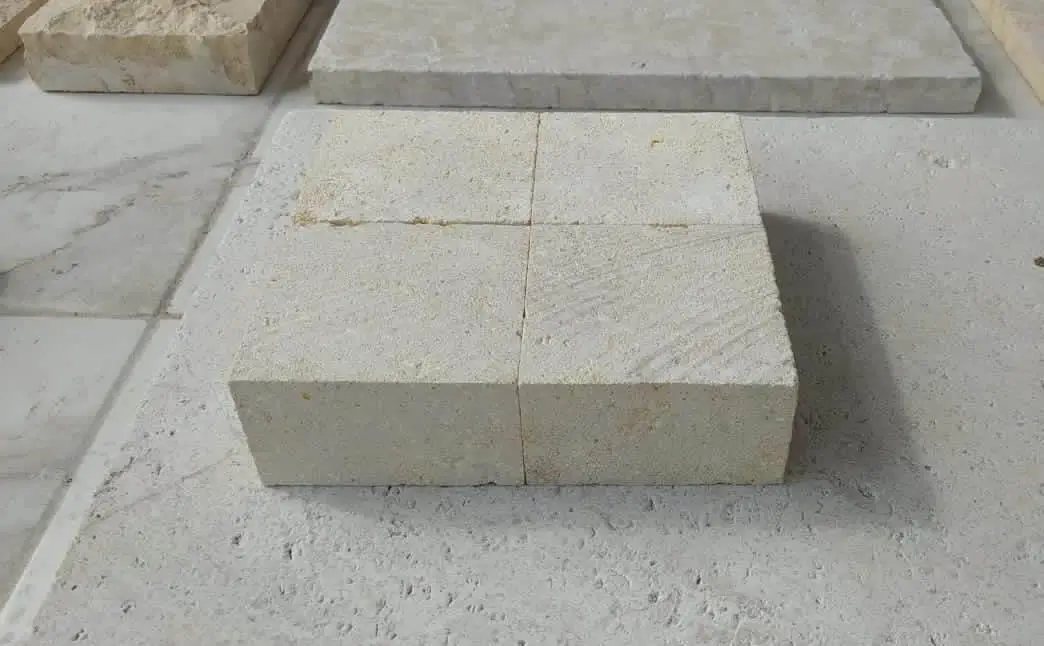
The thickness conversation is where road paver block selection Arizona diverges most sharply from general paving recommendations you’ll find in product datasheets. Product manufacturers publish minimum thickness data based on compressive strength alone — but Arizona’s engineering community has pushed for thickness standards that account for point load distribution across the jointing system, not just the block itself. A 3.15-inch natural stone paver with a compressive strength above 8,000 PSI can distribute a 20,000-pound axle load effectively when the joint pattern and bedding layer are correctly specified. A thinner block at the same strength rating concentrates stress at the joint edges and initiates corner cracking within the first two seasons of use.
Edge restraint specification is equally code-driven and equally underappreciated. Arizona municipalities increasingly require engineered edge restraint systems — not the plastic landscape edging that’s acceptable for pedestrian applications — on any paved surface that carries vehicles. Concrete curb and gutter, or cast-in-place concrete edging with a minimum 6-inch embedment depth, is the standard expectation for vehicular road pavers across most Arizona jurisdictions. Your edge restraint system needs to appear on the engineering drawings, not just in the spec notes, because inspectors are checking for it.
- Traffic Category 2 (passenger vehicles): 60mm minimum paver thickness, 6-inch compacted aggregate base minimum
- Traffic Category 3 (mixed commercial/residential): 80mm minimum thickness, 10-inch compacted aggregate base with geotextile separation layer
- Traffic Category 4 (heavy commercial/municipal road): 100mm minimum thickness, 12-inch base with sub-base stabilization in expansive soil zones
- Edge restraint embedment: minimum 6 inches below finish grade for any vehicular application
- Bedding sand layer: 1-inch compacted thickness, angular washed concrete sand per ASTM C33
- Joint sand: polymeric sand meeting ASTM C144 or approved equal — required by most Arizona municipal specs
Seismic Considerations for Arizona Road Paver Systems
Arizona sits within Seismic Design Category B across most of the state, with some zones in the northwestern region near the Arizona-Nevada border reaching Category C. For most road paver applications, this doesn’t trigger dramatic specification changes — interlocking paver systems actually perform well under seismic loading because the jointed system accommodates lateral movement without catastrophic cracking. What seismic requirements do affect is your base compaction standard and sub-base continuity. Areas in seismic zones require base compaction to 98% of Standard Proctor density rather than the 95% that suffices for non-seismic applications, and any base material with fines content above 12% needs to be replaced or stabilized.
The practical implication for heavy-duty paver blocks for Arizona roads in seismically active zones is that you’re specifying a fully interlocking system — herringbone or running bond at 45 degrees to the direction of traffic — rather than the stacked bond or sailor course patterns that look attractive but provide less lateral interlock. The pattern choice isn’t aesthetic preference; it’s a structural decision that affects how the system responds to both seismic and thermal movement. Herringbone at 45 degrees distributes both vertical load and lateral shear more uniformly across the paver field than any other pattern configuration.
Material Selection for Arizona’s Desert Conditions
Durable road surface pavers across Arizona need to pass a specific set of performance tests that go beyond standard residential paver certifications. You’re looking for a minimum compressive strength of 8,000 PSI for vehicular applications — some Arizona commercial specifications push this to 10,000 PSI for areas with frequent heavy truck traffic. Absorption rate matters too: Arizona desert-rated road paving blocks should target below 5% water absorption by weight, which limits surface degradation from the infrequent but intense rainfall events that characterize the monsoon season.
Concrete pavers dominate Arizona road applications because they’re manufactured to consistent tolerances and their performance data is well-documented in ICPI research. Natural stone pavers are used in municipal streetscape and decorative road applications where appearance justifies the premium, but they require more careful sourcing and testing. For natural stone specifications, you need ASTM C170 compressive strength data, ASTM C97 absorption test results, and ASTM C241 abrasion resistance data — and you should request quarry-specific test results, not generic product-family data, because stone properties vary significantly between quarry seams. At Citadel Stone, we test representative samples from each quarry shipment before it reaches our warehouse, precisely because generic test certificates don’t tell you what you’re actually receiving.
In Tempe, the urban heat island effect amplifies surface temperatures beyond what standard desert climate data predicts, which pushes material selection toward lighter-colored pavers with higher solar reflectance index (SRI) values — particularly for municipal road and plaza applications where surface temperature affects both pedestrian comfort and stormwater runoff temperature management under local MS4 permit requirements.
- Minimum compressive strength: 8,000 PSI (ASTM C140 or C170 for natural stone)
- Maximum water absorption: 5% by weight for vehicular road applications
- Abrasion resistance: ASTM C241 wear index below 10 for traffic lanes
- Freeze-thaw durability: ASTM C1645 or C67 — even in Arizona, northern zone projects near Flagstaff need this data
- Slip resistance: ASTM C1028 wet dynamic coefficient of friction above 0.6 for road crossings and pedestrian-adjacent surfaces
- Dimensional tolerance: ±1/8 inch for length and width, ±3/16 inch for thickness per ICPI standards
Base Preparation in Arizona’s Challenging Soil Conditions
The most common failure mode for road paver systems in Arizona isn’t the paver material itself — it’s inadequate base preparation in the state’s problematic soils. Arizona desert soils include caliche hardpan, highly expansive clays in low-lying basin areas, and poorly graded sand in alluvial fan zones, often within the same project site. Each condition demands a different sub-base strategy, and getting this wrong at the beginning of a project isn’t correctable without complete removal and replacement of the entire paving system.
Caliche layers are a mixed blessing. When you encounter caliche hardpan during excavation — which projects in Phoenix‘s older neighborhoods frequently do at depths between 12 and 36 inches — a continuous, uncracked caliche layer can function as a structural sub-base. But fractured or discontinuous caliche creates differential settlement risk that’s worse than no caliche at all. Your geotechnical report needs to characterize the caliche continuity, not just its presence. Fractured caliche zones need to be either fully excavated or stabilized with lime treatment before your aggregate base goes in.
Expansive clay subgrades require a lime or cement-stabilized sub-base layer — typically 6 to 8 inches of treated material with a minimum unconfined compressive strength of 150 PSI after curing — before you place your aggregate base course. Skipping this step in expansive soil zones produces paver heave and differential settlement within two to three wet seasons, which in Arizona’s monsoon pattern means you’ll see damage in the first summer after installation if the soil is sufficiently plastic.
Thermal Expansion and Joint Spacing in Arizona’s Climate
Arizona desert-rated road paving blocks experience thermal cycling that exceeds most national specification assumptions. Surface temperatures on dark-colored pavers in the Phoenix metropolitan area can reach 160°F during peak summer afternoons, creating a delta-T between the paver surface and the bedding layer of 80°F or more. For concrete pavers, the coefficient of thermal expansion runs approximately 5.5 × 10⁻⁶ per °F, which translates to roughly 3/16 inch of movement per 100 linear feet across a typical summer temperature range. Your joint sand system needs to accommodate this movement continuously — if the joint sand locks up from compaction or polymeric activation at the wrong moisture content, you’ll develop stress fractures at mid-panel locations rather than at the joints where they belong.
For natural stone road pavers, thermal expansion coefficients vary by stone type: granite runs approximately 4.4 × 10⁻⁶ per °F, limestone averages around 4.9 × 10⁻⁶ per °F, and basalt falls between 3.2 and 5.0 × 10⁻⁶ per °F depending on mineral composition. The lower expansion rate of basalt makes it an interesting choice for large-format road paver applications in Arizona where joint spacing is constrained by design intent. You’re not eliminating thermal movement — you’re reducing it to a level that standard joint widths can reliably accommodate without stress concentration.
Field performance data on road paver block selection Arizona consistently shows that 3/16-inch nominal joint width — wider than the 1/8-inch that residential paver specs typically call for — is the right starting point for road-grade applications in the desert. Polymeric joint sand rated for high-temperature climates (look for products tested to 150°F sustained surface temperature) outperforms standard polymeric sand in Arizona conditions by a significant margin. The truck traffic vibration that regular polymeric sand slowly dislodges from joints is handled more effectively by the higher-flexibility formulations designed specifically for vehicular applications.
Ordering, Logistics, and Lead Times for Arizona Road Paver Projects
Planning your material procurement schedule for road paver projects requires more lead time than most project managers budget. Imported natural stone — particularly the large-format 4-inch and 6-inch nominal thickness materials used in heavy-traffic road applications — typically involves 8 to 12 weeks from order to warehouse receipt when sourcing from overseas quarries. Domestic concrete road pavers from regional manufacturers are generally available within 3 to 4 weeks for standard specifications, but custom colors or profiles can push lead times to 8 weeks or more.
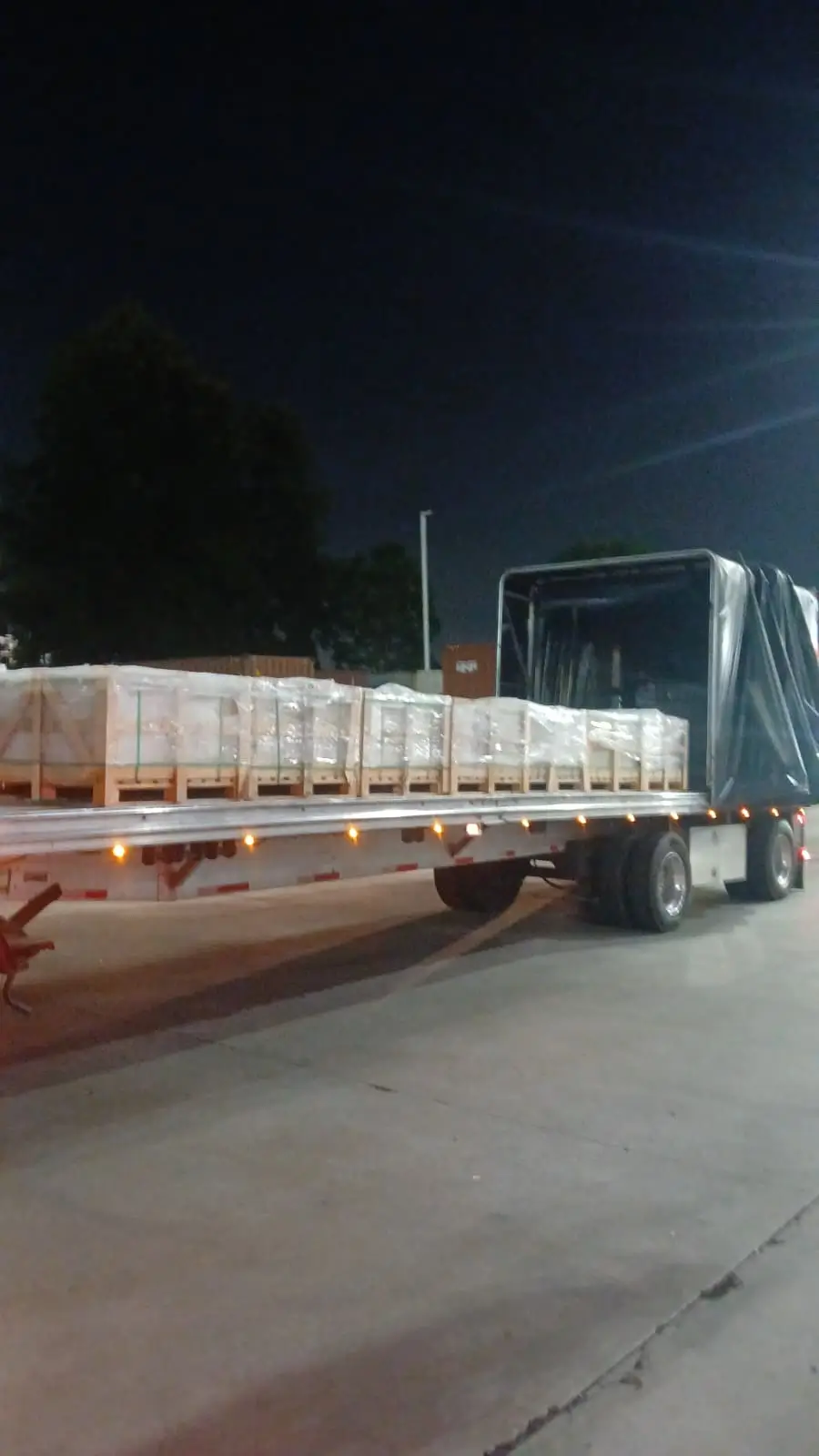
For projects requiring Arizona road blocks from Citadel Stone, coordinating your truck delivery schedule with site readiness is critical. Road paver block deliveries typically arrive on flatbed trucks with forklift offload requirements — you need a clear, level staging area on or adjacent to the site that’s accessible to a 53-foot trailer. Projects in dense urban areas of Arizona cities sometimes require phased deliveries to manage laydown space, which adds coordination complexity and should be discussed with your supplier before contract execution.
Citadel Stone’s Arizona warehouse inventory covers the most commonly specified road paver thicknesses and profiles, which reduces lead times significantly for standard projects. Our technical team can confirm current stock levels and coordinate delivery scheduling that aligns with your base preparation completion date — a detail that matters more than most contractors initially appreciate, because road pavers sitting on a completed aggregate base for more than two weeks before installation start can trap moisture and complicate bedding sand preparation in Arizona’s monsoon season.
- Standard concrete road pavers: 3–4 week lead time from regional manufacturers
- Custom color or profile concrete pavers: 6–8 weeks minimum
- Imported natural stone road pavers: 8–12 weeks for quarry-fresh material
- Warehouse stock items: 1–2 week delivery window for most Arizona project locations
- Minimum truck delivery quantity: typically 400–500 square feet per pallet layer; confirm with supplier
- Staging area requirement: flat, compacted surface capable of supporting forklift with 3,000-pound pallet load
Installation Quality Control and Inspection Requirements
Arizona municipal road paver projects typically require third-party special inspection for compaction testing of the sub-base and aggregate base layers. Your project’s special inspection program — required under IBC Section 1705 for most commercial and municipal road construction — needs to include nuclear density gauge testing at a frequency of at least one test per 500 square feet of base area, with additional tests within 10 feet of each edge restraint installation. Failing a compaction test after you’ve placed aggregate base is a far better outcome than discovering settlement failure three years post-installation, but it does require re-compaction and retesting that adds time to your schedule.
Bedding sand placement is one of the highest-risk steps in the entire installation sequence for road paver block selection Arizona projects. Your bedding sand needs to be placed and screeded to a consistent 1-inch loose thickness — not compacted, not wetted down, just accurately screeded — on the same day the pavers go in. Arizona’s low-humidity environment dries bedding sand rapidly, and sand that’s been exposed for more than four hours in summer conditions can develop a surface crust that interferes with proper paver seating. In Tucson‘s summer conditions, experienced installation crews work in 30-foot screeded panels maximum, placing pavers immediately behind the screed to prevent this drying issue.
Plate compactor passes after paver placement should total a minimum of three passes in alternating directions using a plate with a minimum centrifugal force of 4,500 pounds. For 80mm and thicker road pavers, bump the minimum to 5,500 pounds centrifugal force — the extra mass is what drives the paver into the bedding sand to the 3/4-inch final compacted thickness you need for system integrity. Running a light compactor on heavy-duty paver blocks for Arizona roads leaves them riding high in the bedding and creates a system that rocks under wheel load rather than transferring load through the full block-to-sand contact area.
Putting Road Paver Block Selection Arizona Into Practice
Successful road paver block selection Arizona demands that you work from the regulatory framework outward — starting with your traffic category classification, then locking in your paver thickness and base depth requirements before you evaluate material type, color, or surface finish. The structural requirements are non-negotiable and directly constrain your material options in ways that often surprise specifiers approaching these projects for the first time. Once you’ve confirmed the structural parameters, you have meaningful latitude to make performance and aesthetic choices within a specification that will actually hold up under Arizona’s load and climate conditions.
The projects that perform best over a 20-to-30-year service life are invariably the ones where the structural base was over-engineered relative to minimum code requirements, the paver thickness exceeded the traffic category minimum by one step, and the edge restraint and joint sand systems were specified to vehicular standards throughout. Those decisions add 8 to 15 percent to material and labor cost at installation and essentially eliminate the pavement rehabilitation expense cycle that under-specified road paver systems generate every 8 to 12 years. That’s a straightforward lifecycle cost argument that holds in any Arizona market condition. For the installation execution that brings your specification to life in the field, the How to Install Rigid Pavers in Arizona: Step-by-Step Guide covers the critical sequencing and technique details that determine whether your specification performs as designed.
Contractors in Phoenix, Chandler, and Peoria rely on Citadel Stone for road paver blocks selected for their ability to withstand Arizona’s intense thermal expansion and heavy surface loads.