
Why Thermal Cycling Defines Rigid Paver Performance in Arizona
The number most Arizona installers underestimate isn’t the peak summer temperature — it’s the delta. Phoenix routinely swings 40–50°F between a pre-dawn low and a mid-afternoon high, and knowing how to install rigid pavers in Arizona means accounting for that thermal range before a single paver gets set. Flagstaff adds genuine freeze-thaw cycles on top of that, with overnight lows dropping below 20°F while the same stone bakes above 80°F by early afternoon in spring. That thermal cycling is the dominant engineering challenge, and every decision you make — joint width, base depth, bedding sand type, edge restraint spec — needs to account for it from the start.
Stone expands and contracts with temperature change. For most natural stone rigid pavers, the linear thermal expansion coefficient runs between 4.0 and 6.5 × 10⁻⁶ per °F. Across a 15-foot run of pavers experiencing a 50°F daily swing, that translates to roughly 3/16 inch of cumulative movement at the extremes. That number doesn’t sound like much until you’ve watched a tightly set field heave and crack at the 18-month mark because joint spacing wasn’t calculated for the actual thermal range of the site. Your installation has to build that movement capacity in from the start.
Sub-Base Preparation for Rigid Pavers in Arizona
Sub-base preparation is where most failed installations begin — not at the surface. Arizona’s native soils vary dramatically by region, and the behavior of those soils under thermal stress is just as important as their load-bearing capacity. In the low desert around Scottsdale, you’re typically working with sandy silts and caliche layers. Caliche is almost always misread in the field — crews hit it and assume they’ve found a stable base, but caliche that hasn’t been properly proof-rolled will still exhibit vertical movement when moisture infiltrates from below, especially after the monsoon season pushes water laterally through the soil profile. Proper sub-base preparation for rigid pavers in Arizona demands verification, not assumption, at every layer.
The target for sub-base compaction on rigid paver installations is a minimum 95 percent Proctor density, verified with a nuclear densometer or sand cone test — not just a visual pass with a plate compactor. For residential driveways and patios in the Phoenix metro, you’re typically working with 6 inches of Class II aggregate base compacted in two lifts. For commercial applications or areas with heavier vehicle loads, bump that to 8 inches. Here’s what the spec sheets often don’t tell you: in Arizona’s thermal environment, the aggregate gradation matters as much as the depth. A well-graded crushed stone base resists thermal-cycle pumping better than poorly graded material because there are fewer void spaces for fines to migrate into over time. This is the foundation of sound Arizona desert soil rigid paver setup.
- Excavate to a depth that accommodates base aggregate, bedding layer, and paver thickness — typically 10–12 inches total for pedestrian applications
- Compact native subgrade to a minimum 90 percent Proctor before placing any aggregate
- Use Class II crushed aggregate (3/4-inch minus, well-graded) for base layers in Arizona desert conditions
- Compact aggregate base in lifts no deeper than 4 inches per lift to achieve consistent density throughout
- Verify compaction with a field density test — visual assessment is not sufficient for rigid paver specifications
- Install geotextile fabric between native soil and aggregate base where expansive or silty soils are present
Setting Rigid Pavers Across Arizona Properties
The bedding layer sits between your compacted base and the paver unit, and it’s the most misunderstood component in the rigid paver installation steps used across Arizona. For true rigid installations — meaning the pavers are set in mortar or concrete rather than sand — the bedding is a cement-based mortar bed, typically 3/4 to 1-1/4 inches thick after compaction. Setting rigid pavers across Arizona properties requires a mortar bed set to consistent thickness to maintain a level surface plane, and in Arizona’s heat, your working window is significantly shorter than what the product data sheet assumes.
Mortar manufacturers typically spec a 45-to-60-minute working time at 70°F. At 95°F ambient with direct sun on a concrete substrate, that window can collapse to 20–25 minutes. You’ll need to adjust your mix water slightly, work in smaller sections, and keep the substrate dampened before placing mortar — but never soaking wet. Shade your work area where possible during the 10 a.m. to 3 p.m. window. These aren’t optional accommodations in Arizona; they’re the difference between a mortar bed that bonds properly and one that goes through a hydration failure that won’t show up until the first hard monsoon rain hits the surface.
Joint Spacing and Thermal Expansion Calculations
Here’s where the thermal cycling discussion becomes a direct specification requirement. Your joint spacing for rigid paver installations in Arizona needs to be calculated, not estimated. The formula is straightforward: movement = coefficient × original length × temperature change. Using a conservative coefficient of 5.0 × 10⁻⁶ per °F, a 20-foot run of pavers subjected to a 60°F daily swing will move approximately 0.072 inches — just over 1/16 inch. That sounds manageable, but it accumulates at every restraint point and compounds across the field.
For rigid paver installations, expansion joints filled with flexible backer rod and sealant are required at all fixed boundaries — building walls, pool coping, steps, and any change in plane. In open field conditions, place expansion joints every 12–15 feet in both directions. The generic guideline of 20-foot spacing that appears in many national installation manuals was written for temperate climates. Arizona’s temperature range — particularly in high-elevation communities where Flagstaff’s 8,000-foot elevation creates conditions closer to Colorado than to Phoenix — pushes you toward the tighter end of that spacing band without question.
- Calculate joint movement allowance using the actual site temperature range, not a national average
- Specify flexible polyurethane joint sealant rated for 25–50 percent joint movement capacity
- Install backer rod to control sealant depth — sealant depth should be half the joint width
- Place control joints at all inside corners where stress concentration occurs during thermal cycling
- Never butt rigid pavers directly against fixed vertical surfaces without a compressible expansion joint material
Edge Restraints and Perimeter Anchoring for Long-Term Stability
Rigid paver installations rely on perimeter edge conditions to maintain field integrity across thermal cycles. Unlike flexible interlocking paver systems, rigid mortar-set pavers transfer movement stress through the mortar joints to the perimeter edge — which means that perimeter has to be engineered, not just poured as an afterthought. The most common failure mode in Arizona rigid paver projects is perimeter mortar bond failure at the interface between the field and a concrete header or wall base, usually occurring in years two through four as cumulative thermal cycling weakens the mortar-to-substrate bond.
Specify a concrete perimeter header or soldier course set on a continuous concrete footing — not on aggregate base — at all free edges. The footing depth should extend below the frost line in Flagstaff and at higher elevations; at lower desert elevations, a minimum 6-inch-deep footing poured on compacted native soil performs reliably. Anchor the edge restraint to the footing with 12-inch galvanized spikes or threaded anchors at 18-inch centers. At Citadel Stone, we recommend specifying the edge restraint system before finalizing the field pattern layout, because the perimeter geometry directly controls where your expansion joints land.
Rigid Paver Installation Steps: The Full Arizona Sequence
The installation sequence for how to install rigid pavers in Arizona follows a specific order that can’t be shuffled without consequences. Skipping the compaction verification step or rushing the mortar cure time to get ahead of schedule are the two most common field shortcuts — and both show up as failures within the first two monsoon seasons. The rigid paver installation steps in Arizona outlined below reflect what actually works in the state’s thermal and moisture environment, not what’s printed on a generic installation guide written for mild-climate markets.
- Step 1: Excavate to design depth and remove all organic material, debris, and unstable fill
- Step 2: Compact native subgrade to 90 percent Proctor density minimum — verify with field density testing
- Step 3: Install geotextile fabric where soil conditions warrant, overlapping seams by 12 inches minimum
- Step 4: Place and compact Class II aggregate base in lifts of 4 inches or less — target 95 percent Proctor
- Step 5: Dampen the aggregate base surface before mortar bed placement — do not saturate
- Step 6: Place and screed mortar bed to consistent depth of 3/4 to 1-1/4 inches — work in sections sized for your available working time in current conditions
- Step 7: Set pavers with firm downward pressure and a slight twisting motion to collapse air pockets beneath the unit
- Step 8: Check level across each unit and between adjacent units — maximum lippage of 1/8 inch for pedestrian surfaces
- Step 9: Allow mortar bed to achieve initial set before grouting — typically 24 hours minimum in Arizona summer heat, 48 hours in cooler months
- Step 10: Apply joint grout or sealant after mortar cure is confirmed — do not rush this step
You can find additional sequence detail and material-specific guidance through our rigid paver installation resources, which include compaction tables and mortar selection charts calibrated for Arizona conditions.
Grouting and Joint Sealing in Arizona Heat
Joint grouting for rigid paver installations in Arizona requires the same awareness of working time limitations that governs the mortar bed phase. Unsanded grout is appropriate for joints under 1/8 inch; sanded grout handles joints from 1/8 inch up to 3/8 inch; for joints wider than 3/8 inch, specify a mortar-based joint fill or a flexible polyurethane sealant depending on whether the joint is a standard field joint or an expansion joint. The distinction matters — applying a rigid grout across what should be a movement joint is a documented failure mode in Arizona installations because the thermal cycling will fracture the grout and allow water infiltration before the first year is out.
In the Sedona area and across northern Arizona’s higher elevations, the sealing schedule for rigid pavers needs to account for UV intensity and genuine freeze-thaw exposure. A penetrating silane-siloxane sealer applied within 30 days of installation and reapplied every two to three years provides meaningful protection against moisture infiltration that drives freeze-thaw spalling. In the low desert, the primary sealer benefit shifts from freeze-thaw protection to efflorescence control and stain resistance. Your sealer selection should reflect the actual site elevation and temperature regime, not a one-size specification.
Material Selection for Arizona’s Thermal Demands
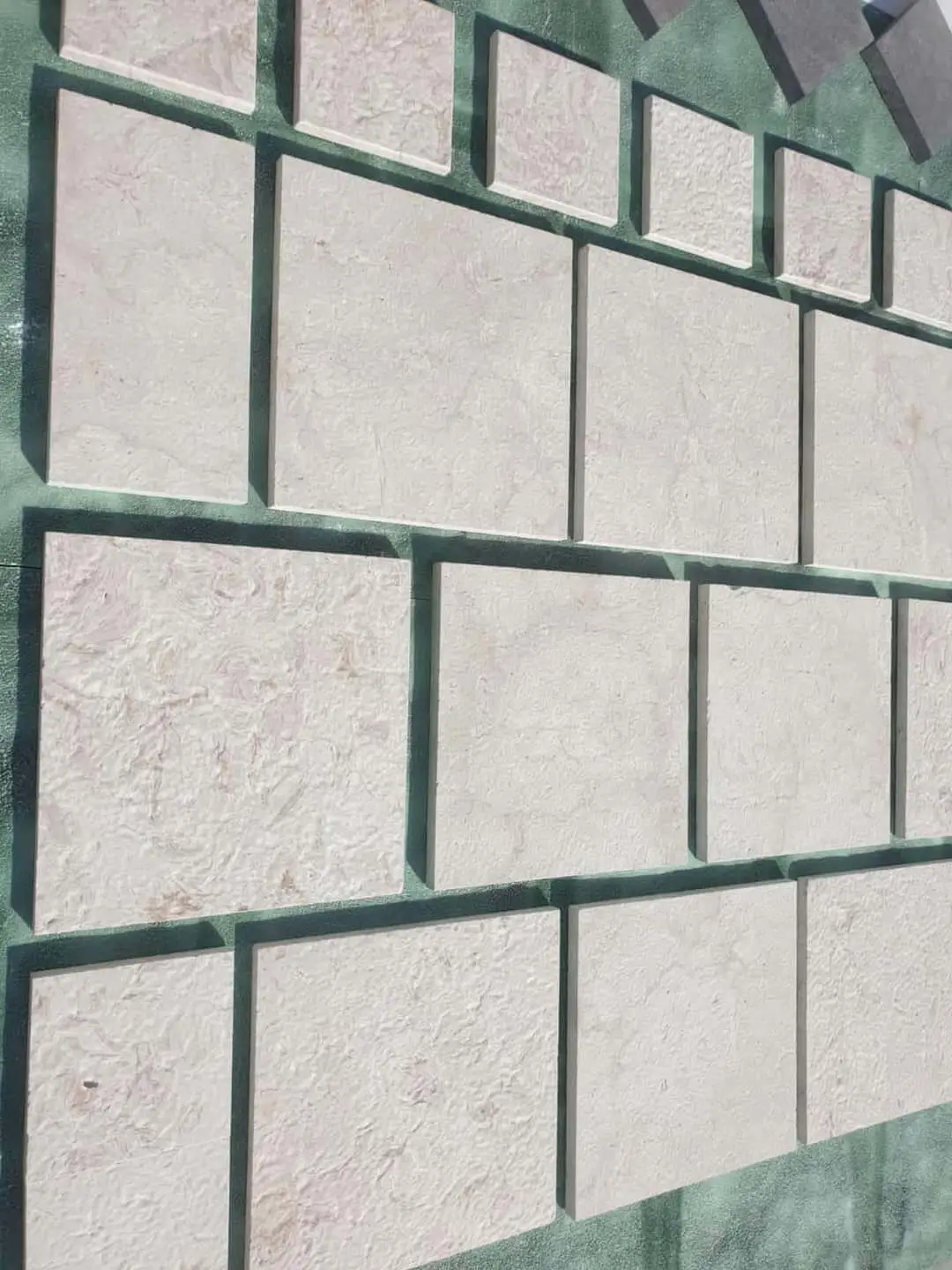
Not all rigid paver materials perform equally across Arizona’s thermal cycling range. Dense, low-porosity stone — basalt, quartzite, and dense-cut limestone — handles repeated thermal expansion and contraction cycles better than high-porosity travertine or soft sandstone in exposed applications. The porosity relationship matters because water that enters the stone during monsoon rainfall and then freezes during a cold Flagstaff night exerts crystallization pressure inside the pore structure, which is the primary driver of surface spalling in freeze-thaw-exposed installations. For desert elevations below 4,000 feet, porosity is less critical; above that threshold, you should specify rigid pavers in Arizona with an absorption rate below 5 percent per ASTM C97.
Citadel Stone carries warehouse inventory of rigid paver materials that have been assessed for both thermal performance and absorption characteristics suitable for Arizona’s elevation zones. That distinction — knowing which material works at 2,500 feet in Scottsdale versus 6,900 feet in Flagstaff — is the kind of specification support that prevents costly material replacements two or three years into a project’s life. When setting rigid pavers across Arizona properties with elevation changes, specify your materials by zone, not by a single statewide standard. Our warehouse inventory is organized by thermal zone to make that selection process straightforward for contractors and specifiers working across multiple elevation bands.
- Basalt: absorption rate typically below 1 percent — excellent for freeze-thaw zones and high thermal cycling applications
- Dense limestone: absorption rate 2–5 percent — suitable for most Arizona elevations with appropriate sealing
- Travertine: absorption rate 5–12 percent — limit to applications below 4,000 feet elevation or seal aggressively in freeze-thaw-exposed zones
- Quartzite: extremely low absorption and high compressive strength — premium option for high-traffic and high-elevation projects
- Sandstone: variable performance — verify absorption and flexural strength data from quarry certification before specifying in thermal cycling environments
Drainage Slope and Water Management in Rigid Paver Systems
Thermal cycling and water management are directly linked in rigid paver performance — water that can’t drain efficiently gets trapped beneath or within the paver field and amplifies the damage from temperature swings. The minimum slope for a rigid paver surface in Arizona is 1 percent (1/8 inch per foot) toward a defined drainage outlet. For pool decks and entertaining areas where ponding is a slip hazard, 1.5 to 2 percent is a more appropriate design target. The slope needs to be established at the subgrade level and maintained through every layer up to the finished surface — trying to compensate for a flat subgrade by tapering the mortar bed produces inconsistent mortar thickness and weak bond areas.
Monsoon rainfall events in Arizona can deliver 1 to 2 inches of rain in under an hour, and the rigid paver surface has to shed that volume without overloading edge drainage points. Size your perimeter drains and area drains based on the actual catchment area and a 10-year storm intensity for your specific location — the values differ significantly between Phoenix’s low desert and the higher-elevation communities. Your project’s truck delivery schedule for materials should also account for the monsoon window, typically July through mid-September, because freshly grouted surfaces that get hit by early monsoon rains before achieving adequate cure strength are a recurring field problem that’s easily avoided with proper scheduling.
Final Recommendations for Arizona Rigid Paver Projects
The installations that hold up over 20-plus years in Arizona’s demanding environment share a consistent set of decisions: compaction verified to 95 percent Proctor, joint spacing calculated for the actual site temperature range rather than a generic national standard, expansion joints at all fixed boundaries, and material selection matched to the elevation zone. Rushing any of those decisions to save time or reduce material cost is a false economy — the repair cost for a failed rigid paver field in year three consistently exceeds the cost of doing the sub-base preparation for rigid pavers in Arizona correctly the first time.
For budget planning and material selection guidance that complements this installation sequence, How to Choose Premium Pavers in Arizona: Buyer’s Guide covers the cost variables and quality benchmarks worth reviewing before you finalize your project specification. Your specification decisions — from aggregate base depth to joint sealant type — will define how the installation performs through Arizona’s relentless thermal cycling for the life of the project. Homeowners in Tucson, Chandler, and Flagstaff following this installation sequence with Citadel Stone rigid pavers report improved joint alignment, particularly when working over sub-bases compacted to a minimum 95 percent Proctor density.