

Timing is the variable that separates flagstone installations that hold for thirty years from ones that start rocking and shifting within eighteen months — and nowhere is that truer than with installing flagstone paving slabs in Arizona. Most homeowners fixate on material selection and base depth, which are genuinely important, but the seasonal window you choose for your installation determines whether your mortar cures properly, your adhesive bonds fully, and your setting bed behaves the way the manufacturer actually intended. Get the timing wrong, and even a technically correct specification can underperform significantly.
Understanding Arizona’s Seasonal Installation Windows
Arizona doesn’t give you a twelve-month open calendar for flagstone work. The state runs two distinct installation seasons — and one hard no-go period — that should drive your project schedule from the moment you start planning. The practical sweet spot for outdoor stone paving preparation across Arizona runs from mid-October through early April. Within that range, ambient temperatures stay predictable enough that setting materials behave the way their technical data sheets describe.
The shoulder seasons — October into November, and February into early April — are genuinely excellent. Nighttime temperatures stabilize above 45°F, daytime highs stay below 90°F, and the diurnal swing is moderate enough that your mortar or dry-pack setting bed won’t experience extreme temperature stress during the critical first 72 hours of cure. That’s the window where everything works together.
- Mid-October to late November: optimal curing conditions, lower humidity, stable overnight temps
- December to mid-February: workable with morning scheduling discipline, watch for rare hard freezes in northern elevation zones
- Mid-February to early April: another strong window before heat builds — prioritize this if you missed fall
- Late May through mid-September: avoid for mortared work; adhesive-set systems face bond-failure risk above 95°F substrate temps
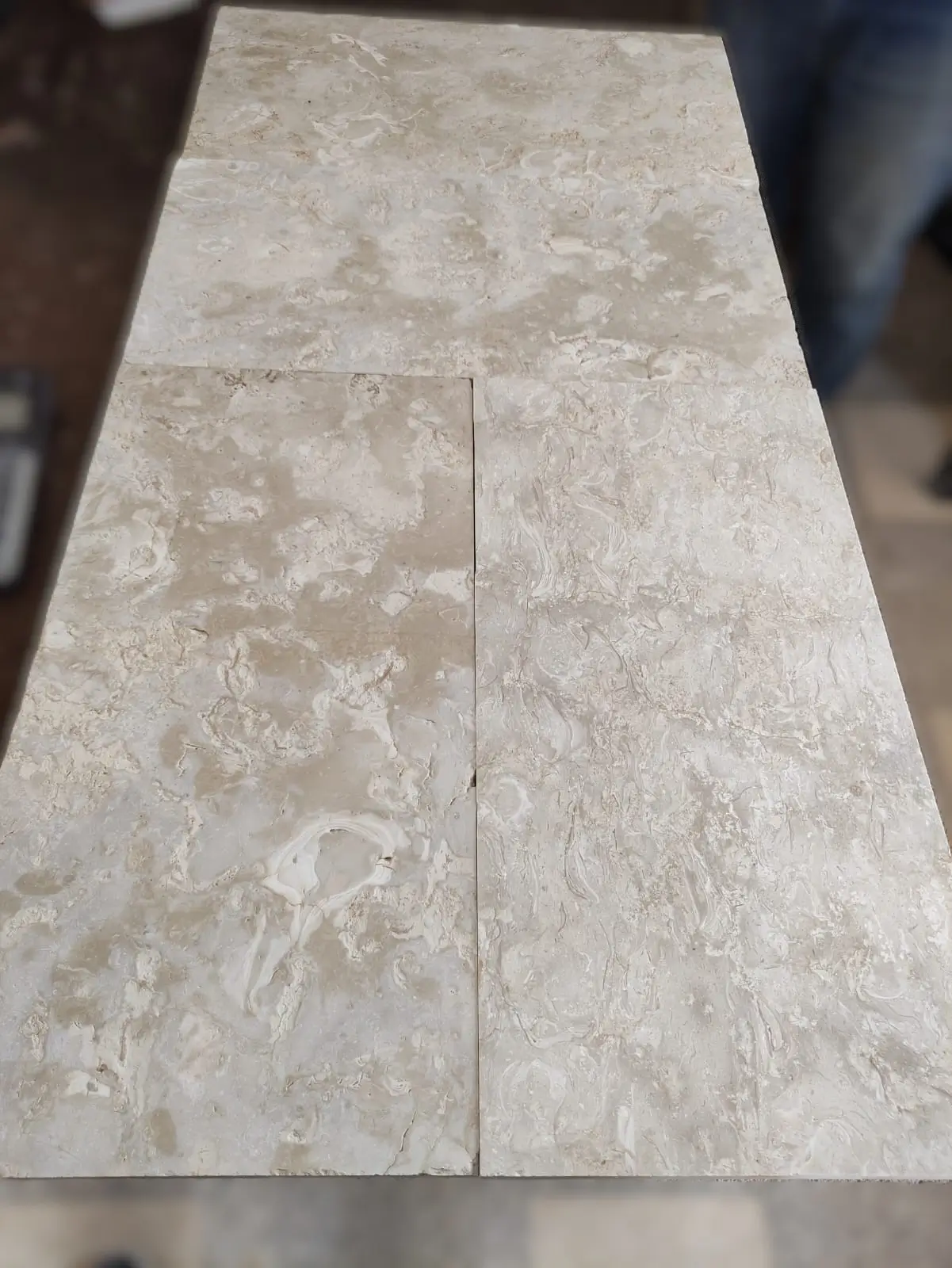
Morning vs. Afternoon Work — Why the Difference Matters More Than You Think
During the transitional months — late March, early October — the time of day you’re laying stone can shift your substrate surface temperature by 40°F or more. That’s not a small variable. Polymer-modified thin-set mortars have an open time that drops from 30 minutes down to 12 minutes when substrate temperatures climb past 95°F, and in Arizona’s spring shoulder season, an unshaded concrete slab facing south can hit that threshold by 9:30 in the morning.
The flagstone slab installation steps AZ homeowners follow most successfully prioritize early starts — ideally with slabs, buckets, and tools on-site by 6:30 AM. You want to complete your setting bed and slab placement before the substrate surface absorbs its peak radiant load. Once the substrate cooks, you’re fighting the material rather than working with it.
- Target slab placement between 6:00 AM and 10:30 AM during transitional months
- Shade your setting material buckets and mixed mortar with burlap or a canopy — direct sun on a mortar bucket accelerates skinning dramatically
- Pre-wet your flagstone slabs lightly the evening before to reduce their initial absorption rate — dry stone pulls moisture from mortar before proper bonding occurs
- Never mix more mortar than you can place in 20 minutes during warm conditions
- Stop stone placement, not just mixing, if substrate temp exceeds 100°F — the bond simply won’t form reliably
Base Preparation Timing and Compaction Windows
Outdoor stone paving preparation across Arizona involves a base construction phase that has its own seasonal sensitivities, separate from the setting bed work. Your compacted aggregate base — typically Class II road base or crushed granite — needs moisture to compact properly. In Arizona’s summer months, you’re fighting rapid moisture evaporation during compaction, which means your lift densities may test lower than the 95% Proctor you’re targeting, even with identical mechanical effort.
For projects in Mesa, the predominant soil type transitions from sandy loam near the Salt River basin to tighter, clay-enriched profiles as you move toward the East Valley foothills. Clay-bearing subgrades expand when they absorb moisture and contract when they dry — and this seasonal movement cycle is most pronounced between June and September. If you compact your base during monsoon-saturated conditions, you’ll get excellent initial density, but that base will settle slightly as the soil dries through fall. Timing your base preparation for late October through November lets the soil stabilize at its seasonal equilibrium moisture content before you lock in your aggregate lifts.
- Compact aggregate base in 3-inch lifts, targeting 95% Modified Proctor density
- Verify subgrade moisture with a simple squeeze test — the soil should crumble, not ribbon
- Allow 24-48 hours after any rain event before compaction to avoid trapping excess moisture
- For projects over 500 square feet, schedule a density test at minimum — it’s inexpensive insurance
Selecting Flagstone Paving Slabs for Arizona’s Seasonal Demands
The stone itself interacts with your installation timing in ways that aren’t always obvious. Installing flagstone paving slabs in Arizona means working with thermal cycling ranges that can exceed 80°F between winter night lows and summer day highs — and the coefficient of thermal expansion for natural stone ranges from 3.0 × 10⁻⁶ per °F for limestone to 6.5 × 10⁻⁶ per °F for certain quartzite varieties. That difference matters when you’re calculating joint spacing and deciding whether to use a rigid or semi-flexible mortar system.
Thicker slabs — 1.5 inches nominal and above — absorb and release heat more slowly than thin cut flagstone. This thermal mass behavior means thick slabs are more forgiving of installation timing errors because their surface-to-core temperature differential is smaller. Thinner stock, 3/4 inch to 1 inch, heats and cools rapidly, which amplifies the consequences of poor installation timing. For Arizona projects where you’re not certain you can consistently hit early morning windows, specifying 1.5-inch or 2-inch slabs gives you a more forgiving thermal envelope to work within.
You can review the full selection of Arizona flagstone paving from Citadel Stone to compare thickness ranges and stone types suited to Arizona’s thermal cycling requirements.
How Seasonal Conditions Affect Adhesive and Mortar Behavior
Understanding how to lay natural stone slabs in Arizona is as much a materials science question as a physical one. Polymer-modified mortars cure through a hydration process that requires a specific temperature range — typically 50°F to 90°F for most ANSI A118.4-compliant products. Below 50°F, hydration slows to the point where you risk incomplete cure, which produces a bond that tests fine initially but shows micro-crack propagation within two seasons. Above 95°F substrate temperature, moisture flashes out of the mortar before the polymer network can form properly.
Arizona’s December and January nights create the lower-bound risk. In Yuma, the risk is minimal — hard freezes are rare and overnight lows rarely drop below the critical 40°F threshold. But projects at higher elevations face genuine freeze risk during the installation cure window. For mid-winter installations, cover your freshly set slabs with insulating blankets overnight for the first three nights — you’re protecting the mortar’s hydration process, not just the stone surface.
- Use Type S mortar or ANSI A118.4 polymer-modified thin-set for all mortared flagstone applications
- Check the manufacturer’s temperature range before every cold-season project day — don’t assume
- Add an acrylic mortar admixture in cold-weather conditions to extend workability and improve low-temp cure
- For sand-set installations, cold weather is far less critical — your timing sensitivity drops significantly
- Epoxy-based adhesives have their own seasonal behavior: they become extremely viscous below 60°F and require pre-warming in winter months
Scheduling Around Monsoon Season
Arizona’s monsoon season runs roughly from mid-June through mid-September, and it introduces two specific scheduling risks beyond raw heat. First, sudden moisture infiltration into a freshly prepared base can displace aggregate fines and reduce your compaction density before stone is ever placed. Second, the rapid temperature drop that accompanies a monsoon storm event — sometimes 25°F in under an hour — creates thermal shock conditions in freshly laid stone that can compromise initial mortar bonds.
The practical rule is straightforward: don’t schedule mortared stone installation if there’s a 30% or greater chance of afternoon storms in the 72-hour window following your installation day. Arizona’s National Weather Service zone forecasts are reliable enough for this kind of short-term scheduling decision — checking them the morning before a planned installation day takes two minutes and can prevent significant rework costs. Sand-set systems are more forgiving of moisture events, but you still need 24 hours of dry conditions after final compaction before placing stone.
Joint Spacing Decisions for Arizona Thermal Cycling
The flagstone slab installation steps AZ homeowners follow most often skip the joint width adjustment that Arizona’s climate actually requires. Generic installation guides suggest 3/8-inch joints for natural stone, which works fine in temperate climates. For Arizona’s full seasonal temperature range, you should be working with 1/2-inch minimum joints for limestone and travertine flagstone, and 5/8-inch for denser stone varieties with higher expansion coefficients.
Field data from projects in Gilbert — where surface temperatures on dark stone have been measured at 160°F or above in direct July sun — shows that under-spaced joints produce edge spalling and corner chipping within two to three seasons as accumulated thermal expansion stress finally overcomes the mortar bond. The fix is not difficult: simply increase joint spacing at layout and use a flexible sanded grout or ASTM C920 sealant in joints for large-format flagstone runs exceeding 10 feet in any direction.
- Minimum joint width: 1/2 inch for limestone, travertine, and sandstone flagstone in Arizona
- Expansion joints: plan one every 12–15 feet in both directions for mortared systems
- Use flexible sealant, not grout, in expansion joint locations — grout has no elasticity
- Irregular flagstone with natural edges can accommodate some thermal movement through joint variability, reducing cracking risk compared to cut-to-size formats
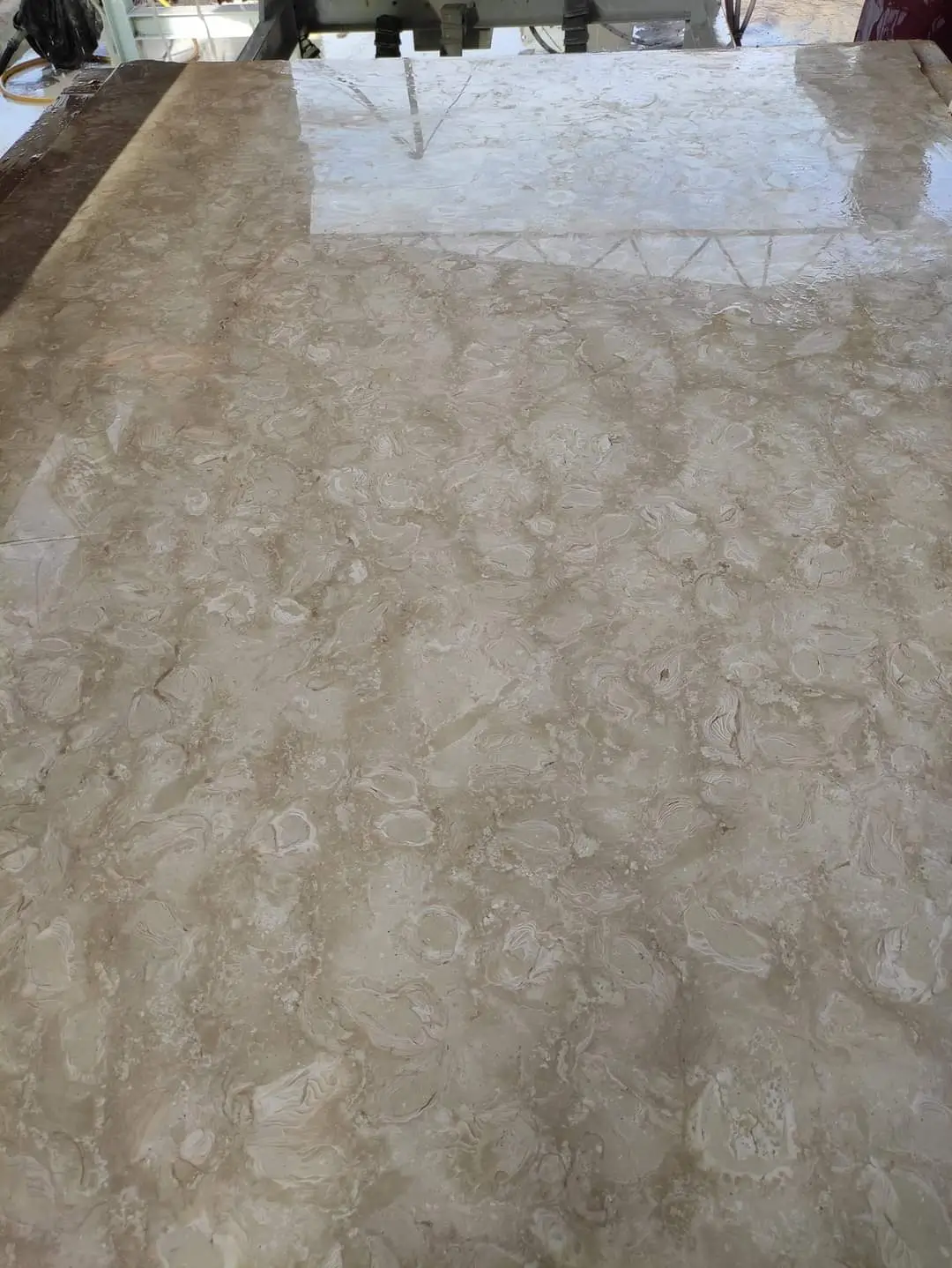
Material Delivery and Project Scheduling Logistics
Your installation timing plan only works if your materials arrive when you need them. Arizona heat-rated flagstone slab base methods require specific aggregate gradations and setting materials that aren’t always sitting on the shelf at a general masonry supplier. Confirming warehouse stock before you schedule your installation crew is a step that experienced contractors treat as non-negotiable — discovering a two-week lead time on your polymer-modified mortar after you’ve committed to a November installation date creates expensive delays.
At Citadel Stone, we maintain warehouse inventory in Arizona specifically to reduce the gap between your project scheduling decision and material availability. Truck delivery to residential sites typically runs on a 3–5 business day lead time for stocked items, which means you can realistically plan your installation window around confirmed material arrival rather than working backward from an uncertain delivery estimate. For larger projects requiring palletized flagstone, confirm truck access at your site — standard flatbed deliveries need a clear 40-foot approach and a surface capable of supporting loaded truck weight without rutting.
- Order flagstone and base materials at least 10 business days before your target installation date
- Verify warehouse stock confirmation in writing — don’t rely on verbal estimates
- Stage your flagstone on-site for a minimum of 48 hours before installation to allow thermal acclimation
- Store setting materials in shade — sun-exposed mortar bags can partially hydrate from condensation inside the bag in humid monsoon conditions
- Confirm truck delivery access before finalizing your order and schedule
Final Recommendations for Installing Flagstone Paving Slabs in Arizona
Installing flagstone paving slabs in Arizona successfully comes down to treating seasonal timing as a first-order specification decision, not an afterthought. Your material selections, base specifications, and joint geometry all need to work together within the thermal and moisture envelope that your chosen installation season creates. The two best windows — fall shoulder season and late winter to early spring — give you the predictable conditions that setting materials need to perform to their rated specifications. Committing to early morning work schedules during transitional months, verifying substrate temperatures before mixing, and sizing your joints for Arizona’s full thermal range are the practical habits that separate installations that age gracefully from ones that need remediation within a few seasons.
Material selection still matters enormously alongside timing, and the two decisions should inform each other. Outdoor stone paving preparation across Arizona doesn’t end with flagstone — if you’re weighing your surface options, Flagstone vs Concrete Pavers: Which Is Better for Arizona? provides a useful side-by-side comparison of how both materials perform under Arizona’s seasonal extremes. Homeowners in Scottsdale, Mesa, and Peoria rely on Citadel Stone for flagstone paving slabs direct from quarries in Turkey, the Mediterranean, and beyond, chosen specifically for Arizona’s compacted base installation requirements.