
Flagstone pool paver installation errors in Arizona trace back to terrain and site preparation far more often than most contractors expect — not the heat, not the UV exposure, but the way this state’s elevation changes and grade complexity set traps that standard installation guides simply don’t address. You can select the right stone, nail your joint spacing, and still end up with a pool surround that lifts, shifts, and drains toward the house within two seasons if the grading and base work weren’t engineered for your specific site conditions. Arizona’s topography ranges from flat desert plains in the metro Phoenix basin to dramatically terraced hillsides in the Sonoran foothills, and each terrain type creates fundamentally different failure modes for flagstone pool pavers around pools.
Why Arizona’s Terrain Drives Most Flagstone Pool Paver Failures
The most persistent common flagstone paving problems in Arizona don’t originate from material defects — they originate from ignoring the relationship between site grade, water movement, and base behavior. On sloped lots, hydrostatic pressure builds behind and beneath your flagstone field during monsoon events. That pressure needs a path to travel, and if your base and bedding layers aren’t designed to direct it away from the pool shell, you’re building a system that actively undermines itself every summer.
Flat desert lots in the Phoenix basin present a different challenge. The terrain looks forgiving, but the near-zero natural grade means you’re entirely dependent on engineered slope in your base to achieve the 1.5–2% drainage pitch that keeps water from ponding under flagstone. Projects in Peoria frequently sit on compacted desert fill that was graded flat during subdivision development — no natural fall, no soil memory of drainage direction, and a sub-base that can settle unevenly once it’s loaded.
- Sloped hillside sites require interceptor drainage trenches uphill of the flagstone field to divert subsurface water before it reaches the setting bed
- Flat desert sites need constructed drainage gradients built into the compacted aggregate base — minimum 1.5% pitch toward a defined outlet point
- Mid-elevation transitional lots often combine both problems: partial grade, partial fill, and a soil profile that changes across the installation footprint
- Caliche layers common across the Valley create a false floor that redirects lateral water movement unpredictably
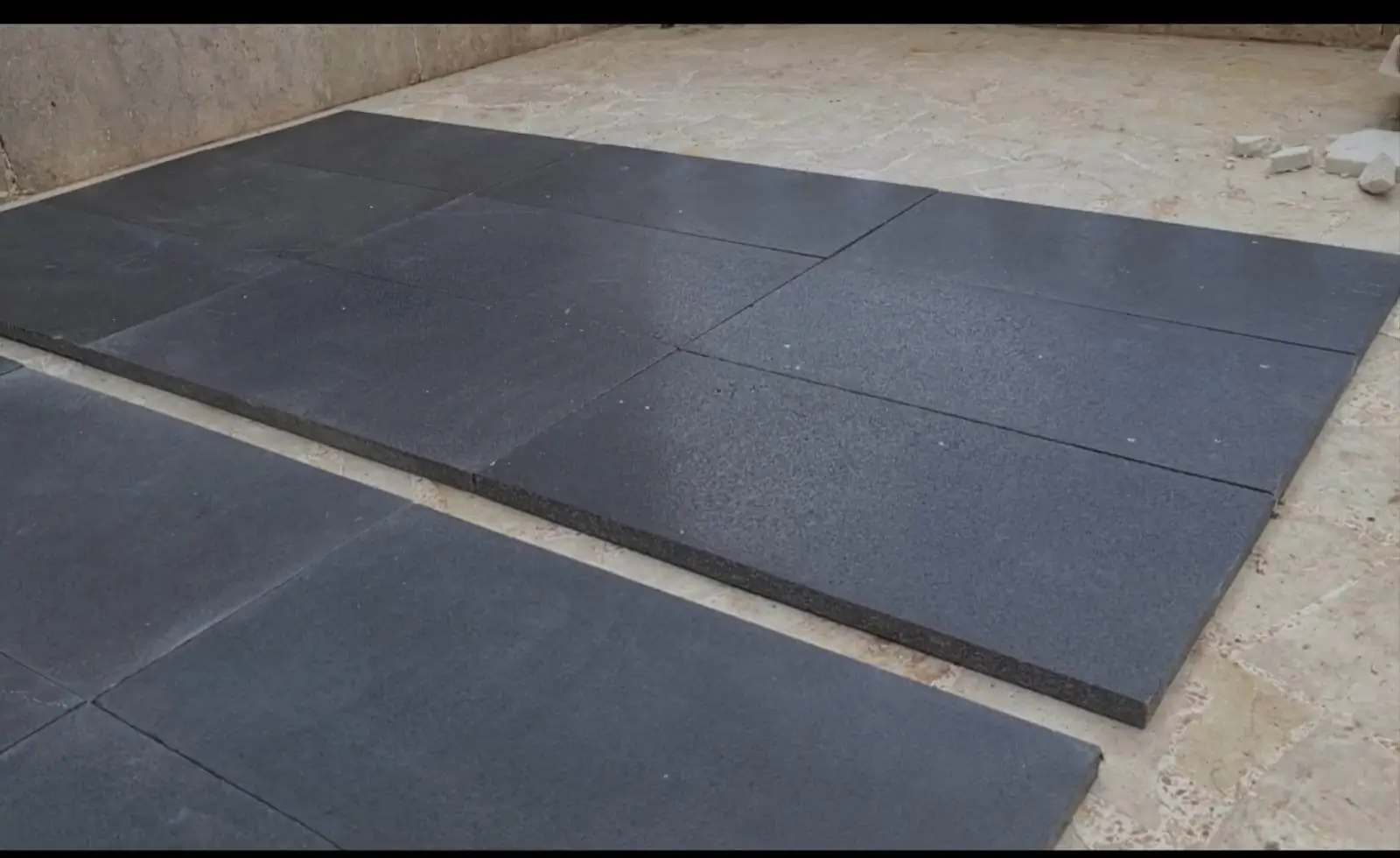
Base Preparation and Grade Management Before You Set One Stone
The base preparation stage is where flagstone pool paver installation errors in Arizona either get prevented or permanently built in. Your compacted aggregate base for pool-surround flagstone should run a minimum of 6 inches in standard desert soil conditions — but on sloped sites or lots with expansive clay subsoil, you need to push that to 8 inches with a geotextile fabric layer at the transition between native soil and imported aggregate. The fabric doesn’t add structural strength; it prevents migration of fines upward into your drainage aggregate over years of moisture cycling.
Grade tolerance within the compacted base is non-negotiable. You’re targeting no more than 3/8-inch variance across a 10-foot straightedge, with consistent drainage pitch throughout. Inconsistent base grades create low spots in the finished flagstone surface where water sits, joint sand erodes, and edge stones eventually tip. Arizona heat effects on natural stone pool surrounds compound this problem — pooled water creates differential thermal loading where wet stone expands at a different rate than dry stone under afternoon sun, which accelerates joint deterioration at exactly those low points.
- Verify compaction with a nuclear density gauge or plate compactor pass count before proceeding — 95% standard Proctor density is your target
- Install perforated drain pipe at the base of any uphill cut when your pool surround sits against a retaining wall or grade change
- Slope your compacted aggregate base toward the pool coping edge or a defined drain inlet — never toward the house or fence line
- Check your base grade with a 10-foot straightedge in multiple directions before setting bedding sand
What Hillside and Sloped Sites Actually Require
Hillside installations represent the most technically demanding category of flagstone pool paver installation errors in Arizona, and they’re concentrated in the foothill communities ringing the metro area. The challenge is lateral load. On a sloped site, your flagstone field is effectively a retaining mass — gravity wants to move the entire paver system downhill incrementally with each wetting and drying cycle. Unbonded flagstone laid over compacted sand on a slope will creep. It’s not a question of if, it’s a question of how fast.
For slopes exceeding 2%, you should be specifying a polymer-modified mortar bed rather than a dry-set sand system. The mortar bed bonds the flagstone to the base course and eliminates differential creep between individual stones. This approach adds material cost and requires a concrete sub-base rather than compacted aggregate, but on a hillside pool surround that cost is the difference between a 20-year installation and a 5-year repair cycle. At Citadel Stone, we consistently advise customers on sloped Arizona lots to confirm with their installer whether the specification matches the actual site grade before truck delivery is scheduled — because switching from a sand-set to a mortar-bed specification after material arrives creates real project delays.
- Slopes under 2%: engineered sand-set system with compacted aggregate base and verified drainage pitch is acceptable
- Slopes between 2–5%: mortar-set system over concrete sub-base required; add edge restraints at the downhill perimeter
- Slopes over 5%: consult a structural engineer; consider step-terraced design that breaks the run into flat platforms
- All slopes: install concrete or steel edge restraints at the downhill perimeter to prevent creep regardless of setting method
Drainage Design That Accounts for the Pool Shell
The pool shell itself creates a drainage complication that site-level grading alone can’t solve. Rainwater and splash water that lands on your flagstone pool surround needs to travel across the surface, reach the outer perimeter, and discharge into a drainage system — but the pool shell acts as a barrier to subsurface water movement. This means any water that infiltrates your flagstone joints and reaches the bedding layer is essentially trapped against the pool shell wall with nowhere to go laterally except along the shell itself.
Fixing loose pool pavers across Arizona that were installed without this consideration typically involves a costly repair strategy: lifting the affected stones, installing a French drain channel along the pool-side edge of the flagstone field, and resetting the stones with improved joint sealing. It’s expensive and disruptive work that’s entirely preventable at the installation phase. Your pool contractor and your paving contractor need to coordinate drainage design before either scope of work begins — the pool rough plumbing phase is the right time to install the subsurface drain infrastructure your flagstone system will rely on.
For a comprehensive look at material selection and pricing considerations, our flagstone pavers for Arizona pools resource covers the stone options best suited to Arizona pool environments across different terrain types.
Joint Sand Failure and Sealing — The Hidden Maintenance Factor
Arizona heat effects on natural stone pool surrounds are real, but they’re secondary to the mechanical erosion that destroys joint sand. The combination of pool splash, monsoon sheet flow, and pressure washing removes polymeric joint sand faster in pool environments than in any other paving application. Plan for joint sand top-up annually in the first two years, and biannually after that, regardless of which sand product you specify.
Sealing your flagstone pool pavers extends joint sand life by hardening the surface layer against erosion and reducing water infiltration into the setting bed. A penetrating sealer appropriate for your flagstone type — whether limestone, quartzite, or sandstone — should be applied within 30 days of installation and reapplied every two to three years depending on UV exposure and foot traffic levels. In Tempe, where pools see heavy use across a ten-month swimming season, that resealing cycle tends to run closer to the two-year end of that range.
- Use a penetrating silane-siloxane sealer rather than a film-forming sealer — film formers trap moisture in high-splash environments and blister
- Apply sealer to dry stone only — minimum 48 hours after any rainfall or pool splashing before application
- Inspect and refill joint sand before sealing each cycle to prevent sealer from bridging over voids
- Avoid pressure washing joint sand out of place — use a low-pressure rinse for routine cleaning
Stone Thickness Specifications for Arizona Pool Surrounds
Flagstone pavers for pool surrounds in Arizona pool environments perform best in the 1.5–2-inch nominal thickness range. Thinner material — anything under 1.25 inches — is vulnerable to point load cracking from pool furniture, particularly on the sand-set systems common in residential installations. Thicker material above 2.5 inches is typically unnecessary for pool surround applications and adds weight that can stress the compacted base under repeated wet-dry cycling on sandy desert soils.
Field performance data on flagstone pavers across Arizona pool surrounds consistently shows that edge chipping and corner breakage concentrate at two locations: the coping-to-deck transition joint and the first flagstone course adjacent to any step nosing. These are the points of highest foot traffic, greatest thermal cycling exposure, and most frequent contact with pool chemicals. Specify your thickest available stone at these transition zones even if you run lighter thickness across the main field.
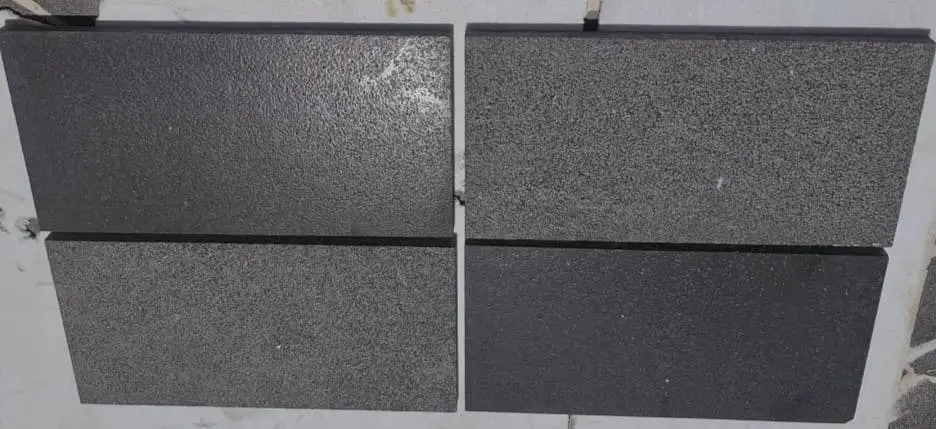
Arizona Pool Area Flagstone Repair: What Actually Works
Pool area flagstone repair tips AZ homeowners rely on most consistently center on a simple principle: fix the cause before you reset the stone. Re-bedding a lifted flagstone without addressing the drainage failure or base settlement that caused the lift will get you three to five years of performance before the same stone lifts again. That pattern is recognizable on inspection — you’ll see the same stones repeatedly repaired while adjacent stones remain stable, which tells you the problem is localized drainage or a sub-base void, not a system-wide failure.
For isolated repairs, the process should be: lift the affected stone, excavate to expose the base, identify and correct the drainage or compaction issue, compact fresh aggregate to match surrounding base height, reset in fresh bedding material, and refill joints. For repairs affecting more than three adjacent stones, you’re likely dealing with a base failure that warrants a more comprehensive excavation rather than spot repairs. Projects in Phoenix metro neighborhoods with older pool installations often discover that original base depths were undersized — 3–4 inches rather than the 6-inch minimum current practice requires.
Fixing loose pool pavers across Arizona at scale also requires attention to drainage patterns that weren’t addressed in the original installation. Documenting which stones lift first after each monsoon season gives you a directional map of subsurface water movement — information that makes targeted repairs far more effective than random stone-by-stone replacement.
- Document the pattern of lifting before starting repairs — photographs help identify whether the failure is localized or directional
- Test base compaction in the repair zone before resetting stone — a simple rebar probe check reveals voids or soft spots
- Match replacement flagstone to existing stone in both thickness and finish to prevent height differentials and trip hazards
- Allow new bedding material to cure and consolidate for 24 hours before allowing foot traffic on repaired areas
Ordering, Lead Times, and Matching Existing Stone
One practical problem that compounds repair costs is material matching. Natural flagstone varies in color and texture from quarry batch to quarry batch, which means the replacement stone you order six months after installation may not match the original material well enough for a seamless repair. Order 10–15% overage at initial installation and keep it in covered warehouse storage until the project is fully signed off and the first inspection period complete. That reserved stock is your insurance against breakage repairs that would otherwise require accepting a visible color mismatch.
Citadel Stone maintains warehouse inventory of flagstone pool pavers in Arizona in multiple stone types and thicknesses, which typically allows for 1–2 week lead times on standard sizes rather than the 6–8 week cycle that imported material requires. When you’re scheduling a pool surround installation, confirming warehouse stock levels before your contractor’s schedule firms up prevents the scenario where your pool is complete, your coping is set, and your flagstone delivery is three weeks out. Coordinating truck delivery timing with the other pool trades — coping, plumbing, electrical — is worth the scheduling effort to keep the project moving without idle time on site.
Getting Arizona Pool Flagstone Installation Right the First Time
Every flagstone pool paver installation error discussed in this article has a corresponding prevention step that costs less than the repair it avoids — and the common thread across all of them is that terrain and drainage engineering decisions made before the first stone is set determine the long-term outcome more than any other variable. Your stone selection matters, your sealing schedule matters, your joint sand quality matters — but none of those factors can compensate for a base that wasn’t built for your site’s specific grade conditions. That’s the lesson that Arizona installations on sloped, fill-heavy, and mixed-terrain lots reinforce repeatedly: get the civil engineering right first.
Beyond installation performance, understanding the full cost picture for your project helps with realistic budgeting from the outset. The Flagstone Pool Paver Cost in Arizona: Full Guide covers material pricing, installation cost variables, and how terrain complexity affects your total project budget — a natural next step once your specification decisions are clear. Installers in Tucson, Scottsdale, and Tempe working with Citadel Stone flagstone pavers report fewer re-setting callbacks when base compaction is completed to the full depth recommended for Arizona’s expansive desert soils.