
Shell limestone paver cost Arizona budgets consistently surprise first-time specifiers — not because the material is expensive, but because the thermal cycling environment here demands a level of system engineering that affects every line item from base preparation to jointing sand. Arizona’s desert climate swings 40°F to 55°F between daytime highs and nighttime lows throughout much of the year, and that daily thermal cycling is far more structurally aggressive than sustained heat alone. Your paver budget isn’t just a material quote — it’s a performance investment that rises or falls on how well the full system handles constant expansion and contraction.
Why Thermal Cycling Drives Shell Limestone Paver Cost in Arizona
The number most specifiers anchor to is the per-square-foot material price — typically $6 to $14 per square foot for shell limestone depending on grade, thickness, and finish. That range is real, but it tells an incomplete story. The thermal expansion coefficient of shell limestone runs approximately 4.8 × 10⁻⁶ per °F, which means a 20-foot run of pavers experiences roughly 0.11 inches of total movement across a 115°F surface temperature swing — the kind of swing you’ll see on a dark-colored installation in Yuma between a winter morning and a summer afternoon. That movement has to go somewhere, and if your joint spacing, base depth, and edge restraint system aren’t engineered for it, you’re looking at cracking, lifting, and differential settlement within 3 to 5 years instead of the 20-plus-year service life this material is fully capable of delivering.
The practical consequence: your installed shell limestone paver cost Arizona — including base, bedding, jointing, and edge restraint — runs $18 to $32 in most Arizona markets. The material itself is only 30 to 45 percent of that number. Understanding where the rest goes is where you start making smart decisions.
Material Grade and Pricing: What You’re Actually Paying For
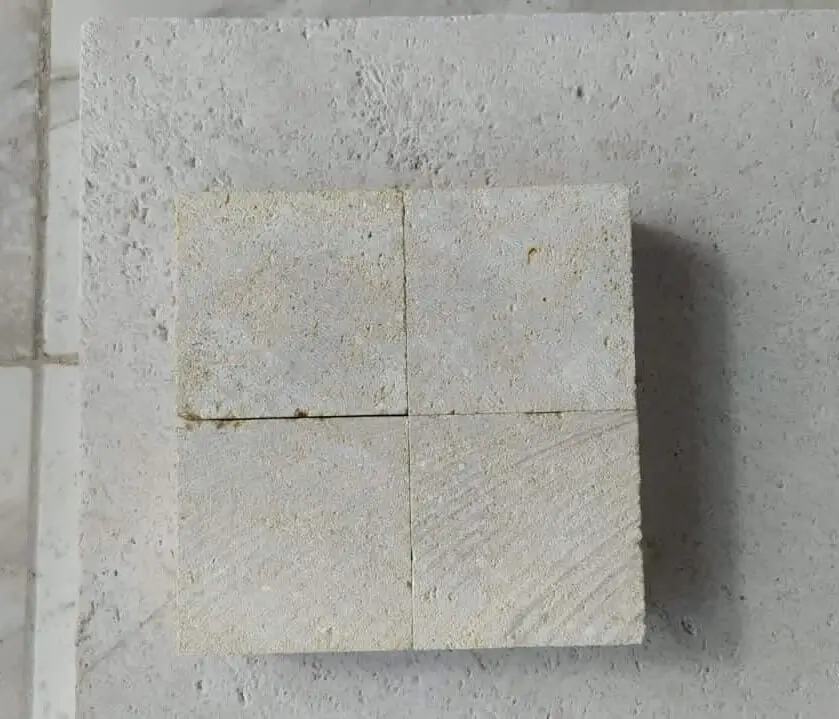
Shell limestone isn’t a single product — it comes in grades that differ meaningfully in density, void content, and fossil shell concentration, all of which affect both price and thermal performance. Here’s how the pricing tiers break down for Arizona projects:
- Entry-grade shell limestone (1.5-inch nominal thickness, standard honed finish): $6 to $8 per square foot material cost — adequate for light foot traffic patios, but thinner profiles amplify thermal stress at joints
- Mid-grade (2-inch nominal, tumbled or brushed finish): $9 to $11 per square foot — the most common specification for residential patios and pool decks, where the added thickness absorbs thermal movement more forgivingly
- Premium-grade (2.5-inch, select fossil content, calibrated thickness tolerance ±1/16 inch): $12 to $14 per square foot — specified when aesthetics and structural performance both matter, particularly for covered outdoor living areas with tighter dimensional control
- Custom-cut formats (irregular dimensions, special profiles): add $2 to $5 per square foot depending on complexity and quantity — lead times from the warehouse extend by 2 to 4 weeks for custom work
The finish choice also affects thermal behavior in ways that don’t show up on a price sheet. A honed surface absorbs more solar radiation than a brushed or tumbled finish, driving surface temperatures 8°F to 12°F higher under identical exposure conditions. That temperature difference is meaningful for both foot comfort and the rate of thermal cycling your base system experiences over time.
Base System Costs: Engineering for Thermal Cycling in Arizona
Your base preparation budget is where Arizona conditions separate from generic paver specifications, and it’s where cutting costs tends to be most consequential. Standard residential paver specs often call for 4 inches of compacted aggregate base. In Arizona’s thermal cycling environment, particularly on expansive soils, 6 inches is a more defensible minimum — and 8 inches is the right call for any installation over 500 square feet where night-to-day temperature swings exceed 45°F consistently.
The engineering logic: deeper, more stable base layers dampen the rate of temperature transfer from the surface down into the subgrade. That reduced thermal gradient slows the differential movement between the paver face and the soil beneath it. Projects in Mesa frequently encounter caliche hardpan at 18 to 24 inches below grade — when properly scarified and compacted, that layer actually provides excellent sub-base stability, but it requires mechanical equipment to address correctly, which adds $1.50 to $2.50 per square foot to site prep costs.
- Aggregate base (6-inch depth, compacted Class II road base): $3.50 to $5.00 per square foot installed
- Sand bedding layer (1-inch nominal, coarse washed concrete sand): $0.75 to $1.25 per square foot
- Polymeric jointing sand (critical for thermal cycle resistance — inhibits joint washout and root intrusion): $0.50 to $0.85 per square foot
- Edge restraint system (aluminum or steel, properly staked): $4 to $7 per linear foot
- Site grading and sub-base compaction (varies by existing conditions): $1.00 to $3.00 per square foot
Polymeric jointing sand deserves special mention. In a thermal cycling environment, joints that wash out or lose sand volume allow pavers to shift laterally during the repeated expansion-contraction cycle. Once lateral shift starts, it compounds — each cycle moves the stones slightly further from their original position. Polymeric sand that’s properly activated and cured locks joint geometry in place, and it’s one of the most cost-effective durability investments you can make on an Arizona shell limestone installation.
Expansion Joint Specification and Cost
Here’s what most budgeting references don’t cover: expansion joints aren’t optional in Arizona thermal cycling conditions — they’re a code-level necessity for any installation over 15 feet in either dimension. The standard recommendation of one expansion joint every 20 feet applies to moderate climate zones. For Arizona’s day-to-night temperature swings, you should spec them every 12 to 15 feet, particularly in exposed installations without overhead shade.
The calculation behind that recommendation: at 4.8 × 10⁻⁶ per °F expansion coefficient and a realistic 100°F surface temperature range across the daily cycle, a 15-foot run generates approximately 0.086 inches of movement. Flexible polyurethane sealant joints, properly tooled to 3/8-inch width and 3/8-inch depth, accommodate that movement comfortably. Narrower joints or rigid grouting at that spacing will crack within two to three thermal seasons.
- Polyurethane expansion joint sealant (per linear foot, installed): $3.50 to $6.00
- Backer rod installation (required for joints over 1/4-inch): $0.50 to $1.00 per linear foot
- Additional expansion joint layout planning (add 10 to 15 percent to joint material quantities versus what a generic spec calls for)
Budgeting for expansion joints at the correct frequency typically adds $200 to $600 to a 400-square-foot project — a cost that’s easily justified when you’re comparing it to a $2,000 to $4,000 repair job three years into installation.
Sealing Costs and Long-Term Maintenance Budget
Shell limestone’s porosity is one of its practical vulnerabilities in the Arizona environment, and sealing is a non-negotiable line item in your total cost of ownership calculation. The material’s interconnected pore structure — which is part of what gives it its visual character — will wick moisture during monsoon events and oil from adjacent cooking areas if left unsealed. That moisture, when it enters the pore structure and then experiences rapid evaporation during the thermal swing back to daytime temperatures, accelerates surface spalling over time.
When budgeting natural stone outdoor pavers in Arizona, a penetrating silane-siloxane sealer applied at the recommended rate covers approximately 150 to 200 square feet per gallon, with material cost running $35 to $55 per gallon for a quality product. Professional application adds $0.75 to $1.50 per square foot for labor. The recommended resealing cycle in Arizona’s UV-intense environment is every 18 to 24 months — not the 3-to-5-year cycle you’ll see on product labels designed for temperate climates.
- Initial sealing (at installation, after 28-day cure): $1.25 to $2.25 per square foot installed
- Biennial resealing: $0.85 to $1.50 per square foot (less surface prep required after initial application)
- 10-year sealing budget for a 400-square-foot installation: $1,500 to $2,800 cumulative
That 10-year maintenance budget is a real number worth including in your project planning. Any complete approach to budgeting natural stone outdoor pavers in Arizona should account for the full ownership cost, not just the installation invoice. The material itself will outlast the maintenance cycle by decades if you stay consistent with resealing.
Stone Paver Cost Comparison for Arizona Projects
Understanding where shell limestone sits relative to alternative materials helps you make a defensible specification decision. This is a practical stone paver cost comparison for AZ homeowners evaluating options across similar application types:
- Shell limestone (installed, full system): $18 to $32 per square foot — mid-range initial cost, moderate maintenance requirement, 20-plus-year performance with proper sealing
- Travertine (installed, full system): $20 to $38 per square foot — similar thermal expansion coefficient, but denser grades handle freeze-thaw better; premium cost, comparable maintenance
- Concrete pavers (installed, full system): $12 to $22 per square foot — lower initial cost, higher thermal expansion rate (approximately 5.5 × 10⁻⁶ per °F), more frequent joint maintenance in cycling conditions
- Porcelain tile pavers (installed, full system): $22 to $42 per square foot — lowest thermal expansion (3.0 × 10⁻⁶ per °F), excellent UV stability, but brittle under point loads and requires mortar-set system that adds complexity
- Flagstone (installed, full system): $16 to $28 per square foot — irregular sizing creates complex joint geometry that makes thermal movement management less predictable
Shell limestone occupies a practical middle position in this stone paver cost comparison for AZ homeowners: better thermal performance than concrete pavers, more accessible pricing than porcelain, and a natural aesthetic that wears into the landscape rather than against it. The material’s fossil-embedded surface texture also delivers slip resistance values around 0.6 COF (ASTM C1028) when wet — relevant for pool deck applications where safety certification matters.
For accurate project budgeting, Citadel Stone limestone paver costs Arizona provides current pricing data and grade comparisons specific to Arizona project conditions, updated to reflect current material availability and delivery logistics.
Affordable Shell Limestone Options Across Arizona Markets
Affordable shell limestone options across Arizona aren’t difficult to find if you understand the grade-to-application matching logic. The biggest cost mistake specifiers make is over-specifying for low-traffic areas and under-specifying for high-stress zones. Your covered patio that sees foot traffic twice a week doesn’t need premium-grade 2.5-inch material — mid-grade 2-inch performs identically under those conditions at 15 to 20 percent lower material cost. Conversely, a driveway apron or heavily trafficked entry walkway where you’re seeing vehicle tire loading absolutely warrants the premium grade and the engineering investment.
In Gilbert, where newer construction neighborhoods feature large open patio footprints, specifying mid-grade shell limestone with a brushed finish in the 2-inch nominal range consistently delivers the right balance of cost, thermal performance, and visual character. The brushed finish’s slightly lower solar absorption reduces surface temperature by enough to matter in a full-sun western exposure — and that reduced peak temperature translates directly to reduced thermal cycling intensity, which extends joint life and reduces maintenance frequency.
At Citadel Stone, we recommend confirming warehouse stock levels before finalizing your project schedule, particularly for mid-grade material in the most popular format sizes (12×24 and 16×16 nominal). Arizona project demand peaks between October and March, and lead times from our warehouse can extend from the standard 1 to 2 weeks to 3 to 4 weeks during high season. Building that reality into your project timeline prevents the schedule compression that forces contractors to rush base preparation — which is exactly the mistake that shows up as settlement problems two years later.
Thickness and Format Selection for Arizona Thermal Conditions
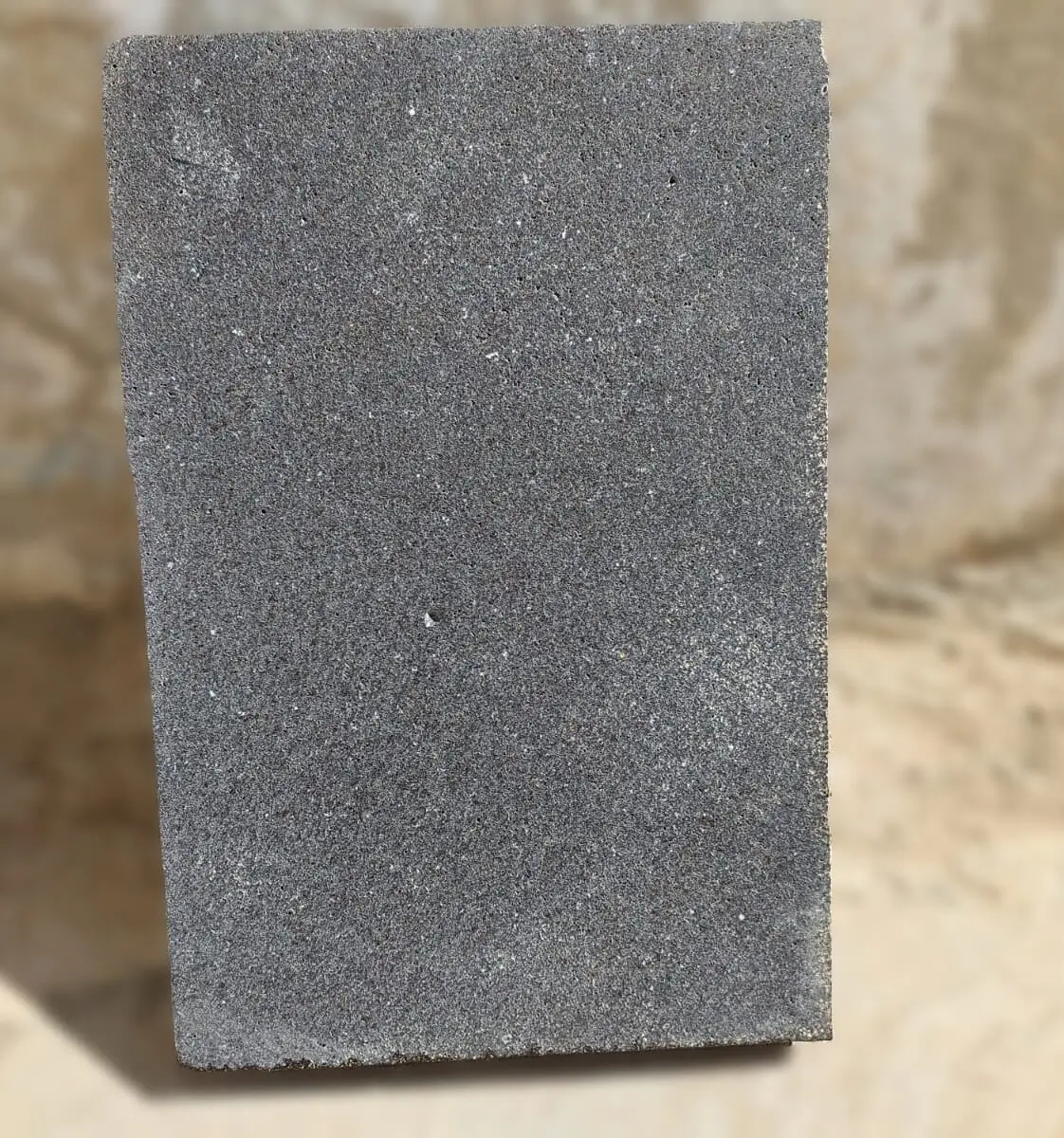
Format size interacts with thermal cycling in a way that’s underappreciated at the specification stage. Larger format pavers — 24×24 and above — experience greater absolute dimensional change per piece during the daily temperature cycle than 12×12 or 16×16 formats. A 24-inch stone at the same expansion coefficient undergoes twice the linear movement per piece as a 12-inch stone across the same temperature swing. That means joint spacing requirements, edge restraint stiffness, and bedding layer compaction all need to be calibrated upward for large-format installations.
Shell limestone pavers in Arizona in the 16×16 and 16×24 formats represent the sweet spot for most residential applications: large enough to read as a premium installation, dimensionally manageable for thermal movement control, and available in sufficient quantity from most warehouse inventories to complete projects without awkward mid-project material gaps. The 12×24 plank format is increasingly popular for its visual direction and contemporary feel, but its asymmetric proportions mean thermal movement occurs at different rates in length versus width — your installer needs to understand that distinction when setting joint widths.
- 12×12 format: simplest thermal management, appropriate for smaller installations and areas with complex geometry
- 16×16 format: optimal balance of aesthetic scale and thermal movement control for most Arizona patios
- 12×24 plank: strong visual impact, requires directional expansion joint planning — spec joints parallel to the long dimension at tighter intervals
- 24×24 large format: maximum visual impact, demands premium base preparation and professional installation — not appropriate for DIY budget scenarios
- Irregular flagging patterns: most complex thermal management — each piece has unique dimensional behavior, requiring wider joints and more flexible polymeric sand
Delivery Logistics and Project Planning in Arizona
Your truck access and delivery logistics affect project cost in ways that rarely appear in online pricing comparisons. Shell limestone arrives on pallets typically weighing 2,200 to 2,800 pounds per pallet, depending on thickness and format. A standard flatbed truck can deliver four to six pallets — covering roughly 400 to 600 square feet of 2-inch material — but your driveway access, overhead clearance, and unloading zone all need to accommodate that equipment without damaging existing hardscape or landscaping.
For projects where direct truck delivery to the installation zone isn’t feasible, factor in the additional labor cost of hand-carrying or mechanically moving material from the street. That adds $0.50 to $1.25 per square foot in labor, depending on distance and site conditions. Confirming your truck access constraints with your supplier before finalizing the delivery schedule avoids the day-of complications that cost time and money. Our technical team typically walks through delivery logistics with Arizona customers during the ordering process — it’s a step that prevents a common and frustrating field problem.
Final Recommendations
Getting shell limestone paver cost Arizona decisions right comes down to treating the system as a whole rather than optimizing individual line items in isolation. The material price is only the starting point — your base depth, expansion joint frequency, format selection, and sealing schedule all interact to determine whether your installation delivers the 20-plus-year performance shell limestone is capable of in Arizona’s demanding thermal cycling environment. The specifiers who get the best long-term value from this material aren’t necessarily the ones who find the lowest per-square-foot material price — they’re the ones who understand why the engineering details cost what they cost and budget for them accurately from the beginning.
As you finalize your specification and move toward installation, the next practical resource covers the field-level procedures that translate these engineering principles into a correctly executed project. How to Install Shell Limestone Pavers in Arizona walks through the base preparation, setting, and jointing sequence specific to Arizona conditions — the logical next step after your budget is locked. Contractors and homeowners in Tucson, Gilbert, and Chandler work with Citadel Stone to compare shell limestone paver grades, allowing accurate cost estimates before outdoor patio projects begin.