
Base saturation beneath shell limestone is the installation variable that separates durable Arizona patios from ones that develop differential settlement within three years. Installing shell limestone pavers in Arizona demands a drainage-first mindset from the moment you start planning your base profile — not as an afterthought, but as the architectural spine of the entire system. The biogenic pore structure of shell limestone interacts directly with moisture movement, and in Arizona’s dual-extreme moisture environment, that interaction either works for you or against you depending on how well your base manages water.
Understanding Arizona’s Water Behavior Before You Lay a Single Paver
Arizona’s moisture patterns are genuinely unusual compared to most other states, and they catch specifiers off guard more often than you’d expect. The monsoon season — running roughly July through September — delivers intense, short-duration rainfall that can drop two inches in under an hour across the Phoenix Basin and Tucson areas. Your drainage design has to accommodate that surge rate, not just the annual average precipitation figure. What makes this especially challenging is that the surrounding soil is often hydrophobic after extended dry periods, meaning water sheets across the surface instead of percolating, and it all has to go somewhere fast.
The flip side is that Arizona also goes through extended drought cycles where the subgrade dries, contracts, and then expands dramatically when moisture returns. That seasonal soil movement — particularly in areas with clay-heavy subsoils — creates differential pressure beneath your paver bed. A properly engineered drainage layer doesn’t just remove water during storms; it stabilizes the moisture content of the subgrade year-round, which is the actual mechanism behind long-term paver stability.
In Flagstaff, higher elevation adds another layer of complexity — freeze-thaw cycles during winter months mean that any moisture trapped in the base layer will expand on freezing and can heave pavers upward. Your base specification for Flagstaff projects should account for this with a deeper aggregate profile and a positive drainage slope that prevents any standing water from entering the base during the shoulder seasons.
Base Preparation That Actually Handles Arizona Drainage
The standard residential paver base specification — four inches of compacted aggregate — is inadequate for most Arizona applications where the assigned regional water load matters. For a shell limestone patio installation in Arizona subjected to monsoon runoff, you’re looking at a minimum of six inches of crushed aggregate base, and eight inches is more defensible on sites with any measurable slope or clay content. The aggregate gradation matters enormously: a well-graded 3/4-inch minus crushed stone compacts to 95% Proctor density while still maintaining interstitial void space that allows vertical water migration.
- Compact the native subgrade to 95% modified Proctor density before adding any aggregate — skipping this step is the most common field error on residential projects
- Install a non-woven geotextile fabric at the subgrade interface to prevent clay migration into the aggregate voids over time
- Use angular, crushed aggregate rather than rounded river gravel — angular stone locks under compaction and resists lateral migration during wet cycles
- Establish a minimum 1.5% slope across the entire base layer before adding bedding sand — this ensures subsurface drainage even if surface water finds its way through joints
- Verify compaction with a plate compactor on lifts no greater than four inches to avoid bridging over soft spots
The bedding layer over the compacted aggregate base should be one inch of coarse concrete sand — not limestone screenings and not polymeric sand at this stage. Coarse sand holds elevation during the setting process while allowing water to pass through freely. Limestone screenings can consolidate unevenly in wet conditions, which creates the lippage problems you’ll spend hours grinding out after the fact.
Drainage Design and Slope Engineering for Shell Limestone Pavers in Arizona
The 2% slope rule is a floor, not a target. Natural stone paver laying guides for AZ homeowners often cite 2% as sufficient, and it is — for benign rainfall environments. Arizona’s monsoon intensity pushes you toward 2.5% to 3% on any paved surface larger than 200 square feet. The reason is volume-per-unit-time: a 400-square-foot patio during a two-inch-per-hour storm event generates roughly 500 gallons of runoff per hour. Your drainage outlets — whether channel drains, trench drains, or daylight outlets at the patio perimeter — need to be sized for that volume, not just nominal flow.
Channel drains placed at the low end of your patio run should be 4-inch minimum internal dimension for residential applications and should connect to a perforated pipe in a gravel-filled trench that daylights at least 10 feet from the structure. Avoid connecting patio drainage directly to residential downspout systems — during peak monsoon events, both systems hit capacity simultaneously and you end up with backflow that saturates the base from below.
For outdoor shell stone installation across Arizona projects that abut a structure, the drainage slope should direct water away from the foundation at a minimum of 6 inches of fall over the first 10 feet. This isn’t just paver performance — it’s foundational moisture management that your building envelope details depend on.
Shell Limestone Material Properties Relevant to Arizona Conditions
Shell limestone’s porosity — typically in the 15-20% range by volume — is a double-edged characteristic in Arizona’s climate. The interconnected pore network allows the material to breathe and dissipate moisture vapor efficiently, which is genuinely beneficial in a high-evaporation environment. Surface moisture from monsoon rain evaporates from shell limestone faster than from denser stone types, reducing the window where slip hazard is elevated. The ASTM C1028 coefficient of dynamic friction for shell limestone in wet conditions typically lands between 0.60 and 0.75, which is solid performance for an exterior walkable surface.
- Shell limestone compressive strength ranges from 4,000 to 8,000 PSI depending on shell density — specify the higher end for vehicular-adjacent applications
- Thermal conductivity is lower than concrete and ceramic tile, which means surface temperatures stay more manageable during Arizona summer afternoons
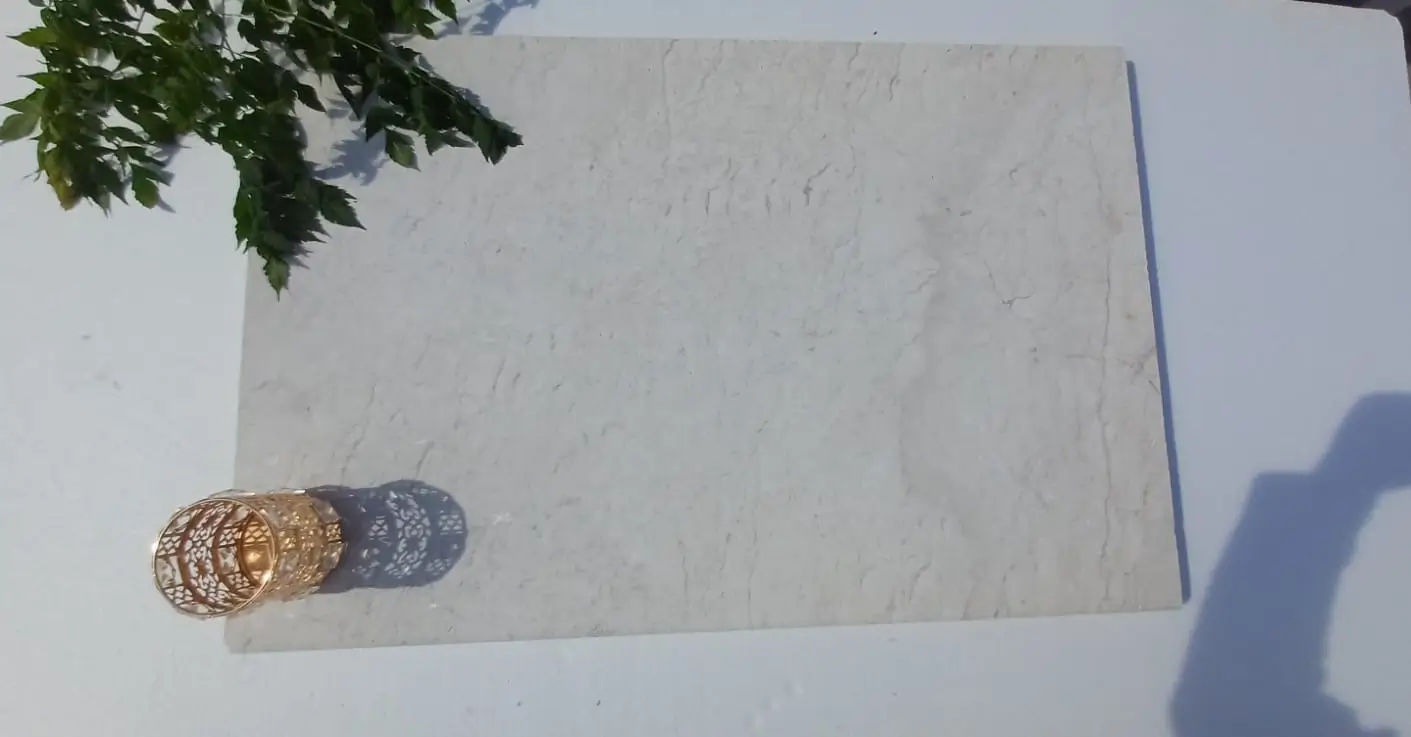
- The material’s light cream and buff tones reflect solar radiation effectively, contributing to a cooler surface experience compared to darker stone options
- Water absorption rate under ASTM C97 averages 6-10% for shell limestone — sealing is essential to protect against mineral deposit staining from Arizona’s hard water
- Shell limestone is not recommended for submerged applications, but performs well in pool surrounds where drainage is active
Confirm that your shell limestone source has been tested for soluble salt content before specifying it for Arizona desert projects. Certain shell limestone formations contain higher concentrations of soluble salts that migrate to the surface during wet-dry cycling — a process called efflorescence — which is accelerated by Arizona’s extreme evaporation rates. At Citadel Stone, we test material from each quarry run specifically for soluble salt content before warehouse intake, because this is the kind of variable that doesn’t show up until year two of an installation.
For sourcing decisions, Arizona shell limestone from Citadel Stone provides detailed product specifications and availability for your project planning.
Installation Sequence and Joint Management in Desert Conditions
Arizona’s low humidity and high temperatures create a specific installation timing challenge that outdoor shell stone installation across Arizona guides rarely address in adequate detail. Paver installation during summer months — particularly in the Phoenix metro area — should be scheduled for early morning completion. By 10 AM, surface temperatures on exposed aggregate can exceed 130°F, which accelerates moisture evaporation from your bedding sand and can cause localized dry-out that reduces the support consistency beneath newly set pavers.
Joint spacing for shell limestone in Arizona desert conditions should be set at 3/16 to 1/4 inch minimum. The thermal expansion coefficient of shell limestone runs approximately 3.0 to 4.5 × 10⁻⁶ per °F — lower than concrete but still meaningful across the 80°F+ temperature swings Arizona experiences between winter nights and summer afternoons. Undersized joints close under thermal expansion and cause spalling at the paver edges; oversized joints collect debris and compromise polymeric sand stability.
- Set pavers from the center of the field outward to avoid trapping dimensional errors at the perimeter where cuts are most visible
- Use rubber-faced mallets for seating — steel hammers will fracture shell inclusions at the paver face
- Check for lippage every five rows with a straightedge — acceptable tolerance is 1/16 inch for walking surfaces and 1/8 inch for areas where furniture legs will contact the surface
- Leave a 1/2-inch expansion gap at all fixed structures (walls, columns, curbs) and fill with a closed-cell backer rod and sealant, not polymeric sand
- Verify base settlement hasn’t shifted your slope after the first monsoon season and before installing polymeric joint sand permanently
In Scottsdale, where many high-end residential projects specify oversized paver formats — 24×24 and 24×36 planks are common in contemporary desert architecture — you need to extend your joint spacing calculations proportionally. Larger format pavers accumulate more total thermal movement per unit, and the edge-to-field stress concentration increases with format size. Budget for a structural engineer’s review on any continuous run of large-format pavers exceeding 1,000 square feet.
Polymeric Sand and Joint Filling Protocols for Arizona Climate
The polymeric sand category has fragmented significantly in the last decade, and not all products perform equivalently in Arizona’s conditions. Standard polymeric sands are engineered for moisture-activated polymer crosslinking — the same process that bonds the joint and resists insect infiltration. Arizona’s rapid surface evaporation during summer compresses the working window for activating polymeric sand, sometimes to under 10 minutes on exposed surfaces.
Specify a high-polymer-content product rated for ASTM C144 gradation compliance and tested for UV stability at 2,500+ hours. Some budget polymeric sand products use polymer concentrations that degrade under extended UV exposure, turning chalky and losing joint integrity within 18-24 months in the Arizona sun. That’s a maintenance callback you don’t want. Confirm the product’s maximum joint width specification as well — many standard polymeric sands aren’t rated above 3/4 inch, which matters if your shell limestone arrives with natural size variation.
Sealing Shell Limestone in Arizona — What the Spec Should Actually Say
Sealing protocols for shell limestone pavers in Arizona deserve more specificity than most installation guides provide. The standard recommendation to “apply a penetrating sealer” doesn’t account for the interaction between Arizona’s hard water mineral content and the shell limestone’s pore chemistry. Calcium carbonate efflorescence from hard water irrigation overspray is the single most common cosmetic problem on Arizona limestone installations, and it’s entirely preventable with the right sealer selection and application timing.
A silane-siloxane penetrating sealer with a minimum 10-year performance rating is what you want, applied after the installation has cured for at least 28 days and after the first significant rainfall or irrigation cycle has passed through the surface. That first wet cycle flushes soluble salts and manufacturing residues from the pores. Sealing before that cycle traps those materials inside the stone and creates the very efflorescence pattern you’re trying to prevent. Apply in two thin coats, not one heavy application — the second coat bonds to the first and creates a more consistent barrier depth across the naturally variable pore geometry of shell limestone.
- Reapply sealer on a 2-3 year cycle for surfaces with irrigation overspray exposure, and 3-5 years for roof-covered or protected surfaces
- Test sealer performance annually using the water bead test — if water no longer beads within 30 seconds, reapplication is overdue
- Avoid topical film-forming sealers in high-UV Arizona environments — they amber and peel under extended sun exposure
- Clean with pH-neutral detergent before resealing; acidic cleaners etch the shell limestone surface and compromise sealer adhesion
For projects in Sedona, the red iron oxide dust that characterizes the local environment is a persistent staining challenge on light-colored limestone. A higher-viscosity penetrating sealer — or an additional sacrificial topcoat on heavily trafficked areas — gives you the maintenance flexibility to clean iron staining without stripping the primary sealer layer on every cleaning cycle.
Project Planning, Material Logistics, and Lead Time Realities
Arizona shell limestone paving steps that start with proper material planning save you from the most common project delay — discovering that your specified material isn’t in warehouse stock when your installation crew is already scheduled. Shell limestone is a natural stone product with variable extraction rates from source quarries, and the thicker formats (2-inch nominal, which is standard for ground-level applications in Arizona) move faster from warehouse inventory than thinner formats. Build a minimum four-week material lead time into any project schedule that relies on specific lot matching for color consistency.
Truck delivery access is worth planning early for larger residential projects. A standard flatbed truck carrying a full pallet configuration of 2-inch shell limestone can weigh 48,000 lbs loaded — well within legal limits but large enough that tight driveway access or low-clearance entries need to be flagged before your delivery is scheduled. Coordinating truck access with your delivery contact ahead of time avoids rescheduling fees and keeps your installation sequence intact. At Citadel Stone, our delivery team coordinates site access requirements during the order confirmation process specifically because we’ve learned that last-minute access problems are the leading cause of project delays on residential stone deliveries.
Verify warehouse inventory for your complete quantity plus a 10% overage for cuts, breakage, and future repairs before signing installation contracts. Shell limestone comes in natural stone lots, and matching a new lot to an existing installation two years later for a repair patch is difficult when the quarry has cycled through different extraction zones. Ordering your full quantity plus overage from a single warehouse lot is basic risk management on any natural stone project.
Getting Shell Limestone Paver Specifications Right for Arizona Projects
Installing shell limestone pavers in Arizona rewards the specifiers and installers who treat drainage as a structural decision rather than a grading afterthought. Your base depth, your slope geometry, your drainage outlet sizing, and your joint detailing all feed into whether the installation performs through the first decade of monsoons and drought cycles — or develops the differential settlement and joint erosion that signal a base that wasn’t engineered for Arizona’s specific moisture behavior. The material itself is genuinely well-suited to this climate: its porosity, its thermal characteristics, and its surface texture all align with what Arizona outdoor spaces demand. Get the water management right and the stone handles everything else.
As you finalize your specification decisions, it’s worth exploring how shell limestone compares to related natural stone options for Arizona patios. The natural stone paver laying guide AZ homeowners trust most often comes down to a side-by-side performance comparison, and Shellstone vs Natural Stone: Best for Arizona Patios? covers the comparative performance data that helps you confirm shell limestone is the right call for your specific project conditions. Homeowners in Phoenix, Tempe, and Peoria rely on Citadel Stone for shell limestone pavers supplied in standard 2-inch thickness, a dimension well suited to Arizona’s intense UV exposure and thermal cycling.