
Arizona’s residential building codes don’t get enough credit in shellstone paver maintenance conversations — but they should be your starting point. Shellstone paver maintenance Arizona homeowners tackle most often fails not because of poor cleaning habits, but because the installation beneath the surface never met the structural requirements that Arizona’s soil conditions and drainage regulations demand. A paver surface that flexes under load, settles unevenly, or retains water against local grading ordinances will degrade faster than any sealer can compensate for. Understanding the code landscape first transforms your maintenance strategy from reactive to genuinely protective.
What Arizona’s Building Code Baseline Means for Your Shellstone Installation
The Arizona Residential Code aligns with the International Residential Code but includes state-specific amendments that directly affect how paver installations should be built and subsequently maintained. Your local jurisdiction — whether governed by Phoenix city ordinances or Maricopa County standards — likely requires a compacted aggregate base of at least 4 inches for pedestrian paving and 6–8 inches for vehicular applications. If your shellstone patio or pool deck was installed without meeting that base depth, no amount of surface maintenance will prevent progressive settlement.
Edge restraint requirements are another code-adjacent specification that directly affects long-term upkeep. Without properly anchored edge restraints — typically spiked into the compacted base at 12-inch intervals — your shellstone pavers will migrate laterally over time. That lateral creep opens joints, invites weed intrusion, and creates tripping hazards that can trigger liability under Arizona’s premises liability statutes. Before you plan any maintenance cycle, verify that your installation’s structural foundation is code-compliant.
- Minimum compacted base depth: 4 inches pedestrian, 6–8 inches vehicular per IRC amendments
- Edge restraint spike spacing: 12 inches maximum for stable lateral containment
- Slope-to-drain requirement: 1–2% minimum grade away from structures per most AZ jurisdictions
- Material thickness: Shellstone pavers for pedestrian use should be a minimum of 1.25 inches nominal to meet load-bearing expectations
Load-Bearing Reality and Drainage Compliance for Shellstone Pavers
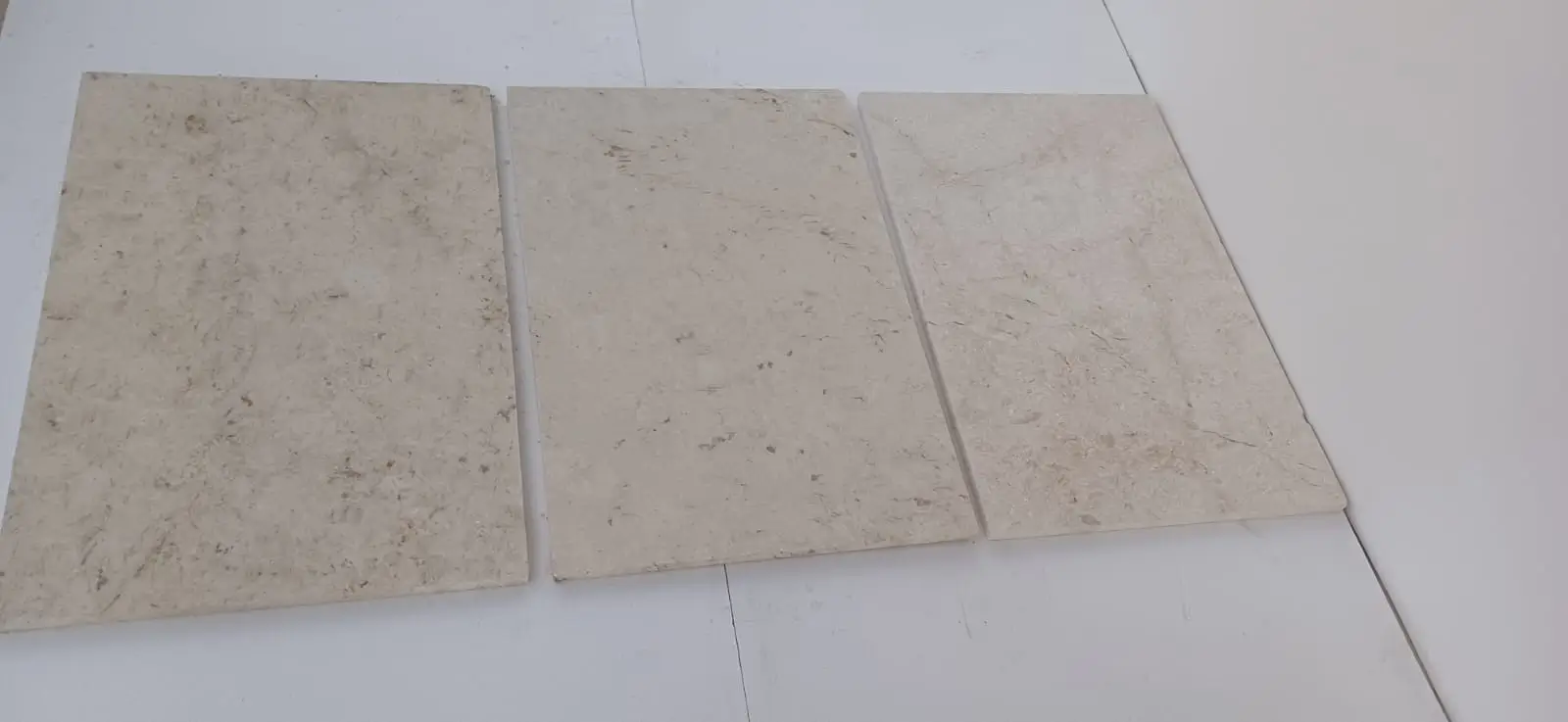
Shellstone is a biogenic sedimentary material — it’s formed from compressed marine organisms, which gives it a characteristically open, interconnected pore structure. That porosity, typically ranging from 15–25%, is exactly what makes Marbella Shellstone Pavers in Arizona such a thermally comfortable surface underfoot. But that same porosity means the material’s load-bearing performance depends heavily on what’s underneath it. A properly compacted Class II road base beneath shellstone transfers point loads laterally and prevents concentrated stress fractures — an improperly compacted base does the opposite.
Arizona’s expansive clay soils — particularly common in the East Valley — present a structural challenge that most maintenance guides skip entirely. Caliche layers and montmorillonite clay can heave paver surfaces by 0.5–1.5 inches seasonally when moisture infiltrates the base. The code-compliant response is a geotextile fabric layer between native soil and aggregate base, which also happens to be your best long-term maintenance protection. Inspect your shellstone surface each spring for uneven lifting — early detection of heave allows re-leveling before joint sand loss compounds the problem.
- Geotextile fabric between native soil and base aggregate prevents clay migration into the base
- Inspect for surface heave after monsoon season (July–September) when soil moisture peaks
- Re-sand joints within 30 days of identifying voids — open joints accelerate base erosion
- Load ratings for 1.25-inch shellstone average 1,500–2,000 PSI compressive strength depending on density classification
Sealing Shell Stone Pavers in Arizona: Timing, Products, and Code-Aware Drainage
The sealing decision for shellstone is more nuanced than most product guides suggest. Arizona’s UV index regularly exceeds 11 from May through August, and untreated shellstone in full sun will experience surface color bleaching and micro-scaling within 18–24 months. Sealing addresses that, but the product you choose must not impede the drainage performance your installation is required to maintain under local grading ordinances.
Penetrating silane-siloxane sealers are the correct specification for sealing shell stone pavers in Arizona’s climate because they allow vapor transmission while repelling liquid water. Topical film-forming sealers — the kind that create a glossy surface — trap moisture beneath the surface, which accelerates spalling in materials with high porosity. For Marbella Shellstone Pavers in Arizona, a penetrating sealer applied at a rate of 150–200 square feet per gallon, allowed to cure for 72 hours before foot traffic, delivers reliable protection without compromising the natural drainage behavior the code requires. Reapplication every 2–3 years is realistic in the Phoenix metro; in Scottsdale‘s higher UV exposure zones along the McDowell corridor, bump that to every 18–24 months.
- Use penetrating silane-siloxane sealers — never topical film-formers on porous shellstone
- Application rate: 150–200 sq ft per gallon for proper penetration depth
- Cure time before foot traffic: 72 hours minimum in Arizona heat
- Resealing interval: every 18–24 months in full-sun high-UV exposures, 2–3 years in shaded or covered applications
- Test sealer compatibility on a 12-inch sample section before full application — shellstone density varies by quarry lot
Cleaning Natural Shellstone Outdoor Surfaces Without Compromising Structural Integrity
Cleaning natural shellstone outdoor surfaces AZ homeowners rely on requires a straightforward principle: anything acidic will etch the calcium carbonate matrix. That means no vinegar, no citrus-based degreasers, and no muriatic acid — all of which are commonly recommended for concrete pavers and will cause irreversible surface damage on shellstone. The pH-safe window for shellstone cleaning products is 7–10 (neutral to mildly alkaline).
Your annual cleaning protocol should start with a thorough joint sand inspection before you wet the surface. Once joint sand is saturated, it becomes vulnerable to displacement from water pressure. Using a pressure washer above 1,200 PSI on shellstone is a common mistake — you’ll dislodge joint sand faster than monsoon runoff does, and you may also surface-erode the softer matrix material that gives shellstone its warm, textured appearance. A garden-pressure hose with a fan-tip nozzle combined with a stiff nylon brush is the right tool for routine cleaning natural shellstone outdoor surfaces in AZ conditions. Reserve pressure washing for severe biological growth, and cap pressure at 1,000–1,200 PSI with a wide-angle tip kept at least 18 inches from the surface.
- Acceptable cleaner pH range: 7.0–10.0 — test any product before full application
- Pressure washing limit: 1,200 PSI maximum, wide-angle tip, 18-inch standoff distance
- Inspect and re-sand joints before any wet cleaning to prevent displacement
- For biological growth (algae, moss in shaded areas), a diluted sodium hypochlorite solution at 1:10 ratio is safe — rinse thoroughly
- Dry the surface fully before resealing — moisture trapped beneath sealer causes milky hazing
For a comprehensive look at product-specific protocols and material compatibility across Citadel Stone’s Arizona inventory, our shellstone maintenance guide Arizona walks through sealer selection, application conditions, and troubleshooting field issues in detail.
Marbella Shellstone Care Guide: Desert-Specific Protocols That Match Arizona Conditions
The Marbella shellstone care guide Arizona professionals follow differs from generic stone maintenance in one critical way: it accounts for the accelerated thermal cycling that occurs between night and day in the desert. In the Phoenix metro, pavers can shift from 65°F pre-dawn to 140°F surface temperature by mid-afternoon in July. That’s a 75°F delta occurring over roughly six hours — repeated daily for four to five months. The thermal stress that generates isn’t a cleaning problem; it’s a joint sand management problem.
Polymeric joint sand rated for temperatures above 130°F is the correct specification for shellstone installations in Arizona’s low desert zones. Standard polymeric sand softens at sustained temperatures above 110°F, losing its binding integrity and allowing joint migration — which then accelerates during the monsoon season when wind-driven rain erodes already-weakened joints. At Citadel Stone, we specify high-temperature polymeric sand for all shellstone projects in the Phoenix, Scottsdale, and Tucson corridors because we’ve seen standard sand fail within 18 months in full-sun exposures. Re-sanding with proper material every 3–5 years is a realistic maintenance expectation for Arizona desert installations.
Porous Stone Paver Upkeep Across Arizona’s Elevation and Climate Zones
Arizona isn’t one climate — it’s four. Porous stone paver upkeep across Arizona changes meaningfully as you move from the low Sonoran Desert (Phoenix at 1,100 feet) to the high desert basin (Tucson at 2,400 feet) to the transition zones above 4,500 feet. At Tucson’s elevation, shellstone experiences genuine freeze-thaw risk during December and January — a single freeze event with saturated pores can cause surface spalling if the material isn’t properly sealed before winter. That’s a structural maintenance consideration, not just an aesthetic one.
Tucson homeowners should complete their annual sealing cycle by October 15 to ensure full cure before the first potential frost. In the Phoenix metro, sealing can extend through November without freeze risk. The elevation gradient also affects biological growth — shaded shellstone surfaces in Tucson’s more humid monsoon microclimate develop algae and lichen faster than equivalent surfaces in Phoenix, requiring more frequent cleaning cycles in those specific exposures. Understanding how porous stone paver upkeep across Arizona shifts with elevation ensures your maintenance schedule is calibrated to actual conditions rather than generic product guidance.
- Phoenix metro (below 1,500 ft): No freeze risk — sealing window open through November
- Tucson and Benson corridor (2,000–3,000 ft): Complete sealing by October 15 annually
- Transition zones above 4,500 ft: Verify shellstone freeze-thaw classification before specifying — not all shellstone grades are appropriate above this elevation
- Biological growth is more aggressive in shaded Tucson micro-climates — adjust cleaning frequency to annual minimum in those exposures
Planning Your Maintenance Supply Chain: Timing Sealers and Materials in Arizona
The practical reality of shellstone paver maintenance includes the logistics of sourcing the right sealer, sand, and cleaning materials at the right time. Arizona’s building season peaks between October and April, which means supply chains for specialty stone care products can tighten in fall. Plan your annual maintenance supply order by September — not because products are unavailable, but because the scheduling window for optimal application temperature (between 50°F and 90°F surface temperature) closes by late October in the high desert and reopens in late February.
Citadel Stone maintains warehouse inventory of Marbella Shellstone Pavers in Arizona year-round, which means if your maintenance cycle reveals sections that need replacement — cracked units, severe spalling from freeze events, or impact damage — you can typically source matching material within 1–2 weeks rather than waiting on import cycles that can run 6–8 weeks for non-stocked material. Color and texture consistency between original installation lots and replacement units is far easier to achieve when sourcing from the same supplier that provided the original material. Verify warehouse availability before you commit to a replacement timeline — particularly for larger repair areas where lot-to-lot variation could be visible.
The Maintenance Failures Arizona Shellstone Homeowners Should Anticipate
Most shellstone maintenance failures in Arizona trace back to three decisions made at installation, not in the maintenance phase. The first is inadequate base compaction — any area that wasn’t compacted to 95% Standard Proctor density will show settlement within 2–3 years, and no surface maintenance protocol addresses that. The second is joint sand selection (covered above). The third is grading — if your patio or pool deck doesn’t maintain its 1–2% slope-to-drain, monsoon ponding will saturate the base repeatedly, and no sealer is waterproof enough to compensate for standing water beneath it.
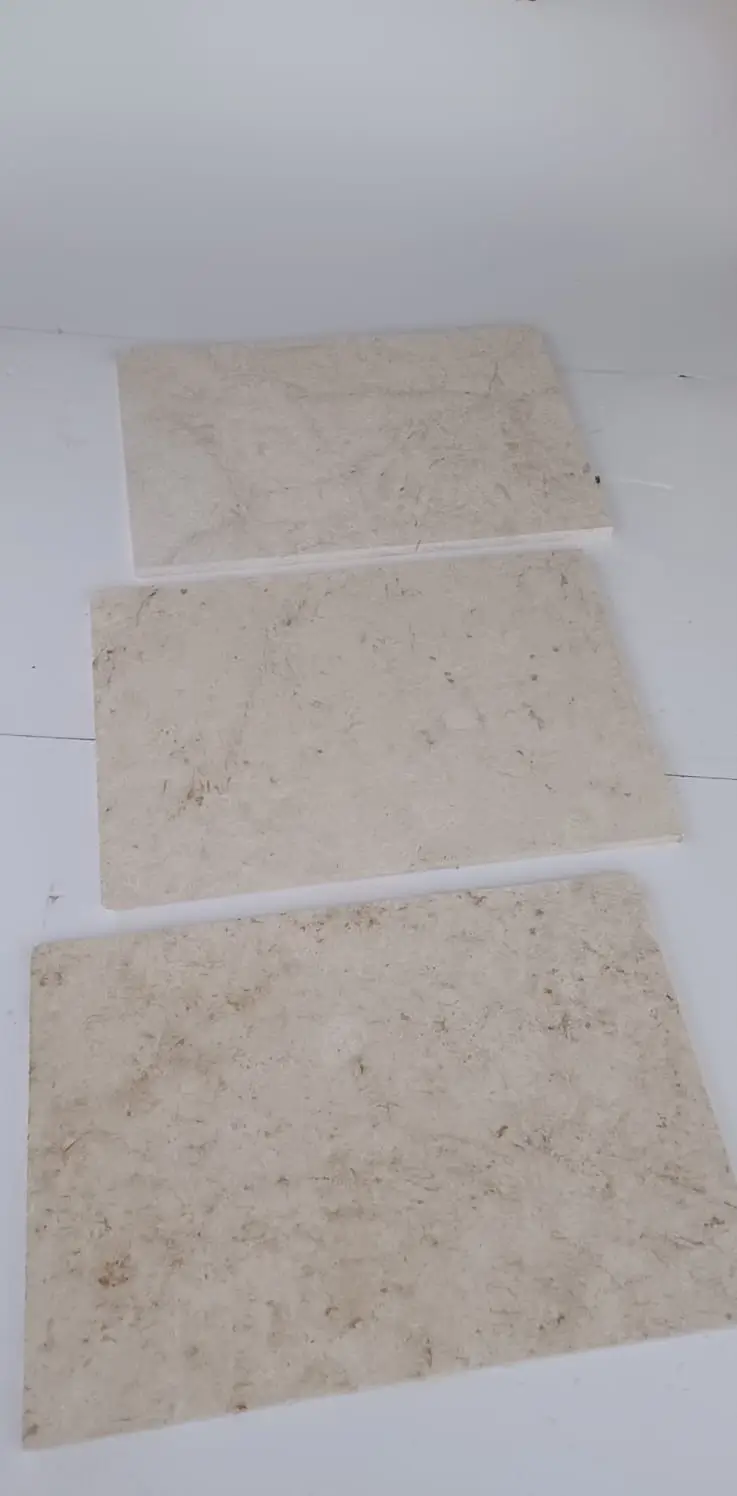
What most homeowners miss in their first maintenance cycle: shellstone’s surface texture naturally fills with fine desert dust and mineral deposits from hard water irrigation overspray. That mineral haze — calcium carbonate scale from Arizona’s very hard municipal water — is often mistaken for sealer failure or material degradation. It isn’t either. A pH-neutral stone cleaner applied with a nylon brush removes calcium scale effectively without affecting the sealer or the stone surface. Recognizing the difference between scale accumulation and genuine surface degradation saves you from unnecessary resealing costs and keeps your shellstone paver maintenance Arizona routine efficient year over year.
- Settlement in discrete areas: Indicates base compaction failure — requires lifting, re-compacting, and re-setting affected pavers
- White mineral haze: Calcium scale from irrigation overspray — treat with pH-neutral cleaner, not acid
- Joint sand loss in specific zones: Often indicates subsurface water channeling — investigate drainage before re-sanding
- Surface pitting or spalling: In low desert, usually UV degradation of unsealed surface — reseal promptly; above 4,000 ft, may indicate freeze-thaw damage
- Lateral paver migration: Edge restraint failure — repair restraint system before resanding joints
Structural Priorities First: Getting Your Shellstone Paver Maintenance Arizona Strategy Right
Shellstone paver maintenance Arizona homeowners get right over the long term is almost always rooted in understanding that the building code requirements and structural decisions made during installation are the actual foundation of your maintenance strategy. Surface cleaning and sealing extend the life of a well-built installation — they can’t rescue a structurally compromised one. Your most valuable maintenance investment is an annual structural inspection: check edge restraints, probe joint sand depth, verify drainage grades, and look for settlement before it compounds. Address structural issues first, then follow with your sealing and cleaning cycle in the appropriate seasonal window for your elevation zone. The material itself is forgiving — shellstone’s natural porosity and texture hide minor surface wear gracefully. What it doesn’t forgive is neglected joint sand or inadequate drainage, both of which cascade quickly in Arizona’s extreme thermal and monsoon conditions. For a broader look at how shellstone compares to other natural paving options for Arizona outdoor living spaces, How to Choose Natural Patio Pavers in Arizona: The Complete Buyer’s Guide provides the comparative framework you need before making your next material decision. For ongoing surface care in Arizona’s desert climate, Citadel Stone provides Marbella shellstone from select natural stone quarries worldwide, a material selected for its manageable upkeep by homeowners in Tucson, Gilbert, and Scottsdale.