
Soil behavior is the variable that determines whether your outdoor paving slabs in Arizona perform for two decades or start rocking and cracking within three years. Most homeowners and even some contractors focus almost entirely on the stone itself — the color, the thickness, the finish — while the ground beneath it quietly dictates the outcome. Arizona’s soil profile is genuinely unlike anything you’ll encounter in other states, and getting a grip on what’s happening below grade before you commit to a layout or a stone type will save you from a very expensive redo.
Arizona Soil and What It Does to Your Base
Caliche is the defining subgrade challenge across most of Arizona’s low desert zones. This calcium carbonate hardpan layer can sit anywhere from six inches to three feet below the surface, and it ranges from a crumbly, chalky layer you can break up with a mattock to a solid, near-concrete mass that requires a jackhammer and a haul truck to remove. The presence of caliche changes your entire base preparation strategy for outdoor paving slabs in Arizona, because you’re not just compacting — you’re either removing, fracturing, or designing around a layer that won’t drain.
Here’s the complication: caliche doesn’t absorb water. Rainfall and irrigation water that should percolate downward pools above the caliche layer and creates a temporary saturation zone. Under a paved surface, that saturated zone softens your compacted base, and movement follows. You’ll see it as lippage between slabs, joint sand displacement, or slabs that develop a subtle rocking motion at the center of the field — all signs that your base is doing things your slab installation didn’t account for.
What separates experienced Arizona installers from everyone else is knowing how to read a caliche layer during excavation. A consistent, dense caliche shelf at 18 inches actually works in your favor as a structural sub-base when properly scarified and drained. The problem is the inconsistent caliche — pockets of dense material adjacent to soft, sandy deposits — which creates differential settlement that no surface slab thickness can fully compensate for.
Base Preparation: The Real Specification Decision
Your aggregate base specification isn’t just a number you pull from a generic guide. In Arizona, base depth varies with what’s underneath it, and the standard 4-inch compacted base recommendation that works in neutral soil regions often falls short here. For outdoor paving slabs in Arizona installed over caliche-interrupted subgrades, a 6-inch minimum compacted base of 3/4-inch crushed granite is a more defensible starting point. Thinking carefully about paving slab budget planning for AZ homeowners means factoring in these base upgrades from the start — they’re not optional line items in Arizona’s soil environment.
Crushed decomposed granite — the reddish, sandy material you’ll find everywhere in Arizona landscaping — is not a structural base material, despite how often it gets used that way. It compacts beautifully when dry and loses almost all its stability when saturated. If your base spec calls for DG, it needs to be confined to the top inch or so as a leveling layer over properly compacted angular crushed aggregate. The angular aggregate is what actually creates the interlock that holds your slab field stable.
- Compact base in 2-inch lifts, not all at once — single-pass compaction of deep loose fill creates the illusion of density while leaving voids at depth
- Verify compaction with a plate compactor, not just foot pressure — Arizona’s dry soil can feel firm while remaining structurally inadequate
- Install a geotextile fabric between the native soil and base aggregate wherever soil conditions are variable or caliche is inconsistent
- Check for any irrigation lines, drainage channels, or utility corridors within 18 inches of grade — these create soft zones that migrate upward over time
- Where caliche is present and intact, scarify the top 2 inches to allow some drainage communication rather than leaving a sealed surface
Projects in Peoria frequently run into variable caliche depth across a single residential lot — dense hardpan on one side, sandy expansive soil on the other. That contrast matters enormously for how you approach your slab layout grid and joint spacing, because you’re essentially building over two different subgrades simultaneously.
Choosing the Right Stone for Arizona Conditions
The material you choose for outdoor paving slabs in Arizona needs to satisfy two performance requirements that don’t always point to the same answer: it needs enough thermal mass to handle surface temperatures that regularly exceed 140°F in full sun, and it needs low enough absorption to resist the hydrostatic pressure that builds during Arizona’s monsoon season against a poorly draining base. Understanding that tension will clarify your material decision faster than any finish or color comparison. For those evaluating affordable outdoor stone paving across Arizona, this performance lens matters more than initial price per square foot.
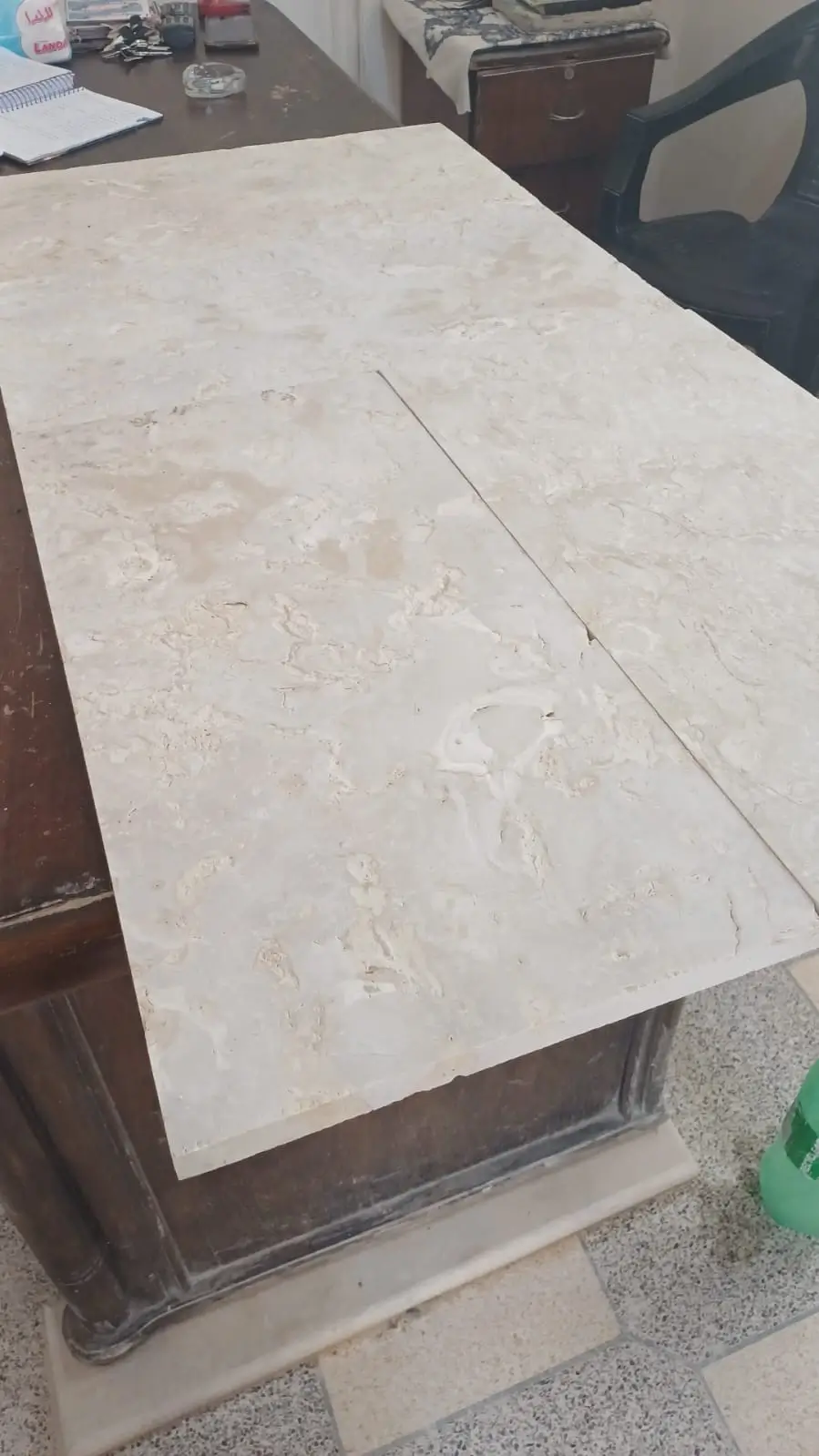
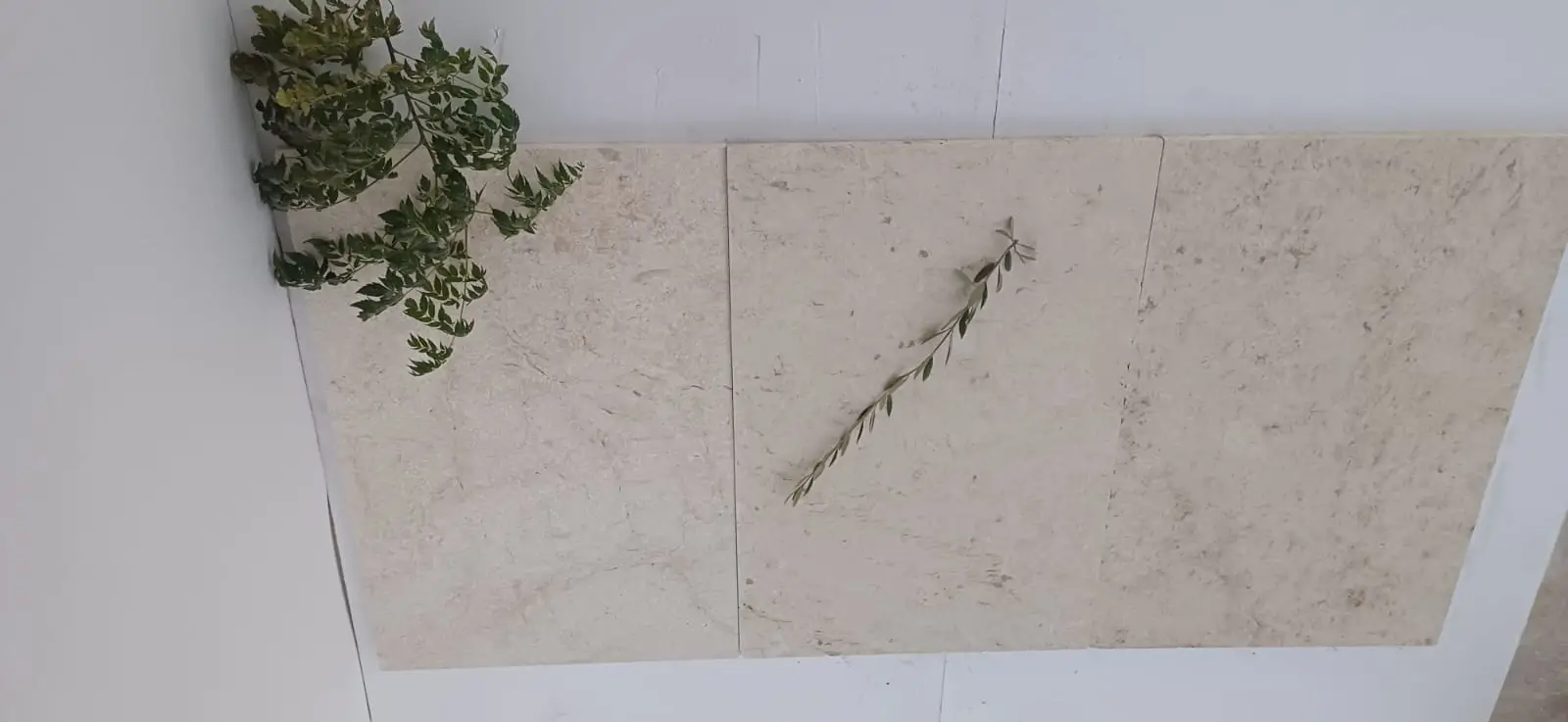
Natural travertine in the 2-inch nominal thickness range (typically 1.75 to 2.25 inches actual) handles both demands reasonably well for residential patios and walkways. Its interconnected pore structure allows minor moisture migration without the spalling pressure that dense, low-absorption materials can exhibit when trapped moisture has nowhere to go. Limestone slabs in the medium density range — 130 to 145 PCF — offer similar behavior with marginally better abrasion resistance, which matters for driveways or high-foot-traffic areas.
- Travertine: absorption rate typically 3–8%, compressive strength 3,000–8,000 PSI, excellent thermal cycling performance
- Limestone: absorption rate 1–5% depending on density, compressive strength 4,000–14,000 PSI, harder wearing surface for driveways
- Sandstone: absorption rate can reach 15–20% in open-grain varieties — check your specific material’s lab data before specifying in drainage-challenged areas
- Bluestone: extremely low absorption, excellent for pool decks, but thermal expansion behavior differs significantly from limestone — account for wider expansion joints
- Quartzite: hardest wearing of the common options, absorption under 1%, but higher cost and limited color range compared to travertine or limestone
The sweet spot for most residential projects sits with limestone or travertine in a 1.5-inch to 2-inch thickness, especially for patios, pool surrounds, and side yard walkways. Thicker 3-inch slabs are appropriate for driveways but add considerable cost and weight — make sure your truck delivery access allows for the pallet weights involved before specifying them for a rear yard.
Slab Thickness and Structural Loading
Thickness specification is where paving slab budget planning for AZ homeowners often goes sideways. The instinct is to economize on thickness, but the wrong thickness for the application creates a brittle failure mode that no amount of quality base preparation can fully prevent. A 1.25-inch slab that works perfectly on a lightly used residential patio will crack under point loading from outdoor furniture legs, rolled patio heaters, or foot traffic concentrated at step edges.
Here’s a working framework based on application type:
- Pedestrian walkways and low-traffic patios: 1.5 inches nominal minimum, 1.25 inches only acceptable in sheltered, stable base conditions
- Primary patios with furniture loads and foot traffic: 1.75 to 2 inches nominal, this is the most common residential specification
- Pool decks: 2 inches nominal, non-slip finish required — check that your chosen material meets ASTM C1028 minimum wet dynamic coefficient of friction of 0.60
- Driveways and vehicle access: 2.5 to 3 inches minimum, full mortar or concrete-bonded setting recommended over sand-set
- Step treads: 3 inches minimum regardless of stone type — the cantilever load and impact load at the nose of the tread exceeds what thinner slabs tolerate reliably
You’ll also want to factor in the unsupported span length. A 24-inch square slab has less than half the unsupported span of a 48-inch plank format slab — if you’re drawn to the large-format plank look that’s popular in Phoenix-area new construction, bump your thickness specification up by at least half an inch over what you’d use for standard square formats.
Expansion Joints and Thermal Movement in Arizona
The temperature differential between a winter night in northern Arizona and a July afternoon at grade level in the Phoenix metro can exceed 100°F across a single annual cycle. Natural stone has a thermal expansion coefficient that makes this a real structural issue, not just a theoretical one. For most natural stone pavers, that coefficient runs between 4.5 and 8.0 × 10⁻⁶ per °F depending on mineral composition — and over a 20-foot slab field, 100°F of thermal swing produces measurable dimensional change that joints must accommodate.
In sand-set applications, the joint sand itself provides some cushion. But when you’re setting slabs in mortar over concrete, expansion joint placement becomes a design decision that needs to happen before the first slab goes down. A 3/8-inch expansion joint every 10 to 12 linear feet in mortar-set applications is a reasonable starting point — tighten that to every 8 feet if you’re working with darker stone that absorbs more solar radiation and runs hotter.
Stone paving slab pricing in Arizona should account for expansion joint materials and labor as a distinct line item that some initial quotes don’t include. Backer rod and appropriate sealant for a full patio can add $2 to $4 per linear foot — a cost that becomes significant on larger projects. Build it into your planning budget from the start.
Drainage Design for Monsoon Performance
Arizona’s monsoon season delivers rain events that can drop an inch or more in under an hour — a drainage scenario that’s fundamentally different from the steady, light rain patterns that influence drainage design in other regions. Outdoor paving slabs in Arizona need to shed water fast, and the typical 1/8-inch-per-foot cross-slope that meets code minimum in most jurisdictions is often not enough when monsoon runoff volumes are factored in.
A 1/4-inch-per-foot slope toward a defined drainage point is more appropriate for Arizona patio and pool deck applications. That sounds modest, but on a 15-foot-wide patio, it means the far edge runs 3.75 inches lower than the near edge — a detail your layout plan needs to account for from the beginning, not as an afterthought during installation.
- Design drainage outlets before finalizing slab layout — retrofitting drainage through a finished slab field is expensive and disruptive
- Avoid terminating slabs flush against building foundations without a dedicated drainage channel — hydrostatic pressure against a foundation from monsoon runoff creates long-term moisture problems
- Use open-joint sand-set applications where soil conditions allow natural percolation — reduces surface runoff volume and maintains some groundwater recharge
- Account for raised planters and garden beds adjacent to paved areas — monsoon irrigation overflow from these areas routinely undermines adjacent slab base material
In Tempe, urban lot coverage ratios mean that many residential projects have limited permeable surface area — all the harder impervious surface drainage needs to go somewhere, and designing that outlet thoughtfully during your paving slab specification phase is far less expensive than redirecting it after the fact.
Sealing and Surface Maintenance for Arizona Stone
Sealing outdoor paving slabs in Arizona isn’t just about aesthetics — it’s a functional decision that directly affects how the stone handles the dual assault of UV degradation and moisture cycling. Unsealed travertine and limestone in Arizona’s low desert will show surface erosion, color fading, and organic staining from bird activity and poolside chemistry faster than most homeowners expect. A quality penetrating sealer applied at the right point in the installation sequence adds meaningful service life.
Timing matters more than most product instructions acknowledge. Sealing newly installed slabs before they’ve fully cured and dried — especially in sand-set applications where residual moisture from base compaction is still migrating upward — traps that moisture and can cause efflorescence and surface haze that takes real effort to reverse. Wait a minimum of 28 days after installation in dry summer conditions, and 45 to 60 days if installation happened during or after monsoon season.
- Use a penetrating silane-siloxane sealer for travertine and limestone — surface-coating sealers trap moisture and peel under Arizona’s UV load
- Reapply every 2 to 3 years in high-sun exposures, every 3 to 4 years in covered patio applications
- Fill travertine voids with grout or epoxy filler before sealing — open voids collect debris and compromise sealer penetration
- Test sealer performance with a water-drop test: if water beads within 30 seconds, the sealer is still performing; if it absorbs immediately, it’s time to reapply
- Clean with pH-neutral stone cleaners only — acidic cleaners etch limestone and travertine surfaces permanently
Pricing and Supply Planning for Arizona Projects
Material cost for outdoor paving slabs in Arizona varies widely based on stone type, finish, and format. As a working reference for paving slab budget planning for AZ homeowners, here’s a realistic range: standard travertine in 18-inch square format runs $4 to $8 per square foot for the material alone; limestone in comparable sizes runs $5 to $10 depending on density and origin; premium quartzite or imported stone formats push $12 to $20 per square foot before installation. Large-format slabs (24×48 inches or larger) carry a 20 to 40 percent premium over standard square formats due to fabrication and handling complexity.
Installation labor in the Phoenix metro adds $8 to $15 per square foot for sand-set applications and $12 to $22 per square foot for mortar-set over concrete — those ranges cover typical residential work, and complex projects with curves, multiple levels, or difficult truck access will push toward the upper end. Your total installed cost for a well-specified residential patio will typically land between $18 and $35 per square foot depending on material selection and site conditions. Stone paving slab pricing in Arizona at this level reflects the base upgrade costs, thermal joint requirements, and drainage engineering that Arizona sites genuinely demand.
Supply logistics affect your project timeline more than most homeowners realize. Checking Citadel Stone Arizona stone slab pricing early in your planning phase helps you understand what’s available from warehouse stock versus what requires a special order — and that distinction can mean the difference between a 2-week lead time and a 10-week one. At Citadel Stone, we maintain in-state warehouse inventory on the most commonly specified Arizona materials specifically to keep residential and commercial projects on schedule.
Truck delivery access is a planning variable that regularly gets overlooked until the material arrives. Full pallet loads of 2-inch limestone or travertine can weigh 2,500 to 3,500 pounds — confirm your driveway width, gate openings, and surface load capacity before scheduling delivery, particularly for rear yard or pool area projects where the truck needs to stage pallets close to the work area.
Final Recommendations
The projects that perform best over the long term in Arizona aren’t necessarily the ones that specified the most expensive stone — they’re the ones that spent the most time thinking about what’s happening below the slab surface. Your soil conditions, your drainage geometry, and your base preparation methodology will determine the performance envelope that your stone selection operates within. No amount of premium material can compensate for a base that’s moving, a drainage plan that’s pushing water back toward the building, or a caliche layer that was papered over rather than addressed.
For most Arizona residential applications, a 2-inch travertine or medium-density limestone slab on a 6-inch compacted crushed granite base, with a 1/4-inch-per-foot cross-slope to defined drainage outlets, represents a specification that holds up across the full range of Arizona’s climate demands. Add a quality penetrating sealer at 45 days and reapply on a 2-to-3 year schedule, and you have a surface that realistically performs for 20 to 30 years with minimal intervention. In Phoenix‘s high-UV, high-temperature environment, that combination of specification discipline and maintenance consistency is what separates installations that age gracefully from ones that look tired within a decade.
Once your material and base specification are settled, the next phase of your planning is execution. How to Install Outdoor Paving Slabs in Arizona covers the installation sequence in practical detail — from excavation and base compaction through setting and jointing — so your specification translates cleanly into field work. Buyers in Peoria, Gilbert, and Flagstaff work with Citadel Stone to understand how slab thickness, stone variety, and site conditions each influence the final outdoor paving slab cost in Arizona.