
Budgeting walkway paver costs Arizona homeowners actually face requires more than a per-square-foot number from a contractor’s estimate sheet — it requires understanding how Arizona’s solar environment attacks your material investment over time. The UV index in Phoenix regularly hits 11-plus from May through September, and that sustained photon bombardment oxidizes sealers, bleaches surface minerals, and begins degrading the crystalline structure of poorly chosen stones within two to three seasons. Your material selection and sealing schedule aren’t aesthetic decisions — they’re financial ones, directly tied to how long your walkway holds its value before requiring costly refinishing or replacement.
Why UV Exposure Drives Your Cost Decisions in Arizona
Most homeowners anchor their budget to the upfront material cost and miss the lifecycle math entirely. A paver that costs $4.50 per square foot but fades to a chalky gray within three Arizona summers hasn’t saved you anything — you’re looking at resealing every 12-18 months instead of every 24-36, which adds $0.75-$1.25 per square foot annually in maintenance costs that never appeared in the original quote. The materials that hold up under Arizona’s UV load tend to cost more upfront, but their total 15-year cost of ownership frequently runs lower than budget options that look attractive at purchase.
Natural stone behaves differently under UV than manufactured concrete pavers because its mineral composition determines photostability. Iron-rich minerals like pyrite inclusions in some limestones oxidize under sustained UV and moisture cycling, producing rust staining that no sealer prevents — it happens from within the stone. Travertine and certain basalts show far better UV stability because their mineral matrices lack reactive iron compounds. This is the kind of material knowledge that separates a well-specified walkway from one that disappoints within a few seasons.
Finish selection amplifies or dampens UV impact significantly. Honed and brushed finishes scatter light rather than reflecting it directly, which reduces the visual impact of surface oxidation and color shift. Polished finishes amplify UV-related discoloration because any change in surface mineral color reads immediately against the high-gloss background. For Arizona walkway applications, honed or tumbled finishes aren’t just aesthetic preferences — they’re practical decisions that extend the interval between visible maintenance needs.
AZ Paver Material Cost Comparison Guide
Understanding what drives paver walkway pricing per square foot in Arizona starts with separating material cost from system cost. The paver itself is only one line item — base preparation, setting bed, joint sand, and sealer complete the picture. Here’s how the primary material categories stack up for Arizona walkway applications:
- Travertine pavers: $3.50-$7.00 per square foot material cost, excellent UV stability, naturally cool underfoot relative to concrete, requires penetrating sealer applied every 24-36 months in Arizona conditions
- Limestone pavers: $4.00-$8.50 per square foot, very high UV photostability in pale cream and buff tones, avoid darker varieties with iron inclusions for Arizona applications
- Basalt pavers: $5.50-$9.00 per square foot, exceptional UV resistance due to dense crystalline structure, dark color absorbs heat so surface temperature management requires shade planning
- Concrete pavers: $2.00-$4.50 per square foot, pigment fading under Arizona UV is measurable within 3-5 years, typically requires resealing every 12-18 months to maintain color
- Porcelain pavers: $4.00-$8.00 per square foot, UV-stable by nature of manufacturing process, zero porosity eliminates sealing costs but creates slip risk without textured finish specification
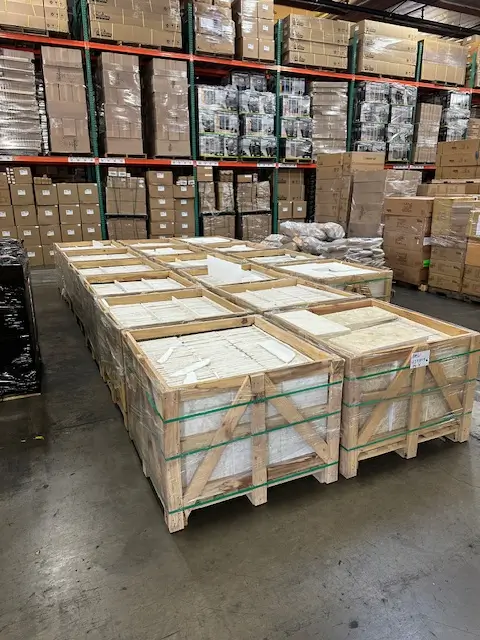
These ranges reflect warehouse pricing from domestic and imported stock — projects requiring custom sizing or specialty cuts will move toward the upper end of each range. Reviewing warehouse stock availability before finalizing your specification avoids lead-time surprises that delay project starts. Your total installed cost adds $8-$15 per square foot in labor and base materials, depending on site access and existing subgrade conditions.
Sealing Schedules Under Arizona’s Sun Conditions
Sealer performance under Arizona’s UV load degrades faster than manufacturers’ national averages suggest because those averages incorporate cooler, lower-UV geographies. A sealer rated for a 3-year reapplication cycle in Chicago or Portland typically delivers 18-24 months of meaningful protection in Phoenix before UV polymerization breaks down the crosslinked polymer structure. Planning your sealing budget based on national product claims is a reliable way to underestimate your 10-year maintenance costs.
Penetrating sealers — specifically silane-siloxane formulations — outperform topical film-forming sealers for Arizona walkway applications because they don’t create a surface film that UV can degrade and delaminate. Topical sealers on natural stone in direct Arizona sun frequently develop a milky, peeling appearance within 18 months because the film absorbs UV stress from above while moisture vapor pressure pushes from below. The peeling itself becomes a maintenance problem that requires stripping before reapplication.
- Silane-siloxane penetrating sealers: reapply every 18-24 months in full Arizona sun, every 24-36 months in shaded or covered walkway applications
- Solvent-based penetrating sealers: slightly longer UV resistance than water-based equivalents, 24-30 month intervals in moderate sun exposure
- Topical film-forming sealers: not recommended for open-sky Arizona walkways due to UV delamination risk — acceptable for covered patio applications only
- Color-enhancing sealers: expect visible UV degradation to sealer appearance within 12-18 months in peak sun zones, plan maintenance costs accordingly
Your sealing cost per square foot runs $0.35-$0.75 for penetrating sealer material plus application labor. Over a 15-year project life, sealing adds $4.00-$8.50 per square foot to your total cost depending on reapplication frequency and material choice — a meaningful number that belongs in your initial budget planning for affordable walkway pavers across Arizona properties.
Finish Selection for Long-Term UV Resistance
The finish you specify determines how visibly UV exposure manifests on your walkway surface over time. This isn’t a minor aesthetic detail — it’s a decision that affects how often your walkway looks like it needs attention and how much remediation costs when color shift becomes noticeable.
Tumbled finishes represent the most forgiving choice for sustained UV exposure. The irregular, softened surface texture reads as intentionally aged, which means the gradual mineral oxidation and color evolution that UV drives in natural stone blends into the aesthetic rather than fighting it. Homeowners who specify tumbled travertine or tumbled limestone in Arizona typically report satisfaction with appearance through year 10-12 without intervention, compared to year 4-6 for honed finishes before touch-up becomes desirable.
Honed finishes occupy the middle ground. The flat, matte surface shows UV-driven color shift more readily than tumbled, but far less dramatically than polished. For walkway applications in Scottsdale where architectural context calls for clean lines and a refined appearance, honed limestone or travertine with a quality penetrating sealer represents a practical compromise between aesthetics and UV maintenance requirements.
- Tumbled: best UV aging performance, suits Mediterranean and rustic architectural contexts
- Brushed: good UV performance, slight texture variation helps mask oxidation, suits transitional styles
- Honed: moderate UV visibility, requires more consistent sealing attention, suits contemporary and clean-line designs
- Polished: poor UV aging performance for outdoor Arizona applications — reserve for covered entryways and interior transitions only
Budget Planning for Walkway Pavers in Arizona
Achieving affordable walkway pavers across Arizona properties requires thinking in total project cost, not material cost alone. A complete budget for a standard residential walkway project — 200-400 square feet, straight or gently curved layout, residential access — typically breaks down as follows across cost tiers:
- Entry-level budget ($18-$24 per square foot installed): concrete pavers, standard installation, basic sealing — expect higher ongoing maintenance costs and visible UV fading within 3-5 years
- Mid-range budget ($24-$34 per square foot installed): travertine or limestone pavers, proper base preparation, penetrating sealer — solid 15-20 year performance with biennial maintenance
- Premium budget ($34-$50+ per square foot installed): bookmatched natural stone, custom sizing, premium base system, professional installation — 20-30 year performance horizon with appropriate maintenance
Your base preparation costs vary significantly with Arizona soil conditions. Expansive clay soils require deeper aggregate bases — typically 6-8 inches of compacted Class II base rather than the 4-inch standard — adding $2-$3 per square foot before a single paver is placed. Caliche layers, common across much of the Phoenix metro, require breaking and removal if they’re at the wrong depth, which adds equipment time and disposal costs your estimate must capture.
Delivery logistics also shape your total cost. If your project site has restricted truck access — narrow side yards, low-clearance gates, or steep grade changes — material staging becomes a labor cost multiplier. Verifying truck clearances before ordering prevents expensive redelivery fees and scheduling delays. At Citadel Stone, we review site access with clients before confirming delivery logistics, which consistently prevents the clearance surprises that inflate project costs mid-installation.
Thickness Requirements That Affect Pricing
Paver thickness selection directly impacts your material cost and your long-term UV maintenance math. Thicker pavers aren’t just structurally stronger — they provide more mineral mass to absorb and distribute UV stress, which means surface degradation penetrates a smaller percentage of total stone depth before you reseal. A 2-inch travertine paver that loses 1mm of surface clarity to UV oxidation has lost 5% of its depth — a 1.25-inch paver under identical conditions has lost 8% of its depth, with proportionally greater structural and aesthetic impact.
For residential walkway applications, the standard thickness tiers run:
- 1.25-inch (30mm): appropriate for pedestrian-only walkways with well-compacted base, lower material cost but shallower UV margin
- 1.5-inch (40mm): recommended minimum for Arizona residential walkways receiving occasional vehicle crossings near garage entries
- 2-inch (50mm): preferred specification for walkways adjacent to driveways, high-traffic entries, or installations over marginal subgrades
- 2.5-inch and above: commercial applications and heavy vehicular loading — rarely required for residential walkways
The price differential between 1.25-inch and 2-inch material runs approximately $1.00-$2.50 per square foot depending on stone type. Over 300 square feet, that’s $300-$750 in additional material cost that buys you meaningfully better UV performance longevity and structural reserve capacity. It’s rarely the wrong trade-off in Arizona conditions, and understanding this dimension of paver walkway pricing per square foot in Arizona helps you evaluate quotes accurately rather than defaulting to the lowest upfront number.
Regional Cost Variables Across Arizona
Walkway paver costs Arizona homeowners encounter aren’t uniform across the state — geography introduces real cost variables that affect both material specifications and installation pricing. Elevation is the primary driver of specification divergence.
Low desert projects in the Phoenix metro and surrounding communities operate in a pure UV-and-heat environment where freeze-thaw cycling is essentially irrelevant. Your specification priorities are UV-resistant material selection, penetrating sealer systems, and drainage geometry that manages monsoon-season runoff. The cost pressures here come from labor demand in a competitive market and the premium that quality UV-stable materials command.
Higher elevation communities introduce freeze-thaw cycles alongside Arizona’s UV intensity — a combination that challenges materials more aggressively than either stress alone. Projects in Tucson at 2,400 feet sit at the threshold where winter temperature drops occasionally reach freezing, and the specification calculus shifts toward denser stone with lower water absorption rates that resist freeze-thaw spalling while also handling UV exposure. Travertine at Tucson elevations requires filled-and-honed specifications rather than open-vein styles to minimize water infiltration into the voids during freeze cycles.
Material freight costs vary across the state based on distance from distribution warehouses. Warehouse inventory depth also affects lead times — confirming warehouse stock levels before committing to a project schedule prevents delays when specific stone varieties are in high demand. Projects in remote or high-elevation areas often absorb $0.50-$1.50 per square foot in additional delivery cost compared to metro Phoenix area installations. That cost differential belongs in your budget from day one — not as a surprise line item when the delivery quote arrives.
Color Stability and Long-Term Appearance Retention
Color selection for Arizona walkways requires you to work with UV rather than against it. Stone colors that are UV-stable at the mineral level — warm creams, buff tones, pale grays, and sandy beiges — maintain visual consistency because their dominant minerals (calcium carbonates, feldspars, quartz) are photochemically stable under sustained UV exposure. These tones also reflect more solar radiation, reducing surface temperatures that can stress the setting bed below.
Darker natural stones present a specific UV trade-off. The dark color that makes basalt and certain dark granites visually striking also means they absorb a higher proportion of solar radiation — surface temperatures on unshaded dark pavers in Phoenix summer conditions can reach 160-180°F at midday. That thermal stress cycles the paver material through extreme expansion and contraction daily, which accelerates joint sand degradation and can create setting bed movement over time if your base system isn’t engineered for it.
For clients committed to darker aesthetics, shading structures — pergolas, shade sails, or strategic tree placement — fundamentally change the UV and thermal performance equation. A dark basalt walkway under 60% shade cover performs closer to a lighter stone in full sun because both the UV photon load and the surface temperature peak are reduced. This is a design integration conversation worth having with your landscape architect before finalizing material selection.
Understanding the full scope of color retention costs is easier when you’re working with a supplier who has evaluated the same materials across multiple Arizona seasons. Citadel Stone paver costs Arizona resources include specific guidance on which stone varieties have demonstrated reliable color stability across our regional project portfolio, helping you make selection decisions grounded in observed field performance rather than manufacturer marketing data.
Common Budget Mistakes Arizona Homeowners Make
The gap between a walkway budget that holds and one that balloons mid-project consistently traces to the same set of underestimated line items. Understanding these ahead of time positions you to plan accurately rather than absorb surprises. These mistakes affect how walkway paver costs Arizona homeowners actually pay diverge from what was quoted at the outset.
- Underestimating base preparation depth: Arizona soils require 4-8 inches of compacted aggregate base depending on subgrade conditions — generic estimates that assume 4 inches for all sites consistently underrun in expansive soil zones
- Ignoring sealer cost over the project life: budgeting only for initial sealing omits $4-$8 per square foot in 15-year maintenance — this number belongs in your total cost comparison when evaluating material options
- Selecting finish for aesthetics without UV consideration: polished finishes that look impressive in a showroom require dramatically higher maintenance frequency in Arizona sun than honed or tumbled alternatives
- Skipping truck access verification before ordering: delivery surcharges for difficult access sites can run $200-$600 per delivery — confirm truck clearances before the material leaves the warehouse
- Using national sealer reapplication schedules: Arizona’s UV environment degrades sealers 30-50% faster than cooler, lower-UV regions — recalculate maintenance intervals using Arizona-specific data
- Omitting waste factor: order 10-15% over calculated square footage to account for cuts, breakage, and future repairs from warehouse-matched inventory — sourcing matching material years later is difficult
The waste factor point deserves emphasis. Natural stone from the same quarry lot shares color and veining characteristics. When you order replacement material three years after installation to repair a damaged section, you’re unlikely to find a perfect match from current warehouse inventory. Ordering 12-15% over your measured quantity and storing the surplus protects your long-term repair options at a minimal upfront cost.
Getting Your Arizona Walkway Paver Budget Right
Walkway paver costs in Arizona are fundamentally a UV management problem expressed as a financial decision. The materials and specifications that perform well under Arizona’s sustained UV exposure — dense natural stone, penetrating sealer systems, UV-stable finishes, adequate thickness — deliver better lifecycle economics than budget choices that look attractive on a per-square-foot basis but require accelerated maintenance and earlier replacement. Getting that initial specification right is worth the additional planning time before a single paver is ordered.
The AZ paver material cost comparison guide framework outlined here gives you a working structure for evaluating quotes side by side — not just on upfront material cost, but on sealing intervals, finish durability, thickness margins, and regional freight variables that determine your true 15-year cost of ownership.
As you finalize your material selections and installation plan, the practical execution matters as much as the specification itself. For step-by-step field guidance on bringing your walkway project from material delivery to finished installation, How to Install Walkway Pavers in Arizona: Step-by-Step Guide covers the installation sequence in detail, including base compaction standards and joint filling techniques specific to Arizona conditions.
For Gilbert, Flagstaff, and Yuma buyers planning paver walkway budgets, Citadel Stone provides detailed material breakdowns so every square footage estimate reflects accurate per-unit costs.