
Budgeting accurately for a slate paver cost guide Arizona project means confronting a cost structure that looks deceptively simple on the surface — price per square foot — but actually involves freight zones, regional labor rates, and material sourcing decisions that can swing your total investment by 40% or more. The square footage number your contractor quotes is really just the starting point. Understanding what drives the full cost picture in Arizona’s market is what separates a well-executed project from one that runs over budget before the first paver is set.
What Drives Slate Paver Pricing in Arizona
Arizona sits in a logistically complex position for natural stone supply. Most domestic slate comes from quarries in the Northeast, Mid-Atlantic, or is imported from Brazil, India, and China — meaning freight distance to Arizona is substantial regardless of origin. You’re paying for material to travel a long way, and that reality shows up in the landed cost at your jobsite. Slate paving price per square foot Arizona typically runs between $8 and $22 depending on grade, thickness, and finish, but that’s the material cost alone before installation.
The regional market in Arizona also has a tiered labor cost structure. Hardscape crews in metro Phoenix charge differently than those working in smaller markets, and specialty stone installers who know how to set cleft-face slate properly command a premium. You’ll want to separate material cost from installation cost in every quote you receive — contractors who bundle them make it nearly impossible to comparison-shop either component effectively.
- Material freight from origin quarry to Arizona adds $1.50–$4.00 per square foot depending on shipping method and pallet count
- Thicker formats (1.5″ to 2″ nominal) weigh more per pallet, increasing truck freight costs directly
- Irregular cleft-face slate requires more cutting waste allowance — typically 12–18% overage vs. 8–10% for gauged slate
- Arizona’s labor market for skilled stone setters runs $6–$12 per square foot for installation, with Phoenix metro rates at the higher end
- Base preparation in caliche-heavy soils adds mobilization cost that doesn’t appear on material quotes
Material Grades and Their Real Cost Implications
Slate comes in grades that the industry doesn’t always advertise transparently, and Arizona homeowners navigating this market for the first time often get confused by conflicting specifications. Commercial-grade slate, sometimes called architectural grade, has consistent thickness within a tighter tolerance — usually ±1/16″ on gauged product. It costs more upfront but reduces installation labor because setting beds need less shimming and adjustment. Budget-grade slate with wider thickness tolerances saves on material cost but adds 15–25% to installation time, which often negates the savings entirely.
The finish matters for both aesthetics and total project cost. Natural cleft slate has the classic textured surface that most homeowners picture, but it creates more cutting complexity at borders and steps. Honed or gauged slate with a flatter surface cuts cleaner and installs faster. For budget planning for slate stone pavers in Arizona, you should factor finish into your labor estimate — not just your material quote.
- Architectural-grade gauged slate: $12–$22 per square foot material cost in Arizona
- Standard residential slate (natural cleft, irregular): $8–$14 per square foot
- Budget commercial-grade irregular slate: $6–$10 per square foot but with higher cutting waste
- Imported Indian multicolor slate: $7–$12 per square foot, widely available but with more thickness variation
- Brazilian black slate (premium finish): $15–$22 per square foot, tighter tolerances, excellent longevity
One detail most spec sheets gloss over: Indian slate’s mica content varies significantly between quarry batches. Higher mica content looks striking in photos but delamination risk increases in applications with freeze-thaw exposure — relevant in northern Arizona — or in areas where the surface stays wet and dries rapidly. You’ll want to ask specifically about mica content when sourcing slate for elevated sites or shaded patios that hold moisture longer.
Freight, Sourcing, and Lead Times in Arizona
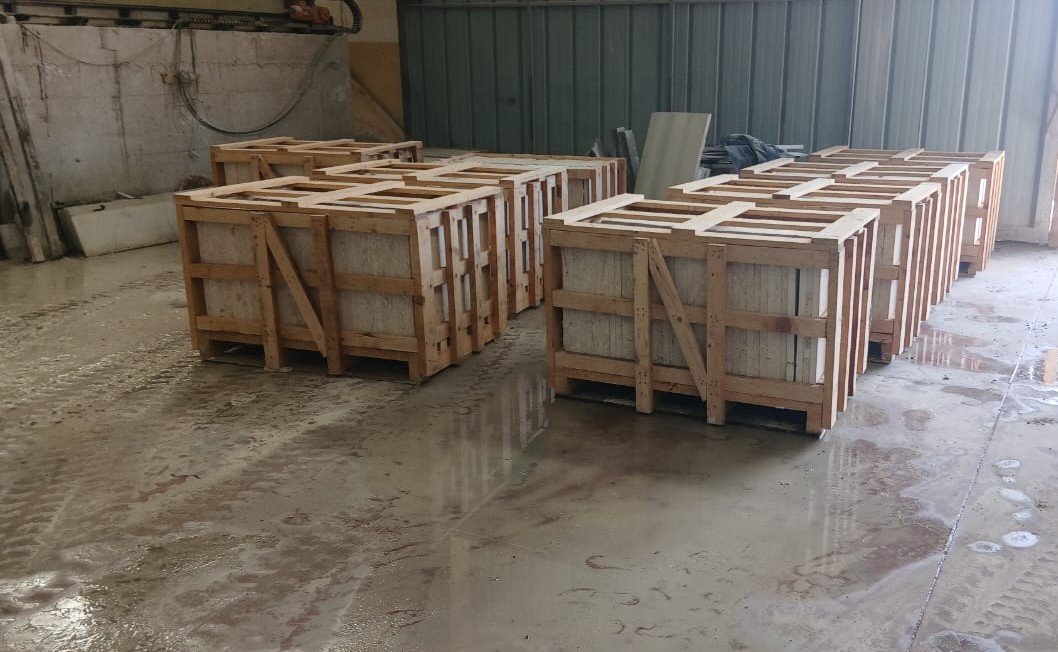
Your total slate paver investment is heavily influenced by sourcing decisions that happen before a single pallet leaves the warehouse. Importing directly from overseas quarries sounds like a cost-saving move, but minimum order quantities typically start at 2,000 square feet, lead times run 8–14 weeks for container shipping, and customs clearance adds unpredictable delays. For most residential projects in the 500–1,500 square foot range, you’re better served by a regional distributor who maintains warehouse inventory in Arizona.
Citadel Stone maintains stocked warehouse inventory in Arizona, which reduces your lead time to 1–2 weeks on standard formats rather than the multi-month wait that import-direct purchasing requires. That lead time difference has real budget implications — short lead times let you keep your installation crew on schedule without dead time charges, which can run $800–$1,500 per day for an experienced hardscape crew sitting idle waiting on material.
For projects in Tempe and surrounding East Valley communities, local warehouse access also means you can order supplemental material quickly if your initial quantity estimate runs short — a surprisingly common situation when cutting irregular formats around curved pool decks or irregular lot boundaries. Running short on a special-order import can delay project completion by 10–12 weeks, a cost most homeowners don’t price into their initial budget planning for slate stone pavers in Arizona.
- Domestic distributor inventory: 1–2 week lead time, higher per-square-foot cost but no minimum quantity penalty
- Import-direct ordering: 8–14 weeks, lower material cost but high minimum quantities and freight risk
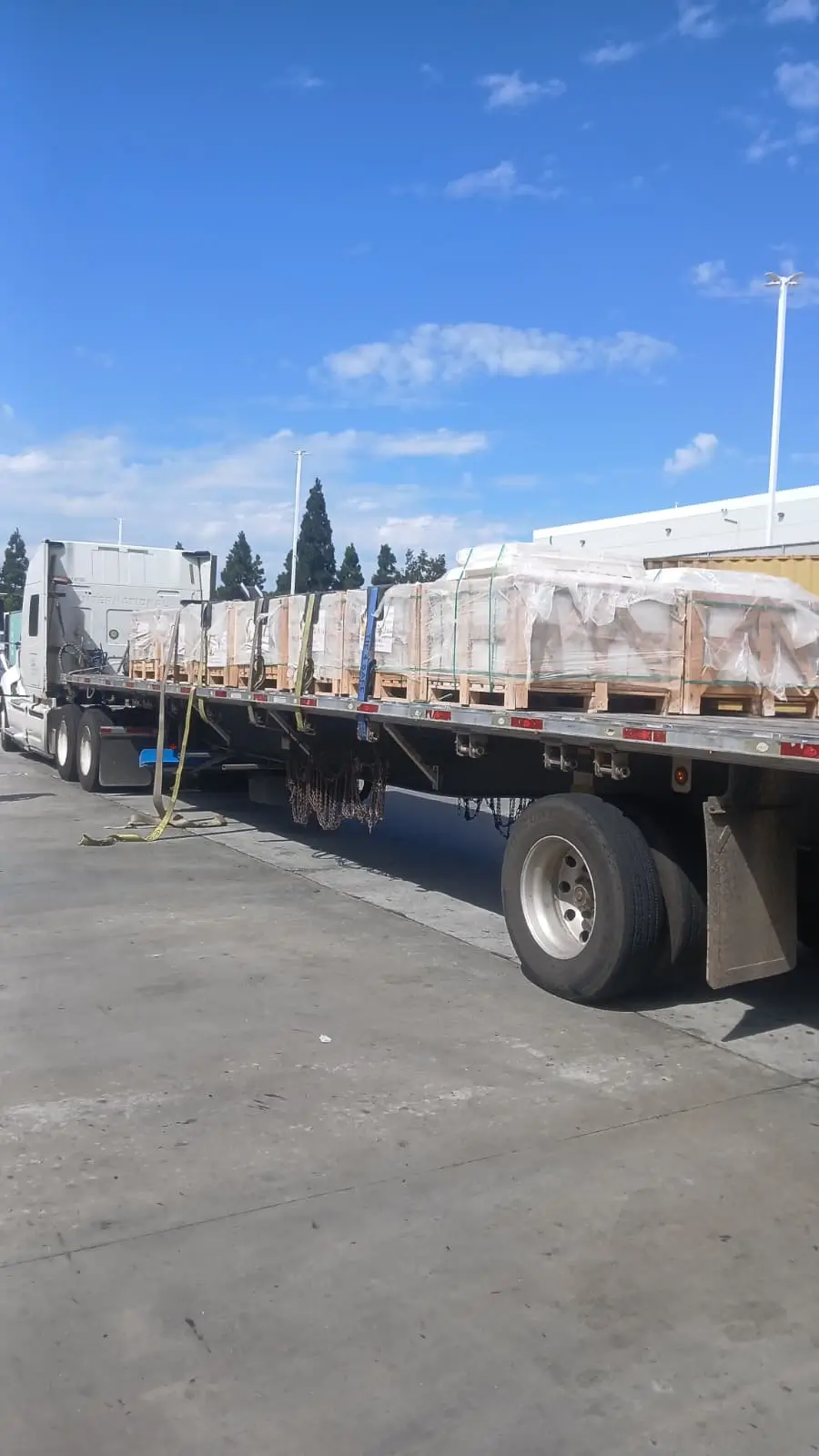
- Truck freight within Arizona from regional warehouse: typically $150–$350 per delivery depending on distance and pallet count
- Order 10–15% overage on natural cleft formats to account for cutting waste and future repair matching
- Verify warehouse stock before scheduling your installation crew — delivery delays cost more than the material savings from waiting
Browse our slate pavers for sale in Arizona to review current format availability, thickness options, and regional stock levels before finalizing your project timeline.
Labor Cost Ratios and Value Engineering
The material-to-labor cost ratio for slate installation in Arizona typically runs 45:55 to 50:50 on residential projects — meaning you’ll spend nearly as much on labor as you do on material. This ratio shifts when you choose simpler formats and installation patterns. A straightforward running bond with gauged slate in a standard 12″×24″ format will come in at the low end of labor costs. A herringbone or diagonal pattern with irregular natural cleft pieces will push labor to 60% or more of your total project cost.
Value engineering your slate project doesn’t mean compromising on quality — it means making deliberate format and pattern choices that match your budget reality. An affordable slate pavers approach across Arizona often comes down to these decisions: choose a gauged product over irregular cleft, select a simple installation pattern, use standard field sizes with a contrasting border rather than custom cut borders throughout, and concentrate budget on high-visibility areas while using a simpler material on secondary zones.
- Simple running bond installation: labor savings of 20–30% compared to complex patterns
- Gauged slate vs. irregular cleft: reduces installation time by 15–20% for equivalent square footage
- Concentrating premium material on patio areas and using a complementary product for pathways can reduce per-square-foot average cost by 18–25%
- Combining slate field pavers with a limestone or travertine coping reduces specialty cutting costs at edges and steps
- Specifying a factory-cut border piece eliminates job-site cutting labor on straight-run borders
In Phoenix, hardscape contractors often recommend gauged slate for covered patio applications where UV exposure is reduced by a shade structure — the flatter surface reads cleaner under overhead lighting and requires less grout joint adjustment during installation, directly reducing your labor hours on large format covered outdoor rooms.
Base Preparation Costs Unique to Arizona
Arizona’s soil conditions create base preparation scenarios you won’t find in most national slate installation guides, and ignoring them is the fastest way to blow your project budget on repairs within 5 years. Expansive clay soils in the East and Southeast Valley, caliche hardpan across much of Central Arizona, and sandy decomposed granite native soil in the desert corridors all require different base approaches — and different cost structures.
Caliche hardpan is actually a benefit when properly prepared. It provides an excellent, non-compressible sub-base that reduces the required aggregate depth from the standard 6–8 inches down to 4 inches in many cases. But you need to scarify and proof-roll it before placing aggregate, which adds equipment mobilization cost — typically $300–$600 for residential scale. Expansive clay is the opposite situation: you’ll need to excavate deeper (sometimes 10–12 inches), place compacted aggregate in lifts, and consider a geotextile separation fabric to prevent clay migration into your base over time.
- Standard crushed aggregate base (non-expansive soil): $2.50–$4.00 per square foot installed
- Expansive clay base preparation with deeper excavation: $4.50–$7.00 per square foot
- Caliche scarification and proof-roll: $300–$600 mobilization plus $0.75–$1.25 per square foot
- Geotextile separation fabric: $0.35–$0.65 per square foot installed
- Mortar-set applications (pool surrounds, elevated decks): add $3.50–$5.50 per square foot over sand-set cost
The mortar-set vs. sand-set decision also affects total project cost significantly. Sand-set slate over a well-prepared aggregate base works well for ground-level patios and walkways. Any application near water — pool surrounds, fountains, outdoor showers — should be mortar-set over a concrete substrate to prevent joint washout and lateral movement. Mortar-set adds cost but it’s the specification that makes the difference between a slate installation that looks great at year 15 and one that starts heaving and settling by year 4.
Sealing Costs and Long-Term Maintenance Budget
An Arizona homeowner slate paver investment guide is incomplete without an honest look at ongoing maintenance costs, because slate has specific sealing requirements that differ from other natural stones. Slate’s layered cleavage structure makes it resistant to surface absorption compared to travertine or limestone, but that doesn’t mean it’s maintenance-free. An impregnating penetrating sealer is the correct specification for exterior slate — not a topcoat sealer, which will peel and flake under Arizona’s UV intensity and thermal cycling between summer and winter.
Application of a quality penetrating sealer costs $0.75–$1.50 per square foot for the material alone, plus labor. You’re looking at reapplication every 3–5 years in Arizona’s climate depending on sun exposure and foot traffic levels. Shaded covered patios can stretch to the 5-year end of that range; full-sun south-facing applications need attention at 3 years. Budget $350–$800 for a 500-square-foot patio sealing service with a qualified applicator, and factor that into your 10-year ownership cost rather than treating it as a surprise expense.
- Initial sealing at installation: included or add $0.75–$1.50 per square foot if not included in contractor scope
- Reapplication cycle: every 3–5 years depending on sun exposure
- Professional sealing service for 500 sq ft: $350–$800 per application
- Iron staining from slate’s mineral content can appear in areas with regular water contact — a specialty iron stain remover ($25–$45 per treatment) handles this without damaging the surface
- Never use acidic cleaners on slate — they attack the mica and feldspar components and permanently dull the surface
Color and Format Selection for Arizona Conditions
Darker slate colors — deep charcoal, graphite, and black — absorb significantly more solar heat than lighter multicolor or gray-green tones. In full-sun Arizona applications, a dark slate surface can reach 160–175°F at peak afternoon in summer, which makes it uncomfortable for bare feet and increases the thermal stress on joint materials and setting beds. This is a practical cost and comfort consideration, not just an aesthetic one, because high surface temperatures accelerate sealer degradation and can cause premature joint sand washout from thermal expansion movement.
Multicolor Indian slate in rust, green, and copper tones tends to perform better thermally in unshaded Arizona applications — the lighter elements reflect more radiation. If your design brief calls for dark slate, specify it in covered or shaded zones and use a lighter complementary material in full-sun field areas. That blended approach is also a solid value engineering move: you get the design impact of premium dark slate where it reads best (under shade structures, at feature walls) while controlling surface temperature and maintenance cost in open areas.
In Tucson, where desert modernist and Sonoran architectural styles are prevalent, slate in earthy multicolor tones reads exceptionally well against adobe and stucco construction — and the slightly warmer color palette tends to blend with the natural desert palette better than a pure dark charcoal slate would. That regional aesthetic alignment is worth considering when you’re evaluating format options, because a material that looks right in its context tends to hold property value better over time.
- Light to medium slate tones (green-gray, multicolor rust): surface temperatures 15–25°F lower than dark charcoal under equivalent sun exposure
- Large format slate (18″×18″ and larger): fewer joints, cleaner aesthetic, but requires flatter sub-base preparation — tolerance tightens to ±1/8″ for large formats
- Standard field sizes (12″×12″, 12″×18″): easiest to source, fastest to install, lowest waste factor
- Irregular flagstone-style slate: highest character, highest cutting waste (15–22%), longest installation time
- Mixed-size patterns (ashlar layout): excellent for disguising site irregularities, moderate installation complexity
Total Project Cost Summary by Project Type
Pulling together material, freight, base preparation, installation, and sealing costs gives you a realistic total project budget range for different application types. These figures reflect Arizona market conditions and are intended as planning benchmarks — actual quotes will vary based on site-specific conditions, contractor availability, and the specific slate product you specify. Use these ranges when evaluating contractor bids; anything significantly below the low end of the range should prompt you to ask specific questions about what’s being omitted. The slate paving price per square foot Arizona contractors quote will only make sense once you know which cost layers are and aren’t included.
- Ground-level residential patio (500 sq ft, standard slate, sand-set): $9,500–$16,500 total installed
- Pool surround (300 sq ft, gauged slate, mortar-set over concrete deck): $9,000–$15,000 total installed
- Front entry walkway (150 sq ft, premium gauged slate, mortar-set): $5,500–$9,500 total installed
- Large outdoor living area (1,200 sq ft, mixed slate formats, complex pattern): $28,000–$48,000 total installed
- Covered patio addition (400 sq ft, dark charcoal slate, mortar-set): $12,000–$19,000 total installed
At Citadel Stone, we recommend getting a minimum of three itemized bids for any slate project exceeding $10,000. Ask each contractor to break out material cost, base preparation, installation labor, and sealing as separate line items — this structure lets you compare apples to apples and identify where significant variances are actually coming from. Our technical team can also review your project scope and help you identify where material specification changes could reduce total cost without compromising performance or longevity.
Truck access to your site affects delivery cost and sometimes dictates pallet staging logistics. If your project site has restricted access — a gated community with weight limits, a narrow driveway, or an elevated lot — discuss truck access with your supplier before finalizing your order. Delivery of heavy stone pallets to sites with restricted truck access may require a smaller boom truck or crane-assisted unload, adding $200–$500 to your freight cost that won’t appear on the base delivery quote.
Completing Your Slate Paver Cost Plan for Arizona
A complete slate paver cost guide Arizona project budget accounts for five cost layers: material, freight, base preparation, installation labor, and ongoing maintenance. Most homeowners budget accurately for the first three and underestimate the last two — which is exactly where projects run into trouble at the 5-year mark. Slate is a genuinely durable material with 25–40 year performance potential in Arizona conditions when it’s specified correctly, set on a proper base, and maintained with appropriate sealing on schedule. The material investment is sound; the installation and maintenance investment is what protects it.
Your best move before finalizing any budget is to lock in your material specification first — grade, format, finish, and thickness — and then get installation bids based on that specific scope. Vague material specs produce vague bids, and vague bids produce budget surprises. Approaching this as an informed Arizona homeowner slate paver investment guide process — starting with material selection and working outward to labor and maintenance costs — gives you the clearest path to an accurate total number. For the installation side of the equation, How to Install Slate Pavers in Arizona: Step-by-Step Guide walks through the technical installation sequence in detail, which will help you evaluate contractor methodology and ask the right questions during the bidding process.
Buyers in Flagstaff, Peoria, and Gilbert find that Citadel Stone’s slate paver formats, ranging from standard field sizes to large-format slabs, accommodate a broad range of Arizona project budgets.