
Front garden paving cost in Arizona carries a variable that most homeowners don’t account for until the excavator hits it — caliche. This dense, calcium carbonate hardpan layer sits anywhere from 6 to 30 inches below the surface across the Phoenix metro and extends across much of the state’s low desert. Your ground conditions, not your material choice, will often determine whether your front garden paving cost in Arizona runs 20% over budget or lands exactly where you planned. Understanding what’s beneath the surface before you commit to a material grade or layout is the most valuable step you can take.
What Caliche Means for Your Budget
Caliche isn’t a soft layer you can simply compact around. Breaking through it requires either a jackhammer, a demolition saw, or a skid-steer with a rotary head, and the rental or labor cost for that equipment can add $800 to $2,500 to your project before a single paver gets placed. The depth and thickness of the layer varies block to block across the Phoenix metro — in Mesa, many residential lots show a relatively shallow caliche band at 10 to 14 inches, which is actually manageable for most front garden paving designs if you’re working with a 4-inch aggregate base rather than a deeper excavation profile.
The critical question is whether your design calls for a flush installation that meets existing grade or a raised layout that can bridge over problem zones with fill. A flush installation means you’re excavating into caliche territory, while a raised planter-integrated design can sometimes avoid it entirely. That single decision can shift your front garden paving cost in Arizona by $4 to $8 per square foot before materials are even priced.
Soil Types Across Arizona and Their Cost Implications
Beyond caliche, Arizona’s soil profile breaks into a few distinct categories that affect your base preparation costs in ways that generic pricing guides completely ignore. Sandy loam soils common in the western Phoenix suburbs allow for easier excavation and excellent drainage, but they’re also prone to erosion under the edges of paving — which means you’ll need a more substantial edge restraint system to prevent lateral creep over time.
Expansive clay soils appear less frequently in the low desert but are more common in Flagstaff’s surrounding areas and in pockets throughout the East Valley. Clay soil expands and contracts seasonally, and that movement will telegraph into your paving surface unless you place a compacted decomposed granite or crushed aggregate layer thick enough to buffer the movement. The standard 4-inch base depth recommendation in moderate climates becomes a 6-inch minimum recommendation in clay-influenced soils — and that additional depth means additional excavation, material, and compaction labor.
- Sandy loam: easier excavation, lower base cost, requires edge restraint focus
- Caliche hardpan: adds $800–$2,500 for breaking and removal depending on depth and area
- Expansive clay pockets: require 6-inch minimum aggregate base, adding $1.50–$2.50 per square foot
- Decomposed granite native soil: excellent drainage, lowest base prep cost of the common Arizona soil types
- Rocky fill from prior grading: unpredictable compaction, may require proof-rolling before base placement
Material Pricing for Arizona Front Garden Paving
Material selection sits at the center of any Arizona front garden stone paving budget guide, but it’s rarely the largest cost variable once ground conditions are factored in. Natural stone pavers for front garden applications in Arizona typically range from $4 to $18 per square foot in material cost alone, with the spread driven primarily by stone type, thickness, and finish.
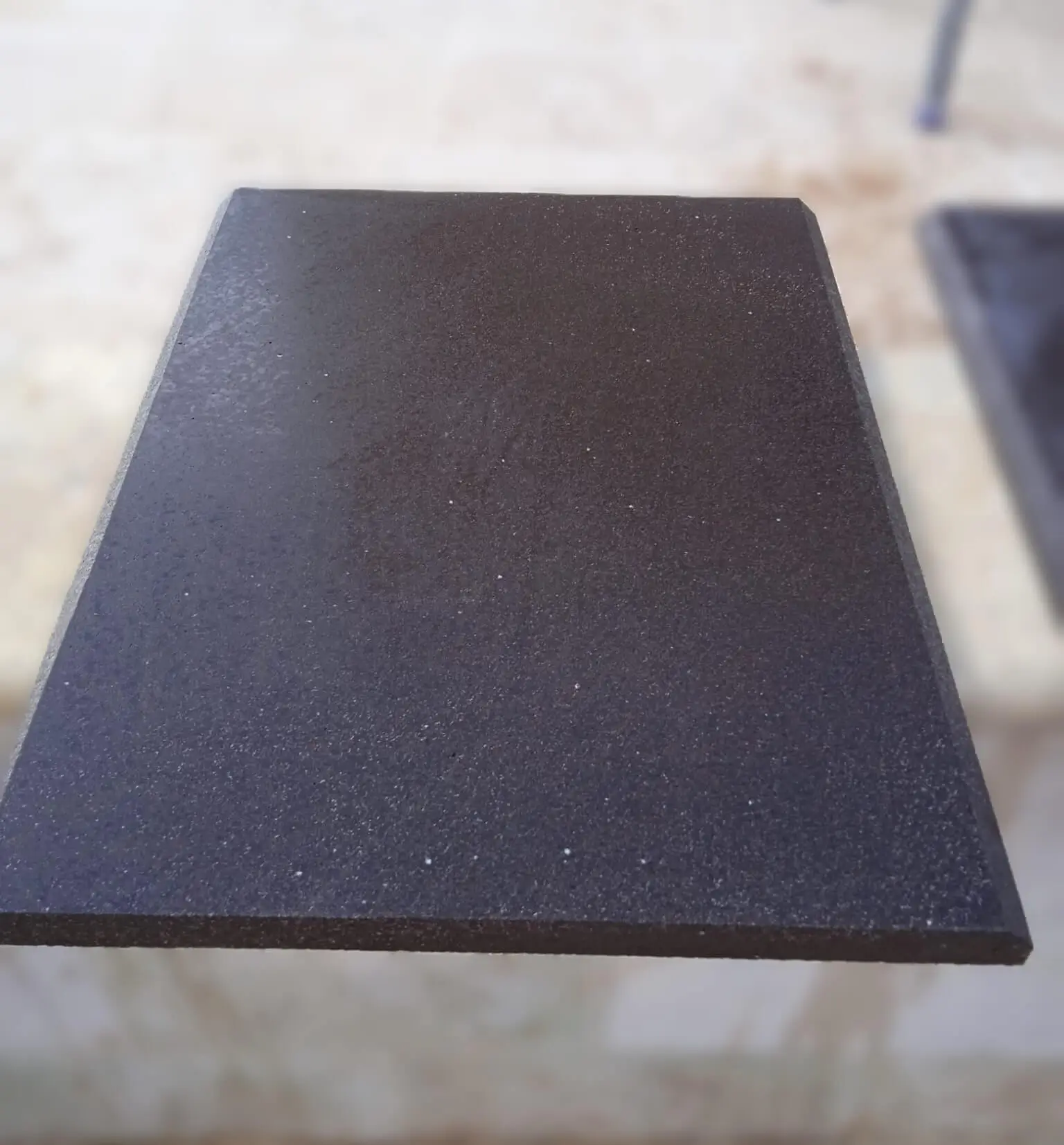
Travertine in a tumbled or brushed finish runs $5 to $9 per square foot and remains one of the most popular choices for Arizona front gardens because its thermal properties keep surface temperatures more manageable than solid concrete or dark porcelain. Limestone pavers land in a similar range at $5 to $10, with the advantage of a naturally textured surface that doesn’t require secondary finishing for slip resistance. Basalt tends to price higher at $9 to $14 per square foot due to its density and the cutting precision required for tight-joint installations.
- Tumbled travertine: $5–$9 per square foot, excellent heat management, natural slip resistance
- Brushed limestone: $5–$10 per square foot, consistent color tone, good bond strength with thin-set
- Basalt: $9–$14 per square foot, extremely dense, ideal for high-traffic entry areas
- Flagstone (irregular): $3–$7 per square foot material cost, higher labor due to fitting time
- Concrete pavers: $2–$5 per square foot, lower upfront cost but typically higher long-term maintenance in UV exposure
At Citadel Stone, we source front garden paving materials directly from quarry partners with specific performance profiles for desert climates, and our warehouse team runs density and absorption checks on incoming stock to confirm the material will meet the thermal cycling demands of Arizona summers before it ever reaches your project.
Installation Labor and Base Preparation Costs
Labor for front garden paving in Arizona runs between $8 and $18 per square foot depending on installation method, pattern complexity, and site access. A straight-lay grid pattern on a well-prepared site with clean truck access and minimal edge work sits at the lower end. A circular or radial pattern with multiple cut borders, raised planter edges, and restricted driveway access can push that figure considerably higher.
Base preparation — separate from demolition of existing material — adds $2 to $5 per square foot for excavation, compaction, and aggregate placement. Projects in Gilbert where the soil profile tends to be sandier and more uniform often see base costs at the lower end of that range, while projects with irregular caliche encounters or clay-influenced subgrade push toward the upper end. The precision of your compaction work at this stage determines the long-term stability of the entire installation — and a poorly compacted base will show up in your paving surface within 18 to 24 months as settled low spots and cracked joints.
What gets underestimated in most how much does front garden paving cost in Arizona conversations is edge restraint and border work. Every linear foot of a clean-cut border edge requires precise saw-cutting of the field stone, tight fitting, and often a concrete haunch or commercial plastic edge restraint below grade. Budget $12 to $22 per linear foot for a finished cut edge, and count your perimeter carefully before assuming edge work is a minor line item.
Total Project Cost Ranges for Common Front Garden Sizes
For a practical frame of reference, consider how front garden hardscape pricing for AZ homeowners stacks up across typical residential footprints. A 200-square-foot front garden with a clean rectangular layout, standard caliche removal at moderate depth, and mid-range natural stone typically runs $3,800 to $5,500 fully installed. A 400-square-foot project with a curved border, a small dry-set planter surround, and premium travertine pushes to $9,000 to $14,000 depending on site conditions and contractor rates in your specific area.
The wide range in those numbers isn’t contractor inconsistency — it reflects genuine variability in soil conditions, material grades, and design complexity. Getting three quotes without specifying your soil conditions and design intent will produce three numbers that are impossible to compare meaningfully. You’ll get a more accurate picture by commissioning a brief soil probe before going out to bid, which costs $150 to $300 and eliminates the biggest pricing unknown before negotiations begin.
- 200 sq ft, rectangular, mid-range stone: $3,800–$5,500 installed
- 300 sq ft, curved edges, travertine: $6,500–$9,500 installed
- 400 sq ft, mixed materials, premium stone: $9,000–$14,000 installed
- Caliche removal add-on (if encountered): $800–$2,500 depending on depth and area
- Additional base depth for clay soil: $600–$1,000 for a 300 sq ft project
For a closer look at materials appropriate to these budget tiers and how they perform across Arizona climates, Citadel Stone garden paving for Arizona outlines material grades with specific performance context for desert conditions.
Affordable Paving Options That Still Perform in Arizona Heat
Affordable paving options for Arizona front gardens don’t have to mean concrete pavers and a generic grid pattern. Some of the most cost-effective approaches within this Arizona front garden stone paving budget guide use irregular flagstone — particularly sandstone or a local Arizona flagstone — in a dry-set or sand-bed installation over compacted decomposed granite. Material costs run $3 to $6 per square foot, and the organic layout actually suits desert landscaping aesthetics better than most formal stone patterns.
The trade-off with flagstone is fitting time. An irregular layout requires a skilled stone setter who can read the material and minimize waste — a less experienced crew will spend two days cutting what an expert fits in a morning, and the labor cost differential can eliminate any material savings. Confirm your contractor has worked with irregular stone specifically, not just manufactured pavers.
Concrete pavers deserve mention here even if they’re not natural stone. A quality interlocking concrete paver from a reputable manufacturer can run $2.50 to $4.50 per square foot, and modern profiles carry UV-stable pigments that hold color reasonably well for 8 to 12 years under Arizona sun. The realistic limitation is thermal mass — concrete pavers absorb and re-radiate heat more aggressively than natural stone, which affects the comfort of your entry path during peak summer afternoons.
Drainage Design and How It Affects Your Total Cost
Arizona’s monsoon season delivers rainfall events that can drop an inch of rain in under 30 minutes, and your front garden paving needs to handle that volume without channeling water toward your foundation. Drainage design isn’t optional — it’s code-required in most municipalities and it directly affects how your base system is constructed.
Projects in Chandler where residential lots tend to have relatively flat grades often require deliberate positive slope engineering into the paving design — a 1.5 to 2% cross-slope minimum toward a street or side-yard drain. Getting that slope right on a caliche subgrade is more complex than on a graded gravel pad, because you can’t always achieve the drainage geometry you want by grading the subgrade alone. Sometimes you’re building up one side of the base system to create slope, which adds material volume and cost.
Permeable paving options — open-joint natural stone over a gravel reservoir base — address drainage at the source by letting water percolate through rather than sheet off. The base system for a permeable installation typically costs 20 to 30% more than a standard compacted aggregate base due to the deeper reservoir depth requirement, but it can eliminate the need for a surface drain channel and the trenching that goes with it. On a 300-square-foot front garden, that trade-off often comes out roughly even in total cost while delivering a better water management result.
Ordering, Logistics, Lead Times, and Project Timing
Front garden paving cost in Arizona doesn’t end at material and labor — delivery logistics and project timing affect your total spend more than most budget guides acknowledge. Natural stone imported from overseas quarries carries a 6 to 10 week lead time from order confirmation, and if your contractor’s schedule is tight, a late delivery means rebooking labor at whatever rate is available, which is rarely the rate you originally agreed on.
Domestically warehoused stone cuts that lead time significantly. Citadel Stone maintains Arizona warehouse inventory on high-demand front garden paving materials, which typically allows 1 to 2 week turnaround from confirmed order to truck delivery at your site. That kind of availability lets you coordinate material delivery and contractor scheduling with real confidence rather than hoping quarry production timelines hold.
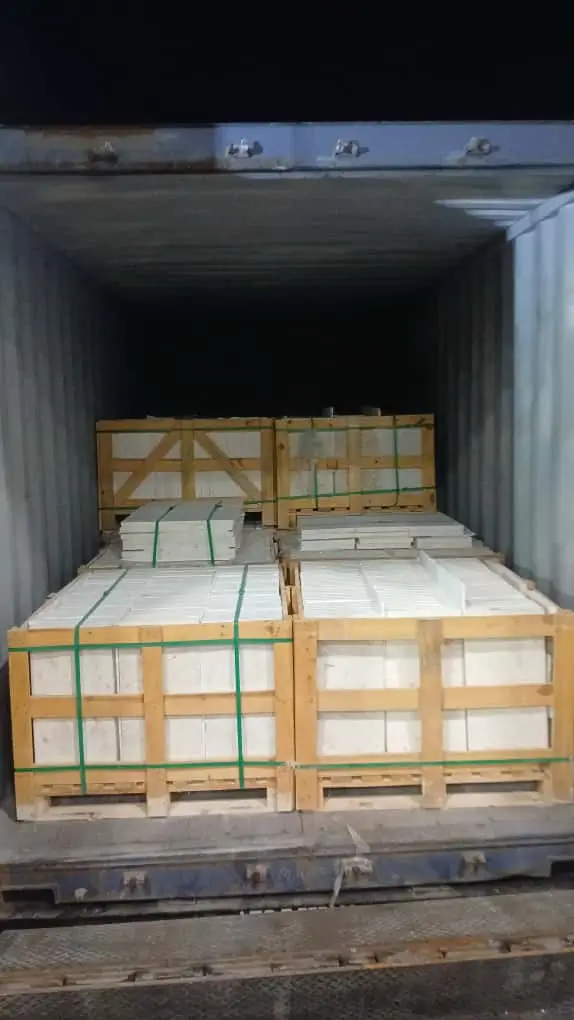
Truck access to your site deserves a specific conversation with your contractor before ordering. A full pallet of natural stone runs 2,500 to 3,500 pounds, and most front garden projects require two to four pallets depending on size and material thickness. A standard flatbed truck needs approximately 40 feet of straight clearance to place a pallet safely with a forklift attachment. Tight cul-de-sacs, overhead utility lines, or low-clearance entries may require a smaller truck and multiple trips, which adds $150 to $400 to delivery costs — not a deal-breaker, but worth confirming before the truck shows up.
- Imported stone lead time: 6–10 weeks from confirmed order
- Domestically warehoused stone: 1–2 weeks typical availability
- Standard pallet weight: 2,500–3,500 lbs per pallet depending on stone type and thickness
- Truck clearance requirement: 40 feet minimum for standard flatbed with forklift
- Small-truck surcharge for restricted access: $150–$400 per additional trip
Decision Points
Bringing front garden paving cost in Arizona into a manageable range comes down to making your critical decisions in the right sequence. Start with a soil probe to identify caliche depth and soil type before you select a material or contact a contractor — that one step eliminates the largest budget unknown before any negotiations begin. Follow that with a drainage assessment, because your slope and permeability strategy determines both your base system and your material options simultaneously.
Material selection follows naturally once you know your base requirements. Your soil conditions, drainage design, and budget ceiling will narrow the material field considerably, and at that point the choice between travertine, limestone, or flagstone becomes a design decision rather than a financial gamble. Working through the full installation sequence — soil probe, drainage design, material specification, contractor quote — in order ensures the numbers will make sense when they come in.
Once your material specifications are confirmed, the installation process itself shapes the longevity of the result as much as the stone you choose. For a detailed look at how proper base preparation and installation sequencing work together on Arizona sites, How to Install Front Garden Paving in Arizona walks through the technical steps that determine whether your installation holds for 10 years or 25. Residents in Gilbert, Peoria, and Yuma working through front garden paving budgets can explore Citadel Stone’s material grades, each selected for long-term performance in Arizona desert conditions.