
Drainage failure is the single most common reason Arizona patio installations deteriorate ahead of schedule — and your choice of outdoor patio slab materials in Arizona determines how well the surface handles what the desert sky actually delivers. Arizona’s monsoon season dumps concentrated rainfall events that can exceed two inches per hour across low desert valleys, and that hydraulic load tests every joint, every slope, and every base layer in your patio system. Choosing between natural stone and concrete isn’t just an aesthetic decision here; it’s a structural one shaped directly by how water moves across and beneath the surface.
Why Water Management Defines Arizona Patio Slab Performance
Most people assume Arizona is purely a heat story. The drainage story is more consequential. Monsoon events between July and mid-September create short, violent rainfall episodes where your patio surface needs to shed water faster than a typical moderate-climate design assumes. When you’re evaluating outdoor patio slab materials for an Arizona comparison, the material’s surface porosity, texture coefficient, and joint-to-field ratio all directly affect how quickly runoff evacuates the surface plane.
Here’s what most specifiers overlook: clay-expansive soils prevalent throughout the Phoenix basin and the Tucson corridor swell when wet and contract during dry cycles. That cyclical movement works against any rigid slab system that doesn’t account for differential settlement. Your base preparation needs to address this soil behavior before you commit to a surface material, because the slab choice you make interacts with that base instability differently depending on whether it’s natural stone or concrete.
- Natural stone’s modular format allows differential movement without full-surface cracking — each unit can shift slightly without propagating failure
- Concrete slabs behave monolithically, meaning soil movement concentrates stress at control joints and slab edges
- Permeable joint systems in natural stone installations can reduce surface ponding by directing water into the base aggregate before it channels laterally
- Arizona’s drought-to-monsoon moisture swing can span 8–12 months, so base materials must tolerate both extremes without losing bearing capacity
How Natural Stone Handles Arizona’s Monsoon Drainage Demands
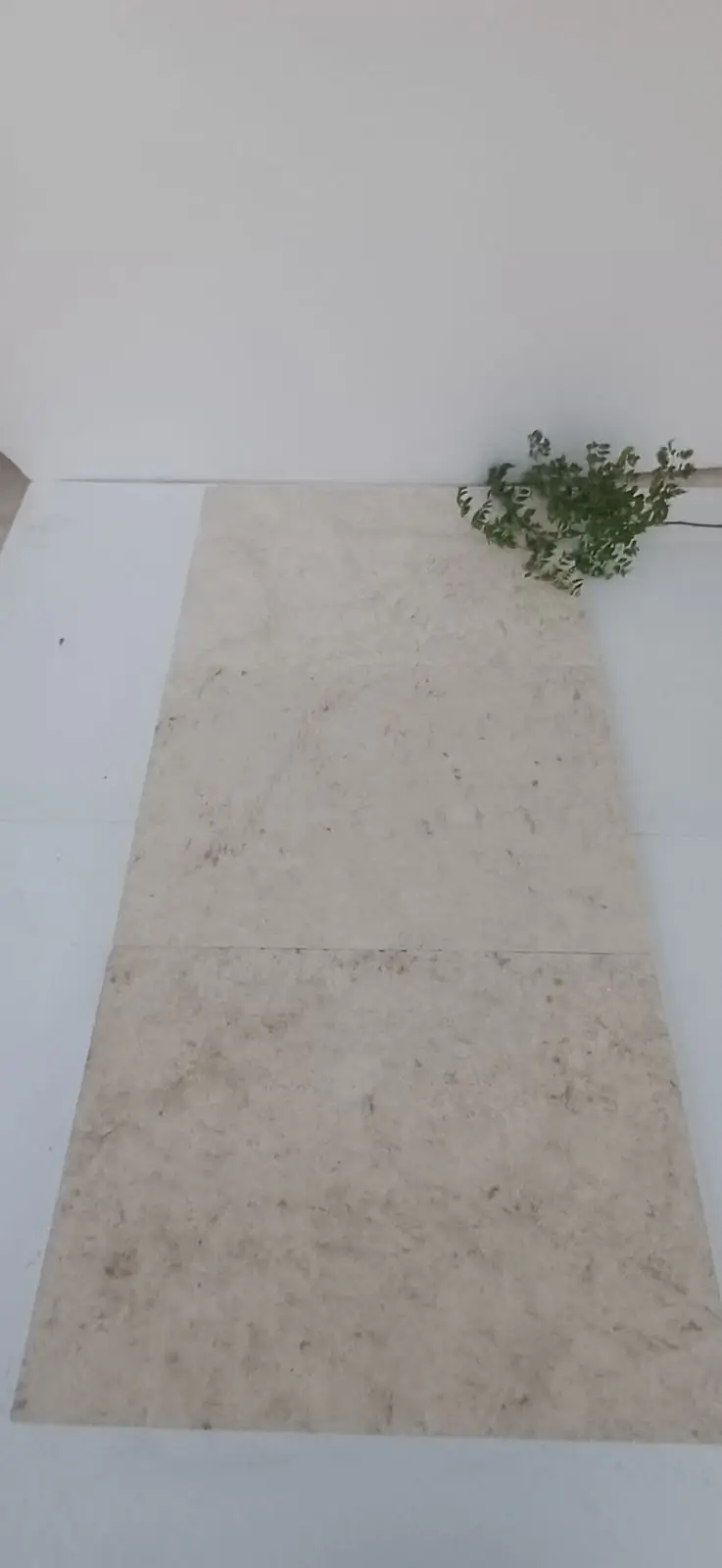
Natural stone’s performance advantage in high-rainfall events comes from its joint geometry. A properly installed natural stone patio — whether travertine, limestone, or basalt — uses open sand-set or polymeric-jointed systems where water infiltrates vertically through joints and disperses into a compacted aggregate base. That vertical drainage path is your first line of defense against surface ponding during monsoon surges.
Travertine, in particular, carries interconnected pore structures that allow modest surface absorption alongside joint drainage. This dual-path water management means the surface doesn’t become a sheet-flow plane the way a sealed concrete slab does. For projects in Scottsdale, where flat lot topography limits natural slope for runoff, that material-level drainage behavior compensates for what the grading can’t achieve on its own.
- Open-jointed natural stone installations allow 15–25% of storm-event water to infiltrate through joint pathways rather than running off laterally
- Sand-set installations tolerate minor base settlement without surface-level cracking — individual units adjust independently
- Textured natural stone surfaces maintain traction coefficients above 0.6 wet, meeting ASTM C1028 slip-resistance thresholds even during active rainfall
- Stone’s thermal mass moderates surface temperature swings, which reduces the thermal cycling stress on joint filler materials
One practical field note on UV-stable outdoor patio slabs across Arizona climates: light-colored natural stone such as cream limestone or ivory travertine maintains its surface integrity under Arizona’s 300+ annual UV exposure days without the chalking or color-shift degradation you see in concrete-based finishes after five to seven years. The mineral structure doesn’t oxidize the same way cementitious materials do.
Concrete Slab Drainage: Where Arizona Conditions Create Vulnerabilities
Concrete patios dominate residential construction volume across Arizona because of upfront cost — and that’s a legitimate consideration. The drainage vulnerability, though, becomes apparent within the first few monsoon seasons. A sealed or broom-finished concrete slab creates a nearly impermeable surface that relies entirely on surface slope to evacuate water. The standard 1/8-inch-per-foot cross-slope recommendation assumes moderate rainfall intensity; it’s inadequate for a two-inch-per-hour monsoon event on a large patio footprint.
The compounding problem is concrete’s soil interaction. Clay soils beneath concrete slabs expand unevenly — the areas with greatest moisture access heave more than shaded or covered areas. That differential heave cracks concrete at control joints and mid-slab. You end up with joints that open at the surface and create drainage traps rather than drainage paths. Water pools in those cracks, accelerates spalling, and the repair cycle begins.
- Broom-finished concrete has a typical slip-resistance coefficient of 0.5–0.6 wet — adequate when dry but borderline during fast monsoon runoff events
- Exposed aggregate concrete improves traction but increases maintenance intervals because aggregate pockets collect debris and moisture
- Control joint spacing at 10 feet in standard residential specs is often insufficient for Arizona’s thermal swing — 8-foot spacing is more appropriate in low-desert climates
- Concrete color and surface treatments degrade under UV exposure, typically requiring re-sealing every 2–3 years in Arizona to maintain water repellency
Comparing Heat-Resistant Patio Slab Options in Arizona Climates
Thermal performance intersects with drainage in a way that’s specific to desert climates. After a monsoon event cools a hot concrete slab rapidly, the thermal shock at the surface creates micro-fracture networks over time — particularly in slabs that were already stressed by the summer heat cycle. Natural stone handles this thermal recovery better because its lower coefficient of thermal expansion (roughly 3–5 × 10⁻⁶ per °F for most limestone and travertine versus 6–8 × 10⁻⁶ for standard concrete) means less dimensional stress during the heat-to-cool transition monsoon events create.
Evaluating heat-resistant patio slab options in Arizona should focus on post-rain thermal performance, not just peak-heat surface temperature. Natural stone’s thermal mass means it absorbs heat more slowly and releases it more gradually — so your patio becomes usable again sooner after a monsoon event than a concrete surface that retains heat aggressively during the cooling phase.
- Light-colored travertine: surface temperature 30–40°F cooler than dark concrete under identical direct sun exposure
- Limestone pavers: thermal expansion coefficient compatible with Arizona’s 60–80°F daily temperature swing in shoulder seasons
- Basalt pavers: higher density provides excellent thermal stability but surface temperature runs warmer — better for shaded or north-facing patios
- Standard gray concrete: absorbs and retains more radiant heat; surface temperatures can reach 170°F during peak summer, limiting midday usability
When comparing natural stone patio slabs across AZ climates, elevation is a variable that demands careful attention. Flagstaff at 6,900 feet introduces genuine freeze-thaw cycling that low-desert projects never encounter — travertine and limestone with absorption rates below 0.75% are appropriate for that environment, while highly porous stone grades that work fine in Phoenix become freeze-vulnerable above 5,000 feet elevation.
Base Preparation and Drainage Design for Arizona Patio Slabs
The slab material you select is only as durable as the drainage system built beneath it. For Arizona monsoon conditions, your aggregate base depth should be a minimum of 6 inches of compacted crushed aggregate for natural stone and 4 inches of compacted base for concrete — but those are floor numbers, not targets. On expansive clay soils, which cover significant portions of the Maricopa and Pima county residential zones, you should budget 8–10 inches of clean angular aggregate to break capillary water movement between the subgrade and the surface system.
Consider a perimeter drain channel on any patio that sits adjacent to a foundation wall or that collects runoff from roof drainage. This is particularly critical for covered patios under extended roof overhangs — the concentrated drip-edge flow during a monsoon can deliver ten times the water volume of open-area rainfall to a single linear foot of patio edge.
- Minimum base slope for natural stone sand-set installation: 1% (1/8 inch per foot) toward a defined drainage edge or collection point
- Perimeter edging restraint systems must not impede drainage — use open-channel edging or space weep gaps every 4 feet
- Geotextile fabric between subgrade and aggregate base prevents clay migration into the base layer, which extends base integrity across multiple wet-dry cycles
- French drain integration at patio perimeter is cost-effective insurance against foundation moisture intrusion, especially on patio additions adjacent to existing structures
At Citadel Stone, we recommend specifying a minimum 2% cross-slope for any Arizona patio that will experience full monsoon exposure — that’s steeper than the generic 1% recommendation because Arizona’s rainfall intensity events exceed what standard residential drainage design assumes. Our technical team has reviewed drainage failure patterns across multiple project types in Arizona, and insufficient slope is consistently the leading cause of premature slab degradation, regardless of material choice.
Natural Stone Patio Slab Options for Arizona Projects
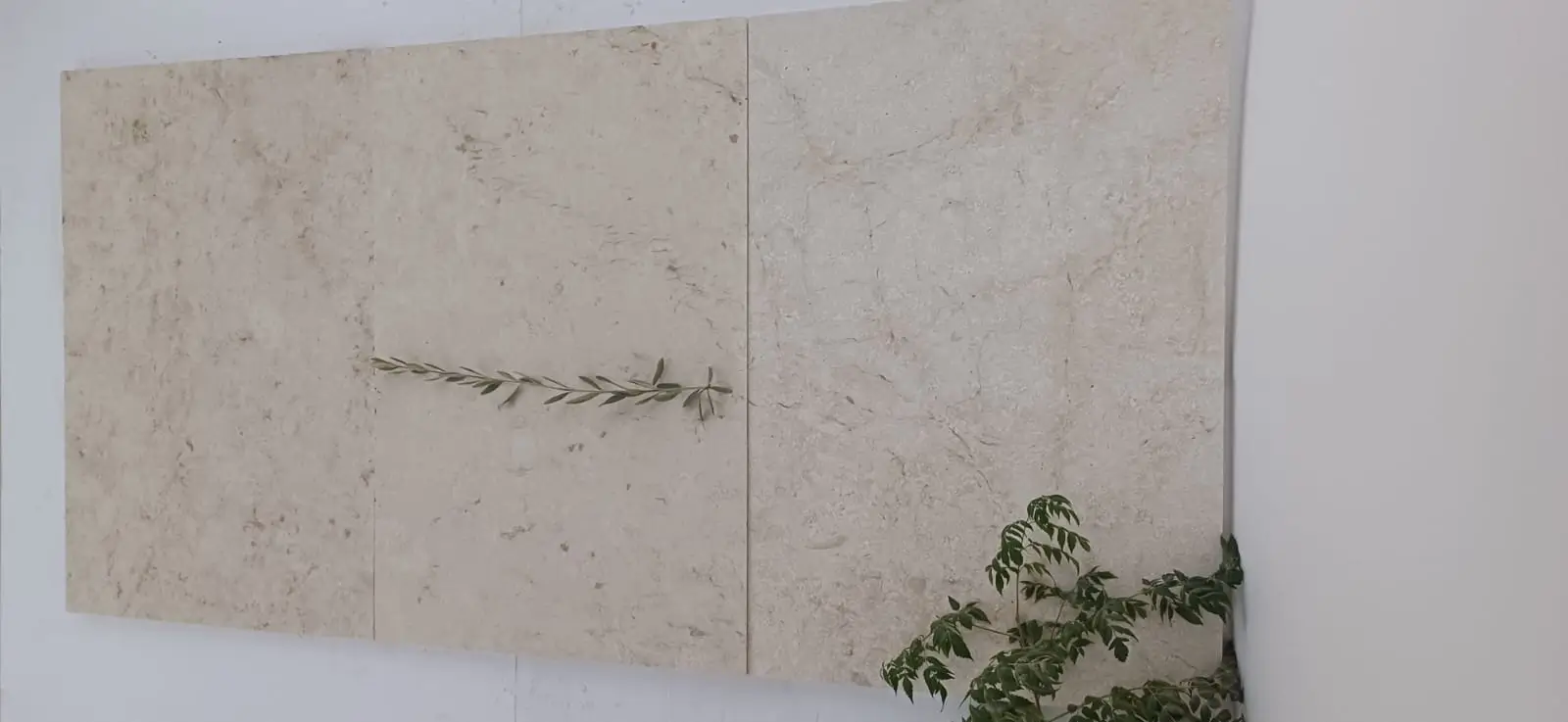
You’ll find the widest performance range within natural stone categories when comparing outdoor patio slab materials for Arizona projects. For desert-rated outdoor patio slab materials in the low desert — travertine and limestone dominate for good reason. Both materials have compressive strengths in the 8,000–12,000 PSI range, their absorption characteristics are manageable with appropriate sealing, and their modular format supports drainage-first base design.
Explore our Arizona patio slab material options to review specific thickness grades and finish profiles suited to Arizona monsoon and UV conditions. Citadel Stone maintains warehouse inventory of Arizona-appropriate natural stone grades, which typically compresses lead times to one to two weeks — a meaningful advantage when project schedules are compressed by seasonal construction windows.
- Travertine (filled and honed): absorption rate 2–4%, suitable for low desert with annual sealing; excellent thermal performance
- Limestone (tumbled or sawn): absorption rate 1.5–3%, highly UV-stable, maintains color integrity without aggressive sealing schedules
- Basalt (natural cleft): near-zero absorption, excellent for pool-adjacent areas where water exposure is constant
- Quartzite: hardness above 7 Mohs, highly abrasion-resistant — appropriate for high-traffic patio areas with heavy furniture loading
Sedona-area projects present a specific material selection consideration. Projects in Sedona often favor warm-toned sandstone and red limestone to complement the regional landscape aesthetic, but those materials need careful sourcing — locally inspired doesn’t always mean locally quarried performance standards are equivalent. Verify absorption and compressive data on any Sedona-adjacent natural stone specification rather than assuming regional origin implies regional performance suitability.
Sealing, Maintenance, and Long-Term Moisture Control
Sealing natural stone in Arizona serves a different primary purpose than it does in humid climates. In Arizona, you’re not primarily blocking ambient humidity — you’re protecting against the concentrated moisture exposure of monsoon events and the UV degradation that breaks down surface finish between those events. A penetrating silane-siloxane sealer applied to dry stone at 80–90°F substrate temperature (common in Arizona’s late-spring installation window) provides the best penetration depth and bond strength.
Your sealing schedule should align with Arizona’s actual weather patterns rather than a calendar interval. Reseal after two full monsoon seasons if the water-bead test shows absorption within 45 seconds of water contact. On high-traffic surfaces, that interval may shorten to 18 months. Concrete patios with color treatments need resealing every 2–3 years regardless of monsoon exposure, because UV degradation of the acrylic coating is time-dependent even in dry periods. Maintaining UV-stable outdoor patio slabs across Arizona’s intense sun and storm cycles requires this kind of weather-calibrated care rather than generic product schedules.
- Penetrating sealers (silane-siloxane): ideal for natural stone; allow vapor transmission while blocking liquid infiltration
- Topical acrylic sealers on concrete: enhance color but create a surface-level moisture barrier that traps water if cracks develop beneath
- Efflorescence management: essential for any masonry surface in Arizona — moisture moving through joints carries dissolved salts that crystallize at the surface and indicate inadequate drainage below
- Joint sand maintenance: polymeric sand joints should be inspected annually after monsoon season; compromised joints allow water to undercut the base aggregate
Project Planning, Logistics, and Material Sourcing in Arizona
Your project timeline in Arizona needs to account for two realistic constraints: installation weather windows and material availability. The optimal installation window for natural stone patios in the Phoenix metro area is October through April — substrate temperatures stay below 95°F during the day, which allows adhesive mortars and polymeric joint sands to cure correctly. Summer installations are possible but require early-morning staging and protective covering to prevent premature cure of setting materials.
Truck delivery logistics for large patio projects deserve attention early in the planning process. Natural stone pallets for a 500-square-foot patio typically require two to three truck deliveries depending on material thickness and pallet configuration. Your site access needs to accommodate a standard flatbed with a liftgate or forklift offload — narrow residential driveways or gated community access restrictions can add meaningful cost to material handling if not addressed at the bid stage. Checking warehouse stock levels before finalizing your project schedule prevents the more disruptive scenario of a partial delivery that stalls installation mid-project.
- Natural stone for 500 sq ft at 1.25-inch thickness: approximately 2,200–2,600 lbs, typically one to two pallets
- Warehouse lead times for standard Arizona-stocked material grades: 1–2 weeks; custom or imported grades: 6–8 weeks
- Truck access requirements: minimum 10-foot clearance width, 14-foot height clearance for standard delivery vehicles
- Order 8–10% overage for natural stone to account for cuts, pattern adjustments, and future repair matching
Making the Right Outdoor Patio Slab Materials Decision for Arizona
Selecting outdoor patio slab materials for Arizona is genuinely a drainage engineering decision wrapped inside a material aesthetics conversation. Natural stone’s modular format, joint-infiltration drainage pathway, and lower thermal expansion coefficient give it a measurable structural advantage in monsoon-exposed Arizona conditions compared to monolithic concrete. Concrete remains a viable option where budget constraints are primary, but it requires a more aggressive drainage design to compensate for its surface impermeability — and that engineering cost narrows the price gap more than most initial estimates reflect.
Your long-term performance outcome depends on three things executing well simultaneously: the right material grade for your elevation and soil type, a drainage-first base system designed for Arizona’s rainfall intensity, and a sealing and maintenance schedule calibrated to monsoon exposure rather than generic product intervals. Get those three right and either material can perform well; get them wrong and even premium natural stone underperforms. As you look beyond the patio surface to other exterior hardscape elements on your Arizona property, Stone vs Stone: Best Large Driveway Pavers Arizona offers a useful parallel analysis for another high-performance application where material selection and drainage design intersect.
Homeowners in Scottsdale, Mesa, and Chandler comparing outdoor patio slab materials consistently note that Citadel Stone natural stone options generally stay cooler underfoot than synthetic alternatives during peak summer heat.