

Subgrade failure is the silent killer of large driveway paver installations across Arizona — and it’s the variable that separates a 25-year installation from one that’s heaving and cracking within five years. Choosing the best large driveway paver materials Arizona projects demand means understanding not just what stone performs well under load, but what stone performs well when the ground underneath it is actively working against you. Arizona’s soil complexity is extraordinary, and it deserves far more attention in material selection conversations than it typically gets.
Why Arizona Soil Conditions Drive Material Selection
The dominant soil challenge across most of central and western Arizona is caliche — a calcium carbonate hardpan layer that typically appears between 12 and 36 inches below grade. Caliche is not inherently a bad sub-base material once properly broken and compacted, but the way it interacts with surface water is the real specification challenge. Caliche is nearly impermeable, which means any water that infiltrates your base aggregate has nowhere to go. In a heavy summer monsoon, that trapped moisture creates hydrostatic pressure directly beneath your paver field, and that pressure shifts slabs in ways that look random but are completely predictable once you understand the drainage geometry underneath.
Beyond caliche, you’ll encounter expansive silty clays in the Phoenix metro and surrounding valleys that swell measurably with moisture gain — as much as 3 to 6 percent volume increase in severe cases. That movement is enough to displace a 4-inch natural stone slab if your base preparation doesn’t account for it. Your material choice directly affects how much that differential movement translates to visible surface damage, which is why this driveway stone material comparison in Arizona starts with soil, not with stone aesthetics.
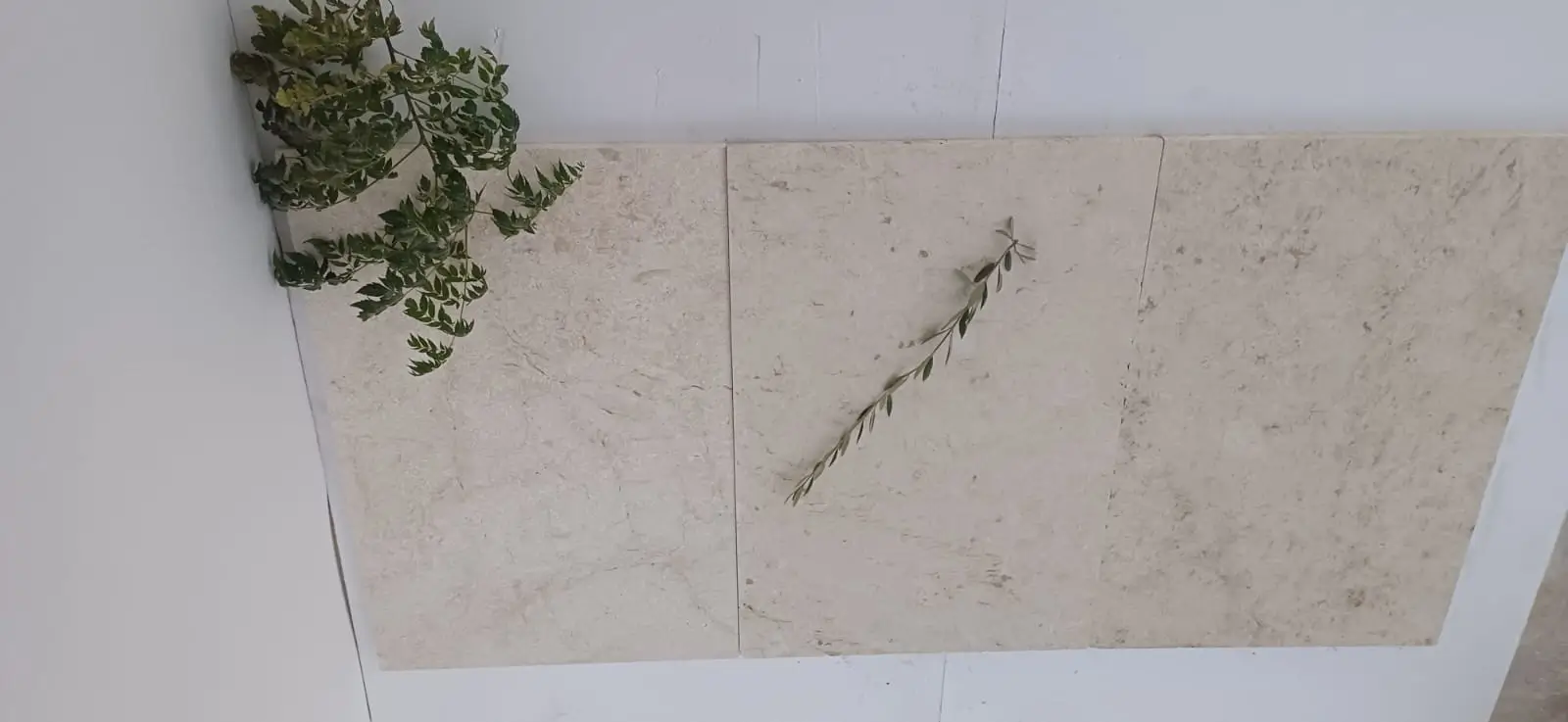
Limestone: The Workhorse With One Significant Caveat
Dense limestone in the 2.5-inch nominal thickness range is one of the most structurally capable options for the best large driveway paver materials Arizona contractors typically reach for first. Its compressive strength typically runs between 8,000 and 15,000 PSI depending on the quarry source, which is more than sufficient for standard passenger vehicle loads and even the occasional light truck delivery.
Here’s what most specifications miss with limestone in Arizona: the porosity profile matters enormously in caliche-heavy soil zones. Lower-density limestone with interconnected pore structures will absorb moisture during monsoon infiltration events, and repeated wet-dry cycling in direct contact with a caliche sub-base accelerates micro-fracturing in the stone’s lower face. You need to spec a minimum bulk density of 150 lb/ft³ for Arizona driveway applications — anything below that threshold starts showing stress fractures within 8 to 10 years in areas with substantial summer storm activity.
- Compressive strength range: 8,000–15,000 PSI (quarry dependent)
- Minimum recommended bulk density for AZ conditions: 150 lb/ft³
- Thermal expansion coefficient: approximately 4.3–5.5 × 10⁻⁶ per °F
- Best thickness for vehicle-loaded driveways: 2.5 inches minimum
- Requires penetrating sealer application every 24 months in monsoon zones
Projects in Peoria frequently sit on some of the more aggressively expansive clay soils in the Phoenix metro, and limestone installations there benefit significantly from a geotextile separation layer between native soil and the compacted aggregate base — a detail that’s optional in sandier profiles but near-mandatory in clay-rich zones.
Travertine: Naturally Voided and What That Really Means
Travertine’s characteristic void structure is the starting point for any honest driveway stone material comparison in Arizona. Those voids — which appear as holes, channels, and pitting in unfilled product — create a specific interaction with Arizona’s fine-blown desert dust and silt. Filled travertine is the only appropriate specification for a driveway application; unfilled product will trap sand and small debris in the voids, and the freeze-thaw risk at higher elevations makes those voids genuine crack initiation points.
Filled and honed travertine in 3-centimeter thickness (roughly 1.2 inches) is marginal for driveway loads — 4 centimeters minimum is the correct specification for any surface that sees regular vehicle traffic. The stone’s natural density runs lower than dense limestone, typically in the 135–145 lb/ft³ range, which means base preparation quality carries even more weight in your specification. A 6-inch compacted aggregate base over native soil is table stakes; in expansive soil zones, consider 8 inches with a 4-inch caliche break layer beneath it.
- Filled travertine only for driveway applications — unfilled is not appropriate
- Minimum recommended thickness: 4 cm (approximately 1.6 inches) for vehicle traffic
- Bulk density: 135–145 lb/ft³ (lower than limestone, requires superior base)
- Void-fill material can degrade in prolonged moisture exposure — budget for periodic touch-up
- Surface texture governs the wet DCOF and can retain fine grit over time
Basalt: Dense, Stable, and Genuinely Heat-Rated
Basalt deserves serious consideration when evaluating heat-rated large paver types AZ driveways need for long-term ground stability. Its density — typically 165–185 lb/ft³ — is the highest of the common natural stone driveway options, and that density directly translates to resistance against differential movement from expanding and contracting subgrades. In practical terms, basalt slabs span minor void spaces in unstable subgrades better than lighter stones, reducing the risk of point-load cracking when a vehicle wheel lands on a slab that’s unsupported beneath one edge.
The challenge with basalt in Arizona is thermal mass accumulation. The same density that makes it structurally superior causes it to absorb and retain heat at a rate that makes barefoot traffic genuinely unsafe during afternoon hours in summer. This matters for driveway-to-entry transition zones where foot traffic is expected. The structural performance is outstanding, but you need to account for surface temperature management — either through strategic shading, lighter-colored aggregate joint fill, or accepting the limitation for purely vehicle-loaded zones.
You can find a detailed side-by-side breakdown of these stone types through our oversized driveway stone comparison Arizona, which includes thickness data and base preparation specifications organized by soil type.
Granite Slabs: The Premium Option With Real Trade-Offs
Granite sits at the top of the density and compressive strength hierarchy for natural driveway stone — compressive strength routinely exceeds 20,000 PSI and bulk density runs 165–175 lb/ft³. When comparing oversized driveway slabs across Arizona climates, granite’s performance envelope is essentially unmatched from a pure structural standpoint. It will not crack under vehicle loads in normal residential applications, and its impermeability means it doesn’t interact with subsurface moisture the way more porous stones do.
The real-world limitation is thermal expansion behavior. Granite’s expansion coefficient runs approximately 4.0–5.5 × 10⁻⁶ per °F, which in Arizona’s 70°F swing from winter night to summer afternoon generates measurable slab movement. Joint spacing becomes critical — you want 3/8-inch minimum joints for oversized granite slabs (24 inches and larger), and you need polymeric sand that can handle that movement without cracking. Rigid joint materials will fail within 2 to 3 seasons in this climate.
- Compressive strength: typically 20,000+ PSI
- Bulk density: 165–175 lb/ft³
- Thermal expansion: 4.0–5.5 × 10⁻⁶ per °F — requires generous joint spacing
- Minimum joint width for oversized slabs: 3/8 inch with flexible polymeric fill
- Essentially impermeable — beneficial in caliche soil zones
- Premium cost — typically 30–45% above limestone at comparable thickness
Base Preparation Specifics by Soil Type
The most important section in any Arizona large paver specification is base preparation — and the base specification changes significantly depending on which soil profile you’re working with. Getting this wrong is the primary reason driveway installations fail prematurely, regardless of which stone material sits on top.
For caliche-dominant sites (most common in Maricopa County and surrounding areas), your specification should include mechanical scarification and removal of the top 6 to 8 inches of caliche where the layer is within 24 inches of finish grade, followed by a compacted Class II base aggregate at 6-inch minimum depth. The caliche layer deeper in the profile can remain and actually provides excellent bearing capacity once drainage is addressed through perimeter relief cuts.
For expansive clay profiles — more common in the eastern valley and transitional zones — the specification shifts toward a stabilized subgrade approach. A 4-inch lime or cement stabilization layer under your aggregate base adds meaningful resistance to differential swelling and is worth the added cost on any premium stone installation. In Chandler, where silty clay and caliche frequently coexist in layered profiles, a dual-approach base — lime stabilization followed by 6 inches of compacted aggregate — is the specification that delivers consistent long-term performance.
- Caliche sites: mechanical scarification to 8 inches, 6-inch compacted aggregate minimum
- Expansive clay sites: lime or cement stabilization layer, then 6–8 inch aggregate base
- Sandy soil: geotextile separation fabric plus 6-inch base is usually sufficient
- All sites: perimeter drainage outlets are non-negotiable in monsoon climate zones
- Compaction target: 95% Standard Proctor Density for base aggregate layer
Thickness Selection for Oversized Slabs
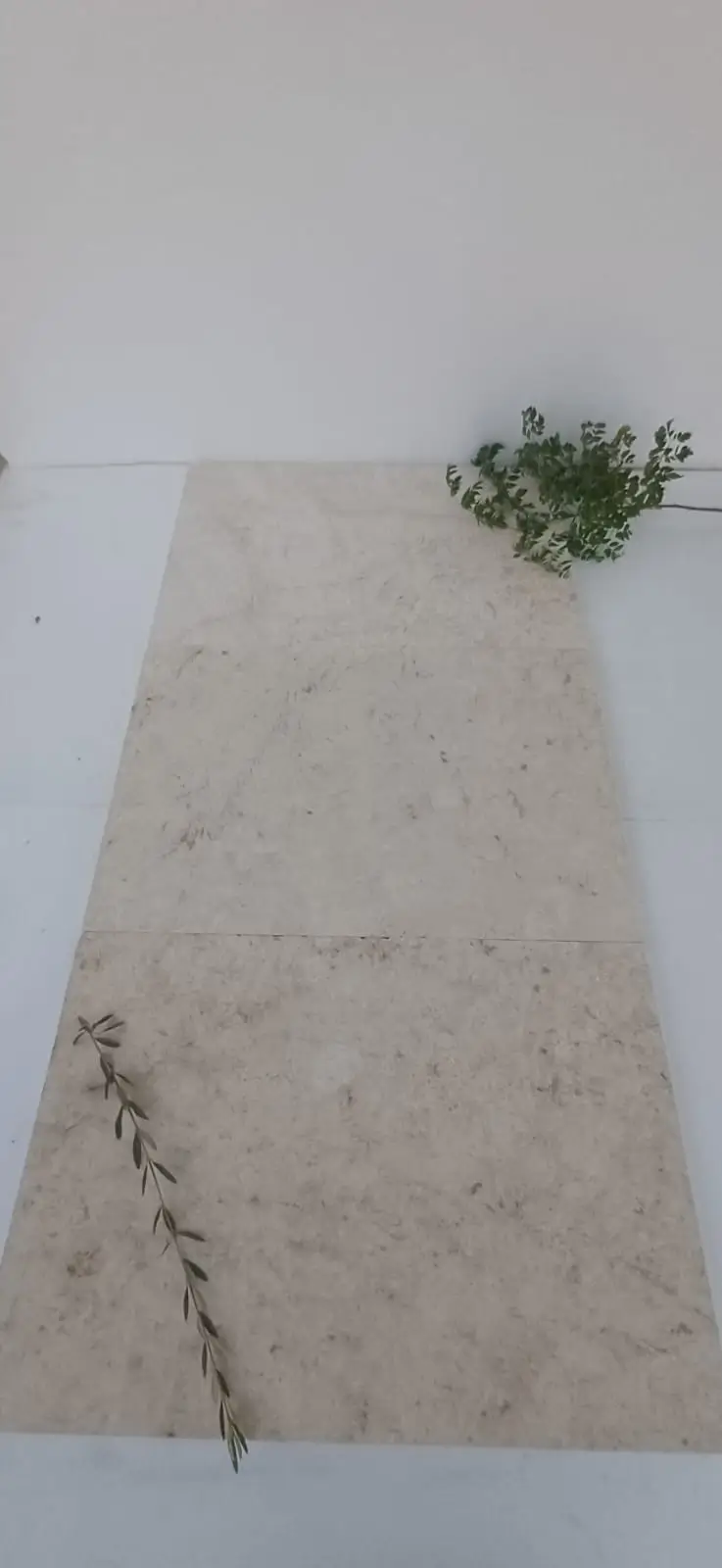
Oversized paver formats — anything 24 inches and larger in at least one dimension — create a leverage problem that thinner slabs can’t handle. The engineering concept is straightforward: a 36-inch slab spanning a 2-inch void in the base aggregate has to carry vehicle point loads across that unsupported span, and thinner stone fails in bending before it fails in compression. The practical minimum for oversized large driveway paver materials Arizona installations demand is 2 inches of actual stone thickness for limestone and travertine, and 1.5 inches for basalt and granite due to their superior modulus of rupture.
At Citadel Stone, we test thickness samples from each warehouse batch before releasing material to Arizona driveway projects — a quality check that catches undersized stone before it reaches the job site rather than after a vehicle load reveals the problem. The thickness variation tolerance within a batch should not exceed ±3mm for oversized slab formats; anything beyond that creates a lippage problem that no amount of setting-bed adjustment will fully correct.
- Limestone/travertine oversized slabs: 2-inch actual thickness minimum
- Basalt/granite oversized slabs: 1.5-inch actual thickness minimum
- Thickness tolerance per batch: ±3mm maximum for consistent installation
- Verify actual thickness at warehouse or delivery — nominal and actual often differ
- Thicker stone does not compensate for inadequate base preparation
Sealing and Maintenance in Arizona Desert Conditions
Arizona desert driveway stone durability comparison discussions frequently underweight the sealing specification, which is a mistake that costs homeowners significantly over a 10-year ownership period. The argument for sealing porous natural stone in Arizona’s climate is not primarily about moisture intrusion — it’s about UV degradation and fine silt penetration. The combination of intense ultraviolet exposure and wind-blown desert dust creates a surface-dulling and micro-etching process that compromises appearance and eventually affects structural integrity in softer stone types.
Penetrating silane/siloxane sealers are the correct product category for Arizona driveway stone — not topical film-forming sealers. Film-forming sealers trap heat beneath the surface coat and delaminate in Arizona’s summer conditions, often within a single season. Penetrating sealers bond within the stone matrix and don’t create a surface layer subject to thermal delamination. Application frequency should be every 18 to 24 months for limestone and travertine, and every 36 months for basalt and granite due to their lower porosity profiles.
In Tempe, where pavers are frequently adjacent to high-traffic vehicle areas and subject to oil drip contamination, a sealer with stain-inhibiting chemistry rather than basic hydrophobic chemistry is worth specifying — the cost difference is minimal and the performance difference under real use conditions is substantial.
Logistics, Lead Times, and Project Planning
Material availability and truck delivery scheduling affect Arizona large paver projects more than most homeowners realize until they’re mid-project with half a driveway done. Oversized stone formats are not standard warehouse inventory at most local suppliers — lead times from import sources can run 6 to 10 weeks, which creates real project scheduling pressure when your base preparation is complete and ready for stone.
Your project planning should confirm warehouse availability before excavation begins, not after. Citadel Stone maintains Arizona-accessible inventory that typically supports 1 to 2 week delivery windows for standard large format stone, but even those timelines require early confirmation during peak spring and fall construction seasons. Truck access to the site also needs planning for oversized slab deliveries — a boom truck or flatbed with delivery access adequate for 500 to 800 lb pallet drops is necessary for larger format stone, and narrow residential driveways sometimes require hand-staging from the street, which adds labor cost to your project budget.
- Confirm warehouse stock before beginning base excavation — not after
- Import lead times for non-stocked material: 6–10 weeks typical
- Truck access assessment: confirm clearance, weight limits, and staging area
- Order 10–15% overage for oversized slabs to account for cut waste and breakage
- Peak season (March–May, September–November) — expect tighter availability windows
Matching the Best Large Driveway Paver Materials Arizona Requires to Your Site Conditions
Your choice among the best large driveway paver materials Arizona projects require should begin with a soil report, not a stone sample. Once you know whether you’re dealing with caliche hardpan, expansive clay, or sandy alluvial deposits, your material selection and base specification become far more precise decisions with predictable long-term outcomes. Dense limestone and basalt deliver the strongest all-around performance across most Arizona soil profiles, with granite as the premium option where budget allows and travertine as a viable choice when base preparation is executed to a high standard.
This Arizona desert driveway stone durability comparison covers material selection and specification — the installation step is where those decisions meet real ground conditions. How to Install Large Driveway Pavers in Arizona walks through the field execution details that turn a sound specification into a durable, finished driveway. Homeowners in Scottsdale, Mesa, and Sedona working with Citadel Stone can compare large driveway paver materials side by side, with each stone type evaluated for surface texture and documented performance under Arizona’s extreme heat cycles.