
Why Drainage Comes First in Dove Grey Limestone Slab Patio Design
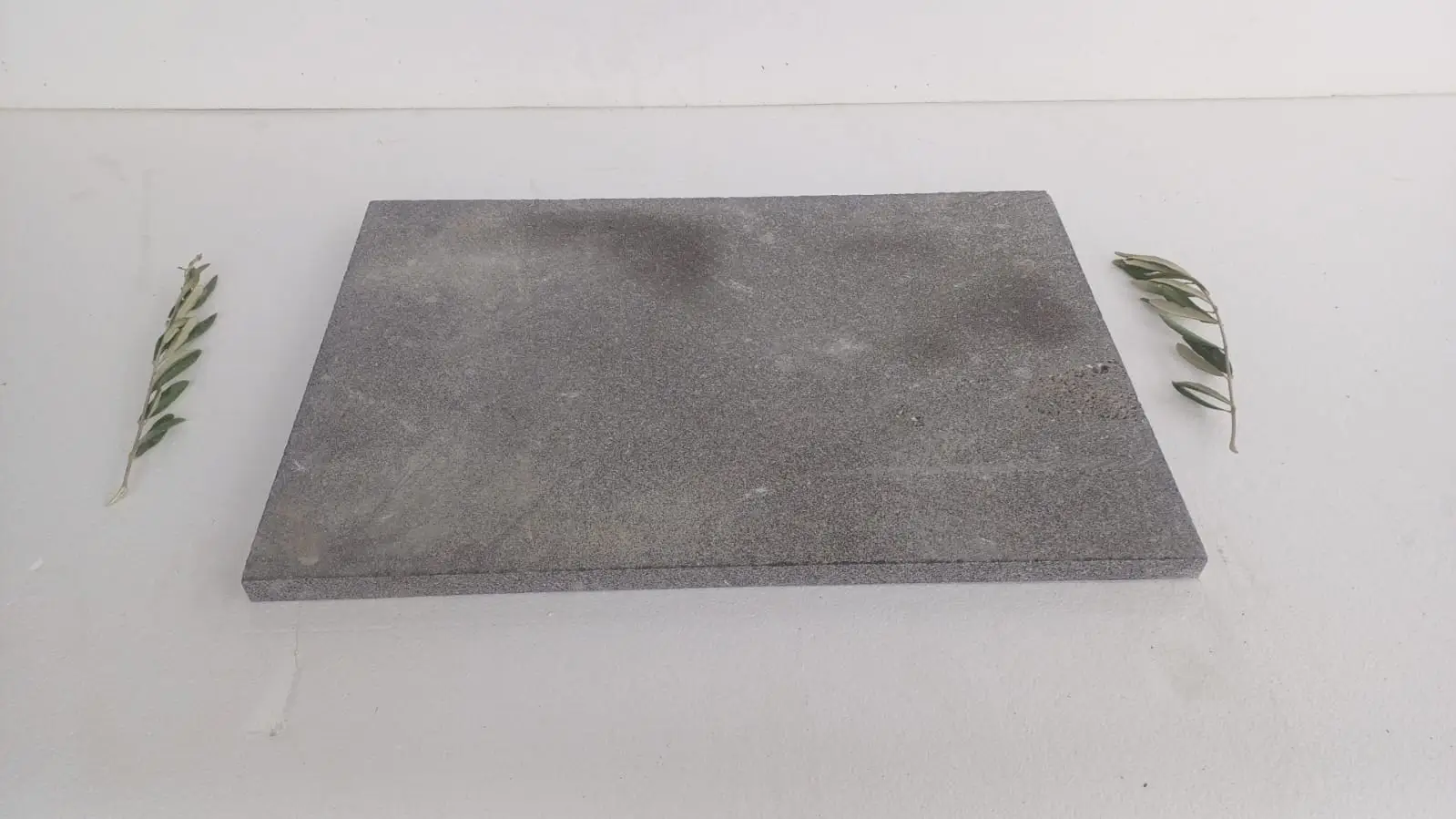
A dove grey limestone slab patio Buckeye homeowners invest in will only perform as well as the water management system beneath it — and that detail separates durable installations from ones that shift, heave, or stain within three years. Arizona’s Buckeye area sits within a monsoon corridor that delivers intense, concentrated rainfall events between July and September, often exceeding 0.5 inches per hour in short bursts. That hydraulic load hits your patio surface all at once, and if your base and grading aren’t engineered for rapid shedding, you’re looking at pooling, efflorescence, and eventually undermined bedding layers.
The limestone itself handles moisture well — dense-cut dove grey limestone typically exhibits an absorption rate between 1.5% and 3.5% by weight, which means the stone won’t saturate quickly during a monsoon event. The real vulnerability isn’t the slab; it’s the interface between your aggregate base and the native Buckeye soil, which in many areas contains expansive clay fractions that respond dramatically to moisture cycling. You need to design your drainage geometry before you select your paver thickness or joint pattern.
How Buckeye’s Monsoon Patterns Shape Material Selection
Buckeye’s annual precipitation averages around 9 to 10 inches, but the distribution is what drives specification decisions. Roughly 40 to 50 percent of that total arrives in a six-week monsoon window, often in events that overwhelm drainage infrastructure designed for desert conditions. Your patio layout needs to account for this asymmetric rainfall profile — not just annual averages. Dove grey paving slab patio Arizona installations that ignore this pattern typically show joint sand washout and surface efflorescence within the first two monsoon seasons.
Dove grey limestone’s mineral composition — primarily calcite with trace silica veining in most quarry cuts — gives it a naturally tighter surface structure than travertine or sandstone. This reduces the rate at which monsoon water infiltrates the slab body, but it also means surface runoff is faster. Positive drainage grades of at least 1.5% away from any structure are required, and 2% is a safer target for Buckeye’s rainfall intensity. Anything below 1% creates ponding conditions that accelerate algae growth on the stone surface and introduce hydrostatic pressure at the slab perimeter.
Base Preparation for Arizona’s Expansive Soil Conditions
The base system under your dove grey limestone slab patio does more work in Arizona than in most other climates because you’re managing two opposing moisture stresses: rapid saturation during monsoon events and extended desiccation during spring and early summer. Expansive soils contract and expand through this cycle, and that vertical movement is what cracks joints, tips slabs, and creates the uneven surfaces that become trip hazards.
Here’s what the base specification needs to accomplish in Buckeye conditions:
- Minimum 6-inch compacted Class II aggregate base, extended to 8 inches in areas with verified clay content above 30 percent
- Geotextile fabric barrier between native soil and aggregate to prevent clay migration into your base over monsoon seasons
- Drainage slope within the base itself — not just on the surface — to direct subsurface water to perimeter outlets
- Bedding layer of 1 inch nominal crushed stone dust or coarse sand, not fine sand, which migrates under hydraulic pressure
- Compaction to 95 percent Modified Proctor density before any slab placement
Projects in Mesa frequently encounter caliche hardpan at 18 to 24 inches below grade, which can actually serve as a natural drainage barrier — useful context when you’re evaluating whether to install perforated drain pipe at base level. In Buckeye, the soil profile is more variable, so a geotechnical probe of three to four test pits across your patio footprint before excavation is time well spent.
Slab Thickness, Joint Spacing, and Structural Loading
The dove grey limestone paving slabs you specify for a dove grey limestone slab patio Buckeye project should be 30mm (approximately 1.2 inches) at minimum for pedestrian use, and 40mm if you’re incorporating the patio into a space where vehicles, golf carts, or heavy furniture with concentrated point loads will be present. Thinner slabs in the 20mm range work for covered, sheltered applications where thermal cycling is moderated, but exposed patios in full Buckeye sun will experience surface temperature swings from roughly 55°F in January nights to 175°F on summer afternoon surfaces — a 120-degree range that creates meaningful thermal stress at thinner profiles.
Expansion joint placement matters more than most homeowners realize. Control joints every 12 to 15 feet in both directions are the correct specification — not the 20-foot spacing that generic guides suggest. The thermal expansion coefficient for limestone runs approximately 4.5 to 5.0 × 10⁻⁶ per degree Fahrenheit. Across a 15-foot run subjected to a 100°F daily surface temperature swing, that translates to roughly 3⁄32 inch of movement per cycle. Over a monsoon season with rapid temperature transitions, that cumulative movement is what opens joints and allows sand migration if you’ve underspecified the joint width or filled with a rigid non-flexible mortar.
Joint Sand Specification and Water Infiltration Control
Polymeric joint sand is the correct specification for dove grey paving slab patio Arizona installations in the Buckeye climate — not standard silica sand. Standard sand migrates out during monsoon runoff events faster than you’d expect, sometimes losing 30 to 40 percent of joint fill depth in a single heavy rain season. Polymeric sand’s polymer binders activate with moisture and lock the particles in place, maintaining joint integrity through the hydraulic stress of summer storms.
Joint width should be consistent at 3⁄16 to 1⁄4 inch for slabs in the 12×24 or 16×24 inch formats common in Buckeye outdoor living projects. Tighter joints than 3⁄16 inch restrict the thermal movement the stone needs, while wider joints beyond 3⁄8 inch allow water channeling that undermines the bedding layer at the joint edges over time.
Surface Sealing Strategy for Monsoon and UV Protection
Sealing dove grey limestone paving slabs in Arizona requires a product specified for both UV resistance and hydrophobic performance — these are two separate performance criteria that not all sealers satisfy simultaneously. A penetrating impregnator sealer, rather than a topical film-forming sealer, is the correct choice for outdoor Buckeye patios. Film-forming sealers peel in the UV intensity of Arizona summers, creating a surface that looks worse than unsealed stone within 18 months.
The sealing schedule for Buckeye conditions should follow this protocol:
- Initial application: two coats of penetrating impregnator sealer at installation, with a 4-hour cure window between coats
- First reapplication: 12 months after installation, once the stone has cycled through one full monsoon season
- Ongoing schedule: every 24 months for pedestrian patios, every 18 months if the patio receives direct monsoon run-in from adjacent hardscape
- Test frequency: annual water bead test — if water absorbs within 60 seconds rather than beading, reseal immediately regardless of schedule
- Pre-sealing cleaning: pH-neutral cleaner only; acid-based cleaners etch limestone and create micro-roughness that accelerates staining
At Citadel Stone, we recommend confirming your sealer’s compatibility with the specific limestone batch before full application — we’ve seen cases where certain impregnators slightly alter the dove grey tone toward a darker charcoal under direct sunlight, which some clients love but others find unexpected. Testing on a spare slab piece from your warehouse delivery before full application eliminates that surprise.
Leisure Zone Layout and Drainage Integration for Buckeye Outdoor Living
Buckeye outdoor living design increasingly incorporates defined leisure zones — separate functional areas for dining, lounging, and transitional circulation — and the drainage geometry has to be planned holistically across all three zones, not treated as a series of independent drainage problems. Your dove grey limestone slab patio in a leisure zone context benefits from the material’s neutral, cool-toned palette, which visually unifies disparate zones without competing with pool water color, landscape planting, or shade structure materials.
The drainage design for leisure zones should incorporate:
- Central zone drain or channel drain positioned at the lowest natural grade point of the patio, not at the perimeter
- Linear drainage channels between zone transitions where grade changes create natural water concentration
- Perimeter edge restraints that don’t impede subsurface drainage — avoid solid concrete curbs that trap water in the base layer
- Grading that directs water away from any structure, pergola footer, or outdoor kitchen base at a minimum 2% slope
The Arizona leisure areas that perform best over a 15-year horizon are the ones where the landscape architect and the stone contractor coordinated drainage grades before any excavation — not after the outdoor kitchen and pergola footers were already poured. That conversation needs to happen at the design development stage, not at the construction documents stage when grades are already locked.
For related color and material specifications, concrete grey limestone slabs offers detailed guidance on grey limestone performance across Arizona’s climate zones, including specific data on surface temperature management and reflectivity values that directly inform leisure zone comfort planning.
How Dove Grey Limestone Performs Under Arizona’s UV Load
The dove grey color category in limestone typically corresponds to a lighter-medium tonal range with a Solar Reflectance Index (SRI) between 35 and 55, depending on surface finish and mineral density. That SRI range meaningfully reduces surface heat load compared to dark pavers — field measurements in comparable Arizona installations show dove grey limestone surfaces running 25 to 40°F cooler than charcoal or dark basalt pavers at 2 PM during July peak conditions. For a Buckeye outdoor living patio where barefoot comfort in summer matters, that temperature differential is the specification decision that most directly affects how usable your outdoor space is in peak season.
In Yuma, which records some of the highest sustained UV exposure levels in the continental United States, dove grey limestone patios installed with a flamed or brushed finish have demonstrated minimal fading over 10-year observation periods. The key variable is finish type: polished finishes show UV-induced tonal shift more noticeably than textured finishes because the light-reflecting characteristics of the polished surface change as microscopic surface oxidation develops. For Arizona Buckeye projects, a honed or brushed finish is the more durable specification choice — it maintains color consistency longer and provides the slip resistance needed when monsoon rain wets the surface unexpectedly.
Logistics, Lead Times, and Project Planning for Buckeye Installations
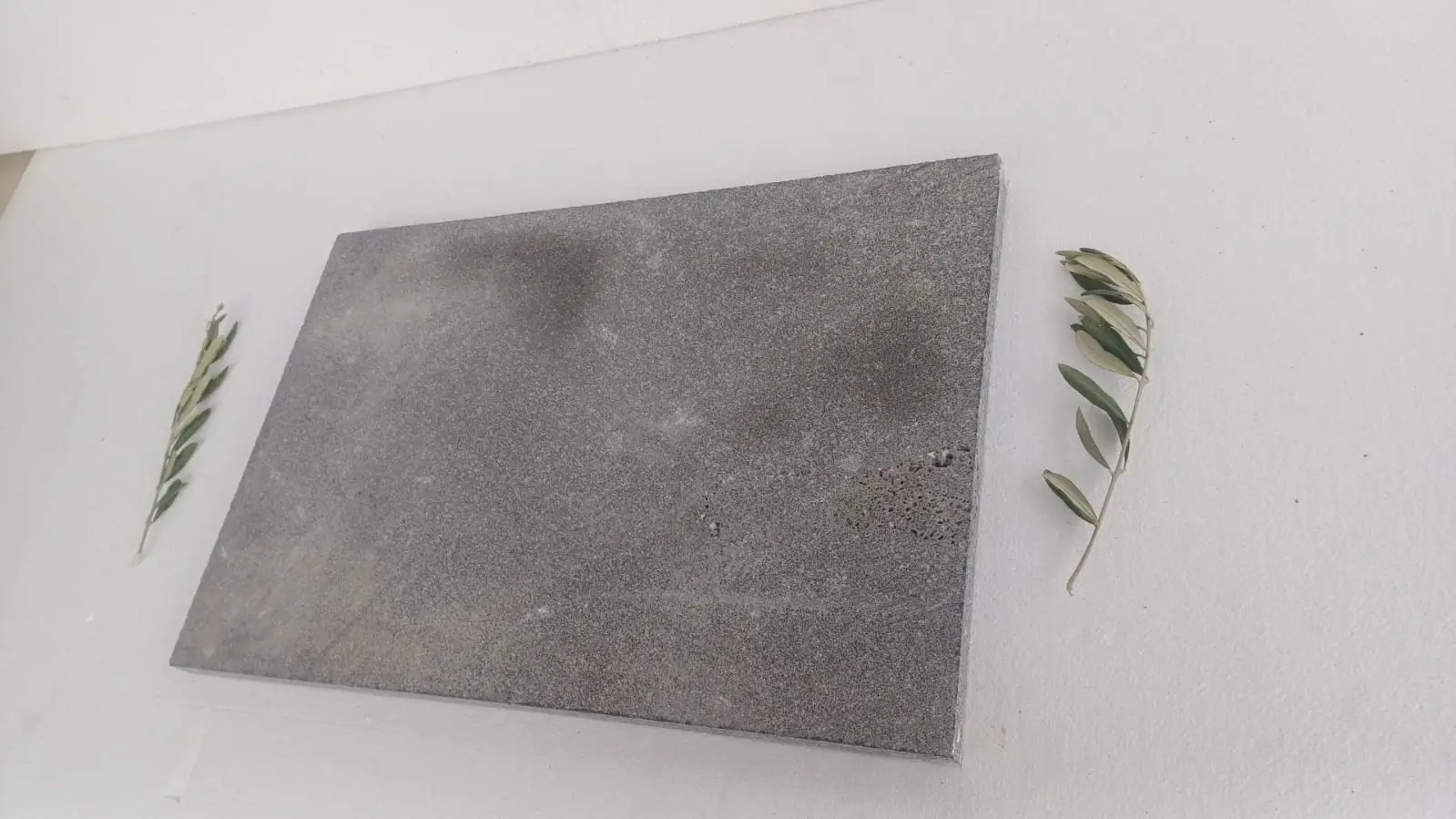
Your project timeline for a dove grey limestone slab patio Buckeye installation should account for material lead times that vary significantly depending on whether the stone is in domestic warehouse stock or requires an import order. Domestic warehouse inventory typically delivers in 1 to 2 weeks, while quarry-direct import orders run 6 to 10 weeks depending on origin and port congestion. Specifying during the spring planning window — February through April — gives you the best chance of securing warehouse stock before summer installation demand peaks in the Phoenix metro region.
Truck delivery logistics matter more than most clients anticipate for Buckeye projects. Many newer residential developments in the area have restricted street widths or HOA rules limiting truck staging windows. Confirming whether a standard flatbed truck can access your site or whether a shorter boom truck delivery is required affects the per-pallet delivery cost directly. Coordinating the truck delivery sequence with your base compaction schedule is also worth planning carefully — receiving all slabs before your base is compacted means storing heavy material on site, which creates both a logistics burden and a safety consideration.
In Gilbert, similar residential density constraints have led many contractors to schedule split deliveries: aggregate base materials on day one, then limestone slabs on day three after compaction is verified. That model works well for Buckeye projects too, and Citadel Stone’s warehouse team can coordinate phased delivery scheduling when you’re working within tight site access constraints.
What the Best Dove Grey Limestone Slab Patio Buckeye Projects Have in Common
A dove grey limestone slab patio Buckeye project succeeds or struggles based on decisions made well before the first slab is placed. Drainage grade, base depth, soil assessment, and joint specification are the four variables that determine whether you’re looking at a 10-year or a 25-year installation — the stone itself is capable of delivering the longer timeline when the system beneath it is correctly engineered for Arizona’s monsoon-driven moisture cycling.
The material’s combination of thermal reflectivity, density, and color stability makes dove grey limestone one of the most well-matched natural stones for Buckeye outdoor living projects. You’re working with a material that handles both the hydraulic stress of monsoon season and the UV intensity of Arizona summers without requiring the high-maintenance intervention that softer or more porous stones demand. Keep your sealing schedule consistent, maintain your joint sand integrity after each monsoon season, and ensure your drainage grades are verified annually — those three practices will protect your investment across the full design life of the installation.
As you think about complementary stone applications across your property, Dove Grey Limestone Paving Slab Garden Paths for Avondale Walkways covers how the same material performs in a path and garden walkway context — a useful reference if your outdoor design extends beyond the primary patio zone into connecting circulation areas. We offer limestone slabs grey in Arizona for creating majestic entrance steps.