
Grade management is the variable that separates dove grey limestone slab paths in Avondale that perform beautifully for decades from those that shift, crack, and pond water within a few seasons. Arizona’s terrain isn’t flat — even in the lower desert, you’re dealing with subtle grade changes, caliche formations, and soil types that move water in unpredictable directions the moment you interrupt natural drainage with a hardscape installation. Getting the slope geometry right before you ever set a slab is the foundational decision that everything else depends on.
Avondale Terrain and What It Means for Slab Paths
Avondale sits in the western Salt River Valley at roughly 1,000 feet elevation — low enough that freeze-thaw cycling isn’t your primary concern, but varied enough in micro-topography that drainage design demands real attention. The Agua Fria River corridor creates subtle grade transitions across much of this area, and those transitions directly affect how water moves across and beneath your walkway surface. For dove grey limestone slab paths in Avondale, that matters because limestone is naturally porous and will absorb standing water if your drainage geometry fails to shed it effectively.
The soil composition in western Maricopa County compounds the challenge. You’ll encounter expansive clay lenses in many residential lots, particularly in subdivisions developed on former agricultural land. These clays absorb moisture, swell, and then contract during dry cycles — a mechanical cycle that can gradually rack a slab installation out of plane even when the surface looks perfectly flat. Your base preparation strategy needs to account for this before the first slab goes down.
- Expansive clay soils require a minimum 6-inch compacted aggregate base, with 8 inches strongly preferred on lots with observable clay content
- Caliche hardpan, when present, can serve as a stable natural sub-base — but only if properly scarified at the interface to prevent perched water tables
- Grade cross-slopes should target 1.5–2% perpendicular to the path direction to ensure surface water evacuates quickly without creating erosion channels at the slab edges
- Longitudinal slopes along the path direction should stay below 5% for pedestrian comfort — above that, you’ll need to consider step integration or landings
Understanding these terrain factors isn’t optional for Avondale garden walkways — it’s the engineering foundation that determines whether your installation needs attention in year three or year twenty-three.
Base Preparation: The Grade Engineering Fundamentals
The single most common failure mode in Avondale garden walkways isn’t material quality — it’s inadequate base preparation that ignores the site’s actual drainage geometry. Establish your finished grade targets before excavation begins, not after. That sequence matters because it determines how deep you excavate, where you place drainage aggregate, and how you manage water that infiltrates through the limestone’s natural pore structure.
For dove grey paving slab paths in Arizona at Avondale’s elevation, your excavation should reach a minimum of 10 inches below finished grade. That breaks down as follows: 4 inches of compacted Class II aggregate base, 4 inches of compacted crusher fines or decomposed granite, and 2 inches of setting bed material. On clay-heavy lots, add 2 inches to the aggregate layer and consider a geotextile fabric at the native soil interface to prevent clay migration into your drainage layer over time.
- Compact aggregate base in two lifts maximum — single-lift compaction of more than 4 inches consistently leaves soft spots that cause differential settlement
- Verify compaction with a plate compactor making minimum two passes in perpendicular directions before adding setting bed material
- Maintain your cross-slope target through every layer — it’s far easier to correct grade in the aggregate than to adjust finished slab positions
- Edge restraints are non-negotiable on sloped installations — without them, slab migration in the downhill direction accelerates over time
- French drain integration along the uphill edge of any path that sits below adjacent grade will intercept subsurface water before it saturates your base
Projects in Phoenix frequently demonstrate what happens when base preparation skips the grade verification step — slabs that look level at installation develop a pronounced tilt within two monsoon seasons as differential settlement follows the path of least resistance through an uncompacted base.
Dove Grey Limestone Performance in Arizona Terrain
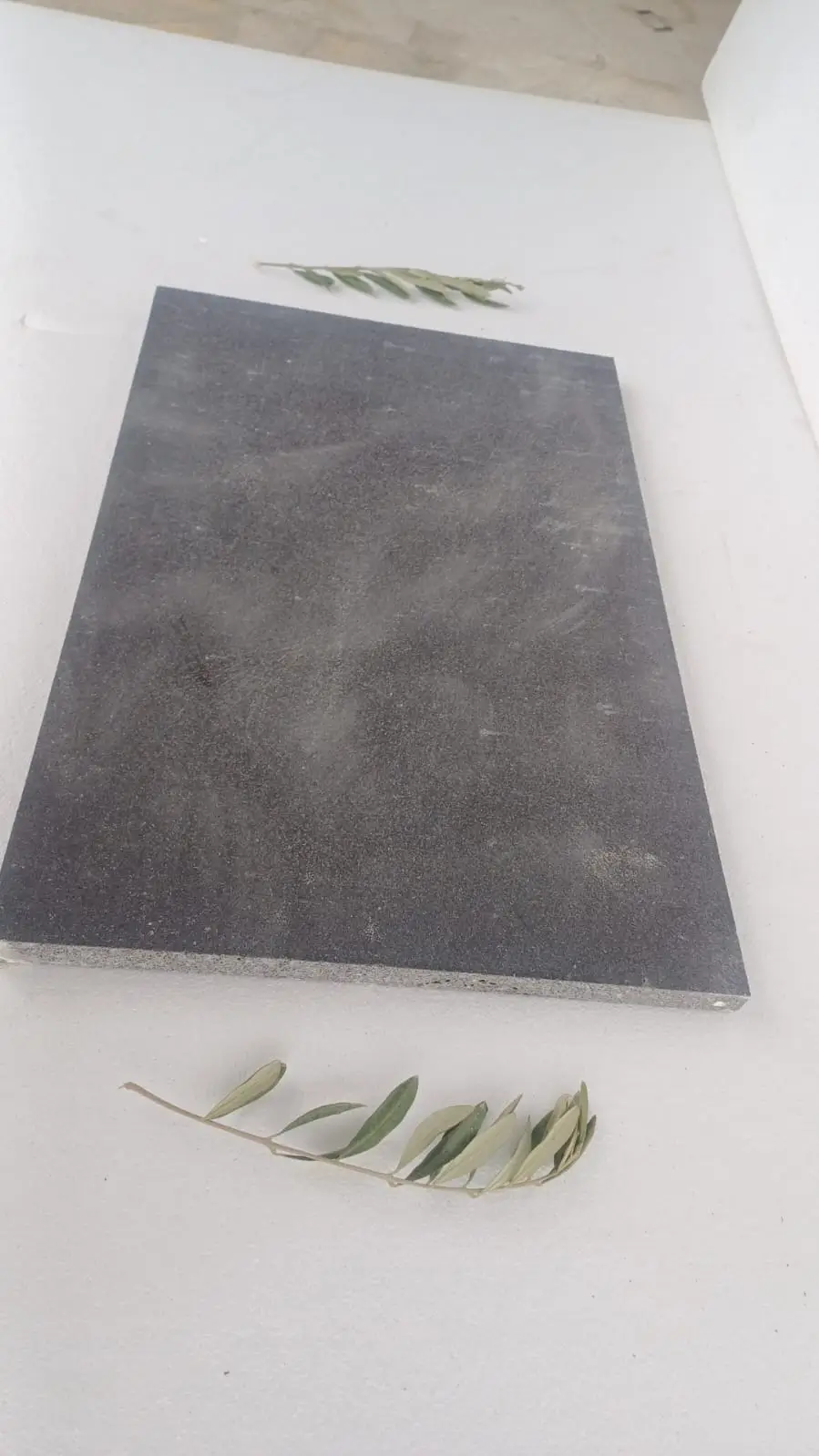
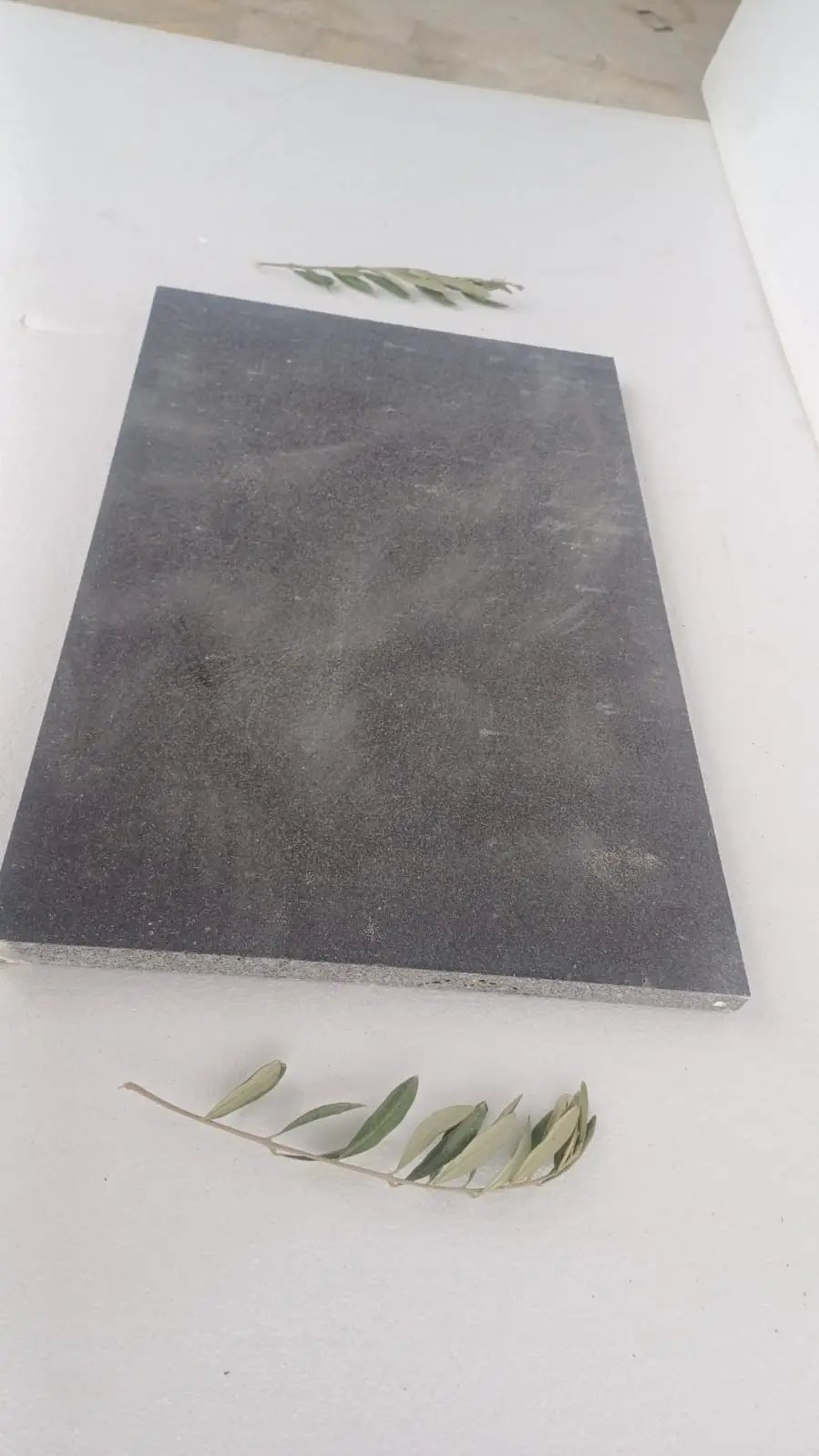
Dove grey limestone brings a specific combination of properties that makes it well-suited to Arizona’s terrain challenges — but you need to understand those properties technically to specify it correctly. The material’s density typically ranges from 155 to 165 pounds per cubic foot, which gives it the mass to resist movement on sloped installations where lighter materials can migrate under pedestrian load. Its compressive strength generally exceeds 8,000 PSI, which provides adequate structural performance for pedestrian pathways on properly prepared bases.
The porosity of limestone — typically 5 to 15% depending on the specific formation — is both an asset and a management consideration in this climate. On sloped installations, that porosity allows some vertical infiltration, which reduces surface runoff velocity and helps prevent erosion at path edges. The trade-off is that water penetrating the stone carries dissolved minerals over time, which can affect the visual character of the surface. Proper sealing every two to three years manages this effectively without eliminating the material’s natural drainage contribution.
Dove grey limestone paving slabs in Arizona also exhibit thermal mass behavior that’s worth understanding for path design. The material absorbs heat during the day and radiates it into the early evening — a property that affects pedestrian comfort on east-west oriented paths where evening use is common. Specifying a light-honed or sandblasted finish amplifies the material’s natural reflectance and reduces peak surface temperatures by 15 to 25°F compared to a polished finish. For paths in full western sun exposure, that difference is meaningful for barefoot summer use.
Slope Management and Step Integration
The terrain around Avondale garden walkways often includes grade transitions that exceed comfortable ramp slopes — particularly in backyard installations that connect different landscape terrace levels. Your design options at these transition points are step integration, ramped landings, or a combination of both. Dove grey limestone handles all three configurations well, but each requires different slab thickness specifications and different base engineering approaches.
For step risers and treads using limestone, target a minimum 2.5-inch slab thickness on the tread. Thinner treads develop stress fractures at the nosing under repeated impact loading, particularly on slopes where pedestrians step forward and down simultaneously. Risers can use thinner material — 1.5 inches is adequate — but the joint between riser and tread needs a tight fit with minimal mortar exposure to prevent water infiltration at that connection point.
- Step riser height should target 6 to 7 inches for comfortable descent on natural-grade installations — taller risers create trip hazards on downhill steps
- Tread depth should be a minimum of 12 inches, with 14 to 16 inches preferred for outdoor pedestrian comfort
- Each step requires its own compacted base pad — cantilevering treads off a single monolithic base creates long-term differential movement as soil compression continues
- Step landing slabs at top and bottom of any stair run should be 1.5 times the width of the path — they serve as transition zones where pedestrians shift gait and need stable footing
Arizona strolling areas that incorporate grade changes without adequate step planning end up with informal dirt paths cutting around the formal stone installation — a clear signal that the design didn’t serve how people actually move through the space.
Slab Sizing and Joint Spacing for Sloped Installations
Slab dimensions affect structural performance differently on sloped surfaces than on flat installations. Larger format slabs — 24×24 inches and above — concentrate point loads across fewer joints, which sounds advantageous but actually increases the risk of rocking on sloped bases where micro-variations in the setting bed are harder to eliminate. On grades above 2%, you’ll achieve better long-term stability with 18×18 or 24×18 inch slabs that allow more setting bed contact points and distribute load more evenly across the base.
Joint spacing on sloped dove grey limestone slab paths deserves careful thought beyond the standard 3/8-inch specification. On steeper sections, wider joints — up to 5/8 inch — provide additional drainage capacity at the surface and allow polymeric sand to fully encapsulate the joint without voids. Voids in joint fill on sloped installations become water infiltration channels that accelerate base saturation during monsoon events. Fill joints completely, tamp them, and top-dress after the first significant rainfall when initial settlement reveals any low spots.
At Citadel Stone, we recommend specifying slab thickness based on slope category rather than a single standard: 1.25-inch slabs for flat-to-2% grades, 1.5-inch for 2–5% grades, and 2-inch minimum for slopes above 5% or any step tread application. Thickness isn’t just about load capacity — it’s about the slab’s resistance to flexural stress when the base beneath one edge is slightly less compacted than the other, which is an inherent reality on sloped terrain.
Drainage Design Integration with Limestone Paths
Your drainage design for pedestrian routes in Avondale needs to treat the path as part of a larger water management system, not as an isolated hardscape element. The installed path intercepts and redirects water that would otherwise infiltrate naturally — and that intercepted water has to go somewhere. Defining where it goes before installation begins prevents the erosion, edge undermining, and subsurface saturation that compromise base integrity over time.
Surface drainage for dove grey limestone slab paths in Avondale should direct runoff toward planted areas or permeable surfaces where possible. Directing path drainage toward adjacent impermeable surfaces — concrete curbs, walls, or building foundations — concentrates water at locations that may not be designed to handle it. A gentle grade toward a planted bed or gravel drainage channel keeps water in the landscape system and prevents the hydraulic pressure buildup that eventually lifts or shifts slab edges.
For Arizona strolling areas that extend more than 40 linear feet, consider incorporating a mid-path drainage break — a slightly wider joint with permeable fill, or a discrete channel drain — that interrupts water’s downhill velocity before it reaches erosive speeds. Water moving at even 2 feet per second across a paved surface can undercut joint fill and begin eroding setting bed material at the path’s downhill terminus.
Surface treatments that modify drainage behavior are worth considering for this climate. For paths on steeper terrain, a sandblasted grey limestone paving finish increases surface friction coefficients significantly — from approximately 0.4 on a honed surface to 0.6 or above — while maintaining the material’s natural micro-texture that channels water laterally across the face rather than pooling at low spots.
Sealing and Surface Protection for Desert Conditions
Sealing dove grey limestone in Arizona’s desert climate serves a different primary purpose than in wet climates — here, you’re primarily managing mineral migration and staining rather than preventing freeze-thaw water infiltration. The calcite matrix in limestone reacts with acidic irrigation water, fertilizers, and organic material in ways that gradually discolor the surface. A penetrating silane-siloxane sealer applied at installation and renewed every two to three years maintains the material’s visual character without creating the high-sheen appearance that looks out of place in natural garden settings.
Film-forming sealers — acrylics and urethanes — are problematic on sloped limestone installations because they create a surface layer that traps moisture below if the application isn’t perfectly uniform. On a slope, moisture migration beneath a film sealer tends to concentrate at low points, leading to delamination and surface bubbling within a few years. Penetrating sealers avoid this failure mode by integrating into the stone’s pore structure rather than coating the surface.
- Apply sealer to clean, completely dry stone — moisture content above 5% prevents proper penetration and causes the sealer to cure on the surface rather than within the pore structure
- Two thin coats outperform one heavy application — allow 4 hours between coats in Arizona summer conditions, 6 hours in cooler months
- Test sealer on a small inconspicuous area first — some penetrating formulations darken grey limestone slightly, and you want to verify the color effect matches your design intent
- Sloped sections may require more frequent resealing than flat areas because water movement across the surface accelerates sealer depletion at the leading edge of each slab
Material Sourcing and Logistics for Avondale Projects
Sourcing dove grey limestone paving slabs in Arizona requires attention to quarry consistency that many buyers underestimate until they’re dealing with mismatched color variation mid-installation. Limestone color isn’t uniform within a single quarry formation — it shifts with depth, with lateral position, and with moisture content at extraction. For a garden path where visual continuity matters, you want slabs pulled from a single quarry run and staged together in the warehouse before delivery.
Delivery logistics for slab material to Avondale residential sites require advance planning around truck access and unloading conditions. A standard truck delivering limestone pallets needs a clear 35 to 40-foot approach to position the boom or liftgate, and residential driveways or narrow streets often constrain that. Coordinate access details with your supplier before finalizing the delivery window — discovering the truck can’t reach the installation area on delivery day creates costly rehandling charges and schedule delays.
Citadel Stone maintains warehouse stock of dove grey limestone slabs specifically for Arizona projects, which typically compresses lead times to one to two weeks rather than the six to eight weeks common with direct import orders. For projects in Scottsdale and the broader Phoenix metro, that local availability translates to real schedule flexibility when client decisions or site conditions shift your installation timeline. Verify warehouse stock levels early in your project planning so you’re not committing to dates that depend on incoming shipments you haven’t confirmed.
Slab storage at the job site also matters. Stack slabs horizontally on a level surface with timber or foam separators between each layer to prevent edge chipping and surface abrasion. Vertical storage of limestone slabs on job sites creates stress fracture risks at thicknesses below 2 inches — a detail that becomes expensive to learn after a pallet of material arrives cracked along the same fault line on every piece.
Design Considerations for Avondale Garden Walkways
The visual character of dove grey limestone changes significantly with the finish you specify, and that choice interacts with both the terrain and the surrounding landscape design. A honed finish reads as more formal and architectural — appropriate for straight paths connecting defined landscape spaces. A natural cleft or sandblasted finish reads as more organic and textural, which works well for curving paths through planted areas where the stone is meant to feel like part of the landscape rather than imposed on it.
Path width specification deserves more deliberate attention than it typically receives. Standard garden path widths of 36 inches allow single-file pedestrian movement comfortably, but where the terrain requires handrail installation on sloped sections — slopes above 5% in most residential applications — you need 42 to 48 inches to maintain comfortable walking width alongside the rail. Planning this at the design stage rather than retrofitting rail posts into a finished path preserves both aesthetics and functionality.
In Tucson, landscape architects commonly combine dove grey limestone paths with decomposed granite borders, a palette that handles the transition between hardscape and softscape elegantly while maintaining a continuous drainage plane from the path edge into the surrounding landscape. That approach works equally well in Avondale’s Sonoran Desert setting and reduces the hard visual boundary between the stone path and native plantings.
Lighting integration along Avondale pedestrian routes should be planned before slab installation begins. Conduit sleeves placed beneath path joints during installation are nearly invisible in the finished surface and provide a clean pathway for low-voltage wire. Adding lighting after installation typically requires saw-cutting joints or excavating edges — both of which create cosmetic challenges in grey limestone that’s already developing its natural patina.
Final Considerations
Dove grey limestone slab paths in Avondale reward the specifiers and installers who treat terrain as the primary design variable rather than an afterthought. Every decision — slab thickness, base depth, joint width, drainage geometry, step integration — flows from an honest assessment of what the site’s grade is doing and what it will do to water during monsoon season. Projects that start with that terrain analysis and build all subsequent decisions around it consistently outperform those that default to generic specifications and hope the site cooperates.
Your slab path also needs a maintenance plan written before installation is complete. That means knowing your resealing interval, your joint sand inspection schedule after each monsoon season, and your threshold for addressing settlement before it becomes a trip hazard. Dove grey limestone is a durable material — field performance on well-specified Arizona installations regularly reaches 25-plus years — but that performance depends on maintenance that addresses small issues before they compound into structural problems. For Arizona projects where installation precision is a defining specification requirement, Dove Grey Limestone Paving Slab Installation for Fountain Hills Precision provides a complementary technical perspective on achieving tight tolerances in demanding desert conditions. Citadel Stone stocks massive grey limestone slabs in Arizona for structural use.