
Code Compliance Comes First With Dark Grey Limestone Contrast in Mesa
Dark grey limestone contrast Mesa projects demand more than a good eye for color — they demand a specification that starts with Arizona’s structural requirements and works backward to aesthetics. The International Building Code as adopted by Arizona, along with Mesa’s local amendments, establishes minimum base depths, edge restraint specifications, and load-bearing thresholds that directly influence which stone thickness you can realistically specify. Get the code side wrong, and the visual balance you’re chasing becomes irrelevant when the inspection fails or the installation fails prematurely.
Mesa enforces a minimum compacted base depth of 4 inches for pedestrian applications and 6–8 inches for vehicular areas, referencing ASTM C1272 for natural stone paver placement over aggregate. Your dark grey limestone pavers need to sit on a properly graded and compacted Class II aggregate base — and the compaction standard matters as much as the depth. Field readings below 95% Proctor density under limestone will cause differential settlement that telegraphs as visible lippage across the contrast palette you’ve designed.
Understanding Dark Grey Limestone Contrast for Mesa Light Accents
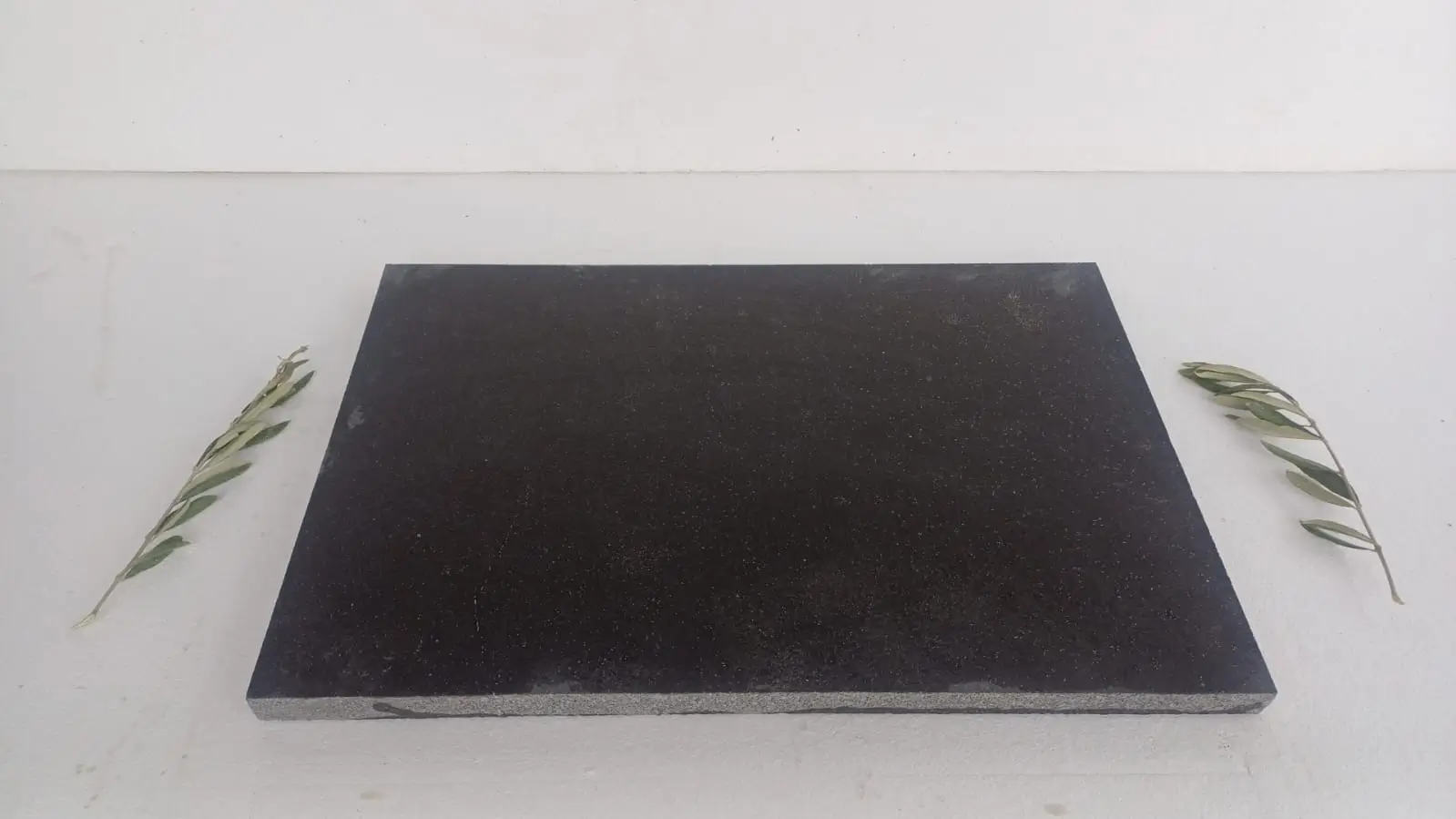
The visual principle behind dark grey limestone contrast Mesa design is straightforward — deep charcoal stone adjacent to warm buff, cream, or light travertine accents creates a tonal separation that reads as structured and intentional rather than accidental. What makes this pairing work in Arizona specifically is the way limestone’s crystalline matrix handles the 300-plus days of annual sun without the bleaching that affects softer materials. The dark grey tones stay stable because the pigmentation is mineral-based and locked within the stone’s structure, not a surface coating.
Understanding reflectance values before finalizing your palette is essential. Dark grey limestone typically measures between 10–20% light reflectance, while the light accent materials you’re pairing it with — cream limestone, buff travertine, or pale sandstone — generally measure 55–75%. That contrast ratio is what creates the visual separation. In Mesa’s intense sun, you need that ratio to be meaningful; materials that are only slightly different in tone will flatten out visually under direct overhead light and lose the definition you’re aiming for.
- Dark grey limestone reflectance: 10–20% LRV range
- Light accent stone reflectance: 55–75% LRV range
- Effective contrast ratio for Mesa sun conditions: minimum 40-point LRV gap
- Color stability rating for mineral-based limestone pigmentation: excellent under UV exposure
- Surface temperature differential between dark grey and light accent pavers: typically 15–22°F under peak sun
Structural Requirements for Limestone Paving in Arizona
Arizona’s structural requirements for natural stone flatwork fall under the IRC and IBC framework, and Mesa’s building department applies both with specific local refinements. The load-bearing requirement for residential patios is a minimum 40 PSF live load capacity, and for driveways, that climbs to 8,000 lbs per wheel load for standard residential vehicles. Your limestone specification needs to address both the paver thickness and the base system — because the stone alone doesn’t carry the load; the composite system does.
For dark grey limestone paving in Arizona residential projects, 1.25-inch thickness handles pedestrian loads adequately when the base is correctly engineered. Step up to 1.5 inches for areas with frequent vehicle overhang or occasional light vehicle access, and to 2 inches for full driveway specification. Compressive strength for quality dark grey limestone runs 8,000–15,000 PSI, which comfortably exceeds Arizona’s structural minimums — but that strength is only realized when the stone is properly bedded. A 1-inch screeded sand bed over compacted aggregate, leveled to within ±1/8 inch over 10 feet, is the standard that delivers full compressive engagement.
- Residential patio load requirement: 40 PSF minimum live load
- Driveway wheel load standard: 8,000 lbs per wheel for residential specification
- Recommended limestone thickness for pedestrian: 1.25 inches minimum
- Recommended limestone thickness for vehicular: 2 inches minimum
- Sand bed depth: 1 inch screeded, over minimum 4–6 inches compacted aggregate
- Compressive strength range for quality dark grey limestone: 8,000–15,000 PSI
Edge Restraint Requirements in Mesa Applications
Mesa’s building standards align with the Interlocking Concrete Pavement Institute’s edge restraint guidelines for natural stone, even though limestone isn’t concrete. You need a continuous perimeter restraint system — either concrete curbing, aluminum edging with 12-inch spike spacing, or embedded concrete edge beams. For the dark grey limestone contrast patterns typical in Mesa residential design, aluminum edging with a dark powder coat finish maintains visual continuity with the stone palette while meeting code.
The restraint system has to be installed before the field stone, not after. Projects in Mesa deal with expansive clay soils in certain neighborhoods, and without perimeter restraint anchored into the compacted base, thermal cycling will push the field pavers outward by 1/8 to 1/4 inch per year — which destroys your contrast joint lines within three seasons.
Visual Balance and Arizona Color Play in Limestone Design
Achieving genuine visual balance in an Arizona paving palette means understanding how the light angle changes the reading of your stone throughout the day. At 7 AM in Gilbert, the low-angle morning sun rakes across your dark grey limestone and highlights every texture variation — tumbled edges, natural clefts, and honed planes all read differently under that light. By 1 PM, the overhead sun flattens everything, and the contrast between your dark grey field pavers and your light accent borders becomes the dominant visual element. Design for both conditions, not just one.
The Arizona color play that works best with dark grey limestone involves restraint on the light accent side. Warm white limestone or pale buff travertine as border material creates a clean, grounded composition. Avoid cold white or bright white accents — they’ll look stark and institutional under Arizona’s intense natural light rather than sophisticated. A cream or soft ivory tone at 65–70% LRV gives you the contrast separation you need without the harshness.
- Morning light condition: raking angle reveals texture — choose consistent finish within each zone
- Midday light condition: overhead sun emphasizes color contrast over texture
- Recommended accent tone: warm white to pale buff, 65–70% LRV
- Avoid: cold white or bright white accents above 80% LRV in direct Arizona sun
- Pattern orientation: running bond in the dark grey field with accent border perpendicular creates clean visual hierarchy
Seismic and Soil Considerations for Arizona Stone Flatwork
Arizona sits in Seismic Design Category B for most of the state, with some western regions approaching Category C. Mesa falls in Category B, which means your limestone paving specification doesn’t require seismic-specific fastening — but it does mean your base system needs to accommodate soil movement without transferring stress to the stone surface. Expansive soils are the real structural concern in the Phoenix metro, and your base design needs to address heave potential before the first paver goes down.
For projects near Yuma, where soil composition shifts considerably from the Phoenix metro profile, geotextile fabric between native soil and aggregate base is not optional — it’s the difference between a 5-year installation and a 15-year one. A 6-oz non-woven geotextile prevents aggregate migration and keeps your base depth consistent through seasonal moisture variation. The investment is minimal; the performance impact is substantial.
- Mesa seismic category: B — no special fastening required for flatwork
- Primary soil concern in Phoenix metro: expansive clay with heave potential
- Geotextile specification: 6-oz minimum non-woven fabric, continuous installation
- Function: prevents aggregate migration into clay substrate under moisture cycling
- Base performance impact: extends installation life from approximately 5 years to 15+ years in expansive soil zones
Dark Grey Paving Contrast Arizona: Thickness and Finish Specifications
Your dark grey paving contrast Arizona specification should address three finish variables that affect both performance and visual consistency: surface texture, edge treatment, and joint width. For honed dark grey limestone, you’ll get the cleanest contrast with light accents because the smooth surface maximizes color depth. Tumbled finish reads warmer and slightly lighter at the edges — still effective for contrast but softer in the overall composition. Sandblasted or bush-hammered finishes create mid-range texture that scatters light and slightly reduces apparent color saturation.
The cool grey limestone paving option works particularly well when you’re pairing it with warm-toned light accent material — the cool grey creates a complementary tension with warm cream or buff that reads as more sophisticated than matching warm-to-warm tones. Joint width between dark grey field pavers and light accent borders should be held to 3/16 inch minimum and 3/8 inch maximum; wider joints visually dilute the contrast edge and reduce the definition between your palette zones.
- Honed finish: maximum color depth, cleanest contrast edge — recommended for high-design applications
- Tumbled finish: softer edges, slightly lighter apparent tone — suited for casual or transitional design styles
- Bush-hammered finish: mid-texture, reduced color saturation — good for slip-resistance priority zones
- Joint width for contrast borders: 3/16 to 3/8 inch
- Grout color recommendation: charcoal or dark grey unsanded grout to reinforce the stone color, not interrupt it
Mesa Light Accents: Which Materials Pair Best With Dark Grey Limestone
The most durable contrast pairings in Arizona use materials with compatible thermal expansion coefficients. Dark grey limestone has a thermal expansion coefficient of approximately 4.4–5.3 × 10⁻⁶ per °F. Pairing it with travertine, which runs at 4.0–5.0 × 10⁻⁶ per °F, means your joint movement between materials is minimal — typically less than 1/16 inch across a 10-foot run during full seasonal temperature swing. Pairing with concrete or ceramic accent material introduces differential expansion that will crack the joint interface within a few years.
Natural stone light accent materials that perform well in Mesa conditions include cream limestone from Turkish or domestic quarries, buff travertine in filled-and-honed specification, and light sandstone in the pale ochre range. Each of these has thermal expansion characteristics close enough to dark grey limestone that they behave as a unified system through Arizona’s temperature extremes — surface temperatures on dark paving in summer regularly exceed 150°F in the Phoenix metro, while winter nights drop below 40°F, creating a thermal range of over 110°F that your material pairing has to accommodate repeatedly.
Installation Logistics and Material Sourcing for Arizona Projects
Material sourcing and delivery timing directly affects installation quality with dark grey limestone contrast work. The stone needs to acclimatize to site temperature before installation — bringing cold-stored limestone onto a 100°F Arizona jobsite and immediately setting it will cause localized thermal shock that can micro-crack thin slabs. Allow 24 hours of on-site acclimatization in shade before installation begins. This is especially important for 1.25-inch specification stone, which has less thermal mass to buffer the transition.
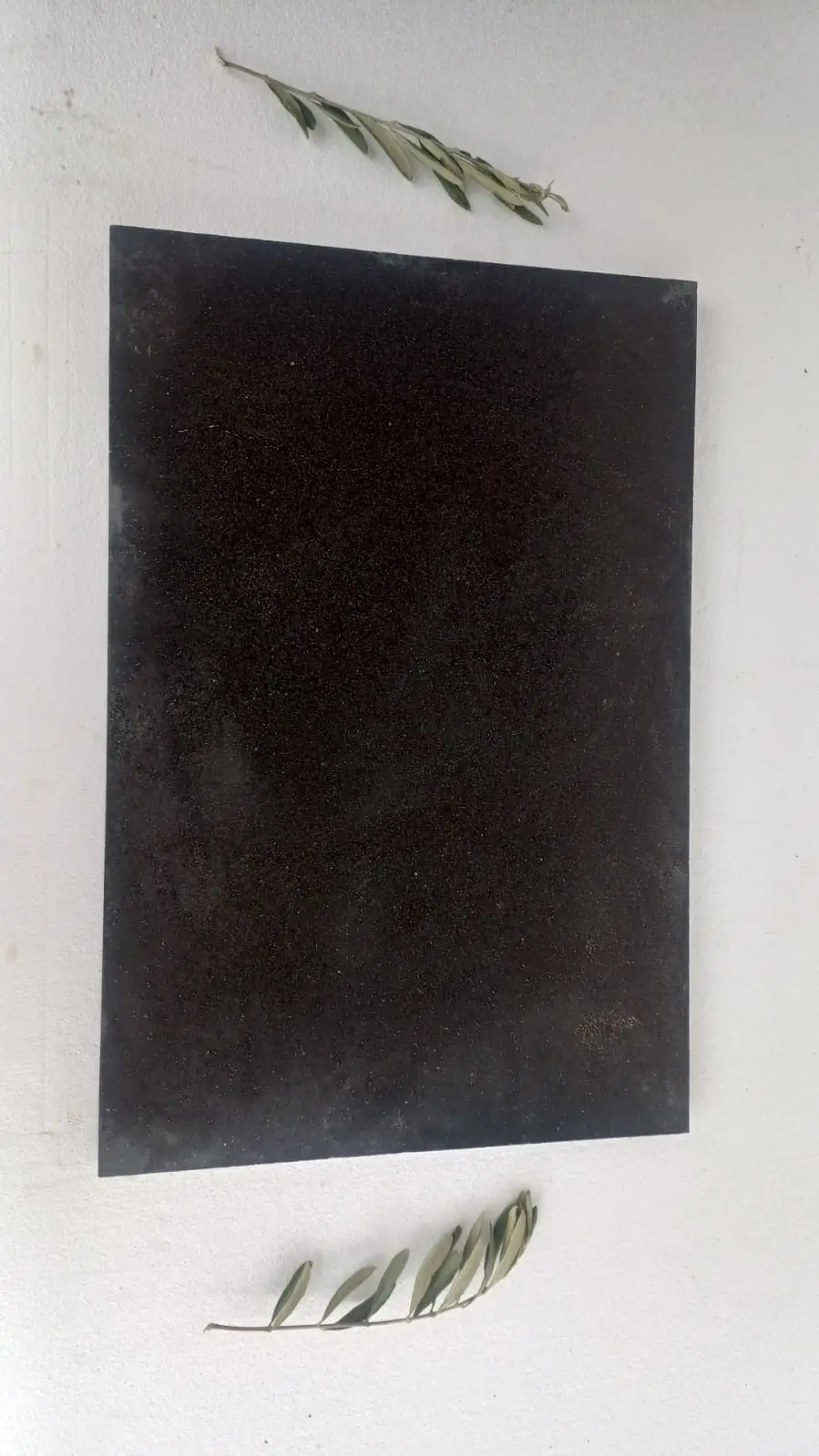
At Citadel Stone, we source dark grey limestone directly from verified quarries and run quality checks at our warehouse before material ships — checking for consistent tone matching, thickness tolerance within ±1/8 inch, and surface finish uniformity across the lot. Tone variation within a single pallet can be significant in natural stone, and dark grey limestone is particularly prone to subtle blue-black or warm graphite variation depending on the extraction zone. Requesting matched lots for contrast installations is worth the extra lead time. Truck delivery schedules vary by region, so building a 3–5 day buffer into your project schedule is standard practice for outlying areas.
- Acclimatization requirement: 24 hours in site shade before installation
- Critical for: slabs 1.25 inches and thinner
- Tone matching: request matched lots from the same extraction batch for contrast work
- Thickness tolerance: specify ±1/8 inch across the full delivery
- Delivery lead time from warehouse: typically 1–2 weeks for stocked material in Arizona
- Outlying area buffer: add 3–5 business days to standard lead time estimates
Sealing and Long-Term Performance for Dark Grey Limestone in Arizona
Dark grey limestone contrast work requires a sealing protocol that protects both the dark field stone and the light accent material — and the two materials may need different sealer formulations. Dark grey limestone in honed finish benefits from a penetrating silicone sealer at 0.3–0.5 mm penetration depth; this maintains color depth without the surface sheen that can look artificial in the Arizona sun. Light cream limestone or travertine accent material needs the same penetrating sealer to prevent staining from irrigation overspray, which is the leading cause of iron oxide staining on light accent pavers in the Phoenix metro.
Your first sealing application should occur 28–30 days after installation to allow any residual moisture to fully cure out of the stone. Reapplication timing in Arizona averages every 2–3 years for covered or partially shaded areas and every 18–24 months for fully exposed installations. Properly sealed and maintained dark grey limestone contrast work can deliver 20–25 years of structural performance when the base specification meets Arizona standards — that’s the realistic range, not a guarantee, because soil variability and maintenance frequency are the two biggest performance variables you control on an ongoing basis.
- Sealer type: penetrating silicone, not topical/film-forming
- Penetration target: 0.3–0.5 mm into stone matrix
- First application: 28–30 days post-installation
- Resealing frequency, shaded areas: every 2–3 years
- Resealing frequency, fully exposed: every 18–24 months
- Expected structural life with proper maintenance: 20–25 years
Getting Dark Grey Limestone Contrast Right for Mesa Projects
The details that separate a strong dark grey limestone contrast Mesa installation from a mediocre one are mostly invisible once the project is complete — base depth, geotextile placement, compaction density, edge restraint positioning, and matched stone lots. None of these show in the finished photography, but all of them determine whether you’re looking at the same crisp contrast palette in 20 years or a settled, stained, edge-blown installation in 7. Code compliance isn’t just a bureaucratic requirement here; it’s the structural framework that makes the design investment worthwhile.
Your specification should treat the Mesa light accents pairing as a system, not two separate material choices. Thermal compatibility, finish coordination, joint width consistency, and matched sealing protocols all contribute to the long-term visual integrity of the contrast design. For projects that take the dark grey limestone aesthetic into a more contemporary architectural direction, Dark Grey Limestone Paving Contemporary for Scottsdale Modern Homes provides additional context on how similar material choices translate across different Arizona design programs. Citadel Stone ensures your Grey Limestone Paving in Arizona arrives on time and intact.