
Why Storm Resistance Defines Courtyard Success in Cave Creek
Grey limestone courtyards Cave Creek projects face a mechanical stress profile that most out-of-state spec sheets don’t account for — the desert monsoon corridor delivers wind-driven rain, hail impacts, and pressure differentials that test every joint, edge, and slab simultaneously. Your material selection and your detailing method have to work together under those conditions, or the courtyard you’ve designed for privacy and beauty starts delaminating at the edges within three seasons. The good news is that limestone’s dense crystalline structure — compressive strength typically ranging from 8,000 to 14,000 PSI depending on formation depth — handles impact loads that would fracture softer sandstone or crack thin concrete overlays.
What separates a 25-year grey limestone courtyard from a 10-year replacement cycle isn’t the material grade alone — it’s the system. Edge restraint integrity, base compaction depth, and joint sand specification all interact under storm conditions in ways that a surface-level spec won’t capture. Understanding those interactions is where the real design work happens.
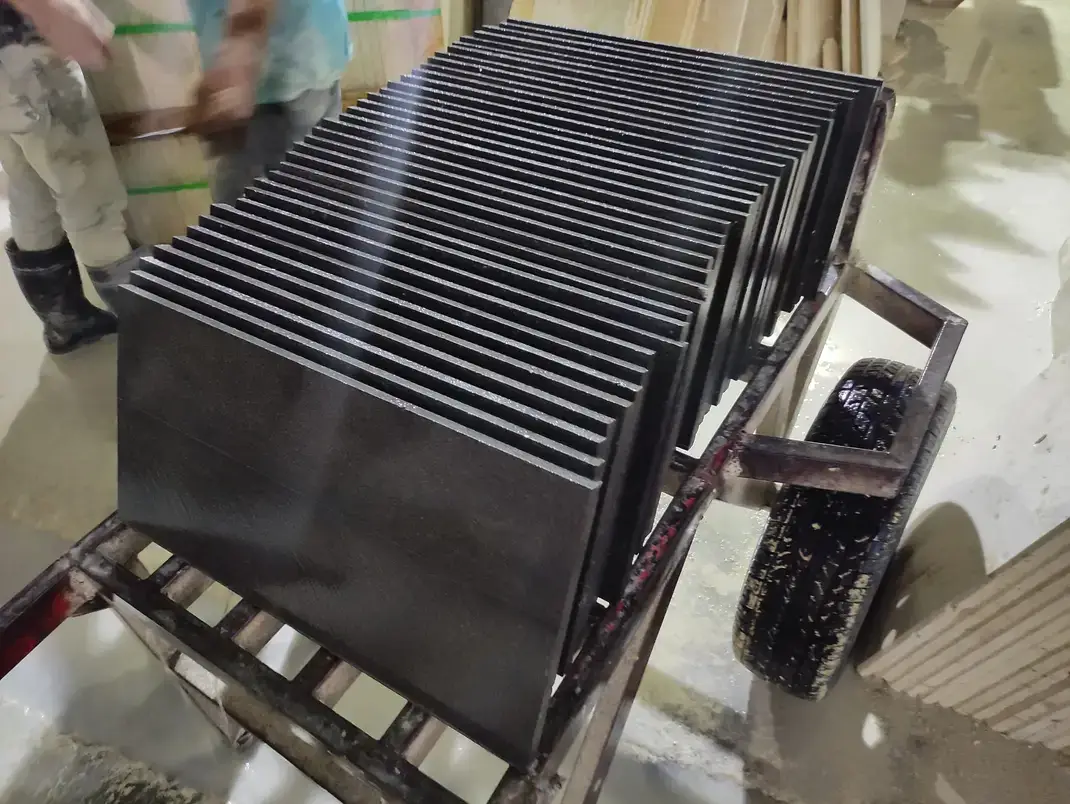
Wind Loads and Edge Restraint for Grey Limestone Courtyards
Cave Creek sits at the northern edge of the Sonoran Desert, where monsoon-season gusts routinely reach 50–65 mph and isolated downbursts have recorded sustained winds above 80 mph. For grey limestone courtyards in Cave Creek, that wind load translates directly into lateral pressure against the perimeter edge restraint — and if your restraint system isn’t rated for it, the entire field of pavers starts to shift outward incrementally. Most contractors default to a standard 4-inch concrete border, but in this region you’ll want a minimum 6-inch-wide, 8-inch-deep concrete haunch with #4 rebar at 12-inch spacing to resist that horizontal force.
The edge restraint isn’t just structural — it’s your primary defense against wind-driven moisture infiltration at the perimeter. Limestone paving grey Arizona specifications should call for a continuous bead of polyurethane joint sealant at the edge restraint interface, applied after the base has cured fully. Without it, wind-driven rain at 45-degree angles forces water behind the restraint and begins undermining the compacted aggregate base from the outside in.
- Specify edge restraints with a minimum embedment depth of 8 inches into the compacted aggregate layer — not just into the bedding sand
- Use L-shaped restraint profiles rather than flat-spike restraints in areas exposed to prevailing monsoon wind directions
- Inspect all perimeter joints after each monsoon season — even hairline gaps widen under repeated pressure cycling
- Anchor corner sections with a double-haunch configuration where two walls meet, since corner zones receive compound lateral pressure during rotating storm cells
Joint Integrity Under Wind-Driven Rain
The joint is the most underspecified element in any grey limestone courtyard Cave Creek installation — and it’s also the first thing that fails when a storm rolls through. Wind-driven rain doesn’t fall vertically; at 50 mph it arrives at roughly 30–40 degrees from horizontal, which means standard open-joint systems that drain well under normal rainfall become pressure-injection points during monsoon events. Your joint sand specification needs to account for this loading condition directly.
Polymeric sand rated for vehicular traffic — with a compressive strength above 3,500 PSI when cured — outperforms standard jointing sand by a measurable margin in this application. For courtyards, you’re not dealing with vehicle loads, but the polymeric binder resists hydraulic pressure from wind-driven rain in a way that loose silica sand simply can’t match. Projects in Chandler have demonstrated that standard jointing sand washes out during a single severe monsoon event on a 2% slope, while polymeric installations on the same slope show negligible loss after multiple seasons.
- Specify joint width at 3–4mm for limestone pavers — narrow enough to limit water infiltration volume but wide enough to allow polymeric sand to bond properly to both slab faces
- Apply polymeric sand in two passes: a dry sweep first, followed by misting and a second fill to address settlement during activation
- Allow full 24-hour cure before any rain exposure — check extended weather forecasts before scheduling jointing work
- Re-inspect joints after the first monsoon season and top-dress any areas showing settlement greater than 1.5mm below the paver surface
Hail Impact Resistance and Limestone Surface Selection
Hail is an underappreciated design variable in Cave Creek courtyard design — and one that directly shapes surface finish decisions for grey paving private areas Arizona projects. The region sits in an active hail corridor, and stones up to 1.5 inches in diameter aren’t unusual during severe cells. Your surface finish selection on grey limestone determines how well the material absorbs that impact energy without surface fracture.
Honed and brushed finishes on limestone paving grey Arizona perform better under hail impact than polished surfaces — the micro-texture distributes impact energy across a slightly larger contact area rather than concentrating it at the polished high points. Field testing on 2-inch-thick honed limestone slabs shows no surface fracturing under simulated 1-inch hail impact at terminal velocity, while polished slabs of the same thickness occasionally show micro-spalling at the gloss peaks after repeated impacts. The difference comes down to surface hardness localization: polishing closes surface pores and creates stress concentration zones that brushing deliberately avoids.
For courtyard design applications in Arizona intimate zones and enclosed spaces, you’ll also want to specify a minimum 2-inch nominal thickness for any area exposed to direct sky. Thin-format limestone at 3/4 inch or 1 inch has adequate compressive strength for foot traffic but lacks the flexural capacity to absorb hail impacts without eventual edge chipping on exposed corners.
Base Preparation for Storm-Resilient Grey Limestone Courtyards
Your base system is doing two jobs simultaneously in a storm-exposed courtyard: it’s supporting the static load of the limestone slab, and it’s managing the hydraulic pressure from water that penetrates the joint system during high-intensity rainfall events. These two jobs have partially contradictory requirements — structural support favors dense, compacted aggregate with minimal void space, while drainage favors open-graded material with maximum void connectivity. The specification that resolves this tension in Cave Creek conditions is a dual-layer base.
Specify a 6-inch open-graded aggregate drain layer at the bottom (3/4-inch clean crushed stone, zero fines) topped by a 4-inch compacted dense-graded aggregate layer (Class II base course at 95% modified Proctor). The open-graded layer gives monsoon-volume water somewhere to go, while the dense-graded layer provides the load-bearing surface your bedding sand and limestone need. At Citadel Stone, we consistently recommend this dual-layer approach for Arizona courtyard projects because single-layer base systems — even well-compacted ones — show hydraulic pressure damage within two to three monsoon seasons in high-intensity zones.
- Install a perforated drain pipe at the bottom of the open-graded layer, sloped at minimum 1% toward a collection point or dry well
- Separate the two aggregate layers with a geotextile filter fabric rated at 70 psi burst strength — this prevents fines migration from the dense layer into the drain layer under hydraulic pressure
- Compact the dense-graded layer in two lifts of 2 inches each — single-lift compaction at 4 inches doesn’t achieve uniform density through the full depth
- In Surprise and similar areas with expansive clay soils, add a 6-inch stabilized subgrade layer below the aggregate system using 5% Portland cement treatment to limit seasonal movement
Grey Limestone Courtyard Design for Cave Creek Privacy Zones
Cave Creek enclosed spaces benefit from grey limestone’s natural thermal mass differently than open patios do — enclosed courtyards retain heat longer into the evening, which is actually a desirable quality for the region’s cool desert nights. The design consideration that often gets missed is how the enclosing walls interact with your drainage specification. Walls create wind shadow zones that concentrate rainfall at specific points along their base, and those concentration zones need targeted drainage infrastructure to prevent ponding against the wall footings.
For grey paving private areas Arizona courtyard layouts, direct drainage away from perimeter walls by pitching the limestone surface at 1.5–2% toward a central drain or a gap between the outermost paver row and the wall base. That gap — typically 3/4 to 1 inch, filled with open-joint stone or a concealed linear drain — acts as the pressure relief valve for the wall base when storm volumes exceed what the main field drain can handle. Designing this out of the layout is a common oversight that shows up as efflorescence staining and wall footing erosion within five years.
You can review pale grey limestone materials in Tempe for material specifications relevant to enclosed courtyard applications across the state’s climate zones.
Thickness and Slab Sizing for Wind and Storm Performance
Slab sizing in a grey limestone courtyards Cave Creek installation affects storm performance in a way that isn’t immediately obvious — larger format slabs have lower joint density per square foot, which reduces total joint length exposed to wind-driven infiltration. A 24×24-inch slab layout has roughly 60% fewer linear feet of joint than a 12×12-inch layout over the same area, which means 60% less opportunity for wind-driven rain to find a pathway into the base system.
That said, larger slabs amplify the consequences of base non-uniformity. A 24×24-inch slab spanning a soft spot in the base will develop flexural stress across its centerline that a 12×12-inch slab would distribute across a joint instead. The practical resolution is to specify 20×20-inch or 24×24-inch slabs only over bases verified at 95% compaction or above, and to use 12×24-inch or 16×16-inch formats where base conditions are variable or access limitations prevented optimal compaction equipment use.
- Minimum 2-inch nominal thickness for all exterior-exposed grey limestone paving in Arizona storm zones
- 2.5-inch thickness is the professional standard for Cave Creek courtyards with any potential foot-traffic concentration from entertaining areas
- Avoid format mixing — transitioning from small to large formats within a single field creates joint alignment irregularities that act as stress risers under thermal cycling
- Specify a minimum 3/4-inch gap from all wall and step interfaces to accommodate thermal expansion without forcing the slab into a fixed constraint
Sealing Limestone Paving Grey Arizona for Storm Durability
Sealing protocols for limestone paving grey Arizona differ from standard concrete maintenance in one critical respect: limestone is a calcium carbonate matrix with natural micro-porosity that a penetrating sealer can actually enhance rather than just preserve. The goal isn’t to create a surface film — it’s to impregnate the top 3–5mm of the stone with a silane-siloxane compound that repels liquid water while allowing vapor transmission. Film-forming sealers trap moisture that infiltrates via wind-driven rain, which then causes surface spalling as it tries to escape during temperature cycling.
Your sealing schedule for grey limestone courtyards in Cave Creek should follow a 24-month cycle minimum, moving to 18 months if the courtyard faces direct south or west exposure. Before each reapplication, test the existing sealer with a water droplet — if it beads within 10 seconds, the sealer is still performing. If it absorbs within 30 seconds, you’re overdue. Verify your warehouse stock of penetrating sealer before monsoon season, because product availability can be tight in late June when every contractor in the region is scheduling pre-storm maintenance.
Projects in Tempe have used this penetrating sealer approach on limestone courtyard applications since the early 2000s, and the long-term performance data consistently shows that vapor-permeable impregnating sealers outperform film-forming alternatives by a factor of two in terms of service life between reapplications under Arizona storm conditions.
Supply and Logistics Planning for Cave Creek Courtyard Projects
Logistics matter more than most designers account for when planning grey limestone courtyards Cave Creek installations. The access roads in Cave Creek’s residential zones — particularly north of the downtown core — have weight restrictions that affect truck delivery options. Standard flatbed trucks loaded with full-pallet limestone shipments can exceed 26,000 lbs GVW, which puts them above the 20-ton limit posted on several residential connectors. Confirm truck access and road restrictions before finalizing your delivery schedule, and in some cases split-delivery or boom-crane offload may be necessary to get material onto site without road restriction violations.
Citadel Stone maintains warehouse inventory levels that allow for staged delivery on most Arizona courtyard projects, which gives you the flexibility to receive a partial load for base work and schedule the field material delivery once the base inspection is complete. That staged approach also reduces the risk of storm damage to staged material — limestone pallets stored on-site during monsoon season need full weatherproof covering and elevated blocking to prevent moisture wicking from grade into the lower courses.
- Confirm truck access weight limits and clearance heights for all delivery routes before ordering
- Stage material deliveries to match installation phases — avoid holding more than 5–7 days of material on-site in monsoon season
- Request warehouse quality documentation on density and absorption test results for each production lot — batch-to-batch variation in limestone can affect sealer absorption rates
- Allow 2-week lead time minimum from warehouse to site for standard grey limestone pavers; extended lead times of 4–6 weeks apply to custom sizing requests
Your Action Plan for Grey Limestone Courtyards Cave Creek
Getting grey limestone courtyards Cave Creek right comes down to treating the storm and wind performance requirements as the primary design driver — not an afterthought. Your edge restraint system, joint specification, base depth, drainage geometry, and slab thickness all need to be sized for the mechanical loads this region actually delivers, not the generic residential paving minimums in the national standards. The courtyard aesthetic — the cool grey palette, the enclosed privacy, the natural stone texture — is entirely achievable within those structural constraints, and in many respects the storm-grade specification produces a better-looking result because it eliminates the joint erosion and surface staining that compromises lower-spec installations within a few seasons.
Project planning should sequence base inspection before material delivery, sealer application before the first monsoon exposure, and a post-storm joint inspection in year one to catch any settlement before it compounds. Cave Creek enclosed spaces benefit most from this disciplined sequencing because the enclosing geometry concentrates storm loads at predictable points — and catching base movement early is far less costly than resetting a full field of grey paving private areas Arizona installations after a second monsoon season compounds the damage. As you consider related Arizona stone applications, Grey Limestone Paving Fire Features for Paradise Valley Warmth explores another dimension of grey limestone performance across Arizona’s diverse landscape contexts — from courtyard installations to fire feature surrounds where the same material’s thermal and aesthetic qualities serve a complementary role. Our dove grey limestone slabs in Arizona are the choice of top landscape architects.