
Budget Realities for Grey Limestone Urban Chandler Projects
Grey limestone urban Chandler specifications start with a number most project managers underestimate — freight cost as a percentage of total material spend. Unlike markets in Phoenix’s urban core, Chandler sits in a mid-distance freight zone where truck delivery from quarry-connected distribution points adds 8–14% to your per-pallet cost depending on order volume and access constraints at the site. That’s not a rounding error on a 2,000-square-foot municipal plaza — it’s a line item that reshapes your material selection before you’ve finalized the spec sheet.
The regional pricing dynamic in Chandler’s metropolitan market reflects the broader Arizona pattern: labor rates have climbed steadily, while material costs remain competitive when you source strategically. Your material-to-labor ratio on a grey limestone installation typically runs 45:55 in this market — meaning the stone itself is almost secondary to installation efficiency. Getting that ratio right requires warehouse availability and delivery timing to align with your crew’s schedule, not the other way around.
How Sourcing Decisions Shape Total Project Cost
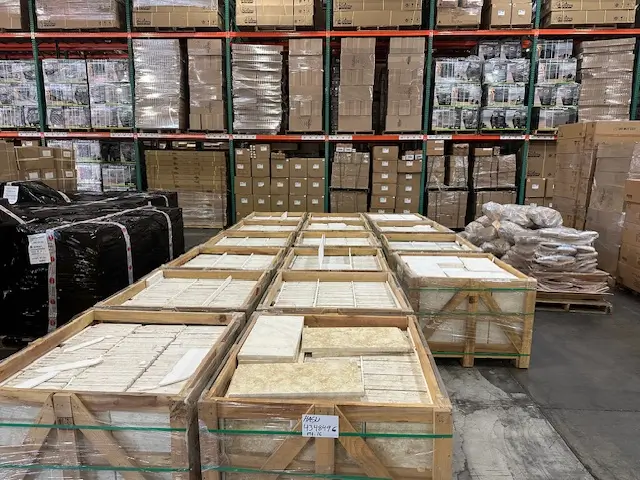
The decision between imported limestone and domestically warehoused stock is where most Chandler urban projects either gain or lose budget margin. Imported stone carries a 6–8 week lead time under normal conditions — and in Arizona’s summer construction window, that timeline can slip to 10–12 weeks when port congestion and inland freight delays stack up. Domestically warehoused grey limestone paving in Arizona, by contrast, moves from warehouse to truck to site in 1–2 weeks when inventory levels are adequate.
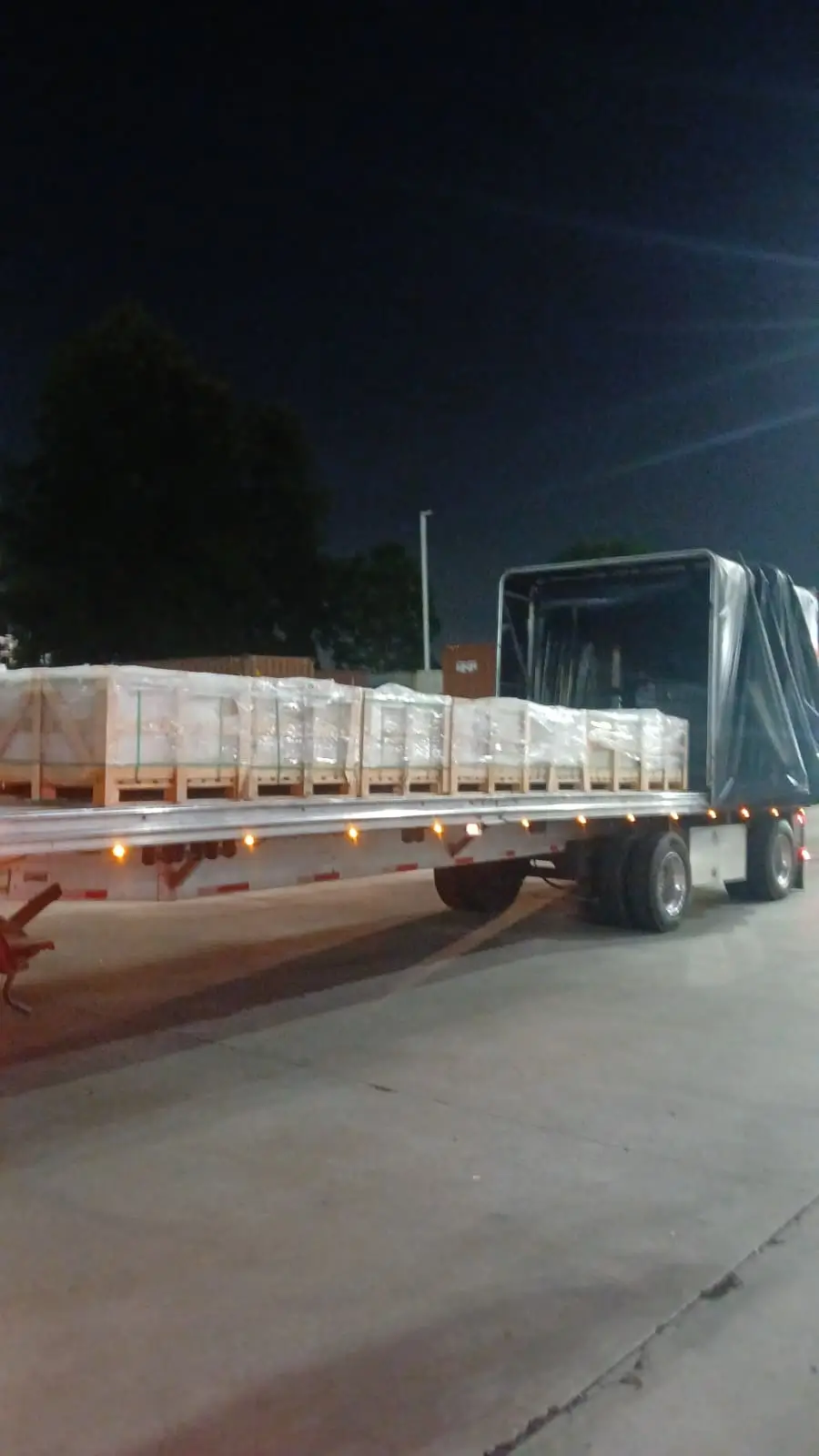
Your sourcing decision also affects staging costs. A phased delivery from local warehouse inventory lets your crew maintain a leaner on-site stone pile, reducing the square footage of covered staging your GC needs to budget. That’s a real cost reduction on tight urban infill sites where Chandler’s downtown development projects frequently deal with constrained laydown areas.
- Local warehouse stock reduces lead time from 6–8 weeks to 1–2 weeks, protecting your construction schedule
- Freight from regional distributors typically runs 15–20% lower per pallet than direct import for orders under 500 square feet
- Phased truck delivery allows tighter staging budgets on space-constrained urban sites
- Consolidated orders above 800 square feet often qualify for freight rate breaks that change the cost-per-square-foot calculus significantly
Material Selection for Urban Grey Limestone Applications
Grey paving city landscapes Arizona demand a material that performs across a wide compressive load range — pedestrian plazas, light vehicle access, and emergency vehicle crossings often share the same hardscape surface in urban Chandler. Grey limestone in the 12,000–16,000 PSI compressive strength range handles this without overspecification. You don’t need engineered stone for a pedestrian-priority streetscape, but you do need density above 2.4 g/cm³ to resist surface abrasion from foot traffic concentrated at entry thresholds.
Thickness matters more than most urban designers initially account for. A 1.25-inch nominal slab performs adequately for pedestrian-only zones, but your 2-inch minimum applies anywhere a service vehicle might cross — and in Chandler’s mixed-use downtown areas, that’s more locations than the initial design intent suggests. Specifying universally at 1.5 inches represents sound value engineering: it splits the cost difference while covering most contingency load scenarios without a full structural upgrade.
For projects in Peoria, where urban redevelopment corridors are expanding rapidly, the same material selection logic applies — but the municipal approval process often requires documented compressive strength data before permit issuance, so keep your material certifications accessible in the project file.
Value Engineering Strategies for Grey Limestone Urban Chandler
Value engineering on grey limestone urban Chandler projects doesn’t mean substituting a cheaper material — it means finding the specification efficiencies that reduce installed cost without compromising performance or aesthetics. Here’s where the real leverage exists in Arizona’s current labor market.
- Specify modular slab sizes (24×24 or 18×24) rather than custom cut dimensions — field waste drops from 12–15% to 6–8%, directly reducing your material order quantity
- Select a grey limestone with a factory-honed finish rather than specifying field honing — labor savings of 30–40 minutes per 100 square feet add up on large plaza installations
- Coordinate truck delivery schedules with your masonry crew’s peak productivity window (typically 6 a.m. to 11 a.m. in Arizona summer months) to avoid heat-related pace reductions
- Order 8–10% overage from warehouse stock rather than 15% — grey limestone’s dimensional consistency means breakage rates run lower than most estimators assume
- Use a dry-lay system for parkway and plaza zones where subsurface access is anticipated — it eliminates future demo costs and speeds initial installation
At Citadel Stone, we recommend reviewing your installation phasing before finalizing the stone order, because the sequence of truck deliveries directly affects how efficiently your crew can move through large urban hardscape areas without re-handling material.
Grey Limestone Arizona Performance Profile
The thermal performance of grey limestone in Arizona’s urban heat environment is worth understanding — not as the primary design driver, but as a specification confirmation. Grey limestone reflects 45–55% of solar radiation depending on finish texture and exact colorway. That’s meaningfully better than standard concrete unit pavers, which typically reflect 25–35%. In Chandler’s urban aesthetics context, where heat island mitigation is increasingly factored into city design review, this performance difference supports your material justification without requiring you to lead with environmental claims.
Porosity runs between 2–6% in quality grey limestone — low enough to resist staining from the food and beverage traffic common in mixed-use urban plazas, but sufficient to prevent the surface tension buildup that causes runoff sheeting. In practice, this means your Chandler urban paving installation handles light rainfall events without pooling, which matters for ADA compliance at accessible routes.
Projects in Sedona deal with a different exposure profile — UV intensity at elevation accelerates surface color fade in some limestone varieties — but Chandler’s lower elevation means your grey limestone specification holds its colorway more consistently, which reduces maintenance resealing frequency to a biennial cycle rather than annual.
Labor Market Conditions and Installation Efficiency
Arizona downtown areas are seeing compressed masonry labor availability, particularly for experienced natural stone installers. Your project schedule needs to account for this reality, because a 3-week delay waiting for a qualified crew can cost more in general conditions overhead than the premium you’d pay to lock in an experienced installer early. The grey limestone urban Chandler market is competitive enough that skilled stone masons are booking 6–10 weeks out during peak construction season (September through May).
Field setting rates for grey limestone slabs on a prepared aggregate base run approximately 80–120 square feet per mason per day for standard modular formats. Custom cut work or complex pattern layouts reduce that rate to 50–70 square feet. Knowing your realistic production rate lets you back-calculate your truck delivery schedule — you don’t want material sitting exposed on a Chandler urban site in summer heat longer than necessary before it’s set, because thermal cycling of unstacked stone can introduce micro-surface variation that affects joint consistency.
- Book your masonry crew 6–8 weeks ahead of your scheduled start date in Arizona’s peak construction window
- Confirm installer experience with natural limestone specifically — concrete paver installation techniques don’t translate directly to slab limestone work
- Factor a 10–15% pace reduction for afternoon work periods in summer months, which affects your delivery staging plan
- Coordinate with your GC on site access hours — urban Chandler projects often have noise ordinances that affect when crews can operate heavy material handling equipment
Grey Limestone Paving Specification Details
Your specification for grey limestone paving in Arizona urban contexts should address joint spacing before it addresses anything else. Thermal expansion in Arizona’s climate range — from winter lows near 35°F to summer peaks above 110°F — creates a 75°F working temperature swing. Grey limestone’s thermal expansion coefficient of approximately 4.5–5.0 × 10⁻⁶ per °F means a 10-foot run of stone moves roughly 0.04 inches across that temperature range. Your joint spacing should accommodate this at 3/16-inch minimum, with 1/4-inch preferred for exposed urban installations.
For large-format slabs used in Chandler metropolitan design projects — anything above 24×24 inches — expansion joints every 12–15 feet are non-negotiable. The 20-foot spacing you’ll see in some generic specs works for smaller format pavers with more inherent joint accommodation. With large-format grey limestone, exceeding 15 feet between expansion joints is the primary cause of edge lifting and corner cracking in Arizona installations. That failure mode is entirely preventable at the specification stage and expensive to correct after installation.
For a closer look at how grey limestone performs in other Arizona hardscape contexts, Jura grey limestone slabs in Mesa covers material options and specification considerations worth reviewing alongside your Chandler urban project planning.
Base Preparation for Urban Grey Limestone Installations
Urban sites in Chandler frequently encounter engineered fill at shallow depths — utility corridors, former building footprints, and compacted road base from previous streetscape work all affect your sub-base preparation requirements. Standard residential base prep assumptions don’t apply. Your geotechnical report should inform base depth, but as a working field guideline, plan for 6–8 inches of compacted Class II aggregate base over native soil for pedestrian zones and 10–12 inches for any surface that may see service vehicle traffic.
Projects in Flagstaff require additional consideration for freeze-thaw cycling in the base layer — a different challenge than Chandler faces — but the lesson applies: base quality determines long-term joint stability far more than the stone specification itself. In Chandler, the primary base risk is expansive clay soil in older neighborhoods and transition zones, which can produce differential settlement that no surface material will bridge without cracking.
- Verify compaction to 95% modified Proctor density before any setting bed work begins
- Use a 1-inch screeded setting bed of coarse sand or stone dust — not mortar — for pedestrian zones where future utility access is anticipated
- Install geotextile fabric at the native soil interface to prevent base migration in sandy or loamy sub-soils common in eastern Chandler
- Document existing utility depths before commencing base excavation on any urban streetscape project
Sealing and Maintenance for Urban Grey Limestone
Grey limestone’s porosity profile — the 2–6% range mentioned earlier — responds well to penetrating silane-siloxane sealers rather than topical film-forming products. In Chandler’s urban environment, where restaurant spills, organic debris, and cleaning chemical runoff are routine, a penetrating sealer protects the stone matrix without creating a surface film that pedestrian traffic wears through unevenly. Film sealers look excellent for the first 18 months and then create visible wear patterns at pedestrian concentration points that are difficult to address without full reapplication.
Your sealing schedule for grey limestone urban Chandler installations should begin with an initial application 30–60 days after installation, allowing the stone to complete its initial off-gassing cycle. Subsequent applications on a biennial schedule maintain protection without over-saturating the stone’s pore structure. Over-sealing — applying annually or more frequently — can actually trap moisture and accelerate the micro-spalling that shows up as surface pitting after several years in high-UV exposure.
- Apply sealer in early morning or evening to avoid application temperature exceeding 85°F — hot stone surfaces cause sealer to flash before it penetrates properly
- Two thin coats outperform one heavy coat in penetration depth and long-term adhesion
- Test sealer compatibility with your specific limestone batch before full application — even within the same grey limestone family, porosity varies enough to affect absorption rate
- Budget for sealer reapplication in your long-term maintenance spec — it’s the lowest-cost intervention that extends installation life by 5–8 years
Your Action Plan for Grey Limestone Urban Chandler Success
Grey limestone urban Chandler projects succeed when the budget conversation precedes the design conversation — not the other way around. Your freight cost analysis, labor market timing, and warehouse availability check should happen at the schematic design phase, not after you’ve specified the material and are negotiating the construction contract. The sourcing decisions you make at that early stage determine whether your installed cost lands at $18–22 per square foot or creeps toward $28–32 when supply chain friction and labor scheduling misalignment compound.
Chandler’s urban growth trajectory makes grey limestone urban paving an increasingly relevant specification for Arizona downtown areas — the Chandler metropolitan design vision for downtown corridors and transit-adjacent plazas favors the understated sophistication that grey limestone delivers. The material aligns with urban aesthetics that municipalities are prioritizing: durable, low-maintenance, heat-reflective, and visually coherent across large public spaces. Getting the specification right means delivering on that vision without budget overruns that force value engineering compromises late in the project.
As you finalize your material plan for Arizona hardscape projects, related surface applications can inform how you approach adjacent design elements. Grey Limestone Paving Pool Deck Safety for Mesa Non-Slip Surfaces explores how grey limestone performs in a wet-surface context — relevant background when your urban project includes water feature surrounds or decorative fountain edges. Our dove grey limestone paving in Arizona creates a serene and elegant outdoor oasis.