
Timing is the variable that separates a black granite paving installation that performs for decades from one that starts showing problems within the first year. Most of the failures we see with installing black granite paving Arizona projects come down to when the work happened, not what materials were used or even how the crew performed. The adhesive cured wrong, the jointing compound set too fast, or the slabs were laid during surface conditions that guaranteed dimensional stress from day one. Understanding Arizona’s seasonal rhythms is the real foundation of a successful installation.
Seasonal Windows That Define Success
Arizona doesn’t offer you a single year-round installation window — it offers you two distinct optimal periods separated by a brutal summer stretch and a mild but occasionally tricky winter. Your project planning needs to treat these windows as non-negotiable scheduling constraints, not flexible preferences.
The premier installation window runs from mid-October through early March. Ambient temperatures stay between 55°F and 75°F through most of the day, and ground temperatures — which matter more than air temperature for black granite adhesive cure — stay in the 60–72°F range that most setting mortars and tile adhesives list as their optimal performance band. You’ll get consistent workability, predictable open times, and jointing compounds that cure at the rate printed on the technical data sheet.
- Mid-October to early March delivers the most reliable adhesive performance across the state
- Ground temperature stabilizes in the 60–72°F band, matching mortar manufacturer specifications
- Longer working windows per day reduce crew scheduling pressure
- UV intensity drops enough to slow surface flash-off during mortar application
- Nighttime temperatures rarely dip below 40°F in the low desert, avoiding cold-cure complications
The secondary window — April through mid-May — works but requires early-morning discipline. By late April, ground temperatures in the Phoenix metro are already climbing past 80°F by 10 a.m., which compresses your effective working window significantly. Desert-rated granite paving across Arizona absolutely can be installed during this shoulder season, but you need to start laying slabs at first light and wrap mortar work by 9 or 10 a.m. at the latest.
Morning vs. Afternoon Installation Discipline
Here’s what most specifiers and homeowners miss entirely: the slab surface temperature and the ambient air temperature are different numbers, and both matter for different reasons. In Arizona’s low desert, a black granite slab that’s been sitting in direct sun for two hours can reach 140–160°F at the surface even when air temperature is only 90°F. That surface temperature affects how quickly your mortar flashes off, how the adhesive layer behaves at the interface, and how much thermal expansion the slab undergoes between placement and final set.
Your mortar open time — the window between trowel application and when the adhesive starts losing bond capacity — can drop from 25–30 minutes under controlled conditions to under 10 minutes when ground and slab temperatures combine above 100°F. That’s not a rough estimate; it’s a real-world figure that consistently shows up when you’re working with thin-set mortars in Arizona summer conditions. These are precisely the AZ outdoor granite paving setup factors that separate experienced crews from those learning on the job.
- Start mortar application before 7 a.m. during shoulder season months
- Work east-to-west across your layout to keep finished slabs in shade as long as possible
- Pre-wet or shade delivery pallets — granite staged in direct sun will hit temperatures that compromise bond before you even begin laying
- Avoid afternoon mortar work entirely from May through September without active substrate cooling
- Use an infrared thermometer to check slab surface temperature before placing — anything above 95°F at the substrate interface warrants a pause
For projects in Mesa, where large suburban lot sizes often mean exposed concrete slabs absorbing heat from early morning, shading the substrate with temporary covers for 30–60 minutes before laying can recover workable conditions even on a warm spring morning. It sounds like extra effort, but it directly protects the bond line that determines long-term performance.
Summer Installation: An Honest Assessment
Professional crews who understand Arizona’s summer conditions can install black granite paving during June, July, and August — but the variables they manage are significantly more demanding, and the margin for error is much narrower. If you’re managing a project that must proceed during summer, the realistic protocol looks quite different from a cooler-weather installation.
Substrate preparation needs to happen the evening before, with the entire base dampened and covered with reflective sheeting overnight to keep ground temperatures from spiking before work begins. Your crew should target a 5 a.m. start, completing all mortar work before 8:30 a.m. and then shifting to cutting, edge work, and non-adhesive tasks through the rest of the day. AZ outdoor granite paving setup during summer doesn’t mean stopping work — it means restructuring the workflow around thermal windows.
- Use polymer-modified mortars rated for high-temperature applications — standard thin-sets are not appropriate above 95°F substrate
- Maintain shade over freshly laid sections for at least 48 hours to prevent thermal shock during initial cure
- Increase joint width by 15–20% from your standard specification to accommodate thermal expansion at peak summer temperatures
- Plan for 72-hour cure before any load traffic, not the standard 24-hour recommendation
- Check adhesive manufacturer data sheets specifically for high-temperature ratings — these are listed separately from standard specifications
Base Preparation and Seasonal Soil Behavior
Arizona’s soil profile changes meaningfully across seasons, and your base preparation timing needs to account for this. The caliche layers common across the Phoenix metro — including projects in Gilbert — behave differently depending on whether you’re excavating during the dry pre-monsoon period or immediately after monsoon rainfall. During dry season, caliche can be mechanically compacted to 95% Proctor density without much difficulty. After monsoon saturation, you need to allow adequate drying time before compacting, or you’ll compact surface moisture into the base and create settlement issues months later.
Your aggregate base should be a minimum of 4 inches of compacted Class II road base for pedestrian applications, stepping up to 6 inches for any area that will see vehicular or heavy load traffic. Black granite’s compressive strength exceeds 20,000 PSI, so the slab itself won’t be your limiting factor — the base behavior under load cycles is where long-term performance gets determined.
- Allow a minimum of 3 dry days after monsoon rain before final base compaction
- Excavate to a minimum of 7 inches below finished surface elevation to accommodate base plus slab thickness
- Install geotextile fabric at the excavation base in areas with expansive clay subsoils
- Compact base in two lifts of equal depth rather than a single deep pass
- Verify base moisture content before compaction — target 3–5% for optimal density
Slab Thickness and Material Specifications
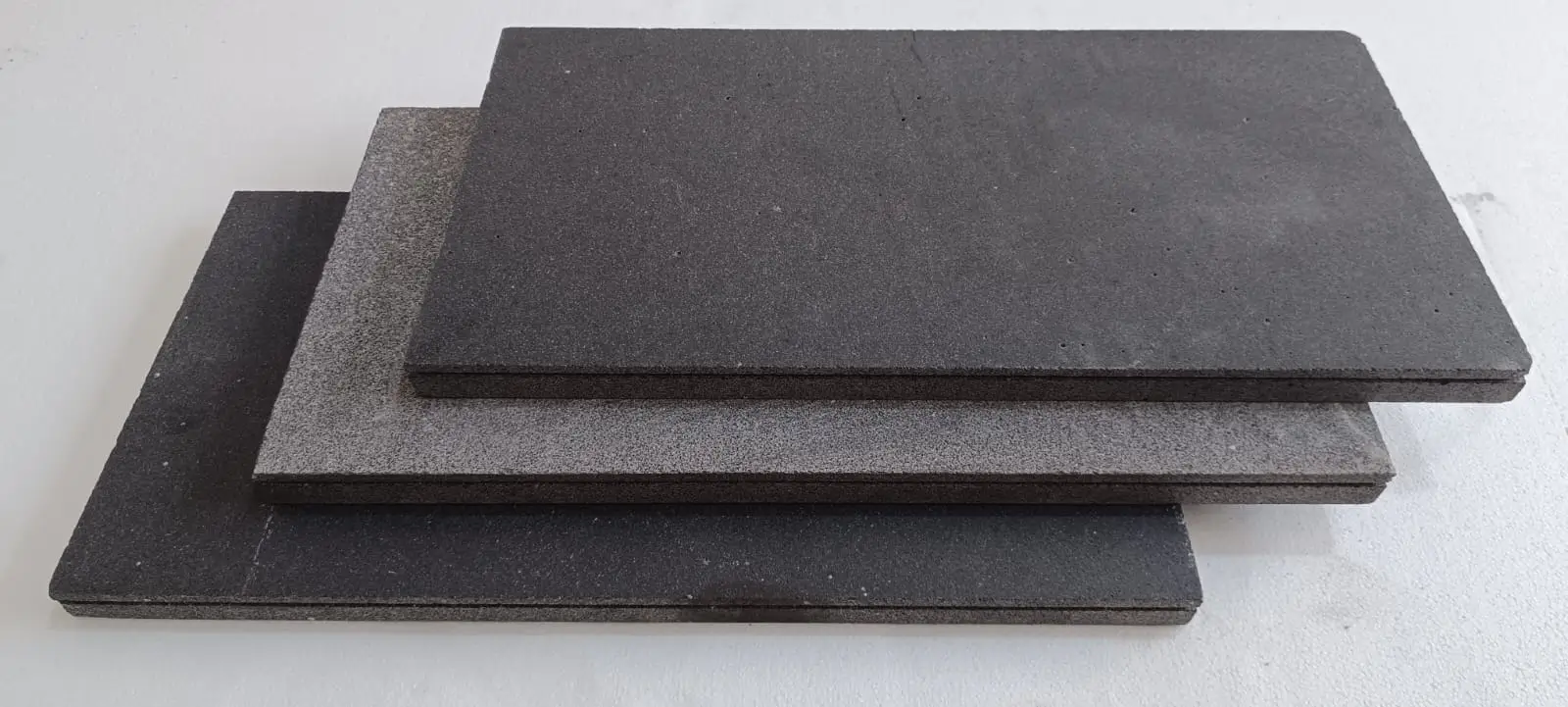
For most Arizona outdoor installations, you’re specifying either 20mm or 30mm black granite slabs depending on application. The 20mm nominal thickness handles pedestrian patios and pool decks without issue — black granite’s inherent density and crystalline structure give it flexural strength well above what residential foot traffic demands. Step up to 30mm for driveways, access paths that see vehicle traffic, or any application where point loads from outdoor furniture with small feet or planters with concentrated weight will be a factor.
Surface finish selection for Arizona conditions deserves specific attention. A flamed or sandblasted finish provides slip resistance values that meet or exceed the ADA wet-coefficient-of-friction threshold of 0.6 — critical for pool surrounds and areas that receive irrigation overspray. Polished black granite looks spectacular but should only be specified in areas that stay reliably dry, because polished dark stone in direct sun can also reach surface temperatures that affect barefoot comfort during summer afternoons. Following the black granite paver installation steps Arizona projects demand, matching finish to application is just as important as matching thickness to load.
- 20mm thickness: pedestrian patios, garden paths, pool decks with adequate drainage
- 30mm thickness: driveways, heavy-use entertaining areas, commercial applications
- Flamed finish: pool surrounds, wet-zone applications, areas with irrigation contact
- Sandblasted finish: walkways, general patio areas, high-traffic residential applications
- Polished finish: sheltered outdoor areas, covered patios, interior transitions only
For projects in Chandler, where newer developments often include expansive backyard entertainment areas with outdoor kitchens and built-in BBQ stations, the 30mm specification for the main activity zone with 20mm for surrounding path areas is a combination that manages both load capacity and material cost efficiently.
Adhesive Selection for Arizona Thermal Cycles
Standard polymer-modified thin-set mortars from major manufacturers are rated for substrate temperatures up to approximately 90°F. Arizona’s ground temperatures in summer routinely exceed this. You need to specify a high-temperature polymer-modified mortar — products explicitly rated for applications up to 120°F substrate — and verify the extended open time rating on the data sheet, not just the standard open time figure.
Two-component epoxy adhesives offer an alternative worth considering for projects where summer installation is unavoidable. Epoxy systems are less temperature-sensitive during application, but they require precise mixing ratios and are unforgiving of contamination on the bond surface. Your substrate must be clean, dry, and free of any dust or efflorescence. Arizona black granite paving Citadel Stone provides technical data sheets for the specific adhesive systems we recommend with our granite products, which takes the guesswork out of compatibility matching.
- Standard thin-set: appropriate only for October–April installations with substrate below 90°F
- High-temperature polymer-modified mortar: suitable for shoulder-season installations with morning-only workflow
- Epoxy adhesive: use for summer installations or anywhere bond integrity is the primary concern
- Verify that your chosen adhesive system lists sulfate resistance — alkaline soil conditions in Arizona can compromise some mortar formulations over time
- Never apply adhesive to a substrate that has been wet in the last 24 hours, regardless of surface appearance
Joint Specification and Grouting Timing
Joint width for installing black granite paving in Arizona conditions isn’t the 3mm standard you’d use in a temperate climate. Black granite has a thermal expansion coefficient of approximately 4.5 × 10⁻⁶ per °F — lower than concrete but still significant across Arizona’s 60°F+ daily temperature swings during summer. Minimum joint width should be 5mm for standard installations, stepping up to 8mm in areas with full-day sun exposure and no overhead shading.
Grouting timing is where many projects lose the gains made through careful slab placement. Your mortar needs to reach initial set — typically 24 hours at optimal temperatures, 48–72 hours during summer — before you introduce grout. Grouting too early disrupts the adhesive layer through vibration and pressure, and it’s a mistake that doesn’t show up immediately. You’ll see it 6 to 18 months later as isolated slab movement or cracking at joint edges.
- Minimum joint width: 5mm for shaded or covered applications
- Recommended joint width: 6–8mm for full-sun Arizona patio and pool deck applications
- Allow 24 hours before grouting in optimal conditions (55–75°F), 72 hours during summer
- Use a polymer-modified grout rated for exterior applications with UV resistance
- Seal grout lines within 7 days of installation to prevent staining before final cure
Sealing and Monsoon Season Scheduling
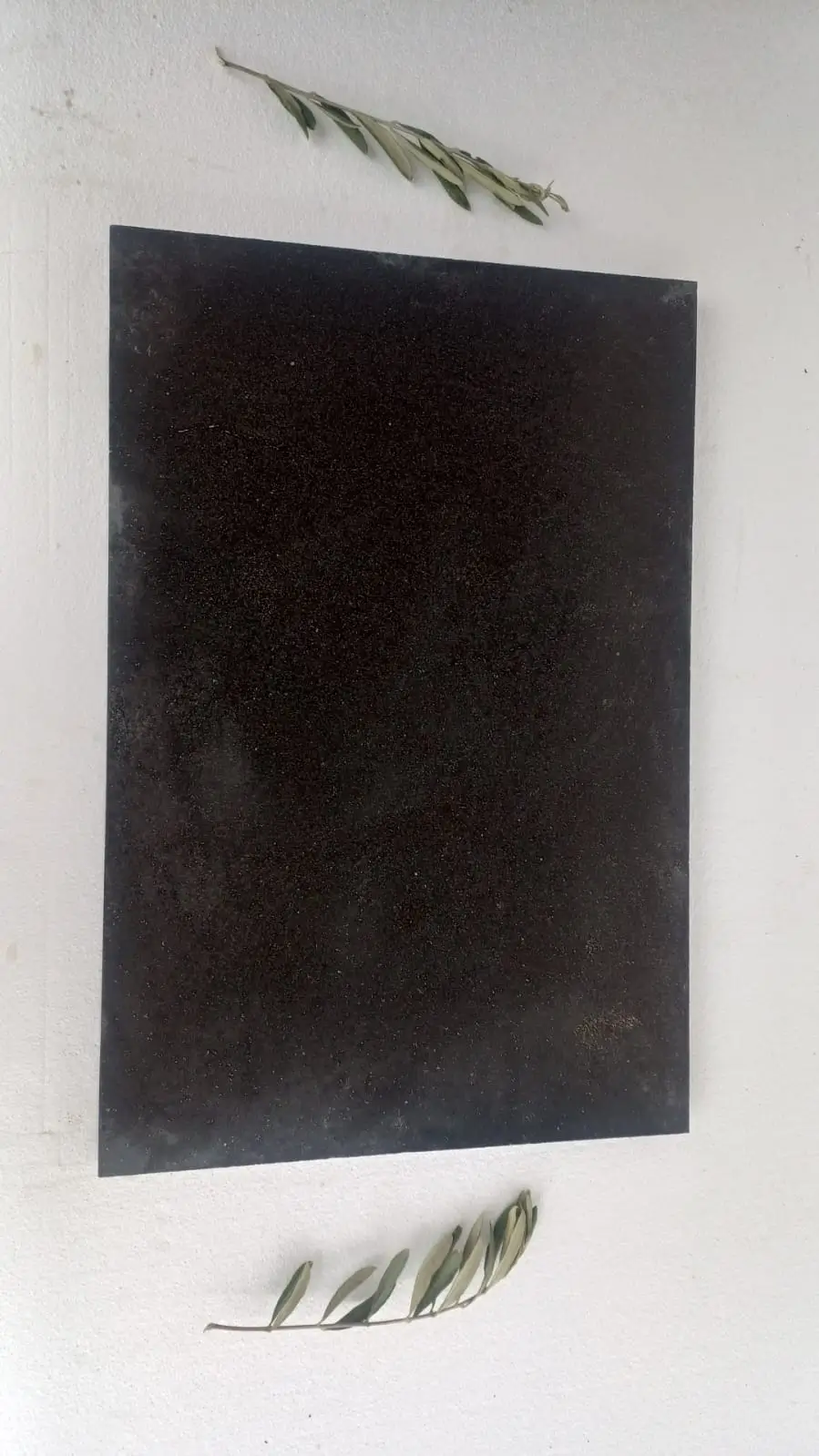
Black granite is a low-porosity igneous stone — absorption rates typically fall between 0.1% and 0.4% by weight, which puts it at the more forgiving end of the natural stone spectrum. That said, unsealed black granite in Arizona’s monsoon season will accumulate organic staining from wind-blown debris and standing water faster than you’d expect, and the iron-bearing minerals in some black granite varieties can develop surface oxidation if moisture is allowed to penetrate repeatedly.
Your sealing schedule should treat the monsoon season as the primary performance test. Apply a penetrating impregnator sealer — not a topical coating — before monsoon season begins, ideally in May or early June. The sealer needs 48–72 hours of dry weather to cure into the stone, so timing your application before monsoon onset is critical. If you’re coordinating warranty stock from the warehouse, confirm lead times allow delivery before your pre-monsoon sealing window closes.
- Apply penetrating impregnator sealer, not film-forming topical coatings
- Schedule initial sealing 28–30 days after installation to allow full mortar cure
- Pre-monsoon sealing in May–June protects through the highest staining-risk period
- Re-seal annually in a climate with Arizona’s UV intensity and monsoon moisture cycling
- Test sealer performance with a water bead test annually — beading below 5mm diameter indicates sealer remains effective
Logistics, Lead Times, and Delivery Planning
Your project timeline needs to build in realistic lead times, especially if you’re targeting the October–November installation window when demand across the Arizona market peaks. At Citadel Stone, we recommend confirming warehouse availability at least 4–6 weeks before your target installation date during peak season. Truck delivery scheduling to residential sites in suburban Arizona — with the access restrictions common in newer developments — requires coordination that can add 5–7 days to your logistics timeline if site access isn’t pre-confirmed.
Black granite paving in Arizona typically ships in full-pallet quantities from our warehouse, and your slab count should include a 10% overage for cuts, pattern adjustments, and potential transit chips on edge profiles. This is especially important for Arizona installations where late-season material shortages can push project timelines past your optimal installation window. Confirming overage stock with warehouse availability upfront protects your scheduling discipline and keeps the black granite paver installation steps Arizona projects depend on moving forward without delay.
- Order 4–6 weeks in advance for October–March installations to secure warehouse allocation
- Include 10% material overage in your order for cuts and contingency
- Confirm truck access for your delivery address — weight restrictions and turn radius matter on residential streets
- Request pallet staging instructions with your delivery — proper storage prevents edge damage during the wait between delivery and installation
- Verify that delivered slabs match your specification for thickness, finish, and batch color before the truck leaves the site
Parting Guidance for Installing Black Granite Paving in Arizona
Installing black granite paving in Arizona rewards preparation and penalizes improvisation. The seasonal timing decisions you make before a single slab is placed will define how the installation performs through a decade of Arizona’s thermal cycling, monsoon saturation, and relentless UV exposure. Your material is already up to the task — black granite’s density, compressive strength, and low porosity make it one of the most climate-capable natural stone options available for desert hardscape applications.
The Arizona installation timeline that works is straightforward in principle: target the October-to-March window whenever the project schedule allows, apply morning-only discipline during shoulder-season work, use temperature-rated adhesives, specify joint widths that accommodate thermal movement, and seal before monsoon season arrives. Every deviation from that framework introduces risk that’s entirely manageable when you plan for it and genuinely problematic when you don’t. Applying those same standards of desert-rated granite paving across Arizona — regardless of stone color — is a principle worth carrying into related projects, which is why the guidance in How to Maintain Grey Granite Paving in Arizona’s Climate offers useful parallels for long-term granite care in this region.
Homeowners in Tucson, Gilbert, and Chandler rely on Citadel Stone for black granite paving sourced from quarries across the Mediterranean and Middle East, arriving cut to standard patio dimensions.