

Base failure accounts for more than 70% of premature stepping stone displacement in desert climates — and when you set out to install bluestone stepping stones in Arizona, that statistic should be your starting point, not an afterthought. The material itself is extraordinarily capable: dense, hard-wearing, and thermally stable enough to handle the 140°F surface temperatures Phoenix summers routinely produce. What separates a well-executed installation from one that shifts, tips, or cracks within three seasons is almost entirely about what happens below grade.
Why Arizona Soil Changes Everything
Desert soils across the state behave differently from the loamy or clay-rich soils most stepping stone installation guides are written for. Arizona’s native caliche layers, expansive sandy loam, and decomposed granite profiles each respond to moisture and heat in ways that directly affect how your bluestone holds alignment. You’re not just setting stones — you’re engineering a stable platform within a soil system that contracts sharply in dry periods and can move laterally when monsoon moisture penetrates.
The critical variable most homeowners underestimate is differential settlement. In Phoenix, the combination of extreme heat-driven moisture loss and sudden summer storm saturation creates a cycle where poorly prepared sub-bases compress unevenly. Stones placed without adequate aggregate depth will rock within 18 months. Your base needs to account for this movement proactively, not reactively.
- Caliche hardpan at 12–24 inch depths can act as a perched water table during heavy rain events, requiring drainage accommodation in your base design
- Sandy desert soils compact well under mechanical tamping but lose density quickly without edge restraint at the perimeter of each stone
- Decomposed granite native subgrade is actually excellent when compacted to 95% Proctor density — the challenge is achieving that uniformity by hand
- Expansive soil pockets, common near older Tucson neighborhoods, require excavation to a stable stratum before any aggregate base work begins
Selecting the Right Bluestone Thickness for Desert Conditions
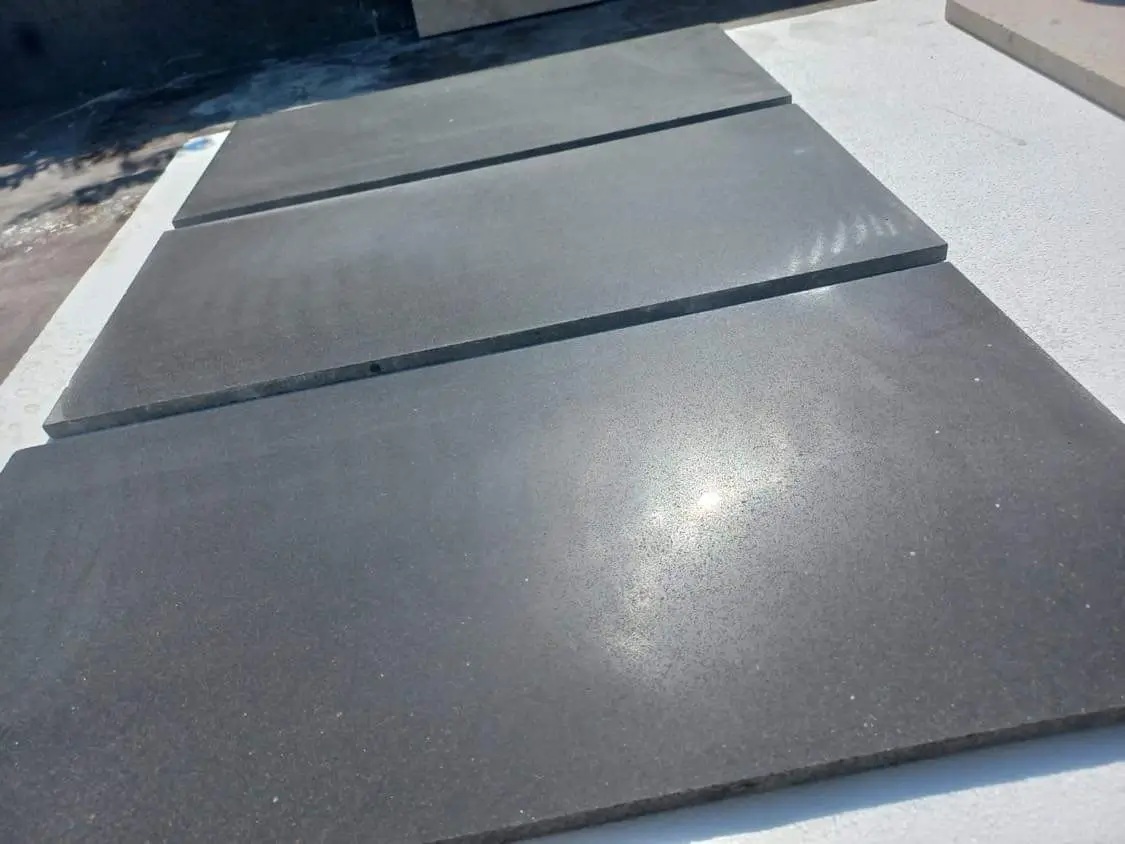
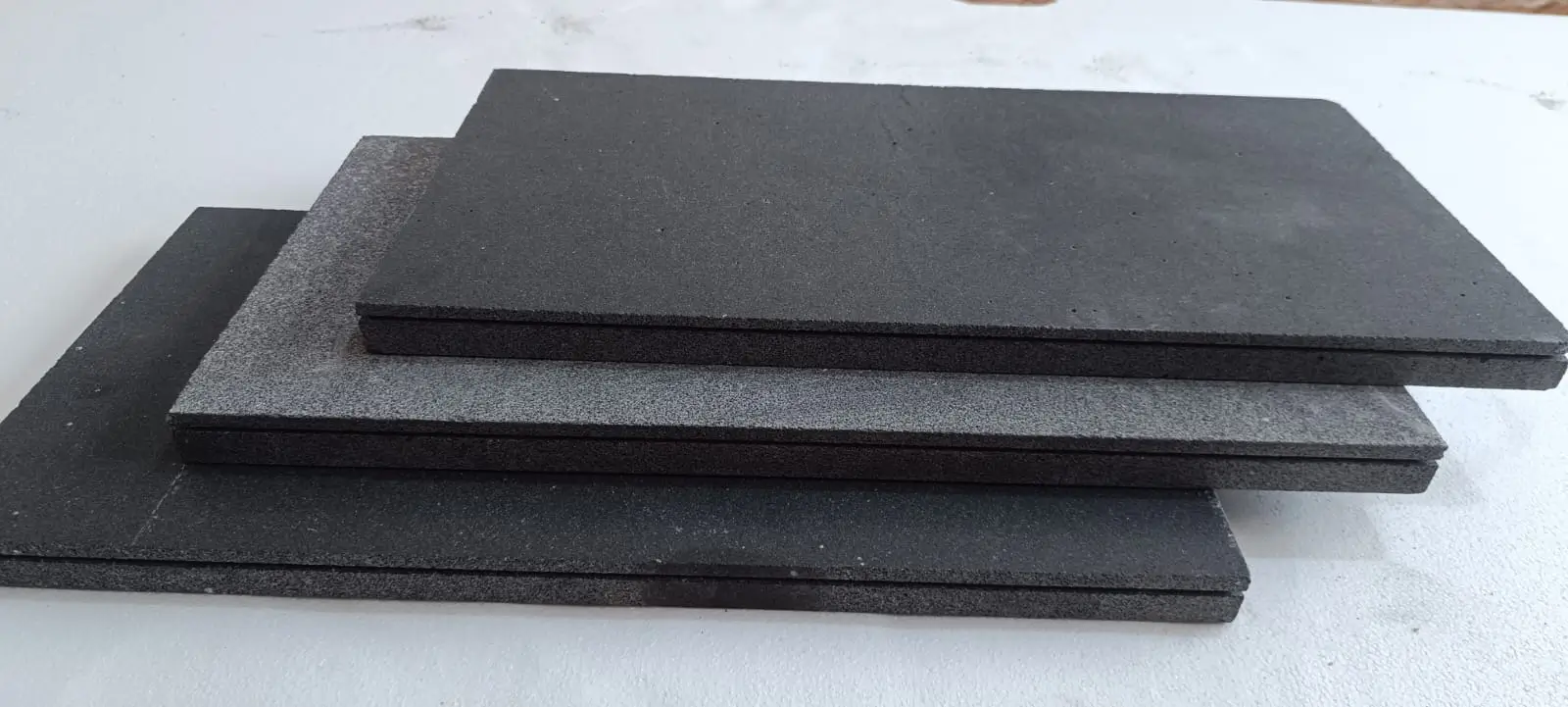
Bluestone stepping stones in Arizona should be specified at a minimum of 1.5 inches nominal thickness for pedestrian pathways, and 2 inches or thicker for any path that will see regular wheeled traffic like garden carts or wheelbarrows. Thinner pieces — the 1-inch slabs you’ll sometimes see marketed for garden stepping stones — develop stress fractures along natural cleavage planes when they’re bridging a void even as small as half an inch. In desert heat, thermal expansion amplifies point-load stress at those voids considerably.
The density of quality bluestone runs between 160 and 175 lbs per cubic foot, which means your 18-by-18-inch by 1.5-inch stone weighs roughly 35 to 40 pounds. That weight is actually working for you — heavier stones resist lateral creep from foot traffic far better than lighter flagstone alternatives. You’ll want to verify your warehouse stock thickness before delivery, since nominal dimensions can vary by a quarter inch between quarry cuts.
- 1.5-inch thickness: appropriate for residential garden paths with light foot traffic
- 2-inch thickness: recommended for main entry walks, pool surrounds, and any path adjacent to irrigated landscape beds
- Irregular thickness variation within a single stone should not exceed 3/8 inch — pieces with greater variation will rock regardless of how well you set them
- Cleft-face finish keeps a texture that polished or honed finishes remove — confirm the wet DCOF against ANSI A326.3 for pool-adjacent placement in Scottsdale where wet feet are a daily reality
Tools and Materials You Actually Need
The difference between a competent installation and a frustrating one usually comes down to having the right compaction and leveling tools on site before you start digging. You can set bluestone stepping stones without renting a plate compactor, but only if your path is fewer than five stones long — anything beyond that, and hand tamping introduces the kind of inconsistent compaction that creates uneven settlement patterns within two monsoon seasons.
For a typical Arizona backyard path of 10 to 20 stones, your material and tool list should include crushed aggregate base (3/4-inch minus or decomposed granite), coarse bedding sand, a 4-foot level, rubber mallet, plate compactor or hand tamper, and a diamond blade wet saw if any cuts are needed. Don’t substitute play sand for bedding sand — the uniform particle size in play sand doesn’t interlock under load, and it migrates laterally when wet. Coarse sharp sand is what the bluestone stone installation steps AZ homeowners use most reliably call for.
- Plate compactor rental: roughly $60–$90 per day, well worth it for paths over 8 stones
- 3/4-inch minus crushed aggregate for base layer: 4 to 6 inches deep depending on native soil stability
- Coarse bedding sand: 1-inch layer only — do not exceed this, more sand creates instability
- Diamond blade wet saw: necessary for any stone that needs trimming to path geometry
- Mason’s string line: essential for maintaining consistent spacing and grade across uneven terrain
Excavation and Base Preparation
Your excavation depth determines everything downstream. For a 1.5-inch bluestone stepping stone over a 1-inch sand bed over a 4-inch compacted aggregate base, you’re digging 6.5 inches below finished grade. That’s deeper than most guide articles suggest, but it’s what Arizona’s thermal cycling and monsoon hydrology actually demand. Stones set shallower than this will migrate vertically — heaving slightly in wet periods and settling unevenly when soil dries.
Excavate each stone location individually rather than trenching the full path. This preserves the structural integrity of the native soil between stones, which acts as lateral restraint. Scarify the bottom of each excavation with a hand rake before placing aggregate — this prevents the smooth-bottomed compaction plane from acting as a slip layer under the base material. Setting bluestone stones in Arizona desert soil without this step is one of the most common mistakes field crews make on residential projects.
- Excavate 2–3 inches wider than the stone on all sides to allow for clean edge compaction
- Remove all organic material, root fragments, and loose debris from the excavation floor
- In caliche zones, scarify or punch-drain the hardpan surface to prevent water ponding under the base
- Place aggregate in two lifts of 2 inches each, compacting each lift separately — single-lift compaction leaves a soft zone at mid-depth
- Verify base compaction by pressing a half-inch diameter rod into the aggregate: it should not penetrate more than 1/2 inch under firm hand pressure
Setting the Stones Correctly
Screeding your bedding sand to a consistent 1-inch depth before placing any stone is a step that’s easy to rush and expensive to redo. Use two parallel pipes of equal diameter as screed rails — 1-inch EMT conduit works perfectly — and drag a straight board across them. Pull the rails out after screeding and fill the voids with loose sand before placing the stone. You’re creating a perfectly level, perfectly dense setting bed that won’t shift when the stone’s weight bears down.
Lower each bluestone stepping stone into position without sliding it across the sand bed. Sliding drags ridges into your screed surface and creates voids beneath the stone’s leading edge. Set the stone down flat, then use a rubber mallet and 4-foot level to seat it to grade. The stone should not rock in any direction — four-point contact across the full bearing surface is what you’re confirming. If it rocks, lift the stone, add sand to the low side, and re-level. Understanding how to lay stepping stones across Arizona yards without rework depends almost entirely on patient screeding and honest leveling at this stage.
Spacing and Joint Design for Arizona Heat
Thermal expansion in bluestone runs approximately 3.3 × 10⁻⁶ per °F — modest compared to concrete but significant enough in Arizona’s 100°F-plus temperature swings to require deliberate joint spacing. A minimum 3/8-inch gap between adjacent stones accommodates seasonal movement without contact stress. Many installers go to 1/2-inch joints in exposed south-facing paths where stones will spend the most time at maximum temperature, and that’s the right call in the Phoenix valley.
For filling joints, decomposed granite or dry-laid polymeric sand both perform well in desert conditions. Avoid standard mortar joints for stepping stone paths — they look cleaner initially but crack at the stone-mortar interface within two heat cycles as differential expansion between the stone and mortar works against the bond. Any reliable Arizona desert-rated bluestone stone placement guide will favor permeable joints that allow moisture to pass through rather than pond against the stone edge.
- Minimum joint width: 3/8 inch for shaded or north-facing paths
- Recommended joint width: 1/2 inch for full-sun south and west exposures
- Joint fill material: decomposed granite, coarse sand, or stabilized DG — not Portland cement mortar
- Repack joint fill after first monsoon season — initial infiltration compacts the fill and creates surface voids worth correcting
Drainage Management During Monsoon Season
The monsoon season hits Arizona’s low desert between July and mid-September, and it changes your path’s drainage demands completely. Your stone placement should follow natural grade slope of at least 1/8 inch per foot away from any structure — this isn’t optional in monsoon country, it’s the difference between a path that drains cleanly and one that becomes a shallow stream bed with every storm cell. For projects in Tucson, where monsoon rainfall intensity often exceeds half an inch per hour, that drainage slope needs to be generous and unobstructed.
Check your completed stone placement with a level after the first significant rainfall. You’re looking for ponding at any joint or low stone edge — even small pools indicate a sub-grade irregularity that will worsen with each wet cycle. Addressing these early, before the soil consolidates around the base material, is far simpler than corrective work after a full season of settlement.
Arizona stepping stones from Citadel Stone
Sealing Bluestone in Arizona’s Climate
Bluestone’s natural porosity ranges from 1% to 4% depending on quarry origin and cut direction — not high enough to cause structural problems, but sufficient to allow mineral staining from alkaline Arizona soils and hard water irrigation systems. A penetrating silane-siloxane sealer applied within 30 days of installation creates a hydrophobic barrier that doesn’t alter the stone’s natural finish while dramatically reducing efflorescence and calcium carbonate deposits.
Resealing schedule in Arizona should run every two years for heavily trafficked paths and every three years for lightly used garden routes. UV degradation of sealers accelerates significantly above 110°F surface temperature, which means paths with full western exposure may need annual reapplication. At Citadel Stone, we recommend testing sealer adhesion annually by dropping a few water beads on the surface — when water no longer beads and instead absorbs within 30 seconds, it’s time to reseal. Bluestone stepping stones in Arizona last decades when this maintenance rhythm is respected.
- Sealer type: penetrating silane-siloxane, not film-forming topical sealer — film sealers peel in desert UV conditions
- Application temperature: between 50°F and 85°F surface temperature — avoid application during peak afternoon heat
- Cure time before foot traffic: minimum 24 hours, 48 hours preferred in high-humidity post-monsoon conditions
- Efflorescence treatment: address with a dilute phosphoric acid wash before resealing, not after — acid wash removes mineral deposits, sealer locks the clean surface
Planning, Ordering, and Lead Times
Calculating your material quantity accurately prevents the most common project delay: a second delivery truck arriving weeks after your installation is partially complete, exposing unfinished base work to monsoon rain. Measure each stepping stone location, add 10% for cuts and breakage, and confirm your stone thickness before ordering. For irregular path layouts, a simple sketch with dimensions is enough — you don’t need CAD drawings to calculate square footage accurately.
Our technical team at Citadel Stone sources bluestone stepping stones for Arizona projects from quarries with documented density and absorption test results, which matters when you’re specifying for high-UV, high-heat environments. Warehouse inventory levels on standard 18×18 and 24×24 sizes typically allow for same-week fulfillment on residential quantities, though custom cuts and larger format pieces carry a 1–2 week lead time. Confirm warehouse stock availability before finalizing your installation schedule — coordinating your base preparation work with your confirmed truck delivery date prevents unnecessary delays in the field.
- Order at least 10% overage to account for irregular cuts at path edges and any pieces with unacceptable thickness variation
- Request a sample stone before full order confirmation to verify finish, color consistency, and thickness tolerance
- Confirm delivery access — a standard flatbed truck requires a minimum 12-foot clear width and reasonable turning radius at your site entry
- Store delivered stone in shade if installation won’t begin within 48 hours — prolonged direct sun before sealing can drive moisture out of the stone and affect initial sealer absorption
What Determines Long-Term Performance When You Install Bluestone Stepping Stones in Arizona
The technical details that actually determine the longevity of your installation come down to depth, drainage, and patience. Cutting corners on excavation depth or rushing through the compaction process are the two decisions that generate the most callbacks and corrective work in Arizona stepping stone projects. Every other variable — stone thickness, joint width, sealer selection — builds on the quality of that sub-grade preparation. Get the base right, and bluestone performs exactly as it should in this climate for 20 years or more.
Following the bluestone stone installation steps AZ homeowners rely on — proper aggregate depth, coarse bedding sand, deliberate joint spacing, and a penetrating sealer — gives every path the foundation it needs to outlast Arizona’s most punishing seasonal cycles. For stone-specific care after your path is in place, How to Maintain Bluestone Patios in Arizona’s Climate covers the long-term maintenance protocols that keep bluestone surfaces in top condition through Arizona’s most demanding seasonal transitions. Your installation investment is only protected when the maintenance program matches the quality of the work that went into placing the stones.
Homeowners in Tucson, Scottsdale, and Peoria have found that bluestone stepping stones from Citadel Stone, sourced from quarries across the Mediterranean and Middle East, hold alignment reliably through repeated thermal expansion cycles.