

Basalt stone tile Arizona durability testing reveals a performance curve that most specification sheets don’t capture — the gap between material quality at delivery and material behavior after three summers of genuine desert exposure. The thermal expansion coefficient of dense basalt sits around 4.5 to 5.0 × 10⁻⁶ per °F, which sounds like an abstract number until you’re watching a patio installed without adequate joint spacing develop stress fractures by month eighteen. What separates a long-performing basalt installation from a costly replacement project isn’t the stone itself — it’s how precisely the specification accounts for Arizona’s specific thermal cycling regime, where surface temperatures can swing 70°F between a summer midnight and a 2 PM peak the following afternoon.
Why Basalt Performs Differently in Desert Heat
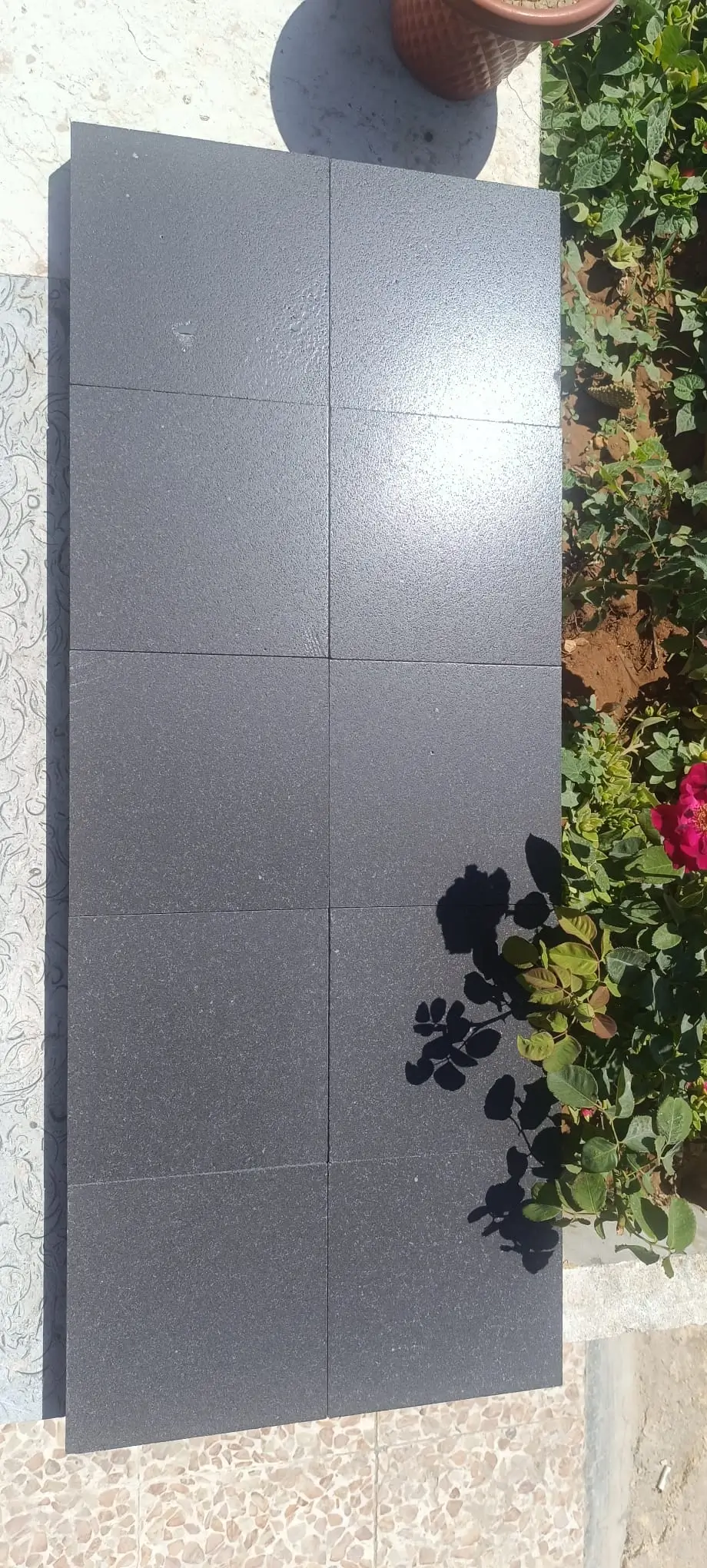
Basalt’s performance in extreme desert climates comes down to its crystalline microstructure. Unlike sedimentary stones, basalt is an extrusive igneous rock that cooled rapidly from volcanic lava — that rapid cooling creates a fine-grained, interlocked mineral matrix with very low interconnected porosity, typically in the 0.5% to 2.0% range for quality material. That structural density is your primary thermal defense in Arizona conditions, and it’s a core reason why basalt stone performance in extreme desert climates consistently outpaces more porous natural stone alternatives.
The low porosity matters more in desert heat than most people realize. When a paver material has high porosity, it absorbs and retains moisture from irrigation cycles, morning dew, and pool splash. In Phoenix basin temperatures, that trapped moisture converts to vapor pressure — a force that works against the stone from the inside. Dense basalt largely sidesteps this mechanism, which is a significant reason why Arizona homeowners choose basalt for climate resistance compared to more porous alternatives like sandstone or tumbled limestone.
- Compressive strength typically ranges from 25,000 to 40,000 PSI for quality basalt — significantly above the 3,000 to 5,000 PSI range of standard concrete pavers
- Water absorption below 1% for premium-grade tile, which limits freeze-thaw damage and vapor pressure build-up under intense solar gain
- Flexural strength in the 5,000 to 10,000 PSI range supports point loading from patio furniture, vehicle access, and thermal stress without delamination
- Surface hardness in the 6 to 7 range on the Mohs scale resists abrasion from foot traffic, pool chemicals, and wind-driven debris
- Low coefficient of thermal expansion relative to the stone’s overall density means dimensional changes per degree are predictable and manageable
What Arizona Thermal Cycling Actually Does to Stone
Understanding how basalt tiles withstand Arizona heat and sun requires thinking about thermal cycling as a fatigue mechanism, not just a heat exposure problem. It’s not the peak temperature that damages stone — it’s the daily repetition of expansion and contraction across joints, adhesive beds, and substrate interfaces. In the Phoenix metro, that cycle runs roughly 340 times per year with meaningful amplitude. In Yuma, where summer daytime highs routinely exceed 115°F and surface temperatures on dark stone can push past 175°F, the amplitude of that daily thermal swing is even more severe than the ambient numbers suggest.
The critical measurement for basalt stone tile Arizona durability testing isn’t just peak surface temperature — it’s the rate of temperature change during the transition periods. Morning warm-up from 65°F to 120°F surface temperature in approximately two hours creates rapid expansion that joints must absorb. Evening cool-down is slower but still significant. Specifications that account only for peak temperatures and miss the rate-of-change dimension tend to underperform in the field, particularly in tile formats larger than 18 × 18 inches where cumulative dimensional movement per tile becomes meaningful.
- Tile formats of 12 × 12 inches or smaller manage thermal movement more easily because total linear expansion per piece is lower
- Larger formats — 24 × 24 inches and above — require joint widths of at least 3/16 inch with flexible sealant, not rigid grout, in full-sun exposures
- Dark basalt absorbs significantly more solar radiation than light-colored alternatives, which increases surface temperature differentials and requires adjusted joint specifications
- Honed or brushed finishes run cooler than polished surfaces because they reduce specular reflection and increase diffuse heat dissipation slightly
- Thermal shock from irrigation systems activating on sun-heated stone is a documented stress mechanism — your irrigation schedule timing matters more than most specs acknowledge
Basalt Stone Tile Arizona Durability Testing Methodology
Meaningful basalt stone tile Arizona durability testing goes beyond manufacturer spec sheets and into field-validated performance data. The testing parameters that actually predict Arizona longevity include accelerated weathering under UV exposure, wet-dry cycling in combination with heat, freeze-thaw resistance for northern Arizona applications, and abrasion resistance under foot traffic loads typical of pool surrounds and outdoor living areas.
ASTM standards provide the framework: ASTM C97 covers water absorption and bulk specific gravity, C99 addresses modulus of rupture, C170 tests compressive strength, and ANSI A326.3 (DCOF AcuTest) addresses wet slip resistance, having replaced the withdrawn ASTM C1028. For Arizona pool deck applications, target a Dynamic Coefficient of Friction (DCOF) of 0.42 or higher in wet conditions, which most quality basalt surfaces comfortably achieve with honed or flamed finishes.
What standard testing misses, though, is the cumulative performance of a material under sustained field exposure. our Arizona basalt stone tile research incorporates data from installed projects across multiple climate zones in the state to supplement laboratory values with real-world performance metrics collected over multiple seasons.
- ASTM C97 water absorption test: quality basalt should return values below 1.0%, with premium grades below 0.5%
- ASTM C170 compressive strength: target 25,000 PSI minimum for residential applications, 35,000 PSI for commercial or vehicular use
- ASTM C99 modulus of rupture: values above 2,000 PSI indicate sufficient flexural resistance for standard installation substrates
- UV resistance: basalt’s mineral composition is inherently stable under ultraviolet exposure — color stability over 20+ years is well-documented in field installations
- Salt resistance: important for pool environments, basalt performs well under sodium and calcium hypochlorite exposure at standard pool chemistry concentrations
How Elevation Changes Your Specification in Arizona
Arizona’s topographic range — from sea-level-adjacent valleys to 7,000-foot elevations — creates performance environments that differ enough to require materially different specifications even for the same basalt product. Flagstaff sits at approximately 6,900 feet of elevation, which introduces genuine freeze-thaw cycling that the Phoenix basin simply doesn’t experience. In that context, basalt’s low porosity becomes critical for a different reason: freeze-thaw spalling requires water in the pore structure to cause damage, and dense basalt gives that mechanism very little material to work with.
The specification shift from low desert to high plateau isn’t just about freeze-thaw resistance, though. Flagstaff’s UV intensity at elevation is meaningfully higher than at sea level — roughly 25% more ultraviolet radiation per unit area compared to valley locations, depending on season and atmospheric conditions. That UV load affects sealers and installation adhesives more than it affects the stone itself, meaning your maintenance schedule for sealed basalt in northern Arizona should run on a tighter interval than the same product installed in the Phoenix metro. Long-term durability of basalt paving across Arizona depends heavily on matching the specification to the elevation zone, not just the general region.
- Below 3,000 feet elevation: primary durability concern is thermal cycling and UV; freeze-thaw is not a design criterion
- 3,000 to 5,000 feet: transitional zone where occasional freeze events occur; specify basalt with water absorption below 0.75% as a buffer
- Above 5,000 feet: full freeze-thaw design criteria apply; require ASTM C666 freeze-thaw testing data from your material supplier
- Sedona-area projects at mid-elevation (~4,300 feet) should treat freeze-thaw as an occasional rather than seasonal concern — design conservatively
- Sealer reapplication intervals should shorten by approximately 30% at elevations above 5,000 feet due to increased UV degradation of sealer chemistry
Slip Resistance Data for Pool and Outdoor Applications
Slip resistance in outdoor applications often gets reduced to a pass-fail check against a minimum coefficient of friction, but the real performance picture is more nuanced. Basalt’s natural surface texture varies significantly based on finish type, and finish selection has a larger impact on wet-surface safety than most project specifications explicitly acknowledge.
In the context of how basalt tiles withstand Arizona heat and sun, surface finish also affects thermal performance — a flamed finish, which creates a rough, open texture through controlled thermal shock, not only maximizes slip resistance but also reduces surface temperatures by approximately 8 to 12°F compared to a polished finish under identical exposure. That’s not a trivial difference when you’re designing a pool deck where bare feet and safety are both concerns. For projects in the Sedona area, where rustic aesthetics often guide material decisions, a bush-hammered or sandblasted finish can deliver comparable slip resistance while complementing the regional design vocabulary.
- Polished basalt: DCOF typically 0.35 to 0.42 wet — marginal for pool deck use, acceptable for covered outdoor areas
- Honed basalt: a wet DCOF test report on request — suited to most outdoor applications including pool surrounds
- Flamed or bush-hammered basalt: an open, heavily textured face — the finish specified for high-traffic pool decks and exposed ramp surfaces
- Sandblasted basalt: DCOF similar to flamed but with a slightly softer texture profile — good for residential applications where aesthetics and safety must balance
- ADA compliance for exterior surfaces requires DCOF of 0.42 or higher — confirm finish-specific test data before specifying for commercial projects
Base Preparation: The Variable Most Specs Undervalue
The most consistent finding across long-term durability evaluations of basalt paving across Arizona is that base preparation quality outweighs material quality as a predictor of installation longevity. You can specify the highest-density basalt available, install it with precision, and still end up with a failing installation in five years if the base isn’t designed for Arizona’s soil behavior.
Arizona soils vary dramatically — in Sedona, the red clay-rich soils expand significantly with moisture, which is a critical base preparation variable that projects coming from other states often underestimate. The standard 4-inch compacted aggregate base that works reliably in stable, sandy soils in other climates needs to be reconsidered in expansive soil zones. Geotextile fabric separation between native soil and aggregate base, combined with a minimum 6-inch compacted aggregate depth, is a more defensible specification in Sedona’s clay-influenced terrain.
- Minimum 6 inches of compacted Class II base aggregate for standard residential applications in Arizona
- 8 to 10 inches of base depth recommended for expansive clay soil conditions or project areas with inconsistent drainage
- Geotextile separation fabric between native soil and base aggregate prevents fines migration that leads to differential settlement
- Compaction to 95% Modified Proctor Density is the field standard — verify with a nuclear density gauge before tiling commences
- Drainage gradient of 1/8 inch per foot minimum away from structures ensures water doesn’t accumulate under the tile bed
- In-slab or sand-set installation choice should be driven by expected thermal movement — mortar-set installations require more precise joint management than sand-set systems
Ordering Logistics and What Affects Your Project Timeline
Basalt is not a commodity material that every stone supplier stocks consistently. The sourcing pipeline for quality basalt runs through specific quarry regions — China’s Fujian province, Iceland, and certain Indonesian deposits produce the dense, low-porosity material that performs well in extreme desert climates. Lead times from overseas quarries to Arizona project sites can run 8 to 14 weeks when you’re working with a supplier who imports on-demand rather than maintaining domestic warehouse stock.
Citadel Stone maintains warehouse inventory of basalt stone tile in Arizona-relevant formats and thicknesses, which typically compresses your project lead time to 1 to 2 weeks rather than the standard import cycle. That distinction matters most when your installation window is constrained by a construction schedule or when you’re working against seasonal weather patterns. Planning your material order before finalizing your install date is standard practice, but with basalt specifically, confirming warehouse availability before committing your install crew is a step that saves significant rescheduling friction. Truck delivery logistics to job sites in more remote Arizona areas — particularly in elevated or canyon-adjacent locations near Sedona — may add 1 to 2 business days to standard delivery windows, so factor that into your timeline.
- Confirm exact tile count plus a 10% overage for cuts, waste, and future repairs before placing your warehouse order
- Request a material hold or deposit arrangement if your project start date is more than 3 weeks out — basalt in popular formats moves quickly
- Verify that all tiles in your order come from the same production lot to ensure color and finish consistency across the installation
- Coordinate truck delivery access at your job site in advance — basalt is significantly heavier than ceramic or porcelain, and pallet weights often exceed 2,500 lbs
- Inspect material at delivery before the truck departs — document any chipped edges or finish inconsistencies immediately for supplier resolution
Sealing and Long-Term Maintenance in Arizona Conditions
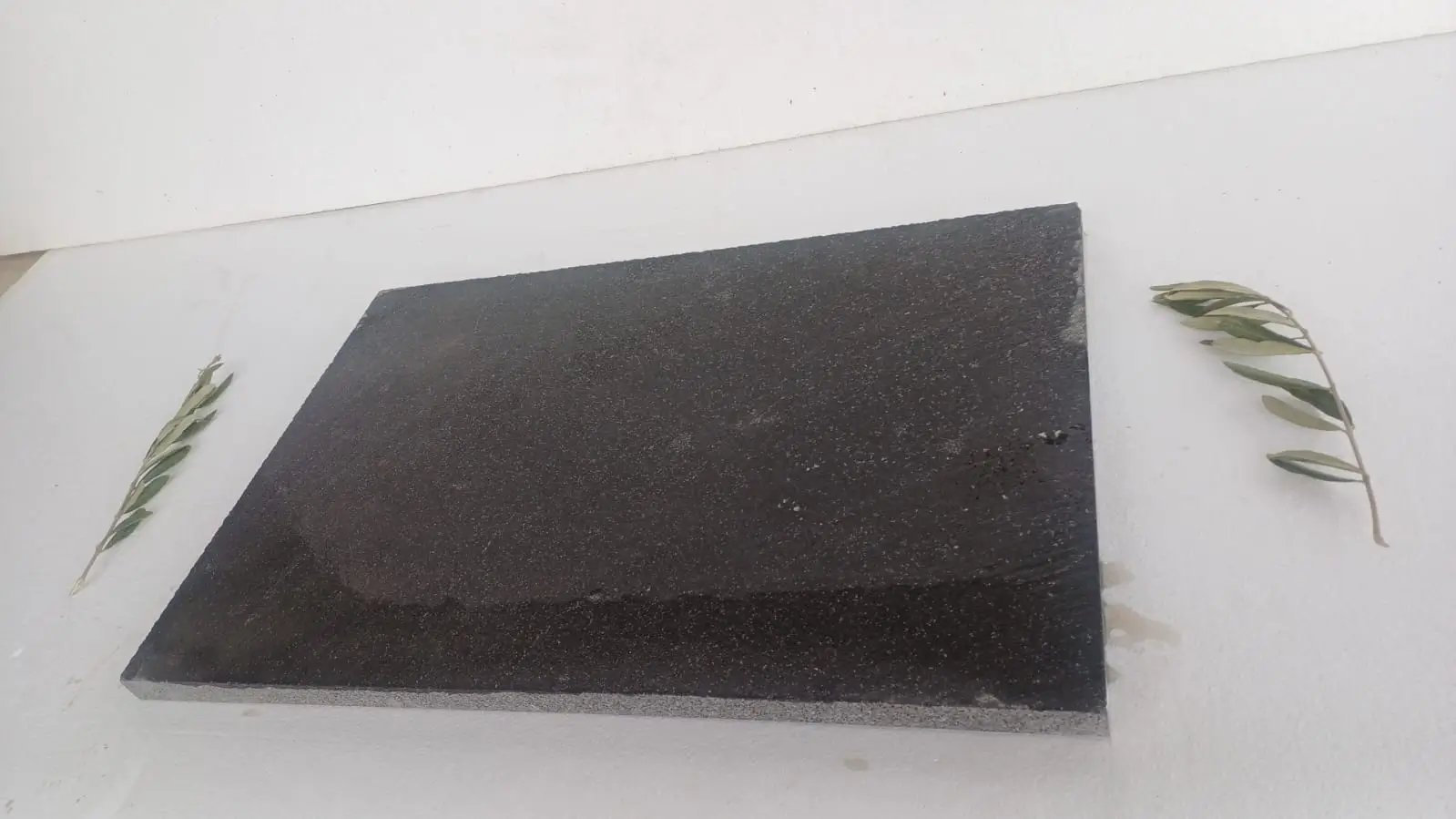
Basalt’s low porosity means it doesn’t require sealing the way travertine or sandstone does — but that doesn’t mean sealing is optional in Arizona outdoor applications. The case for sealing basalt in desert climates is primarily about protecting the surface from pool chemicals, iron staining from irrigation water, and efflorescence from the mortar bed in the early years of an installation. It’s a protective measure rather than a structural necessity, and the product category you select matters as much as the frequency of application.
Penetrating impregnator sealers — specifically those with a fluoropolymer or siloxane chemistry — outperform topical film-forming sealers in Arizona’s UV environment. Film sealers degrade under sustained UV exposure and high surface temperatures, often developing a chalky or peeling appearance within 18 to 24 months. Impregnators don’t create a surface film, so they have no film to degrade. You’ll typically get 3 to 5 years from a quality impregnator on basalt in Phoenix basin conditions before reapplication is warranted. At elevations above 5,000 feet, plan for 2 to 3 year intervals due to accelerated UV chemistry.
- Apply sealer to dry stone — surface moisture above 12% moisture content inhibits penetration and causes sealer clouding
- Two-coat application with a 20-minute flash time between coats delivers better penetration depth than a single heavy application
- Test sealer effectiveness annually with a water droplet test — if water soaks in rather than beading, reapplication is due
- Clean pool chemical residue promptly — sustained contact with pH-elevated water accelerates mineral deposition on the surface
- Iron staining from Arizona irrigation water responds well to oxalic acid-based stone cleaners — address staining early before it sets into the surface texture
- Avoid pressure washing above 1,200 PSI on basalt with flamed or bush-hammered finishes — the mechanical texture can erode at higher pressures over time
Getting Your Basalt Stone Tile Specification Right in Arizona
Basalt stone tile Arizona durability testing ultimately reveals a material with a strong performance profile for desert conditions — but one that rewards precision in specification far more than it forgives approximation. The stone’s density, low porosity, and mineralogical stability address the core challenges of intense UV, thermal cycling, and chemical exposure that Arizona’s climate presents. What the data consistently shows is that the difference between a 12-year installation and a 25-year one traces back to joint specification, base preparation depth, and finish selection — not to material quality differences at the upper tier of available basalt grades.
Your specification checklist for basalt stone tile in Arizona should lock in DCOF values by finish type, confirm water absorption test results below 1.0% from your supplier, establish joint widths appropriate to tile format and sun exposure, verify base aggregate depth against local soil expansion characteristics, and plan your sealing schedule with elevation in mind. These aren’t academic checkboxes — they’re the variables that field performance data identifies as predictive of long-term durability of basalt paving across Arizona. For your project, also consider how complementary stone applications might inform your overall hardscape approach — How to Choose Limestone Paver Sizes in Arizona offers useful perspective on another dimension of natural stone specification for desert conditions that may apply to adjoining areas of your project.
At Citadel Stone, we source and quality-check every basalt shipment against Arizona-specific performance criteria before it reaches your project site — because material that tests well in a European climate zone doesn’t automatically translate to reliable performance under sustained desert conditions. Our technical team is available to review your project specifications, confirm material quantities, and advise on finish selections that match your specific exposure and use case. Citadel Stone sources basalt stone tile proven to resist Arizona’s intense heat cycles, giving homeowners in Tucson, Mesa, and Chandler a climate-tested natural surface built for long-term outdoor performance.