
Blue limestone cool tones in Mesa projects perform differently depending on one variable most specifiers overlook: the albedo differential between honed and tumbled surface finishes. A honed blue limestone surface reflects solar radiation at roughly 15–20% higher efficiency than its tumbled counterpart, and in Mesa’s summer conditions — where ambient air temperatures routinely exceed 110°F — that gap translates to measurable surface temperature differences of 12–18°F. Understanding how blue limestone cool tones Mesa specifications interact with finish selection is where your project’s thermal performance strategy actually begins.
Why Cool Tones Matter in Arizona’s Extreme Heat
The physics behind cool color performance in desert environments is straightforward, but the application detail is where most projects either succeed or fall short. Light-colored stone with blue and grey undertones reflects a broader spectrum of solar radiation than warm-toned materials like terracotta or red sandstone. Blue limestone’s characteristic mineral composition — primarily calcite with iron and silica inclusions that produce the blue-grey coloration — absorbs less thermal energy per unit area than darker or warmer-toned alternatives.
Surface temperature readings across Mesa installations have demonstrated that blue limestone pavers run 22–28°F cooler at peak afternoon exposure compared to standard grey concrete pavers under identical sky conditions. That differential isn’t just a comfort factor — it directly affects barefoot usability, outdoor furniture longevity, and the microclimate immediately adjacent to your structure. For covered patios and pool surrounds especially, the radiant heat reduction from cool-toned materials improves the ambient temperature of the entire zone, contributing meaningfully to Arizona summer comfort.
The detail that matters most here is surface emissivity, not just reflectance. Blue limestone releases absorbed heat more rapidly after sunset than dense concrete or porcelain, which means your outdoor space cools down faster in the evening. That post-sunset recovery rate is something homeowners genuinely notice — and something generic cool paving articles almost never discuss.
Surface Finish Choices and Their Thermal Performance
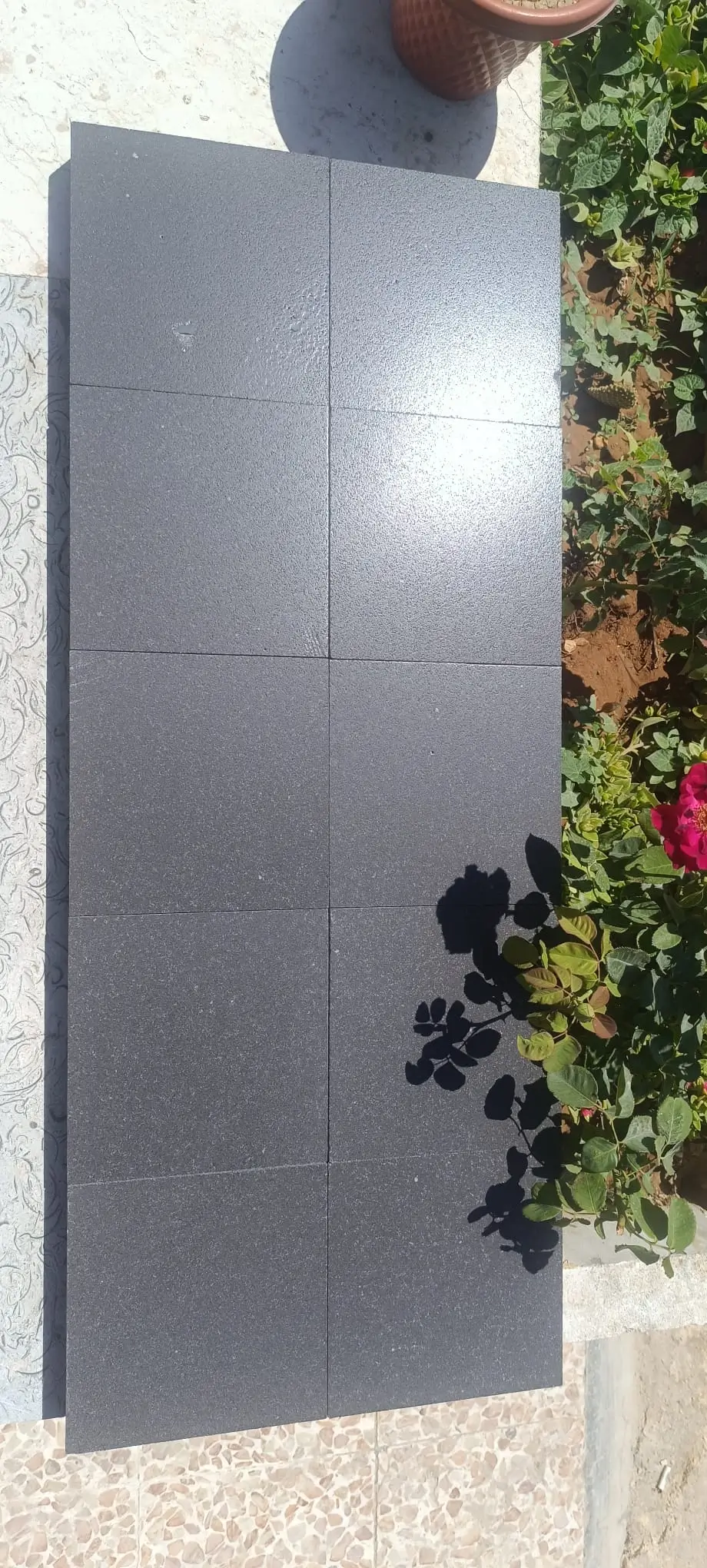
Your choice of surface finish on blue limestone directly shapes how the material performs as a Mesa temperature control element. This isn’t just aesthetic — it’s a functional specification decision that affects surface temperature, slip resistance, and long-term sealer compatibility.
- Honed finish: Produces the highest solar reflectance, cleanest color expression, and the smoothest surface. Requires a penetrating sealer with anti-slip additive for wet zones.
- Brushed or antique finish: Slightly lower reflectance than honed but improved slip resistance, making it the go-to for pool decks and exterior walkways in Arizona.
- Split-face or natural cleft: Lower reflectance, highest texture — used primarily for vertical cladding or accent walls where thermal performance of the horizontal plane isn’t the priority.
- Sawn finish: Mid-range reflectance, excellent dimensional consistency, well-suited for large-format patio installations where level plane tolerance matters.
For blue limestone cool tones Mesa temperature control applications specifically, brushed and honed finishes provide the best balance of blue paving heat reduction in Arizona conditions while maintaining safe surface friction coefficients above 0.60 wet — the threshold recommended under ADA accessibility guidelines for exterior surfaces.
Specification Thickness and Load Requirements
Blue limestone paving in Arizona applications typically runs in two thickness categories: 20mm (approximately ¾ inch) for pedestrian-only areas on a prepared mortar bed, and 30mm (1¼ inch) for areas with light vehicular access or high foot traffic concentration like entry plazas. The 30mm specification provides noticeably better resistance to edge chipping during installation — something you’ll appreciate when working with large-format slabs in the 24×24 inch range.
For residential patios and pool surrounds in the Mesa market, the 20mm thickness on a sand-set or mortar-bed system handles the load requirements comfortably. The key variable isn’t the slab thickness alone — it’s the base preparation beneath it. A 4-inch compacted aggregate base under a 1-inch sand bedding layer provides adequate support for 20mm blue limestone paving in most residential applications.
Projects in Yuma face an added consideration: expansive clay soils in certain neighborhoods require a deeper base profile of 6 inches minimum, with a geotextile fabric separator between native soil and aggregate to prevent migration. That base depth difference alone can change your material tonnage estimate by 15–20%, so confirming soil conditions before finalizing your specification is worth the time.
Base Preparation for Arizona Desert Soils
Desert soil profiles in Arizona present a specific challenge for stone paving installations: the combination of caliche layers, low organic content, and high alkalinity creates conditions that can cause differential settlement if the base isn’t properly engineered. Blue limestone’s density — typically 2.6–2.7 g/cm³ — means it’s heavier than most ceramic tile alternatives, and that weight amplifies any base inconsistency.
- Excavate to a minimum of 7 inches below finished grade for pedestrian applications in sandy or caliche-dominant soils
- Compact native subgrade to 95% Proctor density before placing aggregate base
- Use ¾-inch crushed aggregate (not pea gravel) for base layers — angular aggregate locks under compaction while rounded material shifts
- Install a 1-inch coarse sand bedding layer on top of aggregate base, screeded to level
- Do not wet the sand bed prior to laying blue limestone in summer conditions — evaporation rate in Arizona heat will cause the sand to crust and lose workability within 20–30 minutes
Verify your base preparation quality before laying a single slab by running a straight edge across the screeded sand surface. Any deviation greater than 3/16 inch over a 10-foot span needs correction. Chasing lippage problems after the stone is set costs far more time and material than investing in precision screeding upfront.
Joint Spacing and Thermal Expansion in Arizona Conditions
Thermal expansion is one of those variables that gets glossed over in generic paving guides, but it demands real attention in Arizona’s climate. Blue limestone has a linear thermal expansion coefficient of approximately 4.4–5.0 × 10⁻⁶ per °F, which means a 24-inch slab expands roughly 0.012 inches over a 100°F temperature swing. That sounds minor until you consider that summer surface temperatures on stone pavers in direct Arizona sun routinely swing 80–90°F between pre-dawn and peak afternoon — and you have dozens of slabs in a continuous field.
The practical specification is a 3/16-inch minimum joint width for interior field joints on standard residential patios, and a ¼-inch joint at all perimeter edges where the stone abuts vertical structures. Using a rigid urethane joint filler rather than standard polymeric sand improves performance at these perimeter joints — urethane maintains elasticity across the full 0–140°F surface temperature range, while polymeric sand can become brittle and crack below 40°F (relevant for Gilbert evening temperatures in December and January).
For large-format installations over 500 square feet, incorporate a control joint at every 15-foot interval, not the 20-foot interval you’ll see in some manufacturer guidelines. Arizona’s ground temperature differentials are more extreme than the temperate climates those guidelines were written for, and the 15-foot interval reflects actual field experience with stone paving in the desert Southwest.
Sealing Protocols for Blue Limestone in Desert Climates
Blue limestone’s porosity — typically 2–8% void content depending on source quarry — makes sealing non-negotiable in Arizona installations. UV intensity at Mesa’s latitude degrades unsealed limestone calcite surfaces faster than most coastal or northern climates, and the combination of UV and thermal cycling creates micro-fractures in the surface matrix that trap iron oxide staining from decomposed organic debris.
The sealer selection decision has a permanent consequence that’s easy to overlook: penetrating silane-siloxane sealers preserve the natural cool color benefits of blue limestone better than film-forming topical sealers. Topical sealers add a wet look that deepens color — which aesthetically is attractive — but also shifts the surface’s reflectance characteristics, slightly reducing the blue paving heat reduction in Arizona that is the core reason you specified this material in the first place.
- Apply a penetrating silane-siloxane sealer at installation completion, after 72-hour cure on mortar-set installations
- Reapply every 24–36 months in direct sun exposure zones — Arizona’s UV index accelerates sealer breakdown compared to national reapplication schedules
- Test sealer performance annually with a water droplet test: if water absorbs within 5 minutes rather than beading, reapplication is overdue
- Clean the surface with a pH-neutral stone cleaner before each sealer application — residual alkalinity from mortar or caliche-laden groundwater can interfere with sealer bonding
At Citadel Stone, we recommend confirming your sealer selection with a sample test panel before full application — particularly with blue limestone sourced from different quarry regions, since mineral composition variations affect sealer absorption rates in ways that aren’t always predictable from the manufacturer’s data sheet alone.
Sourcing and Supply Chain Considerations for Arizona Projects
Blue limestone paving in Arizona sourcing timelines depend heavily on whether you’re drawing from domestic warehouse inventory or ordering direct from overseas quarries. The import cycle for container shipments from Southeast Asian or European quarry sources runs 6–8 weeks from order confirmation to Arizona delivery — a timeline that catches many project schedules off guard when contractors assume material is immediately available.
Citadel Stone maintains warehouse stock of blue limestone slabs in standard residential thicknesses and formats, which compresses that lead time to 1–2 weeks for most project sizes. Verify current warehouse inventory levels before finalizing your project schedule, particularly for large-format formats in the 24×24 and 24×36 inch range — these move quickly through summer and early fall, when the bulk of Arizona outdoor project installations happen. You can review current availability at our blue paving slab facility to confirm stock before committing to a timeline.
Truck delivery logistics to residential sites require some advance coordination. Most standard flatbed truck deliveries can handle full pallet drops at curbside, but if your project site has narrow access, low-clearance gates, or HOA restrictions on commercial vehicle hours, communicate those constraints at the time of order. Coordinating truck access details early avoids delivery delays that can stall your installation crew mid-project.
Cool Color Benefits Beyond Temperature: Outdoor Comfort and Design
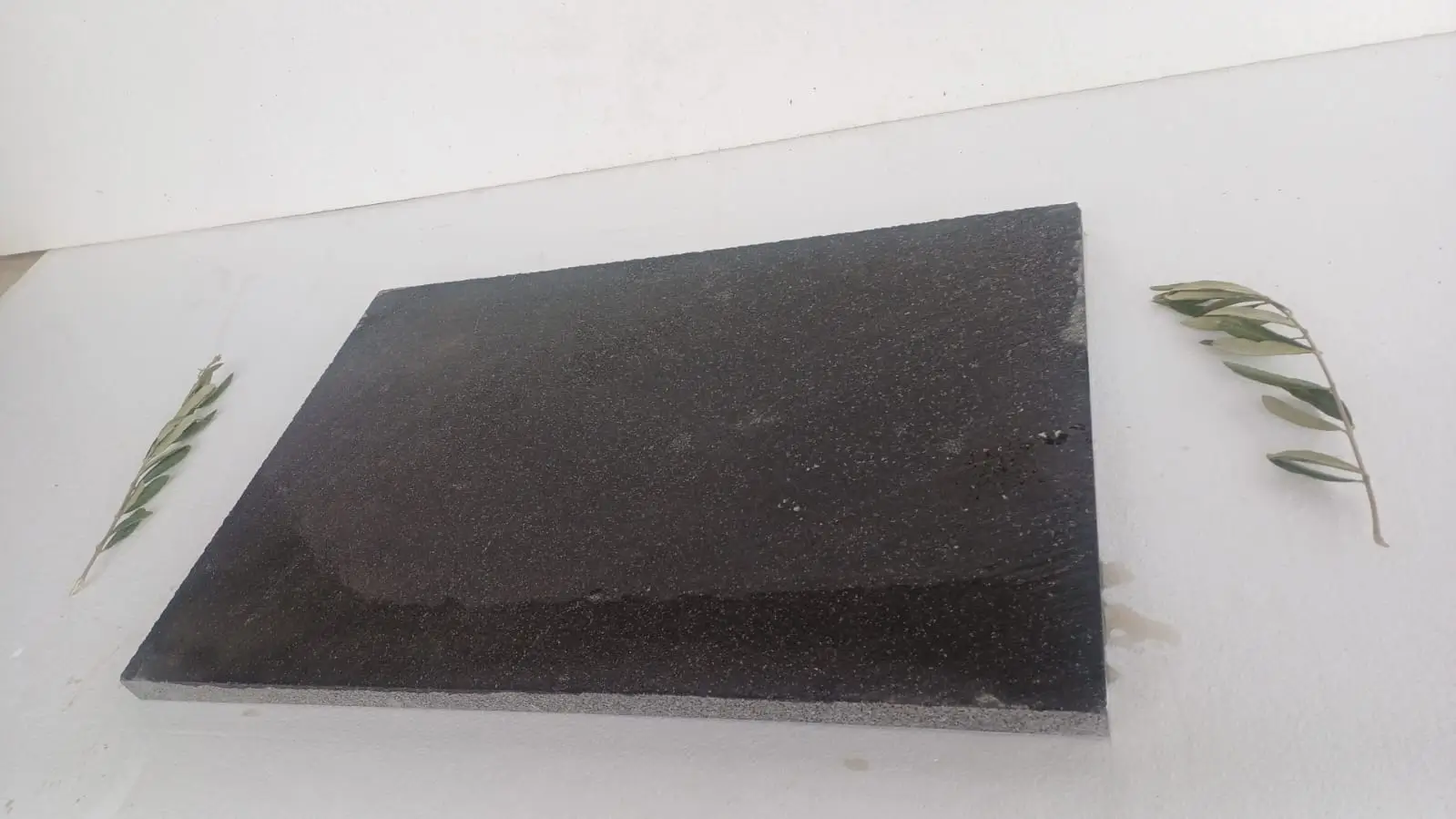
The cool color benefits of blue limestone extend past measurable surface temperature data into the psychological and aesthetic experience of outdoor spaces. Blue-grey tones recede visually, making outdoor areas feel more expansive — a meaningful advantage in residential Mesa projects where outdoor living spaces are often compact relative to the indoor square footage they serve.
The tonal range within blue limestone — from pale blue-grey to deeper charcoal with blue undertones — pairs naturally with the desert landscape without competing with it. Against Arizona’s terracotta soil tones and warm-toned stucco exteriors, blue limestone creates a counterpoint that reads as deliberate and refined rather than contrived. Few natural stone categories bridge contemporary and transitional design vocabularies equally well, which gives you flexibility across different architectural contexts without needing to specify a different material.
Lighting design interacts with blue limestone in a distinctive way worth noting at the specification stage. Low-angle LED path lighting at 2700–3000K color temperature brings out the warmer mineral inclusions in the stone, shifting its apparent color toward grey-blue at night. Cool-white lighting at 4000K+ emphasizes the blue undertones more strongly. If architectural lighting is part of your project scope, aligning the color temperature with your desired evening aesthetic is a detail that pays dividends in the finished result.
In Gilbert, where newer master-planned communities favor clean contemporary architecture, blue limestone paving in large-format sawn finishes has become a strong specification choice for entry courtyards and covered patio transitions — exactly the application context where both the thermal performance and the design contribution of cool tones deliver simultaneous value to Arizona summer comfort.
Getting Blue Limestone Cool Tones Right: Your Action Plan
Specifying blue limestone cool tones Mesa projects correctly means treating the selection as a performance decision first and an aesthetic one second. Your finish selection, joint spacing, base depth, and sealer type each carry thermal implications that aggregate into the actual comfort experience your project delivers. The material’s natural reflectance and emissivity characteristics are real advantages — but only when the specification details supporting them are executed correctly.
Start with a soil assessment before finalizing base depth, confirm warehouse inventory before locking in your project schedule, and select your surface finish based on the functional zone — honed for low-traffic patios, brushed for pool surrounds and wet areas. For projects that incorporate water features or pool surrounds as part of the same design program, Blue Limestone Paving Pool Deck Elegance for Scottsdale Aquatic Areas provides additional detail on how blue limestone performs in Arizona’s most demanding wet-surface applications. We are the source for antique-finish blue black limestone paving in Arizona for a worn heritage look.