

Thermal cycling — not raw heat — is what ultimately destroys 12×24 travertine pool coping installations across Arizona. The desert’s dramatic temperature swings, from sub-freezing nights in January to 115°F afternoons in July, push stone through repeated expansion and contraction cycles that accumulate micro-stress at every joint and edge. Most installers who contact us about failed coping are dealing with the consequences of spec decisions made during the cool months, when the material behaved perfectly — and then summer arrived and the physics caught up. Understanding how thermal cycling works at the material level is the first step to building an installation that actually lasts.
Why Thermal Cycling Destroys Coping Before Anything Else
Travertine’s thermal expansion coefficient sits around 4.4 × 10⁻⁶ per °F — modest by stone standards, but compounding fast across Arizona’s 80°F daily swings. A single 24-inch travertine piece can shift roughly 0.008 to 0.010 inches across a full thermal cycle. Multiply that across a 40-foot coping run and you’re looking at nearly a quarter inch of cumulative movement that has nowhere to go if joints were filled solid. That’s not a marginal condition — that’s a failure mechanism built into every under-gapped installation.
The damage pattern is recognizable: edge cracking parallel to the long axis of the coping tile, grout fracture lines at consistent intervals, and in severe cases, tiles that begin to tent slightly at corners. In Mesa and Gilbert, where pool use extends from March through November, these installations experience more thermal cycles per year than comparable projects in most of the country. The fix isn’t complicated, but it requires correcting several decisions that were made before the first tile was ever set.
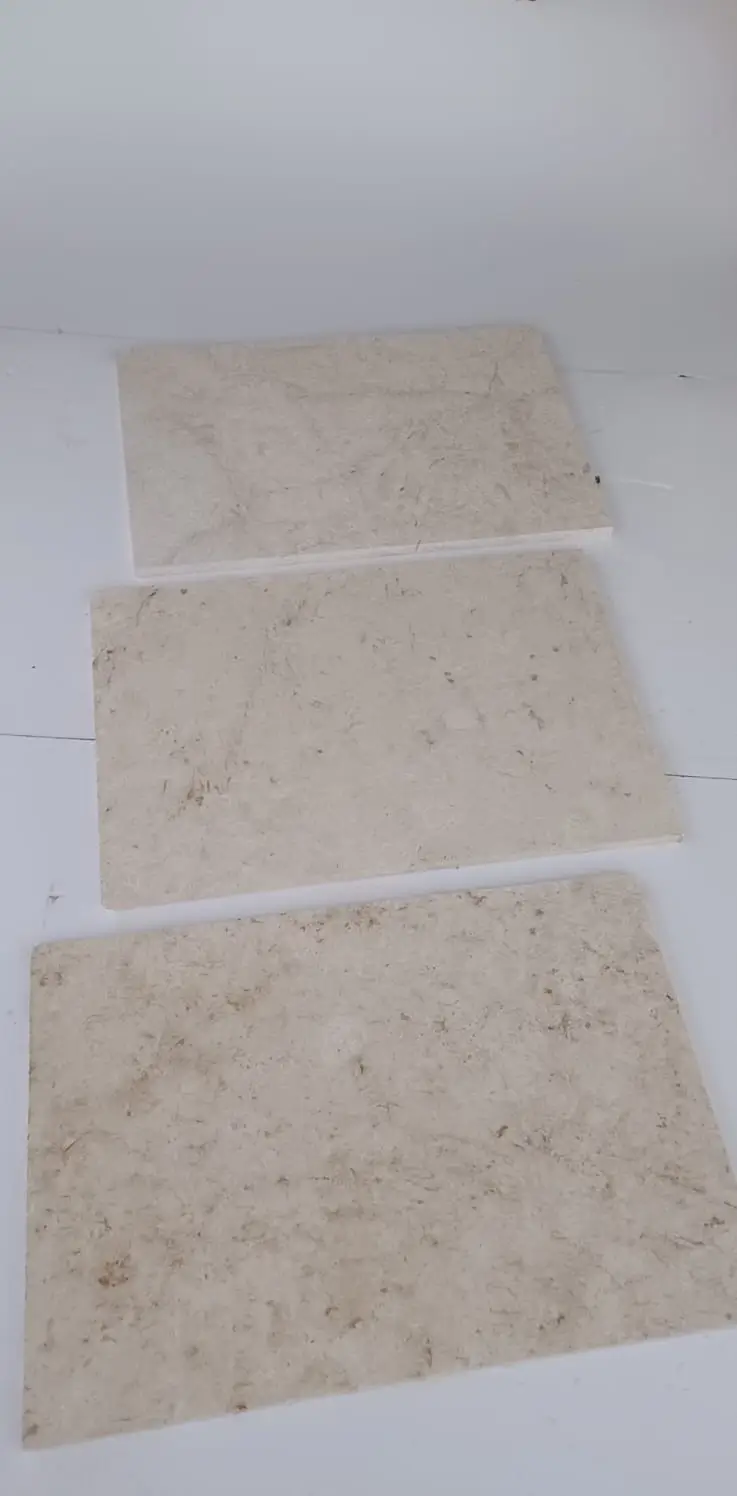
Large Format Coping Substrate Prep in Arizona
The substrate is where most large format coping substrate prep in Arizona goes wrong — not during tile setting, but during the pour. A bond beam or cantilever edge that wasn’t properly cured before tile installation will continue to shrink and move for months, and it takes your coping with it. Standard concrete cure time recommendations assume temperate conditions. In Arizona summer heat, surface cure can appear complete in 24 hours while subsurface moisture migration continues for weeks. Plan for a minimum 28-day cure before setting 12×24 travertine coping, and extend that to 35 days when ambient temperatures during the cure period exceed 100°F.
- Verify substrate flatness within 3/16 inch over 10 feet — large format tiles bridge minor voids but crack under high spots
- Mechanically scarify glazed or sealed concrete surfaces before applying polymer-modified mortar
- Check for efflorescence on older bond beams — it signals ongoing moisture movement that will compromise adhesion
- Pre-wet masonry substrates in dry desert conditions to prevent rapid mortar moisture draw
- Confirm substrate slope at 1/8 inch per foot minimum toward the pool — inadequate slope creates standing water that attacks mortar beds from below
Mortar selection matters more than most installers realize. A standard Type S mortar will see compressive strength around 1,800 PSI — adequate in mild climates but marginal under Arizona thermal cycling. Specify a polymer-modified thin-set rated for exterior stone applications, with a compressive strength of at least 3,500 PSI and a shear bond of 300+ PSI after immersion. These aren’t premium specs for a premium job — they’re baseline requirements for the climate.
Getting Thermal Expansion Gaps Right for Pool Coping in Arizona
The thermal expansion gaps for pool coping AZ projects need aren’t what standard installation guides specify. Most generic guidelines call for 1/16-inch grout joints — a spec designed for interior tile in climate-controlled environments. For 12×24 travertine pool coping in Arizona, your minimum joint width should be 3mm (approximately 1/8 inch) for field joints, with 6mm movement joints every 10 to 12 linear feet. At corners and transitions to vertical surfaces, that movement joint widens to 10mm.
These aren’t conservative estimates — they reflect the actual coefficient of thermal expansion applied to Arizona’s real temperature range. According to ASTM C1527 travertine dimension stone standards, dimensional tolerances and movement allowances for travertine must account for the full thermal range of the installation environment, not just average conditions. Arizona’s 80°F daily swing in shoulder seasons and 60°F swings even in summer mornings means your gap calculations should use the extremes, not the means.
- 3mm minimum for standard field joints between coping pieces
- 6mm movement joints at 10-12 foot intervals — filled with polyurethane or silicone sealant, never grout
- 10mm at all transitions to pool tile, vertical walls, and dissimilar materials
- Never fill movement joints with sanded grout — it will fail within one thermal season
- Use a shore hardness 25-35 polyurethane sealant in movement joints for optimal flexibility at high temperatures
Travertine Coping Drainage Slope Across Arizona Projects
Travertine coping drainage slope across Arizona installations is a two-part specification — pitch toward the pool AND away from the house or structure behind the coping. The standard 1/8 inch per foot toward the pool handles normal splash and rain drainage. What most specs miss is the second drainage requirement: the drip edge detail at the coping nose. Without a proper drip kerf or a minimum 1/4-inch nosing overhang, water tracks back under the coping and begins saturating the mortar bed from below. In Chandler’s alkaline soil environment, that water carries soluble salts that crystallize in the travertine’s pore network during drying — the primary cause of spalling failures you’ll see on improperly detailed coping after two or three seasons.
Travertine’s open-pore calcium carbonate structure makes it particularly vulnerable to sub-surface salt crystallization. According to the Natural Stone Institute travertine properties, this material’s porosity characteristics require careful management of moisture pathways in outdoor applications — especially where evaporation is rapid and salt concentrations can build. Your travertine coping drainage slope specification needs to address where water goes, not just how fast it leaves.
The Night-Cycle Factor Arizona Installers Underestimate
Phoenix metro elevations stay above freezing for most of the year, but the high desert communities feeding into the same material supply chains see genuine freeze-thaw events — sometimes dozens per winter season. For 12×24 travertine pool coping in Arizona’s northern zones and elevated communities, freeze-thaw cycling is a direct failure mechanism, not a theoretical concern. Water that enters travertine’s pore network expands approximately 9% upon freezing, generating internal pressures exceeding 2,000 PSI in confined pore spaces. That’s well above the tensile strength of even well-bonded travertine fill.
The standard protection is penetrating sealer applied to all exposed travertine surfaces, including the underside of coping if accessible. A silicone or fluoropolymer-based penetrating sealer reduces water absorption from typical travertine rates of 0.5–1.5% by weight down to below 0.2% — a meaningful reduction in freeze-thaw vulnerability. Reapply every two years in high-UV Arizona conditions; UV degradation of sealer chemistry accelerates significantly above 3,500 feet elevation.
- Apply penetrating sealer to all six faces of coping tiles before installation in freeze-prone zones
- Confirm sealer compatibility with pool chemistry — chlorine off-gassing can compromise some silicone formulations
- Reapply on a 2-year cycle, moving to annual application above 4,000 feet elevation
- Test water absorption with a small surface water bead test before each resealing cycle — if water soaks in within 60 seconds, reseal immediately
Arizona Pool Coping Installation Problem Fixes You Can Actually Use
Arizona pool coping installation problem fixes tend to cluster around four failure modes, and most of them are recoverable if you catch them early. Edge cracking from thermal cycling is the most common — and the one most often misdiagnosed as a material defect. The fix requires removing affected tiles, widening the joints, and resetting with proper movement allowances. Don’t grind down the substrate to compensate for height variations caused by tile tenting; the tenting itself tells you the joints were too tight.
Grout joint discoloration — often appearing as white or gray staining along joint lines — usually signals efflorescence from residual moisture in the mortar bed. The correct remediation is a diluted acid wash followed by thorough rinsing, then a penetrating sealer application to slow future moisture transmission. For ongoing discoloration that returns within one season, the root cause is typically a drainage problem, not a grout chemistry problem. Regrading or improving the drip edge detail resolves the symptom permanently. You can explore Arizona 12×24 coping from Citadel Stone for specifications that account for these failure modes from the start.
- Tile tenting or lippage: caused by insufficient expansion gaps — remove, recut joints, reset
- Edge spalling: caused by freeze-thaw penetration — reseal exposed faces immediately and address drainage
- Grout cracking at regular intervals: movement joint locations should be relocated and filled with flexible sealant
- Hollow-sounding tiles: mortar coverage below 80% — remove and reset with full back-butter application
- Persistent efflorescence: drainage problem upstream — resolve water pathways before any surface treatment
Mortar Coverage and Back-Buttering for Large Format Stone
Large format travertine coping — particularly in the 12×24 dimension — requires full mortar coverage to prevent the void points that become cracking initiation sites under thermal stress. The TCNA standard for exterior natural stone calls for 95% mortar contact on the tile back; in Arizona conditions, that should be treated as a floor, not a target. Achieve it through back-buttering every tile with a 3/16-inch notched trowel, then pressing and sliding the tile into the mortar bed to collapse ridges and eliminate voids.
According to TCNA natural stone tile installation standards, large-format stone tiles require modified installation techniques to achieve adequate bond coverage compared to smaller format tiles — a distinction that becomes critical in high-thermal-cycling environments like Arizona pool decks. Any void under a 12×24 tile becomes a point of concentrated stress when thermal expansion occurs, and that stress concentrates at the nearest unsupported edge. Proper large format coping substrate prep in Arizona begins here, at the mortar bed level, before a single tile is placed.
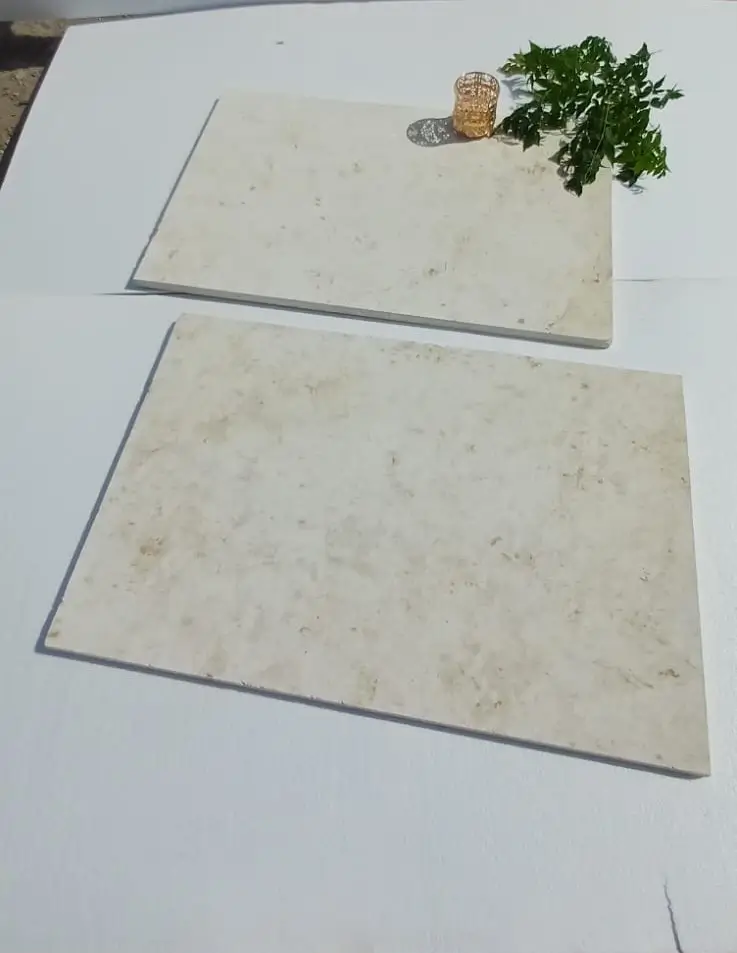
Ordering, Warehouse Stock, and Project Timing in Arizona
Project timing for travertine coping installations in Arizona follows a specific seasonal logic. The ideal installation window runs from October through March — substrates are cooler, mortar setting times are more forgiving, and you’re not fighting the rapid moisture loss that happens when you’re working in direct sun at 105°F. Summer installations require shade tenting over the work area, misting of the substrate immediately before mortar application, and shorter working sections to prevent open-time violations in the adhesive.
Citadel Stone maintains warehouse inventory of 12×24 travertine coping that typically allows 1–2 week lead times on standard orders — significantly shorter than the 6–8 week import cycle for special-order material. That matters most in repair scenarios, where a truck delivery of matching material needs to arrive before the pool is back in service. Confirm warehouse stock levels before finalizing your project schedule, especially for larger quantities where allocation across multiple truck deliveries may affect your installation sequencing.
- Order 10–12% overage on travertine coping to account for cuts, edge pieces, and future repairs
- Inspect each truck delivery for tone and veining consistency before installation — travertine varies batch to batch
- Store coping tiles flat on full-support pallets, shaded, until day of installation
- Do not install coping from pallets that have been exposed to direct sun for extended periods — thermal stress during setting can affect bond formation
Getting the Specification Right for Arizona Pool Coping
The most durable 12×24 travertine pool coping installations in Arizona share a common thread — every specification decision, from joint width to mortar selection to drainage slope, was made with thermal cycling in mind from the start, not retrofitted after the first cracking season. You don’t need to overengineer this material; travertine is genuinely well-suited to outdoor pool environments when the installation accounts for the physics of an 80°F daily temperature range. The mistakes are almost always the same ones: joints that were too tight, movement joints that were filled with grout, substrates that weren’t fully cured, and drainage details that sent water back under the coping instead of away from it.
For design direction that works within the same technical framework, 12×24 coping design ideas for Arizona pools covers how material finish, color, and profile choices interact with the thermal performance specs you’ve just built into your installation. Both dimensions — engineering and aesthetics — need to be resolved together for a coping spec that holds up across the Arizona pool season. Yuma and Tucson installations face the same substrate cure and thermal expansion challenges documented throughout this guide, making these specs equally applicable across the region. Builders in Tucson, Yuma, and Tempe working with Citadel Stone 12×24 travertine coping are advised to maintain 3mm thermal expansion gaps to prevent edge cracking under Arizona’s summer heat cycles.