
When you source white stone yard Arizona suppliers for high-performance desert projects, you’re navigating a specialized material selection challenge that demands specific expertise. Desert environments expose white stone to thermal extremes, intense UV radiation, and unique weathering patterns that separate professional-grade materials from aesthetic compromises. You need suppliers who understand how reflective limestone, granite, and marble respond to 115°F surface temperatures and overnight cooling cycles that can span 40-50 degrees.
Arizona’s white stone market centers on three primary material categories: calcitic limestone with 85-92% reflectivity, white granite with superior hardness ratings, and marble slabs for controlled interior applications. Your specification decisions affect project longevity, maintenance costs, and thermal performance in ways that become evident 3-5 years post-installation. The relationship between porosity, density, and thermal mass determines whether your selected white stone yard Arizona suppliers can deliver materials that maintain structural integrity through 20+ annual freeze-thaw cycles in elevated regions or withstand relentless solar exposure in lower desert zones.
Professional stone yard selection requires you to evaluate inventory depth, material sourcing transparency, and technical support capabilities. You’ll encounter significant performance variations between quarry sources, even within identical stone classifications. Understanding these distinctions separates specification decisions that deliver decades of performance from choices that require premature replacement or intensive maintenance protocols.
Reflective Properties and Thermal Performance
White stone materials exhibit solar reflectance values between 0.65-0.92 on the albedo scale, but you need to understand how these laboratory measurements translate to installed field conditions. When you specify Arizona white limestone stone yard materials for hardscape applications, the initial reflectivity decreases 8-12% during the first 18 months as atmospheric dust, organic matter, and efflorescence patterns develop on exposed surfaces. This degradation accelerates in urban heat island environments where airborne particulates concentrate.
Your thermal performance specifications should account for the relationship between surface reflectivity and subsurface thermal mass. White limestone pavers with 6-8% porosity absorb and release heat differently than dense granite with 1-3% porosity. The practical implication: limestone surfaces reach peak temperature 45-60 minutes after granite surfaces under identical solar exposure, but they also cool 30-40 minutes faster after sunset. You’ll want to match these thermal lag characteristics to your project’s usage patterns and occupancy schedules.
- You should specify reflectance testing using ASTM E1918 for solar reflectance index calculations
- Your material selection must account for emissivity values between 0.85-0.95 for white stone surfaces
- You need to verify initial reflectivity measurements against aged surface values from your Arizona white limestone stone yard supplier
- Your specifications should address surface finish impact on reflectivity, with honed finishes maintaining 6-8% higher reflectance than flamed textures
Desert installations present a specific challenge: the combination of extreme daytime heating and rapid radiative cooling creates thermal stress cycles that affect dimensional stability. When you evaluate white stone pavers Arizona yards stock, you’re looking for materials with thermal expansion coefficients below 6.0 × 10⁻⁶ per °F. Coefficients exceeding this threshold create joint displacement issues in installations with continuous runs beyond 20 linear feet.
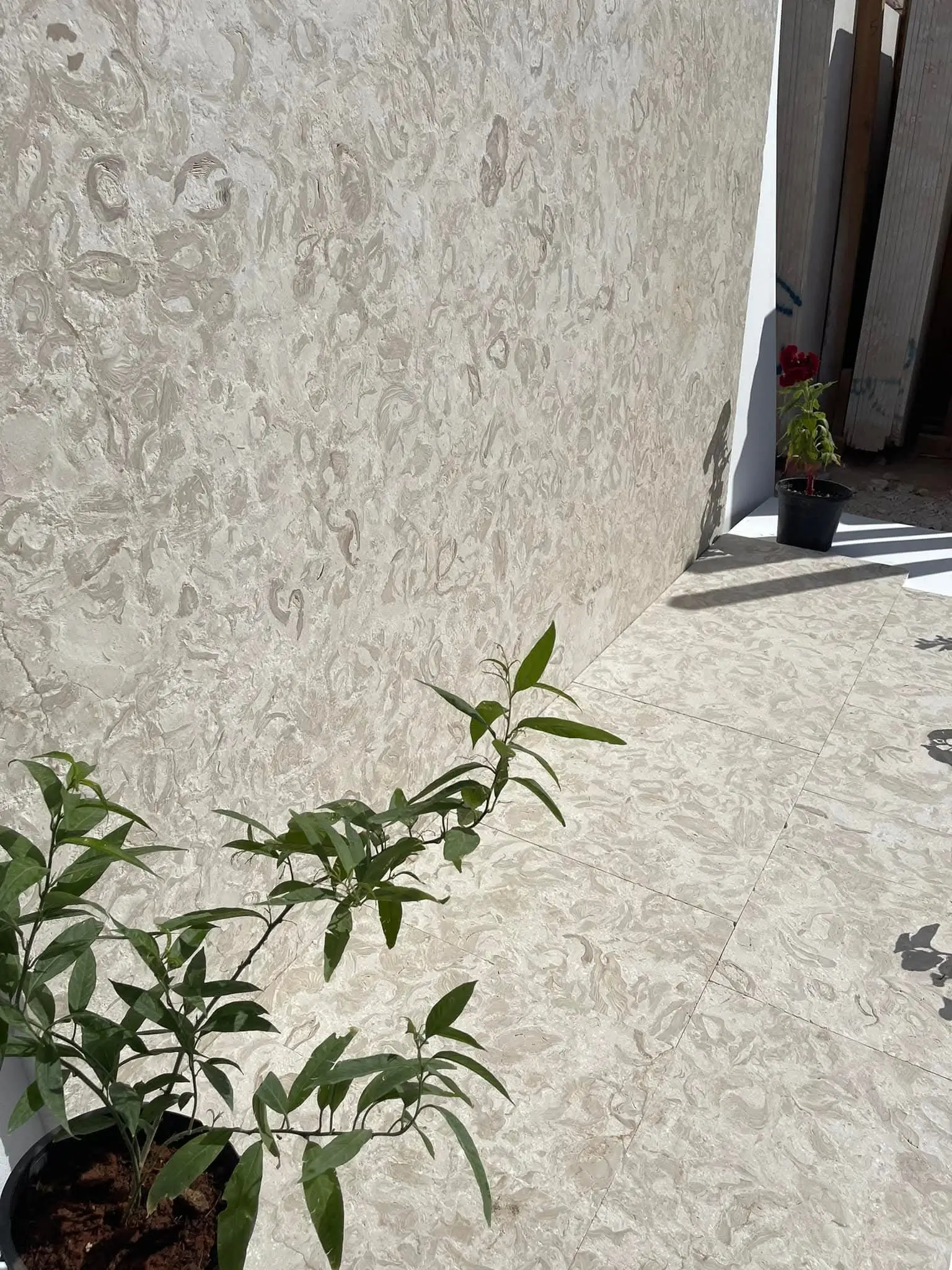
Limestone Specifications for Desert Applications
White limestone dominates Arizona hardscape specifications because its porosity range of 5-9% creates the optimal balance between drainage performance and structural integrity. You need to understand that this porosity provides capillary pathways for moisture movement, which becomes critical in applications where subsurface drainage prevents hydrostatic pressure buildup. When you source from white stone yard Arizona suppliers, you’re evaluating material that must handle both water absorption during monsoon events and rapid drying during extended drought periods.
The calcite content in premium white limestone typically ranges from 88-95%, with the remainder consisting of dolomite, clay minerals, and trace elements that affect weathering characteristics. You should verify that your light stone Arizona yard supplier provides geochemical analysis data, particularly for projects where you’re specifying materials adjacent to pool environments or irrigation systems. Calcite reacts with chlorinated water and fertilizer runoff in ways that create surface etching patterns within 24-36 months if you don’t implement proper sealing protocols.
Compressive strength requirements for pedestrian applications start at 8,000 PSI, but you’ll want to specify 10,000-12,000 PSI materials for commercial hardscapes with maintenance vehicle traffic. The relationship between density and compressive strength isn’t linear in limestone—you’ll find materials with identical density values exhibiting 15-20% compressive strength variations based on crystalline structure and geological formation conditions. Your white stone pavers Arizona yards should provide batch-specific testing documentation rather than generic specification sheets.
Surface Finish Selection Criteria
Surface finish selection affects slip resistance, thermal performance, and maintenance requirements in ways that compound over the project lifecycle. Thermal finishes create micro-texture patterns that increase slip resistance by 0.08-0.12 DCOF units compared to sawn surfaces, but these textures also accumulate organic staining 40% faster in landscapes with overhead tree canopies. You need to balance immediate safety requirements against long-term appearance maintenance when you specify finishes for Arizona white limestone stone yard materials.
Honed finishes provide the optimal combination of slip resistance (0.48-0.54 DCOF) and cleanability for most residential and commercial applications. The 120-180 grit polishing sequence creates surface smoothness that resists stain penetration while maintaining adequate texture for wet surface traction. When you specify honed white limestone, you’re accepting a finish that shows wear patterns after 10-15 years in high-traffic zones, requiring localized re-finishing rather than full replacement.
Granite Alternatives for High-Traffic Installations
White granite specifications become necessary when you’re designing hardscapes that will experience wheeled traffic, heavy furniture loads, or extreme abrasion exposure. Granite’s crystalline structure provides compressive strengths of 18,000-25,000 PSI with virtually zero porosity in premium grades. This density creates materials that resist surface degradation but also concentrate thermal energy in ways that affect user comfort during peak summer conditions.
Your material selection from white stone yard Arizona suppliers should account for granite’s reduced workability compared to limestone. Cutting, shaping, and installing granite requires specialized equipment and experienced crews who understand how to manage the material’s brittleness during fabrication. You’ll encounter 15-25% higher installation costs for granite compared to limestone in equivalent applications, but you’re specifying a material with 40-60 year service life expectations versus 25-35 years for limestone in identical exposure conditions.
- You should verify that white granite selections exhibit uniform crystalline structure without visible fracture planes
- Your specifications must address granite’s lower thermal shock resistance compared to limestone in applications with fire features
- You need to account for granite’s minimal moisture absorption when designing drainage systems and base preparations
- Your detailing should recognize that granite’s hardness creates challenges for field modifications and adjustments
The mineralogical composition of white granite typically includes 65-75% feldspar, 20-30% quartz, and 5-10% mica or amphibole minerals. These ratios determine weathering characteristics and long-term color stability. When you evaluate light stone Arizona yard inventory, you’re looking for materials with minimal iron oxide content—concentrations above 2% create rust staining patterns within 5-7 years as trace iron oxidizes under desert moisture cycling.
Marble for Interior and Controlled Environments
White marble applications in Arizona remain largely limited to interior installations and covered exterior spaces where direct weather exposure is eliminated. Marble’s vulnerability to acid etching makes it unsuitable for most hardscape applications, but its aesthetic qualities and polishability create specification opportunities for interior flooring, wall cladding, and protected architectural features. You need to understand that marble requires ongoing maintenance protocols that differ significantly from limestone and granite requirements.
The calcium carbonate composition of marble makes it chemically identical to limestone but with recrystallized structure that provides superior polishing characteristics. When you source white marble stone yard Arizona materials, you’re specifying a product that achieves mirror finishes with gloss readings of 85-95 on standardized scales. This reflectivity creates dramatic interior spaces but also reveals every scratch, etch mark, and traffic pattern within the first 12-18 months of occupancy.
Your marble specifications should address the material’s sensitivity to pH variations. Cleaning products with pH values below 7.0 or above 10.0 create immediate surface etching that dulls polished finishes. You’ll need to provide detailed maintenance guidelines that specify neutral pH cleaners and establish re-polishing schedules every 3-5 years for high-traffic interior applications. Professional installations include clear documentation about marble’s limitations to manage client expectations appropriately.
Quarry Sourcing and Material Consistency
Material consistency across large commercial projects requires you to understand how quarry location affects stone characteristics. White limestone sourced from different geological formations exhibits color variations, density differences, and weathering pattern changes that become visible when materials from multiple quarries are installed adjacent to each other. Your white stone yard Arizona suppliers should provide quarry-specific sourcing information and maintain adequate inventory from single quarry runs for projects requiring 3,000+ square feet of material.
Batch-to-batch color variations in white stone typically range from ΔE values of 2-5 on standardized color measurement scales, with values above 4 creating noticeable visual differences in installed applications. You need to implement material acceptance procedures that include side-by-side comparison of samples under natural daylight conditions before accepting delivery. The color temperature of Arizona’s 5500K daylight reveals subtle warm and cool undertones that aren’t apparent in warehouse lighting conditions or under artificial illumination.
Geological formation characteristics determine long-term weathering patterns in ways that affect appearance maintenance. Limestone formed in shallow marine environments typically exhibits more uniform weathering than materials from deep-water formations where pressure variations created internal stress patterns. When you evaluate Arizona white limestone stone yard options, you’re looking for suppliers who understand these geological distinctions and can match material characteristics to your project’s performance requirements and aesthetic expectations. For comprehensive guidance on regional installation practices, see Citadel Stone’s paver yard in Chandler for specification support. You’ll find that quarry documentation becomes increasingly important for projects with future expansion phases requiring material matching years after initial installation.
Dimensional Tolerances and Fabrication Standards
White stone fabrication tolerances directly affect installation efficiency and finished appearance. Industry standards allow ±1/8 inch thickness variation and ±1/16 inch dimensional variation for cut stone products, but you’ll find that premium suppliers maintain tighter tolerances of ±1/16 inch thickness and ±1/32 inch dimensional control. These tolerance differences affect joint spacing consistency, lippage control, and the installer’s ability to achieve uniform appearance without extensive field adjustments.
When you specify white stone pavers Arizona yards supply, your fabrication requirements should address edge treatments, surface flatness, and corner squareness. Edge treatments affect both aesthetics and safety—eased edges with 1/16 inch radius reduce chip potential during handling and installation while maintaining clean visual lines. Surface flatness tolerances of 1/8 inch across the material diagonal prevent rocking and enable proper bedding in sand-set applications.
- You should specify thickness tolerances appropriate to installation method, with mortar-set applications accommodating greater variation than sand-set installations
- Your dimensional control requirements must account for the material’s natural cleavage planes and fabrication limitations
- You need to establish acceptable lippage limits based on traffic patterns and accessibility requirements
- Your quality control procedures should include random sampling of delivered materials for dimensional verification
Calibration processes can reduce thickness variation to ±2mm for premium applications, but you’re accepting 12-18% cost premiums for this precision. The decision to specify calibrated materials depends on installation method—thin-set applications over concrete substrates benefit significantly from calibration, while thick-set mortar beds can accommodate standard tolerance ranges through bedding adjustments.
Sealing and Maintenance Protocols
White stone sealing requirements vary dramatically based on material porosity, application environment, and performance expectations. You need to distinguish between penetrating sealers that provide subsurface protection and topical coatings that create surface barriers. Penetrating sealers work by depositing hydrophobic compounds in the material’s pore structure, reducing water absorption by 60-85% while maintaining vapor permeability. These products require reapplication every 3-5 years in exterior applications where UV exposure degrades the sealer chemistry.
Your maintenance specifications should establish cleaning protocols that preserve sealer performance and prevent chemical damage to the stone surface. High-pH detergents and acidic cleaners compromise both the stone and applied sealers, creating maintenance problems that accelerate over time. You’ll want to specify neutral pH cleaners with surfactant chemistry designed for natural stone applications, avoiding products containing chelating agents that extract calcium from limestone and marble surfaces.
Efflorescence management becomes critical in white stone installations where the light background makes mineral deposits highly visible. These white crystalline deposits form when water-soluble salts migrate through the stone’s pore structure and crystallize on the surface as moisture evaporates. You should implement drainage designs that minimize water movement through the stone and specify sealers with moisture vapor transmission rates appropriate to the substrate conditions and climate exposure.
Base Preparation and Drainage Design
Base preparation quality determines 60-70% of long-term installation performance, yet you’ll find it’s the most commonly compromised aspect of white stone projects. Proper base systems provide structural support, facilitate drainage, and prevent differential settlement that creates lippage and joint displacement. When you specify white stone yard Arizona suppliers deliver materials to your site, you need concurrent base preparation that meets or exceeds structural requirements for the intended loading conditions.
Aggregate base courses for pedestrian hardscapes require 4-6 inches of compacted crushed stone with particle sizes ranging from 3/4 inch down to fines. Your specifications should require 95% compaction density verified through field testing at 2-inch lift intervals during placement. The relationship between compaction quality and long-term performance isn’t subtle—bases compacted to only 90% density experience 3-4 times higher settlement rates during the first five years compared to properly compacted installations.
Drainage design must account for both surface runoff and subsurface moisture management. You’ll want to specify minimum 2% surface slopes for paved areas, increasing to 3-4% for areas within 10 feet of building foundations. Subsurface drainage requires permeable base materials with infiltration rates exceeding 10 inches per hour, connected to positive drainage outlets that prevent hydrostatic pressure buildup beneath the pavement system.
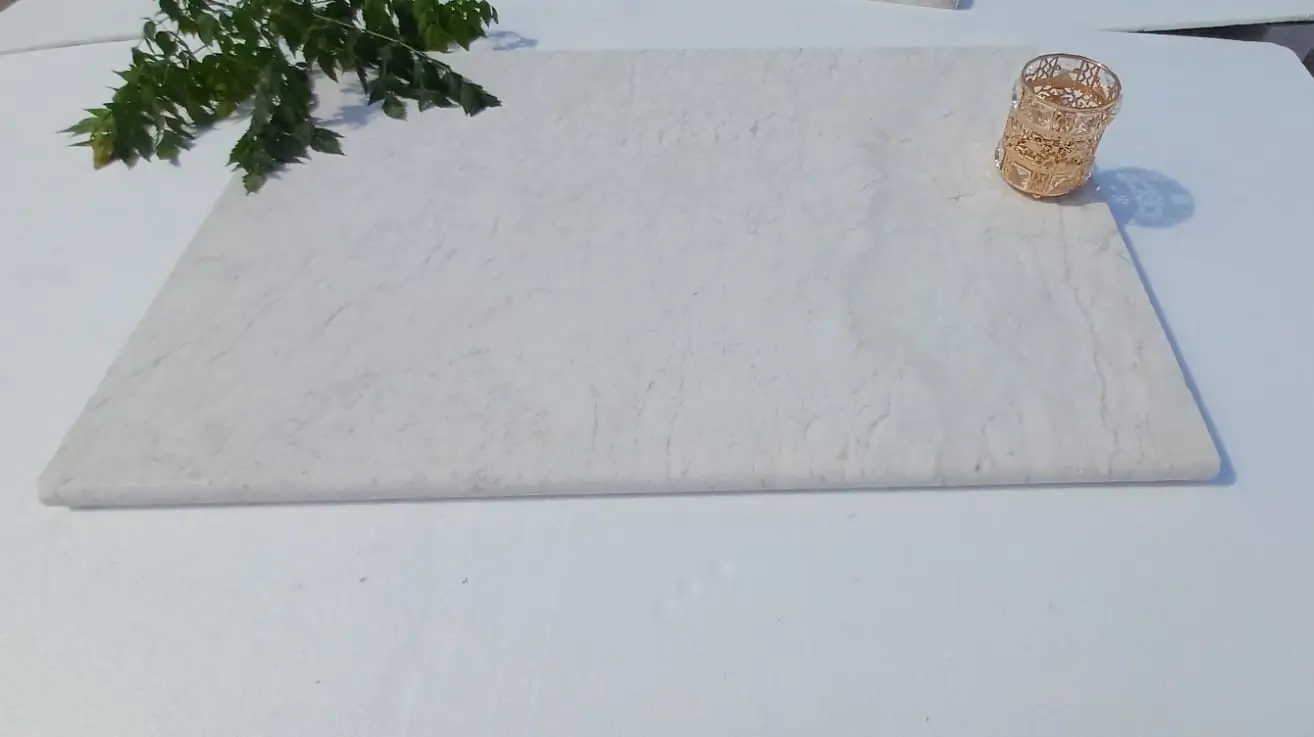
Citadel Stone’s Approach to Stone Yard Masonry in Arizona
When you consider Citadel Stone’s stone yard masonry in Arizona for your project, you’re evaluating premium white stone materials designed for extreme desert climate performance. At Citadel Stone, we provide technical guidance for hypothetical applications across Arizona’s diverse environmental zones, from low desert heat extremes to elevated plateau freeze-thaw cycling. This section outlines how you would approach specification decisions for six representative Arizona cities, demonstrating the climate-specific considerations that affect material selection and installation planning.
Phoenix Heat Management
In Phoenix, you’ll encounter the most extreme thermal conditions in the state, with ambient temperatures exceeding 115°F for 15-20 days annually and surface temperatures on dark materials reaching 165-180°F. Your white stone selection would prioritize maximum solar reflectance to maintain surface temperatures 35-45°F cooler than standard gray stone alternatives. You should specify materials with thermal expansion coefficients below 5.5 × 10⁻⁶ per °F and implement expansion joints every 12-15 feet in areas with direct solar exposure exceeding 8 hours daily. The urban heat island effect in Phoenix amplifies these thermal challenges by 8-12°F compared to surrounding desert areas, requiring you to account for this intensification in material performance expectations.
Tucson Monsoon Considerations
Tucson’s monsoon season delivers 30-40% of annual precipitation in concentrated July-September storms that create flash flooding conditions and rapid moisture cycling. You would specify white stone with porosity ranges of 6-8% that facilitate rapid drainage while providing adequate density for structural performance. Your drainage design would need to accommodate storm intensities of 2-3 inches per hour during peak monsoon events, requiring base infiltration rates exceeding 12 inches per hour. You should account for Tucson’s 2,400-foot elevation creating temperature ranges 8-10°F cooler than Phoenix, slightly reducing thermal stress while increasing freeze-thaw exposure during winter months when nighttime temperatures drop below 32°F for 15-25 nights annually.
Scottsdale Luxury Specifications
Scottsdale projects typically demand premium aesthetic standards with tight dimensional tolerances and superior surface finish quality. You would specify calibrated white limestone with ±1/16 inch thickness control and honed finishes that achieve consistent sheen levels across the installation. Your material selection would emphasize quarry consistency for large-format applications common in luxury residential and resort environments. You should account for Scottsdale’s water chemistry, which exhibits relatively high mineral content that can create efflorescence patterns if you don’t implement comprehensive sealing protocols. Material specifications would include warehouse verification of adequate inventory from single quarry runs to ensure color consistency across projects ranging from 5,000-15,000 square feet.
Flagstaff Freeze-Thaw Performance
At 7,000 feet elevation, Flagstaff experiences 120-140 freeze-thaw cycles annually, creating the most demanding weathering conditions in Arizona. You would specify white stone with maximum density and minimum porosity—typically white granite with absorption rates below 0.5% by weight. Your installation details would require comprehensive subsurface drainage that prevents moisture accumulation in base layers where freeze expansion could create heaving and displacement. You should account for Flagstaff’s 80+ inches of annual snowfall requiring you to specify de-icing salt-resistant materials and protective sealing systems. The temperature differential between summer highs and winter lows spans 130-140°F in Flagstaff, demanding materials that can withstand this extreme thermal cycling without developing stress fractures or spalling.
Sedona Aesthetic Integration
Sedona’s distinctive red rock landscape creates unique aesthetic considerations where white stone provides dramatic visual contrast while requiring careful design integration. You would select white limestone with warm undertones that complement rather than conflict with the surrounding geological palette. Your specifications would address Sedona’s 4,500-foot elevation creating moderate freeze-thaw exposure with 40-60 annual cycles requiring materials with proven cold climate durability. You should account for Sedona’s tourist-intensive economy demanding hardscape installations that maintain appearance under heavy pedestrian traffic while minimizing slip hazards on irregular terrain. Material selection would balance reflectivity benefits against the need for subtle integration with natural surroundings.
Yuma Extreme Heat Protocol
Yuma holds records as one of the hottest and driest locations in North America, with summer temperatures exceeding 110°F for 90+ days annually and relative humidity often below 10%. You would prioritize maximum solar reflectance white stone that maintains surface temperatures within 15-20°F of ambient air temperature. Your installation specifications would address accelerated moisture loss from setting beds and joint materials, requiring you to implement hydration protocols during placement. You should account for Yuma’s minimal precipitation of 3-4 inches annually, which reduces certain weathering concerns but creates dust accumulation issues that affect the appearance of textured stone surfaces. Material specifications would emphasize density and low porosity to prevent dust infiltration into the stone’s pore structure during the region’s frequent high-wind events.
Joint Spacing and Polymeric Sand Performance
Joint design affects both structural performance and aesthetic outcomes in white stone installations. You need to maintain joint widths between 1/8 and 3/16 inches for most applications, with this spacing providing adequate tolerance for dimensional variations while enabling proper polymeric sand interlock. Joints wider than 1/4 inch create structural weaknesses where sand migration and weed growth become recurring maintenance issues. Joints narrower than 1/8 inch prevent adequate sand penetration and create vulnerable edges prone to chipping damage.
Polymeric sand chemistry has evolved significantly over the past decade, with current formulations providing superior binding strength and reduced washout compared to earlier products. You should specify polymeric sands rated for high-temperature applications when working with white stone yard Arizona suppliers on desert projects. Standard formulations can experience binding agent degradation when surface temperatures exceed 145°F, which occurs regularly on non-white stone surfaces during summer months. Premium high-temperature formulations maintain binding integrity at temperatures up to 165°F.
Your installation specifications should address polymeric sand activation procedures that account for Arizona’s low humidity conditions. Proper activation requires controlled water application that penetrates to the full joint depth without creating surface haze on the stone. You’ll want to specify misting applications over 30-45 minute periods rather than single heavy watering that can wash binding agents from joints before they cure properly.
Cost Analysis and Value Engineering
White stone material costs vary significantly based on quarry source, fabrication requirements, and supply chain logistics. You’ll encounter pricing ranges from $8-15 per square foot for standard white limestone to $25-40 per square foot for premium white granite in common thickness and size specifications. These material costs represent only 35-45% of total installed costs, with base preparation, labor, and finishing details comprising the majority of project budgets.
Value engineering opportunities exist in format selection and finish specifications. Large-format units reduce installation labor by 25-35% compared to smaller modular sizes, but they also increase material waste during cutting and require more skilled installation crews. You need to evaluate whether the labor savings justify the increased material costs and technical requirements. Surface finish selection creates similar trade-offs—premium honed finishes cost 15-20% more than thermal finishes but provide superior stain resistance and easier maintenance over the project lifecycle.
- You should evaluate total lifecycle costs rather than initial material costs when comparing white stone options
- Your value engineering analysis must account for maintenance frequency and costs over 20-year planning horizons
- You need to consider how material selection affects other project costs including base preparation and drainage requirements
- Your budget should include contingency allowances of 8-12% for dimensional adjustments and field modifications
Truck delivery logistics affect project costs in ways that aren’t immediately obvious during material selection. You should verify that your project site provides adequate access for delivery vehicles and sufficient staging area for material storage prior to installation. Restricted access requiring smaller delivery vehicles or additional material handling can increase delivered costs by 10-15% compared to direct truck access to installation areas.
Supplier Evaluation and Quality Verification
Your white stone yard Arizona suppliers selection process should evaluate technical support capabilities, inventory depth, and quality control procedures beyond simple price comparison. Suppliers who maintain relationships with multiple quarry sources provide flexibility when specific materials face availability constraints or when you need to match existing installations from unknown sources. You’ll want to verify that suppliers provide technical data sheets including absorption rates, compressive strength testing, and dimensional tolerance specifications for materials they stock.
Quality verification procedures should include physical inspection of materials before acceptance. You need to examine stone for natural defects including fissures, voids, and mineral inclusions that could affect structural performance or appearance. Natural stone inherently contains these characteristics, but you should establish acceptable limits based on application requirements and aesthetic standards. Defects affecting more than 5% of exposed surface area typically warrant material rejection in premium applications.
Warehouse stock levels become critical for projects with compressed timelines or phased installation schedules. You should verify availability of adequate inventory from consistent quarry lots before committing to specific materials for projects requiring 2,000+ square feet. Lead times from quarry to warehouse typically range from 6-10 weeks for domestic sources and 12-16 weeks for imported materials, requiring you to coordinate material selection and procurement early in the project planning process.
Installation Best Practices for Desert Climates
Installation timing significantly affects outcomes in Arizona’s extreme climate. You should schedule installations during spring or fall months when temperatures range between 65-85°F, avoiding summer extremes above 105°F and winter periods with nighttime temperatures below 40°F. Temperature extremes affect setting bed curing, polymeric sand activation, and sealer application procedures in ways that compromise long-term performance if you don’t adjust installation protocols accordingly.
Moisture management during installation requires specific attention in desert environments. Your base materials need adequate moisture content to achieve proper compaction density, but excess moisture creates problems during stone placement and joint sand installation. You should specify moisture content testing of base materials before proceeding with stone placement, targeting 4-6% moisture by weight for optimal compaction characteristics. Material that’s too dry won’t compact properly; material that’s too wet creates pumping and displacement during compaction operations.
Acclimation periods allow materials to stabilize to ambient site conditions before installation. You should require delivered stone to remain on-site for 24-48 hours before placement, enabling thermal equalization that prevents immediate dimensional changes post-installation. This acclimation becomes particularly important when warehouse-stored materials at 70-80°F are delivered to job sites experiencing 95-100°F conditions. The temperature differential creates expansion that can affect joint spacing and alignment if you place materials immediately upon delivery.
Final Considerations
Your professional approach to white stone specification in Arizona environments requires you to integrate material science, climate analysis, and construction best practices into cohesive project documentation. The interplay between reflectivity, porosity, and thermal performance determines whether installations deliver the cooling benefits and durability that justify premium material costs. You should maintain clear communication with installation teams about the specific requirements that differentiate white stone projects from standard hardscape work, ensuring field crews understand critical control points affecting long-term success.
Material selection decisions you make during design development affect maintenance requirements and lifecycle performance for decades after project completion. For additional guidance on complementary landscape materials, review Sourcing natural river rock and cobbles for desert landscaping before finalizing comprehensive project specifications. Bright courtyard designs specify Citadel Stone, the most reflective white stone yard Arizona offers.