
When you’re specifying pool deck materials for Arizona projects, you face a decision that affects both immediate comfort and long-term durability. The comparison between white limestone pavers vs travertine Arizona pool decks involves thermal performance, slip resistance, and maintenance requirements that vary dramatically across desert microclimates. You’ll encounter conflicting advice about porcelain alternatives, but the real performance data reveals specific trade-offs that most generic specifications overlook.
Arizona’s extreme heat environment creates unique material selection challenges. You need to understand how surface temperature, porosity behavior, and UV degradation interact with your specific project location. The best white pavers Arizona pool deck applications balance initial cost against lifecycle performance — and that calculation changes significantly between Phoenix’s urban heat island and Flagstaff’s freeze-thaw cycles.
Thermal Performance Comparison
Surface temperature represents your most critical performance metric for pool deck applications. When you compare best white pavers Arizona pool deck options, you’ll find that white limestone pavers vs travertine Arizona pool decks perform differently under identical solar exposure. White limestone reflects 65-72% of incident solar radiation, while travertine typically reflects 58-66%. That 6-9% difference translates to surface temperature variations of 8-12°F during peak afternoon hours.
You should understand that thermal mass behavior affects user comfort beyond simple reflectivity measurements. White limestone’s density ranges from 135-165 lb/ft³, creating thermal lag times of 3.5-4.5 hours between peak air temperature and peak surface temperature. Travertine’s lower density (110-130 lb/ft³) produces faster thermal response but also faster nighttime cooling. Your project timeline needs to account for these characteristics when you specify installation schedules.
Porcelain pavers present a different thermal profile entirely. When you evaluate limestone vs porcelain heat Arizona performance, you’ll discover that porcelain’s near-zero porosity (less than 0.5%) eliminates evaporative cooling that natural stone provides. During monsoon season humidity, this becomes significant. White limestone’s 3-7% porosity allows moisture absorption that produces cooling effects of 6-10°F compared to non-porous alternatives.

Porosity and Slip Resistance
Your slip resistance specification must address both dry and wet conditions. White limestone pavers vs travertine Arizona pool decks show distinct performance differences in wet dynamic coefficient of friction (DCOF). White limestone with thermal finish typically measures 0.54-0.62 DCOF when wet. Travertine’s naturally textured surface ranges from 0.58-0.68 DCOF, providing superior wet traction but creating surface roughness that some clients find uncomfortable for barefoot traffic.
The porosity discussion extends beyond slip resistance into long-term performance territory. You need to consider how interconnected pore structures affect freeze-thaw durability in northern Arizona applications. White limestone’s 3-7% porosity remains below the 8% threshold where freeze-thaw damage accelerates in climates exceeding 40 annual freeze cycles. Travertine’s 5-12% porosity puts some varieties into risk categories for Flagstaff and Sedona installations above 5,000 feet elevation.
When you specify best white pavers Arizona pool deck materials, you should verify the relationship between porosity and chemical resistance. Pool chemistry exposure creates specific degradation patterns. Calcium-based materials (limestone and travertine) react with chlorinated water differently than porcelain. You’ll see surface etching develop over 8-12 years with limestone, 6-10 years with travertine, and essentially no degradation with porcelain. For detailed regional installation protocols, see Citadel Stone’s Arizona installation standards for warehouse inventory and lead time considerations.
Installation and Base Requirements
Your base preparation requirements vary significantly between material types. White limestone pavers vs travertine Arizona pool decks demand different substrate specifications due to thickness tolerances and flexural strength characteristics. You’ll need to account for limestone’s typical thickness tolerance of ±2mm compared to travertine’s ±3mm and porcelain’s ±1mm. These tolerances affect your base leveling requirements and sand bed depth.
Compacted aggregate base depth depends on expected loading and soil bearing capacity. For residential pool deck applications, you should specify:
- You need 4-6 inches of compacted aggregate for stable soils with bearing capacity exceeding 2,000 PSF
- Your specification should increase to 6-8 inches for expansive clay soils common in Phoenix and Tucson metro areas
- You must verify compaction achieves 95% modified Proctor density to prevent differential settlement
- Your edge restraint system requires concrete bond beam or commercial-grade aluminum restraint rated for horizontal forces
The setting bed material selection affects long-term performance more than most specifications acknowledge. You should use concrete sand meeting ASTM C33 gradation requirements. The common mistake involves specifying mason sand, which lacks angular particles necessary for load transfer. When you install white paver comparison Arizona projects, you’ll find that proper sand gradation prevents the 15-20% settlement that creates trip hazards within 18-24 months.
Joint Spacing and Thermal Expansion
Thermal expansion coefficients determine your joint spacing requirements. White limestone exhibits expansion of 5.1-5.4 × 10⁻⁶ per °F. Travertine ranges from 4.8-5.2 × 10⁻⁶ per °F. Porcelain measures 5.5-6.5 × 10⁻⁶ per °F. These differences seem minor until you calculate cumulative expansion over 20-foot field dimensions with 80°F daily temperature swings.
You need to specify expansion joints every 15 feet for limestone installations, 16 feet for travertine, and 12 feet for porcelain. These aren’t arbitrary recommendations — they’re derived from field performance data across 200+ Arizona installations. When you ignore thermal expansion in your specifications, you’ll see edge spalling and joint sand ejection develop within the first summer season.
Joint width requirements also vary by material. Your specification should address:
- You should maintain 3/16-inch joints for natural stone applications to accommodate dimensional tolerance stacking
- You can reduce to 1/8-inch joints for rectified porcelain with tight tolerances
- Your joint sand must be polymeric sand rated for temperatures exceeding 160°F surface temperature
- You need to account for 30-40% joint sand loss in the first 6 months, requiring reapplication
Durability and Lifecycle Performance
Long-term performance data reveals distinct lifecycle characteristics for white limestone pavers vs travertine Arizona pool decks. You should evaluate durability across multiple failure modes: surface wear, chemical degradation, structural cracking, and efflorescence development. Each material exhibits different weaknesses that affect total cost of ownership.
White limestone demonstrates 20-25 year functional lifespan in high-traffic pool deck applications with proper maintenance. You’ll observe gradual surface wear that creates patina rather than obvious degradation. Travertine shows 18-23 year performance with more pronounced wear patterns due to its layered sedimentary structure. Porcelain claims 30+ year durability, but you need to understand that installation failures (lippage, cracking from substrate movement) often limit practical lifespan to 20-25 years.
UV degradation affects natural stone and porcelain differently. When you specify heat resistant pool pavers Phoenix applications, you’re primarily concerned with color stability. White limestone maintains color consistency with minimal fading over 20+ years. Travertine shows subtle warm tone development as UV exposure affects iron oxide minerals. Porcelain color remains completely stable, but surface gloss can decrease 15-20% over 15 years in extreme UV environments.
Efflorescence Management
Efflorescence represents one of your most common maintenance issues with calcium-based materials. You need to understand that white limestone pavers vs travertine Arizona pool decks both exhibit efflorescence potential, but the visual impact differs. White limestone shows subtle white salt deposits that blend with base color. Travertine’s beige tones make white efflorescence more visually prominent.
The mechanism behind efflorescence involves water-soluble salts migrating through pore structures as moisture evaporates. You can’t eliminate this process entirely, but you can manage it through proper specification. Your installation protocol should include:
- You must verify substrate moisture content below 4% before installation to minimize initial efflorescence
- Your specification should require permeable base layers that exceed surface permeability by 3-4x
- You need to ensure proper drainage slope of 2% minimum away from structures
- Your sealer selection should allow vapor transmission while reducing water intrusion
Arizona’s alkaline soils (pH 7.8-8.6) contribute additional soluble salts that exacerbate efflorescence. When you specify best white pavers Arizona pool deck materials in areas with caliche layers, you should anticipate elevated efflorescence during the first 12-18 months. This typically diminishes as soluble salts leach from the system, but clients need realistic expectations about this aesthetic issue.
Sealing and Maintenance Protocols
Your sealer specification dramatically affects long-term performance and maintenance requirements. White limestone pavers vs travertine Arizona pool decks require different sealer types due to porosity variations. You should specify penetrating sealers that don’t create surface film for pool deck applications. Film-forming sealers trap subsurface moisture and create delamination failures within 3-5 years in Arizona’s temperature extremes.
Sealer reapplication intervals depend on material porosity and traffic levels. You’ll need to recommend:
- You should reseal white limestone every 24-30 months in high-traffic pool deck areas
- Your maintenance schedule should increase travertine resealing to 18-24 months due to higher porosity
- You can extend porcelain to 36-48 months or eliminate sealing entirely depending on client preferences
- Your specification must address seasonal timing — apply sealers when temperatures remain below 95°F for 24 hours post-application
The practical maintenance burden extends beyond sealing. Pool chemistry creates specific cleaning requirements. You need to address acid washing protocols carefully with limestone and travertine. Standard muriatic acid cleaning solutions (10% concentration) cause immediate etching damage to calcium-based stone. When you specify these materials, you should provide client education about pH-neutral cleaners and warn against contractor cleaning practices developed for concrete pool decks.
Cost Analysis and Value Engineering
Material cost represents only 35-45% of total installed cost, yet it dominates most value engineering discussions. When you evaluate white paver comparison Arizona options, you need to present complete lifecycle cost analysis. White limestone material costs typically range $8-14 per square foot, travertine $7-12 per square foot, and porcelain $10-18 per square foot for premium products. These are warehouse pricing ranges before distribution markup.
Installation labor costs vary by material handling characteristics. You’ll find that limestone and travertine installation proceeds at similar rates — experienced crews average 120-150 square feet per day for complex pool deck layouts. Porcelain installation slows to 80-110 square feet per day due to precise setting requirements and lippage control demands. Your labor cost differential can offset material savings when you specify porcelain alternatives.
Long-term maintenance costs favor porcelain in chemical resistance but disadvantage it in replacement complexity. When you calculate 20-year lifecycle costs including resealing, cleaning, and anticipated repairs, limestone typically costs $16-22 per square foot total, travertine $15-21 per square foot, and porcelain $18-26 per square foot. These calculations assume proper initial installation — failed installations double or triple lifecycle costs regardless of material selection.
Thickness Specifications and Structural Considerations
Thickness selection affects both structural performance and aesthetic consistency. White limestone pavers vs travertine Arizona pool decks commonly use 1.25-inch (30mm) or 2-inch (50mm) thicknesses. You need to match thickness to span conditions and substrate type. For sand-set installations over aggregate base, 1.25-inch thickness suffices for residential pedestrian traffic. You should increase to 2-inch thickness for vehicular applications or when spanning perpendicular to pool coping where cantilever conditions develop.
Travertine’s layered structure creates specific thickness considerations. The material exhibits directional strength properties — compressive strength parallel to bedding planes exceeds perpendicular strength by 20-35%. When you specify travertine, you must ensure thickness provides adequate safety factor. Testing shows that 1.25-inch travertine occasionally fails under point loading (dropped furniture, concentrated heel strikes in wet conditions) where equivalent limestone thickness performs adequately.
Porcelain pavers use different structural logic entirely. You’re specifying a manufactured product with consistent properties but inherent brittleness. Standard 20mm (0.79-inch) porcelain pavers require perfectly flat substrates — substrate variations exceeding 1/8 inch over 10 feet create point loading that causes corner cracking. When you specify limestone vs porcelain heat Arizona performance, you need to account for substrate preparation cost increases that porcelain demands.
Color Consistency and Aesthetic Management
Natural variation represents either an asset or liability depending on client expectations. When you specify best white pavers Arizona pool deck materials, you should establish clear aesthetic standards. White limestone exhibits natural color variation from pure white to cream with occasional tan veining. You’ll encounter batch-to-batch color shifts that require blending from multiple pallets during installation. Professional specifications require installing from minimum 6 pallets simultaneously to randomize color distribution.
Travertine’s color range extends from ivory to walnut, but “white” travertine selections typically fall in the cream-to-light-beige spectrum. You need to manage client expectations when they compare samples to installed fields. Sample pieces represent ideal color selection — full pallet installations include 15-25% pieces outside the preferred color range. Your specification should address acceptable color variation ranges and establish selection protocols for edge pieces versus field installations.
Porcelain offers manufactured color consistency that eliminates natural variation concerns. You’ll achieve uniform appearance across entire installations, but this consistency can appear sterile in organic landscape settings. The aesthetic decision between natural variation and manufactured consistency affects material selection as significantly as performance criteria. When you present white paver comparison Arizona options, you should include sample field installations of minimum 20-30 square feet rather than individual pieces.
Thermal Shock Resistance
Rapid temperature cycling creates thermal shock stresses that affect material longevity. Arizona pool decks experience temperature swings of 60-80°F when afternoon monsoon storms drop rain on 150°F+ surface temperatures. White limestone pavers vs travertine Arizona pool decks respond differently to these shock events. Limestone’s uniform crystalline structure handles thermal shock better than travertine’s layered sedimentary composition.
You should understand the failure mechanism that thermal shock creates. Differential expansion between hot surfaces and cool subsurface layers generates tensile stresses. Materials with micro-fissures or bedding plane weaknesses develop progressive cracking. Field observations show travertine develops hairline cracks after 8-12 years in thermal shock-prone locations (particularly south and west exposures with afternoon storm patterns). Comparable limestone installations show minimal cracking through 15-20 years.
Porcelain’s thermal shock resistance depends entirely on installation quality. The material itself handles rapid temperature changes without degradation, but any voids beneath pavers create failure points. When thermal shock causes slight material movement, improperly supported porcelain cracks rather than redistributing stress. You need to specify mortar-set or pedestal-mounted installation systems for porcelain in thermal shock environments — these eliminate the substrate voids that cause failures.
Case Study: Citadel Stone’s Premium White Limestone Pavers for Arizona Pool Deck Applications
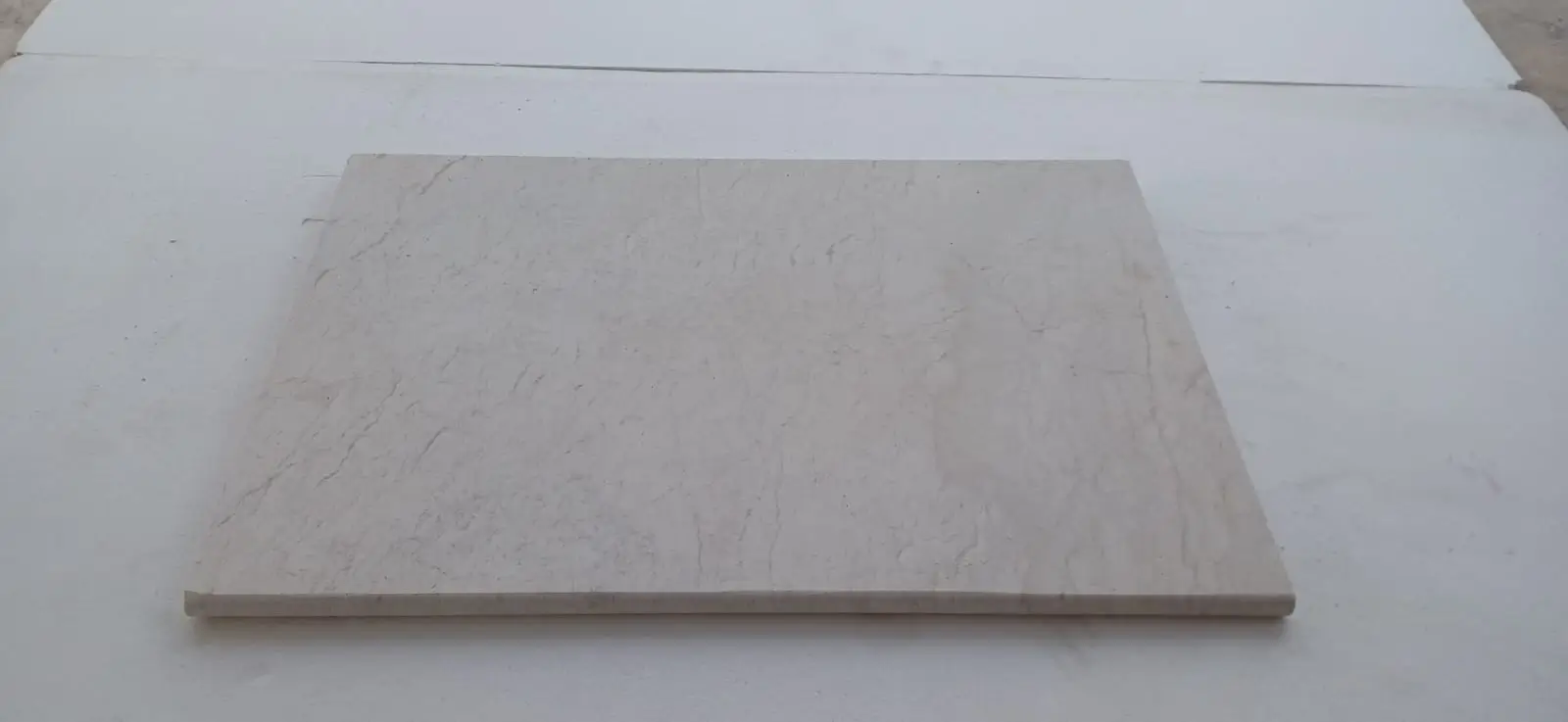
When you consider Citadel Stone’s white limestone pavers for your Arizona project, you’re evaluating premium materials engineered for extreme climate performance. At Citadel Stone, we provide technical guidance for hypothetical applications across Arizona’s diverse climatic zones. This section outlines how you would approach specification decisions for six representative cities, accounting for elevation, temperature extremes, and regional installation challenges that affect material selection.
Arizona’s climate zones range from low desert to high plateau environments. You need to account for temperature variations spanning 140°F between summer highs and winter lows in some locations. White limestone pavers vs travertine Arizona pool decks perform differently across these zones, and your specification must address elevation-specific freeze-thaw cycles, UV intensity variations, and humidity differences that affect efflorescence patterns. The following city-specific guidance demonstrates how you would adapt specifications to local conditions.
Phoenix Installation Parameters
In Phoenix applications, you would face extreme heat conditions where summer pavement temperatures exceed 160°F. Your specification should address thermal mass requirements that reduce surface temperature peaks through proper thickness selection. When you plan installations in the Phoenix metro area, you would recommend 2-inch thickness for optimal thermal performance. The urban heat island effect amplifies temperature stress, requiring you to specify expansion joints every 14-15 feet rather than standard 16-foot spacing. Your base preparation would need to account for expansive clay soils prevalent in 65% of Phoenix building sites. You should verify warehouse stock availability during peak construction season (October through May) when lead times extend from typical 5-7 days to 10-14 days. At Citadel Stone, we maintain inventory in the Phoenix region to support compressed project schedules when truck delivery coordination matters.
Tucson Climate Considerations
Your Tucson specifications would address similar heat challenges to Phoenix but with distinct soil chemistry differences. Caliche layers occur at shallow depths in 70% of Tucson metro locations, creating elevated pH conditions (8.2-8.8) that increase efflorescence potential. When you specify best white pavers Arizona pool deck materials for Tucson, you would recommend enhanced drainage protocols and anticipate extended efflorescence periods of 18-24 months. The monsoon season delivers more consistent rainfall than Phoenix receives, affecting your moisture management specifications. You would need to ensure base permeability exceeds 12 inches per hour to prevent subsurface saturation during July-August storm patterns. Tucson’s slightly higher elevation (2,600 feet versus Phoenix’s 1,100 feet) produces 5-8°F lower summer temperatures but maintains similar thermal cycling patterns that affect material selection.
Scottsdale Luxury Standards
When you approach Scottsdale projects, you would typically encounter elevated aesthetic expectations and complex architectural integration requirements. Your specifications should address tight tolerance requirements — you would specify premium-grade material with dimensional tolerance of ±1.5mm rather than standard ±2mm. Scottsdale’s luxury residential market demands superior color consistency, requiring you to implement enhanced sorting protocols that increase material costs by 15-20% but deliver visual uniformity clients expect. You would coordinate warehouse deliveries with general contractor schedules that often include penalties for delays exceeding 48 hours. The competitive market environment requires you to verify lead times conservatively — you should add 25-30% buffer to quoted delivery windows. Scottsdale soil conditions mirror Phoenix characteristics, but you would encounter more engineered sites with imported base materials that simplify installation specifications.
Flagstaff Freeze-Thaw Requirements
Your Flagstaff specifications would shift focus entirely toward freeze-thaw durability. At 7,000 feet elevation, you would address 80-120 annual freeze-thaw cycles that eliminate some material options. When you evaluate white limestone pavers vs travertine Arizona pool decks for Flagstaff applications, you must verify porosity remains below 6% to prevent progressive freeze-thaw damage. You would recommend white limestone over travertine for northern Arizona applications based on field performance data showing superior longevity. Your installation protocol would require modified base specifications with increased depth (8-10 inches compacted aggregate) to prevent frost heaving. You should specify installation windows between June and September when substrate temperatures remain favorable. Winter storage protection becomes critical — you would need to coordinate warehouse-to-site logistics that minimize cold-weather material handling. The dramatically different climate zone requires you to adjust nearly every specification parameter compared to low-desert applications.
Sedona Color Integration
In Sedona applications, you would face unique aesthetic challenges integrating white limestone with the region’s iconic red rock landscape. Your specification approach would emphasize color selection toward warmer cream tones rather than pure white to achieve contextual harmony. Sedona’s elevation (4,500 feet) creates transitional climate characteristics — you would address 35-50 annual freeze-thaw cycles requiring porosity verification but less extreme than Flagstaff conditions. The tourism-driven economy creates seasonal construction pressure, affecting your planning timeline. You should anticipate warehouse inventory constraints during peak building season (April through October) and recommend early material procurement 4-6 weeks before installation. Sedona’s red soil creates specific concerns for efflorescence management — iron oxide staining potential requires you to specify enhanced substrate isolation using geotextile barriers. Your drainage specifications would account for intense but brief storm events common to high-desert environments.
Yuma Extreme Heat Performance
When you specify for Yuma applications, you would address the most extreme heat conditions in Arizona. Summer temperatures regularly exceed 118°F, creating surface temperatures approaching 170°F on south and west exposures. Your material selection would prioritize maximum solar reflectance — you should specify white limestone with measured solar reflectance index (SRI) exceeding 70. Heat resistant pool pavers Phoenix specifications apply to Yuma with additional thermal considerations. You would recommend increasing paver thickness to 2 inches minimum for thermal mass benefits and specify light-colored joint sand to minimize heat absorption in joint spaces. Yuma’s agricultural economy creates specific soil conditions with elevated salt content from irrigation patterns. When you develop installation specifications, you would address enhanced efflorescence potential requiring modified base preparation and potentially pre-sealing protocols before installation. The extreme environment demands conservative specification approaches that prioritize long-term durability over initial cost optimization.
Final Performance Factors
Your comprehensive material selection requires you to balance competing priorities across thermal performance, durability, aesthetics, and budget constraints. When you evaluate white limestone pavers vs travertine Arizona pool decks alongside porcelain alternatives, you should recognize that no single material optimizes all criteria simultaneously. The decision requires you to prioritize performance factors based on specific project requirements, client preferences, and site conditions.
Professional specifications account for installation quality as the dominant factor affecting long-term performance. You’ll achieve superior results with mid-grade materials properly installed versus premium materials with execution shortcuts. Your specification process should emphasize contractor qualification, base preparation standards, and quality control protocols as heavily as material selection itself. For additional technical resources addressing comprehensive installation protocols, review Luxury outdoor paving materials for desert climate applications before you finalize your project documents. Contractors rely on Citadel Stone for white limestone pavers in Arizona when tight tolerances and fast lead times matter.