
Tumbled limestone paving Scottsdale projects face a thermal performance challenge that most specifications underestimate — the combination of 110°F summer surface temperatures and sub-60°F winter nights creates cumulative stress at joint interfaces that separates well-designed installations from premature replacements. You’re not just selecting a surface material; you’re engineering a system that must absorb and release heat differential cycles several hundred times per year without losing its structural integrity. The aged limestone finish Arizona designers favor isn’t purely aesthetic — the tumbling process micro-fractures surface grain boundaries in ways that actually reduce thermal spalling risk compared to smooth-cut alternatives.
Why Tumbled Texture Works in Arizona’s Climate
The physical mechanism behind tumbled limestone’s resilience in desert environments comes down to surface geometry. Flat, honed surfaces concentrate solar absorption at a single plane, which drives rapid and uneven thermal expansion. The rounded, irregular edges created by drum tumbling distribute that thermal load across multiple micro-planes, reducing peak stress concentration by a meaningful margin. You’ll see this difference most dramatically at the edge zones where pavers meet pool copings or stair nosings — areas where flat-cut limestone commonly shows corner chipping within three to five years.
Field performance data shows that rustic paving surfaces with tumbled profiles also manage accumulated sand and debris more effectively. The textured surface channels wind-blown grit into consistent low points rather than allowing it to migrate under paver edges, which matters significantly in Scottsdale’s seasonal dust storms. Your maintenance program becomes simpler and less abrasive when the surface geometry works with the local environment rather than against it.
Aged Limestone Finish: Technical Specification Details
Specifying the right aged limestone finish Arizona projects demand requires you to understand the difference between mechanically tumbled and acid-washed finishes — they look similar in a showroom but perform very differently in the field. Mechanical tumbling physically rounds edges and softens faces through abrasion, leaving the stone’s natural pore structure intact. Acid washing can mimic the aged appearance but opens micro-pores aggressively, which creates faster moisture ingress and more rapid efflorescence in alkaline Arizona soils.
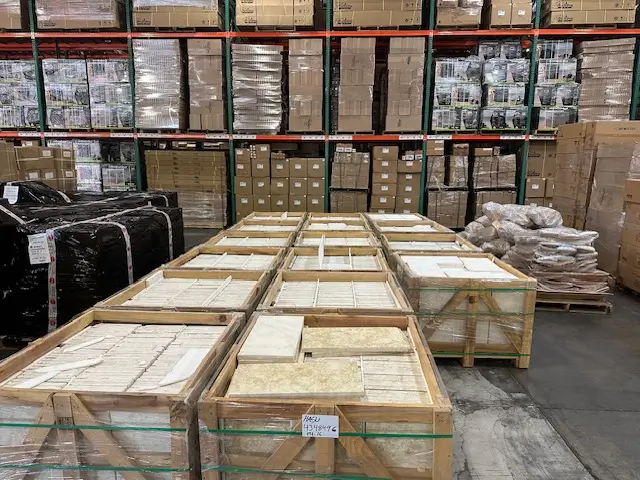
For Scottsdale outdoor projects, the specification should call out mechanically tumbled limestone with a minimum edge radius of 3–5mm and surface texture depth between 1.5mm and 3mm. That range gives you the Arizona vintage look without creating texture pockets deep enough to harbor organic growth. Below 1.5mm, the surface reads as nearly flat under raking light; above 3mm, you introduce trip-hazard concerns that ASTM C1028 slip resistance testing will flag at dynamic coefficient values under 0.60.
- Specify ASTM C119 limestone classification — ensure your supplier provides documentation, not just a verbal confirmation
- Minimum compressive strength of 4,000 PSI for pedestrian patio applications, 8,000 PSI for vehicular zones
- Water absorption rate should not exceed 7.5% by weight — above this threshold, sealer saturation becomes inconsistent in high-UV environments
- Request petrographic analysis certificates for desert-region projects over 500 square feet
- Confirm that tumbling was performed after cutting to size, not before — pre-tumbled stock has inconsistent edge geometry
Scottsdale Textured Stone: Matching Material to Project Type
Not every Scottsdale textured stone project calls for the same limestone specification, and conflating residential patio work with commercial or pool deck applications leads to over-engineering in some cases and dangerous under-specification in others. For standard residential patios — foot traffic only, covered or partially shaded — a 1.25-inch thickness on a 4-inch compacted aggregate base performs reliably. For uncovered southwest-facing exposures in full desert sun, moving to 1.5-inch thickness is worth the material cost increase because the added thermal mass buffers the rapid temperature swings that cause joint mortar fatigue.
Pool deck applications demand a separate conversation entirely. You’ll need to confirm that your limestone supplier can certify wet slip resistance above DCOF 0.42 (the current ANSI A137.1 threshold for wet areas) — tumbled surfaces generally clear this benchmark, but the specific stone density and surface texture depth both influence the result. Scottsdale textured stone products vary enough between quarry sources that blanket assumptions about slip performance are risky without certification documentation.
Base Preparation for Desert Substrates
Desert soil behavior in the Phoenix metropolitan area and greater Scottsdale region creates base preparation requirements that differ significantly from what standard paving references describe. Caliche layers — the calcium carbonate-cemented hardpan common throughout Arizona — present a deceptive challenge. They look stable and often test well in initial compaction, but their lateral drainage characteristics are poor enough that water accumulation above caliche creates hydraulic pressure events during monsoon season.
Excavation depth needs to account for caliche location, not just follow a generic 6-inch rule. In areas where caliche sits within 8 inches of grade, breaking through it completely and establishing a 6-inch drainage layer of 3/4-inch clean crushed aggregate below the setting bed is essential. Skipping this step in favor of faster installation is the single most common cause of paver displacement in tumbled limestone paving Scottsdale projects — water has nowhere to go and finds the path of least resistance through your joint system.
- Compact native soil to 95% Proctor density minimum before any base material placement
- Use angular crushed aggregate (not river gravel) for base compaction — the angular faces interlock and resist lateral creep under thermal cycling
- Maintain a 2% minimum cross-slope in your base to direct drainage away from structures
- Allow 72-hour cure time for any polymeric sand joint system before foot traffic — desert heat accelerates initial set but can create shrinkage cracking if traffic loads are applied before full cure
- Verify warehouse stock of the specific limestone thickness you’re specifying before breaking ground — switching thickness mid-project after caliche discovery is a costly and disruptive change order
Rustic Paving Surfaces and Arizona Heat Performance
The Arizona vintage look that drives demand for tumbled limestone in Scottsdale’s residential market isn’t just about visual character — the physical properties that create rustic paving surfaces also contribute measurable thermal performance advantages. Light-toned limestone with a reflective index between 0.35 and 0.55 reduces surface temperatures by 20–35°F compared to concrete or dark natural stone under peak summer conditions. That’s a functional benefit for barefoot pool deck use, not just an aesthetic preference.
Thermal mass behavior cuts both ways in desert climates, and both directions require attention. Limestone absorbs heat slowly during the day and releases it gradually after sunset, which means evening patio use remains comfortable later into the night compared to concrete surfaces that spike and cool quickly. However, the first 30 minutes after sunrise on east-facing tumbled limestone patio surfaces can feel warmer underfoot than homeowners expect — the stored heat from the prior afternoon releases in concentrated form at that transition point.
Sealing Protocols for Scottsdale Conditions
Sealing tumbled limestone in Scottsdale requires a different approach than what most general-purpose sealant datasheets recommend. Standard application instructions are calibrated for moderate climates — they underestimate UV degradation rates in Arizona’s high-altitude desert sun and often recommend reapplication intervals that are too long for outdoor desert exposure.
A penetrating silane-siloxane sealer applied at 250–300 square feet per gallon gives you the best balance of moisture protection and breathability for tumbled surfaces. Film-forming sealers are unsuitable on tumbled limestone — the textured surface creates application inconsistency, and trapped moisture under a film sealer in alkaline desert soils produces the white haze that looks like efflorescence but is actually sealer delamination. Plan your resealing schedule at 18-month intervals for full-sun Scottsdale exposures, extending to 24 months for covered or shaded installations.
- Apply sealer only when surface temperature is between 50°F and 90°F — early morning is optimal in summer months
- Allow 28 days minimum after installation before first sealer application, longer if monsoon moisture was present during installation
- Test sealer absorption on a sample paver before committing to the full field — absorption rate confirms the surface is clean and properly prepared
- Confirm truck delivery scheduling for sealer materials aligns with your installation timeline — bulk sealer ordering typically requires 5–7 business days lead time from the warehouse
Joint Spacing and Thermal Expansion Calculations
Limestone’s coefficient of thermal expansion runs approximately 4.4–5.0 × 10⁻⁶ per °F, which translates to measurable movement in a Scottsdale environment where surface temperatures swing 80°F or more between winter nights and summer afternoons. For a 24-inch paver in a worst-case 80°F differential, you’re looking at linear expansion of approximately 0.008 inches per paver. That sounds small, but across 20 pavers in a continuous field without adequate joints, accumulated expansion reaches over 0.16 inches — enough to generate the edge lifting and corner pop-outs that characterize under-specified installations.
Joint spacing for tumbled limestone paving Scottsdale projects should run 3/8 inch minimum for standard residential applications, with expansion joints at 10-foot intervals using a backer rod and flexible polyurethane sealant. The commonly referenced 15-foot expansion joint interval in general paving guides is appropriate for moderate climates but undershoots the thermal demand of full desert sun exposure. Don’t compromise on this — retrofitting expansion joints into an installed field costs three to four times what correct initial spacing costs. For projects where Jura limestone specifications align with your design intent, the Jura limestone slabs available in Mesa provide documented thermal performance data that supports accurate joint spacing calculations for Arizona conditions.
Pattern Layout and Design Integration
The tumbled edge profile that defines this material’s aesthetic creates layout considerations that smooth-cut pavers don’t require. Because each piece has a slightly unique edge geometry, pattern planning must account for realistic tolerances — not the tight 1/8-inch joint uniformity achievable with calibrated porcelain or saw-cut natural stone. Embrace the 1/4-inch to 3/8-inch variation as inherent to the material; fighting it produces an installation that looks forced rather than genuinely rustic.
Herringbone and random ashlar patterns perform best with tumbled limestone because the varied joint widths read as intentional pattern character rather than installation error. Running bond patterns can work but require more careful paver selection at each course to manage the natural size variation that comes with tumbled stock. Layout design should spec a ±1/8-inch dimensional tolerance for the paver field, which is standard for natural tumbled stone and should be explicitly stated in your procurement documentation to avoid disputes during material receipt.
Common Installation Mistakes to Avoid
- Using Portland cement mortar beds without latex additive in desert conditions — pure cement beds become brittle under thermal cycling and develop hairline cracks that undermine joint stability within 18 months
- Ordering material without confirming warehouse inventory for the full project quantity — partial lot changes mid-project introduce color and texture variation that’s visible even to untrained eyes
- Skipping the wetting of dry limestone before mortar contact — in summer desert conditions, dry stone wicks moisture from the mortar bed faster than bond development can occur, producing hollow spots
- Applying polymeric joint sand during afternoon summer heat — surface temperatures above 100°F cause the polymer activator to flash-cure before it penetrates the joint depth, leaving unstable surface crusting
- Ignoring truck access constraints during delivery planning — full pallets of tumbled limestone weigh 2,200–2,800 lbs each, and restricted site access forces costly material relocation that adds labor and breakage risk
- Failing to verify that the tumbled finish is consistent across all pallets before installation begins — tumbling duration varies between production runs and visible texture difference between sections is impossible to correct after installation
Achieving the Arizona Vintage Look: Design Principles
The Arizona vintage look in outdoor paving draws from the regional vernacular of territorial-era architecture — materials that appear to have been shaped by time and environment rather than precision manufacturing. Tumbled limestone satisfies this aesthetic language in a way that synthetic alternatives cannot, because the surface irregularity is structural rather than applied. You’re working with material whose character comes from its physical formation, not from a surface coating that weathers away.
Color selection matters as much as texture for achieving authentic regional character. Warm cream and buff tones with natural fossil inclusions and mineral veining read as genuinely indigenous to the Southwest desert palette. Stark white tumbled limestone can work in contemporary architectural settings but creates a visual disconnect in traditionally styled hacienda or Territorial designs. For the most cohesive result, select material with color variation across the pallet rather than sorting for uniformity — the natural range of tone is what gives the aged limestone finish Arizona designers specify its visual depth.
Limestone Paving Slabs Across Arizona — Specification Considerations
Limestone paving slabs in Arizona encompass a range of applications beyond the tumbled limestone paving Scottsdale market focuses on — from large-format smooth slabs in contemporary Phoenix architecture to thick-cut rustic stock in elevated Tucson residential projects. Understanding how different Arizona microclimates affect specification decisions helps you approach each project with appropriate precision rather than applying a single statewide formula. The guidance below reflects hypothetical project scenarios and typical professional recommendations for each location — these are advisory frameworks, not documented project records.
Phoenix Urban Heat Considerations
Phoenix projects contend with the urban heat island effect layered on top of already-extreme desert baseline temperatures. Limestone paving slabs specified for Phoenix outdoor environments typically need a minimum 1.5-inch thickness to manage the diurnal temperature swings that reach 85–90°F differential in urban core locations. Sealing schedules should compress to 12-month intervals for Phoenix full-sun exposures — UV intensity at Phoenix’s elevation and latitude degrades penetrating sealers approximately 20% faster than manufacturer baseline testing (conducted in moderate climates) predicts. Scheduling material delivery through the warehouse in off-peak morning hours also avoids afternoon heat that can affect mortar working time at the setting bed.
Tucson Elevation and Soil Variability
Tucson’s higher elevation — roughly 2,400 feet compared to Phoenix’s 1,100 feet — introduces genuine freeze-thaw cycling that Phoenix projects rarely encounter. Limestone paving slabs specified for Tucson hill sites need water absorption rates below 5.5% by weight to resist frost spalling, tightening the standard Arizona threshold. The Sonoran Desert soils in Tucson’s eastern foothills also contain expansive clay pockets that Phoenix’s alluvial basin soils largely lack, which means base depth specifications for Tucson projects should add a 2-inch buffer over Phoenix baseline recommendations. Verify with your supplier that the specific limestone batch has freeze-thaw cycle test documentation, not just compressive strength ratings.
Scottsdale Luxury Residential Standards
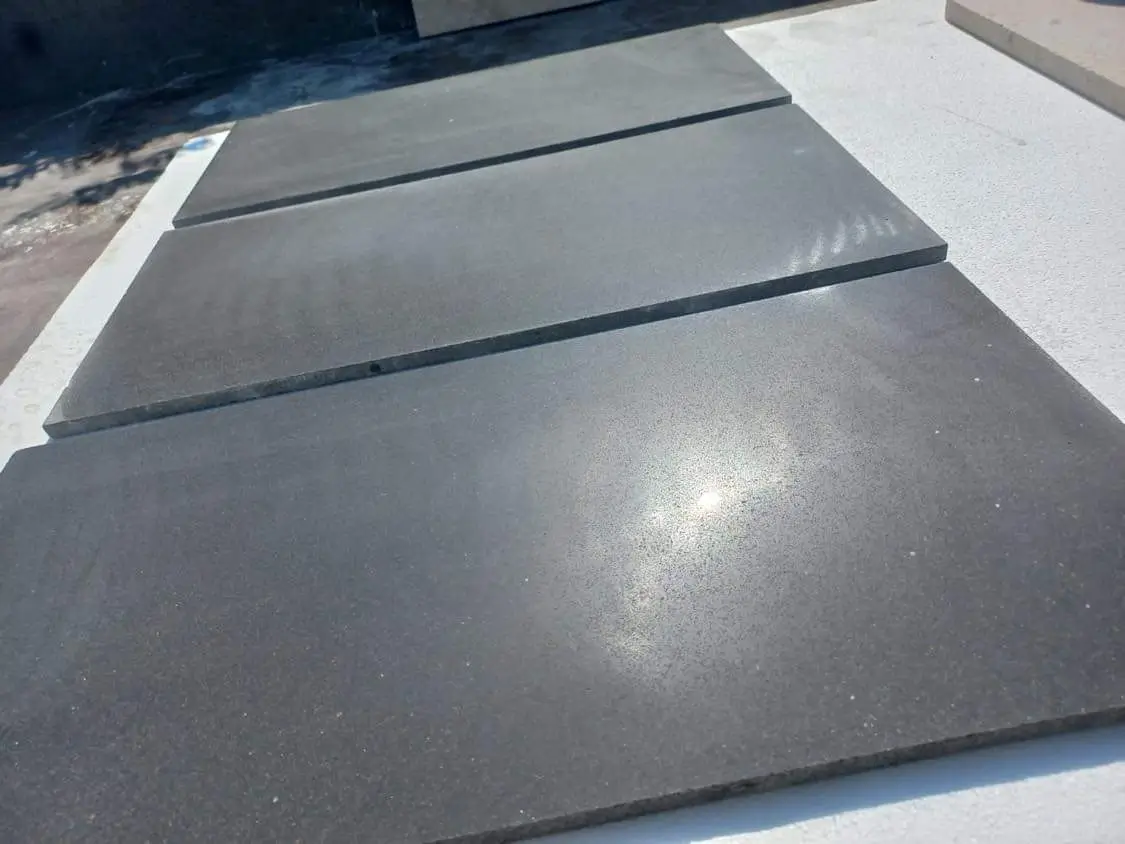
Scottsdale’s high-end residential market holds specification standards that exceed typical residential parameters — homeowners in this market are accustomed to premium material performance and have low tolerance for callbacks within the first five years. Limestone paving slabs for Scottsdale luxury outdoor living spaces typically run 1.5 to 2 inches thick, with pattern layouts reviewed against the architectural drawings rather than field-improvised. The aged limestone finish, rustic paving surfaces character, and Scottsdale textured stone aesthetic expectations in this market demand material sorted for consistent color banding and texture depth. At Citadel Stone, we maintain dedicated warehouse inventory of tumbled limestone stock sorted specifically for Scottsdale luxury project specifications, with truck delivery windows coordinated around construction site access schedules.
Final Field Notes
Tumbled limestone paving Scottsdale projects reward careful upfront specification work with installations that look better at year ten than they did at year one — the aged limestone finish deepens authentically with weathering in ways that manufactured surfaces cannot replicate. Your specification package should cover base preparation depth relative to caliche conditions, joint spacing calibrated to Arizona thermal differentials, sealer type and interval for your specific exposure, and material thickness matched to use category. These aren’t generic guidelines; they’re the variables that separate the 25-year installations from the ones that require partial replacement at year seven.
Arizona vintage look projects also benefit from coordinating your material procurement timeline carefully — tumbled limestone in the specific color and texture range suitable for Scottsdale luxury projects has longer lead times than commodity paving stock, and warehouse inventory fluctuates based on quarry production schedules. Confirming full quantity availability before your installation date prevents the mid-project lot change that creates visible color inconsistency. For Scottsdale outdoor environments where aesthetic continuity is as important as structural performance, the rustic paving surfaces character you’re specifying deserves that procurement discipline. As your project scope expands to cover complementary outdoor areas across your Arizona property, Cream limestone paving suited for Phoenix outdoor environments represents another dimension of Arizona hardscape specification worth reviewing alongside your tumbled limestone selections. We act as a one-stop-shop for limestone paving slabs for sale in Arizona including sealers and setting materials.