
When you’re selecting pavers for Phoenix installations, you face a critical decision that affects both project performance and client satisfaction for decades. The comparison between Travertine vs concrete Phoenix heat performance reveals substantial differences in thermal behavior, surface temperature management, and long-term durability under extreme desert conditions. Understanding how these materials respond to 115°F air temperatures and direct solar radiation exceeding 2,000 BTU per square foot helps you make specification decisions that prevent callbacks and ensure occupant comfort.
Phoenix’s unique climate creates testing conditions that amplify material performance differences. You’ll encounter temperature swings of 40-50°F between day and night during spring and fall, while summer brings sustained heat that exposes weaknesses in material selection. When evaluating Travertine vs concrete Phoenix heat characteristics, you need to account for thermal mass behavior, albedo effects, and how porosity influences surface temperature dynamics in ways that dramatically affect barefoot comfort zones.
Thermal Mass Performance Differences
The fundamental distinction in Travertine vs concrete Phoenix heat performance starts with thermal mass properties. Concrete exhibits higher density (typically 140-150 pounds per cubic foot) compared to travertine’s 135-145 pounds per cubic foot, but this doesn’t tell the complete story. You need to understand how porosity interacts with thermal conductivity to predict real-world surface temperatures.
Travertine’s interconnected pore structure (typically 3-8% porosity) creates air pockets that function as thermal insulators. When you specify travertine for pool decks or outdoor living spaces, you’re selecting material that maintains lower surface temperatures despite absorbing similar solar radiation. Field measurements across Phoenix installations show travertine surfaces running 12-18°F cooler than comparable concrete pavers during peak afternoon hours. This difference matters significantly when your clients walk barefoot from pool to patio.
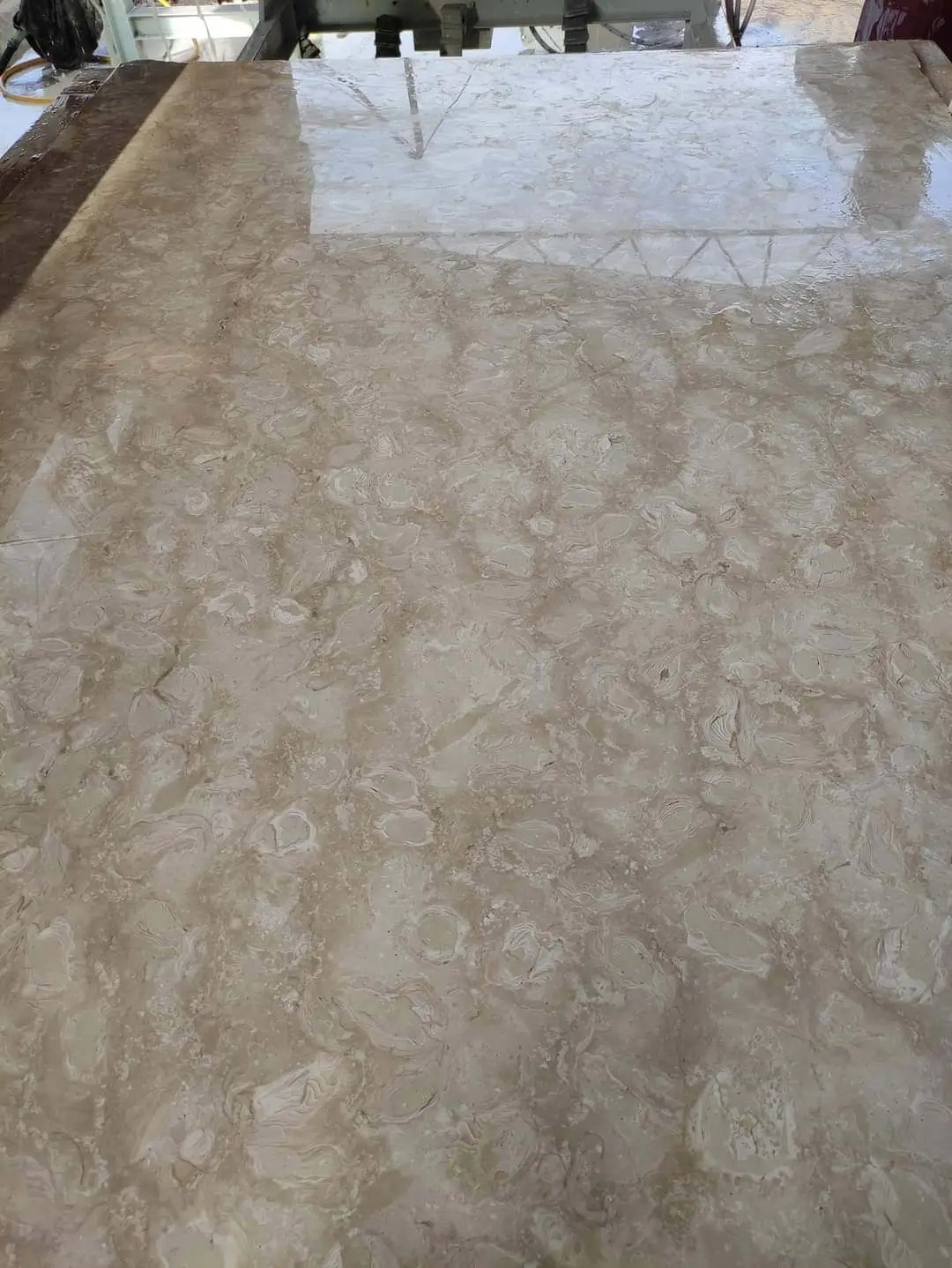
Concrete’s denser matrix conducts heat more efficiently into the material body, creating thermal storage that releases slowly after sunset. You’ll notice concrete patios remain uncomfortably warm until 10 PM or later during summer months, while travertine installations cool within 90 minutes of direct sun exposure ending. This thermal lag time affects outdoor space usability patterns that your residential clients value highly.
Albedo and Solar Reflectance Factors
Surface reflectance plays a decisive role when comparing paver heat comparison Arizona materials. Light-colored travertine exhibits albedo values between 0.55-0.70, meaning it reflects 55-70% of incoming solar radiation. Standard concrete pavers typically measure 0.35-0.45 albedo, absorbing substantially more solar energy that converts directly to surface heat.
When you specify ivory or light beige travertine for Arizona installations, you’re leveraging natural color properties that reduce solar heat gain without requiring surface treatments. The material’s inherent light tones come from calcium carbonate composition, providing stable reflectance that doesn’t degrade with UV exposure. You should recognize this as a permanent performance characteristic rather than applied finish that requires maintenance.
- You gain 15-25°F lower surface temperatures with light travertine compared to gray concrete pavers
- Your material selection directly impacts adjacent air temperatures by 3-5°F in covered outdoor areas
- You’ll see reduced HVAC loads for adjacent interior spaces when exterior hardscape reflects rather than absorbs solar radiation
- Your clients experience extended usability hours for outdoor spaces during Phoenix’s 5-month extreme heat season
Concrete pavers can be manufactured in lighter colors, but you need to account for how cement composition limits achievable albedo. Even “white” concrete pavers rarely exceed 0.50 reflectance due to gray Portland cement content. Pigment additions increase material cost while travertine achieves superior reflectance naturally.
Surface Texture and Comfort Considerations
Beyond bulk temperature differences in Travertine vs concrete Phoenix heat performance, surface texture influences barefoot comfort significantly. Travertine’s natural vein structure and typical tumbled or brushed finishes create micro-texture that reduces contact area between foot and paver surface. You’re specifying material that minimizes heat transfer at the critical interface where occupants actually experience temperature.
Smooth-finished concrete pavers create maximum contact area, conducting stored heat efficiently into bare feet. Even when bulk temperatures measure similarly, perceived comfort differs substantially. Your clients will report travertine feels 8-12°F cooler than actual surface temperature measurements due to this contact area reduction. For pool deck applications where barefoot traffic is constant, this textural advantage becomes a primary selection criterion.
The concrete alternative pavers available in today’s market attempt to replicate natural stone textures, but manufacturing processes create different results. Stamped or molded surface patterns in concrete don’t provide the genuine micro-relief present in natural travertine. You should evaluate actual samples under load to assess real contact area rather than relying on visual texture appearance.
Moisture and Evaporative Cooling Properties
Travertine’s porosity delivers an additional thermal advantage through evaporative cooling effects. When you specify this material for Phoenix outdoor materials applications, you’re selecting pavers that absorb and retain moisture from irrigation overspray, morning dew, or periodic hosing. This moisture evaporates throughout the day, drawing heat from the stone surface through phase change thermodynamics.
Field observations show properly maintained travertine installations in Phoenix landscapes remain 6-10°F cooler than adjacent concrete surfaces during afternoon hours when evaporative processes are active. You need to account for this when designing irrigation systems and maintenance protocols. Strategic water application during early morning hours enhances cooling performance without creating slip hazards or excessive water consumption.
Concrete’s lower porosity (typically 1-3% for quality pavers) limits moisture absorption and evaporative cooling potential. You’ll find concrete alternative pavers perform essentially as heat sinks during peak temperature periods, with minimal opportunity for passive cooling. When evaluating summer heat resistance capabilities, this evaporative factor contributes measurably to occupant comfort outcomes.
Thermal Expansion and Joint Requirements
Both materials expand with temperature increases, but coefficient differences affect your specification approach when comparing Travertine vs concrete Phoenix heat performance. Travertine exhibits thermal expansion around 5.3 × 10⁻⁶ per °F, while concrete typically measures 6.0-7.0 × 10⁻⁶ per °F. These seemingly small differences accumulate across large installations.
For a 20-foot patio section experiencing 80°F temperature swings (common in Phoenix spring/fall), concrete expands approximately 0.12 inches while travertine expands roughly 0.085 inches. You should specify joint spacing accordingly to prevent edge spalling and lippage development. Concrete installations require expansion joints every 12-15 feet in full sun exposure areas, while travertine tolerates 15-18 foot spacing.
- Your joint details must accommodate material-specific expansion rates to prevent installation failures
- You’ll see fewer maintenance issues with travertine due to lower expansion forces
- Your specification should require polymeric sand rated for applicable temperature ranges
- You need to verify that base materials provide adequate drainage to prevent subsurface expansion issues
Joint width recommendations differ between materials. You should spec 3/16 inch joints for travertine installations versus 1/4 inch for concrete pavers in Phoenix heat exposure conditions. This affects pattern appearance and sand retention performance over the installation lifecycle.
Long-Term Durability Factors
When you evaluate Travertine vs concrete Phoenix heat performance across 20-30 year service lives, material stability under thermal cycling becomes critical. Travertine’s natural formation through precipitation processes creates material that has already undergone thousands of years of thermal stress. You’re specifying stone that demonstrates proven stability under temperature variations.
Concrete pavers represent manufactured products with engineered properties. Quality varies significantly based on mix design, curing protocols, and manufacturing consistency. You’ll encounter products ranging from 6,000 PSI to 10,000+ PSI compressive strength, with corresponding variation in freeze-thaw resistance, abrasion resistance, and thermal cycling performance. For Phoenix outdoor materials selection, you need to verify that specified concrete pavers meet minimum 8,000 PSI compressive strength with water absorption below 5%.
UV exposure degrades concrete binders gradually over decades of Phoenix sun exposure. You should anticipate surface dusting and minor color fading after 15-20 years with standard concrete pavers. Travertine’s calcite composition remains stable under UV exposure, maintaining surface integrity throughout service life. This difference affects long-term appearance retention that impacts property values.
Installation Complexity Considerations
Field installation requirements differ between materials in ways that affect project costs and timeline. Travertine’s natural dimensional variation (typically ±3mm thickness tolerance) requires skilled installers who can accommodate irregularities through base preparation and bedding techniques. You’re specifying premium material that demands corresponding installation expertise.
Concrete pavers offer tighter dimensional tolerances (±2mm typical), simplifying installation processes. Your installation crews can work faster with manufactured pavers, potentially offsetting higher material costs when comparing paver heat comparison Arizona options. However, you should recognize that thermal performance advantages of travertine often justify extended installation time for high-value residential projects.
Base preparation requirements remain similar for both materials. You need 6-8 inches of compacted aggregate base with proper drainage provisions regardless of paver selection. Edge restraint specifications differ slightly – travertine’s lower expansion forces allow standard aluminum or plastic restraints, while concrete’s higher expansion may require commercial-grade restraint systems for installations exceeding 500 square feet.
For specialized applications requiring access to diverse material options, sourcing from a comprehensive travertine inventory yard in Pima County ensures you can evaluate actual product samples under site lighting conditions before finalizing specifications. This verification step prevents color and texture surprises during installation.
Maintenance Requirements Comparison
Long-term maintenance demands affect total cost of ownership when you evaluate concrete alternative pavers versus natural stone. Travertine requires periodic sealing (every 2-3 years) to maintain stain resistance and enhance color depth. You should specify penetrating sealers rather than film-forming products that trap moisture and create delamination issues in Phoenix heat.
Concrete pavers benefit from sealing but don’t require it for structural integrity. You’ll find that unsealed concrete in Phoenix installations shows more rapid color fading and surface wear compared to sealed products. When you factor sealing into lifecycle maintenance, cost differences between materials narrow considerably.
- You need to plan for professional power washing every 18-24 months for both materials
- Your maintenance specifications should address polymeric sand replenishment annually
- You’ll encounter efflorescence more frequently with concrete pavers in areas with high irrigation exposure
- Your clients require education about appropriate cleaning chemicals that won’t damage stone or concrete surfaces
Stain resistance differs between materials. Travertine’s porosity makes it more susceptible to oil-based stains from grilling or automotive fluids. You should recommend prompt cleanup protocols and appropriate sealers for high-risk areas. Concrete’s denser structure resists oil penetration better but shows surface staining more visibly due to color contrast.
Cost Analysis and Project Budgeting
Material costs represent one component of total project investment when comparing Travertine vs concrete Phoenix heat options. Premium travertine pavers typically run $12-18 per square foot for material only, while quality concrete pavers range $6-12 per square foot. You need to present complete installed costs including base preparation, labor, edge details, and sealing to provide accurate budget guidance.
Installation labor for travertine adds $4-6 per square foot due to material handling requirements and dimensional accommodation needs. Concrete paver installation typically costs $3-4 per square foot for experienced crews working with modular products. Your total installed costs show travertine at $18-26 per square foot versus concrete at $10-17 per square foot for comparable quality tiers.
These cost differences deserve context within project value propositions. For luxury residential applications where summer heat resistance and thermal comfort drive material selection, travertine’s performance advantages justify premium pricing. You should quantify extended outdoor space usability hours and reduced surface temperatures as tangible benefits that enhance property enjoyment and resale value.
Color Stability and Aesthetic Longevity
Appearance retention over Phoenix’s intense UV exposure affects material selection for design-focused projects. Travertine’s natural coloration comes from mineral content within the stone matrix, providing color stability that extends throughout material thickness. When you specify travertine, you’re selecting pavers that maintain appearance integrity even as surfaces wear microscopically over decades.
Concrete pavers achieve color through pigment additions to cement mix or applied surface treatments. Integral color concrete provides better longevity than surface-colored products, but all concrete pavers show gradual fading under Phoenix sun exposure. You should anticipate 15-25% color shift over 15-20 years with quality concrete products, more with economy-grade pavers.
Natural variation in travertine creates visual interest that many designers prefer over concrete’s uniform appearance. You’ll find that travertine installations develop character over time as traffic patterns create subtle wear highlighting natural veining. Concrete pavers show wear as color loss and surface degradation rather than developing patina. This aesthetic evolution matters significantly for high-end residential projects where clients value authentic material aging.
Slip Resistance and Safety Factors
Surface safety under both dry and wet conditions requires evaluation when comparing Phoenix outdoor materials. Travertine’s natural texture provides inherent slip resistance, with tumbled finishes typically achieving 0.52-0.60 DCOF (Dynamic Coefficient of Friction) wet ratings. You’re specifying material that meets ADA accessibility requirements without additional treatment.
Concrete pavers require surface texturing to achieve comparable slip resistance. Smooth-finished concrete measures 0.35-0.45 DCOF wet, inadequate for pool decks and high-traffic outdoor areas. You should specify broom-finished, shot-blasted, or textured-mold concrete pavers for wet-exposure applications, which increases material costs toward travertine pricing levels.
- You must verify slip resistance ratings match application requirements before finalizing specifications
- Your pool deck details require minimum 0.50 DCOF wet ratings per most jurisdiction codes
- You’ll find that textured concrete surfaces trap dirt and organic material more readily than travertine’s natural relief
- Your maintenance protocols need to address cleaning methods that preserve slip resistance over time
Algae and biofilm growth under Phoenix’s seasonal moisture conditions affects slip resistance maintenance. Travertine’s porosity actually helps by allowing surface moisture to evaporate quickly, reducing sustained wet conditions that promote growth. Concrete’s denser surface can remain damp longer in shaded areas, requiring more frequent cleaning to maintain safe conditions.
Citadel Stone — Best Travertine Stone Arizona Specification Guidance
When you consider premium travertine for demanding Arizona installations, understanding regional climate variations helps optimize material selection. At Citadel Stone, we provide technical guidance for hypothetical applications across Arizona’s diverse environmental zones, from high-desert communities to low-elevation valley developments. This section outlines how you would approach specification decisions for three representative cities where summer heat resistance and thermal performance drive material selection priorities.
Your specification process should account for elevation differences, humidity variations, and local soil conditions that affect installation requirements. These factors influence base preparation details, joint spacing recommendations, and sealing protocols that ensure long-term performance. You’ll find that travertine’s natural properties adapt effectively to Arizona’s range of climatic conditions when you match product characteristics to site-specific requirements.
Flagstaff Applications
At 7,000 feet elevation, you would specify travertine for Flagstaff installations with freeze-thaw resistance as the primary performance criterion. Material selection should emphasize lower porosity ranges (3-5%) to minimize water absorption while maintaining thermal comfort benefits. You’d recommend 3 inches minimum thickness for vehicular applications and 1.5 inches for pedestrian areas, with base depths increased to 8-10 inches for proper drainage and frost protection. Your joint spacing would accommodate both thermal expansion and freeze-thaw movement, typically 1/4 inch filled with polymeric sand rated to -40°F. At Citadel Stone, we would guide selections toward Turkish or Persian travertine sources known for superior freeze-thaw testing results.
Sedona Design Considerations
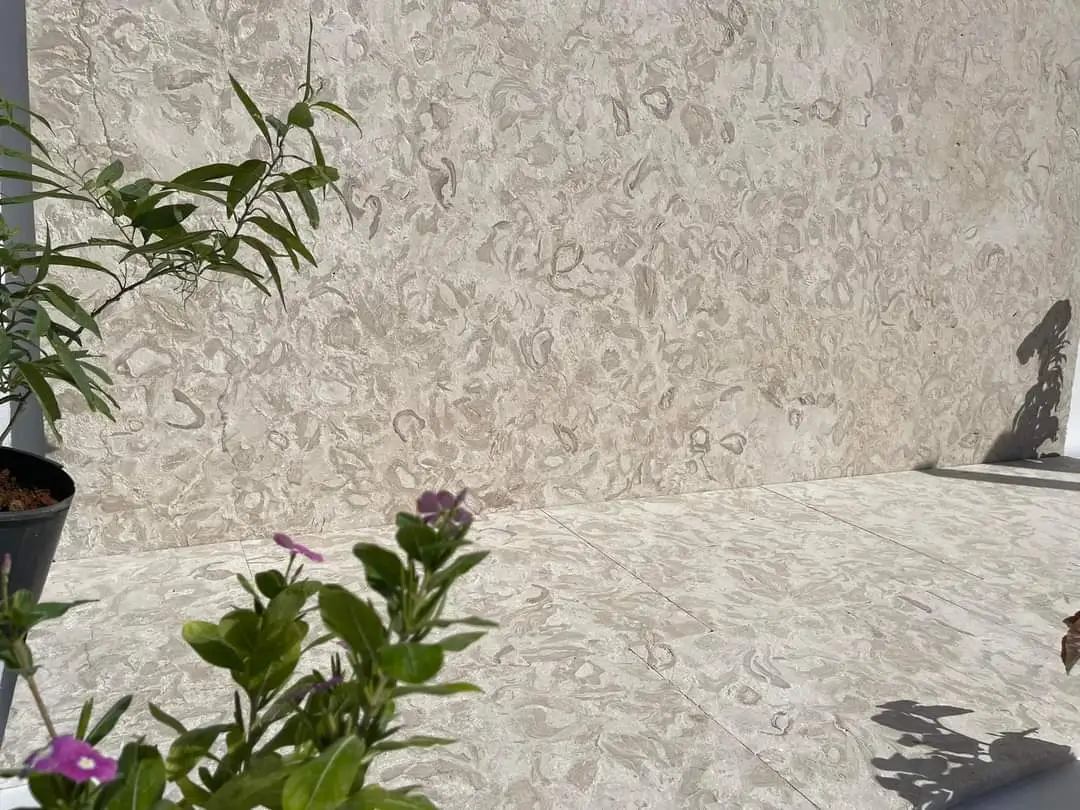
For Sedona’s unique red rock landscape context, you would specify travertine in warm beige and ivory tones that complement rather than compete with surrounding geology. Applications at 4,500 feet elevation experience moderate temperature ranges where you’d balance freeze-thaw concerns with summer heat performance. Material thickness recommendations would follow standard 1.5-2 inch specifications for residential patios and pool decks, with particular attention to color consistency across shipments to maintain aesthetic harmony with site context. You should plan for enhanced UV exposure at this elevation, though travertine’s natural color stability performs well without additional treatments. Your installation details would address red soil staining potential through proper base separation layers and edge details that prevent soil migration.
Peoria Heat Performance
In Peoria’s low-desert environment where summer temperatures regularly exceed 115°F, you would specify light-colored travertine to maximize albedo benefits and minimize surface temperatures. Your material selection should prioritize proven summer heat resistance through proper porosity ranges (5-7%) that enable evaporative cooling while maintaining structural integrity. Pool deck applications represent ideal use cases where you’d specify tumbled or brushed finishes for optimal slip resistance and thermal comfort. You should recommend maintenance protocols including early-morning water application during peak summer months to enhance cooling performance. Base preparation would account for expansive clay soils common in this area, requiring geotextile separation layers and proper compaction verification. At Citadel Stone, we typically recommend ivory select grade material for Peoria installations where barefoot comfort drives specification priorities.
Professional Specification Practices
Your approach to documenting Travertine vs concrete Phoenix heat performance requirements affects installation quality and project outcomes. Complete specifications should address material properties, installation methods, and quality verification procedures that protect both your professional reputation and client interests. You need to include measurable criteria rather than subjective descriptions that create interpretation disputes during construction.
Material specifications should define acceptable ranges for compressive strength (minimum 8,000 PSI for travertine), water absorption (3-8% depending on climate), and dimensional tolerances (±3mm thickness typical). You should specify finish type (tumbled, honed, brushed) with reference samples retained for field verification. Color variation expectations require careful documentation – travertine naturally exhibits 20-30% tonal range within single shipments that you must communicate clearly to clients before material ordering.
- You must include thermal expansion coefficients and required joint spacing in your specification documents
- Your installation section should reference ICPI (Interlocking Concrete Pavement Institute) standards adapted for natural stone
- You need to specify base preparation requirements including material type, compaction levels, and verification testing
- Your quality control section should define inspection hold points and acceptance criteria before installation proceeds
Edge detail specifications deserve particular attention. You should provide construction details showing proper restraint installation, base extension beyond paved area, and transition conditions where travertine meets other materials. These details prevent edge failures that compromise installation integrity and create maintenance problems.
Making Informed Material Decisions
Your material selection process should balance thermal performance requirements with project budgets, aesthetic goals, and client usage patterns. When comparing Travertine vs concrete Phoenix heat characteristics, you’re evaluating both quantifiable performance metrics and subjective comfort factors that determine outdoor space value to property owners.
For luxury residential projects where budget allows premium material investment, travertine delivers measurable advantages in surface temperature reduction, thermal comfort, and aesthetic longevity that justify cost premiums. You should recommend travertine for pool decks, primary outdoor living spaces, and high-visibility areas where material quality affects property perception and resale value. These applications benefit most from travertine’s superior summer heat resistance and natural cooling properties.
Commercial projects and production residential developments may prioritize concrete alternative pavers for cost containment while still achieving acceptable thermal performance. You can specify light-colored, textured concrete products that approach travertine’s heat management capabilities at lower investment levels. Your recommendations should account for long-term maintenance costs that partially offset initial material savings.
Mixed-material strategies offer compromise solutions where you specify travertine for high-impact, high-contact areas while using concrete pavers for secondary spaces. This approach optimizes budget allocation while ensuring thermal comfort in zones where occupants spend most time. You should detail proper transitions between materials to maintain installation integrity and visual coherence.
Project Planning Essentials
Your project timeline development must account for material lead times that differ between travertine and concrete pavers. Natural stone typically requires 3-6 week lead times from order confirmation to warehouse availability, depending on source country and shipping logistics. You should verify current stock levels and container schedules before committing to project timelines that assume immediate availability.
Concrete pavers generally offer shorter lead times (1-3 weeks) due to domestic manufacturing, though custom colors or specialty products may extend this timeframe. Your procurement strategy should include contingency time for material delays, particularly during spring and fall peak construction seasons when both natural stone and manufactured products experience high demand.
Site access for material delivery requires early evaluation. Travertine shipments arrive on flatbed trucks requiring adequate turning radius and vertical clearance for forklift offloading. You need to verify that site conditions accommodate 53-foot trailer access or plan for shuttle truck transfers that increase delivery costs. Warehouse coordination becomes critical when project schedules demand precise delivery timing to avoid material storage issues.
Installation scheduling should account for weather constraints. You’ll achieve best results installing both materials when ambient temperatures range between 50-85°F, allowing proper base compaction and bedding sand placement. Phoenix’s intense summer heat actually complicates installation because base materials dry too quickly for optimal compaction. Your project schedule should target spring or fall installation windows when possible, or plan for early-morning work periods during summer months.
Performance Verification and Quality Control
Your quality assurance program should include verification testing at critical project phases. Base preparation requires compaction testing to confirm 95% modified Proctor density before paver installation proceeds. You can’t visually verify adequate compaction – nuclear density gauge or plate load testing provides quantifiable confirmation that prevents future settlement problems.
Material acceptance procedures should include visual inspection of delivered pavers against approved samples. You need to verify color consistency, dimensional tolerances, and finish quality before installation begins. Catching material deficiencies at delivery stage prevents costly removal and replacement after installation completion.
- You should retain 5-10% additional material beyond calculated quantities for future repairs and replacements
- Your punch list inspection must verify proper joint sand installation and initial compaction
- You need to document any installation deviations from specifications while work is accessible
- Your client education should include maintenance requirements and recommended service intervals
Post-installation verification includes checking for proper drainage function, confirming joint sand placement, and evaluating surface plane tolerance. You should walk entire installations to identify and correct lippage, improper joint widths, or edge conditions requiring adjustment. These details affect long-term performance and client satisfaction significantly.
Essential Project Considerations
Your comprehensive evaluation of Travertine vs concrete Phoenix heat performance should integrate thermal characteristics with project-specific requirements including budget constraints, aesthetic goals, and intended usage patterns. You’ve seen how material properties affect surface temperatures, thermal comfort, and long-term durability under Arizona’s demanding climate conditions. These performance differences justify specification decisions that balance initial investment against lifecycle value and occupant satisfaction.
Professional practice requires you to present complete cost analyses that include installation labor, maintenance requirements, and expected service life rather than comparing material costs alone. You’ll find that travertine’s premium pricing often provides better value propositions for high-end residential applications where thermal performance directly affects outdoor space usability during Phoenix’s extended summer season. For additional guidance on specialty travertine products and surface finishes, explore Textured travertine pavers for rustic Arizona country home exteriors before you finalize material selections for projects demanding distinctive aesthetic character. Builder networks access Citadel Stone’s preferred travertine pavers wholesale in Arizona contractor-only rates.