
Thermal cycling between Phoenix summers and winter nights pushes travertine paving slab problems Arizona solutions to the top of every homeowner’s maintenance list — especially when you’re watching a once-beautiful patio develop cracks, pitting, and surface erosion within just a few seasons. The real culprit isn’t usually the stone itself; it’s the combination of extreme UV exposure, alkaline desert soils, and installation details that weren’t calibrated for Arizona’s specific conditions. Understanding what’s actually happening beneath and across your slab surface is the first step toward a fix that lasts.
Why Travertine Fails in Arizona’s Climate
Travertine is a sedimentary limestone with an interconnected pore structure that behaves very differently under sustained 115°F surface temperatures than it does in the Mediterranean climates where most installation guidelines were originally written. Your slab is absorbing solar radiation, expanding, and then contracting rapidly after sunset — a daily thermal swing that can exceed 50°F in Phoenix-area suburbs. That repeated mechanical stress is what initiates micro-fractures at joint edges long before you see visible cracking across the face.
The porosity that makes travertine visually appealing also makes it a direct pathway for moisture, minerals, and alkaline compounds from desert soils. In many parts of the Valley, caliche layers sit close to the surface, and when irrigation water pulls calcium carbonate upward through the stone, you get efflorescence and surface spalling that homeowners often misread as erosion.
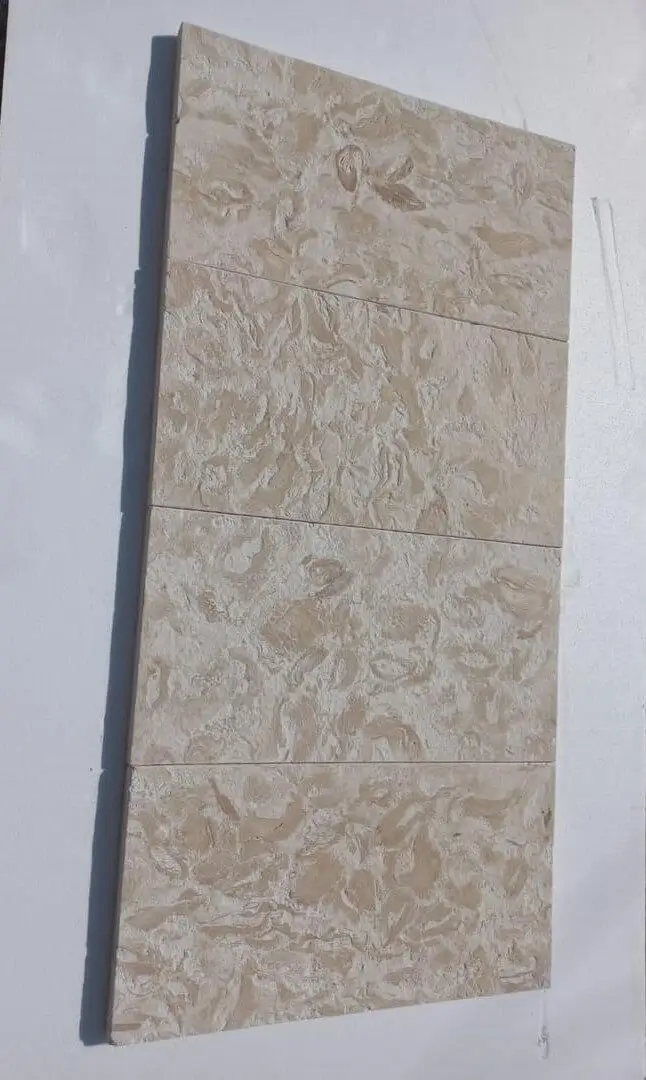
Fixing Cracked Travertine Patio Pavers in Arizona
Fixing cracked travertine patio pavers in Arizona starts with diagnosing whether you’re dealing with structural cracking or surface crazing — they look similar but require completely different approaches. Structural cracks typically run through the full thickness of the slab and follow lines between pavers or across a single large tile, indicating base movement or inadequate joint spacing. Surface crazing, by contrast, is a network of shallow hairline cracks that stay within the top 2–4mm of the stone face, usually caused by thermal shock or chemical damage from pool chemicals or alkaline cleaners.
- Structural cracks wider than 3mm need full slab removal, base re-compaction to 95% Proctor density, and replacement with a matching slab cut to accommodate a 1/4-inch expansion joint
- Hairline surface cracks under 1mm respond well to penetrating epoxy consolidants — apply two coats before sealing, allowing 24-hour cure between applications
- Cracks at slab corners almost always point to inadequate edge support or missing perimeter restraint — fix the edge condition before patching or you’ll be back doing this same repair in two seasons
- Color-matching patched areas in Arizona’s intense UV is genuinely difficult — tinted epoxy fillers drift noticeably after one summer, so a slightly understated neutral filler is usually more durable-looking long term
For projects in Gilbert, expansive clay soils beneath the aggregate base are a frequent driver of structural cracking — the clay swells with seasonal irrigation and contracts sharply in dry periods, creating a sub-base that moves even when the surface installation is technically correct. Addressing that soil condition with a geotextile separator fabric and a minimum 6-inch compacted aggregate base is the only reliable long-term fix for fixing cracked travertine patio pavers in Arizona where clay content is high.
Travertine Surface Erosion Repair Options for AZ Properties
Travertine surface erosion repair options AZ homeowners have access to range from simple sealer refreshes to full honing and resealing — and knowing which one fits your situation saves you significant cost. Erosion in Arizona’s outdoor context usually takes one of two forms: acid etching from improper cleaners or pool splashback, and abrasive wear from wind-blown silica sand, which is essentially sandpaper working against your surface every time the Sonoran Desert winds pick up.
- Acid-etched surfaces lose their polished or honed finish and develop a rough, chalky texture — a professional re-hone to 400-grit followed by a penetrating impregnator sealer restores both appearance and protection
- Abrasive wear from wind-driven sand is harder to reverse once it’s deep — prevention through an annual penetrating sealer is far more cost-effective than restorative grinding
- Travertine surface erosion repair options AZ contractors recommend most often include diamond-pad wet honing for medium erosion and resin-bonded fillers for voided travertine holes that have opened up under weathering
- Never use muriatic acid or standard concrete cleaners on travertine — they accelerate the exact erosion you’re trying to stop
At Citadel Stone, we inspect incoming travertine paver stock specifically for pre-existing voids and surface inconsistencies before it ships — because what arrives at your project site in good condition is far easier to maintain than material that starts with compromised surface integrity. Our warehouse quality checks include thickness tolerance verification to ±1/8 inch, which matters for Arizona slab installations where lippage creates both trip hazards and accelerated edge erosion.
Common Outdoor Travertine Paving Issues Across Arizona
Common outdoor travertine paving issues across Arizona break down into a predictable set of failure patterns that show up repeatedly across the Valley regardless of neighborhood or installer. Recognizing these patterns early is the difference between a straightforward repair and a full replacement project.
- Efflorescence — white mineral deposits migrating to the surface — is the most common complaint, particularly in new installations during the first two monsoon seasons
- Joint sand washout during monsoon rains leaves travertine slabs with no lateral restraint, accelerating cracking under foot traffic and thermal movement
- Staining from iron-rich desert soils creates rust-colored discoloration in unfilled travertine varieties that have open holes in contact with the base material
- Lifting or rocking slabs almost always trace back to inadequate base depth — Arizona’s desert soils need a minimum 4-inch compacted base for residential foot traffic, 6 inches for pool deck applications where water intrusion is constant
- UV-driven sealer failure typically shows as a whitish haze or peeling surface film — most topcoat sealers in Arizona need annual reapplication; penetrating impregnators hold 3–5 years under typical conditions
In Chandler, the combination of high summer heat and intensive residential irrigation creates particularly aggressive efflorescence cycles — you’ll see it most on north-facing surfaces where moisture lingers longer before evaporating. Addressing this means specifying a closed-cell filled travertine variety rather than the open-vein tumbled styles, and applying a silane-siloxane penetrating sealer before any moisture-laden soil contact occurs.
Identifying and Treating Staining Problems
Staining on outdoor travertine in Arizona falls into two categories that demand completely opposite treatments: organic stains and mineral stains. Treating them with the wrong product doesn’t just fail — it often makes the stain permanent by driving it deeper into the stone’s pore structure.
- Organic stains from leaves, berries, algae, and pool chemicals typically respond to an alkaline cleaner or hydrogen peroxide poultice — leave the poultice on for 12–24 hours under plastic sheeting to draw the stain out rather than in
- Iron oxide stains from desert soils need a diluted oxalic acid treatment (5% solution maximum) applied carefully, never left more than 5 minutes, and neutralized immediately with baking soda solution
- Rust staining from iron patio furniture is one of the most stubborn travertine problems — the iron oxidizes inside the pore structure and commercial rust removers aggressive enough to clear it often etch the surface simultaneously
- Pool chlorine discoloration is irreversible once it’s bleached the calcite crystals — prevention through a high-quality penetrating sealer is the only reliable strategy in pool deck applications
Test any cleaning solution on an inconspicuous slab before full application — travertine from different quarry sources responds differently to the same chemical, and any travertine paving slab problems Arizona solutions toolkit must always include a patch test as the first step.
Arizona Desert Travertine Paver Problem Prevention Guide
The most effective Arizona desert travertine paver problem prevention guide isn’t a single product recommendation — it’s a layered system approach that addresses the three primary failure mechanisms simultaneously: base movement, moisture intrusion, and UV-accelerated sealer degradation. Solving one in isolation won’t deliver long-term results.
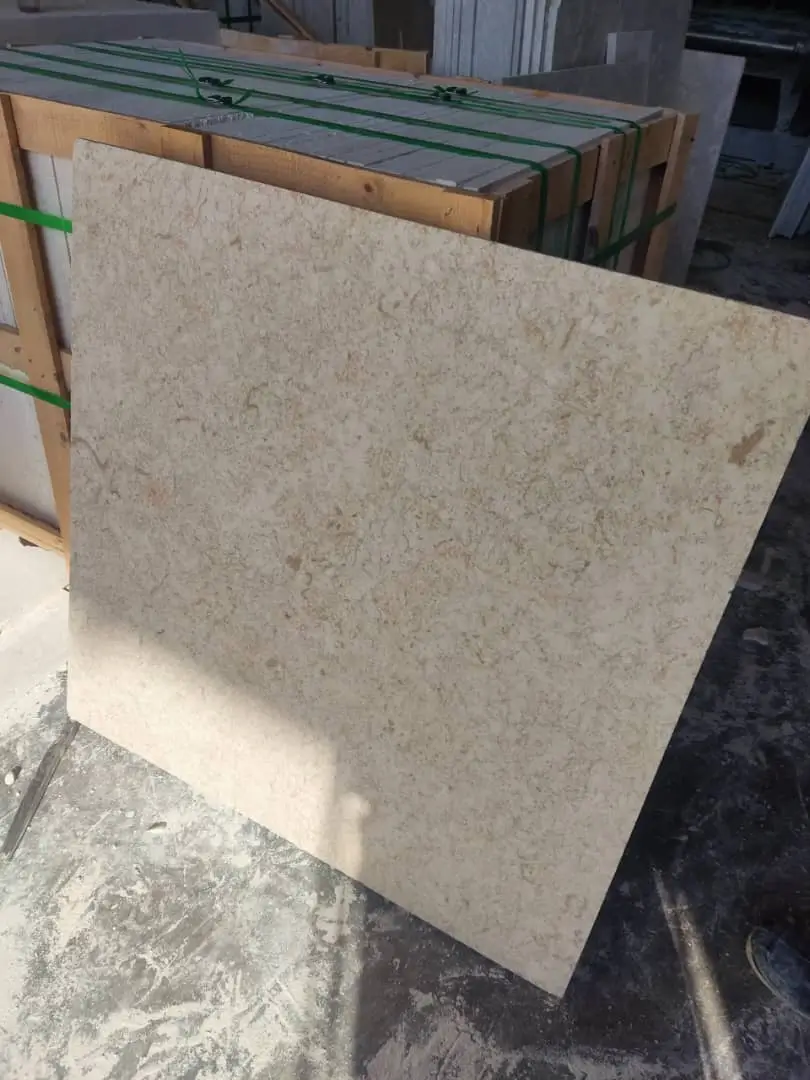
- Base preparation is non-negotiable: compact crushed granite or class II base material to 95% Proctor density, minimum 4 inches for patios, 6 inches for pool decks and driveways
- Expansion joints every 10–12 feet in Arizona conditions — not the 15–20 feet standard guidelines suggest — because your thermal delta is larger than those guidelines assume
- Install a silane-siloxane penetrating sealer before grouting and again after — the pre-grout coat prevents grout hazing from bonding into the pore structure permanently
- Specify filled travertine for any Arizona outdoor application where the surface will contact irrigated soil — open-vein travertine is beautiful but genuinely difficult to maintain without staining in alkaline desert conditions
- Use polymeric joint sand rather than standard sand — the polymer binders resist monsoon washout and reduce the joint replenishment cycle from annually to every 3–5 years
- Schedule annual sealer inspection in March before the UV intensity peaks — sealer failure is much cheaper to address before summer than after
Travertine paver suppliers in Arizona who stock material calibrated for local conditions — not generic Mediterranean-specification product — give you a meaningful head start on the prevention side. Verify that your supplier’s material meets ASTM C1528 absorption requirements of 12% or less for exterior applications; anything higher is a liability in Arizona’s moisture-cycling monsoon environment. You can review our Arizona travertine paving problem-fix options to see how specific material grades match up against the most common failure scenarios documented across Valley installations.
Sealing and Maintenance Schedules That Actually Work
Most travertine maintenance failures in Arizona don’t happen because homeowners skip sealing entirely — they happen because the sealer type chosen wasn’t matched to Arizona’s conditions. Topcoat acrylic sealers look great initially but fail within 12–18 months under Arizona UV, peeling in ways that trap moisture rather than repelling it. Penetrating silane-siloxane or fluoropolymer impregnators are the correct category for any exposed Arizona travertine paving application.
- Apply penetrating sealers in cooler morning conditions — surface temperatures above 90°F cause the carrier solvent to flash off before adequate penetration depth is achieved, leaving a surface film that performs like a topcoat rather than an impregnator
- Two thin coats outperform one heavy coat every time — the second coat fills gaps in the first’s coverage pattern without the bubbling that occurs from over-application
- Travertine paver suppliers in Arizona typically recommend re-sealing every 2–3 years for penetrating products in full sun, annually for shaded areas that retain moisture longer
- Clean thoroughly with a pH-neutral stone cleaner before sealing — residual alkaline cleaners or organic matter will interfere with sealer bonding and create blotchy results
For Peoria installations where pool decks are the primary application, the chlorine-laden splash zone demands a sealer with demonstrated resistance to hypochlorite — not all penetrating sealers are tested for this, and the product data sheet should explicitly list chlorinated water resistance as a confirmed performance characteristic.
When to Replace Rather Than Repair
Knowing when fixing cracked travertine patio pavers in Arizona crosses the line from repair into replacement territory saves you from throwing money at a deteriorating installation. The threshold isn’t just about crack count — it’s about whether the underlying base condition can support the repaired surface.
- Replace when more than 25–30% of your slabs show structural cracking — at that point, the base has moved systemically and patching individual slabs doesn’t address the root cause
- Replace when slabs are rocking under foot traffic — this indicates full base failure, and any repair sits on an unstable foundation that will undo the work within one or two seasons
- Repair is viable when damage is isolated to surface staining, sealer failure, or individual cracked slabs surrounded by stable pavers — contained problems have contained solutions
- Efflorescence alone, even severe efflorescence, is always a repair scenario rather than replacement — it’s a surface and sealer condition, not a structural one
Common outdoor travertine paving issues across Arizona that have been left unaddressed for multiple seasons often compound in ways that cross the replacement threshold — what started as joint sand washout leads to lateral movement, which leads to cracking, which opens pathways for moisture intrusion that accelerates base deterioration. Early intervention on any of the individual failure modes covered here is always the more economical path.
Final Notes
Travertine paving slab problems Arizona solutions ultimately come down to a system-level mindset rather than individual product fixes. Your base preparation, material selection, sealer choice, and maintenance schedule function as an integrated system — a gap in any one element puts stress on the others. Homeowners who approach travertine maintenance as a one-time sealing task consistently see faster deterioration than those who treat it as an annual inspection and maintenance cycle calibrated to Arizona’s specific climate demands.
Travertine is genuinely repairable across most failure modes, and a properly diagnosed and corrected Arizona desert travertine paver problem prevention guide approach can extend the functional life of an existing installation by 10–15 years without full replacement. For a broader look at how Arizona homeowners are using travertine to transform outdoor spaces — and the performance lessons those projects have generated — How Arizona Homeowners Transformed Backyards with Travertine provides real-world context worth reviewing as you plan your repair or prevention strategy. Citadel Stone helps Arizona homeowners address staining, surface erosion, and cracking in travertine pavers, offering prevention and repair products proven effective in Tucson, Chandler, and Tempe.