
Travertine pavers for Arizona outdoor patio projects demand a level of specification precision that most material guides simply don’t address — specifically, the relationship between Arizona’s 110°F surface temperatures and the thermal expansion behavior of calcium carbonate stone. Filled travertine paver selection for Arizona becomes a decisive factor not just in aesthetics, but in long-term joint integrity and surface stability. The margin between a 25-year installation and one that starts failing at year eight often traces back to decisions made before the first paver is set.
Why Travertine Performs in Arizona’s Extreme Heat
Natural stone patio slabs for Arizona homes need to manage two competing demands simultaneously: absorbing enough heat to stay thermally stable, and releasing it fast enough that barefoot comfort remains realistic. Travertine handles this better than porcelain or concrete alternatives because its interconnected pore structure actively dissipates heat rather than concentrating it at the surface. The difference becomes apparent within the first summer — travertine surfaces in direct Phoenix sun typically register 20–30°F cooler underfoot than equivalent concrete pavers under the same conditions.
- Thermal expansion coefficient for travertine runs approximately 4.7–5.3 × 10⁻⁶ per °F, which is meaningfully lower than concrete’s 5.5–6.5 range
- The porous microstructure allows moisture vapor to migrate through the stone rather than building hydrostatic pressure beneath it
- Natural cream and ivory tones reflect 55–65% of solar radiation, reducing heat gain compared to darker stone alternatives
- Compressive strength typically exceeds 8,000 PSI for quality-grade travertine, providing adequate structural performance for residential patio loads
The detail most specifiers miss is that travertine’s thermal performance advantage compounds with correct base preparation. A properly compacted aggregate base — minimum 4 inches in Phoenix basin soils — prevents the differential movement that creates lippage. Your base specification matters as much as your stone selection in Arizona conditions.
Filled vs. Unfilled Travertine for Arizona Patios
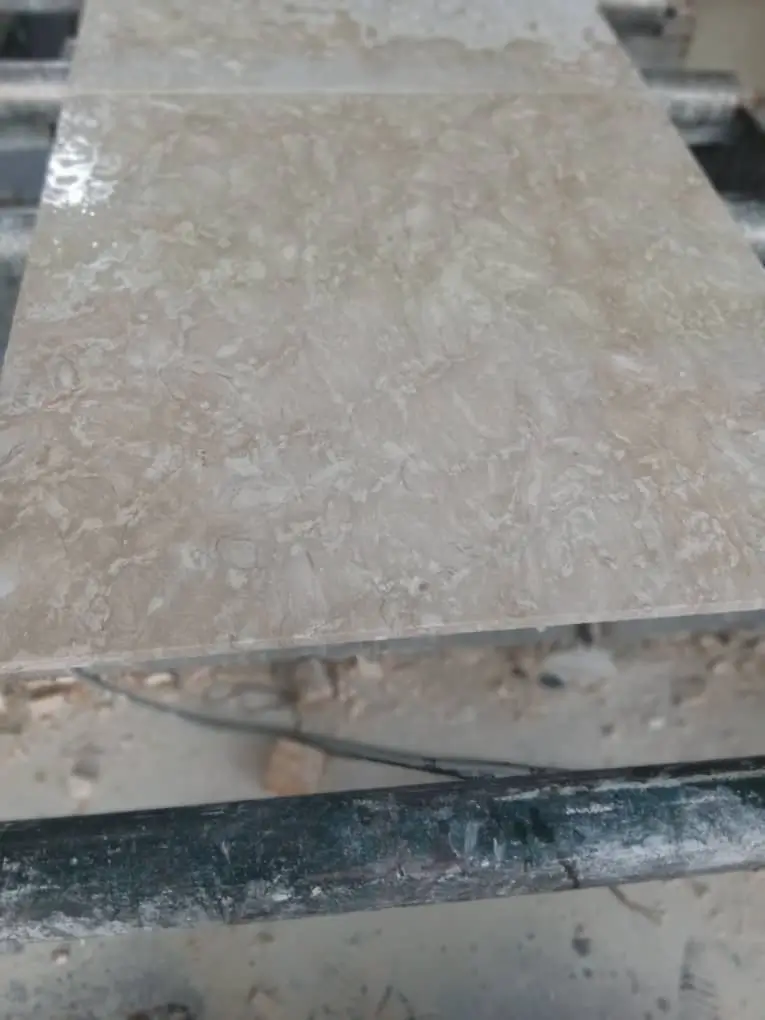
The filled-versus-unfilled decision carries more weight in Arizona than in any other domestic climate zone, and here’s the core reason: unfilled travertine’s natural voids collect desert grit, decomposed granite, and fine particulate at a rate that makes long-term maintenance genuinely challenging. Premium travertine outdoor surfaces in Arizona almost universally spec filled-and-honed or filled-and-brushed finishes for exterior applications specifically because of this debris accumulation behavior.
- Filled travertine uses epoxy resin or cementitious grout to seal voids before finishing — this is the standard for exterior patio applications in Arizona
- Unfilled travertine works well for covered patios with overhead protection but struggles on fully exposed surfaces in dust-heavy desert environments
- Honed finish provides a matte, non-reflective surface with DCOF values typically in the 0.60–0.75 range, meeting ADA slip resistance thresholds
- Brushed or tumbled finishes add micro-texture that improves wet grip — important near pool areas and for monsoon-season rain events
- Polished travertine is not recommended for Arizona outdoor patio applications — the reflective surface becomes dangerously slick when wet and accelerates glare discomfort at peak sun angles
Specify filled travertine with a brushed finish for any Arizona patio where barefoot traffic is expected. The texture differential between honed and brushed is subtle visually but meaningful underfoot, especially on the morning dew that occasionally forms even in desert climates during monsoon season.
Thickness and Sizing Specifications for Arizona Outdoor Patios
Exterior travertine paving options in Arizona typically run in two commercial thicknesses: 1¼ inch (30mm) and 1½ inch (40mm). For residential patios on prepared aggregate bases, 1¼ inch performs adequately under pedestrian loads. The 1½ inch specification becomes necessary when dealing with heavy outdoor furniture, planters exceeding 200 lbs, or any light vehicle access — even golf carts create point loads that stress thinner stone over time on sandy Arizona substrates.
Format selection affects thermal behavior in ways that aren’t obvious upfront. Larger format pavers — 24×24 or 18×36 — create fewer joints, which reduces grout maintenance but requires tighter dimensional tolerancing during installation. Request calibrated or gauged travertine when specifying large-format pieces, because uncalibrated natural stone can vary by up to 3mm in thickness across a single piece, creating lippage that no amount of installation skill fully corrects.
- 12×12 format: easiest to install with consistent joints, good for complex patio shapes with cuts
- 18×18 format: popular balance of scale and manageability, strong visual impact in medium-sized patios
- 24×24 format: best visual impact for open rectangular patios, requires skilled installation and calibrated stone
- 18×36 plank format: contemporary look that works particularly well with modern Arizona architecture
- Mixed-format Versailles pattern: four-piece pattern that creates formal European aesthetic, requires precise base levelness
Sealing Requirements in Arizona’s Desert Climate
Arizona’s UV intensity accelerates sealer degradation at a rate not reflected in manufacturer spec sheets, which are almost always based on temperate climate testing. A penetrating impregnator sealer that carries a 10-year rating in a mid-Atlantic climate will realistically perform for 5–7 years in Phoenix or Scottsdale conditions before reapplication is warranted. Testing shows the UV index at Phoenix’s latitude degrades silane-siloxane chemistry roughly 30–40% faster than identical products experience in comparable northern climates.
Your sealing protocol should begin with a clean, dry surface — and in Arizona this means verifying substrate moisture content is below 0.5% before application. Even desert soils retain capillary moisture that migrates through stone, and sealing over moisture traps vapor beneath the surface, causing efflorescence and eventually spalling at the fill material in filled travertine pavers. Most field failures in Arizona travertine patio projects trace back to premature sealing after installation, not material defects.
- Apply first sealer coat no sooner than 48–72 hours after grouting, longer if ambient humidity exceeds 30% (common during July–September monsoon season)
- Two coats of penetrating impregnator sealer provide better performance than one heavy coat — thin application allows better pore penetration
- Color-enhancing sealers enrich travertine’s natural amber and gold tones but require reapplication more frequently than clear formulations
- Reapply sealer on a 5-year cycle minimum in Phoenix-area climates, 6–7 year cycle in Tucson’s slightly milder UV environment
Joint Spacing and Expansion in Desert Conditions
Standard installation guides recommend 1/16 to 1/8 inch joints for travertine exterior applications — those numbers work in cooler climates but need adjustment for Arizona conditions. Specify minimum 3/16 inch joints for fully exposed Arizona patio installations, and increase that to ¼ inch at any transition to a fixed structure (house wall, step riser, raised planter). The reasoning is straightforward: at peak summer temperatures, stone and substrate are expanding simultaneously, and tight joints leave no tolerance for that movement.
Expansion joints deserve particular attention in Arizona patio design. Industry practice calls for full-depth expansion joints every 10–15 feet in both directions, filled with a polyurethane or silicone sealant rather than grout. In Arizona’s temperature swing of 40°F+ between January nights and July afternoons, cumulative expansion cycles stress grouted joints in ways that moderate climates never generate. Skipping proper expansion joints is the single most common reason cracked grout and lippage appear on otherwise well-specified travertine patio installations.
Color and Finish Selection for Arizona Patios
Exterior travertine paving options in Arizona naturally favor lighter colorways — and this is genuinely functional, not just aesthetic preference. Classic ivory, light walnut, and silver travertine in the 70–80 Solar Reflectance Index range keep surface temperatures manageable through the summer months. Darker travertine varieties like Noce or Walnut travertine are gorgeous materials, but surface temperatures can reach 140–150°F in direct Phoenix sun, which creates both comfort problems and accelerated sealer degradation.
For patios with partial shade coverage from pergolas, ramadas, or mature mesquite trees, the color calculus shifts. Those areas can tolerate medium-tone travertine selections without the thermal penalty, which gives you design flexibility to create visual zones within a larger patio space. Premium travertine outdoor surfaces in Arizona often leverage this dynamic — lighter stone in the exposed zones, slightly richer tones in covered dining areas — creating material continuity while managing heat intelligently.
- Silver and ivory travertine: best solar reflectance performance, works in all exposure conditions
- Light walnut travertine: slight warmth while retaining good reflectance, popular in Scottsdale contemporary design
- Classic travertine (cream-gold): traditional look well-suited to Spanish Colonial and Tuscan-influenced Arizona architecture
- Noce travertine: reserve for covered or heavily shaded areas only in Arizona outdoor applications
Base Preparation for Arizona Soil Conditions
Arizona soils introduce a base preparation challenge that East Coast or Pacific Northwest specifications don’t account for: expansive clay soils in certain Phoenix and Tucson basin areas can generate significant heaving pressure when they absorb monsoon moisture. A soils report is warranted for larger patio projects in these zones, because a standard compacted DG base that performs perfectly in well-draining sandy soils can fail completely in clay-bearing substrates within two to three monsoon seasons.
For most Arizona residential patio applications on non-expansive soils, a 4-inch compacted crushed aggregate base (90% Proctor density minimum) with 1 inch of coarse bedding sand provides adequate support. On clay-bearing soils, increasing base depth to 6 inches and incorporating a geotextile fabric layer beneath the aggregate significantly reduces differential movement risk. Verify your specific project’s soil classification before finalizing base specification — it’s a $50 soil test that eliminates the risk of a five-figure patio replacement.
Travertine Pavers Arizona Outdoor Patio: Buying Guide Essentials
Purchasing travertine pavers for Arizona outdoor patio projects requires more diligence than buying standard building materials, because quality variation within the travertine category is genuinely wide. Verify calibration tolerance (±1.5mm maximum for exterior patio work), freeze-thaw rating (important even in Arizona for Flagstaff and high-elevation projects), and fill material type before committing to any supplier.
Reviewing warehouse stock before finalizing your order is essential for matching lot numbers across a single project. Travertine color and pattern vary between quarry cuts, and patio installations that mix lot numbers can show visible color banding that no amount of pattern randomization fully conceals. Inspect samples from the actual warehouse inventory lot you’re purchasing, not just standard color samples — those show the range, not the specific batch you’ll receive. At Citadel Stone, we recommend requesting matched lot certification for orders exceeding 500 square feet to ensure consistency across your travertine pavers Arizona outdoor patio installation.
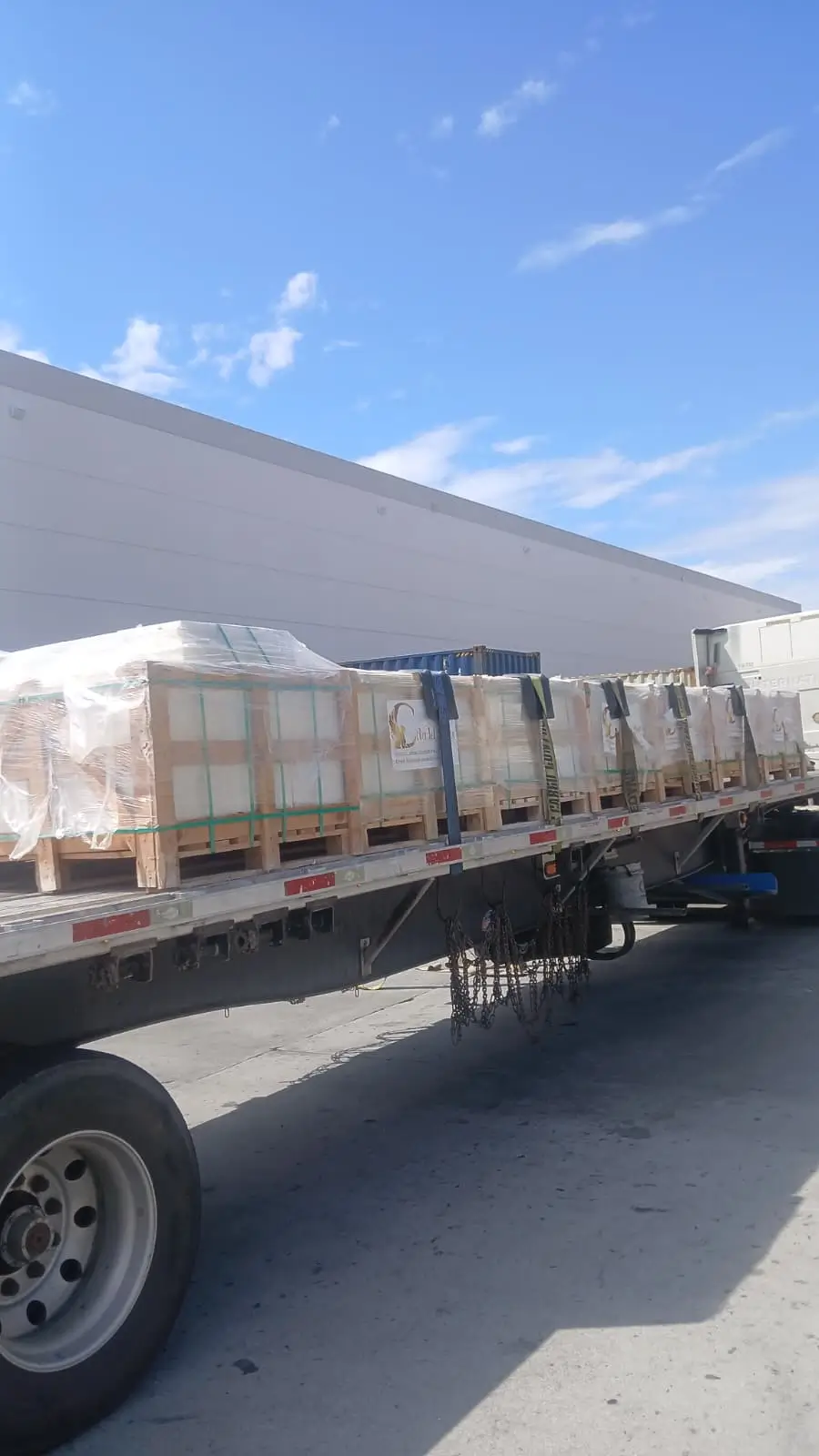
Coordinate your truck delivery scheduling around your installation timeline carefully. Travertine pallets are heavy — typically 2,200–2,500 lbs per pallet — and truck access to your site determines whether you can stage material efficiently or face handling costs that inflate your project budget. Verify that truck clearance exists for standard flatbed delivery vehicles before finalizing your order logistics, particularly in older Scottsdale neighborhoods with mature tree canopies or narrow rear access lanes.
For a broader look at how these material principles apply across your full hardscape design, our Arizona travertine outdoor paving resource covers specification details for a range of patio configurations and climate-zone conditions throughout the state.
Choosing Travertine Paver Suppliers in Arizona — Professional Considerations
Selecting the right travertine paver supplier for Arizona patio projects directly affects specification outcomes — not just price. Citadel Stone’s supply network for natural stone patio slabs for Arizona homes gives you access to calibrated, quality-certified filled travertine with lot-matched inventory, eliminating the color inconsistency risk that sourcing from multiple distributors introduces. The following hypothetical project scenarios illustrate the specification considerations that typically arise across Arizona’s major metropolitan areas when planning travertine outdoor patio installations.
Phoenix Patio Heat Loads
Phoenix projects contend with sustained surface temperatures that push 140°F on fully exposed travertine through June and July. For a hypothetical 800 square foot residential patio in central Phoenix, the recommended specification would be 18×18 ivory or silver travertine at 1¼ inch thickness, filled and brushed, on a 4-inch aggregate base. Citadel Stone’s warehouse inventory in the Phoenix distribution region means you can confirm calibrated lot availability and stage delivery in a single truck run, avoiding the fragmented deliveries that complicate large-format installations. Joint spacing would increase to ¼ inch minimum at structure transitions, with expansion joints on a 12-foot grid throughout the field.
Tucson Soil and Drainage Challenges
Tucson’s basin soils introduce more clay content variability than Phoenix, and the monsoon drainage gradient for a typical southeast Tucson residential lot requires careful base slope planning. A hypothetical 600 square foot patio in the Catalina Foothills zone would benefit from a 6-inch compacted base with geotextile underlayment given the clay-bearing soils common in that area. Citadel Stone’s technical team can assist Tucson specifiers in reviewing soil reports and adjusting base depth recommendations accordingly — that consultation support prevents the base failures that commonly appear in Tucson installations three to five years post-completion. Light walnut travertine in a Versailles pattern performs well in Tucson’s architectural context and provides the solar reflectance needed for the region’s intense UV exposure, making it a strong exterior travertine paving option in Arizona’s second-largest market.
Scottsdale Design-Forward Applications
Scottsdale’s luxury residential market typically demands large-format travertine in 24×24 or 18×36 plank configurations that align with contemporary desert-modern architecture. These formats require tighter installation tolerances and calibrated stone — and truck delivery coordination becomes more complex in Scottsdale’s established neighborhoods where access lane widths and HOA construction windows restrict staging flexibility. A hypothetical 1,200 square foot courtyard-style patio in north Scottsdale using 18×36 classic ivory travertine would need phased delivery across two truck drops, with material staged to minimize surface-level handling. Premium travertine outdoor surfaces in Arizona’s Scottsdale market increasingly feature mixed covered and uncovered zones, calling for consistent stone selection with finish variation — brushed in exposed zones, honed in covered dining areas — to manage thermal performance without disrupting visual continuity.
What Matters Most
The distinction between a travertine patio that performs beautifully for 25 years and one that requires partial replacement within a decade usually comes down to decisions made in the specification and procurement phase, not the installation itself. Stone thickness, joint spacing, base depth, and sealer schedule all need to reflect Arizona’s specific climate demands — not generic installation guidelines written for moderate climates. Natural stone patio slabs for Arizona homes represent a significant investment, and the material is fully capable of delivering on that investment when specified correctly.
Filled travertine paver selection for Arizona should prioritize calibration tolerance, fill integrity, and finish type over price-per-square-foot as the primary selection criteria. A marginal cost savings on uncalibrated or poorly filled stone translates directly into installation difficulty and long-term maintenance cost that erases the savings within the first few years. Exterior travertine paving options in Arizona reward the specifier who understands both the material’s natural characteristics and the climate demands it faces — that combination of knowledge is what separates projects that age gracefully from those that generate remediation calls. As you develop your final design, 10 Large Travertine Patio Ideas for Arizona Spaces offers additional design direction specifically developed for Arizona-scale outdoor living projects worth exploring alongside your specification work.
Citadel Stone provides exterior travertine paving slabs calibrated for Arizona’s UV intensity, giving homeowners in Tucson, Flagstaff, and Yuma a naturally cool surface suited to demanding desert conditions.