
Travertine landscape paver design ideas for Arizona projects start with a constraint most designers underestimate — the material’s thermal mass interacts with desert soil temperatures in ways that reshape your entire layout strategy. The classic warm-toned travertine that looks stunning in a showroom will perform completely differently when it’s sitting on compacted decomposed granite at 160°F in a Yuma summer versus a shaded Mesa courtyard. Getting your design right from the start means understanding those site-specific variables before you commit to a pattern, border treatment, or pathway width.
Why Travertine Works in Arizona Landscapes
The material’s natural porosity does something concrete and ceramic tile simply can’t — it moderates surface temperature through micro-evaporation, even in low-humidity conditions. Field temperature readings consistently show travertine running 15–25°F cooler than adjacent concrete under identical Arizona sun exposure. That’s not marketing copy; it’s a measurable performance characteristic that changes how comfortable your outdoor space actually feels at 2 p.m. in July.
Travertine also brings a tonal range — from creamy ivory to warm walnut — that complements the desert palette without fighting it. Your design choices work with the surrounding landscape rather than against it, which matters especially for natural stone garden path pavers in Arizona where the hardscape should feel like it belongs rather than like it was imported from a suburban Chicago backyard.
1. Straight-Run Garden Paths
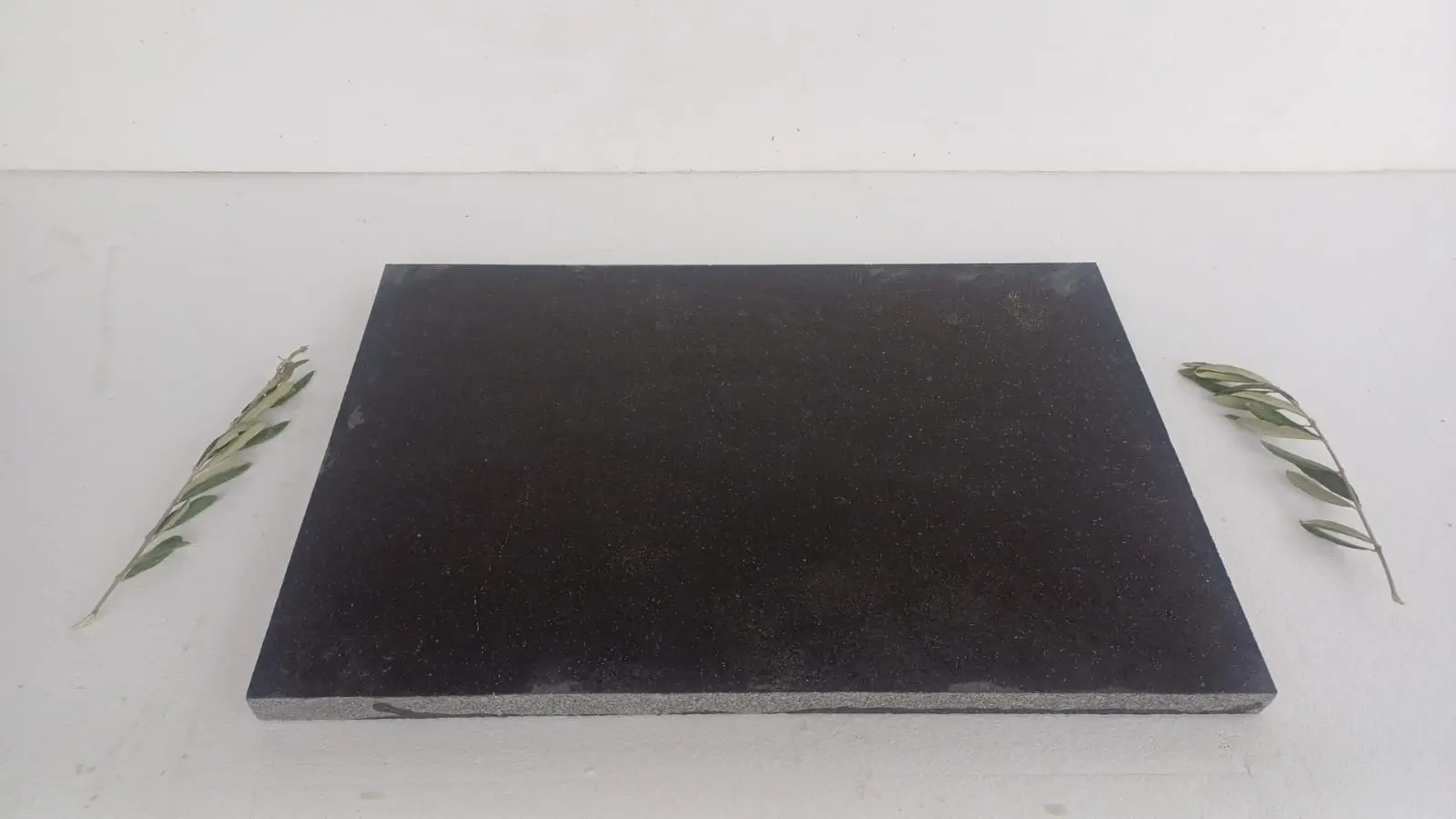
A straight-run path using 16×24 travertine pavers is the most installation-forgiving of the nine travertine landscape paver design ideas for Arizona covered here, and it’s a reliable starting point for travertine stepping stone layout inspiration in AZ climates where soil movement is a real concern. You’ll want to keep your joint spacing at 3/8 inch minimum — in high-heat zones, standard 1/4-inch joints close up under thermal expansion and cause edge chipping that’s expensive to repair.
- Use 2-inch nominal thickness pavers for pathway applications with foot traffic only
- Lay on a 4-inch compacted gravel base topped with 1-inch coarse sand bedding
- Orient the longer dimension perpendicular to the path direction to maximize visual length
- Maintain consistent joint width using plastic spacers, not eyeballing
2. Curved Stepping Stone Layouts
Curves add organic movement to Arizona outdoor landscape travertine paving concepts, especially when your yard transitions between a pool area and a planted desert garden. The practical challenge with curved layouts is that travertine doesn’t score and snap cleanly — you’ll need wet-saw cuts, and planning your curve radius around available slab sizes saves significant cutting waste and cost.
A 6-foot minimum curve radius works well with 12×12 pavers placed in a loose arc pattern. Tighter radii require smaller format pavers or custom cuts at every other piece. In Yuma, where intense UV accelerates joint sand breakdown, filling curved path joints with polymeric sand rated for temperatures above 130°F is essential — standard polymeric sand softens and loses its binding capacity in that climate.
3. Mixed-Size Random Ashlar Patterns
Random ashlar layouts — mixing 12×12, 16×16, and 16×24 pavers in a non-repeating pattern — create the most visually complex Arizona outdoor landscape travertine paving concepts without requiring custom stonework. The pattern disguises any minor color variation between paver lots, which matters because travertine’s natural tone shifts across quarry batches.
- Plan your layout on paper before cutting, targeting a 40/40/20 ratio of small/medium/large pieces
- Avoid aligning more than two joints in a continuous line — this is the most common ashlar mistake
- Keep largest pavers in high-visibility zones; smaller pieces work better at path edges
- Order 10–12% overage to account for pattern cuts and future repairs
For travertine paver suppliers in Arizona who stock mixed-size pallets pre-sorted for ashlar layouts, confirm that all pieces in a shipment come from the same quarry run — this keeps your tonal consistency manageable without spending hours sorting on site.
4. Wide Border Framing Designs
Decorative travertine paver border ideas across Arizona projects have evolved well beyond the simple soldier-course edge treatment. A 12-inch wide border in a contrasting travertine tone — say, a walnut-finish frame around an ivory-filled interior — creates a visual boundary that defines the space without needing walls or planting beds. This technique works particularly well around turf areas where the border also functions as a mowing edge.
You’ll achieve the cleanest result by installing the border course first, then filling the interior. Setting the perimeter before the field pavers lets you establish your true square and work inward, correcting for any site geometry irregularities in the field rather than at the visible edge. For design concepts around this, check out our Arizona travertine garden path paver ideas to see how border framing translates from concept to completed installation.
5. Herringbone Pattern Walkways
Herringbone is structurally the most stable interlocking pattern for travertine stepping stone layout inspiration in AZ, which is why it shows up so frequently in high-traffic commercial Arizona projects before it migrates into residential design. The diagonal orientation of each paver means loads distribute across more joint interfaces, reducing point stress that causes cracking in straight-run and stacked-bond patterns.
Standard herringbone runs at 45 degrees to the walkway centerline. A 90-degree herringbone (straight herringbone) requires fewer edge cuts but distributes load less efficiently. For a walkway connecting a driveway to a front entry in Mesa, where foot traffic concentrates at transition points, the 45-degree diagonal herringbone is worth the additional cutting time at the borders.
- Use square-format pavers (12×12 or 16×16) for true herringbone — rectangular pieces create pattern distortion
- Establish a center snapped chalk line before laying any pieces
- Expect 15–18% waste from border cuts in herringbone versus 8–10% in straight-run patterns
6. Travertine Stepping Stones in Gravel Gardens
Setting individual travertine stepping stones into a decomposed granite or crushed gravel field is one of the most cost-effective travertine landscape paver design ideas for Arizona xeriscape properties. You’re using significantly less material than a full paved surface, and the gravel between pavers actually improves drainage in heavy monsoon events — a real performance advantage over solid paving in flash-flood-prone areas.
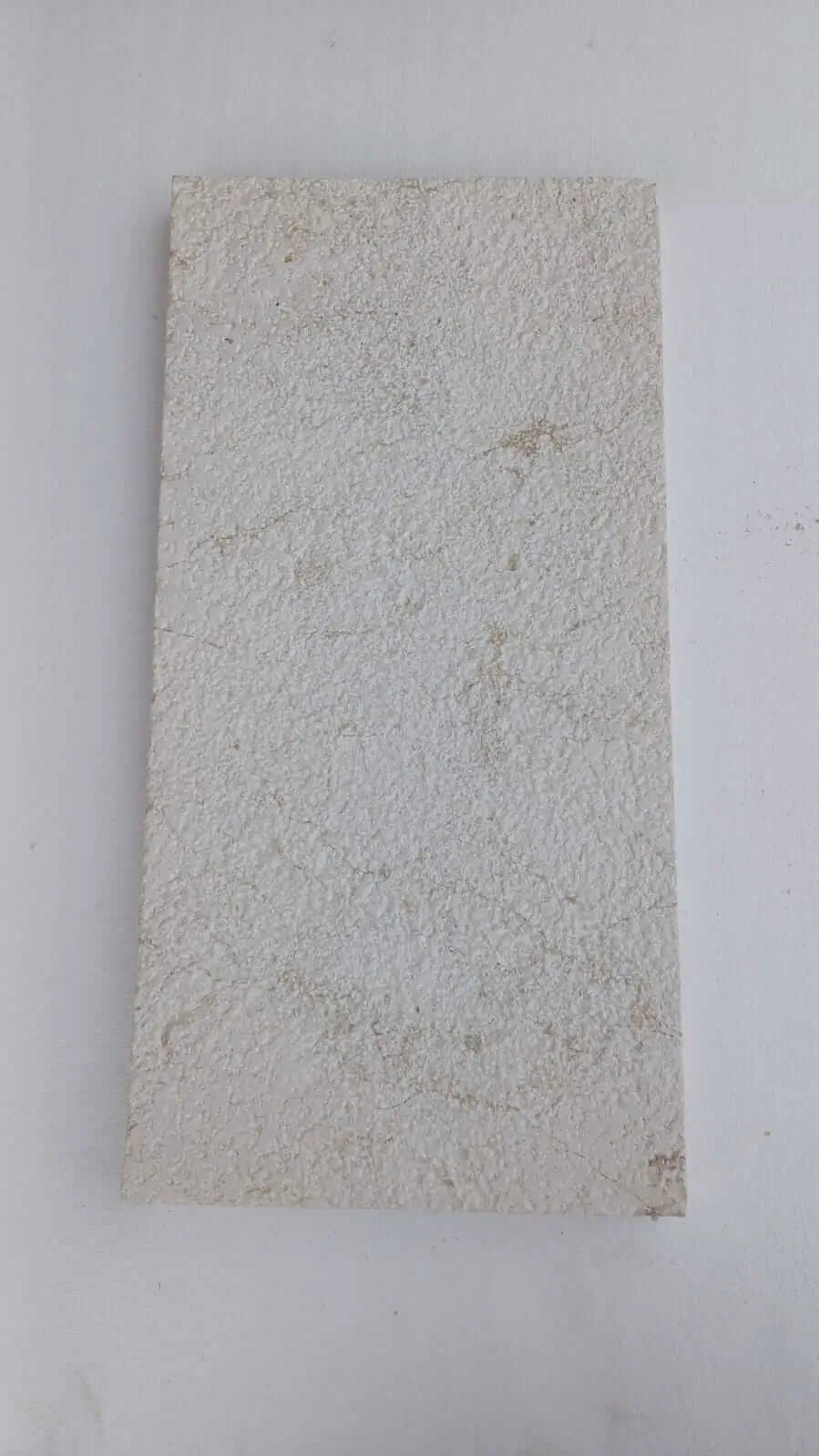
The installation detail that fails most often here is inadequate setting depth. Each stepping stone needs a compacted sand bed at minimum 1.5 inches thick, with the paver surface sitting 3/4 inch above the surrounding gravel grade. Too low and they disappear into the gravel; too high and they become trip hazards and edges chip under lateral foot loads.
7. Courtyard Focal Medallion Layouts
A travertine medallion — a circular or geometric focal element set within a larger paved field — elevates Arizona outdoor landscape travertine paving concepts from functional hardscape to designed outdoor rooms. Travertine’s machinability makes it one of the few natural stones you can reasonably specify for custom radius cuts without prohibitive shop cost, especially in 3/4-inch or 1-inch thickness for non-structural decorative applications.
- Medallions work best when centered under shade structures or at path intersections
- Specify tumbled-finish travertine for medallion pieces — the rounded edges handle adjacent field paver joints more forgivingly than square-cut edges
- Design your medallion diameter as a multiple of your field paver size to reduce field cuts
- Seal medallion pieces separately before installation — grout cleanup is harder on cut-radius pieces
At Citadel Stone, we’ve seen medallion layouts become the single most photographed element in completed Arizona courtyard projects — they read as custom design at a fraction of custom fabrication cost when the surrounding field work is executed cleanly.
8. Pool Perimeter and Garden Transition Bands
Transition bands — narrow runs of natural stone garden path pavers in Arizona that bridge between a pool deck surface and a planted border or lawn edge — are an underused design tool. A 24-inch wide travertine band creates a clean visual frame around planted desert specimens without the cost of paving the entire garden floor. The material’s slip resistance in wet conditions (ASTM C1028 coefficient of friction above 0.60 for brushed-finish travertine) makes it appropriate right at the pool waterline.
For projects in Gilbert, where newer developments often feature tight lot lines and small rear yards, a transition band between pool coping and artificial turf creates the visual separation of a much larger space. Your material quantity stays manageable, and the installation timeline stays under a week for most residential-scale projects. Verify warehouse availability before finalizing your schedule — travertine in 2×24-inch band formats sometimes requires a 10–14 day lead time depending on inventory cycles.
9. Natural Edge Boulder and Paver Combinations
Pairing travertine pavers with desert boulders — setting paver runs that terminate against or weave between native stone specimens — produces the most authentically Arizona-specific of these decorative travertine paver border ideas across Arizona. The material compatibility between travertine’s sedimentary tonality and the warm ochre-to-rust range of local granite and sandstone boulders is strong without requiring any forced color matching.
The technical challenge is maintaining consistent paver elevation where the grade transitions around boulder bases. Your sand-setting bed needs to accommodate grade changes without compressing unevenly — in some cases, a dry-mortar bed (Portland cement and sand, no water) offers more dimensional stability around irregular boulder footprints than straight sand. Confirm that the paver finish you specify — honed, brushed, or tumbled — works visually against the natural rock textures already on site before the truck delivers material.
- Tumbled travertine pairs most naturally with rounded desert boulders
- Brushed-finish works better adjacent to angular cut-stone features
- Leave a 2–3 inch gravel buffer between paver edges and boulder bases for drainage and expansion
- Seal the transition zone carefully — organic debris collects at boulder-paver junctions and accelerates staining
Final Notes
These nine travertine landscape paver design ideas for Arizona cover the range from simple straight-run paths to complex medallion and boulder-integration layouts, but the execution quality on any of them comes down to base preparation and joint management in extreme heat. Reviewing your sealer schedule before and after installation is equally important — for detailed guidance on that front, How to Maintain Light Travertine Pavers in Arizona’s Climate walks through the specific maintenance protocols that keep these designs looking sharp through years of desert exposure. Citadel Stone offers natural stone travertine pavers suited to stepping paths and garden border layouts across Arizona, with design concepts drawn from completed projects in Scottsdale, Yuma, and Tucson.