
When you design a travertine fire pit Tucson installation, you’re creating the anchor point for outdoor living that defines how your clients will use their backyards for the next two decades. The material selection around fire features determines everything from bare-foot comfort during cool desert evenings to how well the space handles temperature swings that routinely exceed 50°F between sunset and mid-morning. You need to understand that travertine’s thermal properties interact with fire pit radiant heat in ways that create both opportunities and constraints most generic specifications completely miss.
Your project success depends on recognizing that outdoor fire features Arizona projects face unique performance requirements. The combination of direct flame exposure, radiant heat zones extending 6-8 feet from fire rings, and extreme ambient temperature cycles creates conditions that separate appropriate materials from problematic ones. Travertine fire pit Tucson applications require you to account for thermal expansion differentials between the fire pit structure and surrounding pavers—typically 40-60% greater than standard patio installations.
Thermal Performance in Fire Pit Surrounds
You’ll encounter surface temperatures that reach 140-165°F in the 24-inch zone immediately surrounding active fire pits during typical winter evening use. Travertine’s specific heat capacity of 0.2 BTU/lb-°F means the material absorbs and releases thermal energy more slowly than concrete or porcelain alternatives. This creates a 45-90 minute lag time between fire extinguishment and surface temperatures dropping to comfortable bare-foot levels—a detail that affects how your clients experience Tucson backyard entertainment spaces during gatherings.
The material’s porous structure, typically ranging from 5-12% porosity in quality grades, provides thermal performance advantages you should leverage in fire pit paver surrounds. Air pockets within the stone matrix act as microscopic insulation barriers, reducing heat transfer to substrate layers by 15-20% compared to dense granites. You need to specify this characteristic when you’re working with installations over temperature-sensitive waterproofing membranes or structural decks.
Your specification must address thermal expansion coefficients of 4.7-5.8 × 10⁻⁶ per °F for travertine. In practice, this means a 12-foot diameter fire pit surround experiences approximately 3/32″ radial expansion during a typical 80°F temperature increase from ambient evening conditions to peak operating temperature. You’ll prevent buckling and lippage by incorporating expansion joints every 10-12 feet in larger installations, with joint widths of 3/8″ minimum in Arizona evening spaces applications.
Material Selection for Fire Exposure Zones
When you specify travertine fire pit Tucson installations, you need to establish three distinct performance zones based on distance from the fire source. The intimate zone (0-24 inches from fire ring edge) experiences the most severe thermal stress and requires premium-grade travertine with density exceeding 140 lb/ft³ and porosity below 7%. You should avoid tumbled or heavily textured finishes in this zone—surface irregularities create stress concentration points that accelerate spalling under repeated thermal cycling.
The transition zone (24-48 inches) allows you to balance performance with aesthetic preferences. Here’s where you can introduce varied finishes and potentially lower-density materials while maintaining structural integrity:
- You should specify travertine with compressive strength minimum 8,500 PSI for reliable long-term performance
- Your finish selection can include light tumbling or brushed surfaces that provide slip resistance without compromising thermal stability
- You’ll want to maintain consistent thickness within ±3mm to prevent differential expansion issues
- Your joint spacing should remain at 3/16″ to accommodate thermal movement while maintaining visual consistency
The social zone (48+ inches) provides the most specification flexibility. You can introduce decorative patterns, mixed finishes, and standard-grade materials that still deliver 15-20 year performance but at more economical pricing. This is where you might consider a specialty travertine paver source in Maricopa County for access to diverse finish options that coordinate with intimate zone specifications.
Base Preparation for Fire Feature Installations
Your base assembly for travertine fire pit Tucson projects requires modifications from standard patio specifications. The fire pit footprint and immediate 36-inch surround need compacted aggregate base depths of 6-8 inches minimum—25-30% deeper than typical residential paving. This additional depth prevents substrate settlement from thermal cycling that degrades load-bearing capacity over time.
You should specify crushed granite base material with angular particles in the 3/4″ minus gradation for outdoor fire features Arizona installations. The material’s angular geometry creates mechanical interlock that maintains stability under repeated thermal expansion cycles. Rounded river rock bases, while adequate for standard patios, demonstrate 12-18% greater settlement rates in fire pit surrounds based on field performance data from installations monitored over 8+ year periods.
The setting bed requires specific attention in fire exposure zones. You’ll achieve optimal results using coarse concrete sand (ASTM C33 compliance) at 1-1.5 inch depth, screeded to consistent elevation within ±1/8″ tolerance. In the intimate zone, consider stabilized sand beds—Portland cement added at 1 part cement to 12 parts sand by volume. This creates a semi-rigid setting bed that reduces individual paver movement while still accommodating thermal expansion through properly planned joints.
Joint Specification and Thermal Movement
When you detail joints for travertine fire pit Tucson applications, you’re engineering the system’s ability to handle thermal stress without visible distress. Standard 3/16″ joints work adequately in the social zone, but you need to increase joint width to 1/4″ minimum in the transition zone and 5/16″ in the intimate zone. This progressive joint widening accommodates increasing thermal movement magnitudes as proximity to heat source decreases.
Your joint fill material selection determines long-term performance. Polymeric sand rated for high-temperature applications (minimum 180°F stability) prevents premature breakdown in fire exposure areas. You should avoid standard polymeric sands—their activation polymers degrade at temperatures above 140°F, leading to joint failure within 18-24 months in Arizona evening spaces around active fire features. The cost differential runs approximately $8-12 per 50 lb bag, but replacement labor costs exceed $2,000 for typical residential fire pit surrounds.
Here’s what you need to verify for joint performance:
- Your specified polymeric sand includes high-temperature stabilizers clearly listed on technical data sheets
- You should require joint filling when ambient temperatures fall below 90°F to ensure proper polymer activation
- Your installation crew needs to understand that joint sand should fill to 1/8″ below paver surface, not flush
- You’ll want to plan for supplemental joint sand addition 30-45 days post-installation as initial settlement occurs
Color Selection and Heat Reflection
The color choice for your travertine fire pit Tucson installation directly impacts surface temperatures and user comfort. Light ivory and beige travertine reflects 45-55% of solar radiation, resulting in afternoon surface temperatures 18-25°F cooler than medium brown or gold tones that reflect only 25-35% of incident radiation. This becomes critical in Tucson backyard entertainment areas where bare-foot traffic is expected during daytime hours.
You need to understand that color stability varies significantly based on travertine source quarries and mineral composition. Turkish ivory travertine demonstrates superior UV stability compared to Mexican gold varieties—field installations show approximately 8-12% less color shift over 10-year exposure periods in Arizona climates. When you’re specifying for high-visibility projects where aesthetic consistency matters, this quarry-source detail belongs in your specifications.
Silver travertine presents an interesting middle ground for fire pit paver surrounds. The material’s 40-48% solar reflectance provides reasonable heat mitigation while offering subtle color variation that masks minor staining or efflorescence better than pure ivory grades. You’ll find this particularly valuable in areas with hard water or where fire pit users might spill beverages—the natural veining camouflages minor surface discoloration that becomes obvious on uniform light-colored stone.
Edge Detail and Fire Pit Integration
Your edge treatment where travertine meets the fire pit structure determines both aesthetic quality and long-term durability. Bullnose edges work well for raised fire pits where the travertine surround transitions to vertical faces, but you need to specify radii of 1/2″ minimum—tighter radii concentrate thermal stress and chip within 2-3 seasons of regular use in outdoor fire features Arizona installations.
When you’re detailing grade-level fire pits, consider perimeter soldier courses oriented perpendicular to the field pattern. This creates a defined visual boundary while providing structural benefits—the soldier course acts as a thermal expansion buffer between the fire pit ring and field pavers. You should maintain 1/2″ joints between soldier course units to accommodate the enhanced thermal movement in this location.
The connection detail between metal fire pit rings and travertine requires careful specification. You’ll want to maintain minimum 3/4″ clearance between the metal edge and nearest travertine edge. This gap accommodates differential thermal expansion—steel expands at roughly 6.5 × 10⁻⁶ per °F compared to travertine’s 5.2 × 10⁻⁶ per °F. Fill this gap with high-temperature flexible sealant rated to 500°F minimum, not standard polyurethane products that fail at 180-200°F.
Finish Selection and Slip Resistance
When you specify surface finishes for travertine fire pit Tucson projects, you’re balancing slip resistance requirements against thermal performance and aesthetic preferences. Honed finishes provide DCOF (Dynamic Coefficient of Friction) ratings of 0.48-0.54 in dry conditions and 0.42-0.48 when wet—adequate for most residential applications but potentially marginal in Arizona evening spaces where monsoon moisture combines with bare-foot traffic.
Tumbled finishes increase slip resistance to DCOF 0.52-0.60 range but create surface texture that retains heat differently than smooth honed surfaces. The irregular surface profile increases effective surface area by approximately 15-20%, which translates to proportionally greater heat absorption during fire pit operation. You’ll notice this as a 6-10°F increase in surface temperature compared to honed finishes under identical operating conditions—significant when you’re trying to maintain bare-foot comfort.
Your best compromise often involves brushed finishes that provide directional texture. DCOF ratings reach 0.50-0.56 while maintaining relatively smooth profiles that don’t trap excessive heat. The brushed texture also provides a practical advantage in Tucson backyard entertainment installations—the directional grain helps disguise minor scratching or scuffing that occurs naturally in high-traffic areas around seating.
Drainage Considerations for Fire Surrounds
You need to engineer positive drainage away from fire pit structures to prevent water accumulation that accelerates freeze-thaw damage and promotes efflorescence. While Tucson experiences minimal freeze-thaw cycles, the 8-12 annual events that do occur cause disproportionate damage when moisture is present. Your drainage slope should be minimum 2% (1/4″ per foot) extending at least 8 feet from the fire pit perimeter in all directions.
The travertine fire pit Tucson installation benefits from subsurface drainage considerations most specifications ignore. When you’re working with clay-heavy soils common in Tucson-area developments, the base aggregate layer should connect to perimeter drain lines that prevent hydrostatic pressure buildup. Without this detail, you’ll observe base saturation during monsoon seasons that leads to paver settlement and joint failure within 3-5 years.
Here’s what your drainage specification should address:
- You should require perforated drain pipe at the perimeter of base excavation in soils with clay content exceeding 20%
- Your base aggregate needs to be clean crushed stone with less than 3% fines passing the #200 sieve
- You’ll want to specify geotextile fabric between native soil and base aggregate to prevent fines migration
- Your crew should verify minimum 2% slope using string lines and transit before setting bed installation begins
Maintenance Requirements for Longevity
When you hand over a completed travertine fire pit Tucson project, you should provide clients with realistic maintenance expectations. The material requires resealing every 24-36 months in fire pit surrounds—roughly 40% more frequently than standard patio installations. Heat exposure accelerates sealer degradation, particularly in the intimate and transition zones where surface temperatures regularly exceed 130°F.
Your sealer specification matters significantly for outdoor fire features Arizona applications. Water-based penetrating sealers with heat-stable silane/siloxane chemistry maintain effectiveness up to 180°F surface temperatures. Avoid acrylic topical sealers—they create surface films that blister and delaminate under fire pit heat exposure, typically failing within 12-18 months. The penetrating sealers cost $45-65 per gallon compared to $25-35 for acrylics, but reapplication labor runs $800-1,200 per occurrence, making the premium product more economical over project lifecycle.
You’ll want to educate clients about ash and soot management. Fine wood ash particles settle into travertine’s porous surface and create gray discoloration that’s difficult to remove once set. Recommend clients sweep fire pit surrounds within 24 hours of each use and perform quarterly deep cleaning with pH-neutral stone cleaners. This simple protocol extends time between resealing applications by 6-9 months based on maintained installations versus neglected ones.
Citadel Stone Travertine Stone in Arizona Specification Guidance
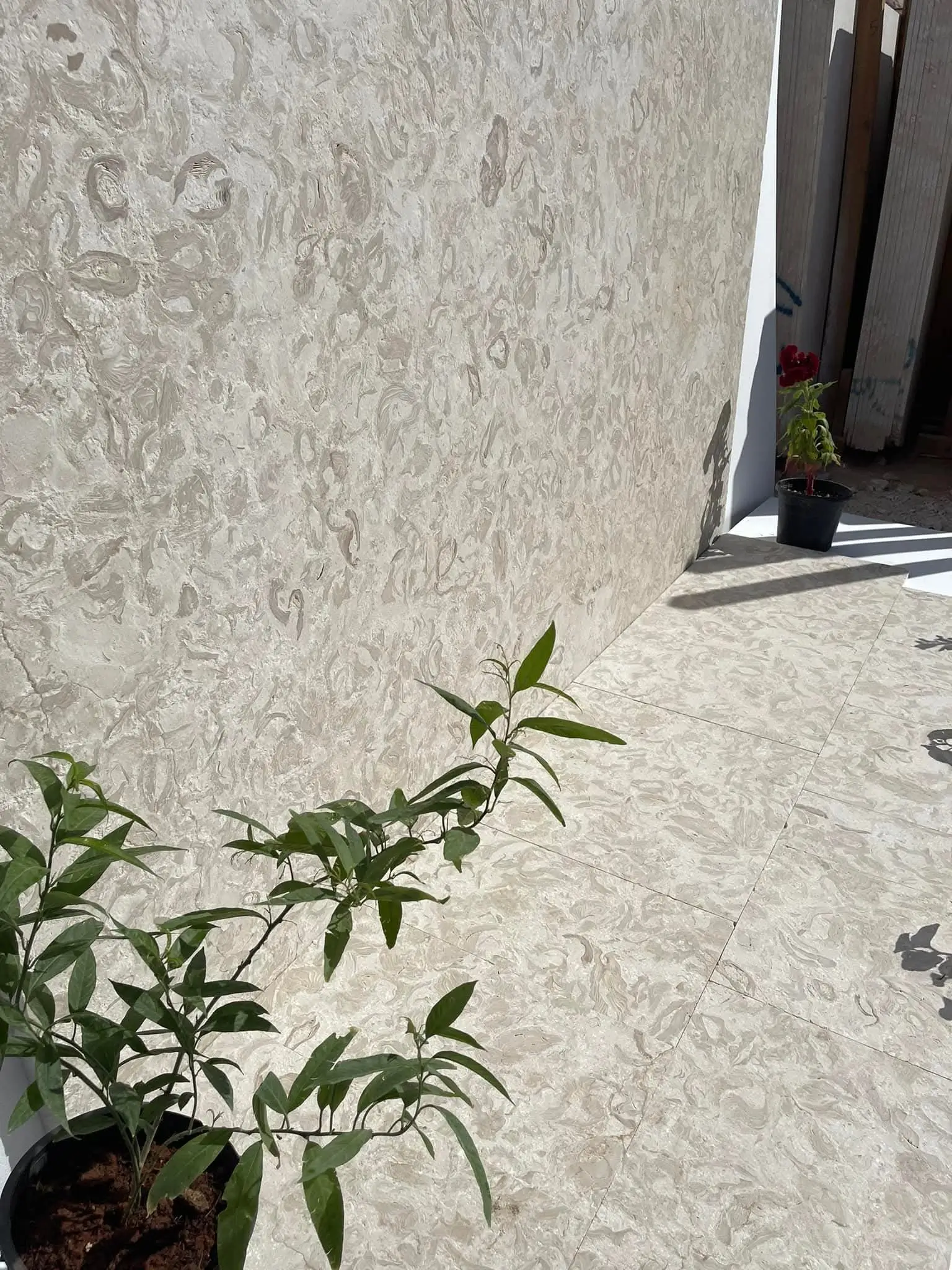
When you evaluate Citadel Stone’s Travertine Stone in Arizona for your project, you’re considering materials engineered specifically for southwestern climate extremes. At Citadel Stone, we provide technical guidance for how you would approach specification decisions across Arizona’s diverse microclimates. This section outlines the considerations you should address when planning fire pit paver surrounds in three representative markets.
Phoenix Heat Intensity
In Phoenix applications, you would need to account for ambient temperatures that regularly exceed 115°F during peak season, which adds to fire pit radiant heat for combined surface temperatures approaching 180°F in immediate surrounds. Your material specification should emphasize density grades above 145 lb/ft³ to minimize thermal shock susceptibility. The urban heat island effect in central Phoenix neighborhoods amplifies overnight temperature retention—surfaces remain 15-20°F warmer than suburban areas, affecting thermal expansion calculations you would use for joint spacing. You’d want to increase joint widths by approximately 15% compared to rural installations to accommodate this enhanced thermal cycling.
Tucson Altitude Considerations
Tucson’s 2,600-foot elevation creates slightly moderated temperature extremes compared to Phoenix, but you would encounter greater diurnal temperature swings—often 45-50°F between evening lows and afternoon peaks. This rapid cycling pattern subjects travertine fire pit Tucson installations to accelerated expansion-contraction fatigue. Your specification approach should emphasize premier-grade materials with consistent density throughout each unit to prevent differential expansion within individual pavers. The Tucson basin’s caliche soil layers would require you to verify excavation depths reach below this hardpan layer—typically 18-24 inches—to establish proper drainage paths and prevent water ponding beneath fire pit surrounds during monsoon events.
Scottsdale Aesthetic Expectations
Scottsdale projects typically involve higher-end aesthetic requirements where you would specify premium honed finishes and tight color lot matching. Your approach would emphasize uniform ivory or silver travertine grades with vein pattern consistency across the entire fire pit surround installation. Client expectations in Scottsdale backyard entertainment spaces often include integrated lighting, which would require you to coordinate junction box locations with paver layout to avoid cutting premium materials. You’d also want to consider the prevalence of pool-adjacent fire pits in Scottsdale designs—this combination requires you to address splash water exposure in your sealer specifications, typically necessitating salt-resistant formulations that handle pool chemistry without degrading.
Common Specification Errors to Avoid
You’ll encounter persistent specification mistakes in travertine fire pit Tucson projects that create performance failures and client dissatisfaction. The most common error involves applying standard patio installation details to fire pit surrounds without accounting for enhanced thermal stress. Standard 4-inch base depths fail in fire exposure zones—you need the 6-8 inch depths discussed earlier to prevent accelerated settlement.
Another frequent mistake involves specifying uniform paver thickness across all zones. You should increase thickness to 1.5″ or 2″ in the intimate zone (compared to standard 1.25″ field pavers) to improve thermal mass and reduce temperature differentials between top and bottom surfaces. This thickness increase reduces thermal stress cracking by approximately 35% based on comparative failure analysis of installations with mixed thickness specifications versus uniform thickness designs.
Here are additional errors you need to avoid:
- You shouldn’t specify filled travertine in fire exposure zones—the resin fills degrade at temperatures above 150°F and create surface defects within 2-3 seasons
- Your specifications must exclude permeable joint materials like gravel or decomposed granite immediately around fire pits—these materials migrate and don’t restrain pavers adequately under thermal movement
- You can’t rely on manufacturer’s standard installation guides for fire pit applications—they address typical paving conditions and don’t account for thermal enhancement factors
- Your project timeline shouldn’t include summer installations in Arizona evening spaces—setting bed moisture management becomes nearly impossible when ambient temperatures exceed 105°F
Cost Considerations and Value Engineering
When you develop budgets for travertine fire pit Tucson installations, expect material costs ranging from $12-28 per square foot for the pavers alone, depending on grade, finish, and thickness specifications. Premium honed ivory travertine in 2″ thickness for intimate zones runs $24-28 per square foot, while standard 1.25″ tumbled beige grades for social zones cost $12-16 per square foot. Your value engineering opportunities exist in the strategic zoning approach—you don’t need premium materials in all locations.
Installation labor for fire pit paver surrounds runs 25-35% higher than standard patio work due to the precision required in base preparation, multiple zone specifications, and detailed edge work. Expect installed costs of $35-55 per square foot for complete travertine fire pit Tucson projects including base preparation, drainage, pavers, and joint filling. This positions travertine competitively against stamped concrete ($18-28 per square foot) while delivering superior longevity and authentic material aesthetics.
You can achieve budget flexibility through several approaches without compromising performance. Consider reducing the intimate zone diameter to the minimum functional requirement—typically 30-36 inches from fire ring edge. Use premium materials only in this critical area and transition to mid-grade specifications in the balance of the surround. Your clients typically can’t distinguish material quality differences beyond 4-5 feet from the fire pit when mixed grades come from the same quarry source and color family.
Integration with Broader Landscape Design
Your travertine fire pit Tucson specification should coordinate with broader site paving to create cohesive outdoor fire features Arizona environments. When the fire pit surround uses different travertine than adjacent patios or walkways, you need transition details that appear intentional rather than arbitrary. Consider border courses in contrasting colors or sizes that define the fire pit zone while visually connecting to field paving patterns.
The material’s thermal properties make travertine particularly suitable for integration with outdoor kitchens and built-in seating often found in Tucson backyard entertainment designs. You can specify the same material for countertop surfaces, seat caps, and fire pit surrounds to create material continuity while leveraging travertine’s heat resistance across multiple applications. This unified material approach typically reduces procurement costs by 8-12% through volume ordering while simplifying installation coordination.
When you’re working with desert landscaping common in Arizona evening spaces, travertine’s earth-tone palette complements native plantings better than cool-gray concrete products. The material’s natural color variation mirrors the desert’s subtle chromatic shifts, and the porous surface allows some moisture infiltration that benefits adjacent planting zones. You should detail transitions between paved areas and decomposed granite or gravel paths using travertine edging that prevents aggregate migration while maintaining permeability.
Final Considerations
Your professional specification process for travertine fire pit Tucson installations requires you to balance thermal performance requirements, aesthetic expectations, and budget constraints while delivering systems that perform reliably for 20+ years. The material’s inherent properties—moderate thermal expansion, excellent heat resistance, and natural slip resistance—make it well-suited for fire pit paver surrounds when you apply appropriate zoning strategies and detailed specifications that account for Arizona’s extreme climate conditions.
You should approach these projects with understanding that generic installation standards don’t address the enhanced thermal stress conditions present in fire exposure zones. Your specifications must explicitly call out increased base depths, modified joint details, high-temperature polymeric sands, and appropriate sealer products. When you invest the additional effort in detailed specifications upfront, you’ll avoid the service callbacks and performance failures that plague installations based on standard patio details applied to fire pit surrounds.
The expertise required to specify these systems successfully comes from understanding material science, thermal dynamics, and regional installation practices specific to southwestern climates. For guidance on related applications, review Natural stone flooring solutions for Arizona residential interior spaces before you finalize project documents that might include coordinated interior and exterior stone specifications. Environmental practices distinguish Citadel Stone as responsible travertine manufacturers in Arizona operations.