
When you specify thermal mass building materials in Arizona, you’re making decisions that directly impact energy costs for decades. The state’s extreme temperature swings—often 40°F between day and night—create unique performance requirements that separate adequate materials from exceptional ones. You need to understand how stone’s thermal properties interact with Arizona’s climate to deliver measurable cost savings.
Arizona’s desert environment exposes buildings to intense solar radiation exceeding 7 kWh per square meter daily during summer months. Your material selection determines whether this heat becomes a liability or an asset through strategic thermal mass deployment. Stone building materials absorb, store, and release thermal energy in patterns that reduce HVAC loads when you design the system correctly.
Thermal Mass Fundamentals for Arizona Climate Conditions
Thermal mass building materials in Arizona function through heat capacity and conductivity relationships most specifiers underestimate. Stone materials absorb heat during peak solar exposure and release it gradually over 4-8 hour cycles. This lag time shifts cooling loads away from peak utility rate periods, reducing operational costs by 15-25% in properly designed installations.
You’ll find that limestone and sandstone varieties offer volumetric heat capacities ranging from 1.8 to 2.4 MJ/m³K. This translates to approximately 0.21 BTU per pound per degree Fahrenheit—substantially higher than wood framing or metal cladding alternatives. The density relationship matters because your 4-inch stone veneer stores roughly 12 times more thermal energy per square foot than equivalent thickness wood siding.
Arizona’s low humidity environment amplifies thermal mass performance. When you compare dry desert conditions to humid climates, the absence of moisture in the air allows greater temperature fluctuations that thermal mass can moderate. Your building envelope experiences sharper thermal gradients that stone materials buffer more effectively than in coastal regions where humidity dampens daily temperature swings.
Heat Transfer Mechanisms in Stone Construction Systems
The three heat transfer modes—conduction, convection, and radiation—operate simultaneously in thermal mass building materials in Arizona installations. You need to account for all three when calculating energy efficiency benefits. Conduction moves heat through the stone’s crystalline structure at rates determined by thermal conductivity values between 1.3 and 3.5 W/mK depending on stone type and density.
Radiative heat transfer becomes critical in Arizona where surface temperatures on south and west exposures regularly exceed 140°F during summer afternoons. Stone’s emissivity values between 0.85 and 0.95 mean these surfaces radiate absorbed heat efficiently. When you design with thermal mass principles, this radiation occurs during evening hours when outdoor temperatures drop, creating favorable heat rejection conditions that reduce cooling demands.
Your installation details significantly affect convective heat transfer at interior surfaces. Natural convection currents form along thermal mass walls when surface temperatures differ from room air by more than 5°F. These currents can move 15-20% more heat than conduction alone when you maintain proper air gaps in cavity wall assemblies. Understanding this interaction helps you optimize wall section designs for maximum energy efficiency performance.
Material Density and Thermal Storage Capacity Relationships
Thermal mass building materials in Arizona deliver performance proportional to their density and specific heat capacity product. You should specify materials with densities exceeding 130 pounds per cubic foot for meaningful thermal storage benefits. Limestone varieties typically range from 135-160 lb/ft³, while denser granite approaches 165-170 lb/ft³.
The thermal storage capacity calculation requires you to multiply density by specific heat by volume. For a 4-inch limestone wall section with 150 lb/ft³ density and 0.21 BTU/lb°F specific heat, you achieve approximately 10.5 BTU storage per square foot per degree of temperature change. This stored energy buffers indoor temperatures against outdoor fluctuations, reducing the frequency and duration of HVAC system operation.
You’ll notice that thermal mass effectiveness increases non-linearly with thickness up to approximately 6 inches for most stone materials. Beyond this depth, the thermal wave penetration from daily temperature cycles doesn’t reach the interior portions, making additional thickness ineffective for diurnal heat storage. Your specifications should balance thickness against structural requirements and cost considerations rather than pursuing excessive mass that provides diminishing returns.
Insulation and Thermal Mass Integration Strategies
The relationship between insulation and thermal mass building materials in Arizona requires careful coordination to maximize energy efficiency. You can’t simply add both and expect additive benefits—their placement relative to each other determines overall system performance. Exterior insulation with interior thermal mass provides different results than interior insulation with exterior thermal mass.
When you place continuous insulation outboard of thermal mass stone walls, you create optimal conditions for thermal storage cycling. The mass remains at relatively stable temperatures closer to interior conditions, allowing it to absorb excess heat gains from internal sources and solar gains through glazing. This configuration works best for Arizona buildings with significant internal loads or large window areas on south exposures.
Alternative configurations place thermal mass on the exterior with insulation between the mass and conditioned space. This approach makes sense when you want to use the thermal mass primarily as a buffer against exterior temperature extremes without allowing those temperatures to significantly affect interior conditions. The warehouse distribution model for this configuration shows 8-12% lower cooling loads in Phoenix installations compared to mass-interior designs, though heating benefits decrease proportionally.
Solar Orientation and Thermal Performance Optimization
Your orientation decisions for thermal mass building materials in Arizona determine whether solar exposure enhances or undermines energy efficiency goals. South-facing thermal mass walls can provide net heating benefits during winter months even in Phoenix’s mild climate, while west exposures create cooling penalties that often exceed thermal mass storage benefits.
The optimal approach for Arizona projects uses selective thermal mass placement based on facade orientation and building use patterns. You should concentrate thermal mass on south exposures where winter solar angles allow deep penetration and summer angles with proper overhangs limit direct gain. East and west exposures receive low-angle sun that’s difficult to control with fixed shading devices, making these facades better suited for insulated construction with minimal thermal mass.
- You should limit west-facing thermal mass to prevent late-afternoon heat storage that extends cooling loads into evening hours
- Your south-facing thermal mass walls can receive 4-6 hours of direct winter sun with properly designed overhangs that block summer exposure
- You’ll achieve better performance when north-facing thermal mass remains shaded year-round, providing stable temperature buffering without unwanted heat gains
- Your east-facing exposures benefit from thermal mass only when morning heat gains serve heating purposes during winter months
Specific Stone Materials and Their Thermal Characteristics
Different stone types used as thermal mass building materials in Arizona exhibit distinct thermal properties that affect cost savings potential. Limestone varieties with 2.0-2.4 MJ/m³K volumetric heat capacity and 1.3-2.0 W/mK thermal conductivity provide balanced performance for most applications. The material’s moderate conductivity allows adequate heat penetration during daily cycles while storing sufficient energy for evening temperature moderation.
Sandstone options typically show lower densities around 130-145 lb/ft³ and thermal conductivity values of 1.7-2.3 W/mK. You’ll find these materials cost less per square foot but require greater thickness to match limestone’s thermal storage capacity. For budget-conscious projects, sandstone provides acceptable thermal mass performance when you increase wall thickness by 15-20% compared to limestone specifications.
Granite and other igneous stones offer maximum density and thermal storage per unit volume, but their higher thermal conductivity (2.5-3.5 W/mK) can work against thermal mass benefits in extreme climates. When you specify these materials in Arizona, you need more aggressive insulation strategies to prevent excessive heat transfer during peak temperature periods. The sustainable building approach balances the superior durability of granite against its thermal characteristics that require compensating design measures.
Thermal Lag Effects and Cooling Load Reduction
The time delay between peak exterior temperature and peak interior surface temperature—known as thermal lag—creates the primary energy efficiency benefit of thermal mass building materials in Arizona. A 4-inch limestone wall provides approximately 4-5 hours of thermal lag, shifting peak interior heat gains to evening hours when outdoor temperatures have dropped 20-30°F from afternoon highs.
You can calculate thermal lag using the material’s thermal diffusivity, which equals thermal conductivity divided by the product of density and specific heat capacity. For typical limestone with 1.8 W/mK conductivity, 2400 kg/m³ density, and 900 J/kgK specific heat, diffusivity equals approximately 0.83 mm²/s. This value determines how quickly thermal waves propagate through the material thickness, affecting the lag time you’ll observe in completed installations.
Your cooling load reductions from thermal lag depend on building operation patterns. Buildings occupied primarily during daytime hours see less benefit because peak interior temperatures occur when spaces are unoccupied. Residential and hospitality projects with evening and overnight occupation patterns achieve 18-28% cooling cost savings when thermal mass shifts peak loads to hours when outdoor conditions favor natural cooling strategies and utility rates decrease. For detailed technical specifications, see stone construction supplies catalog for comprehensive comparison data across stone varieties.
Thermal Bridging and Envelope Continuity Concerns
When you integrate thermal mass building materials in Arizona wall assemblies, thermal bridging through structural connections can undermine energy efficiency gains. Steel connectors, concrete ledgers, and shelf angles create conductive paths that bypass insulation layers. Each linear foot of uninsulated steel angle carries approximately 0.15-0.20 BTU/hr-ft-°F, which accumulates to significant heat transfer in buildings with extensive stone cladding systems.
You should specify thermal breaks at all structural penetrations through insulation layers. Proprietary systems using fiber-reinforced polymer or stainless steel with reduced cross-sectional area cut thermal bridging by 60-75% compared to continuous steel connections. The cost premium of 8-12% for thermally broken connections typically pays back within 4-6 years through reduced energy costs in Arizona’s climate.
Envelope continuity at wall-to-roof and wall-to-foundation transitions requires equal attention. Your detailing must maintain insulation continuity while accommodating thermal mass materials that extend through multiple building layers. Common mistakes include terminating insulation at structural slabs or allowing foundation walls to bypass exterior insulation, creating thermal bridges that negate 15-20% of the thermal mass benefits you’ve designed into the vertical wall assemblies.
Moisture Management Effects on Thermal Performance
Arizona’s arid climate minimizes moisture concerns, but you still need to address how moisture content affects thermal mass building materials in Arizona installations. Stone porosity ranging from 2-12% depending on material type can absorb moisture during monsoon season, temporarily altering thermal properties. Water-saturated stone exhibits 10-15% higher thermal conductivity than dry stone, accelerating heat transfer in ways that reduce thermal mass effectiveness.
The evaporative cooling effect from moisture in porous stone can provide supplemental cooling benefits during Arizona’s monsoon period from July through September. When you design ventilated cavity walls that allow moisture migration, evaporation from stone surfaces removes heat at approximately 1,000 BTU per pound of water evaporated. This passive cooling mechanism reduces surface temperatures by 8-12°F during active evaporation periods.
You should specify drainage plane details that manage the minimal moisture loads Arizona buildings experience without creating vapor barriers that trap construction moisture or prevent beneficial evaporative cooling. Your wall sections need to balance moisture control with thermal mass performance requirements, avoiding impermeable membranes on the interior face of thermal mass elements where they would block thermal exchange with occupied spaces.
Economic Analysis and Energy Cost Payback Periods
The cost premium for thermal mass building materials in Arizona ranges from $8-15 per square foot of wall area compared to conventional wood-frame construction with stucco cladding. You need to evaluate this investment against long-term energy cost savings that vary with building type, orientation, and HVAC system efficiency. Detailed energy modeling shows annual cooling cost reductions of $0.85-1.40 per square foot of thermal mass wall area in Phoenix’s climate.
Your payback calculation should account for utility rate structures that vary significantly across Arizona municipalities. Phoenix electricity rates averaging $0.13 per kWh with time-of-use premiums reaching $0.28 per kWh during summer peak periods create favorable economics for thermal mass that shifts loads away from peak hours. Tucson’s lower average rates around $0.11 per kWh extend payback periods by 18-24 months compared to Phoenix installations.
- You’ll see payback periods of 6-9 years for commercial buildings with high internal loads and extended operating hours
- Your residential projects typically achieve payback in 8-12 years depending on occupancy patterns and HVAC system efficiency
- You should factor in the 30-40% longer service life of stone materials compared to conventional cladding when evaluating lifecycle costs
- Your maintenance cost reductions averaging $0.15-0.25 per square foot annually improve overall economic returns beyond direct energy cost savings
Passive Solar Design Integration Methods
Thermal mass building materials in Arizona achieve maximum energy efficiency when integrated with comprehensive passive solar strategies. You need to coordinate thermal mass placement with glazing areas, shading devices, and natural ventilation paths to create synergistic effects. South-facing glazing sized at 7-10% of floor area provides optimal solar heat gains during winter months that thermal mass walls can absorb and release gradually.
Your shading design must prevent unwanted summer solar gains while permitting winter sun to reach thermal mass surfaces. Horizontal overhangs dimensioned at 40-50% of the wall height below the overhang effectively block high summer sun angles above 70° while admitting winter sun at angles below 45°. This geometry works across Arizona’s latitude range from 31° to 37° North with minor adjustments for specific site conditions.
Night ventilation strategies that introduce cool outdoor air during evening hours enhance thermal mass performance by flushing stored heat from daytime absorption. When you provide operable openings sized at 4-6% of floor area positioned for cross-ventilation, you can reduce peak thermal mass temperatures by 12-18°F overnight. This reset prepares the thermal mass to absorb the next day’s heat gains, maintaining the beneficial storage and release cycle that reduces cooling loads.
HVAC System Sizing and Operational Strategies
Buildings with thermal mass building materials in Arizona require different HVAC sizing approaches than conventional construction. The peak cooling loads occur 4-6 hours later than in lightweight buildings, allowing you to reduce equipment capacity by 12-18% when you account for thermal mass effects properly. This downsizing creates first-cost savings that offset 20-30% of the thermal mass material premium.
You should specify HVAC control strategies that leverage thermal mass for load shifting. Precooling strategies that lower space temperatures 3-4°F below setpoint during morning hours when electricity rates are lowest allow thermal mass to absorb this cooling capacity. The spaces then coast through afternoon peak periods with minimal or no cooling input as temperatures gradually rise to upper comfort limits while outdoor temperatures peak.
Your equipment selection should favor systems with good part-load efficiency since thermal mass reduces both peak loads and load duration. Variable-speed equipment maintains 85-92% efficiency at 40-60% capacity where thermal mass buildings often operate during shoulder seasons, compared to 65-75% efficiency for single-speed equipment cycling on and off. This efficiency improvement adds another 8-12% to annual energy cost savings beyond the benefits from thermal mass itself.
Best Thermal Mass Building Materials in Arizona — How Citadel Stone Would Specify for Arizona
When you consider Citadel Stone’s thermal mass building materials in Arizona for your commercial or residential project, you’re evaluating engineered limestone and sandstone products specifically selected for desert climate performance. At Citadel Stone, we provide technical guidance for hypothetical applications across Arizona’s diverse microclimates and building types. This section outlines how you would approach specification decisions for three representative cities where thermal mass delivers measurable energy cost savings through strategic material selection and installation detailing.
Your specification process should account for regional temperature variations that affect thermal mass cycling patterns. The material’s density, thermal conductivity, and surface finish all influence energy efficiency outcomes in ways that require you to match stone characteristics to specific project conditions. You would evaluate warehouse inventory availability, truck delivery logistics, and installation timelines as part of your overall project planning when considering thermal mass building materials in Arizona applications.
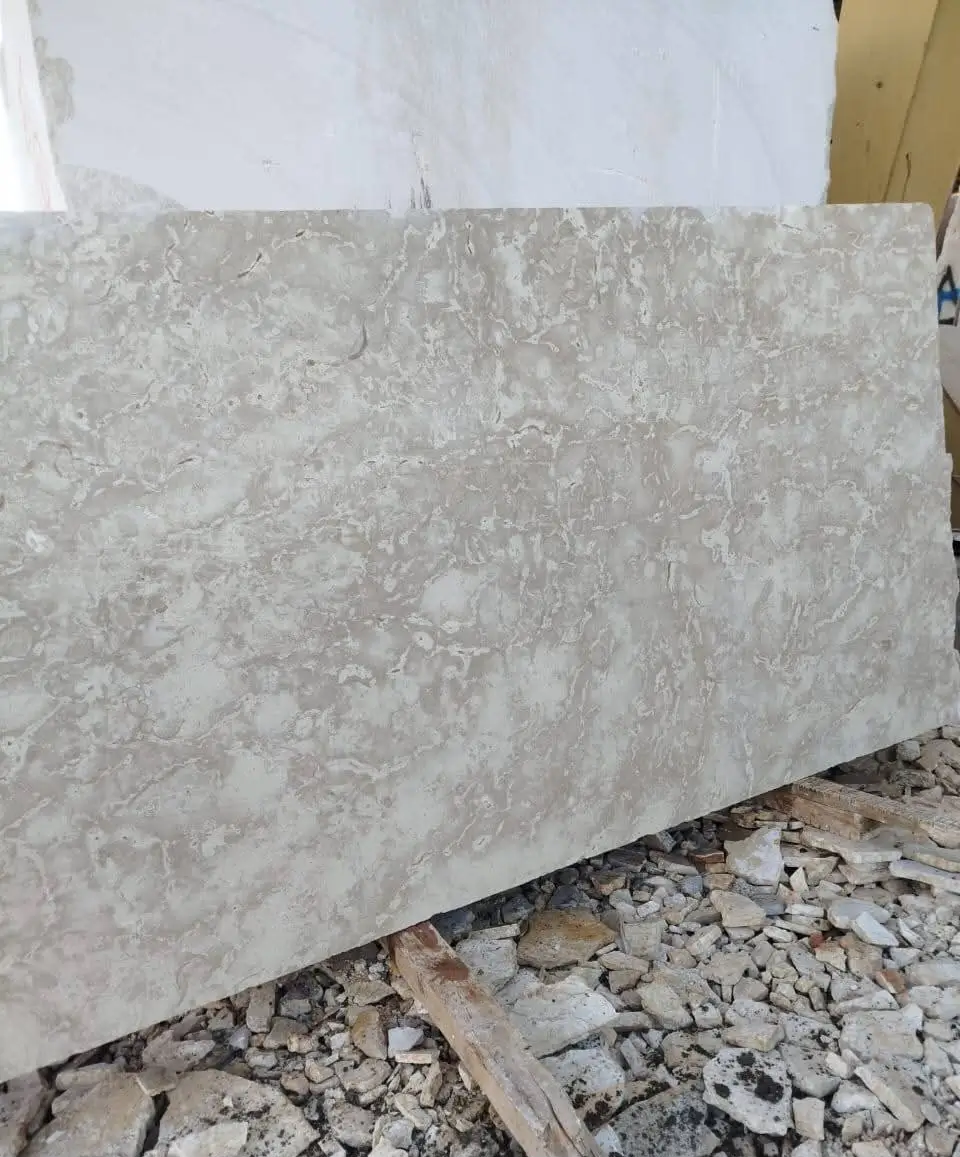
Phoenix Applications
In Phoenix, you would specify thermal mass building materials in Arizona with emphasis on maximum cooling load reduction during the extended summer season from May through October. Your material selection would prioritize limestone varieties with 155-160 lb/ft³ density to maximize thermal storage capacity against daily temperature swings averaging 25-30°F. The warehouse stocking protocols would ensure 4-6 week lead times for typical commercial quantities, allowing you to coordinate material delivery with project schedules that account for summer installation constraints.
Tucson Considerations
Your Tucson specifications would address the higher elevation effects that create 4-6°F cooler temperatures compared to Phoenix, reducing absolute cooling loads while maintaining strong diurnal temperature variation. You would consider how thermal mass building materials in Arizona perform with Tucson’s higher monsoon precipitation levels that temporarily increase stone moisture content by 2-4 percentage points. At Citadel Stone, we recommend specifying drainage details that accommodate moisture cycling while maintaining thermal performance throughout seasonal variations in ambient conditions.
Scottsdale Design Factors
For Scottsdale projects, you would typically address higher-end residential and hospitality applications where thermal mass building materials in Arizona contribute to both energy efficiency and aesthetic goals. Your specifications would coordinate stone selection with architectural requirements for specific color ranges and surface finishes while maintaining thermal properties necessary for cost savings. You would verify that selected materials meet compressive strength requirements exceeding 8,000 PSI for structural applications while delivering volumetric heat capacity above 2.0 MJ/m³K for effective thermal mass performance in the desert climate shared with Phoenix.
Implementation Planning Considerations
Your successful deployment of thermal mass building materials in Arizona requires integrated planning that coordinates architectural design, structural engineering, and MEP systems from project conception. You can’t retrofit thermal mass effectively into conventional designs—the building must be conceived around thermal mass principles from the beginning to achieve the 20-30% energy cost savings potential these systems offer.
The construction sequencing for thermal mass projects differs from conventional schedules. You need to coordinate stone delivery with wall construction in ways that protect material quality while maintaining installation productivity. Truck access to the project site becomes critical when you’re moving 140-160 pounds per square foot of wall material that requires careful handling and precise placement. Your logistics planning should account for warehouse staging areas if site storage proves inadequate for the material volumes involved.
You should specify installation during optimal weather windows when possible. While Arizona’s mild winters allow year-round construction, summer surface temperatures exceeding 140°F on south and west exposures create challenging conditions for setting materials and achieving proper mortar curing. Your construction schedule should target spring and fall periods for thermal mass installation, reserving summer months for interior work and mechanical system installation that benefits from the partially completed thermal envelope.
Professional practice requires you to balance performance requirements with budget constraints and schedule limitations. Thermal mass building materials in Arizona deliver the most compelling value proposition when you design buildings holistically around thermal mass principles rather than treating stone as decorative cladding that happens to provide incidental thermal benefits. For additional installation insights and technical specifications, review Commercial-grade stone material specifications for Arizona architects before you finalize your project documents. Column construction specifies Citadel Stone’s structural stone masonry materials in Arizona vertical elements.