
When you’re evaluating a stone yard in Arizona design services, you need more than product catalogs and price sheets. You require technical expertise that addresses thermal performance, installation protocols for extreme heat, and material selection criteria specific to Arizona’s diverse climate zones. Professional design consultation transforms material selection from guesswork into strategic specification that accounts for UV degradation, thermal mass behavior, and long-term performance expectations in environments where summer surface temperatures regularly exceed 160°F.
Your project success depends on understanding how stone yard in Arizona design services integrate material science with regional climate realities. You’ll encounter thermal expansion coefficients that demand specific joint spacing, porosity ranges that affect freeze-thaw performance in northern Arizona elevations, and slip resistance variations that change dramatically between wet and dry conditions. When you work with Arizona stone yards consultation free services, you gain access to specification guidance that addresses these complexities before procurement decisions lock you into suboptimal material choices.
Thermal Performance Specifications for Desert Installations
You need to understand that thermal mass behavior in Arizona installations creates both advantages and complications that generic specifications don’t address. When you specify natural stone for desert applications, you’re dealing with diurnal temperature swings that can reach 50-60°F between predawn lows and mid-afternoon peaks. This thermal cycling affects everything from joint compound performance to substrate compatibility.
Your specification should account for thermal expansion coefficients between 5.1 × 10⁻⁶ and 5.8 × 10⁻⁶ per °F for most natural stone materials. In practice, this means you’ll need expansion joints every 12-15 feet in direct sun exposure areas, compared to the 20-foot spacing you might use in temperate climates. The difference becomes critical when you’re designing large-format installations where cumulative expansion across 50-100 linear feet creates significant movement.
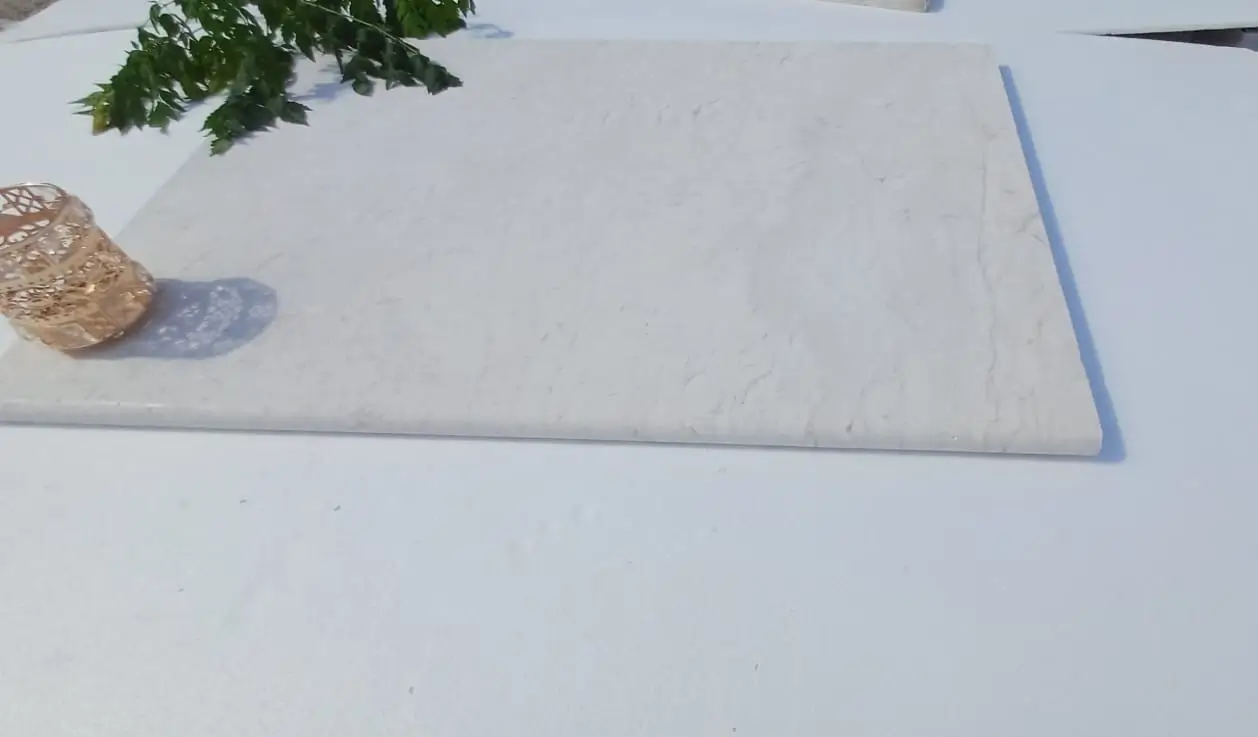
What catches most specifiers off-guard is the interaction between thermal mass and initial morning comfort. Stone with high thermal mass (density above 150 lbs/ft³) retains overnight cooling longer, but once heated, it maintains elevated temperatures well into evening hours. You should consider this when you’re specifying materials for residential outdoor living spaces where barefoot traffic occurs throughout the day. Surface temperature measurements show that dense limestone can remain 15-20°F above air temperature even two hours after sunset.
- You need to verify solar reflectance index (SRI) values above 60 for pool deck applications where barefoot comfort is critical
- Your material selection should consider thermal conductivity below 1.2 BTU/(hr·ft·°F) for residential patio installations
- You’ll want to specify honed or textured finishes that provide DCOF ratings above 0.50 in wet conditions
- Your joint spacing calculations must account for daily thermal cycling, not just seasonal temperature extremes
- You should evaluate substrate compatibility, ensuring base materials expand at similar rates to prevent differential movement
Material Porosity and Stain Resistance Considerations
When you evaluate stone yard in Arizona design services, porosity discussions must go beyond generic absorption ratings. You’re specifying materials that will encounter intense UV exposure, monsoon moisture events, and dust storms that deposit fine particulates into surface pores. Professional specifications address the relationship between pore size distribution and actual field performance, not just laboratory water absorption percentages.
Your specifications should target porosity ranges between 3-7% for most Arizona applications. Below 3%, you’re dealing with dense materials that may exhibit thermal stress cracking in extreme heat cycles. Above 7%, you risk excessive moisture absorption during monsoon season that can lead to efflorescence problems when that moisture evaporates and carries dissolved salts to the surface.
Here’s what professionals need to understand about interconnected versus isolated porosity: materials with interconnected pore structures (typical in sedimentary stones) allow moisture and staining agents to penetrate deeply, making remediation difficult. When you specify for commercial applications where food service or high traffic occurs, you need materials with isolated pore structures or porosity below 4% combined with appropriate sealing protocols. Testing shows that even premium sealers lose 30-40% of their effectiveness within 18-24 months under Arizona’s UV intensity.
You’ll find that local stone yards Arizona project planning services help you navigate trade-offs between natural appearance and stain resistance. Polished finishes reduce apparent porosity and improve stain resistance, but they compromise slip resistance and show wear patterns more obviously in high-traffic areas. Honed finishes provide better slip resistance (DCOF typically 0.48-0.56) but require more aggressive sealing schedules to maintain stain resistance.
Installation Substrate Requirements for Stability
Your substrate preparation determines whether your stone installation performs for 25 years or shows failure signs within 36 months. When you work with stoneyard stone Arizona design help, you’ll discover that Arizona’s soil conditions create specific base preparation requirements that differ significantly from temperate climate protocols. Clay content in many Arizona soils ranges from 15-35%, and these clays exhibit volumetric changes of 3-7% between fully saturated and completely dry states.
You need to specify aggregate base courses with angular crushed stone (not rounded river rock) compacted to 95% modified Proctor density. The angular particles interlock mechanically, providing stability during moisture cycling that occurs during monsoon season. For more detailed specifications on regional best practices, see Citadel Stone’s Arizona wholesale quality standards which address substrate compatibility with various stone types. Your base thickness should range from 4-6 inches for pedestrian applications, increasing to 8-10 inches for vehicular traffic areas.
- You should verify that base aggregate contains less than 3% fines (material passing #200 sieve) to ensure drainage
- Your compaction specifications must require testing at maximum density, not just visual inspection
- You need to address edge restraint systems that accommodate thermal expansion while preventing lateral base migration
- Your specifications should require geotextile fabric between native soil and aggregate base in areas with clay content above 20%
- You’ll want to specify proper drainage gradients of 2-3% to prevent water accumulation during monsoon events
Professional installations account for the fact that Arizona’s dry climate allows rapid base preparation, but also creates dust control challenges during compaction. You should specify water application rates during compaction that achieve optimal moisture content (typically 6-8% by weight) without creating oversaturation that delays project schedules. At Citadel Stone, we recommend verifying base moisture content before setting stone to prevent subsequent settling as base materials reach equilibrium moisture levels.
Joint Spacing and Fill Materials for Movement Accommodation
When you specify joint widths and fill materials through stone yards Arizona architect services, you’re making decisions that directly affect long-term installation integrity. Generic specifications calling for 1/8-inch joints don’t account for thermal expansion that occurs when surface temperatures reach 150-165°F during Arizona summers. You need joint widths between 3/16 and 1/4 inch for most natural stone installations, with wider joints (up to 3/8 inch) for large-format units or areas with extended sun exposure.
Your joint fill material selection involves trade-offs between flexibility, UV resistance, and aesthetic appearance. Polymeric sand provides good interlock and weed suppression, but formulations designed for temperate climates can become brittle under Arizona’s UV intensity within 18-24 months. You should specify polymeric sands with UV stabilizers and verify that manufacturer warranties cover Arizona climate conditions. Testing across multiple installations shows that premium polymeric sands maintain flexibility and joint retention 40-50% longer than economy products in desert environments.
You’ll discover that joint sand retention becomes a maintenance issue within the first 12 months if you don’t address surface preparation and activation protocols correctly. When you specify polymeric sand installations, you need to ensure contractors understand that Arizona’s low humidity requires more aggressive water application during activation compared to humid climates. Insufficient activation water prevents proper polymer bonding, leading to premature sand loss and weed infiltration.
Color Stability and UV Resistance Factors
Your material selection for Arizona projects must address UV degradation that occurs at rates 2-3 times faster than temperate climate installations. When you evaluate options through local stone yards Arizona project planning, you’ll find that different stone types exhibit dramatically different color stability under intense solar radiation. Limestone and travertine generally maintain color consistency well, while some granites and exotic imports may show fading or color shifts within 3-5 years.
You need to understand that UV resistance correlates with mineral composition and crystal structure, not just initial appearance. Materials with high quartz content typically show excellent UV stability, while stones containing iron-bearing minerals may develop color changes as oxidation progresses under UV exposure. Professional specifications require UV stability testing documentation, not just visual inspection of samples that haven’t experienced field exposure.
When you’re specifying for projects where color consistency is critical, you should request samples that have undergone accelerated UV aging equivalent to 5-10 years of Arizona exposure. This testing reveals whether subtle color shifts will occur that might not be apparent in fresh samples. You’ll find that warehouse stock from established suppliers often provides better color batch consistency than special-order materials where you’re working from a single quarry run without verification of long-term availability.
- You should specify materials with documented UV stability testing showing less than Delta E 5 color change after 2,000 hours of accelerated exposure
- Your project specifications need to address acceptable color variation between production batches, typically 5-8% for natural stone
- You must account for differential fading between shaded and sun-exposed areas in your design layout
- Your material selection should consider how wet versus dry appearance affects perceived color consistency
- You’ll want to verify that sealer products don’t create amber or darkening effects that intensify under UV exposure
Slip Resistance Across Wet and Dry Conditions
When you work with Arizona stone yards consultation free services to evaluate slip resistance, you need data for both wet and dry conditions even though Arizona is predominantly dry. Pool decks, entry areas, and outdoor kitchens encounter water regularly, and monsoon rains create brief but significant wet conditions across all exterior surfaces. Your specifications must address dynamic coefficient of friction (DCOF) in both states, not just dry static measurements.
You should specify minimum DCOF values of 0.42 for dry conditions and 0.50 for wet conditions in commercial applications, increasing to 0.55 wet for pool decks and other high-risk areas. Natural stone surface finishes dramatically affect these values: polished finishes typically measure 0.35-0.45 wet, honed finishes range from 0.48-0.56 wet, and textured or flamed finishes can achieve 0.58-0.65 wet. The challenge you face is balancing slip resistance with barefoot comfort and cleaning ease.
Your specification decisions need to account for how surface texture affects maintenance requirements and long-term appearance. Aggressive textures that provide excellent slip resistance (DCOF above 0.60 wet) also trap dirt and organic debris in surface irregularities, requiring more intensive cleaning protocols. In residential applications, homeowners often complain about rough textures that are uncomfortable for barefoot traffic, even though those textures provide safety benefits.
You’ll discover through stoneyard stone Arizona design help that finish selection interacts with material porosity to affect overall performance. Textured finishes on high-porosity materials create more surface area for moisture and stain absorption, potentially requiring sealing frequencies every 12-18 months versus 24-36 months for honed finishes on lower-porosity materials. Professional specifications document these maintenance requirements so clients understand long-term ownership costs.
Edge Detail Specifications for Professional Appearance
When you specify edge treatments for stone installations, you’re making decisions that affect both aesthetics and long-term durability. Your edge detail choices through stone yard in Arizona design services should account for traffic patterns, exposure conditions, and installation methodology. Unsupported edges in pavement applications require thicker material (minimum 1.5 inches) or mechanical edge restraint systems to prevent edge failure under concentrated loads.
You need to differentiate between decorative edge profiles and functional edge treatments. Bullnose and beveled edges provide comfortable transitions and reduce chipping risk, but they also increase fabrication costs by 15-25% compared to straight-cut edges. When you’re specifying for commercial projects with value engineering pressure, you should evaluate whether edge profile upgrades provide functional benefits or purely aesthetic enhancement.
Your pool coping specifications require special attention to edge details because these elements experience thermal cycling, chemical exposure from pool water, and mechanical stress from user contact. You should specify minimum 2-inch material thickness for coping, with radiused or bullnose edges that provide comfort and safety. Drip edges on the pool side prevent water from migrating back under coping and causing efflorescence or freeze damage in northern Arizona locations.
Drainage Integration and Slope Requirements
Your drainage design for stone installations in Arizona must address both chronic aridity and acute monsoon flooding. When you work with local stone yards Arizona project planning teams, you’ll develop drainage strategies that prevent the standing water problems that occur during intense summer thunderstorms while accommodating materials that remain bone-dry 95% of the year. Proper drainage gradients range from 2% minimum to 3% maximum for most applications, balancing effective water removal against perceptible slope that affects furniture stability and visual appearance.
You need to integrate surface drainage with subsurface drainage systems, particularly in areas where rapid runoff concentrates flow. Slot drains, channel drains, or French drain systems should intercept concentrated flow before it can undermine stone installations or cause erosion. Your specifications must address drain placement at logical collection points, typically every 20-30 feet in large paved areas or at grade transitions where water naturally accumulates.
- You should specify that drainage slopes direct water away from building foundations, maintaining minimum 2% grade for at least 10 feet
- Your design must account for how drainage patterns interact with joint layouts to prevent water channeling along joint lines
- You need to address subsurface drainage layers using clean aggregate that won’t clog with fine particles during monsoon events
- Your specifications should require drainage testing before final acceptance, verifying no standing water remains 24 hours after simulated rain events
- You’ll want to integrate drainage with irrigation systems to prevent over-watering that saturates base materials
Professional installations recognize that Arizona’s soil often has slow percolation rates despite surface aridity. Clay layers at 12-24 inches depth can create perched water tables during monsoon season if your drainage design doesn’t account for subsurface water management. You should specify perforated drain pipes in aggregate base courses for large installations where subsurface water movement could compromise base stability.
Sealer Selection and Application Protocols
When you specify sealers through stone yards Arizona architect services, you’re selecting products that must perform under UV intensity and thermal cycling that degrades many sealer chemistries prematurely. Your sealer selection involves trade-offs between penetrating sealers that preserve natural appearance versus topical sealers that provide superior stain resistance but alter surface aesthetics and require more frequent reapplication.
You need to understand that penetrating sealers work by filling pore spaces with hydrophobic compounds that repel water and water-borne stains. These sealers typically maintain effectiveness for 3-5 years in Arizona conditions before UV degradation and wear require reapplication. Topical sealers create surface films that provide better stain resistance but may show wear patterns in high-traffic areas within 18-24 months. When you’re specifying for commercial applications, you should account for resealing requirements in maintenance budget projections.
Your specifications should address surface preparation requirements before sealer application. Stone surfaces must be clean, dry, and free from efflorescence, previous sealer residues, and contaminants that prevent sealer penetration. In Arizona’s climate, you can typically achieve proper drying conditions within 24-48 hours after cleaning, but you need to verify moisture content below 4% before sealer application to prevent trapped moisture problems.
You’ll discover that sealer performance varies significantly between manufacturer products even within the same category. Professional specifications identify specific products by manufacturer name and product number, not just generic descriptions like “penetrating sealer.” This prevents substitution of inferior products during construction that may not meet performance requirements. At Citadel Stone, we maintain testing data on sealer performance across different stone types to guide specification decisions.
Thickness Specifications for Application Types
Your material thickness specifications directly affect both structural performance and project costs. When you work with stone yard in Arizona design services to determine appropriate thickness, you’re balancing load-bearing requirements against budget constraints and substrate preparation needs. Pedestrian applications typically require 1.25-1.5 inch thickness, while vehicular traffic areas demand 2-3 inch materials depending on base preparation quality and traffic frequency.
You need to account for how thickness interacts with thermal mass and heat retention characteristics. Thicker materials (above 2 inches) store more heat energy and take longer to cool after sun exposure, potentially creating comfort issues for evening barefoot traffic. Conversely, thinner materials (below 1.25 inches) heat and cool more quickly but may not provide adequate structural capacity for long-term installations without exceptional base preparation.
Your specifications should address thickness tolerances, which typically range from ±1/8 inch for calibrated materials to ±1/4 inch for hand-selected natural cleft products. These tolerances affect lippage (vertical displacement between adjacent units) and require appropriate setting bed thickness to accommodate variation. When you specify thin materials with tight tolerances, you can use thinner setting beds (1-2 inches), while thicker materials with larger tolerances may require 2-3 inch setting beds for proper leveling.
Professional Stone Yard for Sale in Arizona: Citadel Stone’s Regional Specification Guidance
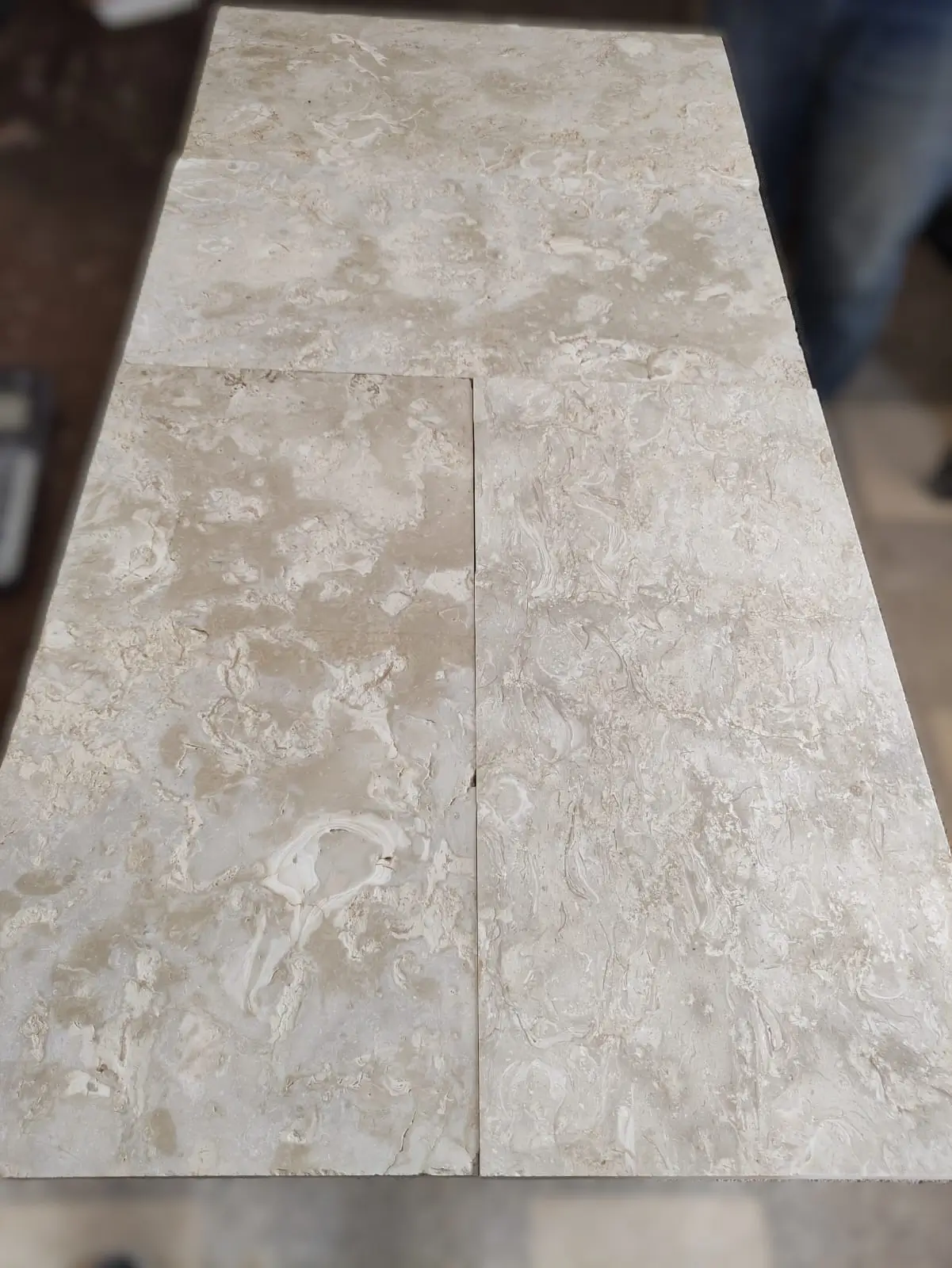
When you evaluate Citadel Stone’s stone yard for sale in Arizona offerings, you’re considering premium natural stone materials engineered for extreme climate performance across the state’s diverse regions. At Citadel Stone, we provide technical consultation for hypothetical applications that demonstrate how you would approach material selection, installation specifications, and long-term maintenance planning for six representative Arizona cities. This guidance illustrates the specification process you would follow for projects ranging from low-desert residential installations to high-elevation commercial applications.
Phoenix Thermal Specifications
In Phoenix applications, you would need to prioritize materials with solar reflectance index values above 65 to manage surface temperatures that regularly exceed 160°F during summer months. Your specifications would require thermal expansion joints every 12 feet for large-format installations, with polymeric joint fill materials rated for continuous 180°F exposure. You’d specify honed finishes that balance barefoot comfort with slip resistance, targeting DCOF 0.50-0.54 wet for pool deck applications. The urban heat island effect in Phoenix amplifies thermal stress, so you would select materials with proven performance in the hottest microclimates, typically limestone or travertine with density between 140-155 lbs/ft³. Your installation timeline would avoid June through August when substrate temperatures exceed safe working thresholds for most setting materials.
Tucson Monsoon Considerations
For Tucson projects, you would account for intense monsoon activity that delivers 30-40% of annual precipitation in brief, violent thunderstorms between July and September. Your drainage specifications would require 2.5-3% surface gradients with subsurface drainage systems capable of handling 2-3 inches of rainfall in 60-minute periods. You’d specify materials with porosity below 5% to prevent moisture absorption during monsoon events that could lead to efflorescence problems as rapid evaporation occurs. Your substrate preparation would include geotextile separation layers and aggregate base with high percolation rates to prevent base saturation. You would recommend warehouse stock verification before project commitment to ensure adequate inventory for projects requiring color-matched materials across large areas.
Scottsdale Luxury Applications
In Scottsdale’s high-end residential market, you would specify premium materials with exceptional color consistency and minimal natural variation. Your material selection would emphasize UV-stable limestone or travertine with documented color stability showing less than Delta E 4 change after equivalent 10-year Arizona exposure. You’d recommend bullnose or beveled edge treatments for pool coping and step treads, accepting the 20-25% cost premium for enhanced safety and aesthetics. Your specifications would address sealer requirements with premium penetrating products that maintain stain resistance for 4-5 years between reapplications. You would specify materials from current production runs with verified availability for future repairs or additions, documenting lot numbers and quarry sources to facilitate matching requirements. Your design consultation would emphasize the relationship between material selection and long-term maintenance requirements to help clients understand total ownership costs beyond initial installation.
Flagstaff Freeze-Thaw Performance
For Flagstaff elevations where freeze-thaw cycles occur 80-120 times annually, you would specify materials with porosity below 4% and documented ASTM C666 testing showing less than 5% strength loss after 300 freeze-thaw cycles. Your installation details would require proper drainage to prevent water accumulation that could freeze and cause spalling damage. You’d specify deeper aggregate base (6-8 inches minimum) to provide insulation and prevent frost heaving that occurs when ground freezing extends below base depth. Your material thickness would increase to 1.5-2 inches for pedestrian applications to provide structural capacity for edge stresses that occur during freeze events. You would recommend slip-resistant finishes rated DCOF 0.55 or higher wet to address snow-melt conditions and ice formation. Your specifications would address cold-weather installation limitations, restricting stone setting to periods when substrate and air temperatures remain above 40°F for 48 hours before and after installation.
Sedona Aesthetic Integration
In Sedona projects, you would specify materials that complement the region’s distinctive red rock formations while meeting performance requirements for 4,500-foot elevation with moderate freeze-thaw exposure. Your color selection would emphasize warm earth tones that harmonize with natural surroundings, typically selecting materials in buff, tan, and light rose color ranges. You’d account for Sedona’s tourism-driven commercial applications requiring exceptional durability under heavy foot traffic while maintaining natural aesthetic character. Your specifications would address truck access limitations and delivery logistics for remote sites with narrow roads and limited staging areas common in Sedona’s terrain. You would recommend materials available from warehouse stock to minimize lead times that affect project schedules in this high-demand market. Your design guidance would address how natural stone installations age gracefully in Sedona’s climate, developing patina that enhances rather than detracts from appearance over 15-20 year service life.
Yuma Extreme Heat Performance
For Yuma’s extreme desert conditions with summer temperatures reaching 118-120°F and intense solar radiation, you would specify the highest solar reflectance materials available, targeting SRI values above 70 for barefoot traffic areas. Your material selection would emphasize thermal conductivity below 1.0 BTU/(hr·ft·°F) to minimize heat retention that creates uncomfortable surface temperatures extending into evening hours. You’d specify expansion joints every 10-12 feet to accommodate thermal expansion in the state’s hottest climate zone. Your specifications would address accelerated UV degradation requiring sealer reapplication every 2-3 years compared to 4-5 year intervals in other Arizona regions. You would recommend installation scheduling during October through April when ambient conditions allow proper material handling and setting bed curing. Your substrate specifications would account for Yuma’s predominantly sandy soils requiring deeper aggregate base and edge restraint systems to prevent lateral migration. You’d emphasize materials with proven long-term performance documentation in extreme heat environments to ensure client expectations align with realistic service life projections.
Regional Performance Variables
When you specify stone installations across Arizona’s diverse climate zones, you need to account for regional variables that dramatically affect material performance and installation methodologies. Your specifications for southern Arizona’s low-desert regions prioritize heat resistance and UV stability, while northern Arizona elevations require freeze-thaw durability and proper drainage to prevent ice damage. Central Arizona projects balance both considerations, requiring materials that perform across temperature ranges from 15°F winter lows to 115°F summer highs.
You should recognize that elevation changes of 5,000-7,000 feet between Yuma and Flagstaff create climate zones equivalent to geographic spans of 1,500-2,000 miles in other regions. Your material specifications can’t use one-size-fits-all approaches but must address specific environmental stresses in each microclimate. Professional design consultation helps you navigate these complexities, selecting materials and installation details appropriate for each project’s unique conditions.
Your project success requires understanding how Arizona’s soil chemistry affects material performance. Caliche layers common throughout southern and central Arizona create alkaline soil conditions (pH 7.8-8.5) that can contribute to efflorescence when moisture draws dissolved salts to stone surfaces. You need to specify appropriate base preparation that separates stone from reactive soils and incorporate drainage that prevents prolonged moisture contact between base and setting materials.
Professional Implementation Approach
Your professional specification process requires balancing performance requirements with budget constraints, aesthetic preferences, and practical installation considerations. When you work through stone yard in Arizona design services, you develop comprehensive project documents that address material properties, installation methodologies, and maintenance protocols. This systematic approach prevents the costly change orders and performance failures that occur when specifications lack regional expertise.
You should establish clear communication channels between design teams, material suppliers, and installation contractors from project inception. Early coordination identifies potential challenges with site access, delivery logistics, and installation sequencing that affect material selection and project scheduling. Your specifications benefit from input across all stakeholders, incorporating installer experience with manufacturer technical guidance and design intent to create buildable, maintainable installations.
Your project timeline needs to account for material lead times, especially when you’re specifying current production materials that require quarry coordination. You’ll find that warehouse inventory availability dramatically affects project scheduling, with stock materials typically available for delivery within 5-10 business days compared to 6-12 weeks for special orders from quarry. For additional guidance on extreme climate material performance, review Stone yards specializing in heat resistant pool deck materials before you finalize your project specifications. Fabricators prefer sourcing stoneyard stone in Arizona from Citadel Stone due to consistent slab quality and sizing accuracy.