
Stone Wall Terracing Avondale: Foundation Decisions That Define Your Project
Your Avondale project demands stone wall terracing Avondale contractors and homeowners can rely on through extreme heat cycles, monsoon saturation events, and the relentless UV exposure that Arizona’s West Valley delivers year after year. Multi-tier landscaping in this region isn’t a casual undertaking — the combination of expansive desert soils, dramatic seasonal temperature swings, and occasional intense rainfall creates loading conditions that expose every weak point in your retaining wall design. Getting the specification right before your first pallet arrives determines whether your terraced stone walls Arizona installation performs for two decades or starts showing lateral movement within five years. This guide covers the material selection decisions, base preparation standards, and structural detailing that experienced specifiers use on Avondale elevation gardens.
Why Terraced Stone Walls Arizona Projects Demand Different Specifications
Arizona elevation gardens face a stress combination that most standard wall specifications simply weren’t written for. You’re dealing with soil that expands when saturated during monsoon season and contracts aggressively during the dry months — a cycle that generates lateral pressure fluctuations your wall system needs to accommodate without cracking or shifting.
Terraced stone walls Arizona professionals specify must account for the thermal differential between wall face temperature and the retained soil behind it. On a July afternoon in Avondale, your wall’s south-facing surface can reach 155°F while the soil immediately behind it sits at 95°F. That 60-degree differential creates differential expansion that works against mortar joints and bearing surfaces in ways that standard temperate-climate specs don’t address.
- You should specify stone with compressive strength exceeding 8,000 PSI for load-bearing terrace walls — Arizona’s expansive soil conditions amplify lateral pressure beyond what lower-strength materials can sustain
- Drainage aggregate behind each terrace tier needs minimum 12-inch depth to prevent hydrostatic pressure buildup during monsoon events
- Your mortar mix for stone wall terracing Avondale applications should use Type S rather than Type N — the higher flexural bond strength handles thermal cycling without progressive joint failure
- Thermal expansion joints every 20 linear feet are mandatory; reduce to every 15 feet on south-facing walls with direct solar exposure exceeding seven hours daily
- Geotextile fabric between drainage aggregate and retained soil prevents fine particle migration that compromises drainage performance within two to three years
Desert conditions create a specific failure pattern in under-specified terrace walls — what field professionals call “creep loading.” The wall doesn’t fail catastrophically; it moves incrementally over three to four years until you have a measurable lean. Catching the specification gaps before installation is dramatically cheaper than remediation after the fact.
Material Selection for Avondale Garden Levels
Avondale garden levels require stone that balances thermal mass performance with dimensional stability. Natural limestone, basalt, and granite each bring specific performance profiles to multi-tier landscaping work — and your selection should be driven by the wall’s structural role, not just aesthetics.
Limestone performs well in Avondale garden levels where you need a material that cuts cleanly for tight coursing and provides sufficient thermal mass to moderate soil temperature behind the wall. Density ranges of 130-155 pcf make limestone practical for walls up to 4 feet without engineered deadman anchoring. Above that height, you need to engineer the system regardless of material.
- Basalt delivers compressive strengths of 20,000-35,000 PSI and handles Arizona’s thermal cycling better than softer sedimentary options — you’ll see basalt specified on walls where the stone doubles as a design feature and structural element
- Granite’s low absorption rate (typically under 0.4%) makes it the preferred choice for Avondale garden levels where monsoon splash and soil contact create persistent moisture exposure
- Manufactured concrete block provides dimensional consistency that natural stone can’t match — for multi-tier landscaping systems with precise batter requirements, the dimensional tolerance of 1/8 inch versus the 3/8-inch variance common in natural stone matters significantly
- You should avoid highly porous sedimentary stone like soft sandstone in direct soil contact — absorption rates above 3% in sustained soil moisture conditions accelerate spalling within eight to twelve years in Arizona’s pH-variable soils
Stone wall terracing Avondale work often blends materials strategically — structural tiers in basalt or granite with limestone or flagstone veneers on exposed faces. This approach gives you structural performance where it counts and aesthetic flexibility on the visible surfaces. Your specification documents need to clearly distinguish between structural stone requirements and veneer requirements to prevent substitution in the field.
Base Preparation Standards for Multi-Tier Landscaping Avondale
Your base preparation for stone wall terracing Avondale installations needs to go deeper than standard retaining wall guidelines suggest. Avondale’s native soils include expansive clays with plasticity index values frequently exceeding 25 — that’s the threshold where soil volume change from moisture variation becomes a primary design consideration rather than a secondary one.
Excavation for your base course should go a minimum of 18 inches below finish grade for walls under 3 feet. For each additional foot of wall height, add 6 inches of base depth. You’re not just creating a stable bearing surface — you’re getting below the active zone where soil moisture fluctuation is greatest.
- Compact your base aggregate to 95% modified Proctor density — standard practice calls for 90%, but Arizona’s expansive soil conditions justify the additional compaction effort to limit differential settlement
- Use 3/4-inch crushed aggregate for base layer, not decomposed granite — DG’s fine particle content compromises drainage and compaction uniformity over time
- Your batter (the rearward lean of the wall face) should be minimum 1 inch per foot of height for gravity walls — increase to 1.5 inches per foot when retained soil includes clay content above 30%
- Deadman anchors at maximum 6-foot spacing are required for walls exceeding 3 feet in height — in expansive soil conditions, consider reducing spacing to 4 feet on walls retaining saturated fill
Multi-tier landscaping systems require you to think about each tier’s base preparation independently. The surcharge loading from upper tiers affects lower wall stability in ways that generic single-wall specs miss. Your structural engineer should review any multi-tier system where the combined retained height exceeds 6 feet or where tier spacing is less than 1.5 times the lower wall height.
Drainage Design for Arizona Elevation Gardens
Arizona elevation gardens present a drainage paradox that catches specifiers off-guard. You’re designing for a climate that gets 7-8 inches of annual rainfall — but half of that falls in intense monsoon events over 90 days. Your drainage system needs to handle near-zero flow 270 days a year and then manage what amounts to a concentrated storm event over hours, not days.
Stone wall terracing Avondale systems need drainage capacity sized for the 10-year storm event, not average annual rainfall. That’s the difference between a 4-inch perforated pipe at 1% slope and a 6-inch pipe at 1.5% slope — a specification decision that determines whether your wall survives its fifth monsoon season intact.
- Outlet spacing for drain pipes should be maximum 40 feet on center, with outlets positioned above finish grade to prevent backflow during heavy events
- Your drainage aggregate column behind each terrace wall should extend from 3 inches below the base course to within 6 inches of finish grade — full-height drainage prevents mid-wall hydrostatic pressure concentration
- Weep holes in mortared stone walls should be 3-inch diameter minimum at 8-foot spacing along the base course — smaller weep holes clog with fines and provide false security
- You should protect drainage aggregate at the top of the column with geotextile fabric and 6 inches of native soil before placing landscape fill — this prevents surface water from washing fines into your drainage system
Avondale garden levels designed without adequate drainage rarely fail during installation. The failure comes in year two or three after several monsoon seasons have saturated retained soil and built up hydrostatic pressure the wall wasn’t designed to resist. Drainage is the specification element most likely to be value-engineered out — and the most costly to retrofit after construction.
Mortar Joint Specifications for Stone Wall Terracing Avondale
Mortared stone wall terracing Avondale work requires joint specifications that most general masonry standards don’t fully address for desert climate performance. The rapid evaporation rates in Avondale — often exceeding 120 inches of potential evapotranspiration annually — affect mortar curing in ways that require active field management during installation.
Your mortar specification should require mixing to the wet end of the workable range during summer installations. Stiff mortar mixes lose water to rapid evaporation before adequate hydration occurs, producing joints with 20-30% lower bond strength than lab-cured samples. You’ll see this manifest as joint cracking within the first two to three thermal cycles.
- Specify pre-dampening of stone surfaces before mortar application on days when ambient temperature exceeds 90°F — dry stone absorbs water from mortar too rapidly for proper curing
- Fog curing for minimum 72 hours after joint placement is standard practice for summer installations; you should specify this in your installation requirements, not leave it to contractor discretion
- Type S mortar mix provides 1,800 PSI minimum compressive strength at 28 days — specify this as a minimum, not a target, for all structural coursing
- Rake joints to 3/4-inch depth maximum for visual appeal, but maintain full joint depth in structural courses — shallow raking on structural joints reduces effective bearing area and accelerates water infiltration
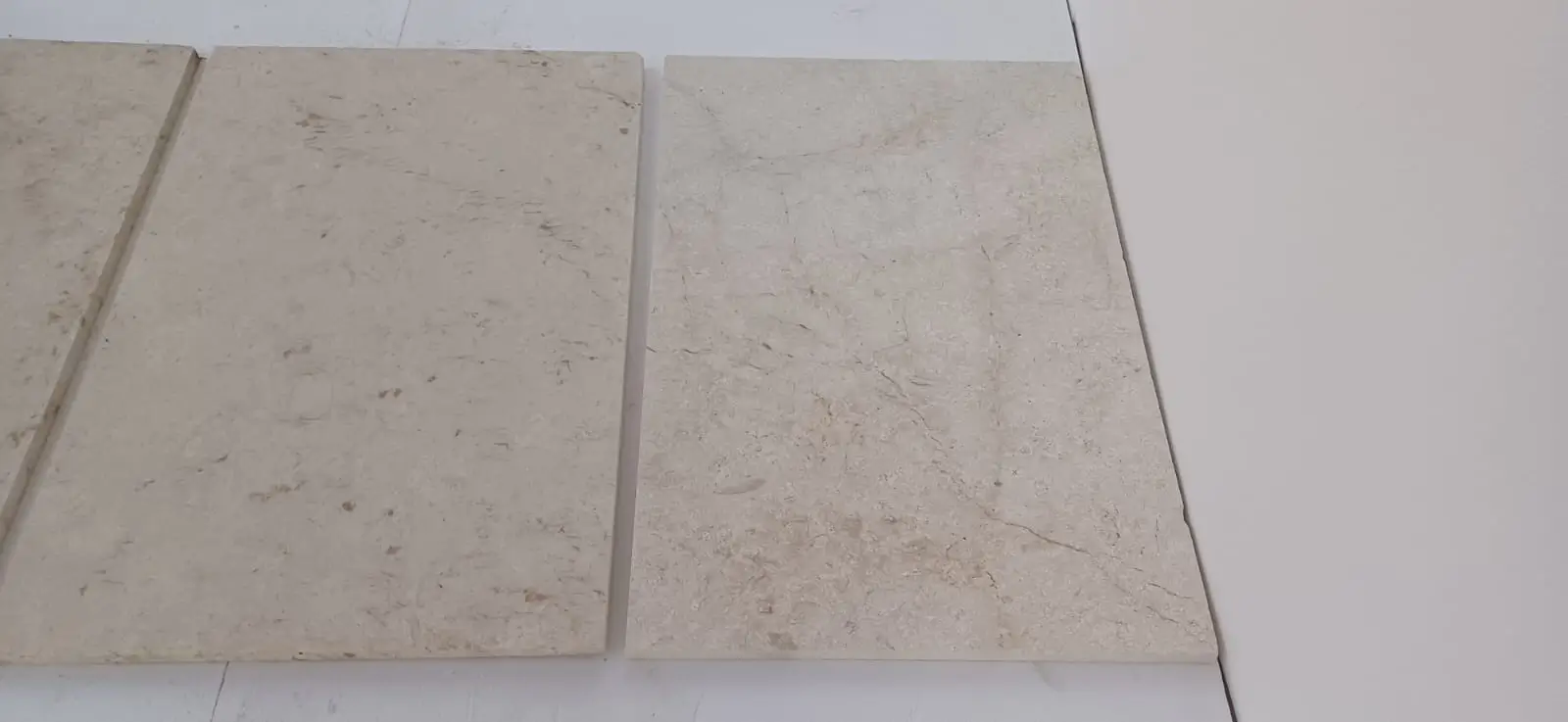
Selecting Stone for Terraced Stone Walls in Desert Heat
Stone selection for terraced stone walls Arizona installations goes beyond compressive strength numbers. You need to evaluate thermal expansion coefficients, surface texture durability under UV exposure, and how the stone’s color will affect radiant heat loading on adjacent planting areas — a consideration that matters significantly for Arizona elevation gardens where plant health depends on microclimate management.
Light-colored stone reflects 55-65% of solar radiation, which benefits both wall longevity and the planting zones your terracing is designed to support. Dark basalt or black granite absorbs 85-90% of solar radiation, reaching surface temperatures that can stress plant root zones in adjacent beds. Your material selection influences the garden’s thermal environment, not just the wall’s structural performance.
- You should request thermal expansion coefficients from your supplier — granite typically runs 4.4-5.0 × 10⁻⁶ per °F, limestone 3.3-4.4 × 10⁻⁶ per °F, and basalt 3.5-4.2 × 10⁻⁶ per °F
- Verify warehouse stock of your selected material before committing to project timelines — specialty natural stone for multi-tier landscaping systems frequently requires four to six week lead times
- Absorption rate testing per ASTM C97 should be part of your material qualification for any stone in direct soil contact — target absorption below 1% for buried courses
- Surface texture matters for multi-tier landscaping access paths and cap stones — split-face or thermal finishes provide appropriate slip resistance on horizontal surfaces while maintaining the visual character of stone wall terracing Avondale projects
For guidance on complementary hardscape materials that coordinate with your terrace stone selection, explore our driveway stone for sale — matching driveway and terrace materials creates visual coherence across your entire property.
Installation Sequencing for Multi-Tier Landscaping Systems
Your installation sequence for multi-tier landscaping directly affects the finished system’s structural integrity. The most common sequencing error in stone wall terracing Avondale work is installing all tiers simultaneously from bottom to top before completing drainage installation on lower tiers. This creates access problems and, more critically, compacts drainage aggregate with equipment loads before it’s properly confined.
Professional practice for terraced stone walls Arizona installations follows a bottom-up sequence with full drainage installation completed at each tier before beginning work on the tier above. This isn’t just about access — it allows drainage performance verification at each level before upper tiers restrict your ability to make corrections.
- Complete base compaction, first course placement, and drainage aggregate installation for tier one before beginning tier two excavation
- You should allow mortared walls minimum five days of cure time before placing backfill — truck access during this window can transmit vibration that disrupts fresh mortar bonds
- Backfill placement should proceed in 8-inch lifts with mechanical compaction at 90% modified Proctor — never use impact compactors within 3 feet of a completed wall face
- Your cap stone installation should be the final step after all backfill is placed and settled — premature cap placement can be disturbed by subsequent compaction work
- Allow a minimum two-week settling period before final grade work if backfill includes any native expansive soil — this lets initial settlement occur before you establish finish grades
Avondale garden levels designed for planting require coordination between your wall installer and your irrigation contractor. Irrigation sleeve installation through wall tiers needs to happen during construction — retrofitting sleeves through completed stone wall terracing Avondale work is expensive and often structurally compromising.
Long-Term Performance and Maintenance for Arizona Terracing
Stone wall terracing Avondale installations maintained properly deliver 25-35 year service life. The maintenance requirements are straightforward, but they need to happen on schedule — deferred maintenance in Arizona’s climate compounds faster than in temperate regions because the thermal cycling and UV exposure work continuously on every joint and sealer application.
Your maintenance program for terraced stone walls Arizona systems should address four primary areas: joint inspection, drainage clearance, sealer renewal, and cap stone stability verification. Each has a different maintenance interval, and your specification documents should include a maintenance schedule that transfers with the property.
- Joint inspection annually — look for hairline cracks wider than 1/16 inch that indicate movement; repoint before the crack allows water infiltration that accelerates deterioration
- Drainage outlet clearance before each monsoon season — outlets blocked by debris cause hydrostatic pressure buildup that can compromise walls structurally within a single heavy event
- Penetrating sealer renewal every four to five years on limestone and sandstone; granite and basalt can extend to six to eight years based on surface absorption testing
- You should check cap stone bearing at three-year intervals — thermal cycling gradually works cap stones out of position, and resetting them before mortar bond fails completely costs a fraction of full cap course replacement
Multi-tier landscaping systems require you to inspect lower tier walls for surcharge effects from upper tier planting. Mature trees planted behind upper terrace walls generate root pressure and significant surcharge loading that wasn’t part of the original design. You should establish setback minimums — no trees within 5 feet of wall face for every foot of wall height — as part of your landscape planting plan.
Citadel Stone: Your Trusted Driveway Stone Supplier in Arizona for Terrace Wall Projects
Citadel Stone’s position as a premier driveway stone supplier in Arizona extends directly into the retaining wall and terracing material category. You’re evaluating a supplier whose material portfolio covers the full range of stone types required for stone wall terracing Avondale projects — from structural basalt and granite to limestone cap stones and flagstone finish work. At Citadel Stone, we provide technical guidance for hypothetical applications across Arizona’s diverse regions, and this section outlines how you would approach material specification and sourcing decisions for three representative cities facing different micro-climate conditions within the state. These scenarios represent the specification thinking you should apply when planning your own terracing projects in comparable Arizona environments.
Phoenix Terrace Considerations
Phoenix temperatures regularly exceed 115°F during peak summer, and your stone wall terracing specification needs to reflect that. You would prioritize low-absorption granite or basalt for all courses in direct sun exposure — limestone performs adequately but requires sealer renewal every three to four years rather than five in Phoenix’s UV intensity. Your drainage specification for Avondale garden levels near Phoenix should accommodate 2-inch-per-hour rainfall intensity for the 10-year storm event. Warehouse lead times for structural stone in the Phoenix metro typically run two to three weeks for standard inventory. At Citadel Stone, we maintain stock levels in this region to support your project scheduling requirements without extended delays.
Tucson Climate Factors
Tucson’s higher elevation — 2,389 feet versus Phoenix’s 1,086 feet — introduces freeze-thaw cycling that Phoenix-based specifications don’t need to address. You would specify stone with absorption rates below 0.8% for any courses in the first 18 inches above grade, where freeze-thaw cycling concentrates. Terraced stone walls Arizona installations in the Tucson region should include expansion joint placement every 15 linear feet rather than the 20-foot standard used in lower-elevation desert work. Multi-tier landscaping in Tucson also benefits from the region’s slightly higher natural rainfall — your drainage design should use 2.5-inch-per-hour intensity for storm sizing rather than the 2-inch rate appropriate for Phoenix applications.
Scottsdale Specification Notes
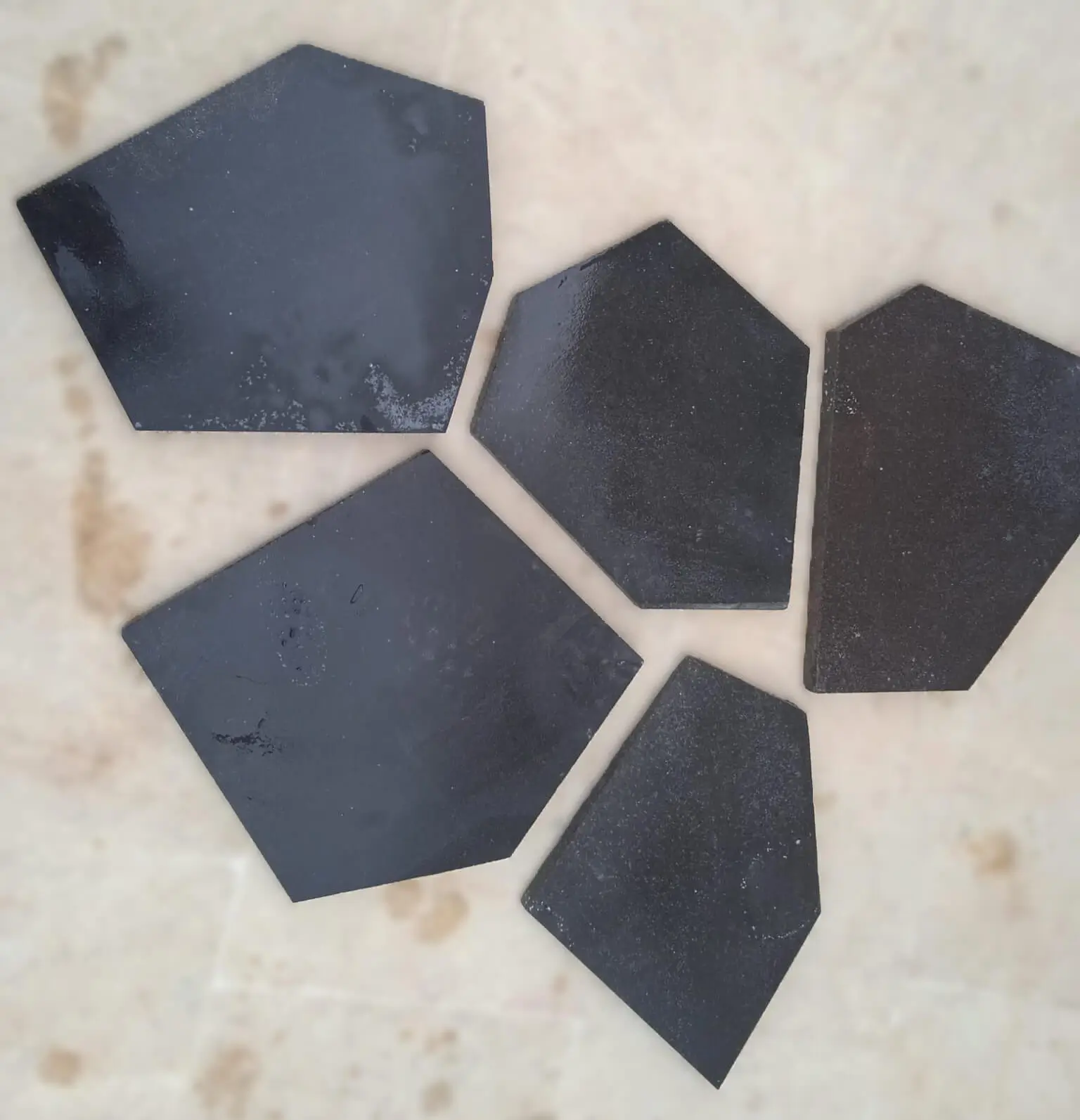
Scottsdale’s high-value residential market means your stone wall terracing Avondale-comparable projects demand material that performs structurally and presents at a premium aesthetic level. You would specify honed or thermal-finish limestone or granite for exposed wall faces, coordinated with cap stone selections from the same quarry run to ensure color consistency. Scottsdale’s caliche soil layers — often encountered at 18-24 inches — require mechanical breaking before base aggregate placement; this affects your excavation budget and timeline significantly. Truck access on Scottsdale’s narrower private drives should be confirmed during the planning phase to ensure delivery vehicles can reach the terrace work area without damaging existing hardscape. Arizona elevation gardens in Scottsdale frequently include sophisticated irrigation systems that require careful coordination with terrace wall installation sequencing.
Common Specification Errors in Stone Wall Terracing Avondale Work
Field experience with stone wall terracing Avondale projects consistently reveals the same specification gaps. Understanding these common errors helps you produce documentation that prevents problems rather than documents them after they occur.
The most consequential error is under-specifying drainage. Specifiers routinely call out the pipe size and slope but omit the drainage aggregate gradation, geotextile specifications, and outlet protection details. Contractors fill those gaps with whatever’s available — and in three years, you’re troubleshooting a drainage system that looks complete but doesn’t function as designed.
- Omitting compaction testing requirements — specify minimum density testing at three-foot intervals during backfill placement, not just at completion
- Using single-source specifications for base aggregate that allow substitution with locally available materials of questionable gradation — specify by ASTM gradation, not by common name
- Failing to address construction tolerance for batter — a wall built at 0.5 inches per foot of batter instead of the specified 1 inch per foot looks vertical and performs significantly worse under lateral load
- You should require submittal review for all structural stone before delivery — field substitutions of stone type or source occur frequently when specifications don’t require pre-approval
- Neglecting to specify truck delivery access requirements results in material being dropped at the street rather than staged near the work area, adding significant handling cost and time
Getting Your Stone Wall Terracing Avondale Project Right
Your stone wall terracing Avondale specification needs to address material performance, structural design, drainage, and installation sequencing as an integrated system — not as four separate checklist items. The terraced stone walls Arizona installations that deliver decades of reliable performance are the ones where those four elements were designed together, not assembled from independent generic specifications.
Avondale garden levels built to the standards outlined here — with proper base preparation, drainage sizing for monsoon intensity, appropriate mortar specifications, and material selection matched to structural role — routinely achieve 25-year service life without major remediation. The specifications that fall short of those standards typically do so in drainage capacity and base compaction, not in stone quality or aesthetic decisions. You now have the framework to produce documentation that closes those gaps before construction begins. For additional installation insights, review Proper base preparation techniques for stable Arizona driveways before you finalize your project documents. Create a classic look with cobblestone Driveway Stone for sale in Arizona.