
When you source natural stone for your Arizona projects, quality standards aren’t just technical checkboxes — they’re the foundation of long-term performance guarantees. You need to understand that stone supply Arizona quality standards directly impact everything from structural integrity to aesthetic longevity, especially when you’re working in climates where summer surface temperatures exceed 160°F and thermal cycling creates stresses most generic materials can’t handle.
Your specification decisions depend on verifiable compliance with ASTM testing protocols, third-party certifications that actually mean something in the field, and supply chain transparency that lets you trace material provenance from quarry to job site. The difference between a stone supply company in Arizona ASTM-compliant and one that simply claims quality becomes obvious 18-36 months post-installation, when inferior materials start showing thermal fracturing, efflorescence patterns, or premature surface degradation.
You’ll find that stone supply Arizona quality standards address five critical performance categories: compressive strength verification, absorption and porosity testing, freeze-thaw durability assessment, slip resistance certification, and dimensional tolerance documentation. Each category connects directly to real-world failure modes you’ve likely encountered — or will encounter if you skip proper vetting. At Citadel Stone, we maintain comprehensive testing documentation because you deserve material selection confidence backed by measurable data, not marketing claims.
Understanding ASTM Compliance Requirements for Stone Supply
ASTM International standards provide the framework you need to evaluate stone performance objectively. When you specify materials for commercial or high-value residential projects, you’re relying on ASTM C615 for granite, ASTM C503 for marble, ASTM C568 for limestone, and ASTM C1527 for travertine. These aren’t interchangeable standards — each addresses material-specific characteristics that determine suitability for your application.
The stone supply company in Arizona ASTM compliance you should demand includes compressive strength testing that verifies minimum thresholds of 8,000 PSI for most exterior applications and 12,000+ PSI for structural elements. Your projects face unique challenges when daytime surface temperatures reach 165°F and nighttime temperatures drop to 85°F within six hours. This 80-degree thermal cycling occurs daily during peak season, creating expansion-contraction stresses that exploit any material weakness.
You need to verify that your supplier conducts absorption testing per ASTM C97, which measures the percentage of water a stone specimen absorbs under controlled conditions. For Arizona applications, you’re looking at optimal absorption rates between 0.2% and 0.4% for dense materials like granite, while limestone and travertine may range from 1.5% to 6.0% depending on density classification. Higher absorption doesn’t automatically disqualify a material, but it changes your sealing protocols and maintenance expectations significantly.
Flexural strength testing under ASTM C880 tells you how your stone performs under load conditions that create bending stresses. You’ll encounter these in cantilever applications, large-format installations, and any scenario where stone spans unsupported distances. The modulus of rupture data from this testing directly informs your thickness specifications — a detail that separates professional specifications from guesswork.
Critical Testing Protocols for Arizona Stone Performance
Arizona’s climate demands testing protocols that go beyond standard ASTM minimums. You’re working in an environment where UV exposure exceeds 95% of North American locations, where monsoon season creates rapid moisture cycling, and where alkaline soils with pH levels of 8.0-8.5 interact with stone porosity to create efflorescence conditions standard testing doesn’t address.
When you evaluate Arizona stone supply inc testing documentation, you should verify thermal cycling protocols that simulate your actual climate conditions. Standard freeze-thaw testing per ASTM C666 assumes moisture presence during freeze cycles — relevant for Flagstaff and high-elevation areas, but irrelevant for Phoenix, Tucson, and low-desert installations. What you need instead is dry thermal cycling data that measures dimensional stability across 140-degree temperature swings without moisture presence.
- You should request accelerated weathering test results that simulate 10-15 years of Arizona UV exposure in compressed timeframes
- Your specifications need to address salt crystallization testing for areas with water features or irrigation exposure
- You’ll want verification that porosity measurements account for directional variation within the stone block
- Your supplier should provide hardness testing data that predicts surface wear patterns in high-traffic applications
The distinction between laboratory testing and field performance becomes critical when you consider how installation methods affect material properties. Wet-set applications alter surface porosity by 8-12% compared to dry-set installations, changing absorption characteristics in ways standard testing doesn’t capture. You need to account for this in your sealing specifications and maintenance planning.
Slip resistance testing under ASTM C1028 provides static coefficient of friction data, but your real-world concern is wet dynamic coefficient — the measurement that matters when monsoon rains hit 115°F pavement and create steam conditions. You’re looking for DCOF values of 0.50 or higher for most exterior applications, increasing to 0.60+ for pool decks and water feature surrounds where wet conditions dominate.
Third-Party Certifications That Actually Matter in the Field
You’ve likely seen marketing materials touting various certifications, but only a handful actually predict field performance. When you evaluate local stone supply Arizona certifications, you need to distinguish between meaningful third-party verification and self-certification schemes that provide no independent oversight.
NSF/ANSI 51 certification matters when you’re specifying stone for food service environments, commercial kitchens, or any application where sanitation requirements demand non-porous, bacteria-resistant surfaces. This certification requires your stone to pass specific absorption thresholds and surface finish requirements that support proper cleaning protocols.
For slip resistance verification that holds up legally and functionally, you should look for materials tested by the Tile Council of North America or other ANSI A137.1-accredited laboratories. These facilities use calibrated tribometers and standardized testing surfaces that provide reproducible results you can specify with confidence. The difference between in-house testing and accredited laboratory verification becomes critical when you’re dealing with liability concerns on commercial projects.
Stone supply Arizona quality standards increasingly require Environmental Product Declarations that document carbon footprint, water usage, and supply chain transparency. While these certifications don’t directly predict performance, they matter for LEED projects and clients with sustainability mandates. You need to verify that EPDs come from recognized operators like UL Environment or NSF International — not manufacturer-generated documents lacking independent verification.
When you source materials from a natural stone supply company, you should request certification of origin documentation that traces material provenance from quarry to distribution point. This matters more than most specifiers realize because certain quarries within the same geological formation produce stone with significantly different performance characteristics. Two limestones labeled “French Limestone” can have 40% variation in compressive strength depending on which section of the quarry produced the block.
Compressive Strength Requirements for Arizona Applications
You need to understand that compressive strength represents only one performance indicator, but it’s foundational to everything else. When you specify stone for Arizona projects, you’re looking at minimum compressive strength requirements of 8,000 PSI for most exterior flatwork, 10,000 PSI for vertical cladding systems, and 12,000+ PSI for structural applications or high-traffic commercial installations.
The relationship between compressive strength and density determines how your stone responds to thermal stress cycles. Lower-density materials with adequate compressive strength often outperform higher-density alternatives in thermal cycling environments because they accommodate expansion-contraction movements through internal pore structure rather than generating surface stresses that lead to spalling or fracturing.
You’ll encounter trade-offs between compressive strength and workability during fabrication. Stones testing above 15,000 PSI become increasingly difficult to cut, polish, and detail without specialized tooling and extended fabrication time. This affects your project budget and timeline in ways that deserve consideration during material selection. Your fabricator’s capabilities should inform your strength specifications — specifying 18,000 PSI granite when your fabricator’s equipment handles 14,000 PSI efficiently creates unnecessary complications.
- You should verify that compressive strength testing used specimens from the same material lot designated for your project
- Your specifications need to address strength variation within individual slabs, which can range 15-20% from edge to center
- You’ll want documentation showing how moisture content during testing affects reported values
- Your supplier should explain whether strength data comes from perpendicular or parallel grain testing, as this creates 25-30% variation
Stone supply Arizona quality standards require you to consider how compressive strength interacts with other properties. High compressive strength combined with low flexural strength creates materials that resist crushing loads but fail under bending stresses. You need balanced performance data, not isolated metrics that look impressive but don’t predict real-world behavior.
Absorption, Porosity, and Moisture Management Considerations
When you evaluate absorption and porosity data, you’re looking at the stone’s internal architecture — how interconnected pore spaces allow moisture movement, chemical interaction, and thermal stress distribution. Arizona stone supply inc testing should provide you with both absorption percentage and porosity classification, because these measurements tell different but complementary stories.
Absorption testing per ASTM C97 measures weight gain after 48-hour water immersion. You’re looking for absorption rates under 0.50% for dense materials like granite and basalt, 1.0-4.0% for medium-density limestone and sandstone, and acknowledging that some travertines and highly figured marbles may absorb 5.0-8.0% while still performing adequately with proper sealing and maintenance protocols.
Porosity classification matters because it predicts how your stone responds to rapid moisture changes during monsoon events. You’ll encounter situations where afternoon storms drop 0.5-1.0 inches of rain in 20 minutes onto stone surfaces at 145°F. This creates steam generation, rapid thermal shock, and moisture absorption scenarios that stress materials in unique ways. Interconnected porosity allows steam release without building subsurface pressure that can cause delamination or surface spalling.
The relationship between porosity and freeze-thaw durability becomes critical for Flagstaff, Prescott, and high-elevation applications where you encounter 40-80 freeze-thaw cycles annually. You need materials with porosity characteristics that accommodate 9% water volume expansion during freezing without generating fracture-inducing stresses. ASTM C666 testing provides this data, but you should verify testing used saturation levels representative of your actual climate — not the full saturation conditions that overestimate real-world moisture exposure.
You should understand that sealing reduces but doesn’t eliminate absorption. Penetrating sealers typically reduce absorption by 60-85%, depending on porosity structure and sealer chemistry. Your maintenance specifications need to address resealing intervals based on actual performance data, not generic manufacturer recommendations. In high-UV Arizona environments, sealer breakdown accelerates 40-50% compared to temperate climates, shortening effective service intervals from 3-5 years to 18-36 months for most formulations.
Dimensional Tolerance Specifications and Quality Control
You’ll find that dimensional tolerances directly affect installation efficiency, joint spacing consistency, and long-term visual quality. When you specify stone for Arizona projects, you need to establish tolerance requirements that balance aesthetic expectations with realistic fabrication capabilities and cost implications.
ASTM C1528 provides tolerance standards for dimension stone, but you should recognize these represent maximums, not targets. For premium installations, you’re specifying tighter tolerances: ±1/32″ for calibrated tiles, ±1/16″ for standard cut slabs, and ±1/8″ for natural cleft or split-face materials. These specifications affect pricing by 15-30% as tolerance requirements tighten, because yield rates drop and fabrication time increases.
- You should verify that thickness tolerance specifications account for natural variation within stone blocks
- Your drawings need to show how joint spacing accommodates accumulated tolerance stacking across large installations
- You’ll want clarification on whether tolerances apply to individual pieces or across multiple pieces within a production run
- Your specifications should address how out-of-tolerance pieces are handled — replacement, field adjustment, or project credit
Flatness tolerances matter more in Arizona’s thermal environment than moderate climates because surface irregularities create differential thermal absorption patterns. A surface varying 1/8″ across a 12″ span creates hot spots and cool zones that accelerate weathering in localized areas. You’re looking for flatness tolerances of 1/16″ maximum variation across any 12″ span for premium exterior applications, relaxing to 1/8″ for rustic or textured finishes where variation contributes to aesthetic intent.
Edge quality specifications affect both visual appearance and long-term chip resistance. You need to distinguish between saw-cut edges, eased edges, and polished edges in your specifications, understanding that each finish provides different performance characteristics. Saw-cut edges show fabrication marks but resist chipping better than highly polished edges that sacrifice edge strength for visual refinement.
Slip Resistance Standards for Safety and Liability Management
When you specify stone for Arizona exterior applications, slip resistance verification protects both user safety and your professional liability exposure. You need to understand that static coefficient of friction testing provides baseline data, but wet dynamic coefficient of friction predicts real-world performance during the conditions that generate slip-and-fall incidents.
ASTM C1028 wet static testing gives you initial screening data, but you should request DCOF testing per ANSI A137.1 for any application where moisture presence is expected or possible. You’re targeting DCOF values of 0.50 minimum for most exterior flatwork, 0.55 for ramps and sloped surfaces, and 0.60+ for pool decks, water feature surrounds, and areas subject to regular irrigation overspray.
The relationship between surface finish and slip resistance creates trade-offs you need to evaluate carefully. Polished finishes provide DCOF values of 0.30-0.40 in most stones — inadequate for wet exterior use but appropriate for dry interior applications where aesthetics take priority. Honed finishes typically deliver 0.45-0.55 DCOF, representing the sweet spot for many applications. Textured and flamed finishes achieve 0.60-0.75 DCOF but sacrifice aesthetic refinement and become more difficult to clean and maintain.
You should recognize that slip resistance degrades over time as traffic patterns polish high-spots and wear removes surface texture. Initial DCOF of 0.55 may decline to 0.48 after 5-7 years in high-traffic areas, potentially falling below code-required minimums. Your specifications need to address either initial over-specification to accommodate wear, surface renewal protocols, or explicit maintenance requirements that restore slip resistance through periodic treatment.
- You need verification that slip resistance testing used the specific finish you’re specifying, not generic data for similar materials
- Your documentation should include wet and dry testing data to understand performance variation across conditions
- You’ll want clarification on whether reported values represent average results or minimum results within the tested sample set
- Your supplier should explain how surface treatments like sealing affect slip resistance measurements
Local stone supply Arizona certifications for slip resistance should come from accredited testing laboratories using calibrated equipment and standardized protocols. In-house testing using handheld tribometers provides preliminary screening but lacks the precision and legal defensibility of laboratory certification when you’re managing liability exposure on commercial projects.
Supply Chain Transparency and Material Traceability Requirements
You need supply chain documentation that traces your stone from quarry origin through processing, distribution, and final delivery to your project site. This traceability matters for quality assurance, sustainability verification, and problem resolution when performance issues arise months or years after installation.
When you work with stone suppliers who maintain comprehensive traceability systems, you can identify exactly which quarry section, which production run, and which processing facility produced your material. This becomes critical when you need to source additional material for future phases or repairs, because stone characteristics vary significantly even within single quarries. The “Bianco Carrara” you installed in Phase 1 may look noticeably different from Phase 2 material if it came from a different quarry section, even though it carries the same commercial name.
Stone supply Arizona quality standards increasingly require Environmental Product Declarations that document carbon footprint from extraction through delivery. You’ll find that domestic stone sources typically show 40-60% lower carbon footprint than imported alternatives due to reduced transportation impacts. For LEED projects pursuing Materials and Resources credits, this documentation becomes essential to point qualification.
Chemical composition analysis provides additional traceability verification and predicts long-term performance characteristics. You should request quantitative analysis showing calcium carbonate content, silica percentage, and trace mineral composition for any material specified in chemically aggressive environments or applications involving regular cleaning chemical exposure. Stone supplies Arizona compliance with chemical resistance requirements depends on compositional analysis, not generic material family assumptions.
Warehouse Inventory and Availability Verification Protocols
Your project timeline depends on verified material availability, not promises or estimates. You need to confirm that your specified stone exists in sufficient quantity at accessible warehouse locations before you commit to installation schedules or make client promises about completion dates.
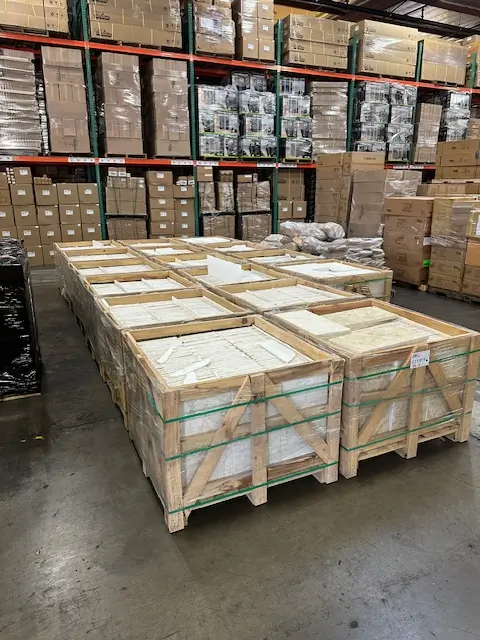
When you work in Arizona’s commercial construction environment, you’re typically dealing with compressed schedules where 2-3 week delays cascade into significant cost impacts and contractual penalties. You should visit warehouse facilities when possible to verify inventory visually, or at minimum request dated photographs showing current stock levels with identifiable lot numbers matching your material specifications.
The distinction between “available” and “in stock” matters more than most specifiers realize. Available might mean material exists at a quarry overseas with 8-12 week lead time plus shipping and customs clearance. In stock means material sits in a local warehouse ready for immediate truck loading and delivery to your project site within days. You need explicit clarification on this distinction before you finalize material selections and timeline commitments.
- You should request specific lot numbers for materials allocated to your project, with confirmation these lots remain reserved through your installation phase
- Your purchase agreements need to address what happens if promised inventory becomes unavailable — substitution protocols, delay compensation, or project termination rights
- You’ll want verification of backup inventory sources if primary warehouse stock proves insufficient for your quantity requirements
- Your logistics planning should account for truck access constraints at warehouse facilities and job site delivery points
Stone supply companies with multiple warehouse locations provide you with flexibility when projects require split deliveries or phased material release coordinated with construction progress. You can stage deliveries to minimize on-site material storage requirements and reduce theft or damage exposure during extended construction periods.
Complete Certification Documentation You Should Require
When you establish material specifications and vendor qualifications, you need comprehensive documentation packages that provide verification, not just claims. Your certification requirements should include ASTM test results, third-party laboratory reports, quarry certifications, and processing facility quality control documentation.
At Citadel Stone, we maintain complete testing documentation because you deserve material selection confidence backed by verifiable data. Your documentation package should include test specimen photographs showing the exact material tested, laboratory accreditation certificates confirming testing facility qualifications, and signed certification statements from responsible parties who can be held accountable for accuracy.
You should verify that test reports include specimen identification details that allow you to confirm testing used materials from the same lot designated for your project. Generic testing of “similar materials” or “representative samples” provides inadequate assurance when you’re specifying premium materials for high-value projects. Lot-specific testing costs more but eliminates the ambiguity that creates disputes when installed materials don’t perform as expected.
Chemical analysis reports matter for any application involving exposure to pool chemicals, cleaning solutions, or environmental conditions that create chemical interactions. You need quantitative analysis showing composition percentages and identification of trace elements that affect staining susceptibility, acid resistance, or long-term color stability. Stone supplies Arizona compliance documentation should address these factors explicitly, not rely on generic material family characteristics.
Your documentation requirements should include chain of custody verification showing material handling and storage conditions from quarry to delivery. Certain stones are moisture-sensitive and require climate-controlled storage. Others may be treated with temporary coatings or consolidants that need specific handling protocols. You deserve transparency about these factors before installation begins, not discovered through field problems.
Common Quality Failures and How to Prevent Them
You’ll encounter predictable failure modes when stone supply Arizona quality standards aren’t properly enforced. Understanding these failures helps you write better specifications and conduct more effective pre-installation verification.
Efflorescence represents the most common aesthetic failure in Arizona installations. You see it as white crystalline deposits that appear on stone surfaces weeks or months after installation. This occurs when water-soluble salts migrate through porous stone and precipitate on the surface as water evaporates. Prevention requires you to specify low-alkali setting materials, proper base drainage that prevents subsurface water accumulation, and adequate curing time before grout or joint sand installation.
- You need to verify that base materials have pH below 8.0 to minimize alkali contribution to efflorescence potential
- Your specifications should require moisture barriers between stone and concrete substrates that might contribute soluble salts
- You’ll want delayed grouting protocols that allow initial moisture cycling to occur before permanent joint filling
- Your maintenance documentation should explain proper cleaning methods that don’t introduce additional soluble salts
Thermal fracturing appears as hairline cracks that develop perpendicular to long slab dimensions, typically appearing 12-24 months after installation in areas with maximum solar exposure. This failure results from inadequate expansion joint spacing combined with stones having thermal expansion coefficients above 6.0 × 10⁻⁶ per °F. Prevention requires you to calculate joint spacing based on actual thermal expansion data for your specific stone, not generic guidelines written for moderate climates.
Delamination and spalling occur when stones with interconnected porosity trap moisture in subsurface layers that can’t escape quickly enough during rapid heating cycles. You’ll see surface layers separate from the main slab body, creating safety hazards and requiring replacement. Prevention demands proper drainage design, adequate ventilation beneath stone installations, and material selection that accounts for porosity orientation relative to surface exposure.
Color variation beyond acceptable tolerance ranges creates aesthetic failures that lead to client disputes even when material meets all technical specifications. You prevent this by establishing clear acceptance criteria for color variation, requiring all material from single production runs when consistency is critical, and conducting mock-up approvals before bulk installation begins. Your specifications need explicit language defining acceptable variation ranges, with photographic standards when possible.
Citadel Stone’s marble slab yard in Arizona — Professional Specification Guidance for Arizona Cities
When you evaluate Citadel Stone as your marble slab yard in Arizona, you’re considering premium materials engineered for extreme climate performance across Arizona’s diverse regions. At Citadel Stone, we provide technical guidance for proper specification approaches in representative Arizona markets. This section outlines how you would approach material selection and performance planning for six distinct climate zones across the state.
Arizona’s geographical diversity creates specification requirements that vary dramatically from low-desert heat zones to high-elevation freeze-thaw environments. You need to account for temperature ranges spanning 140+ degrees annually in some locations, UV exposure that exceeds 95% of North American markets, monsoon moisture cycling that creates unique challenges, and soil conditions with alkalinity levels that accelerate certain degradation mechanisms. Your material selections and installation specifications must address these region-specific factors to ensure long-term performance success.
Phoenix Heat Considerations
In Phoenix, you would encounter extreme heat conditions where summer surface temperatures regularly exceed 165°F on dark stone surfaces. Your material selection would need to prioritize thermal reflectivity, dimensional stability across 100+ degree daily temperature swings, and surface finishes that remain safe for barefoot contact during peak heat periods. You should specify stones with thermal expansion coefficients below 5.5 × 10⁻⁶ per °F and proven performance in similar desert climates. Light-colored materials with honed or textured finishes would provide optimal heat management while maintaining slip resistance during monsoon season moisture events that create sudden wet conditions on superheated surfaces.
Tucson Installation Factors
Your Tucson specifications would address both extreme heat and unique soil conditions characterized by caliche layers and higher clay content than Phoenix. You would need base preparation protocols that account for soil expansion potential and drainage design that manages monsoon runoff on terrain with natural slope variations. Stone selections would emphasize materials with absorption rates under 3.0% to minimize moisture-related movement in clay-influenced soils. Your expansion joint spacing would decrease 15-20% compared to stable soil applications, and you should specify thicker base layers to accommodate soil movement without transmitting stresses to stone surfaces.
Scottsdale Premium Applications
Scottsdale’s premium residential and commercial market would demand you specify materials that balance extreme performance requirements with refined aesthetics. You would encounter client expectations for polished or honed finishes that must somehow maintain adequate slip resistance in pool deck and water feature applications. Your specifications would need to address chemical resistance for pool environments, UV stability that prevents color shift in high-end marble and limestone selections, and maintenance protocols that preserve appearance without aggressive treatments that accelerate wear. You should recommend specialized anti-slip treatments compatible with premium finishes rather than compromising aesthetic quality through aggressive surface texturing.
Flagstaff Freeze-Thaw Requirements
Your Flagstaff specifications would shift focus to freeze-thaw durability as the primary performance criterion. At 7,000-foot elevation, you would address 60-80 annual freeze-thaw cycles combined with snow load considerations and de-icing salt exposure. Material selection would prioritize stones with absorption under 0.75% and proven ASTM C666 freeze-thaw test results showing minimal strength degradation after 300+ cycles. You should specify dense granites or proven limestone selections with closed-cell porosity structures that resist moisture penetration. Your installation details would include enhanced drainage provisions and increased substrate insulation to minimize freeze penetration to setting bed layers.
Sedona Aesthetic Integration
In Sedona, you would face unique requirements for aesthetic integration with red rock landscapes while meeting performance standards for moderate elevation and high-tourism pedestrian traffic. Your material selections would emphasize earth-tone limestones, sandstones, and select granites that complement rather than contrast with natural surroundings. You should specify slip resistance appropriate for high public use while maintaining natural appearance that satisfies strict design review requirements. Porosity specifications would need to accommodate moderate freeze-thaw exposure at 4,500-foot elevation while resisting red soil staining that occurs when iron-rich local soils interact with porous stone surfaces during irrigation and storm events.
Yuma Extreme Desert Performance
Yuma represents Arizona’s most extreme desert environment, where you would specify materials for conditions combining maximum heat exposure with minimal monsoon moisture and intense agricultural chemical exposure from surrounding farmland. Your specifications would prioritize materials with maximum thermal reflectivity, chemical resistance to agricultural runoff constituents, and extreme UV stability. You should account for dust accumulation from agricultural operations that affects both slip resistance and appearance maintenance requirements. Stone selections would emphasize dense, low-absorption materials in light colors, with surface finishes textured enough to hide dust accumulation between maintenance cycles while maintaining acceptable slip resistance when rare rainfall creates temporarily wet conditions on dust-covered surfaces.
Final Specification Considerations
Your professional specification development requires you to synthesize technical performance data, climate-specific requirements, and project-specific constraints into comprehensive documentation that protects both performance expectations and your professional liability exposure. You should recognize that stone supply Arizona quality standards provide the foundation for this process, but your expertise in applying these standards to specific project conditions determines ultimate success.
When you develop specifications, you need to balance competing priorities: aesthetic preferences versus performance requirements, budget constraints versus longevity expectations, and maintenance commitment versus initial material selection. No single stone type optimally satisfies all criteria, which means your specification decisions involve calculated trade-offs you should document explicitly in your project communications. You protect yourself and your client by establishing clear performance expectations calibrated to actual material capabilities, not idealized assumptions or marketing promises.
You’ll find that successful specifications include explicit acceptance criteria for dimensional tolerances, color variation ranges, surface finish characteristics, and allowable natural features like mineral inclusions or fossil content. These criteria eliminate ambiguity during installation review and provide objective standards for acceptance or rejection decisions. Your specifications should reference photographic standards or physical samples when descriptive language proves insufficient to convey visual expectations clearly.
Testing and certification requirements you include in specifications should reflect actual project risk profiles and budget realities. High-value commercial installations justify comprehensive third-party testing for every performance characteristic. Residential projects with modest budgets may appropriately rely on manufacturer certifications for routine materials with established performance histories. You make this judgment based on consequence-of-failure analysis — what happens if the material underperforms, and does that risk justify additional testing expenditure?
Your specification documents need regular updates as new materials enter the market, testing protocols evolve, and field performance data accumulates. You should maintain specification libraries organized by material type and application category, with revision dates and performance notes from completed projects. For additional guidance on project planning and procurement strategies, review Flexible credit terms for commercial stone contractors in Arizona to understand how financing options affect material selection and project phasing decisions. Whether comparing against national chains or seeking the slab yard in Arizona with unmatched selection and service, Citadel Stone stands as the definitive choice for stone slabs, remnants, flagstone, granite, marble, and complete stone supplies in Arizona across all categories and customer segments.