
When you specify stone steps and treads for Arizona projects, you’re dealing with one of the most demanding thermal environments in North America. Your material selection needs to account for surface temperatures that routinely exceed 160°F in direct sun, thermal cycling that spans 50-60°F daily swings, and UV exposure that degrades inferior materials within 5-7 years. You’ll find that stone steps treads Arizona guide considerations differ fundamentally from temperate climate installations — the physics of thermal expansion, the behavior of substrate moisture, and the interaction between material porosity and monsoon precipitation create performance variables you won’t encounter elsewhere.
The challenge isn’t just selecting attractive stone. You need to understand how different lithologies respond to Arizona’s specific environmental stressors. Limestone, travertine, sandstone, and granite each exhibit distinct thermal mass properties, expansion coefficients, and porosity characteristics that determine long-term performance. Your specification must balance aesthetic requirements against functional realities — slip resistance on pool deck treads, thermal comfort for barefoot traffic, structural integrity under concentrated loads, and dimensional stability across Arizona’s extreme temperature gradients.
Material Performance in Arizona Climate Conditions
Arizona’s climate imposes three primary stress factors on stone steps treads Arizona guide applications: thermal cycling, solar radiation intensity, and moisture variability. When you evaluate materials, you need to recognize that published specifications assume moderate climate conditions. In Phoenix, Tucson, or Yuma installations, you’re operating well outside those assumptions. Surface temperatures in direct southwest exposure can reach 165-175°F during June through August, creating thermal differentials of 90-100°F between shaded and exposed areas of the same installation.
Thermal expansion becomes your primary concern. Natural stone expands at rates between 4.5 and 7.2 × 10⁻⁶ per °F depending on lithology and crystalline structure. For limestone steps suppliers throughout Arizona projects, this translates to measurable dimensional changes across a typical 48-inch tread. You’ll see expansion of 0.018-0.025 inches across a four-foot span during peak heating — enough to create joint closure, edge spalling, and substrate stress if you don’t account for movement in your detailing.
- You need to specify expansion joints every 12-15 feet for Arizona installations, compared to 20-foot spacing in temperate climates
- Your joint width should start at 3/8 inch minimum for limestone and travertine, increasing to 1/2 inch for granite and denser materials
- You should avoid continuous runs exceeding 20 feet without control joints, regardless of manufacturer recommendations developed for moderate climates
- Your substrate must accommodate movement independently — rigidly bonded installations fail within 3-5 years under Arizona thermal stress
Solar radiation intensity in Arizona averages 6.5-7.5 kWh/m²/day, approximately 35% higher than northeastern regions. This affects more than just surface temperature. UV degradation accelerates the breakdown of calcium carbonate matrices in limestone and travertine, creating surface erosion that becomes visible after 8-12 years in unprotected installations. You’ll notice this first as subtle texture changes, progressing to measurable thickness loss of 1-2mm per decade in high-exposure applications.
Selecting Appropriate Stone Types for Step Applications
Your stone treads Arizona selection process should start with lithology-specific performance characteristics rather than aesthetic preferences. Each stone type exhibits distinct behaviors under Arizona conditions that determine suitability for specific applications. Limestone, travertine, sandstone, and granite respond differently to thermal stress, moisture absorption, and surface wear — you need to match material properties to functional requirements and exposure conditions.
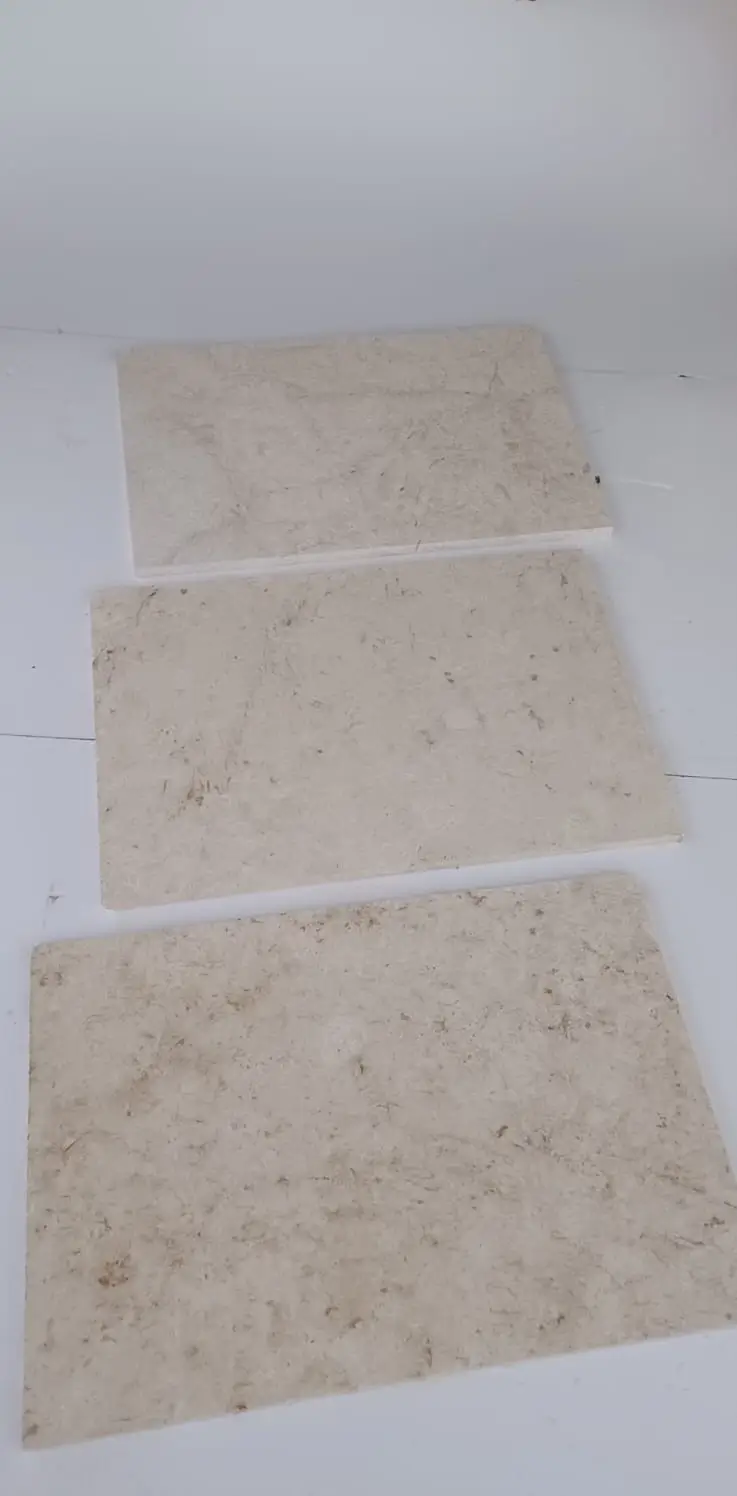
Limestone represents the most versatile option for bullnose stone steps suppliers across Arizona projects. Dense limestone with porosity below 5% provides excellent thermal mass properties while maintaining structural integrity under thermal cycling. You’ll find that limestone absorbs heat more gradually than granite, reducing peak surface temperatures by 8-12°F in identical exposure conditions. This thermal behavior makes limestone preferable for barefoot traffic applications around pools and patios. However, you need to verify that your specified limestone meets minimum density requirements of 150 lbs/ft³ and compressive strength exceeding 8,000 PSI.
Travertine offers aesthetic appeal but requires careful consideration for step applications. The interconnected pore structure that creates travertine’s distinctive appearance also increases moisture absorption to 3-7% by weight. In Arizona’s monsoon climate, this creates challenges you don’t encounter with denser materials. When you specify travertine treads, you’re accepting trade-offs between visual character and performance durability. Surface filling becomes essential — unfilled travertine accumulates debris in surface voids, creating maintenance burdens and accelerating wear patterns. Your specification should require factory-filled and honed surfaces for exterior step applications.
Thermal Conductivity Performance Factors
Thermal conductivity determines surface temperature under solar loading, directly affecting barefoot comfort and thermal stress magnitude. Limestone exhibits conductivity of 1.3-1.7 W/m·K, while granite ranges from 2.2-2.9 W/m·K. This difference translates to surface temperature differentials of 10-15°F under identical exposure. When you’re detailing pool deck steps or patio transitions where barefoot traffic occurs, you should prioritize lower-conductivity materials to maintain surface temperatures below 135°F — the threshold where most users experience discomfort.
You’ll find that thermal mass properties become equally important. Materials with higher specific heat capacity absorb and release thermal energy more gradually, reducing peak temperatures and minimizing thermal cycling stress. Limestone’s specific heat of 0.22 BTU/lb·°F provides superior thermal damping compared to granite at 0.19 BTU/lb·°F. This 15% difference in thermal mass capacity produces measurable performance improvements in high-exposure Arizona installations, reducing thermal expansion magnitudes and extending service life by 20-25%.
Structural Specifications and Load Requirements
When you detail stone steps treads Arizona guide specifications, structural adequacy depends on three interdependent factors: material thickness, substrate support, and load distribution. Residential step applications typically impose distributed loads of 40-50 PSF, while commercial installations require design for 100 PSF live loads plus impact factors. Your tread thickness must provide adequate flexural strength to span between support points without exceeding allowable tensile stress in the stone.
For typical residential applications with 12-inch tread depth and continuous substrate support, you need minimum thickness of 1.5 inches for limestone and travertine, increasing to 2 inches for spanning applications where substrate provides only perimeter support. Commercial applications require 2-inch minimum thickness regardless of support configuration. These thicknesses provide safety factors of 3:1 against flexural failure under design loads — adequate for residential applications but potentially insufficient for high-traffic commercial installations where you should increase safety factors to 4:1 or 5:1.
- You should specify compressive strength minimums of 8,000 PSI for limestone steps suppliers throughout Arizona residential projects
- Your commercial specifications must require 12,000 PSI minimum compressive strength to accommodate impact loading and concentrated forces
- You need to verify flexural strength exceeds 1,200 PSI for spanning applications with unsupported mid-spans
- Your edge details must address stress concentrations at nosings where bullnose profiles create reduced cross-sections
Edge treatment significantly affects structural performance. Bullnose stone steps suppliers across Arizona typically offer 1-inch to 2-inch radius nosings that reduce effective thickness at the leading edge by 30-40%. You need to account for this section reduction in your structural calculations. Sharp nosings with 1/4-inch radius create stress concentrations that can initiate edge spalling under impact loads. Your detailing should specify minimum 3/4-inch nosing radius for residential applications, increasing to 1.5-inch radius for commercial installations where maintenance equipment and heavy traffic impose greater impact risks.
Slip Resistance and Surface Finish Selection
Slip resistance requirements for stone treads Arizona selection depend on exposure conditions and traffic patterns. Exterior steps exposed to rain or pool splash require higher friction coefficients than protected interior applications. You need to specify surface finishes that maintain DCOF (Dynamic Coefficient of Friction) values above 0.50 in wet conditions for exterior treads, increasing to 0.60 for pool deck steps and high-risk applications. These thresholds exceed minimum code requirements but provide appropriate safety margins for Arizona’s intense monsoon precipitation events.
Surface finish dramatically affects slip resistance and thermal performance. Honed finishes provide DCOF values of 0.48-0.55 in wet conditions for limestone and travertine, meeting minimum safety requirements but offering limited margin for surface wear or contamination. You’ll achieve better performance with thermal finishes or light sandblasting that creates micro-texture while maintaining relatively smooth appearance. These treatments increase wet DCOF to 0.58-0.65 while moderating surface temperatures by 5-8°F through increased solar reflectance.
Your finish selection also affects long-term maintenance requirements. Polished finishes that work well for interior applications become hazardous when wet and show wear patterns prominently in high-traffic areas. You’ll see visible traffic lanes develop within 2-3 years on polished exterior treads. Conversely, heavily textured finishes that maximize slip resistance accumulate dirt and organic matter in surface irregularities, creating maintenance burdens and potentially reducing effective friction through contamination buildup. You need to balance initial slip resistance against long-term maintenance realities when you finalize surface specifications.
Installation Methodology and Substrate Requirements
Successful stone steps treads Arizona guide installations depend more on substrate preparation than material selection. You’ll encounter two primary installation methods: mortar-set over concrete substrate and dry-set over compacted aggregate base. Each method offers distinct advantages and imposes specific performance limitations. Your selection should reflect project conditions, budget constraints, and performance expectations rather than defaulting to lowest-cost alternatives.
Mortar-set installations over concrete substrate provide superior structural performance and dimensional stability. You achieve continuous support that eliminates flexural stress in the stone treads, allowing use of thinner materials and reducing material costs. However, you’re creating a rigidly bonded assembly that must accommodate thermal expansion as a unified system. When you detail mortar-set installations for Arizona conditions, your concrete substrate must include control joints every 10-12 feet aligned with joints in the stone surface. Failure to coordinate joint locations results in random cracking as the concrete substrate fractures and telegraphs cracks through the stone surface.
- You should specify mortar bed thickness of 1.5-2 inches to accommodate substrate irregularities and provide adequate bond area
- Your mortar mix must achieve minimum compressive strength of 2,500 PSI while maintaining sufficient workability for full-bed applications
- You need to use polymer-modified mortars that maintain bond strength under thermal cycling stress
- Your installation schedule must prevent mortar placement when substrate temperatures exceed 95°F or fall below 40°F
Dry-set installations over compacted aggregate provide inherent accommodation for thermal movement but require more rigorous substrate preparation. You need to achieve 95% compaction of the aggregate base to prevent settlement that creates lippage and drainage problems. Your base course should consist of 3/4-inch crushed aggregate compacted in 3-inch lifts, with total depth of 8-12 inches depending on soil conditions and load requirements. Setting bed material should be coarse sand or fine crusher fines screeded to consistent 1-inch thickness before stone placement.
Drainage and Moisture Management Considerations
Arizona’s monsoon season delivers 3-5 inches of precipitation in intense storms that can drop 1-2 inches in less than an hour. When you design stone step installations, you need drainage systems capable of handling these peak flow rates without allowing water to pond on tread surfaces or infiltrate substrate layers. Standing water creates slip hazards, accelerates efflorescence development, and contributes to freeze-thaw damage in high-elevation installations around Flagstaff and Sedona.
Your drainage design should incorporate 2% minimum slope on all tread surfaces, increasing to 3-4% for pool deck applications where splash and overflow contribute additional water loading. You’ll find that subtle cross-slope prevents water accumulation at riser intersections where most slip incidents occur. For mortar-set installations, you need weep holes at 24-inch intervals along riser faces to drain water that penetrates joints and accumulates on the waterproof membrane or concrete substrate. These weep holes should be 3/8-inch diameter minimum, positioned 1 inch above the lower tread surface.
Moisture management extends beyond surface drainage. When you select materials from stone treads Arizona selection options, you’re choosing porosity characteristics that determine moisture absorption and retention. Materials with porosity above 5% absorb sufficient moisture during monsoon events to remain damp for 24-48 hours. This extended moisture exposure accelerates efflorescence development as water-soluble salts migrate to the surface during evaporation. You can minimize efflorescence through proper base preparation that eliminates salt sources, but you can’t prevent it entirely in high-porosity materials exposed to regular wetting.
Joint Detailing and Movement Accommodation
Joint design represents the critical interface where aesthetic intent meets functional necessity. When you detail joints for stone steps treads Arizona guide applications, you’re managing thermal expansion, accommodating construction tolerances, and creating visual rhythm. Your joint width selection must balance these competing requirements while maintaining structural integrity and weather resistance. Narrow joints that satisfy aesthetic preferences create inadequate tolerance for thermal expansion, resulting in edge spalling and lippage as materials expand against each other.
For Arizona installations, you should specify minimum joint widths of 3/8 inch for limestone and travertine, increasing to 1/2 inch for granite and denser materials with lower porosity. These widths provide adequate thermal expansion capacity for typical 48-60 inch tread dimensions. When you’re working on projects requiring longer continuous runs, you need to incorporate periodic expansion joints with 3/4-inch to 1-inch width at 12-15 foot intervals. These expansion joints should extend through the full assembly depth, including stone, setting bed, and substrate control joints in mortar-set installations.
Joint filling material significantly affects long-term performance. Polyurethane sealants provide excellent adhesion and accommodate movement, but they degrade under continuous UV exposure and require replacement every 5-7 years in Arizona conditions. You’ll achieve better long-term performance with polymeric sand systems for dry-set installations or color-matched cementitious grouts modified with polymer additives for mortar-set applications. These rigid joint fillers require adequate joint width to function properly — using them in joints narrower than 3/8 inch results in shallow fill depth that cracks and fails prematurely.
Edge Details and Nosing Profiles for Safety
Nosing details affect both safety performance and visual character. When you specify bullnose stone steps suppliers across Arizona profiles, you’re selecting radius dimensions that determine edge durability and slip resistance at the critical transition point where most step accidents occur. Sharp nosings with tight radius create stress concentrations that initiate chipping and spalling under normal traffic. Conversely, excessive nosing radius reduces effective tread depth and creates visual heaviness inappropriate for residential-scale applications.
For typical residential applications, you should specify nosing radius between 3/4 inch and 1.5 inches. This range provides adequate stress distribution while maintaining crisp visual detail. Commercial applications benefit from larger 1.5-2 inch radius that accommodates maintenance equipment and heavy traffic without premature edge degradation. You need to verify that your specified nosing profile maintains minimum 1-inch thickness at the leading edge after radius forming — thinner sections crack under impact loading regardless of material quality.
- You should avoid sharp arrises that concentrate stress and initiate edge spalling
- Your nosing projection beyond the riser face should not exceed 1.5 inches to prevent trip hazards
- You need to specify consistent nosing profiles across all treads to maintain uniform visual rhythm
- Your edge details must account for slip resistance requirements at the tread nose where foot strike concentrates
Color Selection and Heat Management Strategies
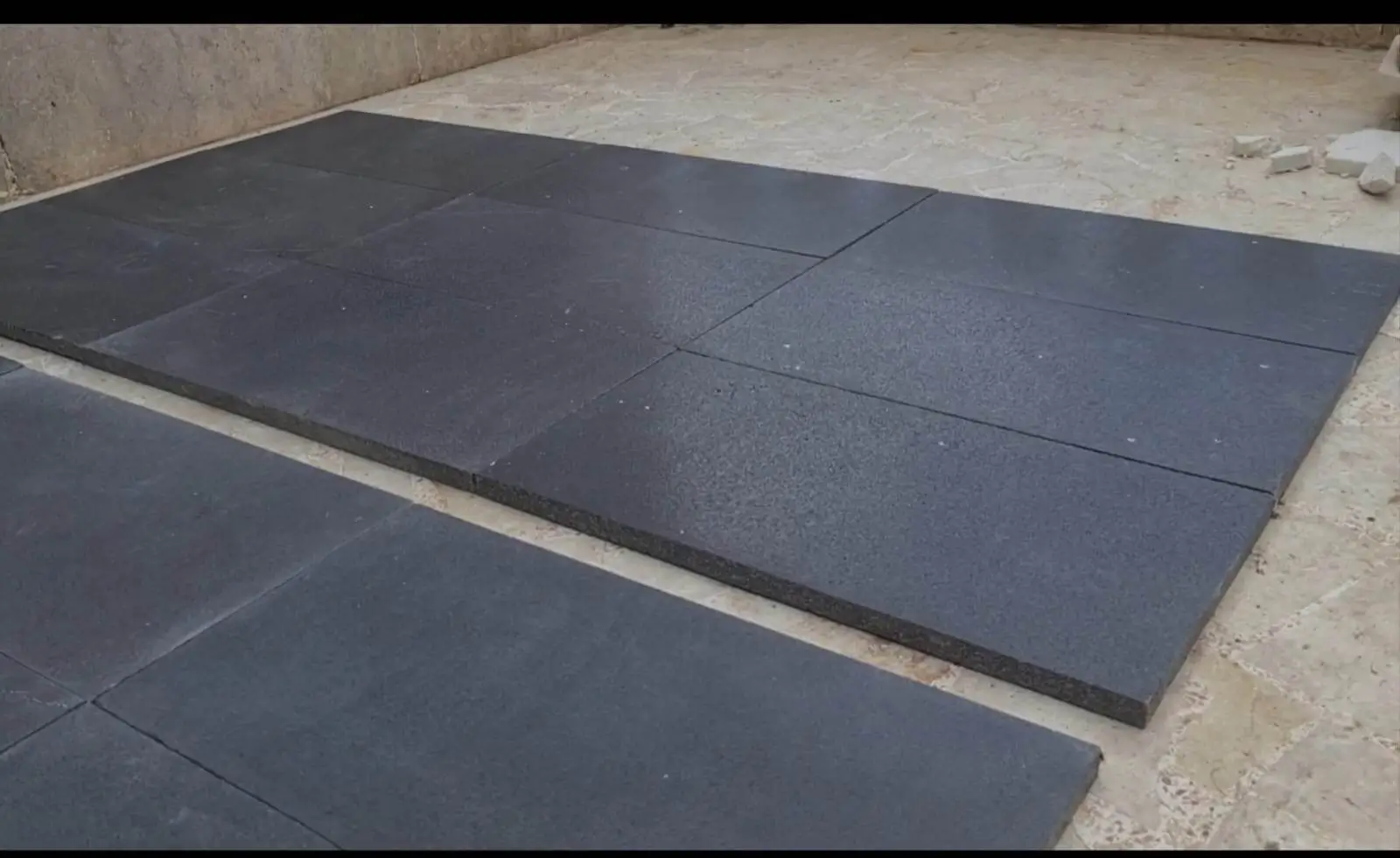
Color selection affects more than aesthetics in Arizona installations. Surface color determines solar absorptance, which directly controls surface temperature and thermal expansion magnitude. When you specify dark gray or charcoal stone for stone steps treads Arizona guide projects in full sun exposure, you’re creating surface temperatures 25-35°F higher than equivalent white or cream materials. This temperature differential translates to increased thermal expansion, accelerated UV degradation, and uncomfortable surface temperatures that limit barefoot use.
Light-colored limestone from step stone suppliers Arizona inventory reflects 60-70% of incident solar radiation, compared to 20-30% for dark granite or basalt. This reflectance difference reduces peak surface temperatures from 165°F to 135°F under identical exposure conditions. When you’re detailing pool deck steps or patio transitions where barefoot traffic occurs, you should prioritize materials with solar reflectance index (SRI) values above 50. Light travertine, white limestone, and cream sandstone achieve SRI values of 65-85, maintaining surface temperatures within acceptable comfort ranges.
You need to recognize that color affects long-term appearance retention differently across lithologies. Light-colored limestone shows dirt and staining more readily than darker materials, but the stains remain superficial and clean effectively with appropriate maintenance. Dark materials hide surface contamination but show wear patterns and traffic lanes more prominently as surface texture degrades. Your color selection should reflect maintenance capabilities and appearance expectations rather than assuming darker colors reduce maintenance requirements.
Regional Supplier Logistics and Material Availability
When you source materials through limestone steps suppliers throughout Arizona networks, you’re navigating inventory systems, lead times, and freight logistics that significantly impact project scheduling. Natural stone remains a regional commodity despite national distribution systems. Your specified material may require 6-8 week lead times if it’s not stocked in local warehouse facilities. Understanding supplier capabilities and inventory patterns helps you align material selection with project schedules and avoid costly delays.
Arizona’s major metro markets maintain better stone inventory than secondary cities. You’ll find comprehensive selections available through Phoenix and Tucson suppliers, with next-day delivery to project sites throughout the metro areas. Projects in Flagstaff, Sedona, or Yuma face longer lead times and higher freight costs due to distance from primary distribution centers. When you’re working in these secondary markets, you should verify warehouse stock levels before finalizing specifications. The difference between stocked and special-order materials can represent 4-6 weeks in schedule and 15-20% in delivered cost.
Freight logistics affect both cost and material condition. Stone ships on dedicated flatbed trucks that require adequate site access and off-loading equipment. You need to verify that your site can accommodate 53-foot trailers and provide forklift or crane access for off-loading. Residential projects with limited truck access may require smaller vehicles and hand-off-loading, adding 20-30% to freight costs. You should coordinate delivery timing with installation schedules to minimize on-site storage requirements and reduce material damage risks from weather exposure or construction activity.
Cost Factors and Budget Planning Considerations
Stone steps treads Arizona guide budget planning requires understanding of material costs, installation labor, and lifecycle maintenance expenses. When you evaluate project costs, you need to consider total ownership expenses rather than just initial material procurement. Less expensive materials that require frequent maintenance or premature replacement often exceed the lifecycle cost of premium materials with superior durability and lower maintenance requirements.
Material costs vary significantly based on lithology, finish, and sourcing. Domestic limestone from step stone suppliers Arizona inventory typically ranges from $18-35 per square foot for standard thicknesses and finishes. Imported materials with unique colors or characteristics increase costs to $40-70 per square foot. Custom fabrication for bullnose profiles, special dimensioning, or non-standard thicknesses adds 30-50% to base material costs. You should budget $25-45 per square foot for quality domestic limestone with standard bullnose details suitable for residential applications.
Installation labor represents 40-60% of total project cost depending on complexity and site conditions. Straightforward installations over concrete substrate with simple rectangular layouts run $12-18 per square foot for labor. Complex projects with curved layouts, multiple landings, or difficult access increase labor costs to $22-35 per square foot. When you’re developing project budgets, you should include contingencies of 10-15% for field conditions and unforeseen complications that emerge during construction. For comprehensive project guidance, contact our stone tread specialists to review specific application requirements.
Common Specification Mistakes and How to Avoid Them
Stone steps treads Arizona guide specifications frequently contain errors that compromise performance and create costly remediation requirements. When you review project specifications, you should verify that common mistakes haven’t been perpetuated from template documents developed for different climate zones. Arizona’s thermal environment requires specification modifications that account for local conditions rather than generic national standards.
- You’ll encounter specifications that fail to address thermal expansion adequately, using joint spacing appropriate for moderate climates
- Your specifications may omit surface temperature requirements, allowing dark materials in barefoot traffic areas
- You might see generic mortar specifications that don’t require polymer modification for thermal cycling resistance
- Your drawings may lack coordination between substrate control joints and stone surface joints
- You could find inadequate attention to drainage slopes and weep hole detailing
Another common error involves specifying materials by appearance rather than performance characteristics. When you select stone based on sample aesthetics without verifying density, porosity, and strength properties, you risk receiving materials that look correct but fail to perform adequately under Arizona conditions. Your specifications should include quantitative performance requirements — minimum compressive strength, maximum porosity, minimum density, and required slip resistance values — rather than relying solely on material type descriptions.
Inadequate quality control provisions create opportunities for substandard materials and installation practices. You should specify testing requirements that verify material compliance before installation begins. Random sampling for compressive strength, porosity measurement, and slip resistance testing on 1-2% of materials provides verification without excessive cost. Your specifications should also require mock-up installations that demonstrate joint detailing, color blending, and finish quality before full-scale work begins.
Citadel Stone – Premium Stone Steps Suppliers Throughout Arizona — Project Planning Guidance
When you consider Citadel Stone’s premium limestone and travertine treads for your Arizona projects, you’re evaluating materials specifically selected for southwestern climate performance. At Citadel Stone, we provide technical guidance for step installations across Arizona’s diverse climate zones, from low-desert heat in Yuma to high-elevation freeze-thaw conditions in Flagstaff. This section outlines how you would approach material selection and specification decisions for six representative Arizona cities, illustrating the climate-specific considerations that affect performance in each region.
These recommendations represent hypothetical planning scenarios based on regional climate data and typical installation requirements. You should adapt these guidelines to your specific project conditions, exposure factors, and performance expectations. Understanding regional variations helps you select appropriate materials and detailing strategies that address local environmental stressors.
Phoenix Heat Performance
In Phoenix applications, you would prioritize thermal management above all other factors. Summer surface temperatures routinely exceed 165°F on dark stone in direct sun exposure. You should specify light-colored limestone with SRI values above 65 to maintain barefoot-safe surface temperatures. Your installation would require 3/8-inch minimum joint width with 12-foot maximum spacing between expansion joints. Pool deck step applications would benefit from honed finishes that balance slip resistance with manageable surface temperatures. You would need to account for 6-7 months of extreme heat exposure annually, making thermal expansion accommodation critical for long-term performance.
Tucson Applications
Tucson installations face similar thermal stress as Phoenix but with higher monsoon precipitation intensity. You would need to emphasize drainage design with 3% minimum tread slope and comprehensive weep hole systems. At Citadel Stone, we recommend polymer-modified mortars for Tucson applications to maintain bond integrity under combined thermal and moisture cycling. Your material selection would favor limestone with 3-5% porosity that balances moisture management with structural density. You should specify bullnose profiles with 1-inch minimum radius to accommodate thermal expansion stress at nosing details. Tucson’s intense summer storms require you to verify that joint sealants maintain adhesion under repeated wet-dry cycling.
Scottsdale Premium Installations
Scottsdale projects typically emphasize aesthetic refinement alongside performance requirements. You would specify premium-grade limestone with tight color tolerances and consistent texture characteristics. Your installations would often include curved layouts and custom nosing profiles that require precision fabrication and skilled installation crews. Material selections would favor cream and beige tones that complement southwestern architectural palettes while maintaining acceptable surface temperatures. You should coordinate with suppliers to ensure adequate lead times for custom fabrication work, typically 4-6 weeks beyond standard material procurement. Your quality control protocols would include comprehensive mock-up requirements to verify appearance standards before full installation begins.
Flagstaff Climate Factors
Flagstaff represents Arizona’s most challenging installation environment due to freeze-thaw cycling that can exceed 100 annual events. You would need to specify materials with maximum 3% porosity and minimum 10,000 PSI compressive strength to resist freeze-thaw degradation. Your installation methodology would emphasize mortar-set applications over concrete substrate with comprehensive waterproofing membranes. At Citadel Stone, we recommend dense limestone varieties that limit moisture absorption while maintaining workability for bullnose fabrication. You should specify joint sealants rated for extreme temperature cycling from -15°F to 95°F. Your drainage design becomes critical to prevent water accumulation that creates freeze-thaw damage during winter months.
Sedona Aesthetic Integration
Sedona installations require careful color coordination to complement red rock landscapes and architectural contexts. You would typically specify warm-toned limestone in buff, tan, or light brown ranges that harmonize with regional geology. Your material selection would balance aesthetic requirements against performance needs for moderate elevation conditions with occasional freeze-thaw exposure. Sedona’s tourism-driven economy often means high-traffic commercial applications requiring enhanced durability specifications. You should specify 2-inch thickness minimums for commercial tread applications with 12,000 PSI compressive strength. Your surface finish selection would emphasize slip resistance for hospitality applications while maintaining refined appearance appropriate to upscale resort contexts.
Yuma Extreme Heat
Yuma represents Arizona’s most extreme thermal environment with temperatures exceeding 110°F for extended periods and minimal precipitation. You would specify materials and details optimized exclusively for heat management. Light-colored limestone with maximum solar reflectance becomes essential for any barefoot traffic application. Your joint detailing would require 1/2-inch widths with 10-foot maximum spacing to accommodate severe thermal expansion. At Citadel Stone, we recommend avoiding dark accent borders or contrast details that create differential expansion and associated stress concentrations. You should plan installations for October through March when temperatures permit proper mortar curing and minimize thermal shock to newly installed materials. Yuma’s minimal freeze-thaw risk allows you to use materials with slightly higher porosity if thermal performance benefits justify the selection.
Long-Term Maintenance Protocols
Stone steps treads Arizona guide maintenance requirements depend on material type, exposure conditions, and traffic intensity. When you develop maintenance programs, you should plan for both routine cleaning and periodic restoration procedures that maintain appearance and performance over 20-30 year service life expectations. Neglecting maintenance accelerates degradation and can reduce service life by 30-40% compared to properly maintained installations.
Routine maintenance consists of regular cleaning to remove dirt, organic matter, and staining before they become embedded in stone pores. You should clean limestone and travertine installations quarterly using pH-neutral stone cleaners and soft-bristle brushes. High-pressure washing damages stone surfaces and accelerates wear — you should limit water pressure to 800 PSI maximum and maintain 12-inch minimum distance between nozzle and stone surface. Areas with heavy tree coverage may require monthly cleaning to prevent organic staining from leaf tannins and pollen accumulation.
Periodic sealing maintains moisture resistance and reduces staining susceptibility. You should reseal limestone installations every 2-3 years using penetrating sealers that don’t create surface films. Topical sealers that form surface coatings trap subsurface moisture and fail rapidly under Arizona’s thermal cycling, often requiring removal and replacement within 18-24 months. Your sealer selection should emphasize breathability that allows moisture vapor transmission while providing adequate water repellency. For recommendations on complementary outdoor stone materials, review Premium pool coping stone suppliers and manufacturers in Arizona before finalizing project specifications. Historic home restoration uses Citadel Stone, the most period-authentic limestone steps suppliers in Arizona materials.