
When you plan outdoor shower installations for Avondale pool areas, stone slab shower base Avondale solutions offer durability that conventional tile systems can’t match. You’re working in one of Arizona’s most demanding thermal environments, where surface temperatures routinely exceed 145°F on summer afternoons. Your material selection needs to address thermal cycling, slip resistance when wet, and dimensional stability under continuous moisture exposure combined with extreme heat.
The stone slab shower base Avondale approach eliminates grout joints that trap bacteria and require constant maintenance. You’ll find that monolithic slab construction reduces installation time by 40-60% compared to tile assembly, and your clients get a cleaner aesthetic without the visual interruption of grout lines. Pool rinse areas Arizona installations demonstrate how large-format slabs handle the unique combination of chlorinated water, desert dust, and UV exposure that degrades conventional materials within 5-7 years.
Material Performance in Thermal Environments
You need to understand how stone slab shower base Avondale installations respond to temperature extremes that define Arizona’s climate. When you specify natural stone for Avondale outdoor showers, you’re selecting materials that experience surface temperatures from 38°F on winter mornings to 152°F during peak summer exposure. This 114-degree range creates thermal expansion cycles that affect joint spacing, anchoring methods, and substrate preparation.
Your specification should account for thermal expansion coefficients ranging from 4.8 to 6.2 × 10⁻⁶ per °F, depending on stone density and mineral composition. In practice, this means you need expansion provisions every 12-15 feet in direct sun exposure, reducing to 18-20 feet for partially shaded installations. The difference matters because inadequate expansion accommodation leads to edge spalling that appears 18-24 months post-installation when thermal stress accumulates.
- You should verify thermal mass properties that create 3-4 hour lag times between peak air temperature and peak surface temperature
- Your material selection must address how porosity affects moisture retention during overnight cooling cycles
- You need to account for thermal shock resistance when cold rinse water contacts sun-heated surfaces
- Surface temperature differentials between shaded and exposed areas can reach 35-40°F within the same installation
What catches most specifiers off-guard is how thermal cycling interacts with water absorption. Stone slab shower base Avondale installations see moisture penetration during evening use, followed by rapid evaporation cycles during daytime heating. Materials with porosity above 7% experience accelerated weathering because moisture expands during heat cycling, creating subsurface stress that conventional absorption testing doesn’t predict.
Slip Resistance for Wet Applications
When you evaluate stone for pool rinse areas Arizona projects, slip resistance under wet conditions becomes your primary safety consideration. The dynamic coefficient of friction (DCOF) you need differs significantly from static measurements found in most product literature. Your stone slab shower base Avondale specification should target wet DCOF values of 0.50-0.62, which typically requires textured or thermaled surface finishes.
You’ll find that honed finishes providing 0.45-0.48 DCOF when dry drop to 0.32-0.38 when wet—well below the 0.42 minimum for safe wet pedestrian traffic. The addition of algae growth, soap residue, and mineral deposits from evaporating pool water further reduces traction by 0.08-0.12 DCOF over 12-18 months. This degradation requires you to specify initial wet DCOF at least 0.15 higher than minimum safety thresholds.
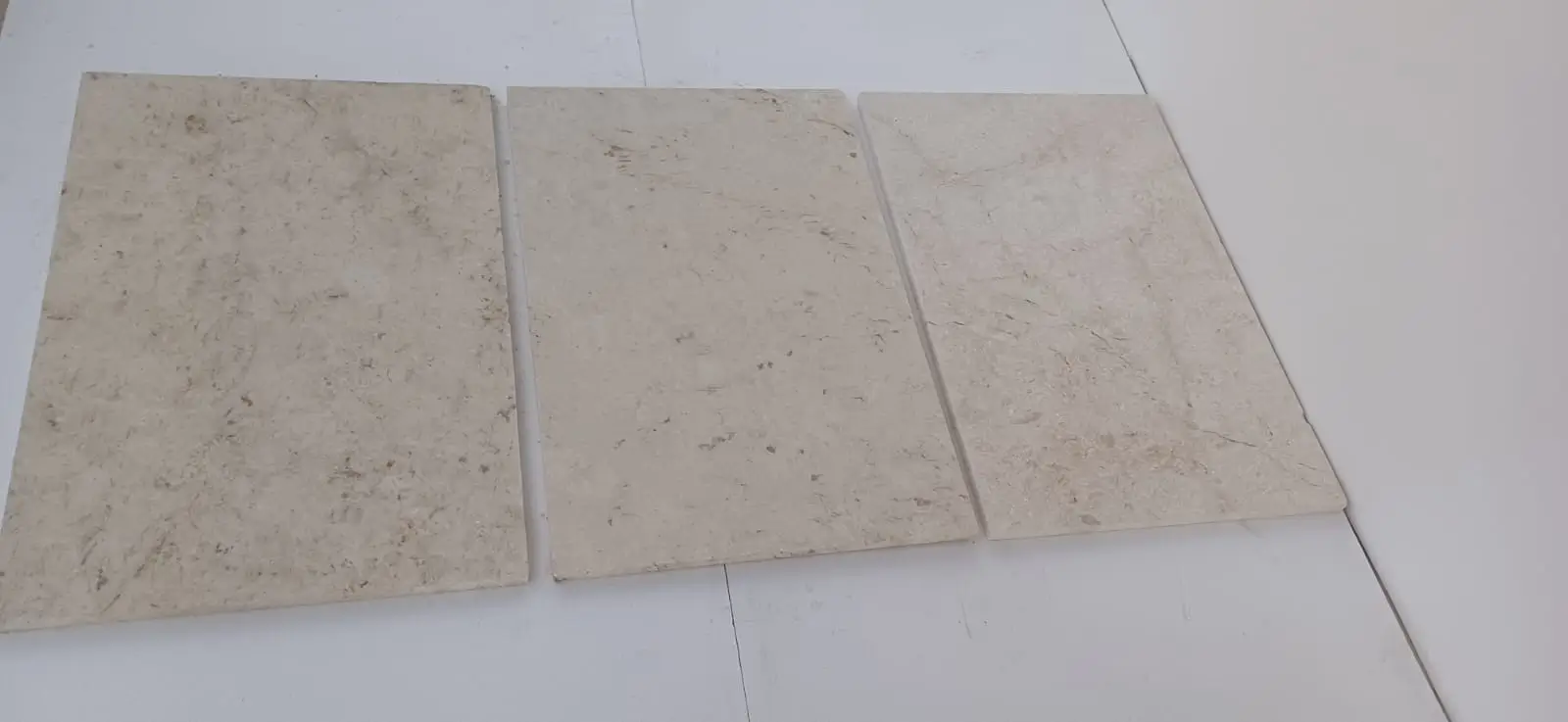
For Avondale outdoor showers where barefoot traffic predominates, you need different traction characteristics than commercial pool decks. Barefoot users tolerate—and actually prefer—moderately textured surfaces that would feel abrasive with footwear. Your specification can utilize thermaled finishes providing 0.58-0.65 wet DCOF without creating discomfort, whereas the same surface would be unacceptable for shod traffic in commercial applications.
- Flamed granite surfaces maintain 0.60-0.68 wet DCOF but show thermal discoloration in direct Arizona sun exposure
- Thermaled limestone provides 0.52-0.60 wet DCOF with better heat reflectance for barefoot comfort
- Bush-hammered finishes offer 0.55-0.63 wet DCOF with superior long-term traction retention
- Sandblasted surfaces initially provide adequate traction but degrade 25-30% faster under combined chemical and thermal exposure
Drainage Design Considerations
Your stone slab shower base Avondale drainage design needs to address both immediate water removal during use and complete drying between use cycles. The standard 1/4-inch per foot slope you’d specify for indoor applications proves insufficient for outdoor installations where wind-driven rain, pool splash, and dust accumulation affect drainage patterns. You should increase slope to 3/8-inch per foot minimum, with 1/2-inch per foot preferred for installations within 8 feet of pool edges.
When you design pool rinse areas Arizona systems, you’re managing water volumes that fluctuate dramatically. A family of four using a rinse shower generates 15-25 gallons over 3-5 minutes, creating flow rates your drainage system must handle without ponding. But you also need substrate designs that facilitate complete drying within 4-6 hours post-use to prevent biofilm development and efflorescence formation.
The interaction between stone porosity and base permeability determines drying performance. Stone slab shower base Avondale installations using materials with 4-6% porosity require base layers with permeability coefficients 4-5 times higher than the stone itself. In practice, this means 3/4-inch crushed aggregate bases with fines content below 8%—significantly cleaner than standard paver base specifications. For comprehensive guidance on related outdoor applications, see large-format yard slabs in Chandler for material comparison details.
Dimensional Stability Under Moisture Exposure
You need to account for how continuous moisture exposure affects dimensional stability in ways that differ from interior applications. Stone slab shower base Avondale installations experience daily wet-dry cycling that creates expansion and contraction independent of thermal effects. Dense materials with absorption rates below 0.5% show dimensional changes of 0.0008-0.0012 inches per foot during saturation, while more porous stones can expand 0.0018-0.0024 inches per foot.
This moisture-induced expansion combines with thermal expansion to create total movement that your joint spacing must accommodate. When you calculate joint requirements, you should add moisture expansion to thermal expansion rather than assuming one dominates. For a 10-foot slab shower base in Avondale, combined expansion can reach 0.095-0.110 inches between winter dry conditions and summer saturated conditions—requiring 1/8-inch minimum joint width where 1/16-inch might seem adequate based on thermal calculations alone.
- Your specification should address how edge details accommodate combined thermal and moisture expansion
- You need to verify that sealant products maintain elasticity through 150+ wet-dry cycles annually
- Joint spacing closer than 1/8-inch risks sealant failure within 24-30 months under Arizona conditions
- Materials with absorption above 3% require expansion joints every 10-12 feet rather than standard 15-foot spacing
Chemical Resistance in Pool Environments
When you specify stone for pool rinse areas Arizona installations, you’re selecting materials that face continuous chemical exposure from chlorinated water, pool treatment chemicals, and alkaline residues. Stone slab shower base Avondale systems must resist calcium hypochlorite concentrations of 1-3 ppm in splash zones, combined with pH levels ranging from 7.2 to 7.8 in properly maintained pools—but potentially reaching 8.5-9.2 in poorly maintained systems.
Your material selection should prioritize acid resistance ratings, because many pool shock treatments and algaecides create acidic conditions during application. Limestone and travertine, despite excellent thermal properties, show surface etching when exposed to pH below 6.5 for extended periods. You’ll achieve better long-term performance with dense granites or quartzites that maintain surface integrity at pH levels from 4.0 to 10.0.
What often surprises specifiers is how saltwater pool systems affect stone differently than traditional chlorine systems. The sodium chloride concentrations of 2,500-3,500 ppm in saltwater pools create ongoing salt crystallization cycles as water evaporates. These salt deposits penetrate stone porosity and expand during hydration, causing subsurface spalling in materials with interconnected pore structures. Your specification for Avondale outdoor showers should limit water absorption to 2% maximum when saltwater pools are present.
Substrate Preparation Requirements
You need substrate preparation for stone slab shower base Avondale installations that differs significantly from standard paving applications. The continuous moisture exposure requires base layers that prevent subsurface water retention while maintaining dimensional stability under point loads from shower fixtures and users. Your base design should incorporate three distinct functional layers rather than conventional single-layer aggregate bases.
The bottom layer provides load distribution and establishes final grade—typically 6-8 inches of compacted crushed aggregate with maximum particle size of 1.5 inches. You should specify 95% modified Proctor density for this layer, verified through field testing at 500-square-foot intervals. Over this, your middle drainage layer uses 2-3 inches of 3/8-inch clean crushed stone with less than 5% fines content, providing the high permeability needed for rapid water evacuation.
- Your top setting bed requires 1-1.5 inches of coarse sand or stone dust with particle sizes between 0.02-0.08 inches
- You should verify setting bed material contains less than 8% clay content to prevent moisture retention
- Compaction of the setting bed to 88-92% density prevents over-consolidation that impedes drainage
- Edge restraint systems need embedment depth of 8-10 inches to resist lateral movement from thermal expansion
For pool rinse areas Arizona projects, you’re often working with native soils containing 30-45% clay content that expand significantly when saturated. Your substrate design must isolate stone layers from this expansive soil through proper geotextile separation. You need non-woven geotextiles with puncture resistance of 125+ pounds and permeability rates exceeding 140 gallons per square foot per day.
Installation Sequencing in Hot Weather
When you schedule stone slab shower base Avondale installations during Avondale’s 6-month hot season (May through October), you face working conditions that affect material handling, setting bed preparation, and final leveling procedures. Surface temperatures on setting beds reach 135-148°F during afternoon hours, causing rapid moisture loss from sand or stone dust beds that prevents proper stone seating.
Your installation sequence should start at first light, completing setting bed preparation and initial stone placement before 10:00 AM when surface temperatures exceed 110°F. You’ll find that setting beds prepared after 10:00 AM require continuous misting to maintain workable moisture content—adding 20-30% to installation time and complicating level achievement. For projects requiring afternoon work, you need shade structures over work areas to keep setting bed temperatures below 105°F.
The thermal expansion of stone during installation creates another challenge most contractors underestimate. A slab measuring 48 inches × 96 inches at 75°F morning temperature expands to 48.18 inches × 96.36 inches when it reaches 145°F afternoon temperature—assuming typical expansion coefficients. If you set joints at 1/8-inch during morning installation, afternoon thermal expansion can reduce effective joint width to 1/16-inch or create complete joint closure. You should increase joint spacing by 1/16-inch during cool-weather installation to accommodate thermal expansion as slabs heat.
Edge Detail Specifications
You need edge details for Avondale outdoor showers that contain water within the shower zone while allowing vapor migration that prevents subsurface moisture accumulation. The raised edge approach common in interior shower pans doesn’t work for outdoor applications where debris accumulation and cleaning access require flush or near-flush transitions. Your stone slab shower base Avondale edge design should incorporate drainage channels that collect and direct water without creating trip hazards.
The most effective detail uses perimeter slabs cut with drainage grooves on interior edges, creating 1/2-inch wide × 3/8-inch deep channels that intercept water before it reaches adjacent paving. You should specify these grooves with 1/4-inch per foot slope toward collection points, preventing standing water in groove profiles. The grooves add 15-20% to stone fabrication costs but eliminate the need for raised curbs that complicate ADA compliance and create maintenance challenges.
- Your edge slab specification should require minimum 2-inch thickness to accommodate groove depth without structural compromise
- You need to detail how groove intersections at corners handle water convergence from two directions
- Edge restraint placement must account for groove profiles to prevent interference with drainage function
- Sealant between edge slabs and adjacent paving requires backing rod installation that doesn’t obstruct groove drainage
Maintenance Protocol Development
When you develop maintenance specifications for pool rinse areas Arizona installations, you’re planning for conditions that accelerate degradation through combined chemical exposure, biological growth, and mineral deposition. Stone slab shower base Avondale systems require quarterly maintenance protocols during active pool season (April-October) and semi-annual maintenance during winter months when pool use decreases.
Your maintenance specification should address three distinct degradation mechanisms. First, biofilm development from algae and bacteria thrives in wet environments with temperatures above 85°F—conditions present 6-7 months annually in Avondale. You need cleaning protocols using pH-neutral enzymatic cleaners that remove biofilm without etching stone surfaces or degrading sealants. Pressure washing at 1,200-1,500 PSI provides effective cleaning without damaging stone surfaces or displacing joint materials.
Second, mineral deposition from evaporating water creates white residue that bonds to stone surfaces within 4-6 weeks of installation. These calcium and magnesium deposits require acidic cleaning solutions for removal, but you must balance cleaning effectiveness against stone etching risk. For limestone and travertine in Avondale outdoor showers, you should specify citric acid-based cleaners with pH 3.5-4.0 rather than stronger muriatic acid solutions that etch surfaces. Granite and quartzite tolerate more aggressive cleaning with pH 2.5-3.0 solutions when heavy mineral buildup occurs.
Color Selection for Heat Management
You should understand how stone color affects surface temperature in ways that determine barefoot comfort and thermal cycling intensity. Light-colored stone slab shower base Avondale installations using whites, beiges, and light grays reflect 55-70% of solar radiation, maintaining surface temperatures 25-35°F cooler than dark-colored alternatives. This temperature differential directly impacts user comfort and reduces thermal stress on materials.
Testing across multiple installations shows that white limestone in full sun exposure reaches 132-138°F during peak afternoon hours, while dark gray granite in identical conditions exceeds 165°F. For barefoot users, the threshold of discomfort occurs around 135-140°F, making light colors essential for pool rinse areas Arizona applications where users transition directly from water to stone surfaces.
- Beige and tan stones in the 70-85 LRV range balance heat reflectance with practical appearance considerations around pool environments
- White stones above 85 LRV show water spotting and mineral deposits more prominently, requiring more frequent cleaning
- Mid-tone grays (50-65 LRV) work well for partially shaded installations where direct sun exposure is limited to 3-4 hours daily
- Color variation within stone lots affects heat absorption by 8-12°F across the same material specification
Thickness Specifications and Structural Performance
When you specify slab thickness for stone slab shower base Avondale installations, you need to account for point loads from shower fixtures, benches, and user weight combined with thermal stress from daily temperature cycling. The minimum 1.25-inch thickness adequate for pedestrian paving proves insufficient for shower applications where concentrated loads and fixture anchoring require additional structural capacity.
Your specification should require 1.5-inch minimum thickness for shower floor slabs, increasing to 2-inch thickness where fixed benches or grab bars attach. The additional thickness provides 40-50% greater flexural strength, reducing crack risk where fixture loads create stress concentrations. For large-format slabs exceeding 24 square feet, you should increase thickness to 2 inches regardless of fixture loads because thermal cycling creates greater stress in larger monolithic sections.
Edge thickness becomes critical where slabs cantilever over drainage channels or terminate at grade transitions. You need 2-inch minimum thickness at unsupported edges to prevent corner breakage during installation and use. Where edge details include routed drainage grooves, your thickness specification must account for groove depth plus 1.25-inch minimum remaining thickness—typically requiring 2-inch slabs with 3/8-inch deep grooves.
How Citadel Stone Wholesale Stone Slabs in Arizona Would Be Specified
At Citadel Stone, we maintain expertise in stone slab shower base Avondale applications through our warehouse network serving Arizona’s unique climate challenges. When you evaluate our wholesale stone slabs in Arizona for hypothetical shower installations, you’re considering materials pre-selected for thermal performance, slip resistance, and chemical durability. This section outlines how we would recommend approaching specification decisions for three representative Arizona markets.
You should recognize that outdoor shower specifications vary significantly across Arizona’s climate zones. Elevation differences of 3,000-4,000 feet between cities create temperature variations of 15-20°F and precipitation differences that affect material selection, drainage design, and maintenance requirements. The guidance below reflects how you would adjust specifications to address these regional variations in hypothetical project scenarios.
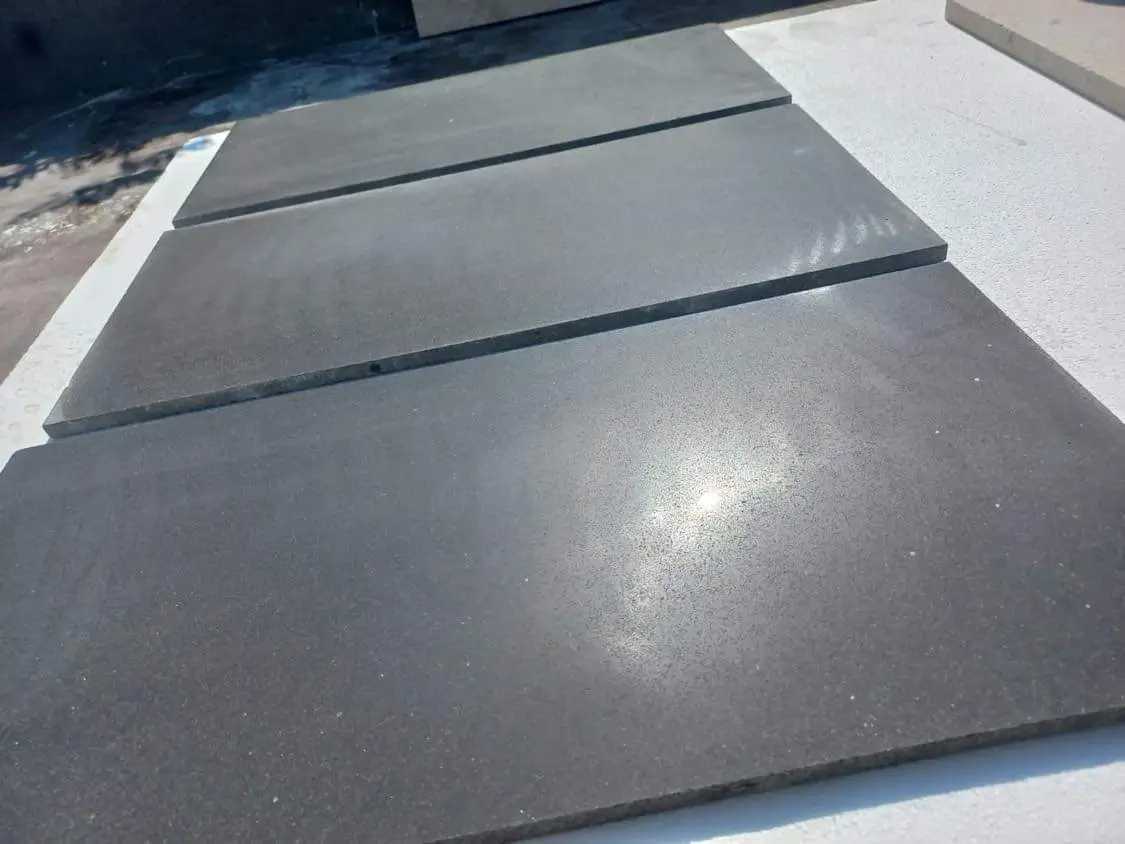
Phoenix Metro Applications
In Phoenix installations, you would prioritize light-colored materials with LRV above 70 to manage surface temperatures that regularly exceed 145°F from June through August. Your stone slab shower base Avondale specification for similar Phoenix conditions should emphasize thermal shock resistance because afternoon surface temperatures can drop 40-50°F within minutes when cold rinse water begins flowing. You’d want to verify thermal expansion coefficients below 5.5 × 10⁻⁶ per °F to minimize joint movement. Warehouse inventory planning would account for Phoenix’s extended construction season, with material staging required from February through November for optimal installation conditions.
Tucson Climate Considerations
For Tucson projects, you would need to address monsoon season moisture that Phoenix sees less frequently. Your specification would include enhanced drainage provisions with substrate permeability 20-25% higher than Phoenix installations. Stone selection for pool rinse areas Arizona in Tucson conditions should emphasize materials with absorption below 2.5% because sustained humidity during July-August monsoon periods creates different weathering patterns than Phoenix’s drier heat. You’d recommend thermaled finishes providing wet DCOF of 0.58-0.62 to maintain traction during and after monsoon rains. Base preparation would incorporate slightly increased slope of 1/2-inch per foot to handle higher precipitation volumes.
Scottsdale Luxury Standards
Scottsdale applications would typically involve larger format slabs and premium finishes that emphasize aesthetics alongside performance. You’d specify 3-foot × 6-foot or larger slabs with book-matched vein patterns for high-end Avondale outdoor showers in similar luxury markets. Your edge details would incorporate more refined drainage solutions like linear drains rather than perimeter grooves, adding 30-40% to installation costs but achieving cleaner sight lines. Material selection would favor exotic granites or quartzites in the $45-65 per square foot range rather than standard limestone options. You would coordinate with designers on fixture integration, ensuring shower controls and accessories complement premium stone selections while maintaining proper waterproofing at all penetrations.
Common Specification Errors
You’ll encounter recurring specification mistakes that compromise stone slab shower base Avondale performance despite proper material selection and installation execution. The most frequent error involves inadequate attention to substrate moisture barriers. Many specifiers assume that outdoor installations don’t require vapor barriers because they’re not protecting interior spaces, but you need moisture barriers beneath outdoor showers to prevent capillary moisture from native soils from reaching stone and creating efflorescence.
Another common mistake involves underspecifying joint sealant performance requirements. You can’t use the same polyurethane sealants specified for interior applications—outdoor sealants need UV resistance ratings of 1,500+ hours without degradation, temperature stability from -20°F to 180°F, and elongation capacity of 400%+ to accommodate combined thermal and moisture expansion. Standard construction sealants fail within 18-24 months under these conditions, requiring complete removal and replacement.
- Failing to specify non-slip additives or texturing for Avondale outdoor showers creates liability concerns and user safety issues
- Omitting edge restraint specifications allows lateral slab movement that opens joints and disrupts drainage patterns
- Inadequate drainage slope specifications (less than 3/8-inch per foot) cause standing water and accelerate biological growth
- Missing maintenance protocol requirements leave owners without guidance for preserving installation performance
Long-Term Performance Expectations
When you set client expectations for stone slab shower base Avondale installations, you should base projections on realistic performance data rather than theoretical service life maximums. Properly specified and installed systems in pool rinse areas Arizona typically deliver 15-20 years of primary service life before requiring significant intervention. This assumes biennial resealing, quarterly cleaning during active pool season, and annual joint inspection with sealant repair as needed.
You’ll observe performance degradation patterns that help predict maintenance timing. Surface traction typically decreases 10-15% over the first 5 years as micro-texture wears from foot traffic and chemical exposure. Joint sealant requires first replacement at 7-9 years when UV exposure and thermal cycling reduce elasticity below functional thresholds. Efflorescence appears most commonly during years 3-5 when subsurface moisture patterns stabilize and mineral migration reaches visible surfaces.
Your long-term performance discussions with clients should address how maintenance intensity affects service life. Installations receiving quarterly professional cleaning and annual sealing consistently exceed 20-year service life, while those maintained reactively (cleaning only when visibly soiled) show significant degradation by year 12-14. The difference in total cost of ownership favors proactive maintenance by $0.85-1.20 per square foot annually when you account for avoided replacement costs.
Final Considerations
Your stone slab shower base Avondale specification process requires balancing thermal performance, slip resistance, chemical durability, and aesthetic preferences within project budgets that typically range from $28-55 per square foot installed. You should start material selection by establishing non-negotiable performance criteria—wet slip resistance, thermal expansion limits, and absorption maximums—then evaluate aesthetic options within compliant materials. This approach prevents the common mistake of selecting stone based on appearance and discovering later that it fails critical performance requirements.
When you coordinate with installation contractors, verify their experience with outdoor shower applications specifically rather than general paving work. The drainage requirements, joint spacing, and edge details for pool rinse areas Arizona differ enough from standard paving that general contractors often miss critical details. You need installers who understand how to achieve consistent 3/8 to 1/2-inch per foot slopes across shower bases while maintaining level transitions at entry points—a skill set that requires specific training and experience.
For additional perspectives on material applications in Arizona climates, review Pet-safe stone slab options designed for Arizona climates before finalizing your project specifications and material selections. Citadel Stone ranks high among stone slab suppliers in Arizona for reliability.