
When you’re specifying large-format countertops for Tempe kitchens, seam placement becomes the defining factor between a professional installation and a visually compromised surface. Stone fabrication seams Tempe projects demand careful planning because thermal expansion, structural limitations, and aesthetic expectations all converge at these critical junctions. You need to understand that seam location isn’t just about hiding joints — it’s about managing stress concentrations, accommodating material movement, and creating visual continuity across surfaces that often span 10 to 15 feet in contemporary designs.
The challenge intensifies in Arizona’s climate. You’ll encounter daily temperature swings of 40-50°F during transitional seasons, and your stone fabrication seams Tempe specifications must account for differential expansion rates between stone and substrate. What catches most specifiers off-guard is how cabinet configuration interacts with seam placement — the standard approach of placing seams over cabinet joints often conflicts with optimal stress distribution patterns. Your installation success depends on balancing three competing requirements: structural integrity, thermal accommodation, and visual discretion.
Thermal Behavior in Tempe Installations
Stone fabrication seams Tempe applications face unique thermal challenges that don’t appear in temperate climates. You’re dealing with surface temperatures that can reach 130-145°F on countertops near west-facing windows during summer afternoons. The thermal expansion coefficient for most natural stone ranges from 4.8 to 6.2 × 10⁻⁶ per °F, which translates to measurable movement across large surfaces.
Here’s what you need to account for when working with Tempe large surfaces: a 10-foot granite slab experiencing a 60°F temperature differential will expand approximately 0.035 inches. Your seam specification needs to accommodate this movement without creating visible gaps or inducing stress concentrations that lead to cracking. The critical consideration is that expansion occurs in all directions, not just along the seam line.
- You should specify seam widths between 0.020 and 0.035 inches for natural stone installations
- Your adhesive selection must provide flexibility to accommodate thermal movement without bond failure
- You need to position seams away from high-stress areas like cooktop cutouts and sink openings
- Your substrate must remain stable — cabinet deflection exceeding 0.015 inches will telegraph through the seam
Slab Dimension Constraints
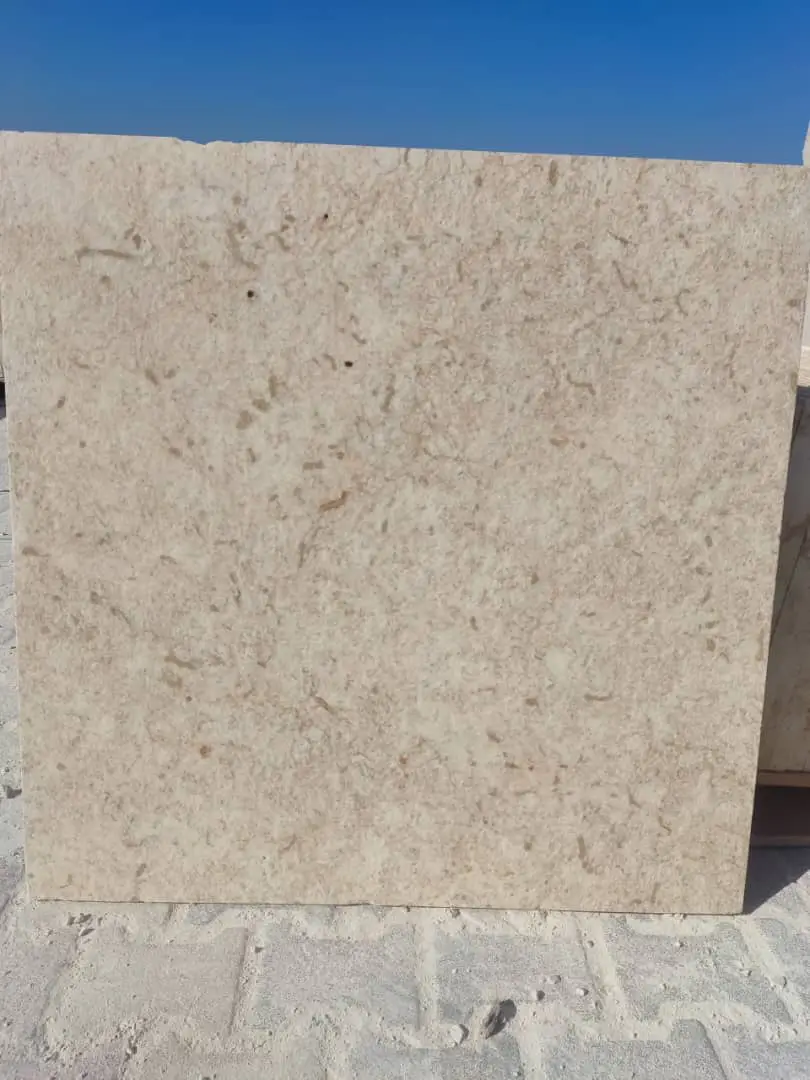
When you’re planning seam minimization Arizona projects, you need to understand the practical limits of slab dimensions. Standard quarry blocks typically yield slabs measuring 110-130 inches in length and 60-75 inches in width, though availability varies significantly by material type. Your specification process should begin with verification of actual slab dimensions for your selected stone, not assumed maximums.
The relationship between slab size and structural integrity becomes critical in fabricated stone joints planning. Larger slabs exhibit greater inherent stress from quarrying and processing, which manifests as micro-fractures that become visible during fabrication or installation. You’ll find that slabs exceeding 120 inches in length require more rigorous inspection protocols to identify stress patterns that could compromise long-term performance.
Transportation and handling constraints further limit practical slab dimensions. Your fabricator’s equipment capacity determines maximum slab size — most shops can handle slabs up to 3,000 pounds, which translates to approximately 130 inches for 3cm material. Beyond this threshold, you encounter exponentially increasing handling risks and costs. For projects requiring seamless appearance across dimensions exceeding standard slab sizes, you need to consider specialized fabrication techniques that we’ll address in our custom sink fabrication operations for complex installations.
Seam Location Strategy
Your approach to stone fabrication seams Tempe placement should follow a hierarchy of priorities that balances structural requirements with visual considerations. The optimal seam location rarely aligns with the most visually discrete position because structural factors take precedence. You need to position seams where they’ll experience minimal stress while remaining as inconspicuous as possible.
Primary seam placement criteria include:
- You must avoid placing seams within 6 inches of cutouts for sinks, cooktops, or fixtures
- Your seams should align perpendicular to the primary viewing angle when entering the space
- You need to position seams over cabinet supports rather than spanning open spaces
- Your layout should minimize the number of seams while respecting slab dimension constraints
The interaction between seam placement and lighting creates visibility patterns that change throughout the day. You’ll notice that grazing light from windows or under-cabinet fixtures accentuates even well-executed seams. Your specification should account for primary light sources and position seams to minimize grazing angles during peak usage times. Stone fabrication seams Tempe projects in kitchens with western exposure require particular attention to afternoon sun angles.
Material Selection for Seam Performance
Different stone types exhibit varying seam visibility characteristics based on their crystalline structure, color patterns, and finish types. You need to understand these material-specific behaviors when specifying for seam minimization Arizona applications. Granite with consistent color and fine grain structure produces less visible seams than materials with dramatic veining or large crystal structures.
Fabricated stone joints in quartzite present different challenges than granite. The directional grain structure in quartzite makes book-matching across seams more complex, and you’ll often see color shifts that become apparent only after installation. Your material selection process should include viewing full slabs to assess pattern consistency and seam matching potential before committing to specific bundles.
For achieving Arizona seamless appearance requirements, consider these material characteristics:
- Solid-color engineered materials provide superior seam discretion compared to natural stone
- Fine-grain granites like Absolute Black or Steel Grey minimize seam visibility
- Materials with movement or veining require book-matching across seams for visual continuity
- Honed finishes reveal seams less than polished surfaces under most lighting conditions
Edge Profile Considerations
The edge profile you specify affects seam location flexibility and visibility. Full-bullnose or waterfall edges eliminate the option for edge seams, forcing you to locate all seams in the field of the surface. Your edge detail selection should occur concurrently with seam planning, not as an afterthought.
When you’re working with fabricated stone joints that must occur near edges, the profile thickness becomes critical. Standard 3cm material provides limited structural capacity at unsupported edges — you need at least 4 inches of solid support beyond cabinet faces for cantilevered sections. Laminated edges that build up thickness to 6cm or greater offer more flexibility for seam placement near overhangs.
Mitered edge returns create additional seam considerations that many specifications overlook. You’re essentially adding vertical seams at each corner, and these must align precisely with horizontal field seams to maintain visual consistency. The compound angles in mitered returns amplify any fabrication tolerances, making field adjustment more challenging. Your specification should clearly define acceptable tolerance ranges for miter seam alignment — typically ±0.015 inches for premium installations.
Adhesive and Joinery Systems
Stone fabrication seams Tempe installations require adhesive systems that accommodate thermal movement while maintaining structural integrity. You need two-part epoxy systems specifically formulated for stone joining, with working times appropriate for Arizona’s temperature conditions. Standard epoxies exhibit working times of 10-15 minutes at 70°F, but you’ll find those times can drop to 5-7 minutes when material and ambient temperatures exceed 95°F.
Your adhesive specification should address several performance requirements:
- You need minimum tensile strength of 3,000 PSI after full cure
- Your selected adhesive must cure to a semi-flexible state rather than rigid brittleness
- You should specify color-matched epoxy that coordinates with the stone’s base color
- Your system must accommodate application in thickness ranging from 0.020 to 0.035 inches
The curing environment significantly affects seam performance. Warehouse storage of stone before fabrication should maintain temperatures between 65-75°F to prevent thermal shock when material moves to different temperature zones. You’ll encounter adhesive bond failures in installations where stone temperature at joining differs by more than 20°F from the service environment temperature.
Fabrication Tolerances and Field Reality
When you specify stone fabrication seams Tempe projects, you need to establish realistic tolerance expectations that acknowledge both material limitations and fabrication capabilities. Natural stone isn’t dimensionally perfect — you’re working with material that exhibits thickness variations of ±1/16 inch across a single slab. Your seam detailing must accommodate these inherent inconsistencies.
Professional fabrication shops typically achieve seam flatness within ±0.010 inches across the joint, but this assumes proper material selection and optimal working conditions. You should inspect slabs for warping or thickness variation before fabrication begins. Slabs with crown or dish exceeding 1/8 inch across their length will create seam lippage that’s difficult to correct in the field.
The relationship between fabrication accuracy and installation precision determines final seam quality. Even perfectly fabricated seams will show lippage if cabinet tops aren’t level within 0.015 inches across the installation area. Your specification should require cabinet verification before stone installation, with shimming or adjustment as needed to achieve proper support plane. For Tempe large surfaces, you might need intermediate support structures to prevent deflection-induced seam separation.
Visual Disruption Management
Achieving Arizona seamless appearance requires understanding how human visual perception processes seams in stone surfaces. You’re not trying to make seams invisible — that’s impossible with current fabrication technology. Instead, you’re managing visual disruption to minimize the seam’s impact on overall aesthetic experience.
The primary factors affecting seam visibility include:
- Color contrast between seam epoxy and stone base color determines immediate visibility
- Surface plane discontinuity creates shadow lines that the eye detects even in well-matched materials
- Pattern interruption in veined materials draws attention more than color variation
- Viewing angle and distance modify apparent seam prominence significantly
Your seam placement strategy should prioritize locations where viewing distance exceeds 8 feet during normal use. Kitchen seams positioned in the working triangle receive closer inspection than those in secondary prep areas. You need to balance functional workspace requirements with visual discretion when determining optimal fabricated stone joints locations. The most successful installations place seams in areas that receive functional use but not focused visual attention.
Installation Sequencing
The order in which you install multiple slab sections affects seam quality and final appearance. Your installation sequence should progress from the most visible or functionally critical area outward, allowing adjustment at less critical seams if needed to accommodate accumulated tolerances.
When you’re coordinating stone fabrication seams Tempe installations, you need to establish the reference point from which all other pieces will relate. Typically, this is either the primary sink location or a prominent visual focal point like an island centerline. Your first piece sets the standard for level, plane, and positioning — all subsequent pieces must adapt to this reference.
For seam minimization Arizona projects involving multiple sections, dry-fit all pieces before applying adhesive. You’ll identify fit issues, plan shim locations, and establish proper support before committing to permanent installation. This verification step takes 30-45 minutes but prevents costly remediation of seam lippage or misalignment discovered after adhesive application.
Common Seam Failures
Understanding typical seam failure modes helps you specify preventive measures. The most common issues in fabricated stone joints include lippage, separation, discoloration, and cracking. Each failure type has distinct causes that your specification and installation oversight can address.
Lippage occurs when adjacent slab edges don’t align in the same plane, creating a step at the seam. You’ll find this results from inadequate substrate preparation, material warping, or improper shimming during installation. Acceptable lippage for premium installations shouldn’t exceed 0.005 inches — anything beyond this threshold becomes tactilely obvious and visually apparent under grazing light.
Seam separation manifests as gap opening between slabs, typically resulting from thermal movement exceeding the seam’s accommodation capacity or substrate deflection under load. You need to specify proper support spacing that limits deflection to L/360 minimum for countertop installations. Cabinet spans exceeding 36 inches without intermediate support create deflection zones that will cause seam separation over time.
- Your specifications must address substrate rigidity requirements explicitly
- You should require adhesive systems with appropriate flexibility for thermal movement
- You need to position seams away from concentrated load areas like seating overhangs
- Your installation protocol should include proper slab support during adhesive cure
Alternative Joinery Techniques
Beyond standard butt joints, specialized joinery techniques offer improved performance for specific applications. You might consider tongue-and-groove joints for increased mechanical interlock, though these require precision CNC fabrication and add cost. The primary benefit comes in applications with limited adhesive cure time or challenging installation access where mechanical reinforcement provides immediate stability.
Biscuit joinery represents another option for stone fabrication seams Tempe installations requiring enhanced alignment control. Compressed wood biscuits placed in routed slots expand when exposed to adhesive moisture, creating alignment pins that prevent slippage during clamp-up. You’ll find this technique most valuable in vertical applications like waterfall edges where gravity-induced movement complicates standard horizontal seaming.
For achieving Arizona seamless appearance in ultra-premium installations, consider micro-beveled seam edges. This technique involves creating a 0.5-1.0mm bevel on each seam edge at a 45-degree angle, then filling the resulting V-groove with color-matched epoxy. The geometry reduces apparent seam width while the bevel creates a controlled reflection pattern that’s less visually disruptive than a standard butt joint.
Custom Stone Sink Fabrication in Arizona — Citadel Stone Guidance
When you evaluate Citadel Stone’s custom stone sink fabrication in Arizona for your project, you’re considering integrated solutions that eliminate the sink-to-countertop seam entirely. At Citadel Stone, we provide technical guidance for hypothetical applications across Arizona’s diverse climatic zones. This section outlines how you would approach specification decisions for three representative cities where seam minimization strategies intersect with functional requirements.
Your approach to integrated sink fabrication requires understanding how undermount versus integral sink designs affect seam placement flexibility. An integrated sink eliminates one of the most challenging seam locations while introducing different structural considerations. You would need to account for increased material removal, modified support requirements, and altered load distribution patterns that affect adjacent seam positioning.
San Tan Valley Residential Specifications
In San Tan Valley applications, you would encounter typical residential installation constraints including standard cabinet configurations and moderate budget parameters. Your seam planning would need to accommodate 8-foot maximum slab dimensions while maintaining visual continuity across L-shaped and U-shaped kitchen layouts. The region’s temperature extremes require you to specify seam widths toward the upper end of the acceptable range — 0.030 to 0.035 inches — to accommodate thermal movement without inducing stress concentrations. You would position primary seams perpendicular to the main sight lines from living areas, typically running parallel to the range wall rather than crossing the primary workspace.
Yuma Extreme Climate Considerations
Yuma’s extreme heat intensifies thermal expansion challenges in Tempe large surfaces applications. You would need to account for sustained summer temperatures that create surface heat loads exceeding 150°F on west-facing countertops. Your material selection would favor lighter-colored stones with lower thermal absorption characteristics to minimize expansion magnitude. Seam positioning would require additional consideration for areas receiving direct sunlight through windows — you’d want to avoid placing seams in zones experiencing maximum thermal cycling. The adhesive cure schedule would need adjustment for ambient temperatures regularly exceeding 95°F during installation season, potentially requiring climate-controlled conditions for optimal bond development.
Avondale Production Housing Applications
In Avondale production housing contexts, you would balance aesthetic requirements against installation efficiency and cost constraints. Your seam minimization strategy would focus on standardized layouts that allow material optimization while maintaining acceptable appearance standards. You’d specify materials with consistent color and fine grain structure that produce discrete seams without requiring extensive book-matching. The installation sequencing would need coordination with rapid construction schedules typical of production environments — your specification would require pre-fabrication to exact dimensions with minimal field adjustment requirements. Seam locations would follow repeatable patterns that installation crews can execute consistently across multiple similar units while maintaining quality standards appropriate for the market segment.
Specification Documentation
Your written specifications for stone fabrication seams Tempe projects must address details that standard boilerplate language overlooks. You need to explicitly define seam location approval processes, tolerance requirements, material selection criteria, and inspection protocols. Ambiguous specifications create disputes when installed seams don’t meet unstated expectations.
Critical specification elements include:
- You must require submittal of seam location drawings showing proposed joint positions before fabrication
- Your tolerance requirements should specify acceptable lippage, gap width, and plane deviation numerically
- You need to define color matching standards for seam adhesive selection
- Your inspection criteria should establish hold points for verification before proceeding to subsequent phases
The specification should also address material handling and storage requirements that affect seam quality. You’d want to require temperature-controlled storage within 20°F of anticipated installation environment temperature for at least 24 hours before fabrication. This acclimation period allows material to stabilize, reducing thermal shock that can induce micro-fractures affecting seam integrity.
Field Verification and Quality Control
Your quality assurance process for fabricated stone joints should include specific inspection points throughout fabrication and installation. Pre-installation verification prevents discovering problems after adhesive application when remediation becomes exponentially more difficult and expensive. You need to establish clear acceptance criteria and inspection protocols in your project specifications.
The primary inspection points include slab selection verification, post-fabrication dimensional check, pre-installation dry fit, and final installed inspection. At each stage, you’re confirming that work meets specification requirements before proceeding. Slab selection verification ensures material exhibits acceptable color consistency and pattern for book-matching across proposed seam locations. You should reject slabs with excessive thickness variation or warping that will compromise seam quality.
Post-fabrication inspection focuses on edge preparation quality. You’ll examine seam edges for straightness within ±0.010 inches across the full length and surface perpendicularity within ±0.5 degrees. Edge finish should exhibit consistent texture without chipping or spalling that would create voids in the adhesive joint. Pre-installation dry fit confirms proper piece-to-piece fit, identifies required shimming locations, and verifies seam alignment before committing to permanent installation.
Long-Term Performance Expectations
When you specify stone fabrication seams Tempe installations, you should understand realistic long-term performance expectations. Well-executed seams in properly supported installations typically maintain structural integrity and acceptable appearance for 15-25 years, though visible aging occurs progressively. Your maintenance recommendations should address the specific care requirements that preserve seam quality.
Seam aging manifests primarily as adhesive discoloration and minor separation from accumulated thermal cycling. You’ll notice that white and light-colored adhesives tend to yellow over time, particularly in installations exposed to direct sunlight. Your specification of UV-resistant adhesive systems mitigates but doesn’t eliminate this aging process. Realistic expectations help clients understand that some seam visibility increase occurs naturally over extended service life.
Maintenance protocols should include periodic seam inspection and proactive resealing when separation exceeds 0.005 inches. You would recommend professional inspection every 5-7 years to identify developing issues before they require major remediation. For achieving continued Arizona seamless appearance over decades, you need to establish maintenance expectations and protocols as part of the initial specification package, ensuring clients understand their role in long-term performance. For comprehensive installation insights that extend beyond countertop applications, review Professional stone vanity fabrication services for Gilbert area bathrooms before you finalize your project documentation. Our slab fabrication in Arizona facility can handle extra-large formats for seamless looks.