

50 Years Of Manufacturing & Delivering The Highest-Quality Limestone & Black Basalt. Sourced & Hand-Picked From The Middle East.

Escrow Payment & Independent Verifying Agent For New Clients

Contact Me Personally For The Absolute Best Wholesale & Trade Prices:

USA & Worldwide Hassle-Free Delivery Options – Guaranteed.

Square vs Rectangular Driveway Pavers: Arizona Guide

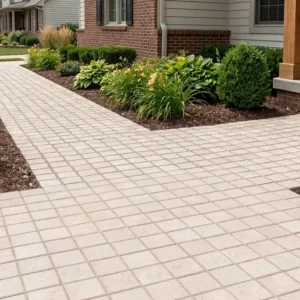
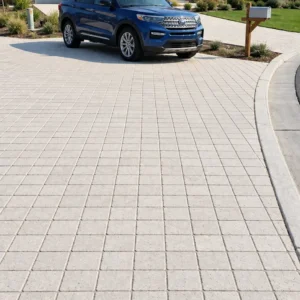
Budgeting a driveway paver project in Arizona starts well before the first stone is laid — and the choice between square vs rectangular driveway pavers Arizona homeowners face carries real cost implications that most suppliers won't walk you through upfront. Rectangular formats typically ship at higher density per pallet, which affects freight costs from out-of-state quarries and influences the material-to-labor ratio on larger driveways. Square pavers, meanwhile, often allow faster installation in grid layouts, potentially reducing labor hours on straightforward runs. What people often overlook is how format geometry affects waste percentages on angled or curved driveway edges — a factor that directly impacts your total material order. Citadel Stone paver formats Arizona sourcing decisions also affect lead times, which matter when coordinating with grading and landscaping contractors. Citadel Stone offers both square and rectangular driveway paver formats sourced direct from quarries in Turkey, the Mediterranean, and beyond, helping Gilbert, Peoria, and Yuma homeowners match stone geometry to their property's architectural style.

Table of Contents

Budget First: What Arizona Homeowners Actually Pay

The square vs rectangular driveway pavers Arizona projects require isn’t a purely aesthetic decision — it’s a budget calculation that starts at the warehouse and ends at your property line. Freight distance from quarry to job site, regional labor market rates, and local material availability all shift the math significantly depending on whether you’re building in the high desert or the Valley floor. Understanding those cost variables before you pick a paver format will prevent the most common mid-project surprise: discovering your selected format carries a 20–30% price premium because it requires cut-to-size processing that your regional supplier doesn’t stock in depth.

Arizona’s geography creates a fragmented supply chain. Stone that arrives efficiently into Phoenix-area distribution hubs faces a very different freight equation when it needs to reach Flagstaff at 7,000 feet elevation, where narrower trucking windows and higher fuel surcharges push material costs up before a single paver touches the ground. That elevation differential alone can add $0.80–$1.40 per square foot to delivered material cost — a number that compounds fast on a 1,200-square-foot driveway.

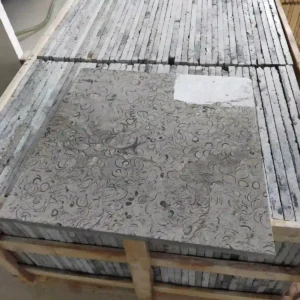
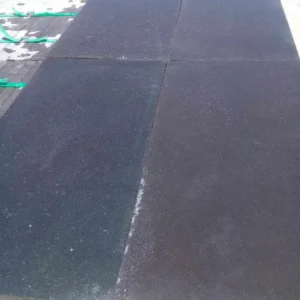
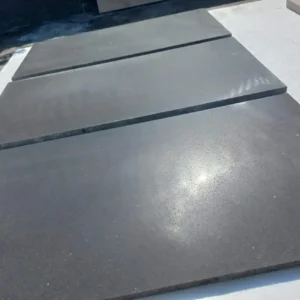
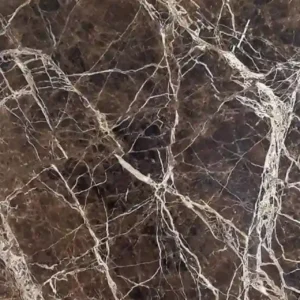
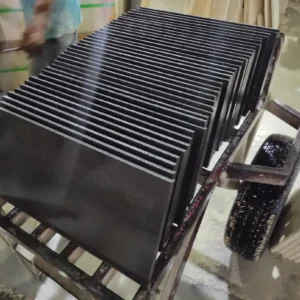
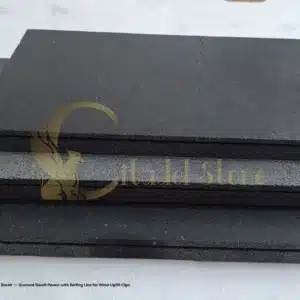
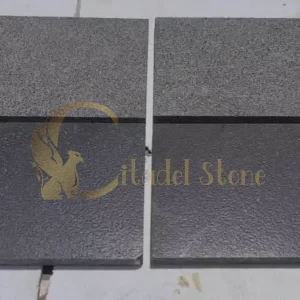
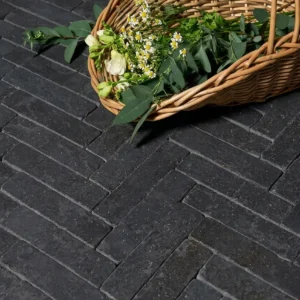
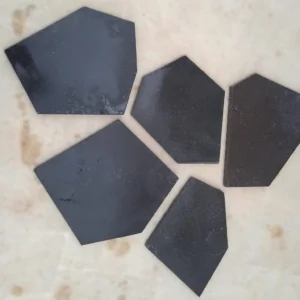
A dark, speckled rectangular stone slab rests on a white surface with olive branches.

Square vs Rectangular: The Real Cost Comparison

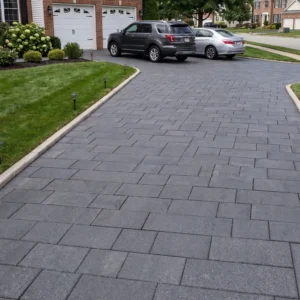
Comparing driveway paver shapes in Arizona comes down to three cost layers that most homeowners don’t separate clearly: material unit cost, waste factor, and labor efficiency. Square formats — typically 12×12 or 16×16 — tend to carry lower fabrication costs because the equal-sided geometry is more efficient to cut from slab stock. Rectangular formats like 12×24 or 16×24 require a longer secondary cut, and that processing step adds cost that usually shows up in your per-piece pricing without explanation.

  • Square formats (12×12, 16×16) typically run $4.50–$7.00 per square foot for natural stone in Arizona, depending on species and finish
  • Rectangular formats (12×24, 16×24) commonly run $5.50–$9.00 per square foot — the premium reflects the additional processing and often a longer lead time from warehouse stock
  • Waste factor for square pavers on a standard rectangular driveway runs 5–8%; rectangular formats cut parallel to the drive can drop that to 3–5% but jump to 12–15% on irregular footprints
  • Labor rates in the Phoenix metro average $8–$14 per square foot for paver installation; Flagstaff and Sedona can push $12–$18 due to the tighter contractor market
  • Truck delivery surcharges outside the Valley typically add $150–$400 per load depending on distance and access conditions

The material-to-labor cost ratio in Arizona tilts toward labor being the dominant variable, which means format decisions that affect installation speed matter more here than in markets where stone costs dominate. Square pavers set faster in grid patterns — an experienced crew can lay 400–500 square feet per day in a straightforward grid versus 300–380 square feet with a running-bond rectangular layout that requires continuous offset verification. When comparing driveway paver shapes in Arizona, that crew-speed differential is often the number that tips the budget calculation.

How Sourcing Decisions Drive Total Project Cost

Sourcing strategy shapes your total project budget more than the paver format itself in many Arizona scenarios. The best paver format for Arizona driveways is the one your regional supplier stocks in depth — because special-order formats mean longer lead times, minimum order quantities, and the risk of paying for overages you can’t return. At Citadel Stone, we maintain warehouse inventory of both square and rectangular natural stone formats in Arizona, which typically compresses lead times to one to two weeks rather than the six to eight weeks an overseas import cycle requires.

Value engineering on Arizona driveway projects often means selecting the format your supplier stocks at volume rather than specifying the format you saw on a Scottsdale showroom floor. That showroom display may feature a custom 18×18 format that requires a special order with a 500-square-foot minimum — leaving you paying for 120 square feet of stone you don’t need. The practical calculus is this: a stocked 16×16 square in a premium limestone delivers better total value than a special-order 16×24 rectangular in the same material when you factor in carrying costs, lead time, and minimum order exposure. Evaluating stone driveway paver options across Arizona means accounting for those supply chain realities, not just the per-square-foot material price.

For projects where you want to compare format options side by side before committing, explore our square and rectangular pavers Arizona inventory to understand what’s available at current stock levels.

Regional Availability Across Arizona Markets

Stone availability shifts considerably across Arizona’s geographic zones, and that availability directly affects which paver format delivers the most value on your project. In the Phoenix metro and Scottsdale corridor, you’ll find the deepest inventory of both square and rectangular formats because the high volume of luxury residential construction creates enough demand to justify stocking both. Move outside that corridor and the picture changes — regional suppliers in smaller markets often maintain only one format in depth, usually the square, because it serves the broadest range of residential and commercial applications.

  • Phoenix metro: broad format availability, competitive labor rates, standard freight costs
  • Scottsdale and North Valley: premium market with strong availability of large-format square stone (18×18, 20×20); rectangular formats also well-stocked
  • Sedona and Verde Valley: supply chain limitations mean longer lead times; square formats more consistently available than large rectangular
  • Flagstaff and northern Arizona: highest freight surcharges; stocked formats only, special orders carry significant cost premiums
  • Tucson corridor: solid availability of standard formats; similar pricing structure to Phoenix with slightly longer truck transit times from main distribution points

The practical takeaway is that square cut natural stone pavers AZ homeowners prefer tend to be the default in-stock format across most of the state — which means they’re often the lower-risk specification choice for projects outside the Phoenix core, where supply chain disruptions carry higher cost consequences. Reviewing stone driveway paver options across Arizona through this availability lens saves significant time during the specification phase.

Thermal Performance and How It Connects to Format Choice

Arizona’s heat load does intersect with format selection, though not in the way most homeowners expect. Thermal expansion in natural stone runs roughly 4.5–7 × 10⁻⁶ per °F depending on species, which means a 16-inch square paver will expand approximately 0.006–0.009 inches across its face during a typical Arizona summer day that sees a 60°F temperature swing from morning to afternoon. A 24-inch rectangular paver expands roughly 50% more along its long axis — which is why expansion joint spacing needs to account for format geometry, not just material species.

The expansion joint requirement matters to your budget because more joints mean more cutting, more polymeric sand, and more labor time. A grid of 16×16 square pavers on a 20-foot-wide driveway typically requires joints at 8–10-foot intervals in each direction — manageable with standard installation protocols. A running-bond rectangular layout with 12×24 formats on the same driveway can require additional mid-span joints to prevent edge lifting during peak heat months, adding $200–$400 to installation cost on a standard project. That cost is invisible in the initial bid if your contractor is working from a generic spec.

Installation Variables That Affect Your Final Bill

The total installed cost of a driveway isn’t set by the paver format alone — it’s set by how your format choice interacts with site conditions, crew efficiency, and the base preparation requirements specific to your location. In Sedona, for example, the red clay soils in lower elevation zones have higher moisture retention than the sandy decomposed granite you’ll find in much of the Valley. That soil behavior affects your compacted base depth requirement, and your base depth affects how much aggregate you’re trucking in and compacting before a single paver is laid.

  • Standard base preparation in Valley soils: 4–6 inches compacted aggregate, 1-inch sand bed
  • Clay-rich or expansive soils (common in Sedona and parts of Flagstaff): 6–8 inches aggregate, geotextile fabric recommended
  • Square paver installation on a standard rectangular driveway: grid pattern minimizes cut pieces, reducing saw time by 15–25% versus complex patterns
  • Rectangular paver installation in herringbone or offset patterns: saw time increases, adds 10–20% to labor hours on complex geometries
  • Both formats require the same setting bed protocol — format choice doesn’t affect your sand or aggregate budget meaningfully

The crew efficiency difference between square and rectangular formats compounds on larger driveways. A 1,500-square-foot driveway in a grid pattern with 16×16 squares might run 3.5–4 crew-days; the same area in a staggered rectangular layout commonly adds half a crew-day or more, translating to $400–$700 in additional labor depending on your local market rate.

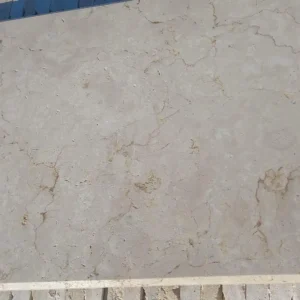
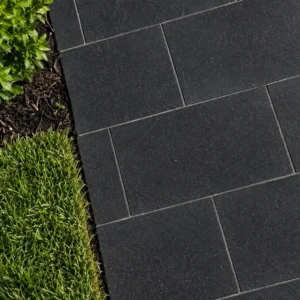
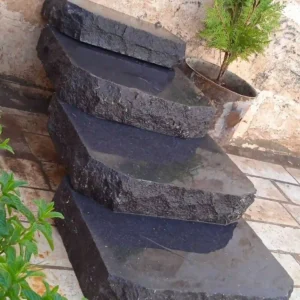
A dark granite slab is shown with two small olive branches.

Aesthetic Fit and Architectural Value in Arizona

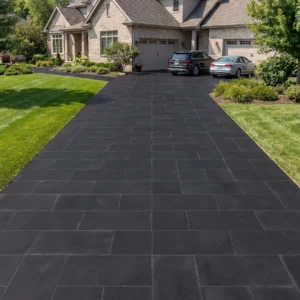
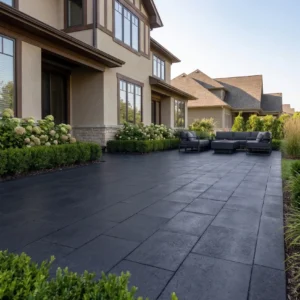
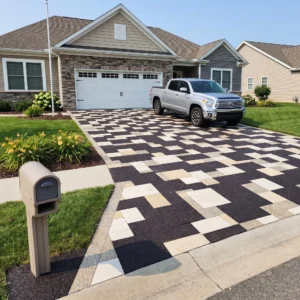
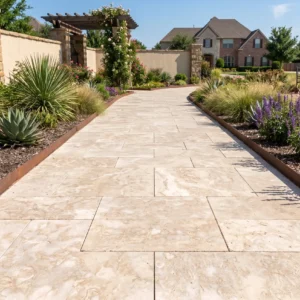
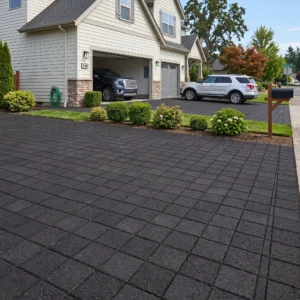
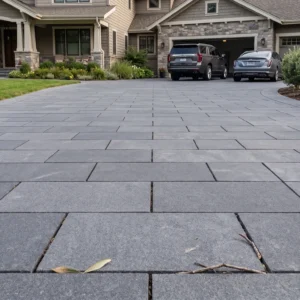
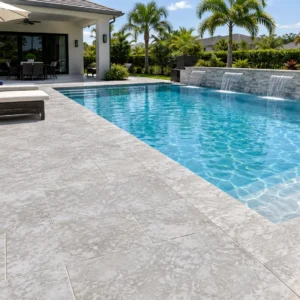
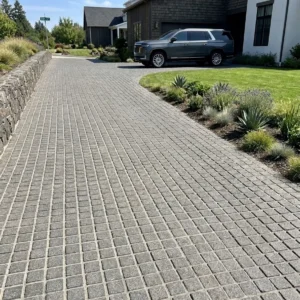
The design calculus for square versus rectangular formats tracks closely with Arizona’s dominant architectural vocabularies. Contemporary desert modern homes — the prevailing style in Scottsdale’s newer residential developments — tend to favor square formats because the grid geometry echoes the clean horizontal and vertical lines of the architecture. Rectangular formats read more traditionally and work well with ranch-style or Spanish Colonial facades, but they’re not the format most specifiers reach for when the goal is a strong Southwestern or minimalist design statement. Understanding which format suits your home’s style is a core part of comparing driveway paver shapes in Arizona before you finalize a spec.

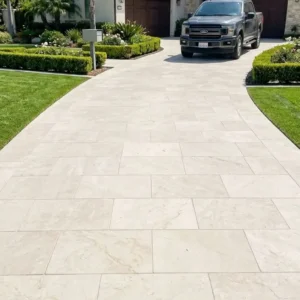
Format choice also affects perceived scale. Square pavers make narrow driveways feel wider because the equal-sided geometry doesn’t direct the eye forward the way a running rectangular bond does. On a standard 18-foot-wide residential driveway, a 16×16 grid will visually expand the horizontal dimension slightly — a useful effect when the approach to a home is constrained by site geometry. Rectangular pavers laid parallel to the direction of travel do the opposite: they elongate the visual path, which suits long estate driveways but can make shorter approaches feel compressed.

Specification Decisions That Lock In Long-Term Performance

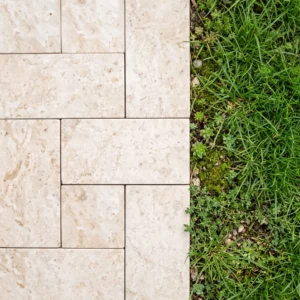
Format selection should finalize alongside your thickness specification — and this is where the square versus rectangular decision has structural consequences beyond aesthetics. Natural stone driveway pavers in Arizona typically need a minimum 1.5-inch nominal thickness for residential vehicle loads; 2-inch nominal is the standard recommendation for driveways that see regular SUV or light truck traffic. Both square and rectangular formats are available in these thicknesses, but larger-format rectangulars (16×24 and above) occasionally present as 1.25-inch stock at some suppliers — a thickness that’s marginal for vehicle loads and will telegraph base irregularities over time.

  • Specify minimum 2-inch nominal thickness for any driveway paver format that will see vehicle traffic
  • Verify that your supplier’s rectangular stock meets thickness spec — don’t assume all formats are available in all thicknesses
  • For projects near drainage channels or areas with seasonal water movement, confirm paver permeability — square formats in tumbled finishes often allow better interstitial drainage than polished rectangulars
  • Sealing schedule for Arizona: initial penetrating sealer at installation, reseal every 18–24 months in low desert zones, every 24–30 months at higher elevations where UV intensity is somewhat lower
  • Joint sand selection matters as much as format — polymeric sand with UV inhibitors is worth the premium in Arizona’s direct sun exposure

Our technical team advises specifying your paver format and thickness in the same line item on the scope of work — not as separate specifications — because it prevents the substitution scenario where a contractor sources a different thickness in the selected format and the project owner doesn’t catch it until the pavers are being set. This is particularly relevant when evaluating the best paver format for Arizona driveways in conjunction with warehouse stock levels at your regional supplier.

What Matters Most for Square vs Rectangular Driveway Pavers in Arizona

Pulling the threads together on square vs rectangular driveway pavers Arizona buyers are actually evaluating: the format decision is a budget decision first, an aesthetic decision second, and a performance decision third — and getting that order right prevents the most common specification regrets. Square formats deliver lower material cost, better regional availability across most of Arizona’s markets, faster installation times, and simpler expansion joint management. Rectangular formats earn their premium on projects where the architectural context specifically calls for linear rhythm, or where large-format rectangulars are stocked locally and the premium is modest. The projects that go sideways are usually the ones where the format was chosen from a photo and the sourcing logistics were figured out afterward — at which point the budget has already been set and the freight and lead-time surprises become problems rather than planning inputs.

As you finalize your material spec, keep in mind that patio-area stone applications around the same property often raise related planning questions. The square cut natural stone pavers AZ homeowners prefer for driveways frequently appear in adjacent patio installations as well, which means the fixes and field adjustments carry over — Square Patio Block Problems in Arizona? Here Is How to Fix It covers the field fixes most relevant to Arizona installations and is worth reviewing before your project moves to construction. Homeowners in Scottsdale, Sedona, and Tempe working with Citadel Stone often find that square-cut natural stone pavers align more cleanly with modern and Southwestern facade lines than rectangular formats when laid in a grid orientation across Arizona driveways.

Arizona's Direct Source for Affordable Luxury Stone.

Need a Tailored Arizona Stone Quote

Receive a Detailed Arizona Estimate

Special AZ Savings on Stone This Season

Grab 15% Off & Enjoy Exclusive Arizona Rates

A Favorite Among Arizona Stone Industry Leaders

Invest in Stone That Adds Lasting Value to Your Arizona Property

100% Full Customer Approval

Our Legacy is Your Assurance.

Experience the Quality That Has Served Arizona for 50 Years.

When Industry Leaders Build for Legacy, They Source Their Stone with Us

Arrange a zero-cost consultation at your leisure, with no obligations.

Achieve your ambitious vision through budget-conscious execution and scalable solutions

An effortless process, a comprehensive selection, and a timeline you can trust. Let the materials impress you, not the logistics.

The Brands Builders Trust Are Also Our Most Loyal Partners.

Secure the foundation of your project with the right materials—source with confidence today

One Supplier, Vast Choices for Limestone Tiles Tailored to AZ!

Frequently Asked Questions

If your question is not listed, please email us at [email protected]

Does the choice between square and rectangular driveway pavers affect overall project cost in Arizona?

Yes — format geometry influences both material cost and labor time in ways that compound on larger driveways. Rectangular pavers in running bond or offset patterns can cover more linear footage per installer hour, which matters in a market where skilled hardscape labor rates have risen steadily. Square formats in grid layouts tend to simplify cutting calculations, potentially reducing offcut waste and lowering your total material order quantity.

Arizona sits far from domestic stone-processing hubs, so freight costs represent a meaningful share of the delivered price for natural pavers. Pallet density and stone weight per square foot directly affect shipping economics — denser rectangular formats sometimes consolidate more coverage per shipment. Sourcing through a supplier with established import infrastructure rather than a regional middleman often reduces the freight markup passed to the end buyer.

Rectangular pavers generally produce less waste on straight, parallel-edged driveways because their proportions align efficiently with standard driveway widths. Square pavers become more efficient on perfectly symmetrical layouts or modular designs where the format repeats without remainder cuts. In practice, the real waste driver is edge geometry — curved aprons and angled transitions increase offcut percentages for both formats, so factoring in a 10–15% overage order is prudent regardless of the shape chosen.

From a professional standpoint, most experienced Arizona installers are equally comfortable with both formats, but rectangular pavers offer more pattern flexibility — herringbone, running bond, and basketweave all use rectangular proportions. This versatility is valued in markets like Scottsdale and Mesa where homeowners often want a pattern that distinguishes their driveway visually. Square formats work well for contractors prioritizing fast, predictable grid installations on time-sensitive jobs.

For residential driveways subject to standard passenger vehicle loads, a minimum 40mm (approximately 1.5 inches) thickness is the practical baseline for natural stone pavers. Arizona’s expansive clay soils in the Phoenix and Tucson basins add a layer of complexity — proper base compaction and a well-graded aggregate sub-base are as critical as paver thickness in preventing long-term movement. On driveways that will see heavier vehicles or delivery trucks, stepping up to 50mm thickness adds meaningful load distribution.

Contractors value Citadel Stone’s technical depth — the team actively assists architects, builders, and homeowners in selecting the correct thickness, finish, and format for each project’s specific load and aesthetic requirements, which generic distributors rarely provide. Citadel Stone’s familiarity with Arizona’s building patterns and desert soil conditions directly informs how inventory is planned and stocked, ensuring locally relevant formats are available without extended lead times. Arizona project teams benefit from Citadel Stone’s regional supply coverage, with dependable access to premium natural stone and specification support from initial selection through final delivery.