

The square limestone checkerboard Scottsdale design trend has pushed a real technical question to the front of every serious specification discussion — not how it looks, but how well it holds together when Arizona’s wind-driven storm season arrives. Alternating light and dark limestone squares create a visually dynamic surface, but the pattern geometry also multiplies the number of joint intersections per square foot, which directly affects how storm loads transfer through the field. Understanding that structural reality before selecting your stones is what separates installations that last from ones that require costly remediation after the first monsoon season.
What Arizona Storms Actually Do to a Checkerboard Surface
Wind-driven rain in Arizona isn’t a gentle inconvenience — during monsoon events, lateral water pressure can exceed 15 PSF against exposed paver edges, especially on raised terraces or open pool decks. A checkerboard layout creates a grid of corner-to-corner intersections where four paver edges converge at a single point, and those intersections are structurally weaker than the midpoint joints you’d have in a running-bond pattern. You’ll want to size your joint sand for those intersections specifically, not just the linear runs.
Hail presents a different problem. Arizona storms in the Scottsdale area regularly produce hail in the 0.75- to 1.25-inch diameter range, and when that hail strikes stone at a perpendicular angle, the impact energy concentrates at the surface rather than dispersing through the body. Limestone with a minimum compressive strength of 8,000 PSI handles that load safely — specify anything below 6,500 PSI and you risk micro-fracturing at the surface, especially in thinner pieces.
The third storm-related factor most specifiers miss is suction force from wind uplift. On a checkerboard field with pavers that aren’t mortared or mechanically fastened, a sustained wind event above 60 MPH can create negative pressure differentials that actually lift unrestrained pavers. Edge restraint systems rated for your local wind zone — typically 90 MPH design wind speed for the greater Scottsdale area — are non-negotiable, not optional.
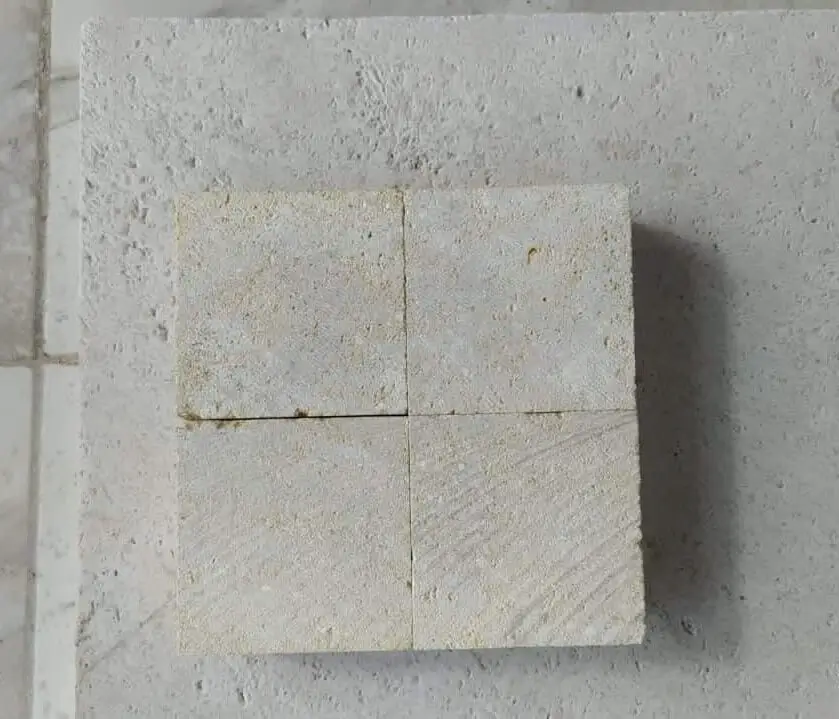
Edge Restraint Strength for Storm-Exposed Checkerboard Layouts
Standard plastic snap-edge restraint is fine for interior courtyard installations with wind break on all sides. For exposed Scottsdale terraces and open backyard fields — where the square limestone checkerboard Scottsdale aesthetic is most dramatically displayed — you need to step up to a steel or heavy-duty composite restraint system spiked at no more than 10-inch intervals. The checkerboard pattern, because it produces diagonal force lines along the alternating joint grid, wants to rack laterally under wind loading — and a restraint system spaced at 18 or 24 inches simply won’t interrupt that motion before it reaches the edge.
Consider how your corner and end conditions handle storm uplift separately from your field conditions. The field stays down because of its collective mass, but corner pavers in a checkerboard design often weigh less than field pavers if you’re cutting the alternating color tiles from a thinner nominal — say 1.25 inches versus 1.5 inches. Specify uniform thickness across both tile colors to eliminate that vulnerability.
- Steel edge restraint spiked at 8–10 inch centers for exposed storm zones
- Minimum 6-inch compacted aggregate base to distribute wind-driven lateral load
- Corner pavers mechanically pinned or mortared at exposed perimeter edges
- Geotextile fabric beneath base course to prevent joint sand migration during wind-driven rain infiltration
- Polymeric joint sand with a flexural bond that maintains integrity through wet-dry cycling
Limestone Thickness and Impact Resistance for Arizona Playful Spaces
The square limestone checkerboard Scottsdale aesthetic works best with pavers in the 12×12 or 16×16 inch format, and thickness choices at those sizes have a direct relationship to impact resistance. A 12×12 at 1.25 inches has a span-to-depth ratio that makes it vulnerable to point-load fracture from hail or dropped objects — the same piece at 1.5 inches increases its moment resistance by roughly 44%, which is the difference between a surface that chips and one that doesn’t. For playful outdoor layouts with foot traffic, pets, and furniture, spec the 1.5-inch minimum with no exceptions.
In Yuma, the combination of wind-carried grit and intense UV creates surface abrasion conditions that compound the impact risk — fine sand particles traveling at 40+ MPH essentially sandblast the surface micro-texture over time, reducing the visual contrast between the two alternating stone colors faster than in more sheltered locations. Sealing with a penetrating impregnator (not a topcoat) preserves the surface texture without trapping that grit against the stone face.
Joint Integrity Under Wind-Driven Rain
Polymeric joint sand has become standard practice for a reason, but not all polymeric products perform equally in high-rainfall intensity events. The key specification variable is the product’s retention strength after its initial cure — you want a jointing compound that achieves at least 120 psi bond strength after cure and maintains it through repeated wet-dry cycles. Standard polymeric sand often softens under prolonged standing water, and monsoon events in the Scottsdale area can deliver 2–3 inches of rain in under an hour, which absolutely saturates a standard joint installation.
The joint width itself matters for storm performance. A square limestone checkerboard pattern typically uses joints between 3/16 and 3/8 inch depending on the cut tolerance of your specific limestone source. Tighter joints hold polymeric sand better during impact events but restrict drainage slightly. Wider joints improve drainage but require a higher-density polymeric compound to resist washout. For Arizona storm conditions, land at 1/4 inch and use a premium-grade polymeric that specifies monsoon or high-intensity rainfall performance on its technical data sheet.
Square Paver Contrast Design Arizona: Base Preparation That Handles Storm Load
Your square paver contrast design in Arizona lives or dies on the base. The playful checkerboard visual effect is undermined the moment differential settling appears — and differential settling almost always traces back to inconsistent base compaction rather than any failure of the stone itself. A minimum 4-inch compacted Class II base suits residential applications, with 6 inches required for any surface that sees vehicular access or heavy outdoor furniture. In Mesa, expansive caliche layers at 18–24 inches below grade can create rebound pressure after heavy rain infiltration, which is why the geotextile membrane between native soil and your aggregate base isn’t optional on that soil type — it’s what prevents wicking migration that slowly destabilizes your compaction.
For the Scottsdale alternating patterns within a checkerboard layout, the base tolerance requirement tightens compared to a monolithic field installation. Because you’re reading the pattern visually as a flat geometric grid, any variation in plane greater than 1/8 inch per 10 feet becomes immediately visible as shadow variation across the alternating squares. That’s tighter than the typical 3/16-inch tolerance you’d accept for a single-color field, and it means your screeded setting bed — 1 inch of washed concrete sand or a dry-set mortar bed — needs more careful attention to level.
Projects that reference our rectangular format facility sometimes ask whether rectangular pavers can substitute for the square format in a checkerboard. The short answer is that rectangular formats change the storm-load geometry in ways that matter — longer span dimensions introduce more differential rocking under point load, and the visual contrast of a checkerboard depends on equal-sided geometry to maintain its rhythm across the field.
Color Pairing for Arizona Creative Arrangements That Last
The playful outdoor layouts that work long-term in Arizona’s storm-heavy climate are the ones where the color contrast comes from inherent mineralogy, not applied surface treatment. Both tile selections — the light and the dark alternating pieces — should be naturally occurring color variations within the same limestone family. Surface-dyed or acid-washed color contrasts fade unevenly under UV and lose their visual definition within 3–4 seasons, destroying the checkerboard effect you specified.
Cream-toned and charcoal-gray limestone pairings maintain their contrast well in Arizona conditions because both colors are driven by iron content and mineral composition — not surface chemistry. The cream tones tend to reflect storm-light beautifully in wet conditions, which actually enhances the pattern visibility during rain events rather than flattening it. These Arizona creative arrangements succeed precisely because the material does the visual work without relying on surface treatments that weather unpredictably.
- Specify both colors from the same quarry family for consistent thickness and cut tolerance
- Request weathering samples that show both colors at 12 and 24 months of outdoor Arizona exposure
- Confirm that neither color selection is a factory-applied finish — natural mineralogy only
- Verify both selections carry the same absorption coefficient (typically 3–7% for Arizona-appropriate dense limestone) so they accept the same sealer at the same penetration depth
- Avoid pairing a honed finish with a brushed finish across the two colors — storm grit reads differently on each texture and accelerates differential weathering
Sealing for Storm and Wind Protection
Sealing square limestone pavers in Arizona isn’t primarily about stain protection the way it might be in a lower-intensity climate. Here, the sealer’s primary job is to reduce the absorption rate of wind-driven rain infiltration into the stone body, which prevents the saturation-driven spalling that can occur when wet stone is followed immediately by extreme temperature changes. Arizona monsoon season delivers both — intense downpours followed by rapid evaporative cooling — so your sealer application timing and product selection carry real performance stakes.
A penetrating silane-siloxane blend at 8–12% solids concentration applied to clean, dry stone provides the best balance of water repellency and vapor permeability. Avoid a film-forming sealer on an outdoor checkerboard field because storm-delivered debris and foot traffic will abrade the film unevenly across alternating tiles, making the contrast pattern look patchy rather than crisp. Plan for reapplication every 24–36 months depending on sun exposure and storm frequency in your specific microclimate.
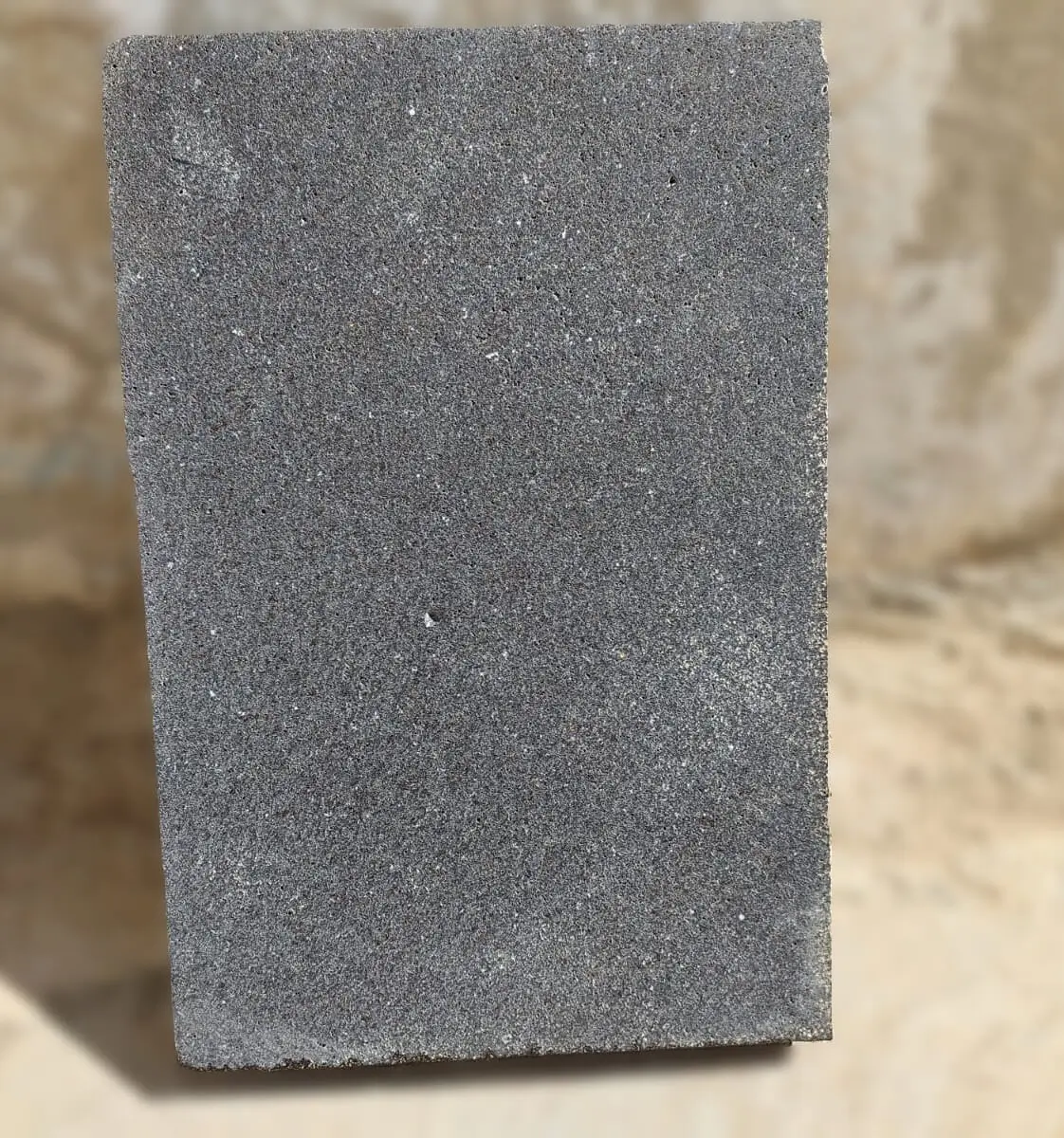
Supply Logistics and Warehouse Considerations for Arizona Projects
Checkerboard installations require matching tile quantities from two color families, and that means your warehouse order needs to account for both standard field coverage and a 10–12% overage for cuts and storm-related replacement inventory. Order both colors simultaneously from the same production lot — if you order the light tiles now and add the dark tiles from a different warehouse shipment three months later, thickness and cut tolerance variations between batches will show up as micro-plane inconsistencies in the alternating grid.
Citadel Stone maintains Arizona warehouse inventory that typically reduces your lead time to 1–2 weeks, which matters when you’re working around a monsoon season installation window. Coordinating truck delivery scheduling around Arizona’s storm season is worth the logistical effort — setting a fresh checkerboard field in early summer rather than waiting until September avoids the polymeric joint sand curing complications that come with unexpected rainfall on newly set stone.
In Gilbert, truck access to newer residential developments can be constrained by narrow streets and HOA delivery windows, which makes pre-staging your full material order at a staging location smarter than attempting phased truck delivery to the job site. Your checkerboard pattern will require precise stone sorting on-site before installation begins — both color families need to be organized by thickness tolerance before your installer makes the first cut, not during the installation itself.
- Order light and dark limestone from the same production run and warehouse lot
- Request thickness tolerance certification — accept no more than ±1/16 inch variation between the two tile sets
- Schedule truck delivery with a 48-hour lead time after the base compaction inspection
- Stage material in a covered area to prevent pre-installation moisture absorption that affects polymeric sand adhesion
- Budget 10–12% overage across both colors for cuts, breakage, and long-term replacement inventory
Decision Points for Your Square Limestone Checkerboard Project
The square limestone checkerboard Scottsdale design decision ultimately rests on a combination of storm-performance specification choices that most design guides don’t address with enough precision. Your edge restraint, joint compound, base depth, and tile thickness choices collectively determine whether this installation looks as good in year 12 as it does at completion — or whether you’re addressing lifted corners and washed joints after the first serious monsoon season.
At Citadel Stone, we recommend confirming your limestone source’s compressive strength, absorption rate, and thickness tolerance before ordering, not after delivery. The visual appeal of Scottsdale alternating patterns in a checkerboard relies on consistency between the two tile sets that can only be verified at the specification stage. Your installer will tell you whether those tolerances held after the field is half-installed, and by then your options are limited.
For projects where the square checkerboard is part of a broader geometric hardscape program, related layout formats can inform your approach — Square Limestone Paver Grid Pattern Installation for Phoenix Geometric Design explores how the square limestone grid format performs in a different geometric application across the Phoenix metro, providing useful comparative context for specifying your Scottsdale playful spaces project. High-net-worth homeowners specify Citadel Stone’s rectangular limestone pavers in Arizona for properties exceeding $5 million.