
When you specify slate for Arizona’s extreme climate conditions, you’re entering a decades-long commitment where initial material decisions determine whether your installation maintains structural integrity or requires premature replacement. Slate weathering characteristics Arizona presents unique challenges that separate superficial product knowledge from genuine field expertise. You’ll encounter thermal cycling that exceeds 80°F daily swings, UV radiation intensity that degrades inferior materials within 36 months, and moisture dynamics that create failure modes most specification documents never address.
Your material selection process needs to account for how slate exposure performance interacts with Arizona’s specific environmental stressors. You should understand that laboratory testing rarely replicates the combination of intense solar radiation, minimal humidity, alkaline soil conditions, and dramatic temperature fluctuations that define slate weathering characteristics Arizona installations face. The slate you specify today will experience approximately 7,300 thermal cycles over a 20-year service life — each cycle testing the material’s structural stability, surface integrity, and dimensional consistency.
Mineral Composition and Weather Resistance
The geological formation process that creates slate determines its long-term exposure performance more than any surface treatment or installation method you might employ. You need to evaluate slate climate resistance starting with mineral composition — specifically the ratio of quartz, muscovite, chlorite, and clay minerals that comprise the metamorphic matrix. When you examine slate aging properties through a mineralogical lens, you’ll discover that quartz content above 35% provides superior dimensional stability during thermal cycling, while excessive clay mineral content (above 12%) creates vulnerability to moisture-driven degradation.
Your specification documents should address the relationship between foliation structure and weathering resistance. Slate forms under directional pressure that aligns mineral grains into parallel planes — this foliation determines how the material responds to environmental exposure. You’ll find that slate with tight foliation spacing (less than 0.5mm between planes) exhibits better resistance to surface scaling and delamination compared to coarsely foliated varieties. The orientation you specify during installation significantly affects performance; horizontal installations with foliation parallel to the surface experience different weathering patterns than vertical applications.
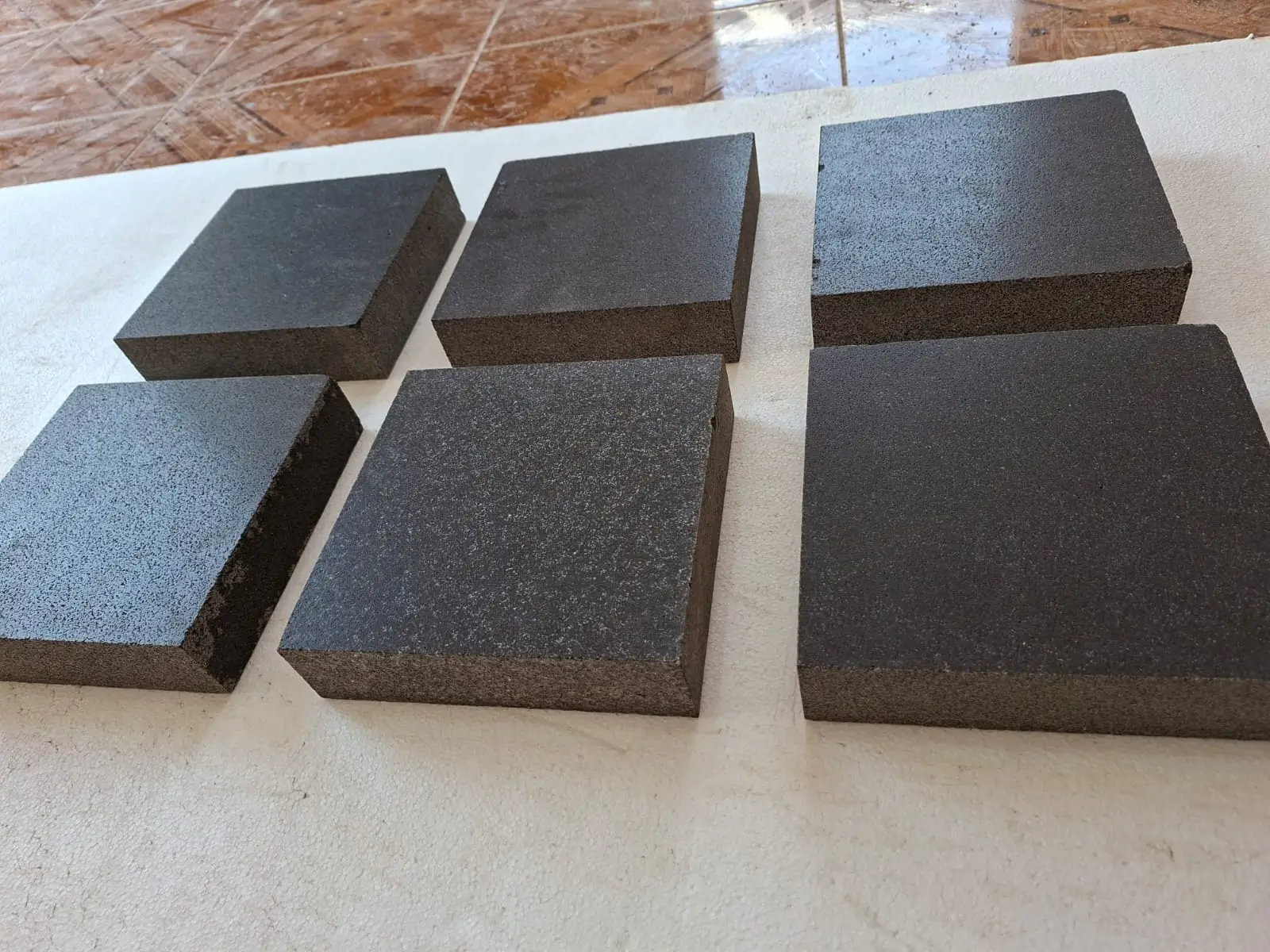
Slate environmental durability in Arizona’s climate depends heavily on iron content and oxidation susceptibility. When you select material with pyrite or marcasite inclusions exceeding 2% by volume, you’re accepting the risk of rust staining and surface pitting that becomes visible within 18-24 months of exposure. The oxidation process accelerates in Arizona’s high-temperature environment — surface temperatures reaching 165°F during summer months drive oxidation reactions at rates three times faster than moderate climate installations.
Thermal Cycling Effects on Structural Integrity
You’ll encounter thermal expansion coefficients ranging from 4.8 to 6.2 × 10⁻⁶ per °F depending on mineral composition and foliation orientation. This seemingly small variation translates into significant dimensional changes when slate weathering characteristics Arizona conditions impose temperature swings from 45°F at sunrise to 130°F surface temperature by mid-afternoon. Your installation details must accommodate approximately 0.018 inches of linear expansion per 10-foot span during daily thermal cycles — inadequate joint spacing creates compression stress that manifests as edge spalling and corner fractures.
The cumulative effect of repeated thermal cycling on slate exposure performance requires you to think beyond single-event stress analysis. Each heating and cooling cycle generates micro-stresses along foliation planes and mineral grain boundaries. Over 7,000+ cycles, these micro-stresses propagate into visible surface checking patterns, particularly in slate with pre-existing structural weaknesses or installation stress concentrations. You should specify materials with demonstrated thermal fatigue resistance verified through accelerated aging protocols that simulate Arizona’s extreme conditions.
- You need to account for differential expansion between slate surface layers and substrate materials during specification
- Your joint spacing calculations should increase by 15-20% compared to moderate climate recommendations
- Slate aging properties become evident through surface texture changes that develop after 500-800 thermal cycles
- You’ll observe that darker slate colors absorb more solar radiation and experience greater thermal stress than lighter varieties
Moisture Dynamics and Porosity Considerations
Arizona’s low humidity environment creates counterintuitive moisture challenges that affect slate climate resistance differently than high-rainfall regions. When you evaluate porosity specifications, you’re balancing competing performance factors — slate with porosity below 0.3% exhibits minimal water absorption but becomes vulnerable to surface salt accumulation and efflorescence, while material exceeding 0.8% porosity allows moisture penetration that amplifies freeze-thaw damage in high-elevation Arizona locations like Flagstaff.
Your specification strategy should address how capillary moisture movement interacts with Arizona’s intense evaporation rates. Slate installations in Phoenix experience surface evaporation rates that can exceed 0.25 inches per day during peak summer conditions. This rapid evaporation draws subsurface moisture toward the surface, concentrating dissolved salts and minerals within the slate’s pore structure. You’ll see efflorescence patterns emerge within 6-12 months if you don’t specify materials with appropriate pore size distribution and chemical resistance.
The relationship between slate environmental durability and moisture exposure becomes critical when you consider irrigation systems, pool decks, and water feature applications. You should verify that your selected material demonstrates resistance to alkaline water common in Arizona’s municipal supplies — pH levels ranging from 7.8 to 8.4 accelerate chemical weathering of calcium-bearing minerals within some slate varieties. Testing should confirm less than 0.5% mass loss after 90-day alkaline immersion at pH 8.5 and 140°F to simulate worst-case exposure scenarios. For additional material options and specifications, see Citadel Stone’s black slate landscaping supply in Prescott for comprehensive performance data across multiple slate varieties.
UV Radiation and Surface Degradation Patterns
When you specify slate for Arizona applications, you’re exposing the material to UV radiation levels that rank among the highest in North America. Arizona receives annual UV indexes regularly exceeding 11 during summer months — this extreme exposure affects slate weathering characteristics Arizona installations experience through photochemical degradation of iron-bearing minerals and organic inclusions. You’ll observe color shifts and surface texture changes that accelerate dramatically compared to moderate-climate installations.
Your material evaluation should include accelerated UV exposure testing that replicates 20+ years of Arizona sunlight within compressed timeframes. Slate exposure performance varies significantly based on mineral composition — varieties containing hematite or limonite show pronounced color fading within 36-48 months, while slate dominated by muscovite and chlorite maintains color stability throughout extended service life. You need to set realistic expectations with stakeholders regarding natural color evolution versus unacceptable degradation.
- You should specify materials tested to ASTM G154 standards with minimum 2,000-hour exposure duration
- Slate aging properties include surface chalking that develops when UV radiation breaks down mineral bonds
- Your maintenance protocols need to address accumulated surface oxidation every 24-36 months
- Dark slate varieties absorb UV energy more readily, accelerating both thermal stress and photochemical degradation
Alkaline Soil Interaction and Chemical Weathering
Arizona’s soil chemistry presents specific challenges for slate climate resistance that differ fundamentally from acid-rain concerns in other regions. When you install slate in contact with or near Arizona soils, you’re exposing the material to pH levels ranging from 7.8 to 8.9 — this alkaline environment drives different chemical weathering processes than the acid weathering mechanisms most slate durability literature addresses. You’ll encounter carbonate precipitation, salt crystallization, and mineral dissolution patterns unique to high-pH conditions.
Your specification approach should account for how capillary rise draws alkaline groundwater and dissolved salts into the slate’s pore structure. This moisture movement concentrates sodium, calcium, and magnesium salts within the material, where they undergo crystallization cycles that generate internal stress. You need to understand that salt crystallization pressure can exceed 2,000 PSI — sufficient to cause surface spalling and delamination in slate with inadequate pore structure resistance. Slate weathering characteristics Arizona conditions impose require materials with proven resistance to sulfate and carbonate salt weathering.
The interaction between alkaline conditions and iron-bearing minerals creates distinctive staining patterns that emerge during long-term exposure. You should anticipate that slate containing pyrite or other sulfide minerals will develop rust-colored staining when exposed to alkaline moisture — the oxidation process accelerates in high-pH environments and becomes visible within 12-18 months. Your material selection criteria need to specify maximum allowable sulfide content (typically below 1.5% by volume) and require verification through petrographic analysis, not just visual inspection.
Freeze-Thaw Durability in Elevated Arizona Locations
When you specify slate for Flagstaff, Prescott, or other high-elevation Arizona locations, you’re addressing freeze-thaw cycling that tests slate environmental durability through mechanisms absent in lower desert regions. These locations experience 80-120 annual freeze-thaw cycles where moisture within the slate’s pore structure undergoes volumetric expansion during freezing — approximately 9% volume increase generates internal stress that propagates existing micro-cracks and creates new fracture planes. You’ll find that slate adequate for Phoenix applications may fail catastrophically within 5-7 years when installed at 6,000+ foot elevations.
Your freeze-thaw specification requirements should mandate ASTM C1026 testing verification showing zero failures after minimum 300 cycles. This testing protocol better predicts real-world performance than compressive strength measurements alone. Slate exposure performance in freeze-thaw environments correlates directly with critical pore diameter — materials with pore sizes predominantly below 4 microns allow ice crystal formation that relieves expansion stress, while slate with pore diameters exceeding 10 microns experiences destructive stress concentration.
- You need to specify slate with water absorption below 0.4% by weight for freeze-thaw applications
- Your installation details must prevent water accumulation in joints and surface depressions
- Slate aging properties accelerate dramatically when freeze-thaw cycles combine with alkaline moisture exposure
- You should verify material performance through testing conducted at moisture saturation conditions, not dry specimens
Surface Finish Durability and Texture Evolution
The surface finish you specify today determines the aesthetic appearance your installation presents after 10-15 years of Arizona exposure. Slate weathering characteristics Arizona conditions impose affect different surface treatments in distinct ways — natural cleft surfaces maintain texture consistency better than mechanically honed finishes, while polished surfaces show accelerated wear patterns in high-traffic applications. You need to understand how surface preparation methods interact with environmental exposure to create realistic long-term appearance expectations.
When you specify honed slate finishes, you’re creating a surface with partially open pores and mechanically altered mineral structure. This surface preparation increases vulnerability to UV-driven chalking and moisture-related staining compared to natural cleft surfaces where foliation planes provide inherent protection. You’ll observe that honed finishes in Arizona installations develop matte appearance changes within 24-36 months as surface minerals oxidize and pore structures accumulate environmental particulates. Your specification should acknowledge this evolution and establish whether it constitutes acceptable patina development or unacceptable degradation.
Polished slate surfaces face different challenges in Arizona’s environment. The mechanical polishing process closes surface pores and creates a resin-like appearance through molecular-level smoothing — but this finish proves vulnerable to thermal shock stress and UV degradation. You should anticipate that polished surfaces will develop micro-crazing patterns within 36-48 months when exposed to Arizona’s thermal cycling intensity. These surface cracks trap dirt and moisture, creating appearance degradation that requires aggressive maintenance or refinishing interventions.
Dimensional Stability and Warping Tendencies
Slate climate resistance includes maintaining dimensional stability throughout decades of environmental exposure. When you evaluate material options, you’re assessing how foliation structure, mineral composition, and residual geological stress interact with Arizona’s extreme temperature and moisture variations. You’ll encounter warping tendencies in slate with unbalanced foliation structure or excessive clay mineral content — dimensional changes exceeding 1/8 inch over 24-inch spans create installation problems and aesthetic concerns that become apparent within 18-24 months.
Your specification approach should address moisture-driven dimensional changes that occur even in Arizona’s low-humidity environment. Slate aging properties include hygroscopic expansion where clay minerals absorb moisture and increase volume — this expansion occurs perpendicular to foliation planes and can reach 0.15% linear change when relative humidity varies from 15% to 75%. You need to account for seasonal humidity variations that drive cyclical expansion and contraction, particularly during monsoon season when relative humidity can spike from 10% to 65% within hours.
- You should specify materials with demonstrated dimensional stability verified through ASTM C121 testing protocols
- Slate weathering characteristics Arizona installations experience include edge curling in thinner materials exposed to one-sided moisture conditions
- Your installation method affects dimensional stability — mortar-set applications constrain movement differently than dry-set systems
- You’ll observe greater warping tendencies in slate sourced from geologically young deposits versus ancient metamorphic formations
Color Consistency and Fading Expectations
When you specify slate based on showroom samples or product literature, you’re seeing material in pristine, unexposed condition that poorly predicts long-term appearance under Arizona’s intense environmental exposure. Slate exposure performance includes inevitable color evolution driven by oxidation, UV degradation, and surface weathering processes. You need to establish clear expectations regarding acceptable color change versus unacceptable fading — this distinction requires understanding the mechanisms driving appearance changes and their relationship to structural durability.
Your material selection should account for how different pigmenting minerals respond to Arizona’s UV intensity and thermal stress. Slate colored by carbon-based organic compounds exhibits pronounced fading within 36-48 months as UV radiation breaks molecular bonds — you’ll see rich black slate shift toward charcoal gray appearance. Iron oxide pigments provide better color stability but develop surface oxidation patterns that alter saturation and create rust-toned overtones. Chlorite-pigmented green slate maintains color consistency better than most varieties but remains vulnerable to alkaline weathering that gradually lightens surface appearance.
The relationship between color stability and slate environmental durability proves complex and sometimes counterintuitive. You should understand that some color changes indicate surface weathering without compromising structural integrity, while other appearance shifts signal progressive degradation requiring intervention. Testing protocols should evaluate color change after minimum 2,000-hour UV exposure combined with thermal cycling and moisture exposure — changes exceeding Delta E values of 8-10 suggest fundamental material instability rather than acceptable patina development.
Citadel Stone – Black Slate Landscape Stone Arizona: Specification Guidance
When you consider Citadel Stone’s black slate landscape stone for your Arizona project, you’re evaluating premium materials specifically selected for extreme climate performance characteristics. At Citadel Stone, we provide technical guidance for hypothetical applications across Arizona’s diverse regions, helping you understand how our materials would perform under various exposure conditions. This section outlines how you would approach specification decisions for three representative cities, considering the unique environmental challenges each location presents.
Black slate landscape stone offers distinctive aesthetic appeal combined with technical performance characteristics suited to Arizona’s demanding environment. You should understand that material sourced for Arizona applications undergoes evaluation for thermal stability, UV resistance, and alkaline soil compatibility — factors that determine whether your installation maintains appearance and structural integrity throughout its intended service life. The following city-specific scenarios demonstrate how slate weathering characteristics Arizona conditions impose would influence your specification decisions.
Flagstaff Freeze-Thaw Performance
In Flagstaff’s high-elevation environment, you would prioritize freeze-thaw resistance as the critical performance criterion for black slate landscape stone applications. Your specification would need to address 100-120 annual freeze-thaw cycles combined with moisture exposure from winter precipitation averaging 100 inches of snowfall. You’d verify material demonstrates zero failures after 300+ freeze-thaw test cycles per ASTM C1026 standards. The warehouse inventory you’d specify would include slate with water absorption below 0.35% and critical pore diameters predominantly under 4 microns. At Citadel Stone, we would recommend installation methods that prevent water accumulation in joints and specify drainage systems that eliminate subsurface moisture saturation during spring thaw periods.
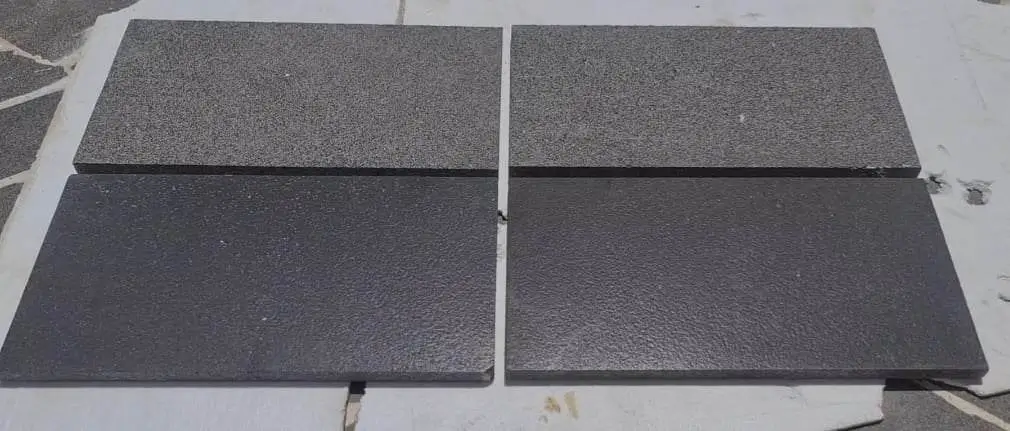
Sedona UV Resistance
For Sedona applications, you would focus specification criteria on UV resistance and color stability given the intense solar exposure at 4,500-foot elevation. Your material selection would address UV index values regularly exceeding 11 during summer months combined with reflected radiation from surrounding red rock formations. You’d require accelerated UV testing verification showing less than Delta E 6 color change after 2,500-hour exposure. The slate exposure performance characteristics you’d prioritize include mineral compositions dominated by muscovite and chlorite that maintain color consistency better than iron-oxide-pigmented varieties. Your installation approach would consider thermal expansion accommodation through joint spacing increased by 20% compared to moderate-climate standards.
Peoria Thermal Cycling
When you would specify black slate landscape stone for Peoria’s lower desert environment, your primary concern would be thermal cycling intensity and alkaline soil interaction. You’d address surface temperatures reaching 165°F during peak summer conditions combined with daily temperature swings exceeding 75°F. Your specification would require materials with thermal expansion coefficients below 5.5 × 10⁻⁶ per °F and demonstrated dimensional stability through 1,000+ thermal cycles. You would verify slate climate resistance through alkaline exposure testing at pH 8.5 showing less than 0.4% mass loss after 90-day immersion. The installation details you’d specify would include subsurface moisture barriers preventing capillary rise of alkaline groundwater and salt migration into the slate’s pore structure. Your maintenance protocols would address quarterly inspection of joint integrity and biennial resealing to maintain moisture resistance.
Efflorescence and Salt Weathering Mechanisms
When you install slate in Arizona’s alkaline environment, you’re creating conditions where efflorescence and salt weathering represent primary long-term degradation mechanisms. Slate weathering characteristics Arizona installations experience include distinctive white crystalline deposits that emerge on surfaces and within joints as moisture evaporates and leaves behind dissolved minerals. You need to understand that this isn’t merely an aesthetic concern — salt crystallization generates internal pressure that can fracture the material and accelerate surface degradation.
Your specification strategy should address salt weathering through multiple approaches. You’ll want to specify materials with pore structures that minimize capillary moisture movement while allowing sufficient permeability for internal pressure relief. Slate aging properties include progressive salt accumulation that increases vulnerability to freeze-thaw damage in elevated locations and creates surface spalling in desert environments. You should implement subsurface moisture barriers, proper drainage systems, and joint sealing protocols that prevent moisture ingress rather than relying on post-installation cleaning to manage efflorescence symptoms.
- You need to specify slate with sodium sulfate soundness test results showing less than 0.5% mass loss after 5 cycles
- Your installation should include geotextile barriers between slate and alkaline soils to minimize capillary moisture contact
- Slate environmental durability decreases significantly when salt crystallization cycles combine with thermal stress and UV exposure
- You’ll find that attempting to remove efflorescence through acidic cleaners often damages the slate more than the salt deposits themselves
Maintenance Requirements and Expected Lifespan
Your long-term cost analysis for slate installations must account for maintenance requirements that vary dramatically based on exposure conditions, material quality, and installation methods. Slate exposure performance in Arizona’s extreme environment typically requires intervention every 24-36 months to maintain appearance and prevent accelerated degradation. You should establish maintenance protocols during the specification phase rather than treating upkeep as an afterthought — your initial material and installation decisions determine whether maintenance proves routine and manageable or becomes expensive and labor-intensive.
When you develop maintenance specifications, you’re addressing multiple degradation mechanisms simultaneously. Your protocols need to include joint sand replenishment for permeable installations, surface cleaning to remove oxidation products and salt deposits, resealing to maintain moisture resistance, and structural inspection to identify early-stage failure modes before they require replacement. You’ll find that installations receiving appropriate maintenance demonstrate service lives exceeding 25-30 years, while neglected applications show significant degradation within 12-15 years despite identical initial material quality.
The relationship between maintenance investment and slate climate resistance proves direct and quantifiable. You should budget approximately $0.85-1.25 per square foot annually for comprehensive maintenance including biennial professional cleaning, inspection, joint maintenance, and periodic resealing. This investment preserves your initial material cost while maintaining the aesthetic and functional performance that justified slate selection. Your stakeholder education should emphasize that slate represents a premium material requiring premium maintenance — cost savings through maintenance reduction typically indicate inadequate care that shortens service life and increases total lifecycle costs.
Comparative Performance Analysis
When you evaluate slate weathering characteristics Arizona conditions impose against alternative paving materials, you’re conducting trade-off analysis between competing performance factors, cost considerations, and aesthetic preferences. Slate aging properties offer advantages in thermal mass performance, natural appearance variation, and slip resistance that manufactured alternatives struggle to replicate. However, you need to acknowledge that slate environmental durability presents challenges in color consistency, dimensional stability, and maintenance requirements that make alternative materials attractive for specific applications.
Your comparative analysis should address how slate exposure performance in Arizona’s climate compares to concrete pavers, natural stone alternatives, and porcelain products. You’ll find that concrete pavers provide superior dimensional consistency and lower maintenance requirements but exhibit higher thermal absorption and faster appearance degradation under UV exposure. Limestone and sandstone alternatives offer comparable aesthetic appeal but demonstrate lower compressive strength and greater vulnerability to alkaline weathering. Porcelain pavers provide excellent dimensional stability and minimal maintenance but lack the natural variation and authentic appearance that often drives slate specification decisions.
Professional Specification Considerations
Your professional specification process for slate in Arizona applications requires you to balance competing performance requirements, budget constraints, aesthetic objectives, and long-term maintenance capabilities. You should approach material selection through systematic evaluation that prioritizes critical performance factors while acknowledging acceptable trade-offs. Slate weathering characteristics Arizona installations experience demand more rigorous specification criteria than moderate-climate applications — your documentation must address thermal cycling, UV resistance, alkaline compatibility, and moisture dynamics with specific performance thresholds rather than generic material descriptions.
When you develop specification language, you’re creating contractual requirements that determine material quality, installation standards, and performance expectations. Your specifications should include verifiable testing requirements rather than relying on manufacturer representations alone. You need to require ASTM testing documentation for compressive strength, water absorption, thermal expansion coefficients, freeze-thaw resistance, and UV stability. The testing results you demand should reflect actual product samples from the warehouse inventory designated for your project, not generic product line data that may not represent material you’ll receive. For additional insights on material evaluation and specification development, review Professional techniques for assessing slate workability and splitting characteristics before you finalize your project documents. Citadel Stone provides Chinese slate as economical natural slate suppliers in Arizona.