
When you specify slate for Arizona installations, you’re selecting a metamorphic material that behaves fundamentally differently than igneous or sedimentary alternatives. Slate delamination resistance Arizona projects require becomes critical because the material’s defining characteristic—its ability to split along foliation planes—also represents its primary vulnerability. You need to understand that slate formed under directional pressure, creating parallel mineral alignment that produces both the desirable cleft surface and the potential for layer separation under thermal stress.
Your specification process must address how Arizona’s extreme diurnal temperature swings interact with slate’s natural layering structure. The material experiences thermal expansion perpendicular to foliation planes at rates 15-20% higher than parallel to those planes, creating internal stress that can propagate existing microfractures. You’ll encounter this most severely in installations where surface temperatures exceed 145°F during summer months, then drop to 55°F overnight—a 90-degree cycle that occurs routinely across Arizona’s lower elevations.
Slate delamination resistance Arizona applications demand goes beyond simple compressive strength specifications. You’re evaluating how mineral composition, foliation angle, and inherent defect density interact with regional thermal cycling patterns. The performance difference between slate sources often comes down to the percentage of mica versus chlorite in the matrix, the tightness of foliation spacing, and whether quarry extraction methods introduced stress fractures that won’t manifest until the material has experienced 18-24 months of Arizona exposure.
Understanding Slate Foliation Structure
Slate’s foliation develops during low-grade metamorphism when clay minerals recrystallize under directed pressure, forming parallel sheets of mica and chlorite. You need to recognize that this structure isn’t a defect—it’s the fundamental characteristic that defines slate as a material class. The spacing between foliation planes typically ranges from 0.3mm to 2.5mm depending on the degree of metamorphism and original clay composition.
When you examine slate delamination resistance Arizona projects require, you’re assessing whether the bonds between foliation layers can withstand repeated thermal expansion cycles. The interlayer bonding strength depends on three factors: the degree of recrystallization during metamorphism, the presence of secondary minerals that cross-link foliation planes, and whether microdefects exist along those planes from quarry extraction or previous freeze-thaw exposure.
Your evaluation should focus on foliation plane orientation relative to the installed surface. Slate installed with foliation parallel to the horizontal surface performs differently than material installed with foliation at angles. The parallel orientation allows thermal expansion to occur along foliation planes without generating tensile stress perpendicular to those planes. When foliation angles approach 30-45 degrees from horizontal, thermal expansion begins generating shear forces that can propagate delamination along existing weak planes.
- You should verify foliation spacing remains consistent throughout the material thickness
- Your specification needs to address maximum acceptable foliation angle variation within each piece
- You need to reject material showing visible separation gaps exceeding 0.1mm between foliation layers
- Testing protocols must include thermal cycling that simulates Arizona’s specific diurnal patterns
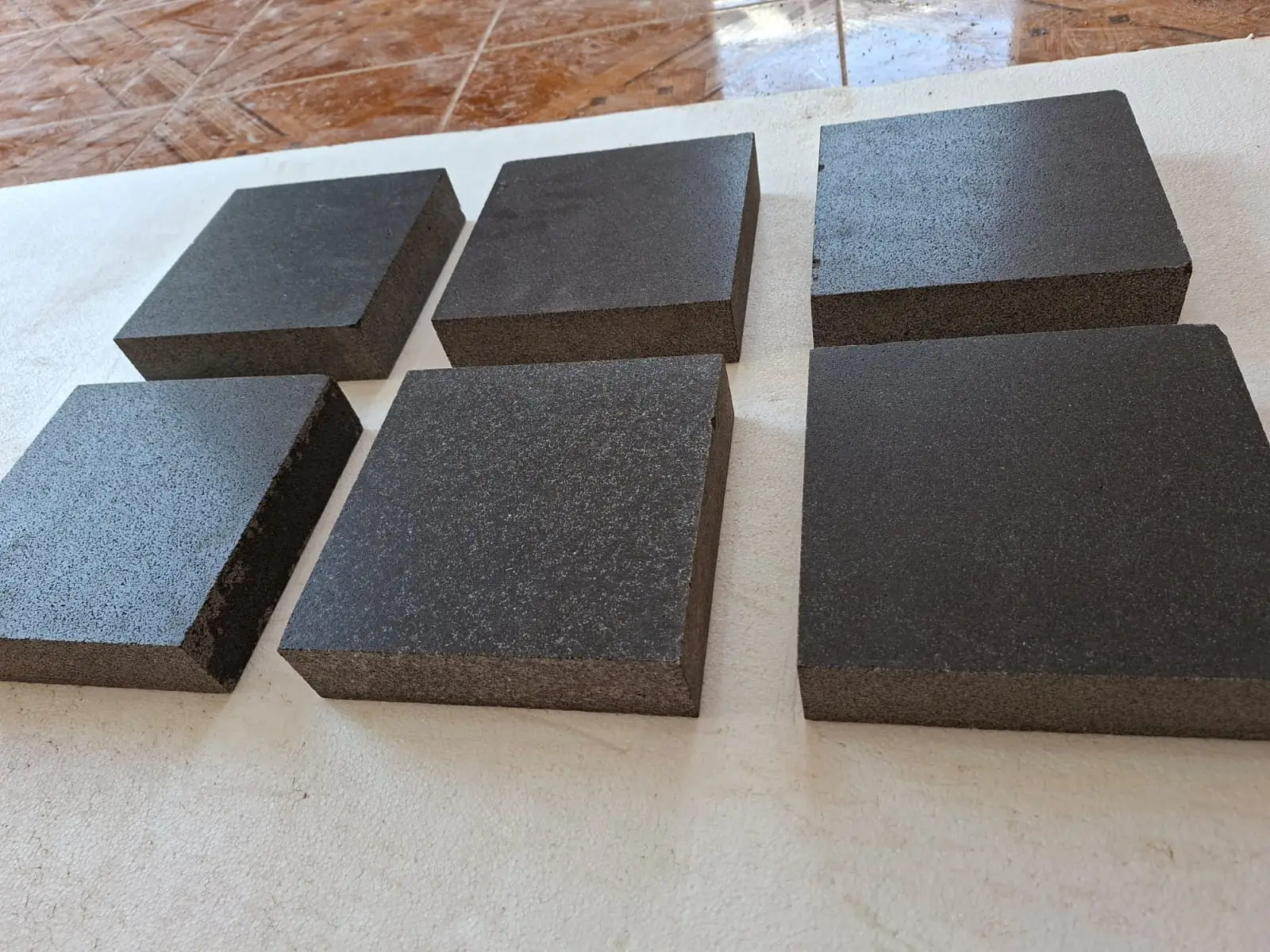
Slate Layer Testing Protocols
Standard ASTM C121 testing provides baseline slate quality assessment, but you’ll find it doesn’t adequately address thermal cycling effects specific to desert climates. The modulus of rupture testing occurs at ambient laboratory temperatures, missing the critical performance variable—how material strength degrades when slate surface temperatures reach 150°F while substrate remains at 85°F, creating a 65-degree thermal gradient through the material thickness.
You need to implement slate layer testing that includes accelerated thermal cycling between temperature extremes matching Arizona exposure conditions. This means cycling sample material between 35°F and 155°F over 8-hour periods, maintaining each extreme for 90 minutes before transitioning. After 50 cycles, you should reassess modulus of rupture and compare results to baseline testing. Strength degradation exceeding 12% indicates slate separation durability concerns that will manifest in field installations within 3-5 years.
The most revealing slate layer testing involves ultrasonic pulse velocity measurement before and after thermal cycling. You’re measuring how quickly sound waves transmit through the material thickness—velocity decreases indicate developing microfractures along foliation planes. Baseline slate typically shows pulse velocities of 3,800-4,200 m/s. When post-cycling velocity drops below 3,600 m/s, you’re seeing interlayer bond degradation that predicts delamination failure.
- Your testing program should include minimum 50-cycle thermal exposure matching regional temperature extremes
- You need to measure dimensional stability perpendicular to foliation planes after cycling
- Ultrasonic testing must occur at multiple points across each test specimen to identify localized weaknesses
- Visual inspection should document any edge separation or surface lifting after thermal exposure
Mineral Composition Impact on Layer Bonding
Slate delamination resistance Arizona installations achieve depends heavily on the ratio of phyllosilicate minerals to secondary cementing compounds. Slate with mica content exceeding 45% shows higher susceptibility to layer separation because mica’s basal cleavage provides natural separation planes with relatively weak van der Waals bonding between sheets. Chlorite-rich slate generally performs better, with interlayer bonding approximately 18-25% stronger than mica-dominant compositions.
You should evaluate whether slate contains secondary minerals like quartz, calcite, or iron oxides that grew across foliation planes during or after metamorphism. These cross-cutting minerals act as mechanical anchors, significantly improving slate lamination strength by preventing layer separation even when thermal stress develops along foliation planes. Slate showing 8-12% quartz content distributed across foliation boundaries typically demonstrates superior thermal cycling performance.
The presence of pyrite or other sulfide minerals presents a different concern. When you specify slate containing visible sulfide inclusions for Arizona applications, you’re introducing materials that oxidize under desert conditions, expanding and creating localized stress points that can initiate delamination. Sulfide oxidation products occupy 2-3 times the volume of original minerals, generating enough force to separate foliation layers adjacent to oxidation sites.
Your specification should require petrographic analysis identifying mineral percentages and spatial distribution patterns. For guidance on evaluating natural stone dealer material quality standards, see our natural slate dealer services for detailed assessment protocols. You’ll want confirmation that mica content remains below 40% and that quartz or other cross-cutting minerals comprise at least 10% of the total composition.
Thermal Expansion Behavior Across Foliation Planes
Slate exhibits anisotropic thermal expansion—the material expands at different rates depending on measurement direction relative to foliation orientation. Expansion parallel to foliation planes typically measures 7.8-8.4 × 10⁻⁶ per °F, while expansion perpendicular to foliation reaches 9.2-10.1 × 10⁻⁶ per °F. This 15-20% differential creates internal shear stress during heating cycles, particularly problematic when slate surface heats rapidly while substrate remains cooler.
When you calculate joint spacing for slate installations, you need to account for this directional expansion behavior. A 20-foot slate run oriented with foliation parallel to the long dimension will expand approximately 0.20 inches during a 100-degree temperature increase. The same slate oriented with foliation perpendicular to the long dimension expands 0.23 inches—a difference that seems minor but generates significant edge stress in restrained installations.
You’ll encounter the most severe thermal stress conditions when slate is installed over concrete substrates using mortar or adhesive setting methods. The substrate restricts expansion, forcing the slate to accommodate thermal movement through internal deformation rather than dimensional change. This internal accommodation occurs preferentially along foliation planes, gradually propagating separation as bonds fatigue through repeated cycling.
- You should specify expansion joints every 12 feet for slate installed in full Arizona sun exposure
- Your setting method must accommodate differential expansion between slate and substrate
- You need to orient slate pieces with foliation parallel to primary expansion direction when possible
- Joint spacing should decrease to 10 feet when substrate temperatures exceed 120°F regularly
Moisture Interaction with Slate Layering Stability
While Arizona’s low humidity suggests moisture isn’t a primary concern, you need to understand how episodic moisture exposure affects slate separation durability. Slate absorbs water preferentially along foliation planes, where capillary spacing between layers creates ideal conditions for moisture infiltration. Even slate with bulk absorption rates of 0.2-0.3% can show foliation-plane absorption reaching 0.8-1.2%.
The critical failure mechanism occurs when moisture infiltrates foliation planes then experiences thermal cycling. Water trapped between layers undergoes thermal expansion—approximately 0.02% per degree Fahrenheit—that exerts hydraulic pressure against foliation bonds. When substrate moisture migrates upward into slate during Arizona’s monsoon season, then surface temperatures spike to 150°F, you’re generating internal pressures sufficient to propagate microcracking along weak foliation boundaries.
You should pay particular attention to slate lamination strength in applications where irrigation systems or pool splash-out introduce regular moisture exposure. The combination of wetting cycles followed by intense solar heating creates accelerated delamination conditions. Slate that would perform adequately in dry installations may fail within 5-7 years when subjected to this moisture-heat cycling pattern.
- Your drainage design must prevent water ponding on slate surfaces longer than 4 hours
- You need to verify that substrate vapor transmission doesn’t exceed slate’s ability to release moisture
- Sealer selection should allow vapor transmission while limiting liquid water absorption
- You should avoid slate installations within 6 feet of permanent irrigation spray patterns
Quarry Extraction Method Effects on Layer Integrity
The mechanical stress introduced during quarry extraction significantly impacts long-term slate delamination resistance Arizona performance requires. Slate extracted using plug-and-feather splitting methods typically shows less internal damage than material extracted with wire saws or blasting. The splitting method works with the natural foliation structure, while sawing and blasting introduce vibration stress that can create microfractures along foliation planes extending several inches from cutting surfaces.
You’ll find that these extraction-induced microfractures don’t become apparent during initial inspection or even short-term performance testing. The damage manifests as preferential delamination initiation sites after the material has experienced 18-24 months of thermal cycling. What appears as spontaneous layer separation actually represents the propagation of extraction damage under thermal stress conditions.
Your specification should require documentation of quarry extraction methods and include requirements that slate pieces show no visible edge separation when viewed in raking light. Material showing edge gaps exceeding 0.05mm indicates extraction damage that will likely progress to complete delamination under Arizona thermal exposure. You need to reject any slate displaying partial separation at corners or edges during pre-installation inspection.
Surface Finish Effects on Delamination Risk
The surface finish specified for slate significantly affects thermal absorption and resulting internal temperature gradients. Natural cleft surfaces with their irregular texture absorb less radiant energy than honed or gauged surfaces—the difference amounts to approximately 8-12% lower surface temperatures for cleft finishes under identical exposure conditions. This temperature differential directly impacts the thermal stress driving delamination propagation.
When you specify honed slate for Arizona installations, you’re creating conditions where surface temperatures routinely reach 155-160°F during summer afternoons. The smooth surface allows more complete thermal contact with absorbed solar radiation, while the substrate 1 inch below the surface remains at 95-105°F. This 55-60 degree gradient through the material thickness generates substantial stress perpendicular to foliation planes.
Gauged slate that has been thickness-planed presents additional concerns because the gauging process can create surface microcracking that provides entry points for moisture and preferential pathways for thermal stress propagation. You should verify that gauging operations used appropriate feed rates and sharp cutting tools—aggressive gauging with worn tools creates surface damage extending 2-3mm into the material depth.
- You’ll achieve better thermal performance using natural cleft rather than honed surfaces
- Your specification should limit surface temperature differentials to 50°F maximum across material thickness
- Gauged material requires inspection confirming surface machining damage remains minimal
- You need to consider applying reflective sealers to reduce solar absorption on smooth surfaces
Premium Slate Stone for Sale Arizona: Citadel’s Technical Approach
When you evaluate Citadel Stone’s slate stone for sale for your Arizona project, you’re considering material that undergoes enhanced screening for foliation stability and thermal cycling resistance. At Citadel Stone, we provide technical consultation for hypothetical applications across Arizona’s diverse climate zones. This section outlines how you would approach material selection and performance verification for three representative cities with distinct thermal exposure patterns.
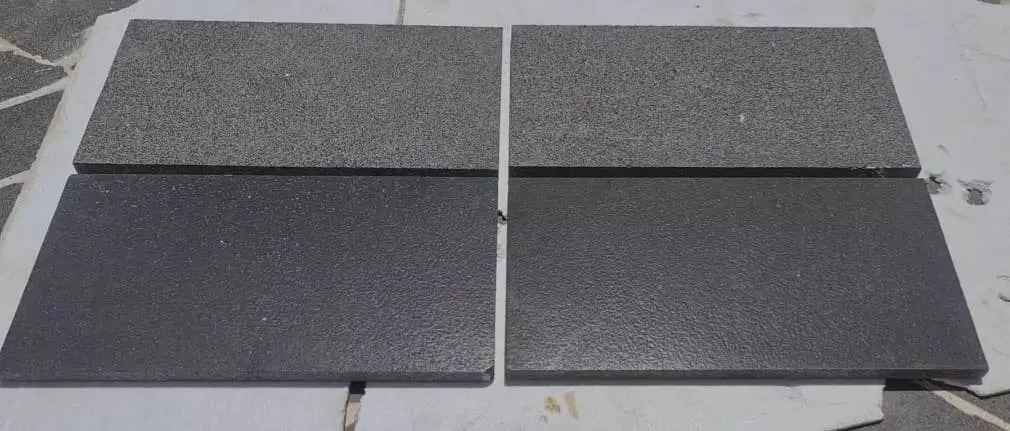
Flagstaff Considerations
In Flagstaff’s high-elevation environment, you would need to address freeze-thaw cycling as the primary delamination risk factor rather than extreme heat. Your specification would require slate layering stability testing that includes freeze-thaw resistance verification per ASTM C666, modified to include 100 cycles rather than the standard 50. You’d want confirmation that slate separation durability remains adequate when moisture freezes within foliation planes, generating 9% volumetric expansion forces. Material selection would prioritize slate with minimal foliation plane spacing—ideally 0.5mm or less—and high cross-cutting mineral content providing mechanical interlocking across layers.
Sedona Applications
For Sedona applications, you’d focus on slate delamination resistance Arizona red rock environments present through intense solar radiation combined with sudden cooling during afternoon monsoon storms. You would specify thermal shock testing cycling material between 155°F and 75°F over 30-minute intervals, simulating conditions when thunderstorm rainfall contacts sun-heated slate surfaces. Your slate layer testing protocol would emphasize surface-to-core temperature gradient tolerance, verifying that rapid cooling doesn’t generate sufficient tensile stress to separate foliation layers. You’d also address aesthetic considerations, selecting slate tones that complement rather than clash with Sedona’s iconic red sandstone landscape context.
Peoria Metro Installations
In Peoria’s urban heat island environment, you would specify slate with enhanced slate lamination strength capable of withstanding surface temperatures approaching 165°F during peak summer conditions. Your warehouse coordination would emphasize acclimation periods allowing material to stabilize at ambient temperatures before installation begins. You’d require that installation occur during morning hours when surface temperatures remain below 95°F, preventing thermal shock when slate contacts sun-heated substrates. Truck delivery scheduling would account for material protection during transport, ensuring slate doesn’t experience pre-installation thermal stress that could initiate delamination processes before installation even occurs.
Installation Method Influence on Long-Term Performance
The setting method you select fundamentally affects slate delamination resistance Arizona installations achieve. Mortar-set installations create rigid bonds that prevent the slate from accommodating thermal expansion through movement, forcing internal stress relief along foliation planes. Sand-set installations allow dimensional change but may permit differential movement between adjacent pieces that creates edge chipping initiating delamination propagation.
You’ll find that modified thin-set installations using flexible polymer-modified adhesives provide optimal performance for slate applications. The flexible bond line accommodates approximately 15-20% of thermal expansion through elastic deformation, reducing stress transmitted into the slate structure. You should specify adhesives with elongation ratings exceeding 150% and shear bond strength of 250-300 PSI after thermal cycling.
Your joint treatment selection also impacts long-term layer stability. Rigid grout joints restrain expansion similarly to mortar setting, while polymer-modified flexible grouts allow limited movement. For slate installations in full sun exposure, you need joint compounds with elongation characteristics matching the adhesive system—typically requiring modified epoxy or polyurethane-based products rather than traditional cement grouts.
- You should specify polymer-modified flexible adhesives for all Arizona slate installations
- Your adhesive selection must provide minimum 150% elongation after thermal aging
- Joint compounds need elongation properties matching the adhesive system characteristics
- You’ll want to avoid rigid mortar setting methods that restrain thermal expansion
Thickness Specification Requirements for Thermal Stress
Slate thickness significantly affects internal thermal gradient magnitude and resulting delamination risk. Thinner material—3/8 to 1/2 inch—experiences less severe temperature differentials between surface and substrate because heat conducts through the reduced thickness more rapidly. Thicker slate—3/4 to 1 inch—shows greater surface-to-substrate temperature differences, creating higher stress levels at foliation planes located mid-thickness.
When you specify slate for Arizona applications, you need to balance thermal performance against structural requirements and cost considerations. Material below 1/2 inch thickness may lack adequate strength for vehicular traffic or heavy furniture loads, while material exceeding 3/4 inch introduces thermal gradient concerns that increase delamination risk. The optimal thickness range for most applications falls between 1/2 and 5/8 inch, providing structural adequacy while limiting internal temperature differentials to 35-45°F.
You should also address thickness variation within individual pieces and across the installation. Slate with thickness variation exceeding ±1/8 inch creates differential thermal mass that results in uneven expansion patterns. Areas of greater thickness remain cooler and expand less than adjacent thinner areas, generating internal shear stress along foliation boundaries between thick and thin zones.
Maintenance Protocols Affecting Layer Longevity
Your maintenance program specification directly impacts how long slate maintains foliation integrity under Arizona exposure. Periodic cleaning using high-pressure washing introduces moisture along foliation planes while simultaneously applying mechanical stress that can propagate existing microcracks. You need to specify cleaning methods that avoid pressure washing, instead using low-pressure rinsing with neutral pH detergents followed by thorough drying.
Sealer maintenance becomes critical for preserving slate separation durability in harsh thermal environments. When existing sealers fail and aren’t promptly renewed, moisture penetration increases substantially—often by 300-400% compared to properly sealed conditions. This moisture access accelerates thermal stress damage along foliation planes. You should establish sealer renewal schedules based on actual performance monitoring rather than arbitrary time intervals, typically requiring resealing every 18-24 months in Arizona’s intense UV exposure.
You’ll also need to address joint sand maintenance in dry-set installations. As joint material erodes or settles, slate edges lose lateral support that helps resist thermal expansion forces. Your maintenance protocol should include joint material inspection and replenishment whenever depth falls below 75% of the slate thickness. This seemingly minor detail significantly affects edge stress distribution and long-term delamination resistance.
- You should prohibit high-pressure washing that forces moisture into foliation planes
- Your sealer renewal schedule must account for Arizona’s intense UV degradation rates
- Joint material maintenance requires replenishment when depth drops below 75% of slate thickness
- You need to establish performance-based rather than time-based maintenance triggers
Common Specification Mistakes Compromising Performance
The most frequent specification error involves applying generic slate standards without adjusting for Arizona’s specific thermal stress environment. You can’t simply reference ASTM C629 and assume adequate performance—that standard addresses general slate quality but doesn’t specifically evaluate thermal cycling resistance or delamination propagation under desert conditions. Your specification needs Arizona-specific performance criteria including thermal shock resistance and post-cycling strength retention minimums.
Another common mistake involves failing to specify foliation orientation relative to the installation plane. When you allow slate to be installed with random foliation angles, you’re permitting pieces with foliation perpendicular to the horizontal surface—an orientation that maximizes delamination risk because thermal expansion generates maximum tensile stress across foliation bonds. You should require that foliation planes remain within 15 degrees of parallel to the installation surface.
Many specifications also fail to address pre-installation material conditioning requirements. Slate delivered directly from climate-controlled warehouse storage then installed onto 130°F substrates experiences thermal shock that can initiate microcracking along foliation planes. You need to require 24-48 hour acclimation periods where material reaches ambient temperature before installation begins.
Performance Monitoring and Early Intervention
You should establish monitoring protocols that identify early delamination indicators before complete layer separation occurs. Visual inspection in raking light reveals subtle surface lifting or edge separation that predicts imminent failure—these indicators typically appear 6-12 months before obvious delamination becomes apparent. When you identify pieces showing early separation signs, immediate remedial action prevents progressive damage to adjacent material.
Acoustic testing using coin-tap methodology provides simple field assessment of developing delamination. Slate pieces with intact foliation bonds produce clear, consistent ringing tones when tapped with metal objects. Material with progressing internal separation produces dull, dead tones indicating compromised layer bonding. You should train maintenance personnel to perform quarterly acoustic surveys identifying suspect pieces requiring detailed evaluation or preemptive replacement.
Thermal imaging surveys conducted during peak heating conditions reveal subsurface delamination before visual evidence appears. Areas with separated foliation layers show different surface temperature patterns than intact material because the air gap between layers creates thermal insulation effects. You’ll see temperature differentials of 5-8°F between delaminated and sound areas when imaging during afternoon heating cycles.
Final Considerations
Your professional approach to slate specification for Arizona applications requires understanding that the material’s characteristic foliation structure represents both its defining aesthetic appeal and its primary vulnerability. You need to balance these competing factors through informed material selection, appropriate installation methods, and proactive maintenance protocols. The key lies in recognizing that slate delamination resistance Arizona projects demand exceeds generic material standards—you’re specifying for conditions that test performance limits in ways most slate applications never encounter.
When you develop comprehensive specifications addressing thermal cycling, moisture interaction, installation methodology, and long-term maintenance requirements, you’re significantly extending service life expectations. For detailed guidance on preserving material performance in extreme conditions, review Black Slate Landscape Stone Arizona before you finalize your project documentation. Educational facilities trust Citadel Stone as reliable slate stone suppliers in Arizona.