
Caliche and expansive desert soils are the real adversaries of silver granite paver maintenance in Arizona’s climate — not the heat itself. Most homeowners in Tempe, Phoenix, and Tucson focus on sealer reapplication schedules when they should be examining what’s happening beneath the slab. Subgrade movement driven by Arizona’s notoriously unstable soil profiles is responsible for more premature joint failure and surface rocking than UV degradation ever will be. Get the ground conditions right first, and your silver granite surface will reward you with decades of low-intervention performance.
Why Arizona Soil Conditions Define Your Maintenance Approach
Arizona sits on one of the most geologically varied soil matrices in the country. You’ve got caliche hardpan in the low Sonoran desert, expansive clay pockets in the middle elevations, and wind-deposited sandy loam in transitional zones. Each of these behaves differently under a granite paver installation, and each demands a slightly different maintenance strategy because the ground movement pattern differs.
Caliche — that compacted calcium carbonate layer you’ll hit anywhere from 8 to 36 inches below grade depending on location — can actually work in your favor. Properly scarified and re-compacted caliche provides a highly stable sub-base that resists the vertical heave common in clay-dominant soils. The problem is that caliche also acts as a capillary break, forcing moisture to migrate laterally rather than drain downward. That lateral moisture movement is what causes the efflorescence and joint staining you’ll see on poorly drained granite paver installations across the Phoenix metro.
- Sandy loam profiles under 12 inches deep need 6 to 8 inches of compacted Class II base aggregate before setting bed installation
- Clay-bearing soils with a plasticity index above 15 require geotextile separation fabric to prevent base contamination over time
- Caliche hardpan at depths below 24 inches generally offers excellent bearing capacity but needs perforated drain pipe at the perimeter to manage lateral moisture
- Mixed profiles with alternating sandy and clay lenses are the most problematic — they exhibit differential settlement that no surface sealer can compensate for
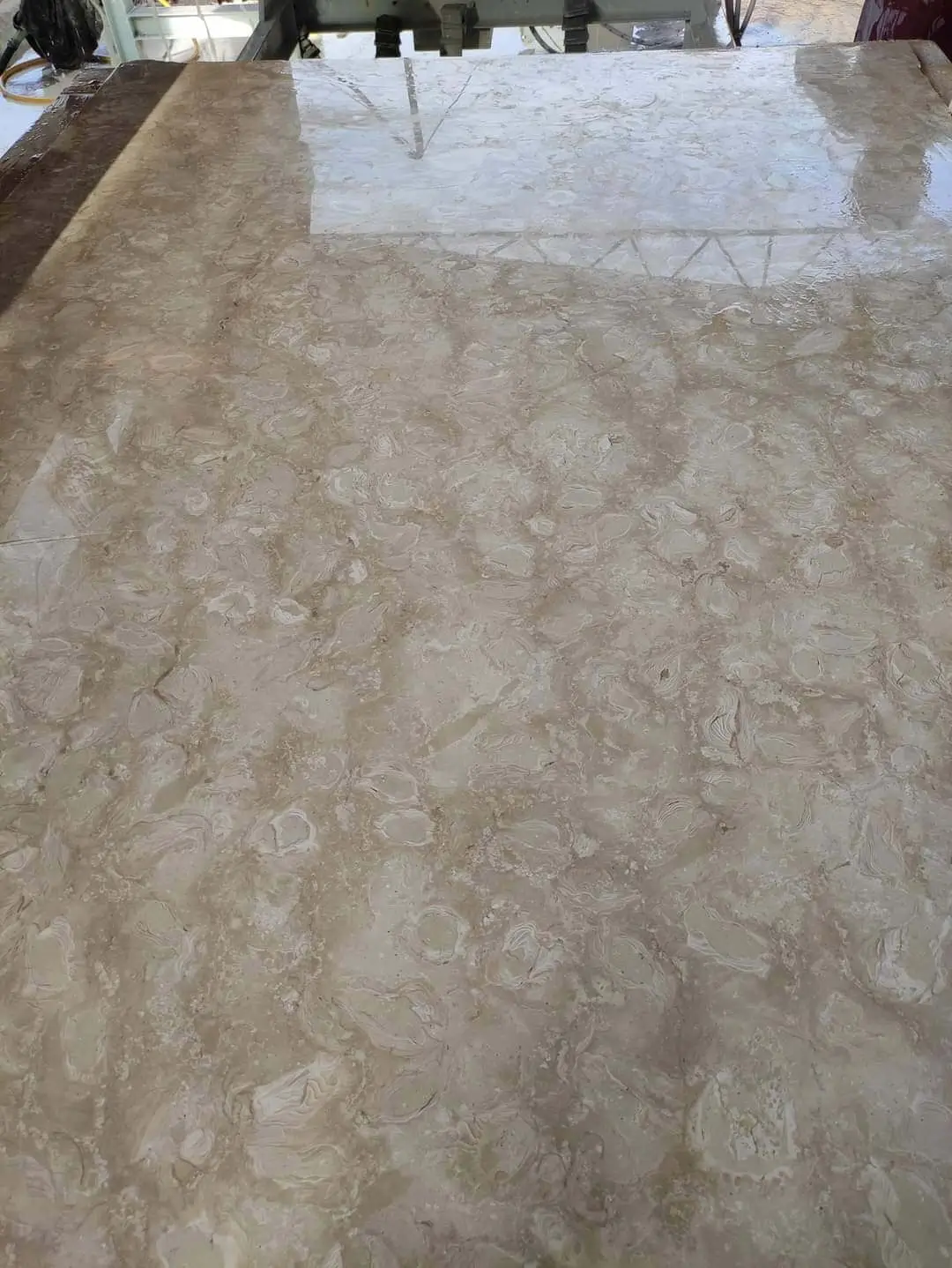
Sealing Granite Pavers in Arizona Heat: Protocols That Account for Desert Ground Movement
Sealing granite pavers in Arizona heat is genuinely different from sealing in a temperate climate, and the difference isn’t just about product selection — it’s about timing relative to soil conditions. Never apply penetrating sealer to silver granite that’s been installed over recently disturbed soil. The ground needs a full monsoon season to re-consolidate before you seal, or you’ll trap differential moisture gradients that push salts to the surface after the first major rain event.
For most low-desert installations, a fluorocarbon impregnating sealer applied at 18 months post-installation outperforms an immediate seal by a significant margin. The stone needs time to reach hygroscopic equilibrium with the surrounding soil environment. After that initial waiting period, re-sealing on a 24 to 36 month cycle is appropriate for Tucson and Phoenix elevations, while higher-elevation projects with freeze-thaw exposure may need annual inspection to assess penetration depth.
- Apply sealer only when surface temperature is between 50°F and 85°F — early morning application in summer months prevents flash evaporation before full penetration
- Two thin coats outperform one heavy application; allow 45 to 60 minutes between coats in dry Arizona air
- Solvent-based penetrating sealers maintain better bond integrity in high-UV environments than water-based alternatives for exterior granite applications
- Test for sealer wear by dropping water on the surface — if absorption happens in under 3 minutes, reapplication is overdue
Monsoon Season Paver Care and Joint Sand Maintenance
Arizona’s monsoon season runs roughly July through mid-September and introduces a maintenance challenge that residents from other states rarely anticipate: rapid saturation of expansive soils following months of extreme desiccation. The soil shrinks significantly during the dry season, then swells rapidly when monsoon rains hit. That swell-shrink cycle transmits directly to your paver bedding layer if joint sand isn’t maintained at proper depth.
Monsoon-season stone paver care in AZ requires your joint sand to be kept at 92 to 95 percent of joint depth year-round — not just topped off after storm events. Polymeric sand performs better than standard jointing sand in this application because it resists washout during the intense, short-duration rain events that characterize Arizona monsoons. Inspect joints in late June before the monsoon season begins and address any voids before the first significant rainfall.
In Tempe, alluvial fan soils near the Salt River corridor are particularly susceptible to this swell-shrink behavior, and homeowners in that corridor should plan on a pre-monsoon joint inspection as a standard annual maintenance item. Leaving gaps in the jointing compound allows moisture to undercut the bedding layer, which accelerates the rocking and settlement that becomes expensive to correct.
Silver Granite Surface Upkeep Across Arizona’s Varied Geology
Silver granite surface upkeep across Arizona isn’t one-size-fits-all precisely because the geology shifts dramatically within relatively short distances. A project in the Tucson foothills sits on decomposed granite and rocky alluvium — a naturally free-draining profile that requires minimal base intervention but demands careful attention to surface cleaning because the surrounding landscape constantly deposits fine particulate onto the paver surface. A project in central Phoenix might be on heavily engineered fill with unpredictable compaction history.
For decomposed granite soil profiles, your primary upkeep concern shifts to surface staining from iron oxide in the surrounding native material — the reddish-brown particles that blow and wash onto the pavers. A diluted phosphoric acid wash at a 5 to 8 percent concentration applied annually handles iron staining effectively without etching the granite surface. Avoid muriatic acid on silver granite — the chloride content can accelerate crystal growth in the pore structure and lead to surface spalling over time.
- Blow or sweep off fine desert particulate weekly during dry season — abrasive grit under foot traffic acts as sandpaper on the sealed surface
- Apply iron stain remover before the annual seal, not after — sealing over existing staining locks it into the surface
- Avoid pressure washing above 1,200 PSI, which can dislodge polymeric joint sand and drive fine soil particles into open pores
- After any significant grading or soil disturbance adjacent to the installation, re-check base compaction along the affected perimeter
For ongoing technical reference, our Arizona silver granite maintenance guide covers material-specific sealing intervals and stain-removal sequences in greater detail than this article can address in full.
Subgrade Stability and Long-Term Paver Performance
The single maintenance call that gets underestimated most consistently is subgrade re-inspection after years two through four of an installation. This window is when delayed soil consolidation — particularly in fill areas or profiles with clay lenses — produces the first visible signs of differential settlement. You’ll see it as subtle lippage between adjacent pavers, usually less than 3/16 inch initially, that progressively worsens if not addressed.
Resetting pavers in a settled zone is straightforward when caught early. Lift the affected units, add bedding sand to compensate for the grade change, re-compact, and reset. Waiting until lippage exceeds 3/8 inch typically means the base layer itself has moved, which requires a more involved repair — excavating to sub-base depth, re-compacting, and rebuilding the aggregate bed before paver reset. Catching it at year three costs a fraction of what year six repairs cost.
At Citadel Stone, we recommend that clients in clay-bearing soil zones request a written compaction specification from their installer before work begins — minimum 95 percent Standard Proctor compaction for the sub-base layer is the threshold that separates durable installations from problematic ones in Arizona desert conditions.
Arizona Desert Granite Paver Longevity: What the Numbers Actually Look Like
Arizona desert granite paver longevity tips often focus exclusively on surface care, but the longevity curve is driven by three compounding factors: subgrade stability, drainage adequacy, and sealer integrity. When all three are properly maintained, silver granite paver maintenance in Arizona’s climate rewards diligent owners with 25 to 35 years of serviceable performance with minimal intervention. Let any one of those three slip, and you’re looking at a 12 to 15 year replacement cycle instead.
- Drainage slope of 1 to 2 percent away from structures — anything less allows moisture to pool against the subgrade, accelerating clay swell cycles
- Perimeter edging systems should be re-inspected every 3 years; edge pavers are the first to migrate under lateral soil pressure
- Granite’s low water absorption rate (typically under 0.4 percent by mass for quality material) provides inherent resistance, but that advantage disappears when joints fail and moisture routes below the setting bed
- Compressive strength above 19,000 PSI in quality silver granite means surface wear is almost never the failure mode — it’s always the foundation
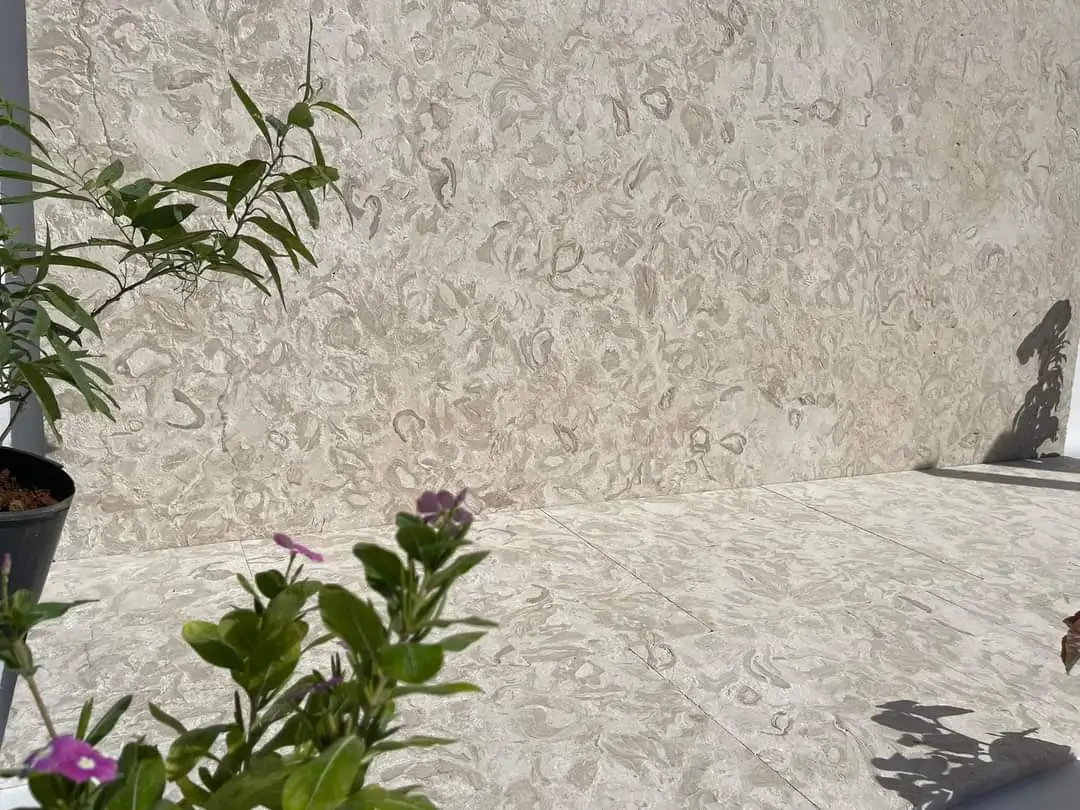
Ordering, Warehouse Stock, and Delivery Planning in Arizona
Material availability directly affects your maintenance planning timeline, particularly for replacement units after a settlement repair or a storm event that damages edge pavers. Silver granite pavers in Arizona can be subject to batch variation across production runs, which means matching existing installations with new material becomes harder the longer you wait to reorder.
Citadel Stone maintains warehouse inventory of silver granite specifically sized for the Arizona market, which typically brings lead times down to one to two weeks from the point of order confirmation. That’s a meaningful advantage compared to the six to eight week import cycle you’ll encounter sourcing through generalist distributors. When you’re coordinating a truck delivery to a finished residential property, confirming warehouse stock before scheduling your contractor’s repair window saves you from rebooking delays.
In Tucson, where decomposed granite native soils mean projects often need edge replacement units after their first monsoon season, having a warehouse source that can respond within a two-week window makes the repair process significantly less disruptive for homeowners. Plan your initial order with a 5 to 8 percent overage specifically to hold in storage for future repairs — the cost of carrying that inventory is far lower than the sourcing risk of trying to match aged granite from a new production run. Scheduling a truck delivery for that overage stock at the time of original installation is the simplest way to protect against future sourcing gaps.
Keeping Silver Granite Pavers Performing Through Arizona’s Seasons
Silver granite paver maintenance in Arizona’s climate rewards the homeowner who treats ground conditions as the primary maintenance variable rather than an afterthought. Your sealing schedule, joint sand management, and surface cleaning routine all matter — but they’re secondary to what’s happening below the setting bed. Address soil instability proactively, maintain drainage geometry, and keep joint integrity intact through the monsoon seasons, and the surface maintenance practically manages itself.
As you round out your Arizona stone project planning, it’s worth noting that different natural stone materials age and weather in distinctly different ways under desert conditions. Natural Blue Black Limestone Weathering Process for Avondale Patina explores how another Citadel Stone material develops its character over time in the Arizona environment — useful context when you’re comparing long-term performance expectations across stone types for your property. Citadel Stone supplies silver granite pavers to homeowners in Flagstaff, Chandler, and Mesa with material specifications that inform practical sealing schedules and stain-removal approaches suited to Arizona’s desert climate.