
RV driveway stone Prescott installations demand a fundamentally different specification approach than standard residential driveways — you’re distributing axle loads that can hit 20,000 pounds per axle across a surface that also needs to handle Arizona’s thermal cycling without heaving or shifting. Most spec failures happen because the stone selection gets treated like a decorative choice rather than a structural one. This article walks you through the material properties, base preparation standards, and regional performance factors that separate a 25-year RV access surface from one that needs regrading in five years.
Why RV Loads Demand Different Stone Specifications
Your Class A motorhome or fifth-wheel trailer isn’t just heavy — it concentrates that weight through a small contact patch at each tire. Standard driveway stone designed for passenger vehicles typically specs at 4,000–6,000 PSI compressive strength, which gets you through daily sedans and pickups without much drama. For recreational vehicle access, you’re looking at material that needs to maintain integrity under repeated dynamic loads, not just static weight.
The material properties that matter most for heavy-duty driveway stone Arizona applications come down to three non-negotiable factors:
- Compressive strength minimum 8,500 PSI for surface stone, with angular aggregate in the base layer to interlock under lateral load
- Thermal expansion coefficient compatibility with your base material — mismatches at the surface-to-base interface cause progressive shear failures over three to five seasonal cycles
- Angularity and particle shape — round river rock looks appealing but has almost no load transfer capability; crushed angular stone creates the mechanical interlock that distributes your RV’s point loads laterally
Prescott sits at roughly 5,400 feet elevation, which changes your thermal envelope considerably compared to Phoenix basin projects. You’ll see temperature swings of 40–50°F in a single day during spring and fall, and nighttime lows that can approach freezing even in May. That combination creates freeze-thaw stress cycles that lower-elevation Arizona large vehicle support specs don’t account for.
Base Preparation for Prescott RV Driveways
The stone surface gets all the attention, but the base layer determines whether your recreational vehicle access holds up or develops ruts and soft spots within the first three seasons. Prescott’s soil composition varies significantly by neighborhood — Granite Dells areas have shallow bedrock that can actually work in your favor, while the valley sections closer to Prescott Valley transition have more expansive clay content that needs aggressive stabilization.
For RV driveways in clay-heavy soil zones, your base specification should include:
- Geotextile fabric across the full footprint, overlapped 18 inches at seams — this prevents base material migration into the subgrade during wet cycles
- Minimum 8-inch compacted Class II aggregate base, achieving 95% modified Proctor density — for Class A motorhomes over 30,000 GVWR, push that to 10 inches
- Cross-slope of 1.5–2% to drain surface water away from the structure; flat driveways in Prescott accumulate monsoon runoff that undermines base stability faster than any load-bearing issue
- Transition zones at grade changes kept to 2% maximum grade change per 10 linear feet to prevent high-centering your rig’s underbelly
The granite-based subgrades common in north Prescott near Thumb Butte generally need less aggressive base prep, but don’t skip the geotextile — even stable subgrades allow fines migration over time that creates voids under your surface stone layer.
Stone Type Selection for RV Access
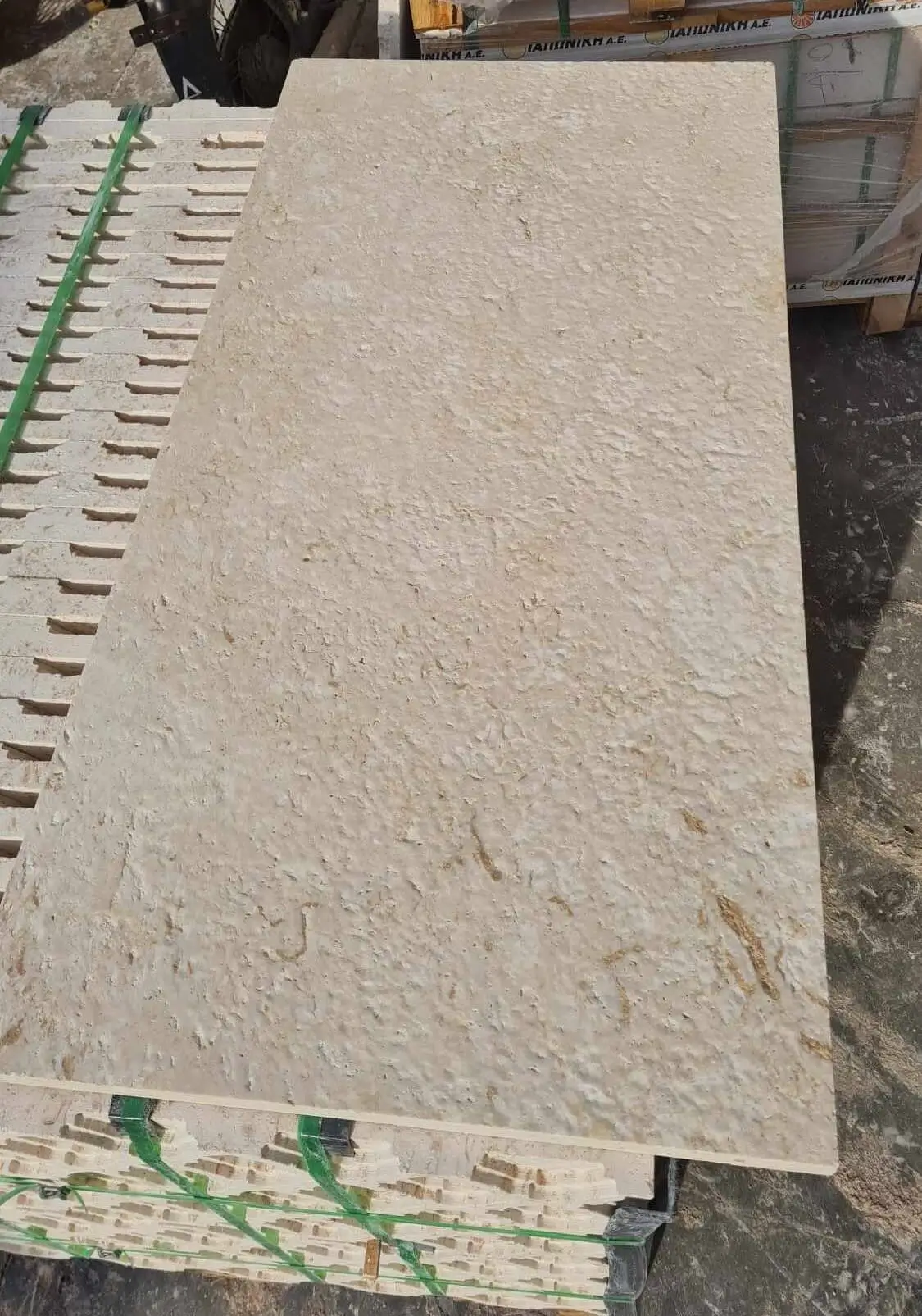
Crushed granite remains the workhorse material for RV driveway stone Prescott projects, and for good reason. Local crushed granite at ¾-inch minus gradation provides the angular interlock, drainage capacity, and thermal stability that recreational vehicle access demands. The decomposed granite products that work beautifully for pedestrian paths and low-traffic areas don’t have the structural integrity to resist the shear forces your RV tires create during turns.
For a properly-functioning heavy-duty driveway stone Arizona surface, consider a two-layer approach:
- Bottom wearing course: 1½-inch crushed aggregate, 4 inches compacted depth — this handles primary load distribution and provides drainage pathways
- Top surface course: ¾-inch minus crushed granite or limestone, 2–3 inches compacted depth — this is the finish layer that compacts tightly under repeated loads to create a firm, stable surface
- Avoid anything smaller than ¼-inch minus for the surface layer on RV driveways; fine materials compact initially but migrate with water flow and create ruts at tire tracks
Limestone performs exceptionally well as a surface material in Prescott’s semi-arid climate. Its natural hardness ranges from 7,500–10,000 PSI compressive strength depending on source formation, and it weathers to a tight surface over time rather than loosening like some softer aggregates. The slight alkalinity actually helps stabilize the surface in areas where you get occasional moisture intrusion.
Drainage Design for Prescott RV Sites
Prescott gets most of its precipitation in two distinct windows — winter snow events and the July–September monsoon season. Your RV driveway needs to handle both, and they create different drainage challenges. Snow melt is slow and relatively manageable with proper cross-slope; monsoon events can deliver two inches of rain in 90 minutes, which overwhelms any surface drainage that isn’t deliberately designed.
Drainage design for recreational vehicle access should address these specific scenarios:
- Side-channel diversion for driveways exceeding 60 feet in length — without it, concentrated flow builds velocity and moves your surface stone toward the street
- Permeable stone selection helps, but don’t rely on infiltration to manage monsoon volumes in clay-dominant soils where percolation rates drop below 0.5 inches per hour
- Curbing or edge restraint at the downhill side prevents lateral migration of your surface layer — this is the detail most homeowners skip and then wonder why the driveway spreads outward after two monsoon seasons
Proper drainage also protects your Prescott RV storage area from water intrusion under the vehicle. Standing water under a parked Class A for several months creates underbelly corrosion and rodent habitat issues that are genuinely expensive to address. Get the drainage right in the design phase.
Turning Radius and Maneuvering Space Requirements
The stone specification and the site geometry interact in ways that matter for long-term performance. Tight turning radiuses concentrate load and lateral shear stress at predictable locations — the inside of every turn your rig makes. Premature surface failure appears at those spots on driveways that were designed without accounting for your specific vehicle’s turning radius.
Field performance data shows that surface stone in high-shear zones needs to be spec’d at least one size coarser than straight-run sections. Here’s what that means practically:
- Straight driveway runs: ¾-inch minus compacted surface layer performs fine
- Turning aprons and backing areas: step up to 1½-inch minus or add a stabilized decomposed granite mix with polymer binder to resist lateral displacement
- Entry transition from street to driveway: this zone sees the most dynamic load — vehicles accelerating and braking — and benefits from a 12-inch minimum concrete apron before transitioning to stone
For a 40-foot Class A motorhome, you’re working with a minimum turning radius around 55–60 feet at the front overhang. That typically means your apron needs to be at least 30 feet wide at the street connection to allow one-motion entry without a three-point turn. Plan the stone coverage area based on that footprint, not a standard 16-foot-wide residential driveway dimension.
Thermal Performance at Prescott’s Elevation
Elevation changes the thermal game considerably for RV driveway stone Prescott specifications. At 5,400 feet, your surface stone experiences a wider daily temperature range than Phoenix projects, but also lower peak temperatures — you’re rarely hitting the 150°F surface temperatures common in the Valley during July. The challenge shifts from pure heat management to freeze-thaw cycle durability.
Stone materials that handle Prescott’s thermal profile need specific properties:
- Absorption rate below 3% by weight — higher absorption means more water infiltration into the stone matrix, and that water expands 9% when it freezes, progressively fracturing lower-quality stone
- Thermal expansion coefficient around 3.0–4.5 × 10⁻⁶ per °F for crushed granite, which is compatible with standard base aggregate expansion rates and won’t create shear planes at the material interface
- Avoid sandstone varieties in Prescott applications — they’re beautiful but absorb water aggressively and deteriorate in freeze-thaw conditions faster than any other sedimentary option
The good news for Prescott is that your freeze-thaw cycles are relatively gentle compared to high-mountain Arizona locations at 7,000+ feet. A well-chosen crushed granite or limestone product at the right gradation handles Prescott’s thermal cycling without special additives or treatments.
Maintenance Protocols for Long-Term RV Driveways
Your installation won’t stay in perfect condition without a maintenance protocol, and the maintenance requirements for RV driveways differ from pedestrian stone surfaces. The higher loads compact the surface more aggressively in the first two to three years, which is actually a good thing — but that compaction process also migrates fines to the surface and creates areas where top-dressing becomes necessary.
A practical maintenance schedule for heavy-duty driveway stone Arizona installations looks like this:
- Year one: expect 15–20% surface settlement; add ½-inch top-dress of fresh crushed material after the first monsoon season to restore grade and replenish lost fines
- Annual check: inspect edge restraints and curbing for lateral migration — address any movement before it cascades into surface stone displacement
- Every three to five years: rake and regrade the top layer, paying attention to tire track depressions that accumulate water and accelerate base softening
- After significant precipitation events: check the uphill end of the driveway for erosion channels — small channels left unaddressed grow quickly and can move substantial stone volume in a single monsoon event
Coordinating your truck delivery schedule when ordering top-dress material allows you to plan maintenance during favorable installation weather. Late spring — April through mid-June — is the ideal window in Prescott before monsoon season begins. Confirming warehouse availability for your chosen aggregate ahead of that window prevents delays when weather conditions align.
For material sourcing and project planning, Citadel Stone’s driveway stone services include technical support to match the right aggregate spec to your specific site conditions and vehicle type.
Retaining Wall Stone for Sale in Arizona — Performance Overview
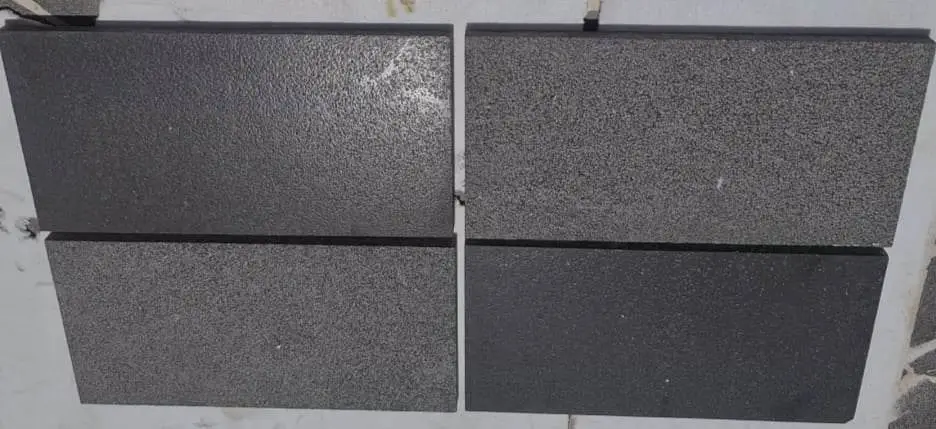
Citadel Stone’s retaining wall stone for sale in Arizona represents a curated selection of angular aggregates and dimensional stone products engineered for the performance demands of Arizona’s varied climate zones. This section provides hypothetical guidance on how these materials would perform across three distinct Arizona project locations, helping you understand how regional variables shape specification decisions. The analysis is advisory in nature and draws on technical performance data rather than specific project histories.
Arizona’s climate diversity — from Prescott’s elevation-driven freeze-thaw cycles to Peoria’s desert heat and Sedona’s red rock drainage dynamics — means there’s no single specification that performs optimally everywhere. Material selection needs to account for local soil chemistry, precipitation patterns, traffic loads, and UV exposure. The following city-specific analysis walks through the variables that matter most in each location.
Flagstaff Elevation Specification Challenges
At 7,000 feet, Flagstaff projects demand the most aggressive freeze-thaw specification in Arizona. Retaining wall stone used in Flagstaff applications should have absorption rates below 2% — tighter than the 3% threshold adequate for Prescott. Base prep would need to include frost-depth consideration of 18–24 inches in exposed northern-facing applications. Angular limestone or basalt with documented freeze-thaw durability ratings falls into the appropriate material category, and warehouse inventory confirmation before project start is essential given Flagstaff’s shorter construction windows.
Sedona Drainage and Aesthetic Integration
Sedona’s red rock geology creates an interesting specification environment where drainage performance and visual integration with the surrounding landscape both carry weight. The local soil transitions rapidly between sandy washes and clay-dominant benches — base prep needs to account for that variability across even a modest project footprint. Retaining wall stone in warm earth tones performs exceptionally here both functionally and aesthetically. Truck delivery logistics in Sedona’s canyon neighborhoods also warrant early coordination, as vehicle size restrictions on some access roads affect material delivery planning. A second truck delivery may be necessary for larger projects where access roads limit payload per run.
Peoria Heat Load and UV Stability
Peoria’s Phoenix metro location creates a completely different performance environment from the mountain cities. Surface temperatures on exposed stone can reach 145–155°F in July, and UV exposure at this latitude bleaches lower-quality materials noticeably within three to five years. Retaining wall stone used in Peoria heavy-duty driveway stone Arizona applications needs documented UV color stability and thermal expansion data. At Citadel Stone, we recommend reviewing technical data sheets for coefficient of thermal expansion before specifying, particularly for large continuous surfaces where differential expansion creates joint stress. The warehouse maintains consistent Peoria-ready inventory with verified UV performance ratings, and a second warehouse location serves the West Valley for faster fulfillment.
Your Action Plan
Getting your RV driveway stone Prescott project right comes down to sequencing your decisions correctly — base design first, stone selection second, and drainage planning as an integrated component of both. You now have the technical framework to evaluate materials against Prescott’s specific performance demands: the elevation-driven thermal cycling, the soil variability between granite and clay zones, and the dynamic loads your recreational vehicle access will generate over decades of use. The detail most projects get wrong is the transition zone specification — entry aprons and turning areas need a step up in material coarseness and, in some cases, stabilized treatment to resist lateral shear under your rig’s heaviest maneuvering loads. Don’t leave Prescott RV storage surface prep to the last minute either; proper base compaction needs at least two weeks of cure time before your first heavy vehicle pass. Integrated stone seating within retaining walls enhances Marana outdoor functionality — a consideration worth exploring as you think about the full scope of your Arizona stone project. As driveway stone suppliers in Arizona we help you calculate exactly how much tonnage you need.