
Grade changes across Arizona terrain expose a failure point in road paver block materials comparison that most specs never address — how differential settlement behaves differently at 3% slope versus 8% slope, and why the material you choose determines whether that difference costs you a patch repair or a full reinstall. The right road paver block materials Arizona comparison starts not with surface finish or color, but with how each material category responds to lateral thrust on a sloped base. Drainage geometry, compaction behavior under repeated load, and bedding layer stability all shift when elevation changes enter the equation.
Why Arizona Terrain Drives Material Decisions First
Arizona isn’t a flat state, and that fact alone changes how you evaluate paving block options. You’re dealing with everything from the 6,900-foot elevation of Flagstaff — where freeze-thaw cycling adds a structural dimension that low-desert specs completely miss — down to valley floor installations in the Phoenix basin where drainage velocity on even modest grades can undercut poorly compacted aggregate bases. Elevation shapes your entire specification framework before you ever touch a paver catalog.
The terrain challenge isn’t just about slope percentage. It’s about how water moves through your cross-section during monsoon events, how thermal mass interacts with shaded versus exposed grade faces, and whether your edge restraint system can hold lateral loading on a hillside installation over a 20-year service cycle. These aren’t concerns you’ll solve by choosing one brand over another — they’re performance criteria that filter your material category shortlist from the very beginning.
Natural Stone Road Pavers on Slopes and Grades
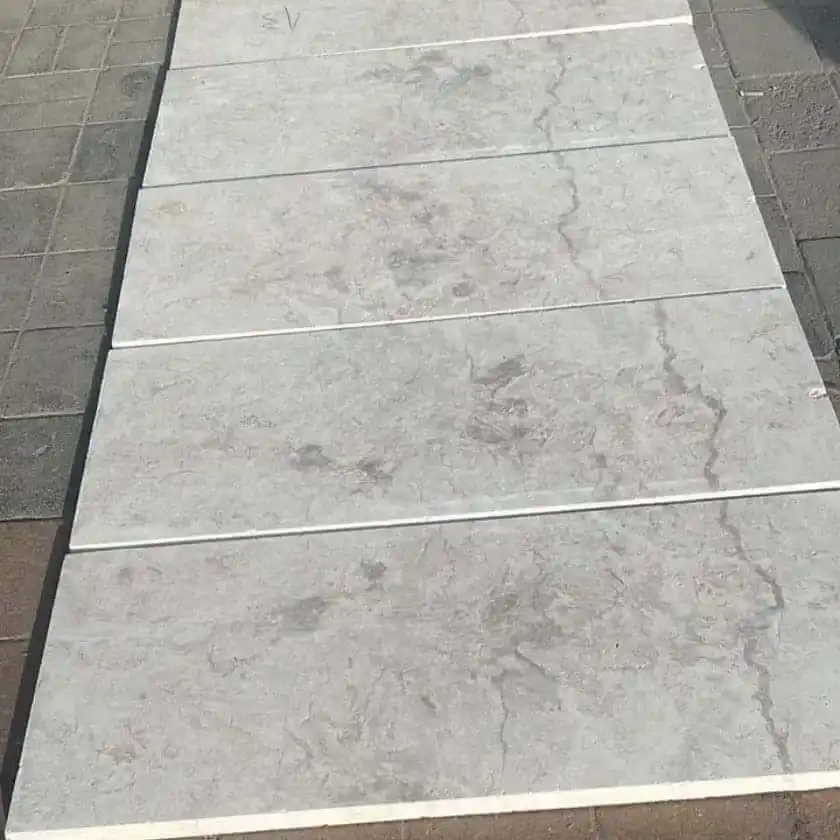
Natural stone road pavers — basalt, limestone, and quartzite formats — carry a structural density that works in your favor on graded installations. Basalt in particular, with compressive strengths commonly ranging from 20,000 to 28,000 PSI, resists lateral creep on slopes better than lightweight alternatives because the mass itself contributes to interlock stability. You’re essentially using the stone’s weight as a component of the restraint system.
What most specifiers miss when comparing road paving blocks in Arizona is the bedding layer behavior differential. On a 5% grade or steeper, a 1-inch sand setting bed under a dense basalt or limestone paver develops lateral drainage pathways that can migrate fines over time. Moving to a chip-and-dust bedding mix — a blend of angular granite fines rather than washed concrete sand — holds position better on grade and reduces the settlement differential that causes rocking pavers in the first 3 to 5 years.
- Limestone road pavers in 4-inch nominal thickness provide adequate load distribution for standard vehicle traffic and handle moderate grade installations well
- Basalt offers higher abrasion resistance, making it preferable for steep-entry driveways where turning maneuvers concentrate stress
- Quartzite’s low absorption rate (typically under 0.5%) makes it the strongest performer where upslope water infiltration is a persistent issue
- All natural stone options require proper edge restraint — buried concrete curb or steel pin edging — to resist lateral thrust on any grade above 3%
How Concrete Pavers Behave on Graded Arizona Sites
Concrete interlocking pavers dominate the volume market in Arizona, and for flat or near-flat installations in Scottsdale, their dimensional consistency and cost profile make them a rational choice. The challenge comes when you move those same specs onto a site with meaningful elevation change. Concrete pavers manufactured to ASTM C936 standards perform well under compressive load, but their surface abrasion resistance in the 8,000–10,000 PSI range is lower than dense natural stone, and that matters on slopes where tire scrub concentrates at turning points.
The more significant issue on graded sites is drainage interception. Concrete paver joints — typically 3mm to 4mm — allow water to pass through into the bedding layer, which is an asset on flat ground but creates a saturation risk at the toe of a slope where water accumulates. You’ll need to engineer a positive drainage break — either a channel drain or a French drain intercept — at every grade transition point to prevent the bedding layer from becoming a reservoir under hydrostatic pressure during monsoon events.
- Concrete pavers perform reliably on grades up to approximately 4–5% without requiring modified bedding specifications
- Above 5% grade, the setting bed must shift from standard ASTM C33 concrete sand to an open-graded permeable base system to manage subsurface water pressure
- Thermal expansion in concrete pavers runs approximately 5.5 × 10⁻⁶ per °F — manageable with standard 1/8-inch joint spacing maintained during installation
- Freeze-thaw cycling at higher elevations can cause spalling in standard-mix concrete pavers; specify air-entrained mixes or natural stone alternatives for sites above 5,500 feet
Permeable Paver Blocks and Arizona Drainage Engineering
Permeable interlocking concrete pavers (PICP) and open-joint natural stone systems have gained traction in Arizona because storm water management requirements are tightening, particularly in developed corridors. The drainage performance on flat or gently sloping sites is well-documented. The story changes on steeper terrain, and this is where stone versus concrete road pavers in Arizona diverge most meaningfully in field performance.
On grades above 6%, the infiltration rate advantage of permeable systems partially inverts. Water enters the joint and aggregate reservoir as designed, but hydrostatic pressure at the base of the slope can exceed the drainage capacity of the open-graded base layer during high-intensity events. The solution isn’t to abandon permeable systems — it’s to engineer horizontal drainage galleries at 15- to 20-foot intervals down the slope, essentially creating a series of detention steps rather than a single continuous drainage plane. This adds cost but preserves the permeable performance benefit across the full slope length.
You can review material options and get specification support by visiting Citadel Stone Arizona road paving blocks, where both natural stone and engineered paver options are available with technical documentation suited to graded site applications.
Base Preparation Across Arizona’s Elevation Zones
The soil profile under your installation changes more with elevation in Arizona than in almost any other state. Desert valley floors present calcareous hardpan — caliche — that can sit at 12 to 36 inches below grade and ranges from a nuisance to a genuine structural asset depending on how you approach it. At middle elevations around 4,000 to 5,000 feet, you transition into volcanic-origin soils with higher clay fractions that expand noticeably with moisture. Above 6,000 feet, decomposed granite and forest soil introduce organic content that requires full removal and replacement before any aggregate base work begins.
For paver block road installations in Arizona across all elevation bands, the compaction standard matters more than the aggregate depth. A 6-inch compacted base at 98% Standard Proctor density outperforms a 10-inch loosely compacted base every time — this is the field reality that gets lost when specs are written from a distance. In the volcanic clay zones at mid-elevation, installing a non-woven geotextile fabric between native subgrade and aggregate base adds a separation layer that prevents clay migration upward into the drainage layer, which is a problem that typically shows up in years 4 through 7 as surface undulation.
- Desert valley sites (below 2,500 feet): minimum 4-inch compacted Class II base for residential driveways; 6-inch minimum for road applications
- Mid-elevation sites (2,500–5,500 feet): 6-inch base minimum; geotextile separation fabric required where clay content exceeds 20%
- High-elevation sites (above 5,500 feet): 8-inch base with full organic removal; frost depth consideration requires base below the 12-inch frost penetration zone
- Caliche layers, where intact and at appropriate depth, can serve as a natural sub-base — verify bearing capacity before using in structural applications
Comparing Road Paving Blocks in Complex Terrain Conditions
The red rock terrain surrounding Sedona represents one of the most demanding installation environments in Arizona — a combination of steep driveway grades, iron-oxide clay soils with moderate expansion potential, and an architectural context that heavily favors natural stone aesthetics. Comparing road paving blocks in this environment forces you to weigh structural performance against aesthetic integration simultaneously, and the two criteria don’t always point to the same material.
Natural sandstone and limestone pavers blend visually with the regional character but require careful thickness specification — 2.5-inch minimum nominal thickness for vehicular applications on sloped sites in this region. Concrete pavers in a blend of earth tones are structurally appropriate but carry an aesthetic penalty that affects property value in this market. The practical answer for most Sedona-area projects is a natural stone field paver in limestone or quartzite with concrete edge restraint hidden below finished grade — you get the aesthetic of natural stone with the dimensional predictability of engineered restraint.
Thickness Specifications for Load and Grade
Paver block thickness requirements increase on sloped sites because the effective load distribution footprint narrows as grade increases. A standard 2-3/8-inch concrete paver on a 2% grade distributes load through the full bedding layer contact area. That same paver on a 7% grade under a turning vehicle experiences concentrated point load at the uphill edge — a condition that accelerates surface wear and increases the risk of rocking over time.
The field standard for paver block types for Arizona driveways on grades above 5% is 3-1/8-inch concrete pavers or 2.5-inch natural stone minimum. This isn’t an overspecification — it’s the threshold where point-load performance under a 5,000-pound vehicle becomes consistently reliable over a 15-year service period without requiring joint re-sanding more than twice. Natural stone’s grain structure also gives it an edge in this specific scenario: the slight surface texture variation in basalt or limestone increases interlock friction between adjacent units in a way that machined concrete pavers don’t replicate.
- 2-3/8-inch concrete pavers: appropriate for grades up to 5% under standard residential vehicle loads
- 3-1/8-inch concrete pavers: required for grades above 5% or where commercial vehicle loads are anticipated
- 2.5-inch natural stone: minimum for any vehicular road application on graded sites
- 3-inch natural stone: recommended for high-cycle entry driveways where delivery trucks or heavy SUVs represent regular loading
Logistics, Lead Times, and Arizona Material Availability
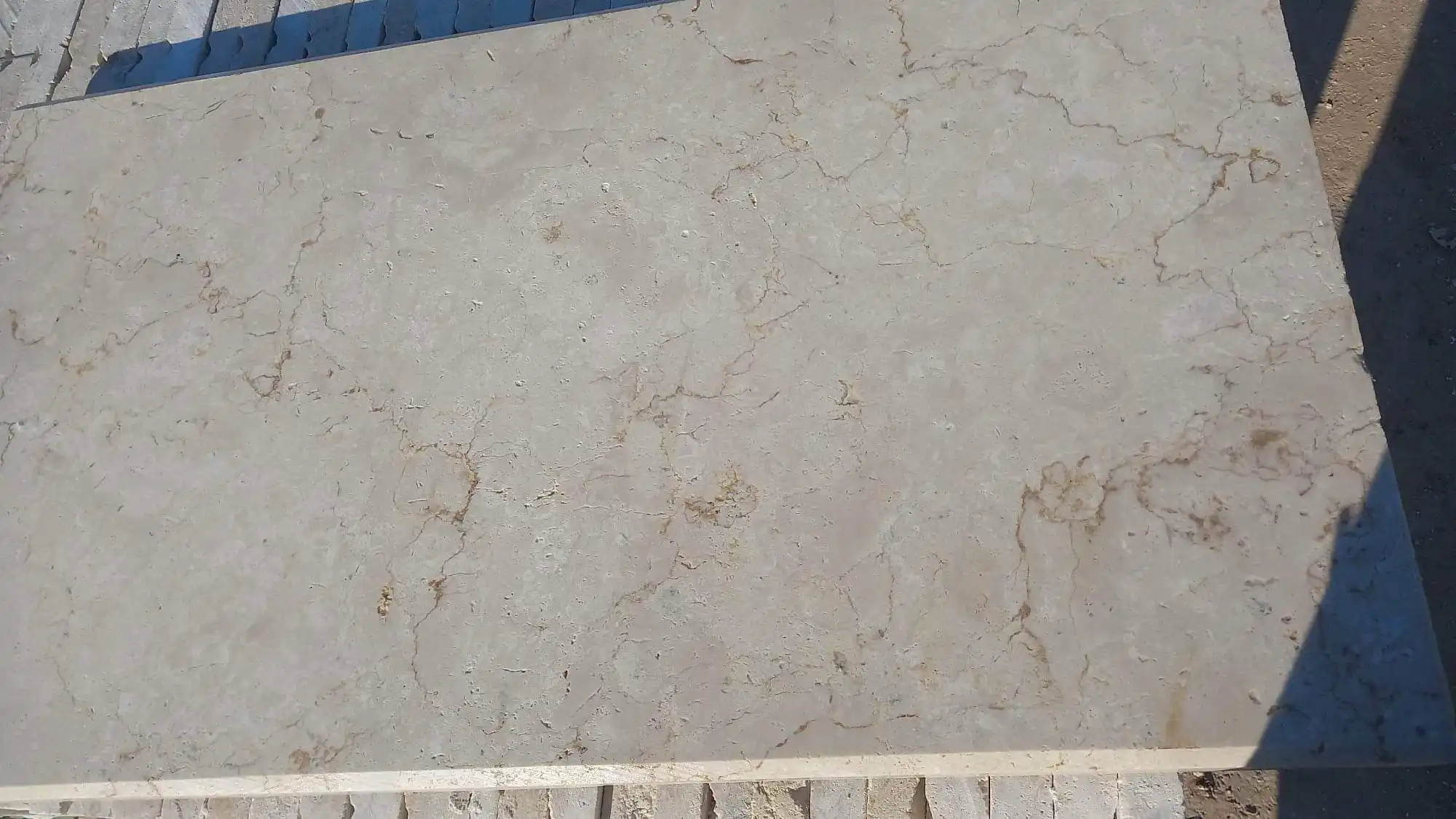
Material selection decisions in Arizona aren’t made in a vacuum — your truck access constraints, site staging area, and project sequencing timeline all interact with what’s actually available when you need it. Natural stone road pavers sourced internationally carry 8- to 12-week lead times from order confirmation to truck delivery on site, which means your material decision needs to happen before your base work begins, not after.
At Citadel Stone, we maintain warehouse inventory of key road paver formats specifically to compress that timeline for Arizona contractors. For standard natural stone road paver sizes in basalt and limestone, warehouse stock levels typically support 1- to 2-week delivery from order, which aligns with a realistic base preparation and compaction schedule. The practical implication for your project planning is that you don’t have to lock in a concrete paver default simply because you can’t wait for imported stone — if your spec calls for natural stone, warehouse-stocked material keeps that option viable without delaying your pour schedule.
Your truck access situation also deserves a direct conversation with your supplier before you finalize the spec. Standard flatbed deliveries work for most residential driveway applications, but road paver block installations on hillside sites sometimes require staged delivery with on-site material repositioning — something worth building into your contract as a line item rather than discovering it at delivery.
Road Paver Block Materials Arizona: Specification Wrap-Up
The road paver block materials Arizona comparison that actually serves your project is one that leads with terrain and drainage, not surface aesthetics or unit price. Elevation zone determines your base specification, grade percentage determines your thickness and bedding methodology, and soil profile determines whether you need geotextile separation and what drainage intercept engineering your design requires. Material category — natural stone versus concrete — shapes your long-term maintenance obligation and your interlock friction behavior on slopes, both of which compound over the project’s service life.
When selecting the best road surface blocks across Arizona, the decision tree runs through elevation zone, slope percentage, soil profile, and load cycle expectations before it ever reaches unit cost or surface finish. For technical specification support on your next graded paver installation, How to Choose Road Paver Blocks in Arizona provides a structured decision framework covering material categories, base depth by elevation zone, and grade-specific thickness requirements that complement the terrain-focused guidance in this comparison. For contractors evaluating stone versus concrete road pavers in Tucson, Scottsdale, and Mesa, Citadel Stone provides material samples and specification sheets to support informed decisions across Arizona projects.