
When you’re planning a residential paving project in Arizona, you need suppliers who understand homeowner timelines, budgets, and the unique challenges of DIY or small-scale installations. Unlike commercial contractors with dedicated procurement teams, you’re juggling design decisions, contractor coordination, and material logistics yourself. Finding residential paving slabs Arizona suppliers who provide genuine homeowner support—not just product catalogs—makes the difference between a smooth installation and a frustrating experience filled with delays and unexpected costs.
You’ll discover that most Arizona paving suppliers focus exclusively on high-volume commercial accounts, leaving homeowners to navigate complex specifications and minimum order requirements without guidance. The best homeowner paving dealers Phoenix and throughout Arizona offer transparent pricing, material education, and realistic delivery timelines that align with residential project schedules. You should look for suppliers who maintain accessible warehouse inventory rather than requiring you to wait 8-12 weeks for special orders that may not even match your climate requirements.
Material Selection for Arizona Homeowner Projects
Your material choice determines not just aesthetics but long-term maintenance costs and performance under Arizona’s extreme conditions. When you evaluate options with residential paving slabs Arizona suppliers, you’re balancing initial investment against 20-30 year lifecycle costs. Here’s what catches most homeowners off-guard: the material that looks perfect in a showroom sample may perform entirely differently under 115°F direct sun exposure with thermal cycling that ranges 40-50 degrees between night and day.
Porosity becomes critical in Arizona’s monsoon season despite the state’s desert reputation. You need materials with 4-7% porosity for proper drainage during intense summer storms that can dump 2-3 inches in under an hour. Below 4%, water sheets across the surface creating slip hazards and erosion. Above 7%, you risk accelerated weathering in high-traffic areas. Most homeowner paving dealers Phoenix representatives don’t explain this trade-off—they simply recommend whatever moves fastest from their warehouse.
Thermal mass properties affect how your outdoor spaces feel during peak summer months. Materials with high thermal mass absorb heat during the day and release it slowly at night, keeping surfaces uncomfortably hot until 10-11 PM. Lower thermal mass materials cool faster but reach higher peak temperatures. You’ll want to discuss this with DIY friendly suppliers Arizona who understand how material properties translate to real-world comfort, not just structural specifications.
- You should verify compressive strength exceeds 8,000 PSI for vehicle-rated applications
- Your specification needs slip resistance ratings between DCOF 0.50-0.60 for pool decks
- You need to account for thermal expansion coefficients of 5.3 × 10⁻⁶ per °F in joint spacing
- Your selected finish affects both appearance and maintenance frequency over time
What Separates Homeowner-Friendly Suppliers from Commercial-Only Distributors
The distinction between true homeowner paving dealers Phoenix operations and commercial-focused distributors becomes obvious when you request a quote for 400 square feet instead of 4,000. Commercial distributors impose minimum order quantities that force you to purchase 30-40% more material than needed, or they quote pricing that’s 50-60% higher for small quantities. You’re essentially subsidizing their preference for large orders.
Genuine residential paving slabs Arizona suppliers structure their operations differently. They maintain mixed inventory that accommodates both commercial projects and residential projects near me, with pricing tiers that don’t penalize homeowners. You should expect reasonable minimum orders—typically 200-300 square feet—without dramatic price penalties. They stock complementary materials like edge restraints, joint sand, and base aggregates sized for residential installations rather than forcing you to source these from multiple vendors.
Customer support quality reveals supplier priorities immediately. When you call with questions about base preparation or drainage design, does the supplier connect you with someone who understands residential site conditions? Or do they redirect you to generic installation guides written for commercial contractors? The best DIY friendly suppliers Arizona operations employ staff who can walk you through site-specific challenges, recommend solutions for common homeowner scenarios, and provide realistic installation timelines.
- You need suppliers who stock materials in quantities appropriate for 300-800 square foot residential projects
- Your supplier should provide delivered pricing that includes realistic truck access considerations for residential streets
- You want access to technical support that addresses homeowner skill levels and tool availability
- Your project timeline requires warehouse inventory confirmation before you commit to installation dates
Pricing Structures and Hidden Costs in Residential Paving
When you request quotes from residential paving slabs Arizona suppliers, you’ll encounter dramatically different pricing approaches. Some suppliers quote material-only pricing that seems attractive until you discover delivery charges that add 25-35% to your total cost. Others bundle delivery but impose geographic restrictions or minimum order requirements buried in fine print. You need to understand the complete cost structure before comparing suppliers.
Delivery logistics drive significant cost variation in residential projects. A truck delivering to your home doesn’t have the loading dock access or forklift equipment typical at commercial sites. You’re looking at manual offloading, curbside delivery, or crane service—each with different cost implications. Responsible homeowner paving dealers Phoenix operations explain these variables upfront rather than surprising you with additional charges after you’ve committed to materials.
Material packaging affects both pricing and installation efficiency. Commercial-grade pallets typically contain 400-500 square feet of material, while residential-friendly packaging offers 200-250 square foot units that reduce waste and simplify handling for homeowners or small crews. You’ll pay slightly more per square foot for smaller packaging, but you avoid purchasing 30% excess material that sits unused. For comprehensive technical specifications and performance data across material options, review our Arizona slab material library before finalizing your material selection.
DIY Installation Support vs. Contractor Coordination Services
Your installation approach—DIY, contractor-managed, or hybrid—determines what support you need from residential paving slabs Arizona suppliers. True DIY installations require suppliers who provide detailed technical guidance, proper base material specifications, and realistic assessments of tool requirements. Most homeowners underestimate the equipment needed for proper base preparation, assuming a hand tamper suffices for projects over 200 square feet. It doesn’t—you need plate compactors that achieve 95% modified Proctor density.
Hybrid approaches where you handle base work but hire professionals for final material installation are increasingly common. You save 40-50% of labor costs while ensuring professional-quality finish work. DIY friendly suppliers Arizona who support this approach stock appropriate base materials in homeowner quantities and provide clear specifications for contractor handoff. You need to know exactly what compaction levels, grade tolerances, and edge restraint methods contractors expect when they arrive for finish work.
- You should verify that base aggregate gradation meets ASTM D2940 specifications for pedestrian applications
- Your compaction equipment needs to achieve 95% density in 4-6 inch lifts for stable installation
- You need to establish drainage slope of 2% minimum away from structures before material installation
- Your edge restraints must be installed before paving material to prevent lateral movement over time
When you work with contractors, supplier coordination becomes critical. Professional installers have preferred suppliers based on material consistency, delivery reliability, and technical support. If you’ve already purchased materials from residential paving slabs Arizona suppliers without contractor input, you risk installation delays or performance issues. Smart homeowner paving dealers Phoenix operations facilitate contractor communication, providing material specifications and installation guidelines that professional crews recognize and trust.
Managing Project Timelines and Material Lead Times
Arizona’s seasonal installation windows create timeline pressures that affect material availability and pricing. You’ll find optimal installation conditions from October through April when temperatures moderate and monsoon risks diminish. During this peak season, warehouse inventory moves quickly and lead times extend from 3-5 days to 2-3 weeks for popular materials. Planning your project timeline around material availability—not just contractor schedules—prevents costly delays.
Smart residential paving slabs Arizona suppliers communicate inventory status transparently rather than accepting orders they can’t fulfill within stated timelines. You should verify actual warehouse stock before committing to installation dates, especially for projects scheduled during peak season. Generic “in stock” claims often mean material is available from the manufacturer with 4-6 week lead times, not sitting in local warehouse inventory ready for immediate delivery.
Summer installations present specific challenges that affect both material selection and installation methods. When ambient temperatures exceed 105°F, certain adhesives and sealers won’t cure properly, joint sand won’t settle correctly, and material handling becomes difficult. Experienced DIY friendly suppliers Arizona representatives guide you toward installation methods and materials that accommodate summer conditions rather than simply processing orders without consideration of installation timing.
Arizona Climate Considerations for Material Performance
Your material selection must address Arizona’s extreme thermal environment, where surface temperatures reach 160-180°F during summer months. This isn’t just about comfort—it’s about structural performance. Thermal expansion creates joint movement that affects long-term stability. You need expansion joints every 12-15 feet in Arizona installations, with joint widths of 3/8 inch minimum to accommodate thermal cycling without creating binding forces that cause material damage.
UV exposure in Arizona rates among the highest in North America, with annual solar radiation exceeding 7.5 kWh/m²/day in southern regions. This degrades sealers, fades pigmented materials, and accelerates surface weathering. When you discuss material options with homeowner paving dealers Phoenix suppliers, you should specifically ask about UV stability testing and expected color retention over 10-15 years. Generic answers about “fade resistance” aren’t sufficient—you need specific data.
- You need materials with proven thermal cycling resistance across 80-100°F daily temperature swings
- Your sealer selection should specify UV inhibitors designed for southwestern exposure conditions
- You should account for monsoon drainage requirements that handle 2-3 inch hourly rainfall intensities
- Your installation must address soil expansion characteristics common in Arizona clay deposits
Monsoon season from July through September creates unique performance requirements. Intense rainfall after months of drought causes rapid soil saturation and potential base movement. Your base design needs subdrainage layers that prevent water accumulation and maintain stability during saturation events. Most residential projects near me skip this detail, leading to settlement issues that appear 12-18 months after installation when the first major monsoon cycle hits.
Warranty Terms and Performance Guarantees
When you evaluate residential paving slabs Arizona suppliers, warranty terms reveal material quality expectations and supplier confidence. Comprehensive warranties cover manufacturing defects, dimensional tolerances, and structural performance for 5-10 years minimum. Limited warranties that exclude “normal wear” or “color variation” essentially provide no meaningful protection—these exclusions encompass most real-world performance issues homeowners encounter.
You should distinguish between material warranties from manufacturers and installation warranties from contractors. Material defects account for less than 5% of paving failures—most problems stem from improper base preparation, inadequate drainage, or incorrect installation methods. Even premium materials from reputable DIY friendly suppliers Arizona distributors will fail if installed incorrectly. Your warranty protection requires both quality materials and proper installation documentation.
Performance guarantees differ from warranties by specifying measurable outcomes: slip resistance maintenance, color retention percentages, or structural integrity criteria. These guarantees carry more weight than generic warranty language because they establish clear performance standards. When homeowner paving dealers Phoenix suppliers offer performance guarantees, they’re demonstrating confidence in material selection guidance and installation support quality.
Inventory Management and Material Availability
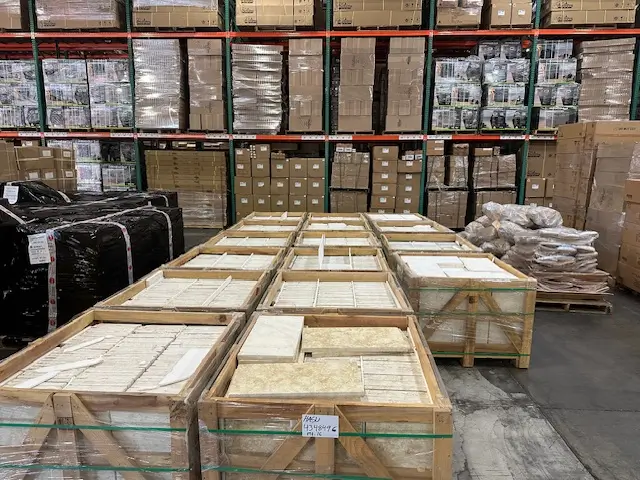
You’ll encounter two inventory models among residential paving slabs Arizona suppliers: direct-stock operations that maintain physical warehouse inventory, and order-fulfillment distributors who source materials after receiving your order. The distinction dramatically affects your project timeline and material consistency. Direct-stock suppliers can fulfill orders within 3-5 days and guarantee material matching for future repairs or expansions. Order-fulfillment operations introduce 3-6 week lead times and can’t guarantee long-term material availability.
Material lot consistency matters more than most homeowners realize. Natural stone varies between production runs, with color and texture differences that become obvious when combining materials from different lots. When you purchase from residential projects near me suppliers with limited inventory turnover, you risk receiving mixed lots that show visible variation after installation. Established suppliers with high turnover move complete production lots quickly, reducing mix-lot risks.
- You should request lot number documentation to ensure material consistency across your order
- Your supplier needs to confirm whether quoted materials are in warehouse inventory or require special ordering
- You need to order 8-10% overage for future repairs since exact material matches may not be available years later
- Your project timeline should include 7-10 day buffer for material delivery logistics and quality verification
Technical Support and Installation Resources
The quality of technical support separates exceptional DIY friendly suppliers Arizona operations from basic material distributors. When you encounter site-specific challenges—unusual drainage conditions, difficult access, complex pattern layouts—you need suppliers who provide genuine problem-solving support rather than redirecting you to generic installation manuals. Real support means site-specific guidance that addresses your unique conditions.
Installation resources should include detailed specification sheets, base preparation guides, and realistic tool requirements. You’ll find that many homeowner paving dealers Phoenix suppliers provide installation instructions written for professional contractors with commercial equipment access. These aren’t useful for homeowners working with rental equipment and limited experience. Resources scaled for residential skill levels and tool availability demonstrate supplier understanding of homeowner needs.
Some advanced residential paving slabs Arizona suppliers offer installation training sessions or site consultation services. While these typically carry additional costs, they prevent expensive mistakes that occur when homeowners misunderstand critical installation steps. A 2-3 hour consultation that costs $200-300 routinely prevents $2,000-3,000 in corrective work from base failures or improper material installation.
Strategic Approach to Comparing Multiple Suppliers
When you compare residential paving slabs Arizona suppliers, you need standardized evaluation criteria beyond simple price-per-square-foot comparisons. Create a specification sheet that defines your exact requirements: square footage, material type, finish, delivery location, and timeline. Provide this identical specification to each supplier you evaluate. You’ll discover that “apples-to-apples” comparisons are difficult because suppliers quote different material grades, delivery terms, and support services.
Total project cost includes materials, delivery, base aggregates, edge restraints, joint sand, sealers, and any required equipment rentals or professional services. When homeowner paving dealers Phoenix operations provide complete project quotes, you can make informed comparisons. Suppliers who quote only material costs force you to piece together additional expenses from multiple vendors, introducing complexity and potential compatibility issues between system components.
- You should request delivered pricing that includes all freight and fuel surcharges
- Your comparison needs to account for warranty terms and performance guarantees
- You need to evaluate technical support quality through direct conversation with supplier staff
- Your timeline requirements must be verified against confirmed warehouse stock availability
Site visits to supplier showrooms or warehouse facilities reveal operational quality that phone conversations don’t capture. You can examine material samples under natural light, assess inventory organization, and observe how staff interact with other customers. Professional operations maintain organized facilities with clearly labeled inventory and knowledgeable staff who can locate specific materials quickly. Disorganized warehouses with limited staff knowledge often deliver similar disorder in order fulfillment and customer support.
Common Homeowner Mistakes When Sourcing Paving Materials
The most expensive mistake homeowners make is purchasing materials before finalizing design and base preparation details. You’ll find that material quantities, edge treatment requirements, and drainage provisions affect base design. When you buy materials first, you’re locked into specific dimensions and installation methods that may not suit your site conditions. Work with DIY friendly suppliers Arizona representatives to finalize complete system specifications before purchasing any components.
Underestimating project complexity leads homeowners to attempt installations beyond their skill levels. A 200 square foot patio on level, well-drained soil suits DIY installation. A 600 square foot driveway with 4% cross-slope on clay soil requires professional expertise. Honest residential paving slabs Arizona suppliers help you assess project complexity realistically rather than simply processing orders regardless of installation feasibility. You save money and frustration by recognizing when professional installation is necessary.
Neglecting base preparation quality is the primary cause of paving failures in residential installations. You might save $800-1,200 by reducing base depth from 6 inches to 4 inches, but you’ll spend $4,000-6,000 correcting settlement failures within 3-5 years. Proper base preparation costs represent 40-50% of total project expenses but determine 90% of long-term performance. Suppliers who emphasize base quality over material aesthetics demonstrate professional integrity.
Citadel Stone Paving Slabs for Arizona: Specification Guidance Across Regions
When you consider Citadel Stone’s paving slabs for your Arizona project, you’re evaluating premium materials engineered specifically for southwestern climate extremes. At Citadel Stone, we provide technical specification guidance for hypothetical applications across Arizona’s diverse climatic zones, from low-desert heat to high-elevation freeze-thaw conditions. This section outlines how you would approach material selection and installation planning for six representative Arizona cities, each presenting unique environmental challenges.
Arizona’s geographic diversity creates dramatically different performance requirements within a single state. You’ll encounter low-desert conditions in Yuma where summer temperatures consistently exceed 110°F, high-desert environments in Flagstaff with significant freeze-thaw cycling, and urban heat island effects in Phoenix that amplify thermal stress. Your material specifications must account for these regional variations rather than applying generic southwestern recommendations.
Phoenix Heat Specifications
In Phoenix applications, you would need to prioritize materials with superior thermal performance characteristics. Summer surface temperatures routinely reach 165-180°F, creating extreme thermal expansion forces and uncomfortable surface conditions. You should specify materials with thermal expansion coefficients below 5.5 × 10⁻⁶ per °F and light coloration that reflects 55-65% of solar radiation. Your installation would require expansion joints every 12 feet with 3/8 inch minimum joint width to accommodate thermal movement without binding. The urban heat island effect in Phoenix amplifies thermal cycling by 8-12°F compared to surrounding desert areas, requiring you to account for enhanced thermal stress in material durability calculations.
Tucson Monsoon Considerations
Tucson’s intense monsoon season would drive your drainage design specifications. The city experiences summer storms that deliver 2-3 inches of rainfall in under 90 minutes, overwhelming inadequate drainage systems. You would specify materials with 5-7% porosity for rapid surface drainage combined with subdrainage layers that prevent base saturation. Your installation would incorporate 2.5% minimum slope away from structures with drainage swales every 20-25 feet for projects exceeding 400 square feet. Tucson’s calcareous soils also require you to address potential efflorescence through proper base preparation and sealer selection that allows moisture vapor transmission while preventing surface salt deposition.
Scottsdale Aesthetic Integration
For Scottsdale’s design-focused residential market, you would balance performance specifications with aesthetic requirements that complement southwestern architectural styles. Material selection would emphasize natural color variations and textured finishes that coordinate with desert landscaping while maintaining slip resistance ratings of DCOF 0.50-0.55 for pool deck applications. You should specify premium-grade materials with tight dimensional tolerances (±1/8 inch) that support intricate pattern layouts and clean joint lines. Scottsdale’s affluent market typically demands 10-year minimum performance guarantees, requiring you to select materials with proven long-term durability documentation and comprehensive sealer programs that maintain appearance through 120°F+ summer conditions.
Flagstaff Freeze-Thaw Resistance
Flagstaff’s high-elevation climate would require completely different specifications focused on freeze-thaw durability. You would need materials with absorption rates below 3% and proven resistance to 50+ annual freeze-thaw cycles. Your installation specifications would include 8-inch aggregate base depth for frost protection, subdrainage systems that prevent ice lens formation, and joint sealers that remain flexible at temperatures down to -10°F. You should specify materials with demonstrated performance in ASTM C1645 freeze-thaw testing showing less than 0.5% strength loss after 300 cycles. At Citadel Stone, we would recommend addressing Flagstaff’s unique combination of winter freeze conditions and summer UV exposure through material selections proven in similar mountain resort environments.
Sedona Color Coordination
In Sedona applications, you would prioritize color selection that either complements or intentionally contrasts with the area’s distinctive red rock formations. Material specifications would focus on colorfastness under intense UV exposure, requiring documented color retention of 85% minimum over 10 years. You should account for Sedona’s tourist-driven economy where outdoor entertainment spaces receive heavy foot traffic, specifying materials with abrasion resistance ratings suitable for commercial applications despite residential settings. The city’s strict architectural guidelines would require you to verify material color and finish compatibility with local design review standards before finalizing selections, adding 2-3 weeks to typical project timelines for approval processes.
Mesa Value Engineering
Mesa’s diverse residential market would drive value-engineered specifications that optimize performance-to-cost ratios. You would specify materials that meet essential durability requirements—8,000 PSI minimum compressive strength, DCOF 0.45+ slip resistance, 5-6% porosity—while avoiding premium aesthetic features that significantly increase costs. Your installation approach would emphasize proper base preparation and drainage design to maximize material longevity rather than relying on premium material grades to compensate for installation shortcuts. Material selections would favor neutral colors and standard finishes that maintain broad market appeal for future resale considerations, important in Mesa’s active real estate market where homes change hands every 8-12 years on average.
Essential Takeaways
Your success in sourcing residential paving materials depends on finding suppliers who genuinely support homeowner needs rather than simply processing orders. You should prioritize residential paving slabs Arizona suppliers who maintain accessible warehouse inventory, provide transparent pricing including all delivery costs, and offer technical support scaled to homeowner skill levels. The difference between adequate and exceptional suppliers becomes obvious when you encounter project complications—site access challenges, material questions, timeline pressures—and need genuine problem-solving support rather than generic responses.
Material selection requires you to balance initial costs against long-term performance expectations and maintenance requirements. You’ll achieve optimal results when you specify materials appropriate for your specific climate zone and usage patterns rather than selecting based solely on appearance or lowest price. Arizona’s extreme conditions demand materials with proven thermal performance, UV stability, and appropriate porosity characteristics that generic specifications don’t address adequately.
Your project timeline should account for material lead times, contractor availability, and seasonal installation windows that affect both material performance and labor scheduling. You need to verify actual warehouse stock levels before committing to installation dates, especially for projects planned during Arizona’s peak October-April season. Working with DIY friendly suppliers Arizona who communicate inventory status transparently prevents costly delays and project disruptions.
When you evaluate multiple suppliers, create standardized comparison criteria that account for total project costs including materials, delivery, system components, and support services. You should request detailed quotes that specify exactly what’s included rather than comparing incomplete pricing that obscures true costs. Site visits to supplier facilities reveal operational quality and staff expertise that phone conversations don’t capture. For larger commercial applications requiring bulk material quantities and extended project support, review Bulk commercial grade paving materials for Arizona hospitality projects to understand institutional-grade specification requirements. Citadel Stone supplies integrated drainage paving slabs, sells system packages, and distributes across Arizona.