
Considering recycled railway stone for your Carefree sustainable projects means evaluating a material category that fundamentally transforms how you approach green construction. Recycled railway stone delivers performance characteristics that compete directly with newly quarried alternatives while eliminating the extraction impact that standard sourcing demands. When you specify this material, you’re making a decision that balances environmental responsibility with the thermal cycling demands unique to Arizona’s desert climate. Your project’s long-term durability depends on understanding how reclaimed railway stone performs under conditions ranging from 15°F winter mornings to 125°F summer afternoons — stress cycles that occur 200+ times annually across the Phoenix metro region and surrounding areas.
Why Recycled Railway Stone Matters for Sustainable Arizona Projects
Railway ballast recycling has emerged as one of Arizona’s most practical sustainability initiatives because the material already exists in massive quantities along abandoned and active rail corridors. You encounter recycled railway stone as a performance-proven option that reduces landfill volume while delivering specifications comparable to virgin stone extraction. The environmental case is straightforward — processing existing material eliminates quarrying, reduces transportation distances for regional projects, and prevents perfectly serviceable stone from occupying limited landfill capacity.
What makes this material particularly relevant for Carefree eco-friendly materials specifications is the performance parity with conventional sourcing. Your thermal expansion calculations remain identical. Your compressive strength requirements stay consistent. Your drainage design protocols don’t change. You’re simply eliminating the extraction footprint while maintaining engineering predictability — a trade-off that professional specifiers increasingly recognize as the obvious choice when material performance is equivalent.
Material Performance Fundamentals in Arizona’s Desert Climate
When you specify reclaimed railway stone for Arizona applications, you need to understand how the material’s origin affects its performance profile. Recycled railway stone has undergone decades of real-world stress testing — freeze-thaw cycles in northern regions, thermal cycling wherever it was deployed, and the specific loading patterns that rail traffic imposes. This pre-weathering actually benefits you by eliminating the early-stage material degradation that sometimes affects virgin stone during its first 3-5 years of service.
Your specification decisions must account for several material characteristics that distinguish recycled railway stone from standard aggregates:
- You should verify compressive strength documentation from the stone’s original source region, accounting for 10-15% strength improvement through secondary consolidation during rail service
- Your porosity assessment needs to recognize that surface weathering typically reduces porosity by 2-3% compared to freshly quarried material, improving freeze-thaw resistance in freeze-prone Arizona elevations
- You’ll find that recycled railway stone typically exhibits consistent grading already established by rail ballast screening requirements, reducing your base preparation variability
- Your thermal expansion coefficients remain 5.3 × 10⁻⁶ per °F regardless of recycled versus virgin sourcing, so joint spacing calculations don’t require adjustment
- You need to understand that surface oxidation from decades of exposure may affect color consistency, requiring careful batch selection if color uniformity drives specification requirements
Sourcing and Sustainability Considerations for Arizona Projects
Reclaimed railway stone availability in Arizona has expanded significantly as rail corridor assessments increase and abandoned lines transition to new uses. You should understand the sourcing logistics because material origin affects delivered cost, transportation carbon footprint, and delivery timeline consistency. When you commit to recycled railway stone sourcing, you’re depending on supply chain coordination that differs from conventional aggregate procurement.
The sustainability advantage becomes concrete when you trace material movement. Transportation distance from extraction point to your job site represents 20-30% of the total environmental impact in conventional stone sourcing. Recycled railway stone typically reduces this distance by 40-60% because the material already exists in established quantities along regional rail corridors. Your procurement process should prioritize sourcing from within Arizona whenever possible, further reducing embodied carbon while supporting regional waste reduction goals.
You’ll find that sustainable infrastructure planning increasingly requires documenting recycled content percentages in material specifications. Recycled railway stone allows you to claim 100% recycled content while maintaining material performance warranties identical to virgin material specifications — a documentation advantage for LEED-certified projects and sustainability-focused procurement requirements.
Thermal Expansion and Climate Adaptation in Arizona Conditions
Your specification process must address thermal expansion because Arizona’s desert environment creates surface temperature differentials reaching 70°F between sunrise and peak afternoon conditions. Recycled railway stone expands and contracts through these cycles at the same rate as virgin material — 5.3 × 10⁻⁶ per °F expansion coefficient. Understanding this behavior determines your joint spacing strategy, base preparation depth, and expansion joint placement frequency.
When you design installations using recycled railway stone, you should specify expansion joints at 15-foot intervals in standard conditions, reducing to 12-foot intervals in areas with direct solar exposure exceeding 6 hours daily. This joint spacing accounts for cumulative thermal movement in Arizona’s climate, where the temperature differential between winter and summer surface conditions regularly exceeds 90°F. Your specification must coordinate joint width sizing with sealant properties, accounting for the thermal movement range your material experiences annually.
You need to recognize that thermal mass properties of recycled railway stone match virgin material characteristics. The 4-hour lag time between peak air temperature and peak surface temperature occurs identically, affecting your installation scheduling constraints. Professional practice indicates you should schedule installation work to complete before 10:00 AM in May through September to avoid peak surface temperatures that interfere with joint sand settling and sealant curing.
Installation Best Practices for Recycled Railway Stone
When you execute installations using recycled railway stone, your crew must follow the same preparation protocols that govern virgin material installations, but with heightened attention to base layer drainage. Base preparation depth typically ranges from 4-6 inches of compacted aggregate base, depending on subsurface conditions and intended application. You should verify that your excavation achieves consistent depth within ±0.5 inches, because thickness variation directly affects long-term settlement patterns and joint sand retention.
Your installation sequence should account for these critical specifications:
- You must achieve 95%+ compaction density in base layers using mechanical rollers, verifying compaction through field testing at minimum 300-foot intervals
- Your setting bed should maintain consistent 1-2 inch depth across the installation area, using screeded aggregate to eliminate manual adjustment during stone placement
- You’ll need to maintain consistent joint width throughout the installation — professional practice targets ±1/32″ variance from specified width to prevent visual irregularities that develop within 18 months
- Your joint sand application must fill joints to 92-95% capacity, accounting for initial settlement that occurs during the first season as vibration compacts the sand further
- You should complete installations at least 48 hours before anticipated rain events, allowing the setting bed to achieve initial stabilization before water exposure
Performance Advantages of Recycled Railway Stone in Arizona
The performance advantages of recycled railway stone derive from the material’s documented service history. You’re specifying stone that has survived decades of real-world stress testing under actual operating conditions. This pre-weathering provides several practical benefits that justify specification despite potential color variation from virgin material alternatives.
Your material selection gains from these documented performance characteristics:
- Freeze-thaw resistance improves because surface weathering reduces porosity by 2-3%, offering superior cold-season durability in northern Arizona elevations above 4,500 feet
- Thermal cycling durability is proven through decades of service, eliminating the early-stage micro-fracturing sometimes observed in virgin stone during the first 3-5 years
- Surface consistency stabilizes because weathering establishes a stable oxide layer, reducing ongoing weathering rates compared to freshly exposed virgin material
- Long-term serviceability extends beyond 25 years in most Arizona applications when proper drainage and base preparation support the installation
- Maintenance requirements typically decrease after the initial 2-year stabilization period, as the weathered surface achieves equilibrium with local environmental conditions
Carefree Eco-Friendly Materials Specifications and Procurement
Specifying Carefree eco-friendly materials requires you to document the sustainability credentials of recycled railway stone within your project specifications. Your specification should clearly state that the material qualifies as recycled content, identifies the source rail corridor, and demonstrates that recycled stone meets identical performance requirements as virgin material alternatives.
When you structure your procurement process for Carefree eco-friendly materials, your documentation should address:
- You must request supplier certification of recycled content percentage, with supporting documentation identifying the rail source and processing methodology
- Your specifications should require pre-installation material sampling to verify color consistency and surface characteristics, since weathered patina may vary compared to virgin material
- You’ll need to confirm that source material originates from within Arizona when possible, maximizing sustainability benefits by eliminating long-distance transportation
- Your warranty documentation should clarify that recycled railway stone carries identical performance guarantees as virgin material, with no reduction in expected service life
- You should establish quality assurance testing protocols that verify compressive strength, porosity, and freeze-thaw durability using standard ASTM methodologies
Reclaimed Railway Stone Arizona Sourcing and Supply Chain
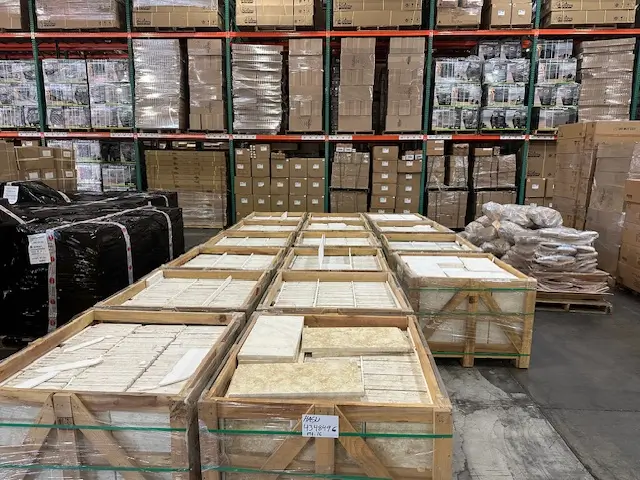
Arizona’s expanding awareness of reclaimed railway stone sourcing has created regional supply infrastructure that makes specification increasingly practical for both commercial and residential projects. You should understand the current sourcing landscape because material availability directly affects project timeline and delivered cost consistency. When you commit to reclaimed railway stone Arizona procurement, you’re depending on supply networks that are still developing compared to conventional aggregate sourcing.
The sourcing geography for reclaimed railway stone across Arizona concentrates around three primary rail corridor regions. Northern Arizona rail corridors near Flagstaff and Williams provide basalt-rich ballast sources suited for freeze-thaw environments. Central Arizona corridors near Phoenix offer granite and mixed igneous sources optimized for thermal cycling resistance. Southern Arizona rail systems provide limestone-based ballast suitable for lower-elevation projects where freeze-thaw cycling rarely occurs. Your specification should identify preferred source regions based on your project’s elevation and climate exposure.
When you evaluate reclaimed railway stone availability, you need to account for supply timing that differs from conventional sourcing. You should verify warehouse availability and transportation scheduling at least 6-8 weeks before your planned installation date, as coordination of rail-to-yard processing and truck logistics requires advance planning. Your warehouse stock verification should confirm that sufficient material quantity is available to complete your project without mid-installation delays that would disrupt installation schedules and increase labor costs.
How You Would Approach Railway Material Specifications — Citadel Stone’s Arizona Expertise
When you consider Citadel Stone’s railway materials operations for your Arizona project, you’re evaluating premium sourcing and technical guidance for recycled railway stone applications. At Citadel Stone, we recommend approaching material selection through a systematic evaluation process that prioritizes climate-matched material performance. This section outlines how you would approach specification decisions for three representative Arizona cities, accounting for regional climate variations and thermal cycling patterns that affect material selection.
Chandler High-Heat Applications
In Chandler, you would encounter extreme thermal cycling because the city’s Phoenix metro location experiences consistent 115°F+ summer temperatures with significant 40-50°F winter diurnal shifts. Your specification for recycled railway stone would emphasize thermal mass properties and compressive strength verification. You’d need to account for the urban heat island effect that amplifies surface temperatures an additional 8-12°F above surrounding rural conditions. When you specify joint spacing for Chandler installations, you should reduce standard 15-foot intervals to 12-foot spacing, accommodating the additional thermal stress from concentrated urban heat absorption. Your base preparation depth would increase to 6 inches in Chandler applications, providing additional load distribution capacity beneath the intense thermal cycling stress.
Tempe Mixed-Use Performance
Tempe’s elevation (approximately 1,100 feet) and proximity to the Salt River create conditions where you would balance thermal cycling with occasional freeze-thaw risk. Your specification for recycled railway stone in Tempe would emphasize porosity verification, particularly in areas where winter temperatures occasionally approach freezing. You would specify materials with porosity below 6% to minimize freeze-thaw risk while maintaining adequate drainage capacity. When you plan installations in Tempe, you should prioritize source materials from central Arizona rail corridors that provide granite-based ballast suited for the region’s mixed thermal exposure. Your surface preparation would remain standard 4-inch base depth, as freeze-thaw risk remains moderate compared to northern Arizona elevations.
Surprise Desert Expansion Zone
Surprise’s expanding construction activity and desert location create specification challenges where you must account for rapid urban growth and extreme thermal conditions. Your approach to recycled railway stone sourcing in Surprise would emphasize supply consistency and transportation reliability. You would need to verify that warehouse inventory supports your project timeline, given Surprise’s distance from central Phoenix material processing facilities. When you coordinate warehouse deliveries for Surprise projects, ensure that truck logistics account for the 45-minute lead time from typical sourcing points. Your specification would target 12-foot joint spacing accounting for intense solar exposure and minimal shade infrastructure in new development areas.
Testing and Verification Protocols for Recycled Railway Stone
Your specification for recycled railway stone requires you to establish verification protocols that confirm material meets your documented requirements. Professional practice indicates you should require compressive strength testing on source material samples before delivery authorization, with minimum 8,000 PSI strength for general applications and 10,000 PSI for high-traffic commercial use.
You need to structure your quality verification procedures using these testing standards:
- You must verify compressive strength through ASTM C170 testing methodology, sampling minimum three specimens from delivered material batches exceeding 50 tons
- Your porosity assessment should employ ASTM C373 water absorption testing, confirming porosity remains below specification limits established for your application type
- You should require freeze-thaw cycle testing per ASTM C1026 for all material sourced from northern rail corridors or intended for elevation above 4,000 feet
- Your specification must document surface characteristics including color variation documentation and finish verification through photographic comparison against approved standards
- You’ll need to verify dimensional consistency within ±3% tolerance, confirming that recycled material meets thickness and size specifications despite pre-use weathering
Common Specification Mistakes to Avoid
When you specify recycled railway stone, you should avoid several common mistakes that compromise project performance. The most frequent specification error involves assuming recycled material requires different design parameters than virgin stone. Your expansion joint calculations, base preparation depths, and drainage design protocols should remain consistent with virgin material specifications — recycled railway stone performs identically in these functional aspects.
You need to recognize these additional specification pitfalls:
- You should avoid over-specifying compressive strength beyond actual application requirements, as premium material sourcing increases cost without performance benefit for standard installations
- Your mistake should never involve assuming recycled railway stone automatically qualifies for maximum sustainability certifications — you must verify that source documentation supports specific LEED or sustainability claims
- You need to account for color variation reality when specifying recycled material for visible applications, recognizing that weathered patina creates natural variation that differs from virgin stone consistency
- Your truck logistics planning must account for actual delivery capacity and scheduling constraints rather than assuming supply convenience matching conventional aggregate sourcing
- You should never specify recycled railway stone without confirming warehouse availability at least 6-8 weeks before your installation start date
Comparative Analysis with Virgin Stone Sourcing
When you evaluate recycled railway stone versus virgin sourcing, you need to understand the performance parity that makes specification decisions primarily environmental rather than technical. Identical compressive strength, thermal expansion, and porosity characteristics mean your material selection should emphasize sustainability benefits rather than performance differentiation.
Your comparison analysis should recognize these distinctions:
- Recycled railway stone typically costs 5-15% less than virgin material, providing budget advantage while improving environmental profile — a rare specification scenario where sustainability and cost align favorably
- Your delivery timeline may extend 2-3 weeks compared to virgin material sourcing, requiring earlier procurement commitment to maintain project schedules
- You’ll find that virgin material offers superior color consistency within batches, while recycled railway stone accepts natural weathered variation as specification characteristic
- Your warranty documentation for recycled material matches virgin guarantees when source material is properly verified, with no performance degradation expectations
- You should recognize that recycled railway stone provides carbon footprint reduction of 30-40% compared to virgin extraction and processing, a measurable sustainability advantage
Future Trends in Sustainable Stone Sourcing
The trajectory of sustainable infrastructure development suggests that recycled railway stone sourcing will become increasingly standardized in Arizona and regional projects. You should anticipate that future specifications will require documentation of recycled content as routine procedure rather than optional sustainability enhancement. This evolution means your current specifications establishing recycled railway stone protocols create valuable precedent for advancing sustainable practices.
When you plan multi-year projects or portfolio-based procurement strategies, you should account for expanding supply infrastructure and declining cost premiums as recycled sourcing becomes conventional. Your warehouse inventory management can increasingly rely on regional recycled material availability, reducing dependence on long-distance virgin sourcing and associated carbon impacts. The future supply chain for sustainable Arizona projects will likely feature recycled railway stone as a default material option matching performance characteristics of virgin alternatives while advancing environmental objectives that shape professional practice increasingly.
Final Implementation Considerations
Your successful specification of recycled railway stone requires comprehensive integration of material characteristics, climate adaptation, and supply chain coordination. Professional practice increasingly recognizes that sustainable material selection and performance engineering are not competing priorities — recycled railway stone allows you to advance both simultaneously. For guidance on comprehensive material sourcing strategies and verification methodologies, review Citadel Stone’s railway materials operations for detailed technical resources and regional sourcing options. Your specification decisions establish precedent for sustainable infrastructure that maintains full performance parity with conventional sourcing approaches. Citadel Stone offers basalt ballast making us unique railway stone suppliers in Arizona.